Capital Analytics talks to the Cancer Treatment Centers of America
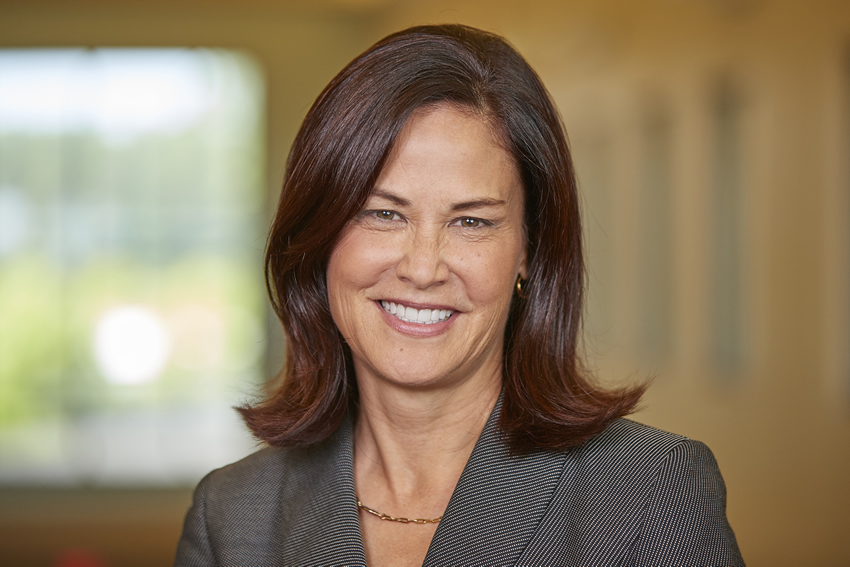 September 2017 – Data analytics, machine learning and teleconferencing technologies are just some of the technology advances that are sitting on the frontiers of medicine, both in the U.S. and across the globe. As the information age is creating disruptive technologies across almost all economic sectors, healthcare is utilizing cutting-edge concepts to improve almost every aspect of patient care, from the way patients interact with their healthcare providers to improving outcomes of cancer treatments.
Capital Analytics spoke to Anne Meisner, CEO of the Cancer Treatment Centers of America (CTCA) about the way technology is changing their organization, and the healthcare sector as a whole.
Access to digital technology is increasing in our everyday lives. How is this impacting the way the CTCA interacts with its patients?
As young people become much more tech savvy, we are seeing some interesting innovations happening in consumer demand around the ease of navigations and being able to connect with providers in a more meaningful and convenient way.
One of the things the Cancer Treatment Centers of America (CTCA) is particularly interested in is the use of telemedicine. Many of our patients travel for treatment, so we are exploring it as a way of increasing our connectivity to our patients at any point during their treatment whether they’re at home or elsewhere. There has been an increase in the use of oral chemotherapies. Just managing patients on those medications and those drugs over geographies could be greatly enhanced by telemedicine in terms of nurse-physician interaction and pharmacist interaction to ensure the right level of support. It is a new frontier that is yet to be leveraged and exploited in ways that could benefit patients as well as providers.
How is precision medicine being used to better improve patient outcomes?
Precision medicine is a global term for understanding health and illness against a genomic fingerprint. Whether it is oncology or other conditions, we are seeing a proliferation of research and focus on in terms of understanding how our genes our mutations on our genes influence disease, incidence disease progression and disease response.
This is one of our critical clinical priorities at the CTCA. We have a number of partnerships, such as with the American Society of Clinical Oncology, who are partnering with on the Targeted Agent and Profiling Utilization Registry (TAPUR) clinical trials. This trial allows patients that have particular genetic mutations access to therapies that are matched against those mutations.
TAPUR is part of the process in terms of understanding whether drug therapies are effective against particular genetic mutations. It impacts the diagnostic process and understanding whether it’s something in your genetic makeup that either predisposes you to cancer and continues to impact your response to therapies.
More organizations are understanding and doing more of these molecular tests before they treat patients and the result is more personalized outcomes in terms of understanding how a particular therapy would impact you either positively or negatively. This is exciting, and for oncology, it has the potential for creating breakthroughs that are ultimately going to be much more meaningful.
How can the healthcare industry utilize new concepts in data analytics?
With the data that we are collecting on patients, it is important to form partnerships with companies and institution that are involved in machine learning and big data analytics. Making sense of the data that we are collecting on individual patients can be daunting. It one of the areas that ASCO is currently interested in.
The CTCA has done some work with the Georgia Institute of Technology looking at applications of data science. On the technology side, we’re one of the first hospitals to connect a number of different databases through various software applications.
These new technological applications might not be something that creates the big eureka moment over the next year. Rather, it is about foundation building and creating partnerships with the right institutions. Over the next five ten years, I’m excited to see how we can much more effectively treat patients to manage both the length and the quality of life.
Focus: Atlanta speaks with Metro Atlanta’s governing bodies
August 2017 – In 2016, the Metro Atlanta workforce grew by 2.7 percent, adding 70,800 more jobs on the previous year, according to the U.S. Bureau of Labor Statistics. These figures made it the fourth best improvement in the 51 metropolitan areas with a population of more than 1 million. It was beaten by New York-Newark-Jersey City with 120,600 jobs added, the Dallas-Fort Worth-Arlington area with 113,500 and Los Angeles-Long Beach-Anaheim with 90,000.
Current projections are suggesting 2017 will also be a good year, and Metro Atlanta will account for 59 percent of the new jobs in Georgia in 2017. Unemployment was down to 4.9 percent in June 2017, 0.4 percentage points down from the same month in the previous year.
The success of the economic powerhouse of Georgia has been ascribed to its geographic position, the great connections offered by the Hartsfield-Jackson Airport, the strength and quality of the educational establishments and the enthusiasm of the private sector for partnerships and innovation.
“We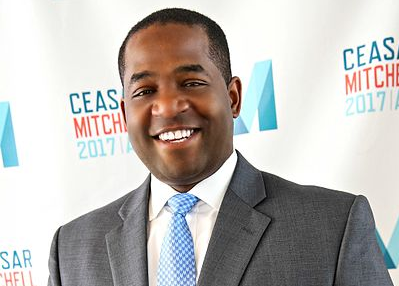 have job growth outpacing housing, meaning that there is tremendous opportunity here. Our educational establishments are strong and create a dynamic talent pool. Atlanta has a geostrategic advantage. We are in a geo-stable environment. We don’t suffer from hurricanes or earthquakes, and our climate is moderate. There is a strong transportation infrastructure, because of the ease of access to Atlanta, regionally, nationally and internationally. We have to continue to build upon these strengths,” Ceasar Mitchell, president of the Atlanta City Council told Capital Analytics.
Doug Hooker, executive director of the Atlanta Regional Commission stressed the internationalist dimension, telling Capital Analytics, “Atlanta has always had aspirations to be a great international city. As it has grown and become a much  richer, more diverse economy, it has attracted a variety of corporate actors that don’t necessarily have their roots in this city or in the region. They come from across the world and established their presence, and the ones that stay long enough start to get more involved in the community.”
Capital Analytics spoke to a number of executives from governing bodies for the first edition of Focus: Atlanta, which is a comprehensive guide covering the crucial economic sectors of the Atlanta area.
Nick Masino, CEO of Partnership Gwinnett pointed out that outside the main city, lower prices remain a major attraction. “Midtown and Buckhead are too expensive for a lot
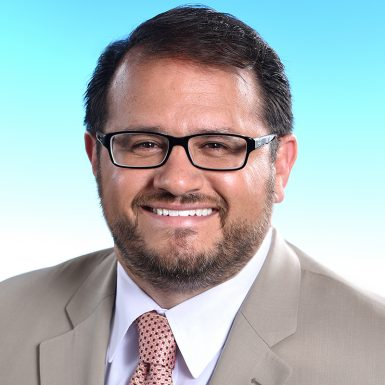
of companies. Gwinnett has office space that is more affordable, and with the redevelopment and place making that is happening here we will continue to attract young highly skilled talent and new business to our community,” he told Capital Analytics.
The strength and sustainability of the area’s success lies in the fact that not only are the business districts of the City of Atlanta seeing economic energy, in the form of tech innovation and financial services, but in fact, growth is spread across a number of different counties in the Metro Atlanta region.
 “Transportation is one of Fulton County’s biggest sectors because of the airport. We have the need for transit expansion and mobility enhancement. Our hospitality, financial technology and healthcare industries are also very strong. We have an emerging film industry generating a lot of economic activity, and we also have a strong music scene that is beginning to make its mark on a global scale,” said John Eaves the chairman of Fulton County.
Patti Garrett, Mayor of the City of Decatur, pointed towards the opportunities on offer for people looking for something less hectic. “Decatur is vibrant and walkable. It’s not just about jobs, it’s about the quality of life. We have our own, independent school systems that have doubled in size over the past eight years as we expand existing institutions and create new ones. We have had one of the best performing school systems in the state, and our location is ideal for people working at Emory and the Center for Disease Control,” she said.
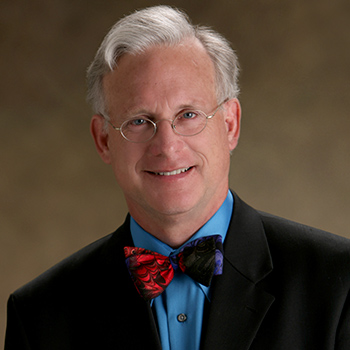 Jere Wood, mayor of the City of Roswell, was also enthusiastic, but added caution. “We have a challenge in how to grow and develop without losing who we are, because change isn’t always good. For us, the first question is how does a project make Roswell a better place to live? If it’s a good place to live, people will move here. There have been many discussion about creating a city center, but some residents want to preserve the green aesthetic that we have. It is a matter of timing. I have a long term perspective for Roswell; we have no reason to be in a hurry. Change will come in cycles.” he told Capital Analytics.
The interviews were done during the field research for Focus: Atlanta, the greater metro area’s first and only comprehensive investment guide, which covers a range of economic sectors from real estate and finance to education, technology and sports. The publication has been compiled from more than 200 meetings with executives from major Atlanta firms as well as governmental representatives.
The Evolving Financial Ecosystem
#CLAB is a can’t-miss event held August 30 – September 1 in Miami, Florida. Attendees will learn invaluable insights and network with the best and the brightest high-level executives from the IT Financial Industry.
Each day, technology and Innovation becomes an even more essential tool for financial institutions seeking to grow for years to come. The 17th Annual CL@B 2017 Conference is the largest Latin America technology and innovation event featuring networking and learning platforms for the financial industry. The conference is a traditional bridge connecting Latin America and the world.
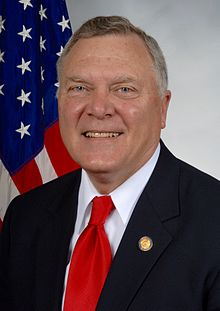
Focus: Atlanta speaks with Governor Nathan Deal, State of Georgia
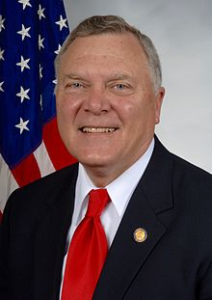
“One of Georgia’s greatest economic development assets is global accessibility,” Governor Nathan Deal tells Capital Analytics.
With the busiest airport in the world by passengers, the Center for Disease Control and a film industry producing global box-office hits, Georgia truly has an international impact. The Hartsfield-Jackson Atlanta International Airport saw more than 100 million passengers in 2016, and with almost 3,000 flights arriving and departing both nationally and internationally per day it is easy to understand its popularity.
In a recent interview for Focus: Atlanta, Governor of Georgia, Nathan Deal, was keen to emphasize the impact that logistics has on the economy of the state. “One of Georgia’s greatest economic development assets is global accessibility with our interconnected highways and waterways, creating the ideal location for innovative companies to thrive,” he told Capital Analytics. “We’ve taken advantage of a strategic location on the Southeastern corner of the nation to become a global hub for trade with the fourth busiest port in the nation, the busiest airport in the world and two Class I rail lines.”
Governor Deal answered questions on a number of key topics for the first edition of Focus: Atlanta, which is a series of fully comprehensive guides covering the crucial economic sectors of the Atlanta area. As well as pointing out the crucial role Georgia ports and transit systems play, he was keen to mention how its cultural attractions also create a significant draw across the world.
The silver screen
“Our growing film and music industries contributed significantly to the rise in tourism. In fact, Georgia ranked first in feature film production in 2016, surpassing California and New York for the first time, with 17 of the 100 top grossing feature films produced in our state. The 245 film and television productions shot in Georgia in 2016 represented $2.02 billion in direct spending in the state with an economic impact of over $7 billion.“
Spiderman: Homecoming and Baby Driver, both top-10 box office draws at the time of writing, were shot in Atlanta. With the Marvel Cinematic Universe mostly filmed at the city’s Pinewood Studios, Georgia has the potential to take one of the biggest shares of cinematic receipts in 2017.
Global frontrunner
The internationalist approach is an important characteristic of many businesses native to the state, as well as a growing number of multinationals, such as Porsche taking root in Georgia. This attitude is reflected by leaders both on city and state levels, and one that continues to translate into economic success.
As Deal told Capital Analytics, “Georgia’s 2016 trade numbers reinforce the state’s position as a front-runner in the global economy and as a leader in international trade. In 2016, total trade between Georgia and the world exceeded $121.7 billion, and exports surpassed $35.5 billion. As a matter of fact, companies in 95 percent of Georgia counties are active in international trade.
As a global leader in the marketplace, companies, site selectors and visitors often say that what makes Georgia stand out is the experience and totality of attractive assets we offer. With the support of our statewide economic development partners, we provide an all-encompassing experience that cannot be found anywhere else.”
Governor Deal’s interview will open Focus: Atlanta, the greater metro area’s first and only comprehensive investment guide, which covers a range of economic sectors from real estate and finance to education, technology and sports. The publication has been compiled from more than 200 meetings with executives from major Atlanta firms as well as governmental representatives.
To read more about the State of Georgia, visit http://www.investgeorgia.net/
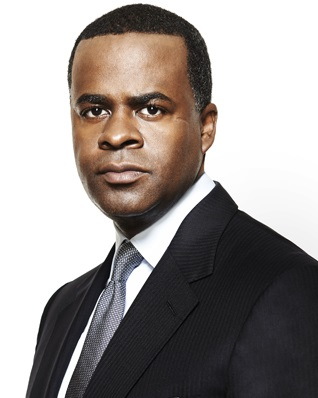
Setting the scene for investment, Focus: Atlanta speaks with Mayor Kasim Reed, City of Atlanta
“I want Atlanta to be comfortably and authentically referenced as one of the best cities in the world.” Mayor Reed tells Capital Analytics.
Atlanta added more than 90,000 people to its population between in 2016, 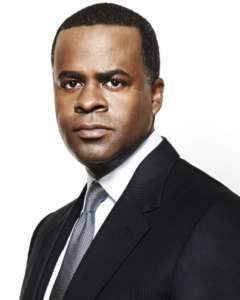 according to the U.S. Census Bureau, and there are no signs of this slowing down. With a change of around 500,000 between April 2010 and July 2016 up to nearly 5.8 million, according to figures released in the first half of 2017, Atlanta is the fourth-quickest growing metropolitan area with only New York City, Dallas-Fort Worth and Houston in front.
What is even more crucial is that this growth of population is driven by employment. On the one hand, major companies such as international automotive giant Porsche and U.S. financial services group State Farm have relocated to take advantage of the superior international links and the skilled workforce. On the other, young professionals are flooding the area, chasing after quality tech jobs in a place that, unlike competitors such as New York, will not break the bank.
Mayor of Atlanta, Kasim Reed has been a driving force behind Atlanta’s recent growth. Speaking to Capital Analytics in June 2017 said “Atlanta is one of the leading cities in attracting young talent.” The meeting was in preparation for the launch of Focus: Atlanta, Capital Analytics first publication in a series of fully comprehensive guides covering the crucial economic sectors of the Atlanta area.
He also highlighted the international nature of the city. “We also have one of the fastest growing foreign populations and the second largest foreign-born population, by percentage, on the eastern seaboard. We are becoming authentically diverse. A disproportionate number of those foreign-born citizens are entrepreneurs, so that makes our overall economy more dynamic.”
NCR is another major corporation in Atlanta, and in 2016 announced new headquarters at Technology Square, near the Georgia Institute of Technology. “The $300-million NCR campus being built, with 5,000 jobs moving into the city, is the single largest job move into Atlanta in 40 years. Average salaries will be in excess of $67,000 per year. The economic impact on the city will be more than $1 billion per year,” Reed told Capital Analytics
Reed also expressed the need for further investment into the city. “The expansion of our public transportation system is the largest for 40 years. We have the ninth-largest system in the U.S. and are expanding that in hopes that we can connect to Emory University, the Center for Disease Control and the Children’s Hospital. That is the largest job corridor without rail connectivity. The $6-billion capital program at the Hartsfield-Jackson Airport is about us looking to the future. Delta Airlines signed an agreement for 20 years, meaning that the airport will probably stay the number one airport in the world for some time to come.”
Finally, Reed expressed his hopes for the future of Atlanta. “I want the city to be in the strongest financial condition that it has been in the past 50 years. We have a strong AA+ credit, the largest cash reserves that the city has had in its history, eight years without ever raising property taxes, the largest police force in the history of Atlanta and crime at 40-year lows. I want Atlanta to be comfortably and authentically referenced as one of the best cities in the world. We are setting the scene for that.”
Mayor Reed’s interview will open Focus: Atlanta, the greater metro area’s first and only comprehensive investment guide, which covers a range of economic sectors from real estate and finance to education, technology and sports. The publication has been compiled from more than 200 meetings with executives from major Atlanta firms as well as governmental representatives.
To read more about the City of Atlanta, visit their website at: https://www.atlantaga.gov/
Las Vegas Private Wealth Management Summit
December 3-5, 2017, Las Vegas, NV
The Private Wealth Management Summit is the premium forum that brings together solution providers with the most recognized single and multi-family offices in North America in a private luxurious venue, destined to explore topics and issues on the industry, create  business and debate about solutions for the private wealth matters in the region. Along with the content, there will be formal networking opportunities between investors and money managers, thanks to our “one on one” model of pre-schedule business meetings. Between the presentations and meetings, attendees can network during the coffee breaks, meals and cocktail hours!
- Pre – schedule one on one business meetings with qualified buyers
- Grow sales faster through a time efficient format
- Network with high level executives in a luxurious and stimulating environment
- All inclusive investment
Past experts include:
- Timothy Volk, Founder and Principal, T. Volk & Company
- Franklin J. Parker, Chief Investment Officer & Director, Bright Wealth Management
- Ernest E. Cecilia, CFA, Chief Investment Officer, Bryn Mawr Trust Company
- Laura Mattia, PhD, Senior Vice President, Financial Planning, Cumberland Advisors
- Alan Solon, Chairman & Chief Executive Officer, EcoVest Capital Inc. and many more!
Directed too: CIO’s, VP’s, Directors, Founders, Investment Leaders
From: Multi Family Offices, Single Family Offices, and Investment Advisors
For more information, please contact Deborah Sacal at alejandrad@marcusevansmx.com or call +52 55 4170 5555 ext. 2437 or visit the event website: http://events.marcusevans-events.com/private_wealth_management_december-caa/
Latin Private Wealth Management Summit
October 9-10, 2017, The Ritz Carlton, Cancun, Mexico
The Latin Private Wealth Management Summit is the premium forum that brings together solution providers with the most recognized  single and multi-family offices in LATAM in a private luxurious venue, destined to explore topics and issues, create business and debate about solutions for the private wealth industry in the region. Along with the content, there will be formal networking opportunities between investors and money managers, thanks to our “one on one” model of pre-schedule business meetings. Between the presentations and meetings, attendees can network during the coffee breaks, meals and cocktail hours!
- Pre – schedule one on one business meetings with qualified buyers
- Grow sales faster through a time efficient format
- Network with high level executives in a luxurious and stimulating environment
- All inclusive investment
Key Topics to be discussed:
- Economic Outlook and Investment Opportunities in Latin America
- The Challenges in Structuring a Family
- Implications of the Creation and Implementation of the Family Protocol
- Migration of Assets to the United States
- Best Practices for Impact Investments
- The Influence of Technology in Family
Network with industry experts like:
Alfonso Carrillo, Partner, Family Office Mexico SC
- Javier Lopez Casado, CEO, Finaccess Advisors
- Marcelo Benitez, CEO, Proaltus Capital
- Alvaro Castillo, President, Loyola Asset Management
- Arturo Hierro, VP, Loyola Asset Management
- Ivan Carrillo, CEO, Creuza Advisors
- Antonio Gastelum, Presidente, Antonio Gastelum Inc.
- Javier Mtanous Arocha, Partner, MG Capital
Directed to: CIO’s, VP’s, Directors, Founders, Investment Leaders
From: Multi Family Offices, Single Family Offices, and Investment Advisors
For more information, please contact Deborah Sacal at alejandrad@marcusevansmx.com or call +52 55 4170 5555 ext. 2437 or visit the event website: http://events.marcusevans-events.com/latin-private-wealth-summit-caa/