Latin CFO Summit
October 9-10, 2017 at The Ritz Carlton, Cancun, Mexico
The Latin CFO Summit is the premium forum that brings together solution providers with senior finance executives from the most  recognized companies in the world, in a private luxurious venue, destined to explore topics and issues on the industry, create business and debate about solutions for the financial matters in the region. Along with the content, there will be formal networking opportunities between investors and money managers, thanks to our “one on one” model of pre-schedule business meetings. Between the presentations and meetings, attendees can network during the coffee breaks, meals and cocktail hours!
- Pre – schedule one on one business meetings with qualified buyers
- Grow sales faster through a time efficient format
- Network with high level executives in a luxurious and stimulating environment
- All inclusive investment
Past experts include:
- CFO, Microsoft
- Finance Head, Nestle Nutrition Latin America
- CFO, Holding ToniCopr at The Coca Cola Company
- Chief Financial Officer, GSK
- Finance Director, Sanofi Pasteur and more!
For more information, please contact Deborah Sacal at alejandrad@marcusevansmx.com or call +52 55 4170 5555 ext. 2437 or visit the event website: http://events.marcusevans-events.com/latin-cfo-summit-caa/
Capital Analytics speaks to Jorge Gonzalez, President & CEO, City National Bank
July 2017 — The last 12 months has been a story of increasing success for South Florida as the area has seen the growth of sectors outside of traditional areas of strength such as tourism and trade. Technology and healthcare are two areas among others that signal just how exciting Miami is becoming as an investment destination.
Underpinning this growth is a robust banking center, which is one of the healthiest in the U.S., buoyed by a strong economy featuring a robust real estate sector and favorable regulations from the State of Florida. Miami-Dade follows the area’s positive trend in the banking sector and its top five banks all experienced an increase in assets in 2016. Among them is City National Bank of Florida, which recorded a $24.3 million net income in the first quarter of 2017, an 83 percent increase year-on-year. Capital Analytics spoke with President & CEO Jorge Gonzalez about growth in the region, changing demographics and the road ahead for South Florida.
In which area of business do you expect to see the most growth for South Florida?
Small business will continue to be the main economic driver in South Florida, and this is an underserved segment when it comes  to banking. Our value proposition is particularly attractive to small and midsized businesses that really want a partner, not just a bank. There are various growing sectors in South Florida, including distribution, technology, healthcare and professional services. We see great opportunity there. Small businesses will continue to grow and expand as the economy continues to strengthen and we’ll see job growth and innovation across various of these sectors.
What are the expectations of market performance for 2017?
All signs so far in 2017 indicate that we are continuing to see a strengthening economy and low unemployment, and that is good for everyone. South Florida and Miami in particular continue to be the beneficiaries of international investment and while that has waned some with the strengthening dollar, we are still a highly desired destination for capital and investment.
What regulatory frameworks do you want to see addressed?
I wholeheartedly believe that banks need to be closely regulated, but that regulation should focus on the areas where there is risk and exposure. There has to be a prioritization of of regulation to focus on areas with the most risk. Technology is one area that I think we’ll see more regulation and that makes sense, because of the risks associated with electronic fraud. Information security and cyber security are emerging areas that banks and regulators need to be focused on. It is a new and quickly growing threat that needs to be managed very carefully.
South Florida has a young population. How will this affect long-term products and services?
Ultimately what we are building here is a global community bank, that is, a community bank that is focused on serving the marketplace it operates in, with a global perspective. We have a $40-billion Chilean parent company, Bci, and City National Bank is based in South Florida, which is home to people and companies from throughout the world. We are building a unique platform to serve them. Regardless of age, consumers are looking for the same things: relationships, excellent service and a diverse product offering. We are what I call and old-fashioned bank, with a modern twist, committed to those traditional values of building relationships and delivering an exceptional client experience and at the same time investing in technology so that our clients can interact with us in the way that they choose. We are also willing to build tailor made solutions for our clients. These are things that most banks are not built to do. Either they are too big to be personal or too small to invest in the systems and solutions clients need. The expectations of all clients are very high and we are constantly raising the bar for ourselves and working to anticipate client needs and wants.
What challenges need to be overcome?
I am very bullish on South Florida. We’ve seen tremendous growth in the last 10-15 years and I expect the next decade will dwarf that. Miami is a brand that has tremendous national and international appeal, and it has emerged as one of the most important places for business in the world. But that growth comes with challenges and I think we all know what they are. Our infrastructure needs to be properly developed to support long-term growth. This is best illustrated by the traffic situation. Affordable housing is another area that we need to find innovative ways to increase the inventory. Companies want to ensure their employees have a certain quality of life and that includes being able to live closer to work. Education is also an area that we need to continue focusing on. Our public schools have made great strides, but more work is needed, particularly in the area of ensuring we provide opportunities for individuals to be productive members of our community. This is an area that City National Bank invests in with our community dollars, because we believe that educational opportunity and access has the biggest impact on the long-term economic development of our community. Our community has also seen a lot of investment in culture, from new museums to international art fairs, and this is something we need to foster more of, if we are going to continue to develop Miami into a cosmopolitan and global city.
To learn more about City National Bank of Florida, visit their website at: https://www.citynational.com/

What are the main factors attracting visitors to Miami-Dade County, and how can it build on its strengths to attract more people?
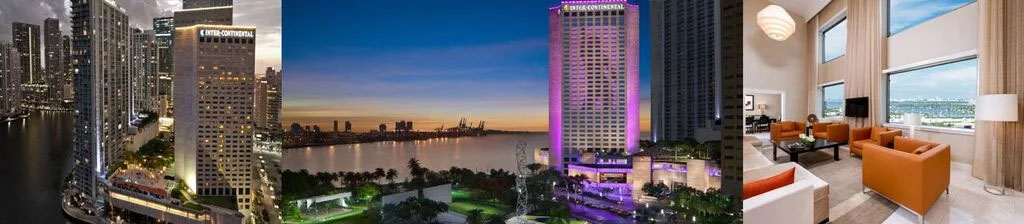
Miami-Dade and Downtown in particular have come a long way since I moved back to Miami to become GM of the InterContinental Miami in 2009. I remember when the streets around the hotel were empty once the clock struck 5 pm, but now there is activity at all hours of the day. The residential growth of the past decade has had a positive effect on our neighborhood, because tourists are naturally drawn to areas where locals spend their time. Today, downtown is a destination for business and lifestyle, and it’s up to us to manage that growth. We’re making strides through investments in our new science and art museums, improvements along Flagler Street and innovative projects like Biscayne Green, but challenges still exist as we look for new ways to improve access and mobility. Traffic is problematic, major events cause road closures, and we need to upgrade our public transit systems, which is something that visitors from around the world expect when they arrive in a world-class city.

How well has the hospitality industry weathered the recent problems of Zika and falling currencies in traditional overseas markets?
Last year, we experienced only a nominal impact from Zika at the InterContinental Miami. Two corporate events were postponed by risk-averse groups, but our leisure travel business remained intact throughout the summer and 2016 was another strong year for us. Since then, we’ve been working year-round with the authorities and our hotel peers to create and implement a 10-point plan that will make sure we’re ready to mitigate any mosquito-borne threat that South Florida faces in the future. We’ve also managed to sustain our strong occupancy amidst a strong dollar. We credit this to our hotel’s popularity among business travelers and groups hosting large meetings and events.
To what extent does the current growth of hospitality and home-sharing apps such as Airbnb create competition for the traditional hospitality sector? Is there enough regulation to keep the playing field even?
Miami is reportedly one of Airbnb’s top-five markets in the country, and that’s no surprise given our rise as a global destination. Some have sought to ban these services outright, but that’s unrealistic. The reality is that we’re already co-existing with home-sharing services. The difference is that a property like InterContinental Miami appeals to business and leisure travelers seeking the comforts of a luxury hotel – from daily housekeeping and a top-notch restaurant and bar downstairs, to a pool deck overlooking Biscayne Bay and a luxurious spa. Short-term rentals may cater to a specific niche in the market, but there’s no substitute for the exceptional hospitality that a full-service hotel can deliver. That being said, we need to protect our visitors and residents by ensuring short-term rental properties are safe and regulated appropriately. Also, we must preserve the tourist tax revenues that conventional hotels have been collecting for years and which support critical services.
How much of an impact would the reducing of Visit Florida’s budget have on the tourism and the meetings and convention industry in Miami?
The budget was in jeopardy, but the elected officials in Tallahassee saw the value of marketing Florida’s brand around the world. We are deeply thankful for Gov. Scott’s support, as well as the support of Florida’s legislature for fully funding Visit Florida in 2018. The state legislature’s decision to fund Visit Florida means that Florida, and Miami in particular, will continue to attract millions of tourists every year, strengthening this city’s already thriving hospitality industry and growing its local economy, including new jobs.
With a growing amount of hotel rooms in the Downtown area, how can the InterContinental differentiate itself from the competition? What are the midterm goals, plans and outlook for the InterContinental in Miami?
There have been new hotels opening their doors around downtown Miami over the past few years, so we’re always looking for new ways to keep our competitive edge. Earlier this year, we remodeled and relaunched Toro Toro, complete with a new menu, an expanded lounge, and a new private dining room, “El Matador Room”. We’re also introducing new technologies. One of my favorites is an app called Zingle that allows guests to request any service – from the morning paper to milk and cookies – from their smartphone. We even host a local competition each year to choose new skyline dancers for our digital canvas (we take nothing for granted!). The InterContinental Miami has been operating for almost 35 years and many of our team members have been with us for more than half that time. I like to think that longevity and consistency define who we are and set us apart in an increasingly competitive field. Looking ahead, we’re going to keep our focus on providing exceptional hospitality to our business and leisure travelers, while ensuring the services and amenities we offer stay creative and innovative.
What can be done to further promote the meetings and conventions industry in Miami?
Miami knows how to host a large event, be it the Super Bowl, the Major League Baseball All-Star Game, Art Basel, Ultra Music Festival, and more. We’re also making sizable investments in our local infrastructure through the renovation of Miami Beach Convention Center, improvements at Miami International Airport and the launch of the Brightline rail system, both of which will make getting to Miami easier. Now we’re working with our partners at the GMCVB to spread the word out and send a message that Miami is a great destination for business and vacation.
For more information on InterContinental Miami, please visit icmiamihotel.com
Twitter: InterConMIAMI
Instagram: interconmiami
Facebook: InterContinental Miami
 Once the domain of the science fiction fantasy, experts are predicting a cashless society in the U.S. by 2030. As Apple Pay, Bitcoin and contactless cards are taking the place of traditional bills and coins, electronic payment is becoming one of the most crucial segments of the fintech sector. With the launch of the P20 Payment Conference, Atlanta, Georgia is consolidating its position right in the center of this lucrative system.
June 2017 – In an April 2017 survey conducted for ING Bank, 38 percent of respondents from the U.S. said that they would like to “go completely cashless.” For a generation of professionals raised with debit cards, the idea of making even the smallest of transactions without resorting to traditional bills and coins is becoming more reasonable. However, with this new era for day-to-day financial transactions comes an increased demand for processing infrastructure, security, and innovation.
 Atlanta has been on its way to becoming a center for credit card payment processing since the late 1980s when caps on the credit card fees were lifted and credit card companies flocked to Georgia. In 2017, around 70 percent of all transactions in the U.S. were going through Atlanta, according to the American Transaction Processors Coalition (ATPC), earning is the title of “Transaction Alley”. Around half of all global payments are currently processed in Atlanta and the surrounding region.
“Atlanta sits at the intersection between financial technologies and a large number of payment companies. The cost of living and operating makes Atlanta a good prospect for companies, and the educational environment here is very good. It makes sense to have a concentration of fintech companies here.“ Joan Herbig, CEO of ControlScan told Focus: Atlanta 2017.
To build upon this already impressive standing and with an eye to the future of international payments the first P20 conference, run in partnership with the City of London, UK will be taking place in October 2017. The conference will alternate between Atlanta and London and will bring together 20 of the most important payment processing institutions, as well as bankers, politicians and other members of the international finance industry.
“The P20 conference will be great for Atlanta. London is often considered a financial capital and so having bilateral cooperation between London and Atlanta is itself advantageous. The P20 conference will be a great launching pad for more awareness and the promotion of Atlanta on the global stage.” Barry McCarthy, executive vice-president of First Data told Focus: Atlanta in May 2017.
The aim of P20 is to bring together key innovators and stakeholders to work on a range of issues such as security, regulation and developing technology. It will create a direct connection and partnership between Atlanta and London, leading to long-term synergies and importantly, facilitating dialogue surrounding issues such as growing security risks and the need for regulation.
“The P20 conference is our international platform that will bring together regulatory thought leaders with industry thought leaders from the U.K. and the U.S. It will nurture new ideas around the future frameworks. We want to set up global regulatory frameworks and we want to do this in an inclusive fashion.” H. West Richards, executive director of ATPC told Focus: Atlanta 2017.
The Fintech industry supports more than 40,000 jobs in Georgia, and is worth more than $30 billion per year. Despite uncertainty as to its place in the EU, London held onto its title of financial capital of the world in 2017. The P20 partnership will bring the international recognition that Atlanta deserves, and help to grow its already vibrant fintech industry even more.
When: June 23, 2017
Where: Pompano Beach Cultural Center & Library, 50 W Atlantic Blvd
Pompano Beach, FL 33060 United States
ULI and the Pompano Beach Community Redevelopment Agency (CRA) invite you to hear from recent investors and redevelopment  experts about new development opportunities in South Florida. This program explores the unique half billion dollar investment opportunity in the emerging Pompano Beach Downtown Innovation District and the plan for an innovative and resilient drainage district!
Agenda
8:00am – Breakfast & Networking
8:20am – Welcoming Remarks
Dr. Charles C. Bohl, Chair, ULI Southeast Florida/Caribbean & Director, MRED+U
Mayor Lamar Fisher, City of Pompano Beach
8:30am – Pompano Beach & Broward County Real Estate Market Overview
Chris Metzger, Executive Director, Cushman & Wakefield
Marty Kiar, Broward County Property Appraiser
8:50am – Getting Going on an Innovation District
Mitchell Weiss, Senior Lecturer, Harvard Business School & Former Chief of Staff, City of Boston
9:10am – The Innovation District: A Global and Regional Perspective
Nitin Motwani, Principal, Miami Worldcenter Associates
Mitchell Weiss, Senior Lecturer, Harvard Business School
David Coddington, Vice President, Business Development, Greater Fort Lauderdale Alliance
Moderator: Kim Briesemeister, Principal, Redevelopment Management Associates
10:00am – Innovative Infrastructure: FDOT Takeover, Transit, & Drainage
Greg Harrison, City Manager, City of Pompano Beach
Jason McClair, Vice President, Chen Moore and Associates
Paul Kissinger, Principal, EDSA
Whitney Rawls, Chairman, NW CRA Advisory Committee
Moderator: Thomas DiGiorgio, Chairman, Pompano Beach Economic Development Council
10:45am – Pompano Beach Investment Opportunities & Developers Who Have Skin in the Game
Tim Hernandez, Founder, New Urban Communities
Christopher Longsworth, CEO, Invesca Development Group
Adam Adache, Co-Founder and Managing Partner, Cavache Properties
Mark Corlew, Principal, Grover & Corlew
Moderator: Darcie Lunsford, Senior Vice President, Butters Construction
11:30am – Adjourn
11:30am – Optional Tours: Cultural Center or Innovation District Bus Tour
Registration Fees:
|
Member |
Non-Member |
| Private |
$45 |
$65 |
| Public/Nonprofit |
$35 |
$50 |
| Student |
$25 |
$35 |
| Under 35 |
Commentators and analysts are warning e-commerce will spell the death of the shopping mall, but fresh concepts in the retail experience are breathing new life into Atlanta’s brick-and-mortar retail.
Despite worries of a downturn, U.S. retail figures have seen a first quarter boost in 2017. In initial estimates released by the U.S. Department of Commerce in April, the first quarter of 2017 saw overall retail spending at $1.25 trillion, an increase of 5.1 percent on the same quarter the previous year. However, the increase for online retail was almost 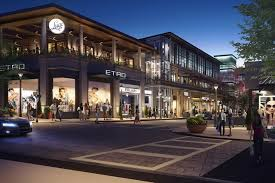 three-times that, at 14.7 percent, reaching $105.7 billion.
Driven by companies such as e-retailer Amazon, which accounts for 43 percent of all online sales in the U.S., e-commerce has been threatening traditional brick and mortar stores for the best part of the past 20 years. In 2007, e-commerce accounted for 3.1 percent of all retail in the U.S.; as of the first quarter of 2017, this figure stands at 8.5 percent. A CNBC report in May 2016 featured retail analyst Jan Kniffen warning almost a third of all enclosed malls in the U.S. were likely to fail in the near future.
The online sphere offers convenience, choice and often greater value for money. With access to the online world growing year-by-year, it’s easy to think that the days are numbered for the traditional shopping mall.
The rebirth of the mall
Not everybody is convinced by the death toll for the mall though, and “experiential retail” is the buzz phrase driving renewed enthusiasm for brick-and-mortar stores. “We shop online out of convenience, but there is still that experiential factor in, for example, buying a nice suit, and you don’t get that online,” Gene Rice, co-founder of Vantage Realty Partners, an Atlanta-based commercial real estate agency told Focus: Atlanta in April 2017. It is this idea of an “experience” that is emerging as a new direction for brick-and-mortar retail in the U.S. One of the leading examples is Ponce City Market, a 16-acre mixed-use retail, office and residential development in Atlanta, Georgia.
Developed by Jamestown Properties, and situated near the Beltline, Ponce City Market reuses the historic Sears, Roebuck & Co building. “We are working to make retail an attractive substitute to online shopping. We try to make our 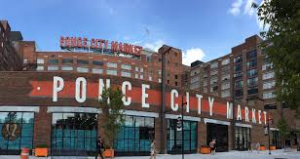 environment surprising, challenging and exciting.” Matt Bronfman, CEO of Jamestown Properties told Focus: Atlanta. The idea of combining popular retail stores with other attractions, such as high-end restaurants, leisure pursuits and even live concerts is one taking off across the state.
“People are getting more creative with their retail and getting people out of their houses to come shop in store. You start to see barber shops and bars. It’s a different experience,” Rice told Focus: Atlanta.
Central to the success of these developments is combination of other aspects of life, such as work, making the mixed-use development the ideal torchbearer for experiential retail. Avalon, developed by North American Properties, in Alpharetta contains more than 100,000 square feet of office space, along with over 300 planned family housing units in addition to its 365,000 square feet of retail. In addition to cinemas, and high-class restaurants the development also offers yoga lessons and play areas.
“We always need to look at how to attract people to our real estate developments. At Avalon, we have been able to create an urban experience in a suburban setting.” Mark Toro, managing director of North American Properties, managers of the Avalon development, told Capital Analytics.
Both Ponce City Market and Avalon work on the central tenant that people want to enjoy the shopping experience. Indeed, an afternoon shopping can still be an event for either the family who can enjoy quality time snapping up the seasons bargains, or the book-lover that gets lost among the shelves of their favorite store. This is a fact that even companies like Amazon cannot deny as demonstrated by their current program of opening physical stores across the country.
While the internet is surely driving one of the largest shifts in shopping habits since the invention of the shopping mall, it seems that for the moment there is still plenty of life in the bricks and mortar retail store.