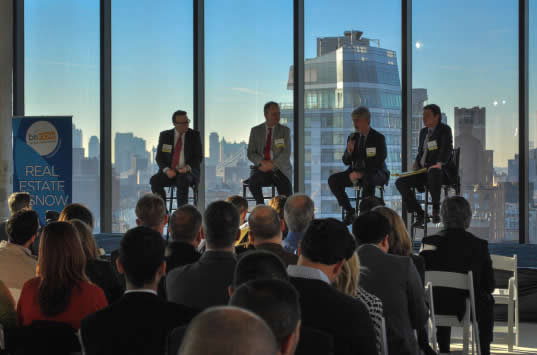
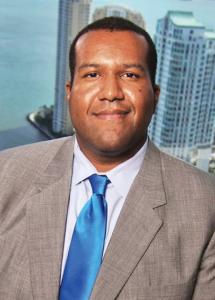
Invest: Miami speaks with Greenberg Traurig’s Jaret Davis
 June 2017 – With a growing number of young, educated entrepreneurs and a location that offers global connections, it is easy to understand why the Miami Metropolitan Area has such a thriving startup environment. The county’s potential is further bolstered with an excellent support network with Miami’s Economic Development Agency, The Beacon Council, playing a major part.
As of May 2017, the Kauffman index of entrepreneurial activity, one of the leading indicators of new business activity for the U.S., ranks Miami as best large metropolitan area in the country when it came to startup activity. In 2016, there was a rate of new entrepreneurs of 0.56 percent – meaning that for every 100,000 adults, there were 560 starting a business venture.
In addition to advising new companies on important business and law issues, Miami-based international law firm Greenberg Traurig runs a series of events and seminars aimed at educating people on the need for a healthy startup culture, and how startups can make an international impact. Capital Analytics spoke to Jaret Davis, Miami co-managing shareholder of Greenberg Traurig, on how to support new companies and the role of the Beacon Council in Miami’s development.
How can Miami-Dade better support the growth of startups?
Miami is a robust and sophisticated ecosystem that supports startups. Opportunities for improvement include access to additional sources of capital – particularly on the seed level below $1 million and Series B funding with a level of $10 million to $20 million – and enhanced collaboration with universities and other innovators.
It is important that large corporations in Miami-Dade support startups by purchasing their output. They should also provide input on market needs to ensure startups don’t innovate in a vacuum – producing products and services that don’t address market needs. Universities and other innovators in Miami-Dade have a powerful role in ensuring research is commercialized and students are trained in the technical skills the startup community requires.
How do you see The Beacon Council benefiting Miami-Dade’s growth moving forward?
The Connect and Grow initiative is very powerful. We have launched a new accelerator program formed through our trade and logistics committee. Trade and logistics is an important target industry responsible for more than 20 percent of our jobs in Miami-Dade.
We have seen that Connect and Grow goes much further than just innovation, it brings together various aspects of Miami-Dade County. Our Urban Initiatives Task Force is doing great work to ensure all sectors of the county are connected, including those that have been historically underserved. We have brought marketing opportunities to those regions of Miami-Dade, such as South Dade, which have not received as much attention as other areas.
These could be major game-changers for the region if they deliver as we anticipate. We’ve seen the power of Connect and Grow in achieving better connections with organizations such as the Greater Miami Chamber of Commerce, plus state and national players such as Enterprise Florida and SelectUSA.
To learn more about Greenberg Traurig, visit: www.gtlaw.com
When: Wed, June 14, 2017, 8:30 AM – 6:30 PM EDT
Where: Signature Grand, 6900 State Road 84, Davie, FL 33317
The SFHHA 11TH Annual Healthcare Summit!
Capital Analytics launches the third edition of Invest: Miami at annual launch conference
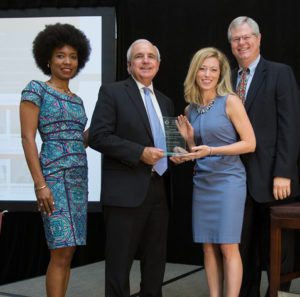 “We will be one of the great cities of the U.S. and the world – it’s up to us to build the foundation,” Carlos Gimenez, mayor of Miami-Dade, told a receptive audience at the launch of Invest: Miami 2017. The launch was attended by some 350 people, 70 percent of whom are C-suite level executives and featured a closing address from Mayor Gimenez as well as speeches from Capital Analytics CFO Albert Lindenberg, General Manager Abby Melone and Executive Director for Invest: Miami Erica Knowles. The event also included two-panel discussions from leading names in the South Florida economy.
Moderated by Kerri Barsh shareholder and co-chair of the National Environment Practice of Greenberg Traurig, the conference’s first panel focused on the infrastructure developments facing the county. The three-member panel consisted of Alice Bravo, director of the Miami-Dade Department of Transportation and Public Works, Tony Coley, president of the South Florida Region of BB&T and George Foyo and executive vice-president and chief administration officer of Baptist Health South Florida.
The second panel, moderated by Gerry Greenspoon, co-managing director of GreenspoonMarder, discussed the growing global profile of Miami-Dade. The panel was made up of Edgardo Defortuna, president & CEO of Fortune International Group, Emilio Gonzalez, director of Miami-Dade Aviation Department and Miami International Airport, David Schwartz, president of Florida International Banking Association and Penny Shaffer, market president for South Florida of FloridaBlue.
It was also announced at the launch that Capital Analytics is expanding its coverage to include publications on Broward, Florida and Atlanta, Georgia with more to follow later in the year.
For more information on Invest: Miami, our events or upcoming publications, please contact Albert Lindenberg at alinde@capitalaa.com.
Invest: Miami speaks to Nicholas Remillard, President & CEO, World Strategic Forum
What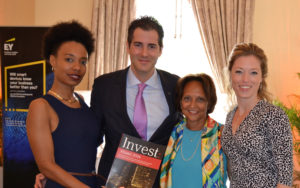 was the initial vision of the World Strategic Forum, and how has it developed over the years to what we see today?
A lot of the forums in Miami deal with solely Latin America, but we want to bring all the regions together. There’s still a strong component of the Americas, but there’s also a large component for Asia and Europe. Miami has a mixed population. There is an increasing amount of Europeans living here, as well as people from Africa and Asia. People come from all over the world to Miami to do business.
The airports and ports are increasing the amount of trade they do and expanding their shipping mandates beyond Latin America. A lot of the cargo shipping contracts are with China, for instance. Miami International Airport is running daily flights to the Europe and the Middle East.
What is the significance of holding the forum in a place such as Miami and how does the audience here differ from other locations like Paris or in Canada?
Miami, it’s a brand by itself. It has a lot of appeal, and people tend to come here with their spouses or family so that they can have a vacation as well as attend the forum. The Biltmore in Coral Gables is a perfect location for us. It’s a nice area, and on the practical side, we don’t lose our clients up to 2 o’clock on the beach.
There has been a lot of infrastructure development in Miami. So in the 2017 program, we had a bigger component on infrastructure. There’s also a large section on cybersecurity, which is another big issue in Miami. But it’s a work in progress. We’re developing new content for 2018. It will bring a different identity to the Miami conference that will make a difference from all the other events.
We don’t want to have an event in Miami and then have a similar one in Paris because they would be competing even though the same organization. However, the branding makes a big difference. Those attending the event in Miami have a unique experience.
How can we ensure that innovation and ideas are nurtured across borders?
There’s not enough communication between countries. Latin America is a perfect example in that it is a group of countries that don’t connect enough on a regular basis. They are a number of countries with a lot to share, but there isn’t enough dialogue. In our mind, unity is the key to everything. For example, even though the UK has voted to leave the European Union (EU), Europe has never been so strong. It’s amazing how the different EU states communicate and trade with each other. They exchange policies, and they have regulations that don’t just affect one country, but the entire union.
Given the recent political change in the U.S. What are the biggest challenges to cross-border corporation in the Americas?
President Donald Trump wants to redefine all the agreements between Canada, Mexico and the US. This is not exactly a bad thing, because they’re old agreements that need updating for all parties. Now it’s an opportunity to go back to the drawing board, but the biggest obstacle is the change in governments.
There next general election in Mexico is scheduled for 2018, so we’ll get a chance to see what the reaction is there. Mexico is a huge market for the US, and it’s bad to have economic or commercial conflict with your next door neighbor.
What is the biggest issue that has an impact on the global economy?
The threats to cyber security are worrying. The autopilot systems in airplanes and computer systems in cars make them vulnerable to hacking. There are a lot of smart technologies and innovation in industry at the moment. Yet there isn’t enough regulation to stop hackers. Smart technology is becoming a part of our everyday life, with the Internet of Things. It is even being used in the healthcare industry. Threats to cybersecurity can mean life-threatening situations. There needs to be industry-wide best practices to prevent serious incidents caused by hacking. This takes some kind of international consensus, which means cross-border cooperation.
Focus: Atlanta to highlight economic opportunities in the greater metro area
April 2017
FOR IMMEDIATE RELEASE
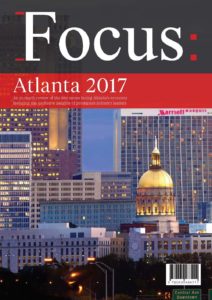 ATLANTA – Media company Capital Analytics has begun work on Focus: Atlanta, the first publication outside of its home state of Florida. Focus: Atlanta will be the first in an annual series of business reports featuring comments from key industry leaders across Atlanta’s economic spectrum, including heads of major companies and influential institutions.
Focus: Atlanta will highlight key stories of the Greater Atlanta Metro Area’s economy including the growth of technology companies, the entrance of Fortune 500 companies and infrastructure development in community improvement districts. It will include in-depth analysis on all the main sectors of Atlanta such as healthcare, bioscience, higher education, technology, finance, hospitality, logistics and film, music and broadcast media production.
Currently in its third year of publishing the highly praised Invest: Miami, Capital Analytics made the decision to build up its success and move into the Atlanta market because of the substantial opportunities being offered by the city. The publication is being produced in partnership with the development authority, Invest Atlanta, and with the full support of Kasim Reed, Mayor of Atlanta.
“Focus: Atlanta 2017 will inform global investors, entrepreneurs and businesspeople of the professional opportunities available in Atlanta, while also highlighting and promoting Atlanta as a great place to do business,” Mayor Reed, said about the publication.
“What we are hearing from companies is that they want to go to a place that is vibrant and exciting because the workforce and the attraction of the right workforce has taken a much higher priority. When they make decisions about where to go they are always thinking about their business and return on investment. For their workforce, they want to make sure that the place is of quality, where individuals can buy a home, go to good schools, and have the great amenities of a city. Atlanta really offers all of that.” Eloisa Klementich, president and CEO of Invest Atlanta told Capital Analytics.
The Capital Analytics team started work on Focus: Atlanta in March 2017, and have already spoken to many high-profile executives and leaders of key organizations in the area. It will be Atlanta’s first and most comprehensive report on its dynamic business climate.
“There is a real drive in Atlanta for innovation and development in this vibrant economic environment. We have found that is translating into enthusiasm for our upcoming publication Focus: Atlanta, which promises to be the most comprehensive business and investment guide published about this exciting city,” said Alex Mazonowicz, managing editor of Capital Analytics.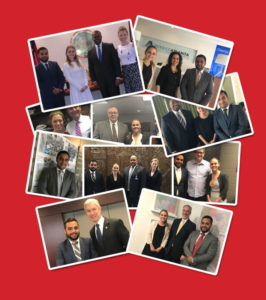
“I don’t believe there is any other city that has the same spirit of multi-faceted entrepreneurship and community. The entrepreneurialism in Atlanta involves business, community, seniors and kids alike. Atlanta’s uniqueness lies in its collection of different neighborhoods with different personalities.” Faye Di Massimo, general manager of Renew Atlanta, told Capital Analytics.
Capital Analytics produces in-depth business intelligence with a focus on providing comprehensive investment knowledge
on markets within the U.S. to the domestic and global business community in the annual economic report series. Over a six-month research period, it meets with more than 200 top political, commercial and industry leaders to deliver targeted information, in-depth analysis and strategic advice to the global business community on economic trends and investment opportunities.
Its first publication, Invest: Miami, has a global readership and includes among its readers’ top executives working in real estate, finance, technology, trade and logistics, health, hospitality and others. Books are distributed locally, nationally and globally to trade and investment boards, executives of Fortune 500 companies, institutional investors, consulates and embassies, hedge funds, leading chambers and associations, as well as high-level summits and conferences.
For more information contact Abby Melone amelone@capitalaa.com TEL: 305-523-9708
Invest: Miami speaks with Jose Parrilla, CEO & president of InvestQuest Partners
What were InvestQuest Partner’s most important successes and milestones for 2016?
We achieved many important milestones in 2016. From the business standpoint, we were able to open an important number of developments. Our primary business is buying, renovating and flipping assets. We wiped out over $10 million in liens held by the local municipalities and completed over 200 flips. Our success this year has allowed us to grow the company to 300 employees.
With the deceleration of real estate growth, what is the expected impact on real estate investment in 2017?
The current slowdown in the market is a temporary one. We strongly believe that Miami will continue on a path of long-term growth because of its history of continually attracting affluent investors. We are confident that in a two-year period we will be able to sell our new projects at similar or higher prices to the ones today. Even when you take into account that, for Latin American investors, it has become more expensive to invest in the U.S. due to the strengthening USD and that the proportion of foreign money in the market has decreased in the last few years, there have still been an increase in foreign investors with significant presence, such as those coming from Spain and Canada.
What has been the performance of the REO vs the short sale market?
The Real Estate Owned (REO) market has completely dried up. According to our data, which is very conservative, there are people in that market segment who are overpaying for properties. This might be related to some speculation in the market, with many players assuming that the market is slowly going to increase. However, our data suggests that we should be preparing for a slight downturn.
The opposite situation is happening in the short sale market. It is an important opportunity in Miami because it not only gives players a chance to help people by taking them out of a difficult situation offering “cash for keys,” but it also is the most lucrative investment in real estate because of its many revenue sources: commissions from the banks, commissions from the mortgage holder, and the property at a huge discount.
How can investors take advantage of the zoning in Miami?
The optimum zoning we are currently focused on is T6-80, which allows the developer to build up to 12 stories with a density of 150 units per acre. One of the main challenges for developers that are trying to build under Miami21 is compliance with the parking spaces that are required in order to be allowed to build the units. However, since one of our projects is near the border between Downtown and Brickell, we received the first permission to build our units without the required parking spaces. This shows that the city is evolving and adapting to a structure better suited for high population density.
To learn more about Invest Quest partners, visit their website at: http://investquestpartners.com/
A NEW FRONTIER: TRANSIT ORIENTED DEVELOPMENT IN SOUTH FLORIDA
When: THU MAY 11, 2017 7:30 AM
Where: VENUE TO BE ANNOUNCED BY APRIL 11TH
As South Florida’s popularity is on the rise so is population. With an influx of people, the need for transportation solutions continues to rise. More than ever before projects in South Florida that provide mobility options are being championed by the private development community and public sector alike.
Florida State MSDC 32nd Annual Business Expo
When: March 30-31, 2017
Where: Broward County Convention Center
This year’s Annual Business Expo is a powerful two-day matchmaking event. Attendees are able to meet with corporate and government exhibitors and attendees seeking certified minority business suppliers with capacity. The event draws business leaders and corporations from around the U.S. The event consists of a trade fair, workshops and a luncheon that provides a forum to network and showcase your company’s products and services. During these energizing and information packed days, you will meet educational institutions and government agencies; develop new contacts and resources; negotiate potential procurement contracts and learn valuable information for professional and business growth
Invest: Miami speaks with Congressman Mario Diaz-Balart of the 25th District of Florida
Hialeah’s average household income was $29,249 in 2015 and Miami-Fort Lauderdale-Port St. Lucie’ was $48,333. What policies should be pursued in order to increase growth in Hialeah and narrow the income gap?
The issue is economic growth. The agenda that the House of Representatives put together covers a number of key areas. Economic growth is the first thing. We ask ourselves what we can do at the federal level to incentivize economic growth. We will try and roll back this explosion of new, overreaching regulations. You will also see a lot of action taken administratively to take the boot off the throats of businesses.
Secondly is tax reform. We want to dramatically reduce taxes so that U.S. businesses can be more competitive. As we speak, there are different committees working on legislation. You are going to see a number of bills coming forward. The difference now is that we feel confident that it will get passed.
The first thing we can’t ignore is healthcare. Healthcare is 20 percent of the U.S. economy. Obamacare (the Affordable Care Act) has not only been disastrous, but it has also been a hindrance on the economy. We will reform healthcare by listening to the American people. There are a lot of ideas and we will consider them, but it doesn’t mean we will push all ideas through. We want to rescue people from the atrocity that is Obamacare.
Another key issue for economic growth that will create more than a million jobs is energy. We need to free up the energy resources. It will create jobs and roll back the out-of-control regulations from the Obama administration. The economic impact of all of these issues should really help create an atmosphere where the job creators will be able to flourish. We can’t be satisfied with economic growth of only 2 percent. Economic growth will be priorities one, two, and three of this administration.
What are the main benefits of the Water Infrastructure Improvements for the Nation (WIIN) Act of 2016? What can be done from Capitol Hill to continue protecting environmental conditions that are ever more important for South Florida’s economy?
The committees have worked very hard to create a plan that would help the economy. I’m a senior member of the appropriations committee and we have had substantial success putting a dam around Lake Okeechobee. That has an impact that is crucial for our environment but it is also crucial for our economy. Thankfully we have a lot of water in Florida, but we have a system where we actually dump water in the rainy season, which is very expensive.
We want to help the environment but we also want to help the economy and we have had some success with this. If we are going to continue the restorations, it will be subject to a strong and vibrant economy so that we can afford these projects. It is all interlinked. The Everglades are an environmental issue as well as an economic one. If we continue to accept 2-percent growth, we won’t be able to finance these projects. That is why we need to produce a vibrant economy. I’m optimistic that we will be able to get it done.
What can be expected from the new administration, in terms of trade policy, taking into account the president’s opposition to the North Atlantic Free Trade Agreement(NAFTA)?
President Trump has been clear that he doesn’t want to get into these multi-nation, massive trade deals. He is more focused on doing bilateral trade deals, which I think is something that we can do.
We are looking at NAFTA, and what it has done to Florida, as a mixed blessing. In some parts our economy has been devastated. We have a president who is not content with the status quo and wants to make sure that whatever deals we do are good for our economy. I think that we will be able to do trade deals on a bilateral basis. I’m optimistic that we will be able to move forward.
There are aspects of NAFTA that must be modernized and changed. A lot of people are fearful of looking at these trade deals. Reviewing deals that were made a long time ago is always healthy. We are already talking about it and looking at options to improve trade deals. People can sometimes be scared of change, but I am very optimistic.
Our new administration is unified, and believes that a free market economy is the best system. I am very optimistic and haven’t felt this way in a long time.
What are the main tasks of the Congressional Hispanic Conference and how does it engage the Hispanic community in the political system?
If you look at those impacted by the sluggish economy, it has largely been in the Latino and African American communities. I go back to economic growth. The job creators are small businesses, and a large proportion of those are Hispanic.
We are now heading into a period of growth. I constantly meet with small business owners and a lot of them have told me about the uncertainty that exists out there. Everyday there is a new regulation, but those days are over. Nobody is in a better position to take advantage of the enterprise system than the growing, hardworking, entrepreneurial Hispanic community of the U.S.
What is the best way to increase mutual economic benefits between the U.S. and Cuba without renouncing the demands for democracy?
Look at the results of Barack Obama’s policy. We heard from him and others that had pushed for better relations that this would increase agriculture sales and create economic growth. But the reality is that U.S. agricultural sales are down more than 50 percent. All of the narratives have been false.
It has also been catastrophic for the Cuban people. They haven’t seen repression at this level in 20 years. The number of political arrests, the beatings of opposition leaders and ladies in white has been rising. There’s a third component, it has been negative for the national security interests of the U.S. We are still dealing with a dictatorship. We’ve seen espionage activity and they have intensified their relationship with rogue regimes. All it has done is finance Castro’s monopolies. Until that system changes, you are looking at an insignificant market.
To learn more about the Congressman Diaz- Balart, visit his website at: http://mariodiazbalart.house.gov/