While in other parts of the U.S., Hispanics may be considered part of a niche or minority market, in Miami-Dade County, the Hispanic market is the general market. Broadly speaking, Hispanics in Miami are highly entrepreneurial and more affluent, better educated and more technologically engaged than they may be elsewhere in the U.S.
A large portion of the Hispanic population in Miami-Dade prefers to speak Spanish. El Nuevo Herald attracts these Spanish-preferring Hispanics while the Miami Herald attracts the English prefer-ring Hispanics. We also have Hispanic readers who buy both the English-language Miami Herald and its Spanish counterpart El Nuevo Herald because the coverage of the two papers is quite different.
El Nuevo Herald focuses more on news and issues that pertain to Latin America, especially Venezuela, Colombia and Cuba, while the Miami Herald emphasizes local or national news with the U.S., even as its coverage of Latin America is renowned nationally and internationally. We even have differ-ent editorial perspectives for the two newspapers that hold distinct views as they serve different audiences. A perfect example: during the Florida gubernatorial elections, the editorial staff at Miami Herald backed candidate Charlie Crist, while those at el Nuevo Herald supported incumbent Rick Scott.
It is important to note that our Hispanic readership is not monolithic. For instance, there is a big difference demographically between digital and print consumption among our Spanish readers, as is the case with our English readers. Both El Nuevo Herald and Miami Herald digital readers skew younger, more affluent and have a higher education level than readers of the print version. Essentially, we are addressing a much different constituent and audience in the digital space in Spanish and English than on the print side. As Hispanics in the U.S. continue to grow its size and influence on culture, economics and politics, it will become extremely important to understand the nuances of this mar-ket, and Miami-Dade County will be ahead of the curve nationally because of its proficiency and experience catering to this demographic.
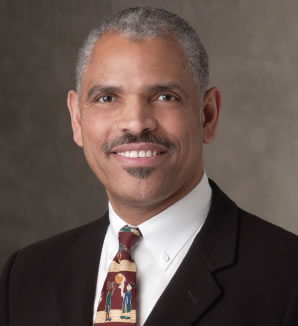
Carnival Corporation President and CEO Arnold Donald describes growth trends in the cruising industry and the advantages of being headquartered in Miami-Dade
What are the growth trends for Miami-Dade cruising?
In 2014, 22.1 million people worldwide took a cruise – representing a 4-percent growth over 2013 – and this figure is expected to reach 23 million in 2015. Carnival Corporation ships carried nearly half of all global cruising traffic in 2014, while the company saw 25 percent growth over the previous year. Miami-Dade drives much of the cruise activity in Florida – the cruising center of the U.S., with 14.1 million revenue passengers (7 million individuals). PortMiami’s $2 billion long-term masterplan to expand cruising facilities will only support that growth. The port broke a world record in fiscal year 2014, processing approximately 4.8 million multi-day cruise passengers. In fiscal year 2015, the port expects to welcome 34 total ships from 15 cruise brands, which is an increase from 2014. With an increasingly global cruise market, the port’s expansion will help to keep some of the biggest ships across the industry home ported in Miami.
Carnival Corporation’s global headquarters are in Mi-ami-Dade. What are the advantages that this confers?
The advantages are numerous, including great weather, leading port operations, a solid customer base and close proximity to the Caribbean – by far the largest cruise market in the world. South Florida, therefore, enjoys a big advantage in its proximity and ease of access to one of the most beautiful parts of the world, with amazing itineraries and destinations.
PortMiami is one of the finest cruise ports in the world, with seven cruise terminals, on-port parking for drive-in customers and drop-off in front of each port for those arriving by taxi, shuttle or limo. Terminals D and E, each of which are 105,000-square-foot ultra-modern, three-story structures, can accommodate travelers sailing on some of the Carnival Corporation’s biggest ships. As part of the recent agreement Carnival Cruise Line signed with PortMiami to keep ships there through 2028, Miami-Dade County agreed to spend up to $10 million upgrading Carnival’s port terminals.
How do you see the cruise industry evolving?
With such a small percentage of the world’s population who has cruised, there is a tremendous opportunity available with first-time cruisers. About 50 percent of our addressable market has never cruised and 75 percent of that will consider cruising in the next five years. Attracting new cruisers to our industry – especially more socially conscious travelers and millennials – is the next big opportunity for all of us. The chief competition for cruising is land-based vacations, so as we better communicate our overall value, we can convince more new cruisers to vacation with us and exceed their every expectation when they are onboard.
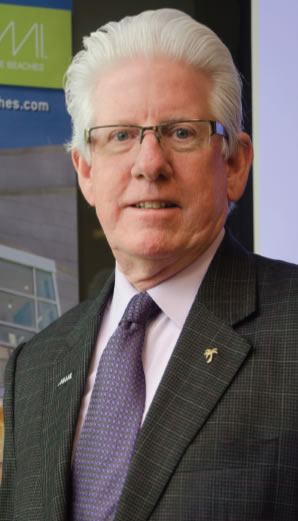
Greater Miami Convention & Visitors Bureau (GMCVB) President and CEO William D. Talbert III discusses the growth of luxury tourism in Miami
What are the key trends in Miami tourism today?
Today Miami is one of the top luxury destinations in the world, which we couldn’t have said in the past, when we were just a local vacation spot. Miami is now in the same league as other global cities – London, Paris, Sydney, and Tokyo. With all the high-end hotels and the infrastructure we’ve developed – the cultural facilities, the airlift – we can support the growth in this segment. The advantage of being a luxury destination is that it makes us recession-proof; the luxury consumer travels during tough times, they shop and dine, so even when there is an economic downturn this segment continues to flourish.
Tell us about the profile of the luxury traveler. From which countries are they arriving?
We saw a record 14.5 million visitors in 2014. In 2013, for the first time in our history, we had more international visitors than domestic. No other city in the U.S. can say that. Those international visitors represented 70 percent of the visitor spend, while 96 percent of our visitors come by air. A third of all of our customers come from Latin America, with Brazil as our number one international market. It took Brazil 25 years to be-come our first billion-dollar international market, and within four years it will likely double to $2 billion.
Miami’s international community is a great attraction for foreign visitors and enhances the cultural offering. For instance, during the 2014 World Cup, Miami was one of the few cities in the world where you could find restaurants, bars and clubs, representing each of the nations competing in the Cup. During the event, in Miami, you could find match-viewing parties being hosted by Argentine grills, German and British pubs, Italian and Colombian restaurants.
In which markets does the GBCVB conduct outreach to attract more visitors to Miami?
We have offices in 46 cities around the world, including India and China. In terms of opening new offices, we are looking to the Middle East, possibly Doha, Qatar. Doha allows us to better connect with Asia. Qatar Airways, which recently started direct flights to Miami, connects to 11 cities in India and seven in China. We are also presently working to establish relationships with other international carriers, including Emirates and Japan Airlines.
How do you balance the needs of the luxury segment with the affordable tourism market?
We focus on luxury, but the developments around town are quite diverse. You can never have too many luxury brands, but you are also seeing that different mid-range brands are coming in. The luxury segment drives the rest of the local tourism industry. People want to go where the rich and famous are, whether it’s movie stars, professional athletes, or captains of industry, so luxury becomes an important aspect of attracting all visitors to Miami.
How is the GMCVB working to promote the meetings, incentives, conferencing and exhibitions (MICE) segment?
We have staff dedicated to promoting the MICE market and that is also thanks to the growth in luxury tourism. New high-end hotels are be-ing constructed, such as SLS Lux and the EAST – both located in Brickell – and they will further add to the existing luxury hotel offerings in Miami.
We are also the exclusive sales agent for the Miami Beach Convention Center, which is currently undergoing renovation and expansion to foster more business tourism for the destination.
What are some of the greatest challenges facing Miami’s tourism sector today?
Streamlining procedures. Since 96 percent of our visitors come by air, we need to make it easier and more efficient for them to get to, from and through the airport. I’m referring here to the customs process. If a tourist is visiting from, say, Qatar, when he arrives to Miami, he has been on a plane for 15 hours. To spend that much time on a flight to come to a luxury destination, and have to then spend an additional two to three hours being processed at customs is not beneficial for the Miami brand, or brand USA for that matter.
We are continuously working with the U.S. government to address this matter, in particular how to improve staffing. Miami International Airport (MIA) has recently purchased automatic passport control (APC) equipment, which helps speed things up tremendously.
How would you comment on the quality of customer service within tourism and hospitality?
Tourism is the number one employer in this city, so jobs are very much at the center of what this industry is all about. To maintain our status as a top global destination, we constantly need to work on our customer service. Five years ago, the GMCVB implemented a number of initiatives intended to improve the quality of service in tourism-related industries.
We have a program, Miami Begins With Me, established in partnership with the Miami Dade College Center for Service Excellence, which provides service training to individuals and organizations. We partnered with MIA to establish the Miami Begins with Me Customer Service Training Institute at the airport to provide training for taxi drivers and airport employees.
Customer service remains a key challenge for us because there is such a large transient population in Miami. On the other hand, the fact that we have so many five-star hotels and establishments means that those businesses set a precedent for service quality that trickles down to the rest of the sector.
Beyond the nightclubs and beaches, what are some emerging tourist attractions within Miami?
What is great about Miami is the city is constantly evolving. It is no longer all about South Beach, although the beaches are still a significant draw for tourists. Today we have places like Midtown, the Design District and Wyn-wood, neighborhoods that were previously warehouses and industrial lots, being converted into edgy, artistic hubs. These have become new attractions, not just for tourists, but also for locals, affirming Miami’s niche as an ideal place to live, work and play.
We are witnessing the re-emergence of a great downtown, with new buildings under construction and a rich offering in terms of dining, shopping, arts and entertainment, as well as our diverse heritage neighborhoods. What we must realize is this is not a zero-sum game. As new developments crop up, Miami’s attraction as a destination builds and the pie just keeps expanding for all involved.