The year ahead: A glimpse at the economic outlook for South Florida

The year ahead: A glimpse at the economic outlook for South Florida

The resurgent South Florida economy has the recession and real estate collapse of the late 2000s in its rear-view mirror. Led by rapid growth in construction jobs, South Florida is on track to further rebuild its employment base in 2015, expert observers say.

“We should do well in 2015,” said J. Antonio Villamil, founder and principal of the Washington Economics Group in Coral Gables. “We have a good business climate, low interest rates and low oil prices, so we’re coming into the new calendar year with a bang. … Construction, retail and anything to do with the visitor industry should do well.”

Villamil said employment in South Florida is growing across multiple industries: “It’s more diverse than just a boom in one sector. … South Florida is finishing the year [2014] with all the cylinders running at a high rate.”

High-rise construction is hot again, raising questions about its sustainability.

“You have to worry about it getting too robust, too frothy. You know, Florida has a history of that, boom-bust, and I think that’s one thing we’ve got to watch,” said David “Dave” Seleski, president and chief executive officer of Fort Lauderdale-based Stonegate Bank.

“You see the prices that condos are selling for, you see multifamily apartments popping up everywhere. You have got to wonder: At what point is it going to get overbuilt?”

But if history is a good guide, concern about another real estate meltdown in South Florida may be premature.

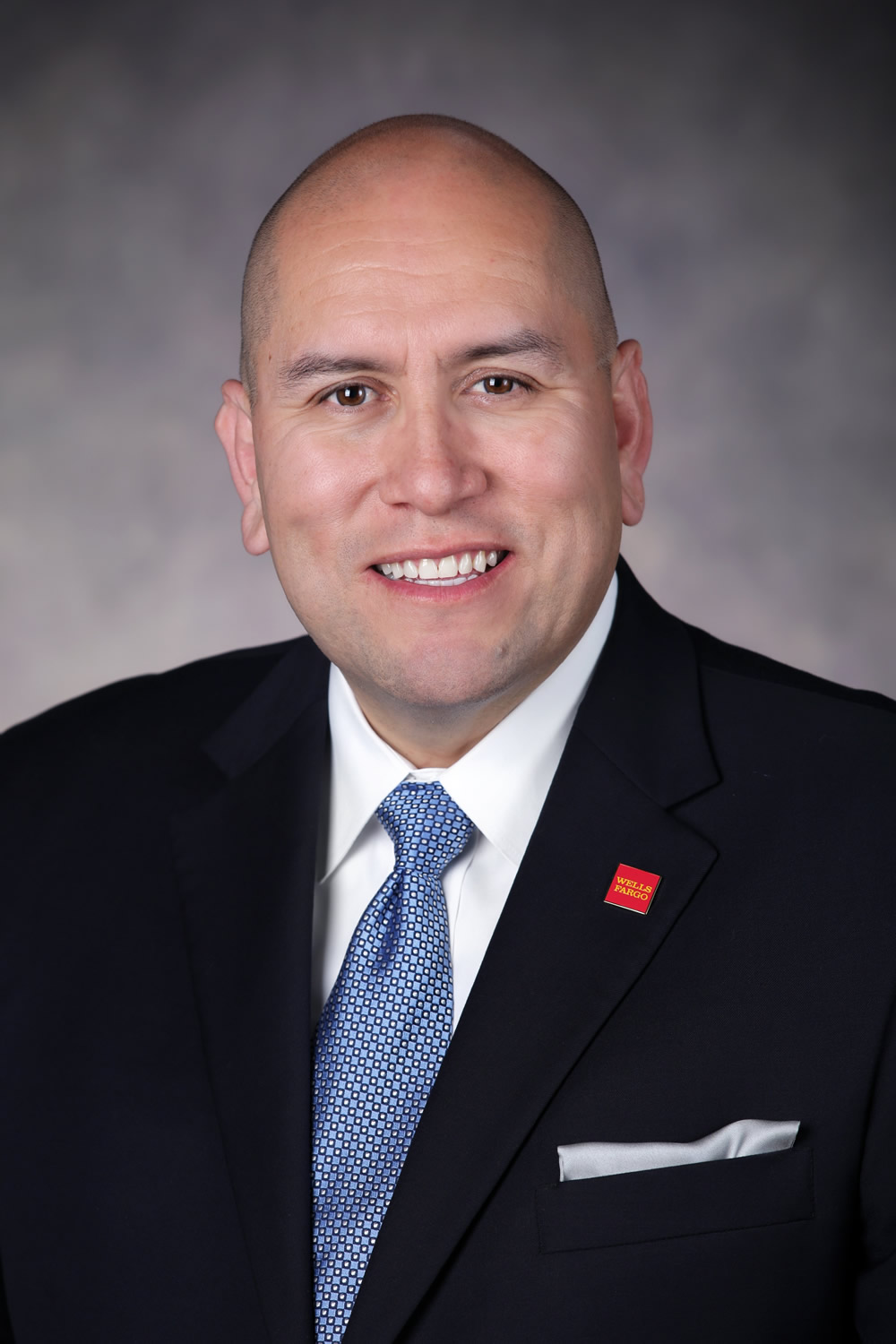
Mark Vitner, a senior economist of Wells Fargo Bank, said South Florida real estate slumps and economic recessions rarely coincide as they did in the late 2000s. He said it previously had happened in the early 1990s and the mid-1970s.

“The good news is that the real estate cycle tends to be twice as long as the business cycle, so real estate busts do not come along as often as recessions,” Vitner said.

“There’s no way to completely escape booms and busts in the real estate market,” but future busts may do less damage than past ones, he said.

“The Miami economy has broadened and deepened to a point where it … should be more durable than it has been in the past,” Vitner said.

Here are glimpses of the outlook in five key sectors of the South Florida economy:

CONSTRUCTION

Co-worker reunions have become a routine at Coastal Construction Group, which gradually has hired back some of the employees it laid off amid a breakdown in building activity from 2007 to 2010.

After downsizing its staff to survive the downturn, Miami-based Coastal resumed hiring — and rehiring — in 2011. “We have 54 people who we’ve talked to about coming back and 53 have rejoined us over the past three years,” said Tom C. Murphy, executive vice president of Coastal Construction Group.

Coastal now has more than 400 employees, up from its pre-slump head count of 350 in 2007, to handle its expanding business. The company expects revenue to grow from $850 million in 2014 to $900 million in 2015. Among its biggest current projects are the Porsche Design Tower, a luxury high-rise condominium building in Sunny Isles Beach, and SkyRise, a 1,000-foot observation tower in downtown Miami.

“We continue to see growth in the high rise residential,” Murphy said, and the market for residential estates with construction costs of $15 million to $50 million “is booming.”

The fortunes of other builders have improved, too. Over the past 10 years, average annual employment in South Florida’s construction sector bottomed at 85,100 in 2011 after peaking at 164,000 in 2006. The preliminary estimate of construction employment in November was 105,700 — still about 20 percent below the 125,000 level 10 years ago.

The temporarily muted construction industry is making big noises again: Employment is growing faster in construction than in any other sector of the economy. The number of construction jobs in Miami-Dade, Broward and Palm Beach counties grew by 8.9 percent from November 2013 to November 2014 while total employment in the area grew 3.4 percent. University of Central Florida economist Sean Snaith forecast that South Florida’s job base in construction will grow 11.6 percent in 2015.

Vitner said he expected even faster growth in construction employment, “given all the highly visible construction activity we see in South Florida. One possible explanation for that is, single-family home building has not come back at all. … The upper end of the condo market has been exceptionally strong, though it’s mostly an international phenomenon.”

High-rise residential development, dormant during the one-two punch of economic recession and the real estate collapse in the late 2000s, is surging again. But this segment of the construction industry may be less susceptible to a repeat of the last boom- and-bust cycle.

“I really think things are different this time,” said Gil Dezer, developer of the $500 million Porsche Design Tower, featuring elevators that will take residents and their cars to condo units with adjacent parking spaces.

South Florida condo purchases have been “sustained this time around,” Dezer said, crediting bigger deposits and down payments by buyers. “There’s a lot of cash from the buyers. There’s a lot less leverage than before when there were 80 percent and 90 percent mortgages.”

Read more here: http://www.miamiherald.com/news/business/biz-monday/article5414133.html#storylink=cpy
Atlanta M&A activity hot in health care, consumer goods, logistics, fintech

Atlanta M&A activity hot in health care, consumer goods, logistics, fintech

Middle-market and small businesses are changing their growth strategies as they move forward with plans to ramp up expansion over the next five years, according to SunTrust Banks Inc.

The Atlanta-based bank’s (NYSE: STI) Business Pulse Survey reported 36 percent of middle-market companies with annual revenue of $10 million to $150 million are exploring mergers and acquisitions, up from 25 percent 2015.

Middle-market and small businesses are changing their growth strategies as they move forward with plans to ramp up expansion over the next five years, according to SunTrust Banks Inc.

The Atlanta-based bank’s (NYSE: STI) Business Pulse Survey reported 36 percent of middle-market companies with annual revenue of $10 million to $150 million are exploring mergers and acquisitions, up from 25 percent 2015.

Jeffery Mortimer, director of Investment Strategy for BNY Mellon Wealth Management (NYSE: BK) and the former chief investment officer of Charles Schwab Investment Management Inc., said even though 2014 was a good year in the M&A market, on a national level 2015 was much more mixed.

However he noted, middle-market M&A activity nationally saw a 14 percent volume drop in 2015, while the Southeast had a small increase in deal volume.

Growing a tech hub

Growing a tech hub

Medina CapitaManaging Partner and eMerge Americas Conference creator Manuel D. Medina discusses Miami’s budding tech industry

What were the origins of eMerge Americas and the movement to build a tech hub in Miami?

The idea grew out of my frustrations in running a publicly traded tech company, Terremark, headquartered in Miami, but the city not getting any respect when it came to technology. Miami is the capital of everything having to do with Latin America, except technology. We determined that a major event, modeled after South by Southwest (SXSW) in Austin, would be the best way forward to promote the tech potential and opportunities that exist here – just look at what Art Basel did for arts and culture in Miami. This conference, however, is just one part of a greater strategy, which has the following four pillars: education; incubators and accelerators; funding mechanisms; and an employment base. These are the four essential components to a healthy tech ecosystem.

What are some of the tech trends in and related to Latin America? How do these impact Miami? 

There is greater mobile penetration in Latin America than in the U.S., which makes mobile technology a key growth area in the region, as are cyber security and cloud products, or “agile IT.” Miami is well positioned to benefit from the growth of Latin America’s tech industry, and the increasing international interest the region has generated. We are seeing an insatiable appetite for the transfer of technology into Latin America from abroad, as well as a desire to import technology developed in Latin America to the U.S. For legacy companies – the IBMs and HPs of the world – the explosion in the development of innovative technologies in Latin America presents new opportunities for their business.

What factors inform Miami’s potential to become a tech hub, specifically a tech hub for Latin America?

Miami houses the Network Access Point (NAP) of the Americas, through which 95 percent of the Internet traffic between Latin America, North America and Europe passes. There are 170-180 carriers amalgamated in this facility, and that is a feature that sets Miami apart from a connectivity standpoint. Miami also has a strong bilingual base, which is increasingly important for developing technology ties with Latin America and attracting Latin American capital.

With regard to funding, eMerge Americas is working to recruit more venture capitalists (VCs) to Miami. What has been the progress to date?

The success of eMerge Americas, which saw more media impressions in its first year than SXSW, has been eye-catching for Silicon Valley and East Coast VCs. We are also capitalizing on the presence of family offices here in Miami, many of whom were previously investing almost exclusively in real estate, but are now providing seed money for a number of tech ventures and talented entrepreneurs.


Invest: Miami speaks with Dr. M. Narendra Kini, President & CEO, Nicklaus Children’s Hospital

Invest: Miami speaks with Dr. M. Narendra Kini, President & CEO, Nicklaus Children’s Hospital

While technology is creating new opportunities in health, it is, in fact, health care that will catapult the growth of innovation and technology in Miami-Dade. A number of underlying factors support this – we have a large concentration of health care institutions and academic capability in this market, but just as importantly, we have a highly diverse population, whose unique health needs will spark innovations in personalized care.
Many small innovations are being incubated here – from next-generation consumer apps to innovations that drive efficiencies in the health care work environment, which include digital workflows, three-dimensional mapping of facilities and asset tracking, and innovative drug and device trials.
Today we are entering into an area of more personalized medicine. For instances, if two individuals were diagnosed with diabetes, even simple, long-held medicine would work differently on each of them. Dietary restrictions for patients with diabetes are highly variable and there is no true national standard that would apply to all racial groups.
Hispanics are the least represented in clinical trials today, even as they are the fastest-growing demographic in the U.S. There is an immense opportunity, therefore, to personalize present-day treatment diagnosis, including screening and prevention, for Hispanics. This is not something that is a focus in the Northeast or Silicon Valley – areas where technology is being developed. It is an enormous opportunity that would be of true value to the country, and it places Miami-Dade in the pole position.
The concept of wellness, prevention and rapid ac-cess to consumers, as well as the capability to personalize care will drive growth in the health sector in the medium term. The capability to geographically disperse services, whether or on a physical or virtual basis, will be an important theme. Better access is no longer just about physical access, but virtual access, digital access, and ethnic-appropriate access. Investing in platforms that change the awareness of the consumer and enable the consumer to interact with medical experts regardless of education status or income status is the next big step.

Invest: Miami speaks with Matt Haggman, Program Director-Miami, Knight Foundation

Invest: Miami speaks with Matt Haggman, Program Director-Miami, Knight Foundation

We want to make Miami a place where ideas are built. In the past, if somebody had a great idea, they would question whether Miami was the place to launch it. We are changing this paradigm by directing significant dollars towards creating a robust network of talent, funders, inspiration, supported by a rich calendar of events.

In 2012, the Knight Foundation launched an initiative around entrepreneurship to better connect and propel emerging communities of innovators in Miami. This idea-agnostic initiative sought high-impact and scalable ideas, with high growth potential. The goal was to improve talent retention and attraction, and add another layer to the identity of this rapidly changing city, as well as foster a community of problem-solvers.

Two exciting programs we have supported un-der this initiative are Endeavor and LaunchCode. We provided a $2-million grant to make Miami the first U.S. city to launch Endeavor and 2014 marked its first full year. Endeavor is a global non-profit that identifies promising entrepreneurs and pairs them with highly accomplished mentors with the intention of nurturing the young talent to stardom. Based on a pay-it-forward model, the idea is that once these entrepreneurs become successful, they will mentor and sponsor other budding innovators, thereby creating a virtuous cycle. In 2014, the Knight Foundation also invested $1.25 million to bring LaunchCode – a St. Louis-based program that offers students guided coursework in programming and coding – to Miami in 2014.

This community’s efforts to foster a tech hub is paying off. One notable example is Mako Surgical – a homegrown, Miami-based surgical robotics company, which had a $1.65 billion exit in late 2013. Maurice Ferre, Mako’s founder, is now on the board of Endeavor Miami, and contributing to creating that multiplier effect. Other notable examples include .co that sold for $109 million, Open English that raised $130m in Miami for their U.S. expansion and Magic Leap that sold for $500 million. As the local tech ecosystem continues to evolve, we will hear more stories like this coming out of Miami.

Community focus

Community focus

Wells Fargo South Florida Region President Joe Atkinson discusses the importance of community for large banks and small business alike

What are the notable growth trends in South Florida?
Small business is the engine that drives South Florida, and we are excited to be part of what’s happening here. Over 90 percent of businesses in this market are small and medium enterprises (SMEs). For Wells Fargo – a leading bank in South Florida in terms of deposits held, as well as the number-one small business association (SBA) lender of loans under $100,000 – the importance of SMEs to our bottom line cannot be overstated.
 The sectors exhibiting the most growth in this mar-ket are hospitality, construction, and those providing products and services to Latin America. In South Florida, Wells Fargo has been growing in small business banking – this is where we have been hiring the most personnel. We are also paying attention to a number of up-and-coming areas. For instance, we are seeing great growth potential in Doral and looking to expand our reach to that market.
 Miami-Dade is a highly dense market, and understanding that dynamic is key. If you drive by any one of our streets you will see small businesses clustered together in a fairly small space. That is a good indicator of both the professional and community growth that has led to a very large and stable deposit base in South Florida from a community and retail banking perspective.
 
How has post-recession lending reduced risk, while still providing adequate financing for homebuyers?
We have learned a lot from the Great Recession. We are better capitalized today and more cautious when it comes to mortgages, where in the past we may have been too aggressive. To do this we have had to remain close to our customers to make sure we understand their needs. Moreover, we have invested greatly in ensuring greater adherence to compliance procedures.
We also recognize that the density and growth of the market is a challenge to affordable housing and that we need to be proactive in helping provide housing options through community partnerships. For example, Wells Fargo has provided a significant investment to finance a 158-unit, low-income affordable housing project in Overtown.
 
What innovations have area banks implemented to adapt to an increasingly digital marketplace?
We hear that brick-and-mortar banking is dying, but the reality is that it is not going to go away. From this perspective, we are looking at developing technologically functional, eco-friendly neighborhood branches that integrate online, text and mobile banking technologies that can provide access to customers when they need their money, when they want to borrow and when they want advice, outside of normal business hours.

Local and global

Local and global

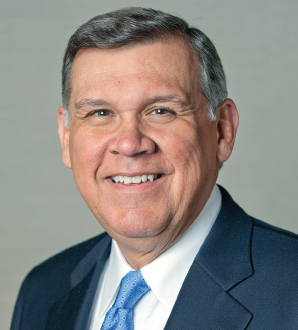
Mel Martinez

JPMorgan Chase & Co. Southeast U.S. and Latin America Chairman Mel Martinez discusses the blurring of the local and international in South Florida’s banking sector

As it pertains to the banking sector, what sets South Florida apart from other major U.S. markets?
South Florida is an economy dominated by small and medium enterprises, which means the middle market there is the predominant segment for us. South Florida also has a high concentration of high-net-worth individuals, which provides a strong base for our private banking business. In Miami, there is a strong international presence. While we predominantly service domestic clients, at times it is difficult to distinguish between what is local and what is international. Many aspects of local businesses are international, while many Miami-based businesses are actually branches of international businesses.
 
What developments in Latin America most influence Miami’s banking industry?
Mexico and Brazil have traditionally been the dominant economies in the region, but in the last two years growth in both countries have slowed and we saw a slight decrease in business from both. However, we are excited about the reforms the Mexican government has taken recently – in the areas of energy, education, tax reform – all of which we believe will make Mexico a very attractive place for business, investments and banking.
We anticipate an increase in trade activities coming to and from the region, which will undoubtedly have a profound impact on banking. This is due to the expansion of the Panama Canal, but also the free trade agreements we have entered into – NAFTA, CAFTA-DR, bilateral agreements with Chile and Panama – all of which enhance trade and commerce, and Miami is the largest participant and beneficiary from all of that commercial activity.
 
How do you see the executive action on Cuba impacting banking and commerce in Miami?
The biggest problem is how little we got in return.  Further, as it goes into implementation, the complexity of dealing with the Cuban government appears more clearly.  In the long run, I hope whatever our government does will improve the lives of the Cuban people, including the human rights conditions.
Ultimately, Cuba could be a great trade and commercial partner for South Florida and Miami. That will only happen when conditions for rule of law, including property and labor rights exist in Cuba.
 
What are the key components of JPMorgan Chase & Co.’s medium-term strategy for South Florida?
We will continue to consolidate the different lines of our business to better serve the client end to end; grow our market share and deepen our engagement in the community through our philanthropic and CSR initiatives.

Southern portal

Southern portal

Alex Wertheim

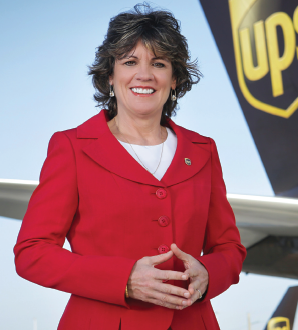
UPS Americas President Romaine Seguin discusses the strategic importance of South Florida as a critical trade and logistics pathway to Latin American markets

How is South Florida an advantageous logistics hub?
South Florida is the connection to Central America and South America, which are critical markets for us. The expanding middle classes in Latin America, along with healthy GDP growth and rising international influence, are creating attractive opportunities for commerce and investment. South Florida is a strategic location for American and European companies seeking to venture south to expand their business.
South Florida is an important northern entryway for Latin America as well. It’s amazing the quantity of perishables that come through here – just look at flowers. Over 90 percent of the flowers that enter the U.S. come through Miami. Flowers are the number one import, followed by other perishables, and after that fish. It is the starting point to feeding the U.S.
What are the areas of growth for the logistics sector?
One of our strategic imperatives is to capture more of the healthcare vertical in Mexico and throughout the Americas region. The medical equipment and biotechnology industries are experiencing tremendous growth and change, and these are the areas where our consumers are pushing us to go. The number of patents expiring each year continues to increase, which means that a generic, more affordable product is get-ting into the market.
It’s not an easy market to enter because of the complexities entailed, whether it’s related to temperature control, infrastructure or human capital. Moreover, the regulations and licensing requirements in each country are different; for instance, some countries require facilities to have a pharmacist on site.
 
What are some recent developments in trade policy?
The most recent free trade agreements (FTAs) the U.S. signed with entered into effect in late 2012, one with Panama and one with Colombia. Despite continuous political debate, there is a movement to take the barriers down and enhance free trade. What is important is to educate the private sector, especially companies here in South Florida who wish to expand their businesses to international markets, on what FTAs are and what they can mean for a company.
 
Within the logistics sector, what factors most impact cost of operations in South Florida?
The great expense in transportation in Latin America is the customs processes – they’re not automated and extremely tedious. Automation provides more security, more transparency, and more consistency. We are working with government officials to improve these procedures. For South Florida-based logistics companies, the bulk of whose business is trade with Latin America, these delays become quite problematic.

Striking a balance

Striking a balance

Alex Wertheim

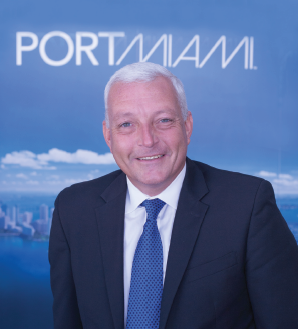
PortMiami Director Juan Kuryla discusses balancing the growth of the port’s two lucrative business lines – cruise and containerized cargo

How much of PortMiami’s business is comprised of the cruise versus containerized cargo segment?
Revenues are significant from both sides, with roughly 60 percent of the direct revenue to the port coming from cruise and 40 percent from cargo; however, cargo comprises nearly 80 percent of the economic impact to Miami-Dade County. The cruise industry is extremely significant, driving tourism and employment growth; it is the number one contributor to Miami-Dade’s hotel occupancy. In the fiscal year 2014, PortMiami had a record-breaking year, processing 4.77 million cruise passengers in our 45th consecutive year as the world’s largest cruise home port. We benefit from having Carnival Corporation, Royal Caribbean Cruise Lines, and Norwegian Cruise Lines – collectively comprising 75 percent of the global cruise market – headquartered in Miami-Dade County.
 
How will the completion of PortMiami’s Deep Dredge Project impact South Florida?
The Deep Dredge Project is a game-changer for this region. Upon the project’s completion in mid-2015, we will be the only U.S. port south of Virginia at a water depth of 50 feet. This will allow us to berth much larger vessels and reclaim some of the transshipment business we lost to ports in Panama and the Caribbean in the early 2000s.
This deeper draft capacity is of great interest to the large shipping companies, who save money, thus make money, by consolidating containers from multiple lines into a single larger vessel. The depth will enable us to capture new cargo business, particularly from Asia, on vessels that will now be able to transit the expanded Pan-ama Canal upon its completion in early 2016.
 
What is PortMiami’s strategy for the medium term?
Recapturing transshipment is a top priority. We lost much of this business after 9/11 because of high security-related costs and inspection protocols. Today we work closely with U.S. Customs and Border Protection to create a commercially friendly business environment at the port, while maintaining the highest standards of security. In conjunction with our partners at Florida East Coast Railway, we are targeting industries such as frozen poultry, beef, scrap metals, scrap paper, corn, soy, grains and other food products, to boost cargo volumes passing through the port.  Part of the port’s initiative is to export more loaded containers to complement the importation of products coming in from Asia and Europe. We also anticipate continued growth in trade to and from Latin America and the Caribbean as well as starting new trade routes with emerging markets such as India and Africa. On the cruise side, we are working on the construction of a new berth and terminal for completion within the next two to five years.  These improvements will expand our passenger capacity by approximately 20-25 percent.