Flying high

Flying high

Alex Wertheim

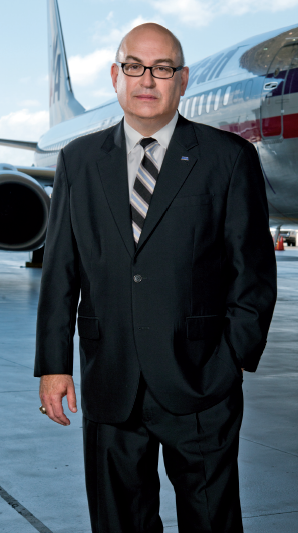
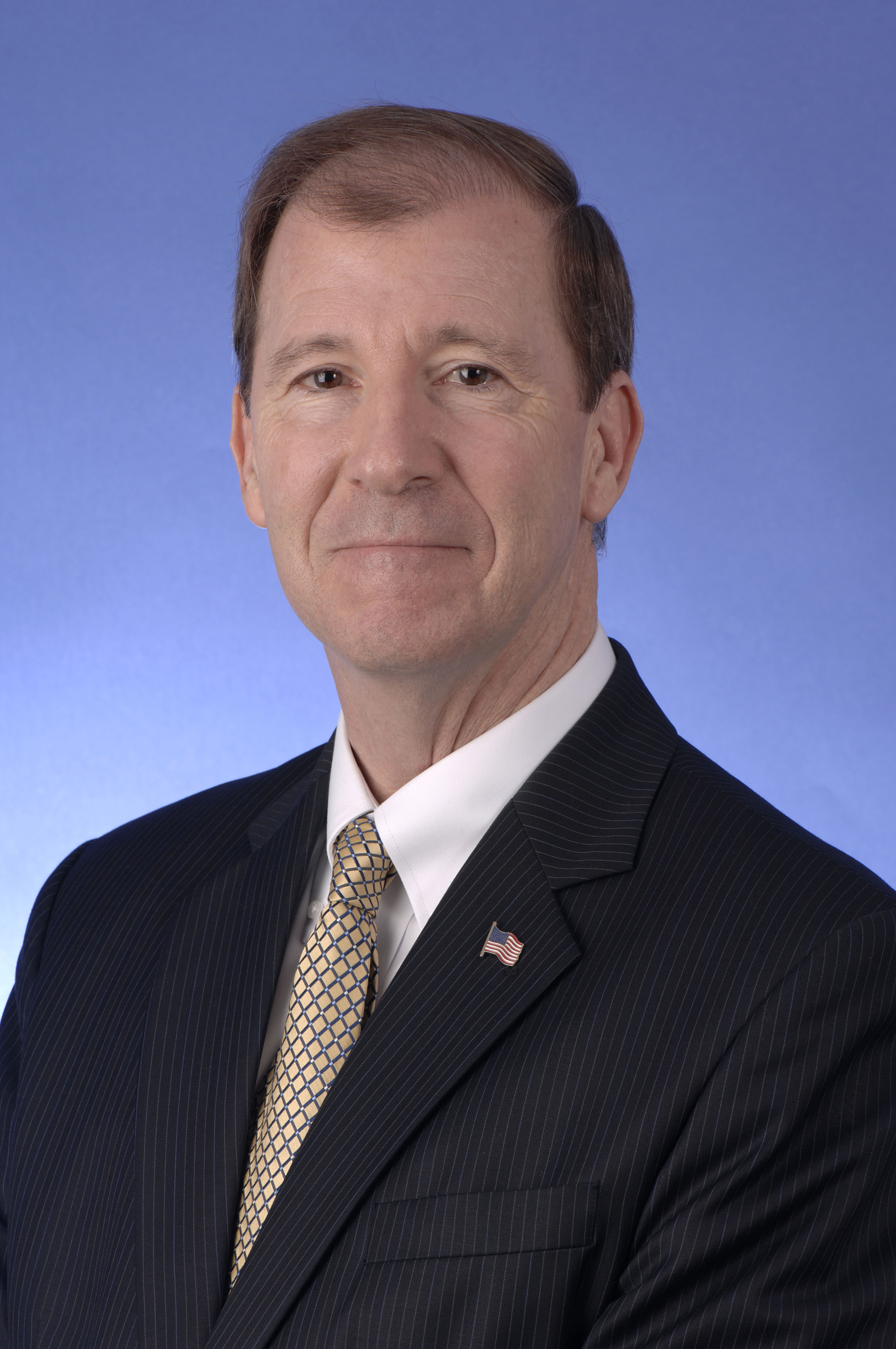
American Airlines Senior Vice President for Mexico, Latin America and the Caribbean Art Torno discusses the significance of Miami as a transport hub for the Americas

How has establishing a hub in Miami contributed to American Airlines’ business? 
In 2014, we celebrated the 25th anniversary of our Miami hub. This was momentous for both American Airlines and Miami-Dade; today, over 70 percent of departures from Miami International Airport (MIA) are American Airlines flights. We are privileged to be an airline company here, as Miami allows us to link North America to the rest of the hemisphere. This linkage has contributed greatly to American Airlines’ growth in MIA. In 1989, we had 19 flights a day and about 200 employees. That same year, we purchased assets from Eastern Airlines, which gave us access to routes in Latin America and the Caribbean. That investment was one of the smartest decisions American Airlines has made in its 80-year history. Today, we fly over 340 flights a day, to 126 different destinations, and employ 11,500 people.
 
What have been some recent developments in government relations in the hemisphere?
We constantly work with governments to develop the demand, to create the market, for air travel, particularly in the Caribbean, where we engage in cooperative advertising, work with hotels and travel agencies, to generate demand. Government relations are also the means by which we develop new routes. A great ex-ample is Brazil, where we’ve worked with, not just the federal government, but local governments as well, to increase access to locations that were previously isolated. As a result, American Airlines now controls 42 percent of traffic from Brazil to the U.S., from which Miami greatly benefits.
 
One challenge for Miami-Dade aviation pertains to lengthy customs processing. How can this be addressed?
Lengthy customs procedures could deter travelers from flying to MIA, thus hurting tourism and commerce. Addressing this matter – which is significant – has meant collaborating with the county and U.S. Customs and Border Patrol (CBP) to add additional officers; look at new technologies and staffing models and share different profiles of customers.
Most international airports in the U.S. have a lower split between foreign customers and domestic. At MIA, there is a larger percentage of foreign arrivals, so if MIA is being staffed with the same models used for other international hubs in the U.S., that model would be inadequate because a larger portion of our customers need a deeper level of scrutiny. In the last two years, we as an airport community entered into a pilot program with CBP where we would collectively fund overtime hours for their officers during peak travel times. So far, this initiative has been successful and is now being rolled out in two or three other airports in the country.

Soaring growth

Soaring growth

Miami International Airport Aviation Director Dr. Emilio T. Gonzalez, discusses infrastructural upgrades and plans to transform Miami-Dade into a global hub


Miami International Airport (MIA) has seen incredible growth in recent years. What is the strategy to keep pace?

Broadening capacity is a priority for this airport and at the core of both our medium and long-term strategies. We service 40 million passengers each year – roughly the population of Argentina – and the airport’s capacity is 50 million; at some point we will run out of space.

To anticipate these needs, we are undertaking a number of major infrastructural upgrades. One project is to build 40 hardstands to park planes. Until recently, air traffic operated on peaks and valleys. You see no arriving flights at 2 a.m., but at 6 a.m. there is a surge of planes. Some of our aircraft, particularly those originating from South America, fly here and go nowhere else. They arrive at, for example, 8 p.m. from Brazil and stay until 11 p.m. Because of American Airlines’ recent reorganization, we no longer have the peaks and valleys, but instead, have constant traffic. Consequently, we no longer have the luxury of avail-able empty gates for us to park idle planes.

We must also accommodate growth in air freight, another important driver in this economy. We operate five airfields. One of them, our training and transition airfield, located in the middle of the Everglades, has a 10,000-foot runway. We are looking to convert that into a cargo airport sometime in the distant future.


What is MIA doing to upgrade its terminals?

We are currently renovating Terminal E, which is part of the central concourse. Interestingly, we are only launching this project as a stopgap measure to buy us time before we can build new structures.

Eventually, Terminals G, F and E will become two terminals. We will start on one end of the airport and work our way in, knocking down terminals along the way. We are looking to break ground on this project in 2020 and it will take 10-15 years to complete the terminal.

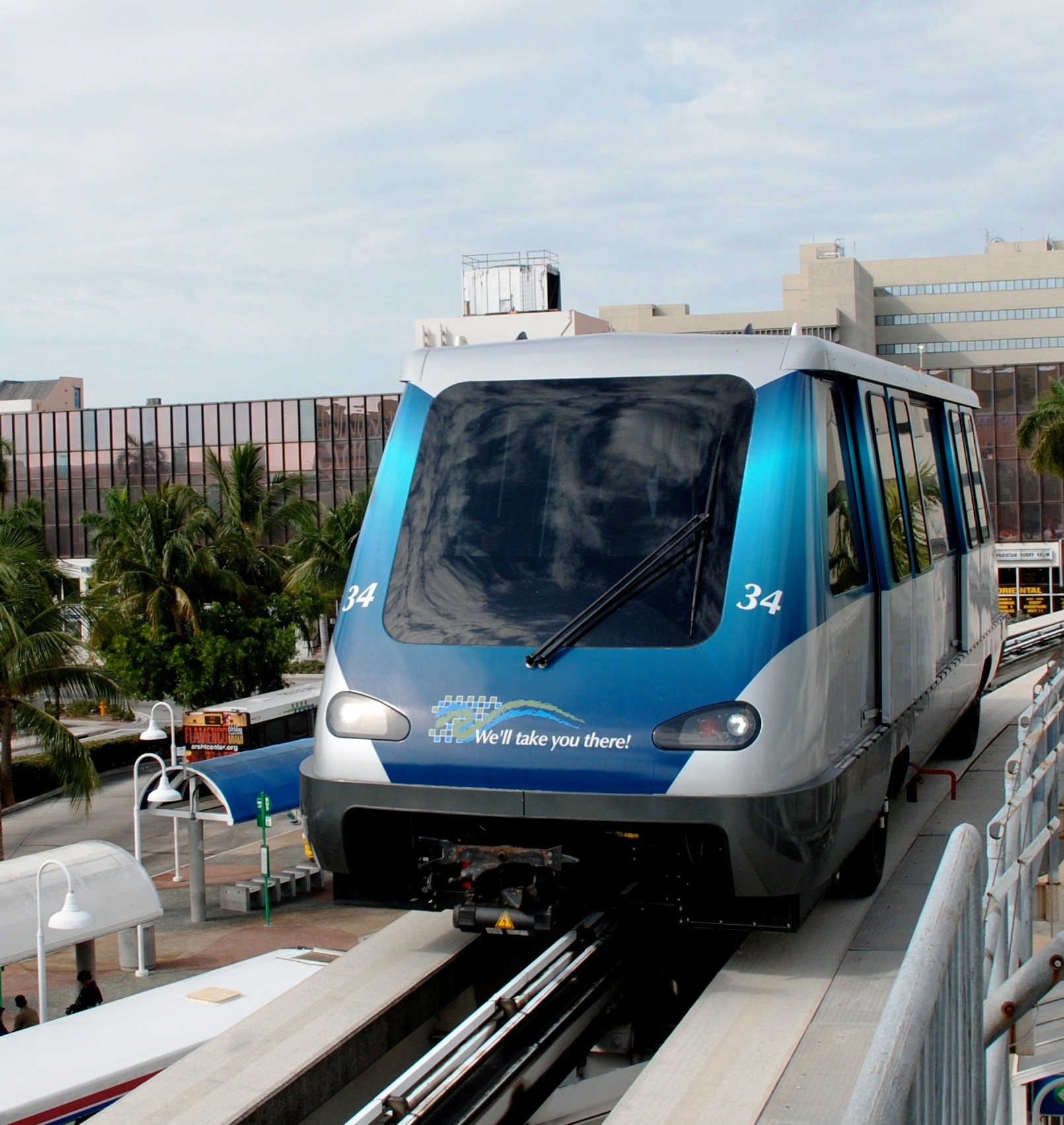
Because of its central position within the airport, and because of added traffic from the slew of new flights that American Airlines has announced they will be adding, Terminal E will be where the action is. Subsequently, we are investing in modernizing it. We recently purchased a $90-million train system to improve connectivity within the airport. This will be delivered in the next two years and has a lifespan of 10 years. In the distant future, we are looking to erect a high-end mall, which will have all of the major luxury retailers, in the central terminal.


What are MIA’s plans for broadening connectivity with respect to passenger business?

MIA is the second-largest international passenger airport in the U.S. However, in looking at our existing network there are a number of gaps. With respect to Europe, we need to improve connections with Eastern Europe and Scandinavia. We are looking to develop routes like Warsaw-Miami and Stockholm-Miami.

Asia is another big untapped market for us, in terms of passenger service. We already have cargo business with Asian companies, namely China Air, Korean Air, and Cathay Pacific, and those are usually one-stop flights that go from East Asia to Alaska, refuel and go back. I have spoken to representatives from different Asian carriers, and they all want to come here; it’s not a matter of “if,” but “when.” The “when” will happen when these airlines get new, larger, aircraft, for instance, the Dreamliners. When they start getting A-380s, then we will start to see an increase in Asian traffic coming here.

We are also working on getting flights to Africa. These don’t necessarily have to be through African carriers but could be U.S. airlines with Miami-Johannesburg, Miami-Lagos or Miami-Cairo routes.

MIA is the number one international freight airport in the U.S. What are the growth fundamentals of this segment?Being a gateway city, Miami sees cargo both coming in and going out. Planes arrive full of goods, and the only way they can generate a profit is if they also leave with full loads. From a cargo perspective, Atlanta can’t be Miami because they don’t have much to send back. At MIA, thanks to South Florida’s robust distribution and logistics operations, all of our cargo planes come in full of goods and they leave full as well. They arrive with perishables – flowers, fish, fruit – and depart with high-tech exports, such as electronics, medical technology, mining equipment and automobiles.


How does MIA contribute to job growth and economic diversification in South Florida?

The airport is one of the largest employers in Miami-Dade County, contributing nearly 158,000 direct jobs to the economy annually. It also generates a significant number of indirect jobs in related and peripheral industries, such as tourism, logistics, and manufacturing.

For instance, although it may not be very visible, there is a robust aerospace industry in South Florida. One of the largest airplane manufacturing companies, the Brazilian-based Embraer, has its U.S. headquarters in Ft. Lauderdale. B/E Aerospace, which is headquartered in Palm Beach and manufactures interior cabin products, has more employees than U.S. Southern Command (SOUTHCOM). The French-Italian aircraft manufacturer ATR recently relocated their North American headquarters to MIA from Virginia.


What are the most pressing challenges of operating an airport of this size and significance?

There are a lot of moving parts – some of it operational, some financial. The operational aspect is tied to the fact that we have over 90 airlines that fly out of here and they need a lot of care. We also have over 200 concession locations, which would make us one of the largest malls in the U.S., as well as related businesses such as a hotel, parking facilities, etc.

On the financial side, MIA is the largest economic engine – not just in Miami-Dade County, but in the U.S. Southeast, from Washington, D.C., down. To put this in perspective, we generate $1 billion more revenue than Hatsfield-Jackson Atlanta International Airport; we are bigger than Disney World and bigger than the Tennessee Valley Authority. When you generate that much wealth and economic business, everyone wants a piece of the action. Consequently, I get lobbied frequently and must ensure that proper procedures, when it comes to bids, are enforced at all times.


What is your strategic vision for MIA and your outlook on South Florida’s economy?

Currently, Miami-Dade is the Gateway to Latin America. Ultimately, our goal is to transform it to a global hub. We have the fundamentals to support this – strong tourism, real estate, logistics and banking industries – and MIA’s capital projects will only boost this progression.

 

New Frontiers

New Frontiers

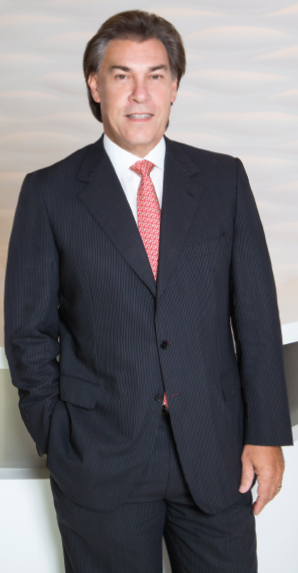
Fortune International Group President and CEO Edgardo Defortuna discusses Miami-Dade’s complex zoning landscape and the impact on luxury real estate development


One of your major projects at the moment is JADE Signature, located in Sunny Isles. What advantages does Sunny Isles offer to developers?

Oceanfront property has become increasingly scarce in South Florida. Sunny Isles is one of the few remaining areas where a developer can secure large parcels of land with a water view. Our Jade Signature project – designed by Herzog & de Meuron – the architects that created the Perez Art Museum Miami (PAMM) – sits on 2.5 acres of land right on the beach.

Sunny Isles is attractive to developers because it allows the space for creativity – literally. There are no other locations on the beach that permit you to build structures up to 650 feet tall. That sparks innovative thinking in design and presents an exciting opportunity for developers like Fortune International Group to have a significant impact on the skyline.


How would you describe the landscape for zoning and other regulations affecting real estate development?

The regulatory landscape in the region is complex, and in Miami, it is as diverse as the city itself. Twenty years ago when Fortune began developing here, there were zoning and land use guidelines in Miami and in Dade County. Over time, many smaller towns and municipalities started to form independent governments, each with its own set of zoning regulations.

For example, today the zoning rules in North Miami and Key Biscayne are different, just as they are in the Broward County cities of Hollywood and Hallandale. From a developer’s point of view – that kind of change significantly impacts your business strategy. You must be extremely knowledgeable of the area and the regulatory nuances from project to project.

In the City of Miami, where development now is fairly limited, you have one set of zoning guidelines, Miami 21, which is quite favorable to commercial developers because it is primarily a business district. However, it is challenging to find waterfront sites within the city. While in Miami Beach, the challenges arise due to the various historic designations and related restrictions. In many areas, existing structures cannot be demolished to make room for new development. You can refurbish a historic building, but you must maintain the existing structure.


How does this fragmentation impact development? Do you see the situation changing in the near future?

It’s important to understand that the main revenue stream for all of the cities and counties in South Florida today is real estate tax. The municipalities thought that taxes were unfairly distributed when they were concentrated into one place, so I don’t see the situation changing. There might be some agreements made between one area and another, but it would be difficult to create a unified government; if anything, more areas are going to break apart and try to generate their own pockets of zoning.

Not having a strong unified effort for infrastructure, transportation and other services needed for a major city like Miami to function presents a challenge. Hopefully the public sector can integrate a little bit more, and really create comprehensive plans for the major needs of the city as a whole so as to support the growth we are experiencing.


What are some of the comparative advantages Miami offers when it comes to real estate?

Prices here are competitive when compared to other major cities in the U.S. and the world. Prices in New York are three or four times what it is here, and the same goes for San Francisco and Los Angeles. From a U.S. investment proposition, Miami is still very attractive to outside investors, which is why we are seeing the high volume of individual buyers, as well as funds and groups, willing to invest equity in the different projects being developed here.

Miami has much to offer culturally as well. The museums have done marvels to the city. Art Basel has significantly changed the cultural aspect of Miami, as have the Adrienne Arsht Performing Arts Center and the New World Symphony. If you like sporting events, you have The HEAT and the Dolphins, and hopefully David Beckham can bring soccer here.

All of these things impact the overall perception of the city. Previously, higher-end Latin Americans would say, “Yes, I love Miami. I spend a few days there, but my apartment is in New York.” Now, they might still have their apartment in New York, but they are spending a significant amount of time in Miami, and they all want an apartment here.


What risks are present within the real estate market?

People talk about bubbles all the time, but it’s really a question of managing supply and demand, and the timing of when you launch the supply. As a developer, it’s important to be disciplined and mindful of what the market is like before moving forward.

Today, most prudent developments are supported by 50 percent deposits from the buyer; you don’t start construction until you have a significant number of presales. With all the money the buyers have put into the construction, it’s very difficult for them not to close at the end, which is what happened in the past when they were speculating with 10 percent or 20 percent.

As long as we keep this structure in place, we should avoid some major risks. But now that financing is becoming more available, this could create a temptation for developers to require reduced deposits of, say, 30 percent and get the remaining 70 percent from the bank. That’s when problems could potentially start.


How has the consumer profile for luxury properties changed in the current building cycle? 

In the past, the market was dominated by Latin Americans responding to the political and economic situations in their home countries. Today Europe is becoming a very strong player – England especially – because the exchange rate makes Miami prices attractive. Investment from the Asian market, which was previously almost nonexistent, is starting to pick up as well.

Brazil and Argentina continue to be key markets for us – as they have been for a long period of time – for different reasons. Brazil has been doing well for the past five years, while Argentina’s economy has been going the other way. People are attracted to Miami when their countries are either doing very well or very poorly. If they’re doing very well, then they’re diversifying and buying in Miami and if they’re doing poorly, then they’re taking the money out of their countries and buying in Miami. We’re also looking at Mexico because of the growth and wealth creation happening there.

I’m particularly excited about our new relationships in London because the market is so vibrant there. People are making significant amounts of money there and they all love the natural conditions of Miami. They just need to get more exposure to this type of product because they’re used to buying in Orlando or in the islands and they are just now really discovering Miami.


Invest: Miami speaks with Armando Codina, Chairman, Codina Partners

Invest: Miami speaks with Armando Codina, Chairman, Codina Partners

Alex Wertheim
Doral’s growth story is linked to the growth story of Miami-Dade. The highest employment concentration in Miami-Dade County is Airport West, the area where Doral lies. Carnival Corporation is headquartered in Doral, along with major media companies like Miami Herald and Univision, as well as the Federal Reserve, U.S. Southern Command, and a thriving logistics sector. Employment opportunities have brought an influx of residents into the city – as have greater affordability and a strategic location – both foreign and domestic. In recent years, Venezuelans, fleeing political and economic crises in their country, have come to Miami-Dade and settled in Doral. For them, and for many Latin Americans, the proximity to the airport is a great attraction and a reason to buy homes and start businesses here.
If Doral was to become a great city, it needed a heart, and a downtown is the heart of any city. This is why we’re building Downtown Doral. Doral is the first city in Dade County that offered the opportunity to build a core – a downtown – from the ground up, and for a developer, this is truly special. We are creating a master-planned community that includes high-end shopping, dining and living options, as well as the supporting infrastructure – bike paths, sidewalks, public green spaces etc. With so many businesses that also call Doral home, we have taken special care in developing the new office space that will be included in the project, creating a modern campus feel.
This project also features a great example of a public-private partnership (PPP) – Downtown Doral’s collaboration with Miami-Dade County Public Schools to build a charter school. In this arrangement, developers provide the land and finance the construction, while the school board administers the school. Private sector execution allows for greater efficiency, while public sector management allows all parties to benefit from the expertise and accomplishments of the county’s award-winning school board. The new school will be an added draw for prospective residents seeking an affordable community with strong infrastructure, while it allows the county to earn additional revenue from operating the school.

Growing rapidly and steadily

Growing rapidly and steadily

Alex Wertheim

Invest: Miami speaks with Alex Wertheim, President, SPACiO Design Build

What demand is currently driving design services?

Over the years, we have seen significant growth in residential demand. Developers can execute large-scale projects, as the cost per square foot in South Florida is still much less expensive to buyers than in many other major cities within the U.S. This region offers a competitive cost of living as well as an advantageous tax structure. Growth in the residential segment has caused growth in the commercial segment as well, to the point that we are seeing more activity in the commercial real estate sector than in the residential market when it comes to construction in Miami.

What are the main profile trends of the client base for contractor and design services in Miami?

There was an important change in the profile of the clients after the crisis of 2009. We have started to see more Latin American clients reaching out to us to build-out their recently purchased high-end condos since then. This is expected to continue, as Miami is a melting pot for Latin Americans. However, in the past few years, we have begun to see an increase in the number of clients from the U.S. retaining our services, which makes me think the domestic market is coming back. Miami is attracting many retirees from the Northeast that are looking to take advantage of the lower cost of living. We have also seen an increase from international clients from other regions of the world such as Asia and Europe.

Miami is growing rapidly and continuously. In 2017, we will continue to see such growth driven by international and American buyers. We are also going to keep seeing continuous repositioning of real estate properties. As we run out of developable land, developers are rapidly buying up existing Class B and Class C properties in up-and-coming neighborhoods to turn them into Class A properties, from hotels to retail space. As a full-service general contractor, we are seeing – and we will continue to see in 2017 – an increase in retail space construction. We are currently involved in building out Breitling and very soon Swarovski in Brickell City Centre. The demand is a direct result of Miami’s evolution as a high-end shopping and dining destination.

Which sectors are expected to be the growth engines for design and contracting services the upcoming years?

Even though both residential and commercial sectors are growing simultaneously, commercial will start to see an important increase in the hospitality sector, especially restaurants. Miami has developed its culinary offerings extensively over the past couple years.  These new restaurants have made significant investments in design services because they understand the importance of aesthetics for their businesses. The Nobu restaurant in Miami Beach is a perfect example. Chef Nobu Matsuhisa sought the “best of the best” to build out the space.  For example, the stone flooring was imported from Italy, the oak flooring from Denmark and many other finishes are derived from around the world. Nobu truly adds an extra level of sophistication to the iconic Eden Roc. We were very fortunate to work under Chef Matsuhisa’s leadership building out that amazing space. Hotels – both new and existing – have also made important investments in design with an important emphasis on quality and that will continue to happen in Miami

What would you identify as the current major challenges in construction?

From a business perspective, one of the main challenges for the developers is making sure they hire the right architect and designer. Doing all the correct due diligence and pre-construction work is extremely important. Not many people realize the amount of work that goes into pre-construction and its importance. When done poorly, this ends up being a problem for developers as they execute their projects. The way to tackle this issue is by making sure their pre-construction work is handled by highly qualified professionals.  Another challenge is finding qualified construction workers, especially when you are working on high-end projects. We make sure we take good care of our people because we see value in loyalty and having an A team that we can move from job to job.

For more information on Spacio Design Build, visit: http://spaciodb.com

Modernizing transport network

Modernizing transport network

Invest: Miami speaks with Charles Scurr, Executive Director, Transportation Trust

What have been the main achievements of the People’s Transportation Plan in 2016?

The Transportation Trust has an important role in developing the funding plan for the Tri-Rail Downtown Miami Link project. The Downtown Miami Link is a transformative public transit project that will provide riders in Miami-Dade County with a direct commuter rail connection with 26 direct Tri-Rail trains per weekday between Downtown Miami Broward and Palm Beach County. In downtown, Miami commuters can walk to their place of employment or conveniently transfer to the Metromover, Metrorail, the Miami Trolley or Metrobus to get to their final destination. This new service would significantly improve Miami-Dade’s mass-transit system. The Trust is proud to participate in this historic effort and we urge all of the funding partners to approve and find their respective portions of the project. Implementing this project presents a unique public-private partnership opportunity to use innovative funding techniques to fund this transformations project.

What other complementary sources of financing are there to enhance the public transportation network besides the ½ penny sales tax of Miami-Dade approved in 2002?

The People’s Transportation Plan (PTP 1.0) is the coordinated programs of transit and roadway projects that was approved by voters in 2002 and funded by the half-percent surtax.  Accomplishments of the PTP include: funding the Metrorail Orange line extension to the Airport, purchase of new Metrorail and Metromover vehicles, free rides for seniors and eligible military veterans with the Golden Passport/Patriot Passport Program, new buses added to the Metrobus fleet and the countywide traffic signalization system, which has been upgraded with an Advanced Traffic Management System (ATMS).

Recognizing this, the Trust initiated a series of special studies, projects and initiatives to advance major transit investments in Miami-Dade County.  A number of these initiatives were collaborative efforts with Miami-Dade County, the Greater Miami Chamber of Commerce, the Downtown Development Authority and the Miami-Dade League of Cities.  

The outcome of this partnership has been the development of the PTP 2.0, which offers a new approach for using innovative funding, technology and delivery mechanism to invest Surtax dollars tailored to each corridor. PTP 2.0 emphasizes innovative financing options and multiple transit technology alternatives in each corridor. In addition to PTP and FDOT funds, potential funding sources could include: tax incremental financing, contributions from municipalities, public-private partnerships, special assessment districts, USDOT TIGER grants, developer investments, naming rights and joint development. PTP 2.0 and it presents a vision and strategic plan for financing Miami-Dade County’s rapid transit projects.

What are the most important transport infrastructure projects planned for the upcoming years?

The Strategic Miami Area Rapid Transit Plan (SMART) was developed by Miami-Dade County and the Miami-Dade Metropolitan Planning Organization as a shared vision and strategic plan to improve mobility within Miami-Dade County. The design of the SMART plan connects areas like the North, Miami Beach, East-West, South Miami-Dade, Northeast and Kendall with six rapid transit corridors and a supportive bus network. All of the corridors are connected to the Metrorail system, the backbone of the transportation system in Miami-Dade County.

The six SMART line corridors were part of the original rail expansion plan approved by voters in 2002 and would be advanced to the Project Development & Environment stage to evaluate the implementation of a cost-effective, rapid transit system and infrastructure as part of an overall interconnected premium transit network.

The Trust believes that PTP 2.0 has the potential to be a major funding partner for the SMART Plan and implementation of these projects is a critical step forward in developing and implementing the community’s vision for a comprehensive and coordinated mass transit system.

What are the main environmental benefits of the new hybrid Metrobus fleet?  

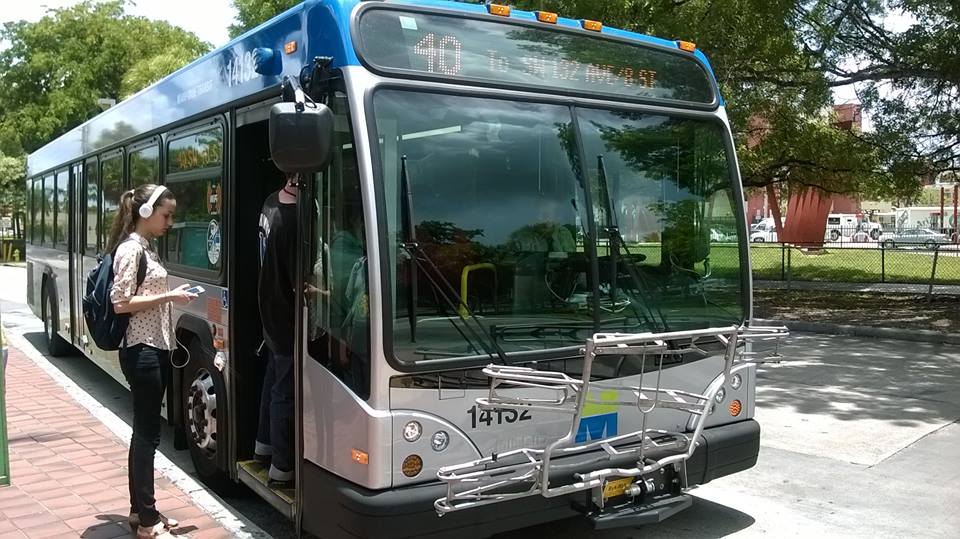
Hybrid technology is becoming an increasingly vibrant segment in the public transportation arena to help lower greenhouse gas emissions and address climate change. The Miami-Dade Department of Transportation and Public Works has moved towards introducing new, state-of-the-art technologies that can help its bus fleet reduce emissions, as well as fuel consumption.

To learn more about the Citizens’ Independent Transportation Trust, visit their website: http://www.miamidade.gov/citt/


Making a mark

Making a mark

Terra President David Martin speaks about thriving within the constraints of South Florida’s construction sector


Terra’s current projects are focused in Coconut Grove, Miami Beach and Doral. What do those neighborhoods and municipalities offer to developers? 

We specialize in neighborhoods with high barriers to entry. Coconut Grove and Miami Beach, where zoning requirements limit construction, allow us to create high-design buildings that leave a mark. In areas where you can build, say, 30 towers, it is harder to set yourself apart.

Doral, one of Terra’s suburban components, is an important transit hub that is experiencing tremendous job growth. We are developing master plan communities there. The idea is to bring design to the suburbs.


Which is growing faster in South Florida, demand for suburban development or urban development?

Both are growing, but for different reasons. People moving to Doral, for instance, are attracted to the safety of the area, the retail offerings – the abundance of South American restaurants and stores, the relative low cost of starting a business, and the good schools.

If more land were available, everyone would build single-family homes because those projects have better margins and are easier to execute. But as South Florida is running out of land, developers are, in effect, forced into urban-type projects. Moreover, the maintenance and operating expenses of high-rise construction buildings are much higher than for a single-family community that just has a clubhouse.


Another aspect of your company is that it has its own construction division. What are some recent trends you have observed in the construction industry? 

As the market has become more competitive, profitability for the subcontractor base is growing substantially, which is good and healthy, but requires developers to be highly attuned to costs, to design projects knowing that last year’s costs will not be the same as next year’s. Part of the process means we are constantly analyzing the backlog for our subcontractors. More and more of the subcontractors are taking on less work than in the past. They’re limiting the number of jobs they do in order to protect themselves and their clients, and preserve quality control, which is of the utmost importance.


How will labor supply constraints be addressed?

One aspect is salaries need to go up. Another is that an area undergoing a construction boom will see an in-migration of the labor force, although it may take a while for word to spread about the opportunities.

Miami has a unique advantage in that many subcontractors and laborers prefer to live here, because of the climate and lifestyle, which is invaluable for recruitment. There is also a backlog of work here, which is attractive for laborers, many of whom are looking for long-term opportunities. This recovery in Miami is more sustainable on a long-term basis than others in the past because most of the retail, industrial and residential owners have a lot of liquidity so the market is quite strong.


Do you have concerns about the availability, now or in the near future, of certain building materials, for instance steel, glass or concrete?

Our projects don’t require much steel, so we can’t comment on that market. For glazing, formwork and concrete, although we have great suppliers, there is volatility in those industries. Petroleum prices just dropped, so petroleum-based products are going down.

It’s important to establish close relationships with suppliers. We have a strong contract with one of the largest glass manufacturers, who are based in Colombia, but have their U.S. headquarters in Miami, and a great relationship with one of the largest mining operators in the country, who supplies us with lime rock. Miami has the third-best quality of lime rock in the country and it’s all mined west of Doral.

The period from 2008 to 2013 was tough for contractors and suppliers. Many did not have the profit margins to keep their doors open. Now is their time to make up for those years, so while there are economic forces driving commodities down, because we as an industry are so busy, margins are increasing, which balances the situation out.

What we can’t do is increase the prices of our units because of construction costs. That is not an option be-cause prices are a direct reflection of demand. What you will see is that at some point, in certain neighborhoods, projects won’t get built because the market pricing is not high enough to cover certain construction costs.


How do developers address the unique challenges presented by South Florida’s climate and geography?

Florida is a leader in this country when it comes to building codes because of our experience with Hurricane An-drew. I think building to code is sufficient to withstand the impact of powerful winds.

The other thing we’re working on is sea level rise. We’re doing hydrostatic slabs, floodproofing, and being mindful of where we’re locating our utilities, vaults and lift stations, in projects where we have them, so as to address this issue. The real dilemma is that our existing infrastructure is where it is. Just because we build a project that addresses three feet of sea level rise, doesn’t mean that when the residents go into the streets that they are not confronting it.

Sea level rise is a complex matter and it’s a question of time. There are scientists who feel the catastrophic problems will come sooner and others who say it will come much later. It’s important to be ahead of the game and focused on solutions.


What lessons have developers learned from previous cycles?

One thing is that we can’t promote people to supervisor positions that don’t have the proper experience. Supervision is important and we make it our goal to be as close as possible to the construction process. Getting prices right is critical, and something we are learning and assessing daily. While we always want to negotiate the best prices, we also want the best subcontractors, which can mean paying a premium instead of going to the lowest bidders as doing so may impact scheduling if they don’t perform, or if they underbid the job.

During the crisis, many companies learned how to do more with less people. Much of the excesses were stripped and a lot of properties went from weak hands to strong hands, and that provides stability. There are no forced sales – there is no forced liquidity – which are all good signs for a healthy real estate economy. We just have to balance supply and demand and I think that’s our struggle as an industry because when you have strong international demand, it’s very difficult to predict what that depth is. That said, I am constantly amazed by the pride and commitment to Miami I see from those living and investing here, regardless of what country they come from.


Addictive buildings

Addictive buildings

Florida East Coast Realty (FECR) Chairman and President Tibor Hollo shares his vision on how to create buildings within an urban center

In 2014 FECR’s Panorama Tower was announced as the City of Miami’s first EB-5 designated development. Could you speak on the significance of that?
Foreign direct investment has been a key element of the Miami story. Fidel Castro played a major role in the first phase of this movement, which was the influx of Cubans to Miami. This was followed by the mass migration of South Americans from various countries, who saw this city as the capital of Latin America. To-day, international companies wanting to access Latin American markets are coming here as well.
The US Citizenship and Immigration Services’ (CIS) EB-5 program promotes job creation and capital investment through a special visa for qualified foreign investors. The City of Miami needed an iconic project, and Panorama Tower – a mixed-use project with 820 rental units, a 208-suite hotel and dining and retail options – was the perfect candidate.
 
What informs the decision to develop rental property versus condominiums?
We wanted to leave a legacy building for the city, which is why we chose to develop apartments. There is too much fragmentation in a condominium because there are multiple owners. Moreover, condominium developers in this market are in large part dependent on foreign capital inflows, as international buyers have driven growth in that segment. They are more negatively impacted by economic crises because they have to make sure they can sell all the units. It is much easier to get people to rent out an apartment during an economic downturn than it is to get them to commit hundreds of thousands of dollars towards buying a condominium. As a result, empty condo buildings fail to garner the necessary funds to maintain the facility and provide basic services, such as garbage disposal. This turns people away even more, leading to an adverse cyclical effect.
Other factors remain similar between the two types of buildings. Urban residents opt to live in the city center so that all of their needs – work, social, leisure, shopping – can be met in one place.
 
Many of the projects under construction today, from Brickell City Centre, to FECR’s Panorama Tower, are mixed-use buildings, combining residential, commercial and retail elements. What has informed this trend towards mixed-use developments?
When you create buildings where residents can, not just live, but also work and play, you create gathering spaces and develop social communities. Although it seems like a recent trend, we have developed mixed-use buildings since the 1970s. The Grand – formerly the Venetia and which I consider my greatest project – was one of Miami’s first mixed-use developments. Both Panorama Tower and One Bayfront Plaza will be mixed-use developments.
It is not enough to simply have the retail, the residential and office components; the buildings themselves have to be appealing for the residents. The key is to create top-notch amenities –social spaces, game rooms, multiple swimming pools, gyms, etc.
– to make buildings addictive so that residents don’t need to leave the building to meet their needs, whether that is dining, shopping or socializing.  This is especially important today as we continue to see more people opting for the urban lifestyle, where they don’t rely on their automobiles. Panorama will offer more than 50,000 feet of retail in addition to other amenities such as a cyber room, a community dining room, and a muse room where musicians can have jam sessions whenever they want. We will also have a kennel because, let’s face it, for most people pets are like family – sometimes more important than a spouse or a boyfriend. We pay attention to small details like that because that is how you create addictive buildings.
 
FECR has been active in this market for over six decades. What are the most notable changes you have witnessed over the years? 
Needless to say, much has changed in the real estate mar-ket. Back then, you would not want to wander the streets of downtown after 6pm. The area was dominated by office buildings, and at night the workers would rush back to their homes in the suburbs. Downtown after six was not a safe place. Today we have something close to a 24-hour city. You see lots of activity at night – people walking around, frequenting restaurants and bars. Much of this transformation can be attributed to Bayfront Park, which has been a huge asset for this community.
Because I am an architect by training, I have also paid attention to how building structures have evolved over time. In the early 1960s, we developed a 22-story residential building that at the time was the tallest building in Miami. We recently broke ground on Panorama, which at 83 stories, will be the tallest building in the State of Florida upon its completion. Vertical development has been a major part of development story in Miami because it is impossible to develop east and west here due to the geography and there is only so much room north and south. There is greater emphasis on mixed-use development and developers are also competing to come up with the most attractive amenities.
 
What are the greatest concerns facing developers?
The greatest concerns for the real estate market are national and global in nature, whether this is related to politics or the markets or climate issues. Developers must execute projects while dealing with the volatile nature of real estate. The market is doing well now but not so long ago, in 2009, Miami suffered from a real estate crisis that affected most markets. I knew back then that the market would bounce back, but I also know that the today’s success cannot last forever.
That said, when developing in the urban center, the challenge lies in designing how your building will best interact with the city – not just on the inside but the exterior as well. This is why, for instance, we have placed the waste management facilities of the Panorama Tower underground, in the belly of the building, so that passersby do not have to interact with smelly garbage. This is also why we are developing a pedestrian walkway on the building’s north end that would connect Brickell to Brickell Bay Drive to provide a pleasant walking experience and encourage exercise.
 
What is FECR’s strategy for the medium term?
We will continue to do what we have always done: develop amazing buildings. Our strategy is always to look at the big picture and have a long-term view, rather than be fixated on what is happening in the present, or what today’s market conditions are like. We are a family company and we have always been conservative in our business approach. We will only work on one or two projects at a time so that we can give each the proper attention it deserves, and to ensure that we can fully execute the project regardless of what is going on in the market.

NEW GROWTH STORY

NEW GROWTH STORY

THE RELATED GROUP CHAIRMAN AND CEO JORGE M. PEREZ DISCUSSES THE MATURATION OF MIAMI AS A REAL ESTATE MARKET AND BUDDING GLOBAL CITY, AND THE CHALLENGES AHEAD

What does it mean to be a prudent developer in to-day’s real estate market?

Developers are far more prudent today than ever be-fore because we learned the lessons from the last recession. We borrowed too much then and when the market crashed, it was hard to pay back the loans. The staying power of developers was greatly reduced.

This time around lending has comprised a much lower percentage of development. At Related, leverage has become quite low. The ratio of our bank loans to total costs is fairly insignificant, so should there be a slow-down, we would be in a much better position to deal with any loans in any one of our jobs. The new deposit structures for preconstruction projects – we were the first to implement this – require significant cash payments up front. In the first two buildings we developed post-recession, we required down payments of 80 percent of the purchase price. Today, we as a market have settled in at 50 percent, which is still significant, considering that pre-recession this was at 20 percent.

Related has also become more diversified. We have our luxury condominium projects, which are doing well, but the company is also expanding in its property management and multifamily divisions here in South Florida, as well as globally. We are engaging in more joint ventures and are continuing to acquire great sites for future developments. If the condominium market slows, the company can sustain itself. Miami developers today are more adept at handling what is called “patient money” – money in the market today that doesn’t need the short-term gains and is really there for the long-term.

In terms of financing, what safeguards exist today that mitigate some of the risks in Miami real estate? 

The difference between today and the previous cycle is the level of financing from banks has been greatly reduced, which decreases the risk exposure of developers. Banks are lending at a much lower rate. They are more conservative and are being paid back more than in the past. They are scrutinizing the quality of the developer before they lend. On the other hand, there are more equity sources coming into Miami, making avail-able a greater diversity of funding.

It is not only developers and financiers that have become more refined– the buyers and investors have too. There are 80 countries represented among the buyers of Related projects. The capital infusion from foreigners launched this market’s rebirth. These buyers are very sophisticated. They hedge themselves on their currency with the dollar constantly, so events like currency fluctuations and the strengthening U.S. dollar are less of a concern for this market than it was 20 years ago.

One trending Miami neighborhood for condo development is Edgewater, where Related has big projects. What is the growth potential of this area?

Edgewater, or Edgewater East, is a waterfront stretch from 20th Street up to 36th Street along Biscayne Boulevard. The geography alone speaks to area’s potential. It is bound by the Julia Tuttle Causeway to the north, the Venetian Causeway to the south, Biscayne Bay to the east, and Biscayne Boulevard to the west. The area offers incredible views, and is well-connected to downtown and the beach. This pocket was not penetrated much in the old days, so there was immense opportunity, which was why during the downturn we started purchasing distressed properties in the area from the banks.

How are Related’s Edgewater projects progressing?

Our Edgewater properties have seen strong demand, and progress in both construction and sales has been remarkable. In November 2014, we broke ground on Paraiso Bay, and today 99 percent of the units have been sold. ONE Paraiso is 94 percent sold, and that broke ground in December 2014. Our fourth tower, Paraiso Bay Views, is 70 percent sold, and we started closings in our first Edgewater project, Icon Bay, which is sold out.

Outside of real estate, you have made significant investments in Miami’s cultural infrastructure. How do arts and culture support Miami’s growth?

I think Miami’s art and culture offering have been one of the great engines for Miami’s growth. Even in the condominium projects, you are seeing how art is taking center stage – for instance, we have taken art pieces valued at $2 million to $4 million and put them in our buildings. More than anything else, events like Art Basel Miami Beach have highlighted Miami as not just a fun place, but as a cultural place, where art is an integral part of the community. Miami has become a place where art thrives. We never had that before. Art has become an important part of Miami becoming a truly great metropolis.

How would you characterize Miami’s art scene?

We excel in contemporary art and Latin American art. The niche for arts in Miami, like Miami itself, is that it functions as the center between the north and the south of the Americas. We are definitely not New York City – we don’t have the Metropolitan Museum of Art and the Museum of Modern Art (MoMA) like New York does – but we are striving to get there. The exhibits we’ve had at the Perez Art Museum Miami (PAMM), such as the Ai Weiwei and others featuring emerging artists, have been highly acclaimed. We have a long ways to go, and we still have to invest massively in cultural infrastructure to get to the level of a true global city.

Crucial for growing the arts, and broader economic diversification, in Miami is having affordable and attainable housing. As an expert in this realm, what do you feel needs to happen to promote affordability?

It’s a huge challenge. When we talk about having a 24-hour city, filled with people who live, work, play, and shop, we don’t want this to just be for the rich people, or the upper middle class; we want this to be for everybody, from artists to workers, and so forth. Unfortunately, developing in urban areas – and this is not unique to Miami – is very expensive. The majority of the population cannot afford the condominiums being built in the downtown and urban locations. This is a huge problem that cannot just be solved by the private sector. We need government programs and subsidies to allow all segments to afford housing in this global city we’re trying to create.

There are innovative ways for private sector to tackle housing concerns. Although Related is active in the luxury segment, we also have a division geared towards attainable housing. In some areas we’ve created apartment buildings where rents are structured such that 80 percent is set at market rate and 20 percent is restricted to a certain portion of tenants’ income. We’ve done joint ventures with the county on rehabilitating the public housing that has been sitting out there for 40 to 50 years – and we are bringing federal tax credits in rehabilitating them. Resolving this challenge will entail a combination of both public and private sector solutions.