City of Atlanta helps small businesses rise again

City of Atlanta helps small businesses rise again

By: Felipe Rivas
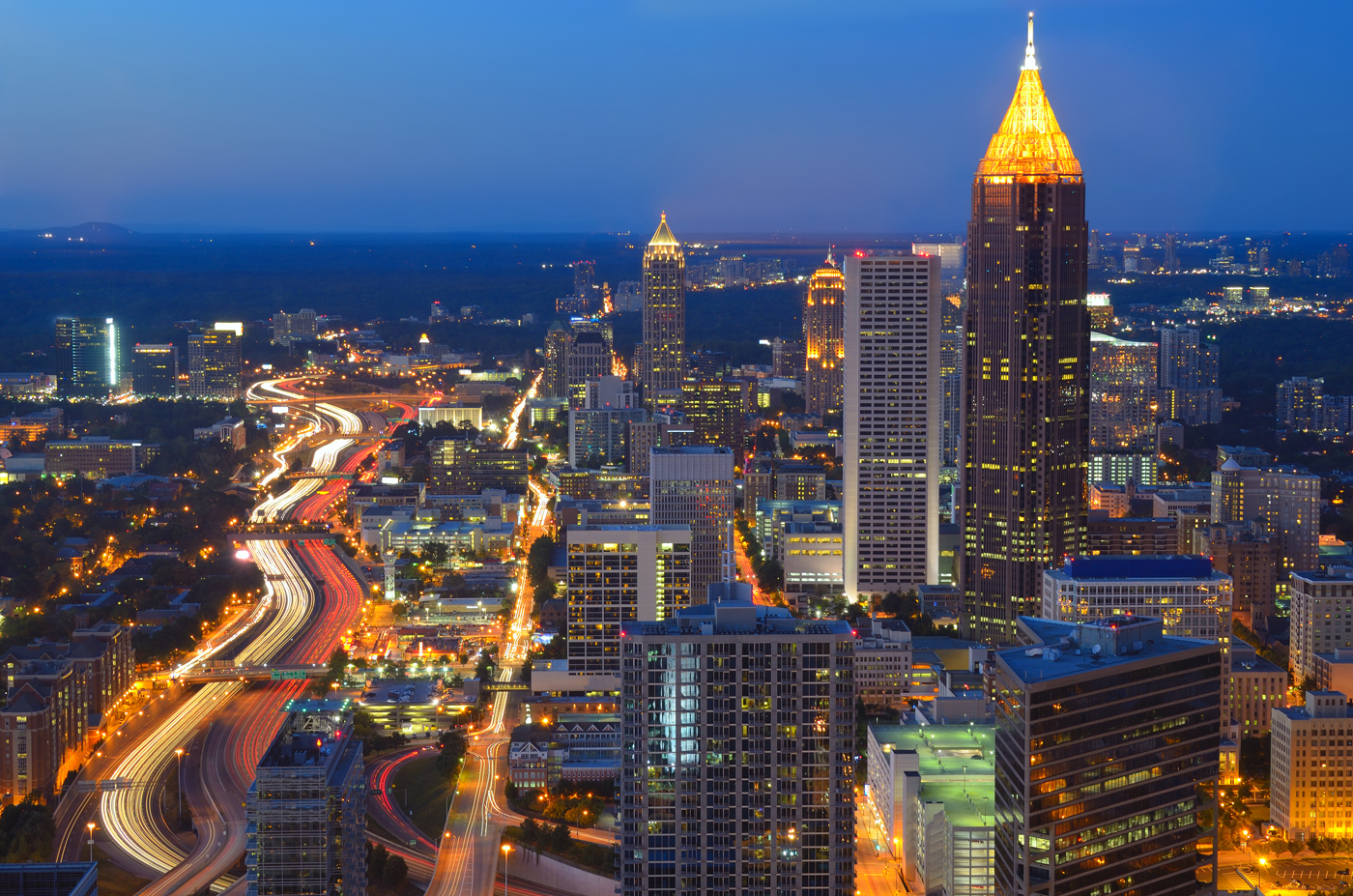
2 min read August 2020—True to its motto, the city of Atlanta looks to rise again by launching a new program to help small businesses recover from pandemic-related challenges. Atlanta Mayor Keisha Lance Bottoms announced the launch of the Resurgence Grant Fund, which is set to begin accepting applications next week. The Resurgence Grant Fund is slated to help qualifying businesses keep their operations open and cover pandemic-related expenses via grants of various amounts. 

“The City of Atlanta’s motto is Resurgens- Latin for ‘rising again.’ Resurgens is more than an emblem, it is part of the One Atlanta way, coming together as one community to support each other in times of need,” Bottoms said in a press release. “As COVID-19 continues to challenge Atlanta’s small businesses and the communities that depend on them, the Resurgence program will provide funds to help businesses operate safely and protect their employees as our city recovers together.”

Atlanta business owners wishing to take advantage of the Resurgence Program can apply for up to $40,000 to reimburse the costs of business interruptions as a result of shelter-in-place measures and pandemic-related closures. Business owners can use the grants to buy personal protective equipment, cleaning supplies and other health measures to protect their employees and customers. Through the funds, businesses will have access to up to $10,000 of no-cost technical assistance services, such as legal resources and workforce development, as they pivot their business practices to adapt to a more socially-distanced, digital and touch-free environment, the mayor’s office said in a press release. 

Eligible businesses must meet the following criteria: 

  • Operates an active for-profit enterprise in the City of Atlanta;
  • Holds a 2020 city of Atlanta business license;
  • Continuously in business and operating since March 1, 2019;
  • Had fewer than 250 employees as of March 1, 2020; and
  • Documented business interruption as a result of the COVID-19 pandemic and related emergency declarations, resulting in financial loss.

Economic development authority Invest Atlanta will handle the application process. The application window will be open from Aug. 10 to Aug. 31. “We are listening to the needs of the business community and continue to deploy resources to help them through the impacts of COVID-19,” said Eloise Klementich, president and CEO of Invest Atlanta, in a press release. “Economic prosperity and competitiveness in Atlanta start with equity, and Atlanta’s recovery from the pandemic must be an equitable recovery. These new grant programs will help achieve this by ensuring more Atlanta small business owners have access to funds to adapt their business and operate safely.”

The Resurgence Grant Fund is made possible by the $88-million federal Coronavirus Aid, Relief, and Economic Security Act (CARES Act) funding to the city of Atlanta, of which $22 million was allocated to support small businesses and independent professionals impacted by the pandemic, the mayor’s office said in press release. 

Interest business owners can attend a citywide Resurgence Grant Fund webinar on Wednesday, Aug. 12, hosted by Invest Atlanta. 


To learn more, visit:

https://www.atlantaga.gov/

ttps://www.investatlanta.com/resurgence-grant-fund

Invest: Orlando offers economic insight in a time of uncertainty

Invest: Orlando offers economic insight in a time of uncertainty

By: Beatrice Silva 

Invest: Orlando offers economic insight in a time of uncertainty

AUGUST 4, 2020

FOR IMMEDIATE RELEASE

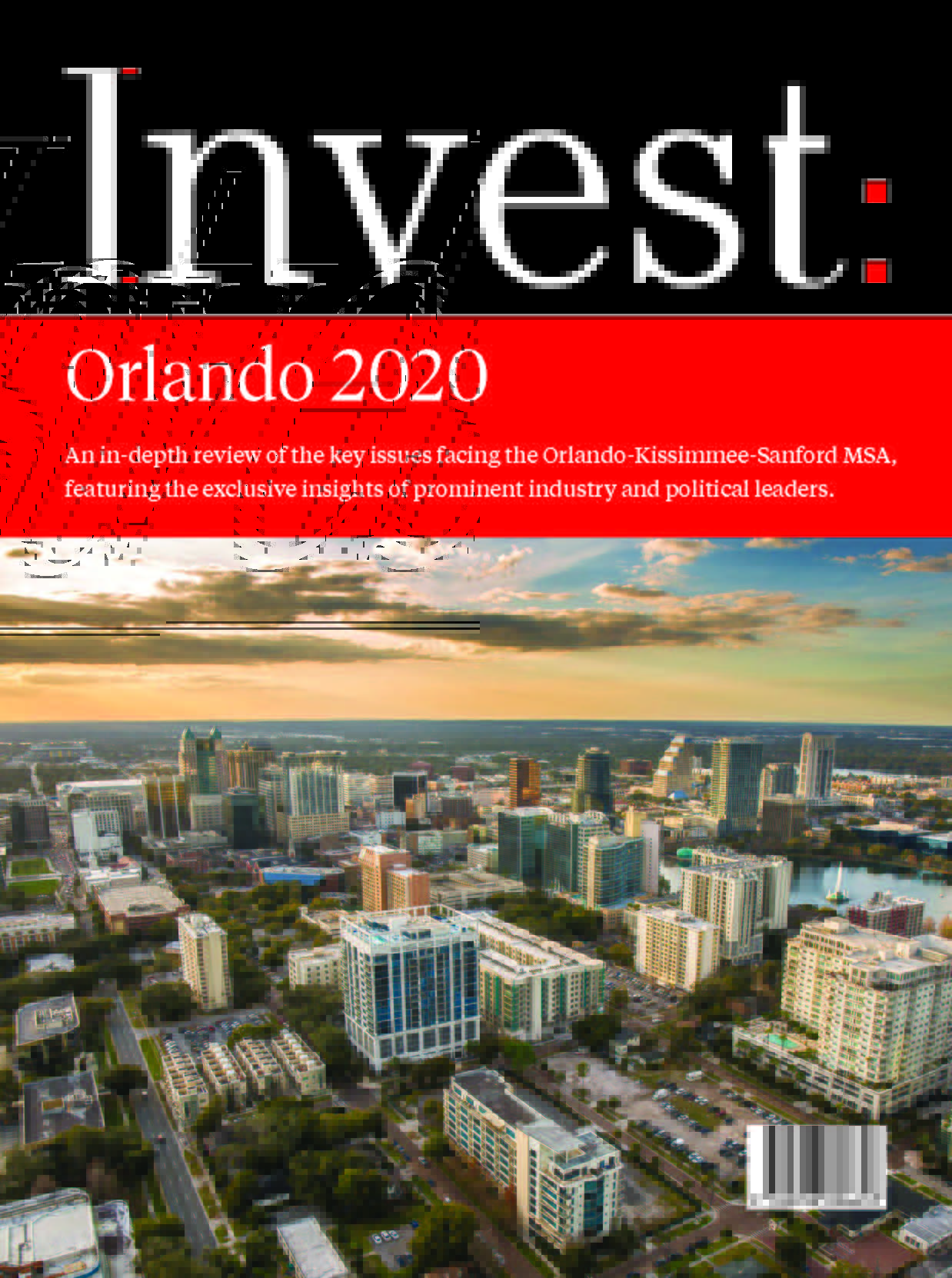
ORLANDO, FLA – Capital Analytics’ in-depth research into the Orlando market has never been more important. As the region navigates through the largest economic shock it has experienced in decades, Invest: Orlando 2020, the latest in Capital Analytics’ annual series of business reports, offers comprehensive business intelligence during this time of economic uncertainty. With 120 pages of thoroughly researched analysis, the inaugural edition of Invest: Orlando 2020 highlights the opportunities in the Orlando Metro Area economy through C-level insider insights and key business intelligence. Orlando is known for its aerospace, technology, life sciences and healthcare, real estate, and its reputation as a major tourism hub. The City Beautiful is poised to continue its growth and economic diversification even through current coronavirus-related challenges. In the middle of every difficulty lies opportunity. The challenges and impact of the pandemic are just some of the focal points in this edition of Invest: Orlando. The 2020 edition highlights Orange County and beyond, including parts of Osceola County, such as Kissimmee and St. Cloud.“Many of the interviews in Invest: Orlando 2020 were conducted prior to the pandemic’s outbreak, but we have endeavored to reflect recent events throughout our editorial. Those interviewees who were able to comment on the potential long-term impact agree that the U.S. economy remains resilient, and most are optimistic that any downturn will be relatively short-lived. The economy’s underlying strength, many business leaders believe, will give greater growth over the long term,” said Abby Melone, president of Capital Analytics.

Now more than ever, information is not only necessary, it is vital. Invest: Orlando 2020 dives deep into the top economic sectors in the Orlando Metro Area. The business report features exclusive insights from industry leaders, sector insiders, elected officials and heads of important institutions, brought together for a comprehensive release. It analyzes the leading challenges facing the market and uncovers emerging opportunities for investors, entrepreneurs and innovators.

Over seven months, the Capital Analytics team conducted extensive research and interviewed over 200 high-profile industry leaders, including Buddy Dyer, mayor for the City of Orlando; Besty Eckbert, president and CEO of Winter Park Chamber of Commerce; and Craig Ustler, president of Ustler Development. Through their research, the Capital Analytics team identified significant business insights that will serve as important knowledge benchmarks for investors, entrepreneurs and innovators. The publication’s comprehensive report on Orlando’s business climate remains steadfast in its purpose to deliver in-depth insights. 

“Over the course of our extensive research period, we were given the ability to truly peel back the curtain and discover what has gone into making Orlando the hotbed for investment, tourism and development that it has become. What we found was that this economy has not only flourished thanks to cross-sector collaboration but also because of thoughtfully calculated community efforts to raise Orlando’s status as a preeminent destination for both economic and social prosperity,” said Max Crampton-Thomas, regional editor of Capital Analytics.   

About Capital Analytics & Invest: Orlando

Capital Analytics is an integrated media platform that produces in-depth business intelligence through its annual print and digital economic reviews, high-impact conferences and events and top-level interviews via its video platform, Invest: Insights.

Invest: Orlando is an in-depth economic review of the key issues facing Orlando’s economy, featuring the exclusive insights of prominent industry leaders. Invest: Orlando is produced with two goals in mind: 1) to provide comprehensive investment knowledge on the Orlando region to local, national and international investors, and 2) to promote Orlando as a place to invest and do business.

The book conducts a deep dive into the top economic sectors in the county, including real estate, construction, utilities and infrastructure, transportation and aviation, banking and finance, legal, healthcare, education, and arts, culture and tourism. The publication is compiled from insights collected from more than 200 economic leaders, sector insiders, political leaders and heads of important institutions. It analyzes the leading challenges facing the market, and uncovers emerging opportunities for investors, entrepreneurs and innovators.


For more information contact 

Max Crampton-Thomas 

Regional Editor

mcthomas@capitalaa.com

TEL: 305-523-9708 ext 233

Invest: Charlotte 2020 Press Release

Invest: Charlotte 2020 Press Release

By: Felipe Rivas

Charlotte’s economic resilience in the face of unprecedented challenges to highlight the launch of the inaugural edition of Invest: Charlotte 2020.

July 31, 2020

FOR IMMEDIATE RELEASE

Charlotte, N.C. – In this time of uncertainty, it is crucial to showcase the strength and overall resilience of the local community and economy. Invest: Charlotte 2020 does just that. With 152 pages of thoroughly researched analysis, the inaugural edition of Invest: Charlotte 2020 highlights the opportunities in the Charlotte Metro Area economy through C-level insider insights and key business intelligence. Known for its affordability, highly educated workforce and reputation as a major banking hub, the Queen City is poised to continue its growth and economic diversification even through current coronavirus-related challenges. These challenges and the steps taken to overcome them are just some of the focal points in this edition of Invest: Charlotte, published by Capital Analytics. The 2020 edition highlights Mecklenburg County and beyond, including parts of South Carolina, such as Rock Hill and Lancaster County, and includes a special focus chapter on Gaston County.

Importantly, this first edition of Invest: Charlotte dives deep into the top economic sectors in the Charlotte Metro Area. The business report features exclusive insights from industry leaders, sector insiders, elected officials and heads of important institutions, brought together for the first time in a comprehensive release. It analyzes the leading challenges facing the market and uncovers emerging opportunities for investors, entrepreneurs and innovators.

The official launch of the publication will take place on Thursday, Sept. 10, at 11:30 a.m. via Zoom Webinar. This event will consist of a brief introduction by Capital Analytics’ CEO Abby Melone and will be followed by two robust panel discussions.

The panels will address the current economic climate as well as prevailing themes dominating the Charlotte Metro Area’s economy: finance and banking in the time of a pandemic and the future of development in the Queen City. Charlotte Mayor VI Lyles will kick off the virtual conference as the opening keynote speaker. Truist Metrolina Regional Charlotte President Heath Campbell, Fifth Third Bank  Mid-Atlantic President Lee Fite, and Wells Fargo Managing Director and Senior Economist Mark Vitner will participate in the panel, “Financial recovery for businesses and individuals in the wake of a pandemic.”Cadwalader, Wickersham & Taft LLP Charlotte Office Managing Partner Suart Goldstein will moderate. The second panel, “The future of development in the Charlotte region,” will feature Zach Pannier of DPR Construction, Marcie Williams of RKW Residential-Charlotte, Clay Grubb of Grubb Properties, and Lawrence Shaw of Colliers International. City of Charlotte Planning Director Taiwo Jaiyeoba will moderate. Charlotte Regional Business Alliance CEO Janet LaBar will be the closing keynote speaker. Hundreds of high-level guests and officials from Charlotte’s key industries and economic institutions will be tuning into the event. We are inviting all attendees and those wanting to register for the event to participate in the following survey, the results of which will be presented at the Invest: Charlotte 2020 launch conference. 

“Charlotte was an important expansion for us as it is the nation’s second-largest banking city and a key driver of economic growth in the Southeast. The Queen City is experiencing positive economic activity as national and international companies choose Charlotte as a place to grow or relocate their operations,” said Abby Melone, President and CEO of Capital Analytics. “Despite the challenges put upon us by COVID-19, Capital Analytics remains steadfast in our purpose: to deliver in-depth business intelligence through its print and digital platforms. Now more than ever, information is not only necessary, it is vital.” 

***

About Capital Analytics & Invest: Charlotte

Capital Analytics is an integrated media platform that produces in-depth business intelligence through its annual print and digital economic reviews, high-impact conferences and events and top-level interviews via its video platform, Invest: Insights.

Invest: Charlotte is an in-depth economic review of the key issues facing Charlotte’s economy, featuring the exclusive insights of prominent industry leaders. Invest: Charlotte is produced with two goals in mind: 1) to provide comprehensive investment knowledge on the Charlotte region to local, national and international investors, and 2) to promote Charlotte as a place to invest and do business.

The book conducts a deep dive into the top economic sectors in the county, including real estate, construction, utilities and infrastructure, transportation and aviation, banking and finance, legal, healthcare, education, and arts, culture and tourism. The publication is compiled from insights collected from more than 200 economic leaders, sector insiders, political leaders and heads of important institutions. It analyzes the leading challenges facing the market, and uncovers emerging opportunities for investors, entrepreneurs and innovators.

For more information, contact: 

Max Crampton-Thomas

Regional Editor

305-523-9708 Ext: 233

Spotlight On: Chuck Cross, Regional Market President, Seacoast Bank

Spotlight On: Chuck Cross, Regional Market President, Seacoast Bank

By: Felipe Rivas

2 min read April 2020 — Over the last few years, consolidation and mergers and acquisitions have dominated the banking industry. In Florida, as the population continues to grow and the financial sector diversifies further, the Palm Beach market remains vital for banks looking to grow their operations in the state. With the recent acquisition of First Bank of the Palm Beaches, Seacoast Bank is positioning itself to take full advantage of the opportunities within the Palm Beach market. In an interview with Invest: Palm Beach, Regional Market President Chuck Cross talks about the strength of the Palm Beach market, the evolution of the banking sector and his outlook for the industry during an economic downturn.

How did Seacoast Bank perform in 2019?

Seacoast Bank once again delivered a record-breaking financial performance in 2019, propelled by a balanced growth strategy. We combined solid, organic growth with smart acquisitions and careful cost control that enabled us to outperform our peers. Seacoast Bank produced double-digit growth and net revenues of $297.8 million. Overall, Seacoast Bank’s goals are focused on growth and Palm Beach County is an important contributor to that growth. Our recent acquisition of First Bank of the Palm Beaches increases our presence in the county from six to eight branches and grows our total deposits to $821 million. When you consider the strength and overall growth of the economy in Palm Beach County, we see the demand for banking services increasing. We are well-positioned to service that growth in Palm Beach County.

How has the banking sector evolved over the last couple of years?

The banking sector has seen a lot of consolidation in the last 10 years, and I think we will continue to see that. Customers are looking for more ways to bank remotely. As banks compete for customers, it is likely they will increase the number of products and services available in their remote channels. The key for a successful merger and acquisition is to integrate and consolidate well and to win over the hearts of acquired customers by providing the convenient products and services of larger banks, but with the personalized attention of a hometown community bank.

What can be done to level the playing field when it comes to credit unions?

The Florida Bankers Association has pushed for legislation to close the loopholes for the mega credit union, those with over $1 billion in assets, and to impose CRA requirements and corporate taxes. Today, there are more than 360 credit unions with more than $1 billion in assets. The majority of credit unions still live up to the intent of the legislation, as they are small and focused, but some of them have grown and may not fit the original intent of the law.

How do you see the banking industry performing during an economic downturn?

The banking industry is federally regulated to make sure that banks remain solvent even in a downturn. Since the last downturn, the Florida banking industry has undergone major consolidation. The winners will be those that manage to deliver the services and technologies that the big banks are known for while still maintaining the high standards of personalized customer services that we all know and love in the community banking environment.

To learn more about our interviewee, visit:https://www.seacoastbank.com/

Spotlight on: James Michael Burkett, President, Florida Technical College

Spotlight on: James Michael Burkett, President, Florida Technical College

By: Yolanda Rivas

Since 1982, Florida Technical College (FTC) has been meeting the needs of students and the job marketplace. At times of low unemployment rates across the nation, educational institutions like FTC play a significant role in providing students the necessary skills businesses are looking for. In an interview with Invest: Orlando, FTC’s President James Michael Burkett discussed the most in-demand programs and how they support the local workforce.

What differentiates Florida Technical College from other educational institutions in the area?


We support people who want to acquire technical job skills that can get them into the job market more quickly. That is one of our main advantages. Our locations in Central Florida have seen unprecedented growth, particularly in our hospitality program because many of the positions in these fields require the technical skills we help students acquire, rather than a traditional four-year degree. Another big advantage for the school is our Spanish language vocational and technical programs. These programs have allowed us to assist the Spanish-speaking population that has migrated to Central Florida over the last few years.

What are some of your efforts to attract and retain talent in Orlando?

We partner with several chambers to make sure that employers in the area understand what we have to offer. That has been a great advantage to both students and employers. We are seeing unprecedentedly low unemployment rates and one of the main challenges employers are facing is finding qualified talent. We communicate with local businesses from different industries to ensure our students have the skills they need. 

Which Florida Technical College programs are seeing the most growth?

Electrical has been one of the fastest-growing programs at Florida Technical College. We have been able to scale that program quickly to meet demand and by the beginning of next year it will be available at most of our campuses. Construction trades and the Spanish language vocational programs also have been areas of growth for us and we expect that to continue in 2020. There is also a big need for culinary skills and we are expanding our capacity for that program as well. With numerous restaurants and hotels opening in the region, we are looking to provide the talent pipeline they need.

To learn more about our interviewee, visit:

Florida Technical College: http://www.ftccollege.edu/

Why Orlando is an ideal city for esports hub

Why Orlando is an ideal city for esports hub

By: Yolanda Rivas

Over the last few years, Orlando has been increasing its presence in the esports scene. Already home to numerous simulation, training and tech companies, there’s no doubt about the City Beautiful’s potential as a main driver in the gaming arena.

One of the pillars in Orlando’s gaming scene has been Full Sail University. The institution opened The Fortress last May, which is the largest esports arena on a college campus in the nation. Since then, it has attracted several major events like an NBA 2K League competition and a qualifying event for the Red Bull Conquest.

“When we were planning and building The Fortress, we knew, like other facilities on campus, it would need to function as a professional-caliber facility since we are educating our students to work in the real world,” said Full Sail President Garry Jones in an article from the Orlando Sentinel. 

Although the esports boom is just starting and there’s only a handful of arenas in the country, these events represent a boost to the economy, especially with the presence of teams and fans attracted by the tournaments. 

A recent report from WalletHub ranked Orlando as the fourth-best city for gamers and No. 2 for gaming environment. The study compared the 100 largest U.S. cities across 23 key indicators of gamer-friendliness.

Spotlight on: Nicholas Haines, CEO, Bromley Companies

Spotlight on: Nicholas Haines, CEO, Bromley Companies

By: Max Crampton-Thomas

The future of Tampa Bay is developing in front of our very eyes and there are a few select developers making this vision come to life. Real estate developer Bromley Companies broke ground in mid-2019 on its ambitious Midtown Tampa project. Company CEO Nicholas Haines discussed the importance of incorporating new tendencies, such as a pedestrian-focused design, and the challenges that both a proper mix of high-end and affordable housing present for the city.


What’s the status of the Midtown Tampa project?

We broke ground on the Midtown project in May 2019 and we are well under construction for the first phase. There are 11 buildings going up at the same time: three residential, two office buildings, and several retail, including a Whole Food Kitchen and True Food Kitchen, both of which are significant expansions in the market. There is also a 1,000-car parking garage that is already topped out, and we’re right on schedule. The goal is to finish it by the 2021 Super Bowl, which will be held here in Tampa Bay just a couple miles up the street. 

A lot of what we are doing now is spending a tremendous amount of time on the finishing touches of the common-space designs that create community. It is about creating an imaginative destination not just for the people working, living and shopping here, but for the neighborhood by adding public art and a feel for the place, all the things that make a space interesting and dynamic. We are building a city within a city — an entirely new district. 

What business trends are you keeping an eye on as you go ahead with this development?

Accessibility and pedestrian-friendliness. I just read about a development in Arizona, with 1,000 residential units and no parking. That is a bold thing for a non-superurban area. What we are trying to do is create one of the first, pedestrian-first mindset versus car-first developments in Tampa Bay and Florida. All the streets inside the development are private, which is a really interesting feature of Midtown Tampa. We are not constrained by the city’s rules regarding traffic and street design. For a big event like the Super Bowl, we can close the streets so that all the cars access Midtown from the periphery.

We have designed curbless sidewalks, for example, and dedicated ride-share drop-off areas. The city of Tampa is working on a number of mass transit initiatives and we are working to accommodate a mass transit stop on one of our main corridors. People are going to live, work and shop here because they want to wake up, go to a coffee shop, walk their dog at the dog park, go shopping at Whole Foods, have a drink at the hotel rooftop bar, and maybe work at one of the office buildings. They’ll also be able to ride a bike path that connects from Midtown Tampa to the Greenway Trail System, from Tampa to St. Petersburg, by crossing a 10-lane bridge at Dale Mabry.

Are there any other areas that you see as a hotspot or active as real estate developments for the moment? 

Yes, it’s really exploding. The Heights area is really interesting. St. Petersburg is incredibly exciting and a great example of a vibrant, urban place with the interplay between food and art. We are talking about a city that has transformed itself over 10 years in terms of the energy there. 

What is your outlook for the Tampa Bay region, and how do you see the region addressing its challenges? 

Regarding sustainability, it is really important to get the mix right between higher-end housing like we are building here and affordable housing. There’s a need to provide better incentives for the private sector to offer that kind of housing. You can only do so much as a city if everyone is building luxury apartments. It is an issue for all cities, but Tampa today does not have a cohesive development and zoning policy to encourage that. Tampa is still a very affordable place on a relative basis, but that affordability gap is narrowing. People who have been living here for a long time with a moderate income are being pushed further and further away from the urban core. 

Transportation is a huge thing too. In some ways, advances in mass transportation technology might help Tampa. The city might not have done it in the past, but in some ways that might not be the worst thing. Tampa might be able to take advantage of innovations in technology like self-driving buses to implement something that is very forward thinking, instead of having to put up the heavy infrastructure and the massive amounts of capital for a light rail system.

To learn more about our interviewee visit: 

https://www.bromco.com/

Spotlight on: Adam Mullen, Market Leader, Greater Philadelphia Region, CBRE

Spotlight on: Adam Mullen, Market Leader, Greater Philadelphia Region, CBRE

By: Yolanda Rivas

One of the main drivers of Philadelphia’s economy is the real estate industry, attractive for its affordable prices, advantageous location and the Pennsylvania I-78/I-81 Corridor. A recent report from commercial real estate firm CBRE showed the corridor saw a total of $132 million in capital investment during Q3 2019. In an interview with Invest:, Adam Mullen, CBRE’s market leader for the Greater Philadelphia region, discussed the areas seeing the most growth in Philly’s commercial real estate and what is spurring growth in the market.


What are the lines of business seeing the most growth or demand in Philadelphia today?

It is hard to understate the momentum we are witnessing in the industrial and logistics space. The shift to e-commerce and modernized supply chains have not only created one of the largest warehouse distribution markets in the world in our backyard, the Pennsylvania I-78/I-81 Corridor, but demand continues to be robust for Philadelphia’s industrial properties. A variety of users, including retailers and third-party logistics companies, are driving demand so they deliver goods to consumers more efficiently than ever before. 

At the same time, the local retail market is as vibrant as it has been in years. Philadelphia is at the top of everyone’s list as a major gateway market in the retail space. We have the largest mall on the East Coast, the King of Prussia Mall, which is a prime example of the consumption activity in our region. Also, the food and beverage sector is one of our leading sources of demand, not only in the suburbs and shopping centers, but also in Downtown Philadelphia. Due to the opportunity we see in the retail market, we have had an extreme focus on our retail business in Philadelphia, doubling down on our investments over the last few months. 

We can’t overlook the dynamism in Philadelphia’s office market. Our Downtown office market is larger, in terms of square footage, than Downtown Los Angeles or Downtown Houston, and we are seeing considerable demand from not only tenants but also investors, particularly from Asia and the Middle East. 

Finally, we continue to watch the rise of the multifamily market in the region. Due to low interest rates and a plentitude of available debt capital, the demand for multifamily assets in greater Philadelphia has exploded over the past few years. 

What are the major drivers of growth for Philadelphia’s real estate sector?

The local economy is very strong and is being driven notably by the “eds and meds” segment, which has a unique presence in the Philadelphia region. Not only do the local educational and health services institutions have a huge effect on the economy and are growing rapidly, but they also represent the largest share of our employment base. Consequently, this concentration of talent has created a boom in the local life sciences industry, which is experiencing rapid growth, notably in central Philadelphia where most of the region’s major academic and healthcare institutions are clustered and spurring innovation and new companies. Not incidentally, we are seeing the highest office rents we have ever seen in Center City, and also experiencing a significant uptick in office tenants relocating to Downtown Philadelphia.

To learn more about our interviewee, visit:

CBRE: http://www.cbre.us/people-and-offices/corporate-offices/philadelphia 

Philly Leads in ‘Taking Care of Business’

Philly Leads in ‘Taking Care of Business’

By: Sara Warden


In NBC’s 2019 ranking of Top States for Business, Pennsylvania landed a lacklustre 28th position – lower than half way down the poll for business friendliness in the country. The state was in 39th place in terms of economy, 32nd in quality of life and 31st in workforce. But there is potential. The state ranked ninth in terms of education and sixth in access to capital. The Philadelphia authorities are grabbing onto these roots and nurturing them into shoots with the new PHL Taking Care of Business Initiative.


“This new investment will have a big impact on neighborhoods all across our city by providing businesses and neighborhoods beyond Center City with the resources they need to succeed and to thrive,” Mayor Jim Kenney said to the Philadelphia Tribune. “Reducing blight not only makes our city more beautiful but it helps small businesses — especially minority and women-owned businesses — attract shoppers and employees. When small businesses succeed, our economy grows stronger.”

The program was pioneered by city Councilwoman Cherelle Parker, with the goal of reducing blight while creating 300 jobs for local residents – that’s 30 part-time employees in each district who are paid $15 per hour. “We are committed to building a strong workforce and job market that will in turn help us attack poverty and crime to ensure inclusive growth across the city,” added Kenney.

But rather than making the employees public servants, they will instead be Cleaning Ambassadors, paid by the Commerce Department to Philadelphia Industrial Development Corporation (PIDC), which will issue RFPs and/or contract with CDCs. “This program will pay workers a living wage and introduce them to workforce training that can lead to other professional opportunities and jobs. I strongly support PHL Taking Care of Business,” said Council President Darrell Clarke in a press release.

For initial costs related to the program, the city has now pledged $10 million to fund the initiative, which is a way to attract new business, improve conditions for existing companies and improve quality of life. “Strengthening our commercial corridors, which are the lifeblood of communities throughout my district and across the city, is essential to stabilizing our neighborhoods,” said Councilwoman Parker in a press release. “PHL Taking Care of Business will help ensure that every business corridor in the city, regardless of size or neighborhood, will be clean and attractive, allowing the businesses to focus more time on growing their enterprise. It will also help to change that awful characterization of our city as ‘Filthadelphia.’”

Several local business owners that are already part of the program’s pilot catchment area are delighted with the results. “Living on a busy street with lots of businesses, you always see trash on the street. Ever since the 9th District street cleaning team started, you definitely see a difference. I believe neighbors see the difference too. People walk around prouder and are more likely to speak up when they see people throwing trash on the ground,” said local resident Frank Huynh.

To learn more, visit:

https://kenneyforphiladelphia.com/

http://phlcouncil.com/darrellclarke/

http://phlcouncil.com/cherelleparker/