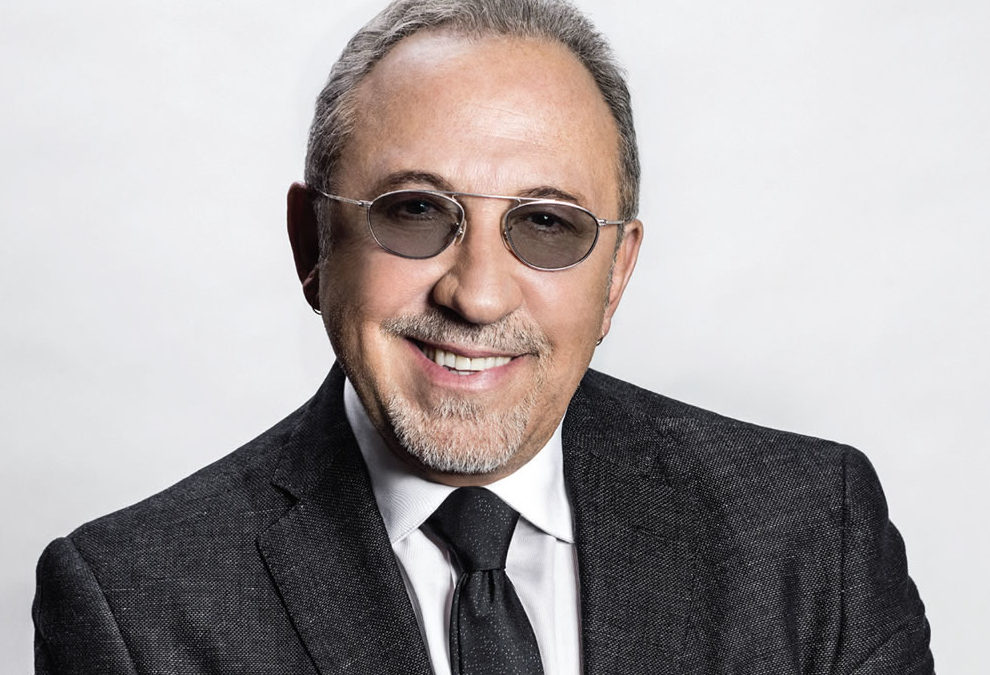
19-time Grammy Award-winning producer and Estefan Enterprises Chairman Emilio Estefan talks about Miami’s distinct fusion of sounds and cultures
Music from Miami is known for having a distinct sound. How would you characterize this sound?
What makes the Miami sound so different is the fusion. A song may have a Haitian performing on a Haitian guitar and a Brazilian percussionist, while the bass is pop music. You have flavors from everybody – Puerto Ricans, Italians, Jews, Colombians, Brazilians, Mexicans and, of course, the Cubans – and they all bring something to the music. We were influenced by pop music, Motown, disco and the Beatles. At the same time, we grew up listening to Celia Cruz, Cachao, and other incredible Latin musicians.
The Miami sound is also about passion and energy, and at the base of it, this is all about the percussion. Percussion moves people. When I first started out in the business – I am not just a producer, but a percussionist – every time I went to a label, they said the percussion would never work and that I had to take it out. I didn’t want to take anything out.
How does the Cuban-American immigrant experience influence culture and arts in Miami?
Today there are four generations of Cuban-Americans immigrants and everyone has a different opinion, particularly when it comes to what is happening in Cuba. Ultimately, we all want what is best for the people living there. We who left Cuba are never going to go back and live there, but we want the people of Cuba to be free. I was both lucky and unlucky to arrive in Miami when I did. It was a new city, full of opportunities, but we brought in new sounds and ideas that were not accepted at the time. The first thing I was told was to change my name and my sound. That was something I would never do. The immigrant influence on Miami has impacted not only music, but also food. Gloria and I opened Larios on the Beach almost 27 years ago. We wanted to open a restaurant on Ocean Drive that served mojitos and traditional Cuban cuisine. We were told that this would never work – that customers would prefer to eat burgers. Since then it has won awards and become a popular attraction.
How does Miami influence broader cultural trends nationally and internationally?
Miami combines so many unique elements that cannot be found anywhere else in the world. It goes back to the diversity we have – the mix of people, cultures and sounds.
People are crazy about the Miami sound, which has influenced, not only the Miami Sound Machine, but also Ricky Martin, Shakira, Jennifer Lopez, Marc Anthony, Pitbull and Jon Secada, among many others. Miami is a great role model for the rest of the U.S. because although we are a young city, everyone is supportive of one another’s successes. We are a gathering of, not just Latinos, but people from all over the world who have great ideas.
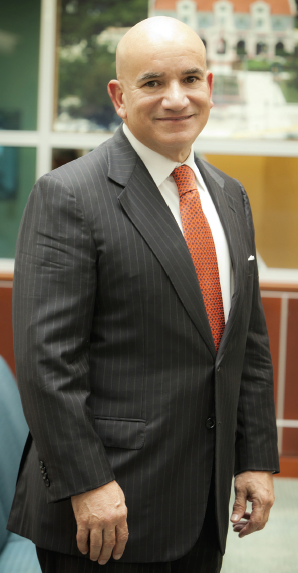
Jackson Health System President and CEO Carlos A. Migoya discusses changes in South Florida’s health landscape and their impact on public hospitals
What are the key components of Jackson Health System’s medium-term strategy?
Our medium-term strategy involves a $1.4-billion campaign we announced last year, which is largely comprised of an $830-million bond awarded to us by Miami-Dade County voters in November 2013. We spent 2014 preparing for the capitalization. These funds will be used to upgrade our buildings and facilities.
We also plan to invest heavily, to the tune of several hundred million dollars, on IT to ensure we have the latest equipment that can provide medical information quickly and more efficiently to nurses and doctors so they can make swift and well-informed decisions in caring for their patients. All of these efforts are geared towards making Jackson a more attractive option for health care.
In terms of physical infrastructure, what are Jackson Health’s plans for expansion and upgrades?
In March 2015, we break ground on a new rehabilitation center, which will benefit both our orthopedics and neurosurgery departments, and enhance our initiative to cure paralysis. Secondly, we have plans to construct a new building for the Miami Transplant Institute that will allow for all necessary procedures, including those pre- and post-transplant, to be done at the facility. Finally, we will build a 130-bed intensive care tower. In addition to those three signature buildings, we will modernize every patient room, emergency room and operating room, build 10-12 urgent care facilities throughout the county, along with a children’s ambulatory pavilion.
What demographic trends are unique to South Florida, and how have they impacted health care?
One unique aspect to South Florida is our large international population, and the high numbers of international visitors we get every year. Medical tourism is an important aspect of our business, enhanced by our partnership with the University of Miami’s Miller School of Medicine, which has an excellent reputation abroad. People from around the world come to us when their life depends on it, with neurosurgery, stroke, transplantation and pediatrics serving as some of the key areas attracting international patients. For years we have drawn many patients from Latin America and the Caribbean. Many doctors from the region do their residencies at Jackson Memorial and once they return to their home countries, they refer their complex cases to us, sending patients to be treated by their former professors. Increasingly, however, we are also seeing patients from Europe and the Middle East.
When we look at the patient profile for Jackson Health specifically, one notable trend has been the reduction of charity care. We continue to provide services to poor and underserved patients, but we have also taken a proactive approach when it comes to conducting financial screening. Many of the people coming through our doors are eligible for Medicaid, but they do not know that they qualify. We have been working hard to qualify those individuals. Not only then do we provide them with services that we receive subsidized payments for, but, more importantly, those eligible folks walk out of our doors with a Medicaid card, which allows them to obtain medical ser-vices in the future. As a result of these efforts, we have reduced the portion of our charity care from 20 percent to somewhere around 12 percent of our total patients.
How has the passage of the Affordable Care Act (ACA) impacted Jackson Health?
We are the largest provider of Medicaid services in the State of Florida. Medicaid patients comprise 35 percent of our business, while Medicare patients make up 20 percent and the rest come from commercial pay. This past year 100 percent of Medicaid cases in Florida became administered through managed care, which was a great adjustment for us. We are now at the forefront of partnering up with managed care companies, not just for managing Medicaid, but Medicare and HMOs as well, which is a complete shift from the fee-for-service model.
In your view, what are the most critical challenges facing the health sector in South Florida?
The biggest challenge continues to be the fact that government reimbursement, both Medicare and Medicaid, as well as supplements to cover some of the charity care continues to be reduced. To address changes in the funding landscape, institutions like Jackson Health need to focus on growing the commercial pay segment.
As baby-boomers age, this will continue to tax the federal budget. Both federal and state governments are looking to spend less on health care, so institutions like ours are being asked to do the same work, if not more, with fewer resources. Shifting to a more managed care environment – something more familiar to states like California and Texas, but less so Florida – is another challenge for this marketplace, as well as keeping pace with technological developments, in particular the rapidly changing landscape of telemedicine and electronic medical records.
South Florida is also affected by the changes in the medical profession. Being a doctor is not as lucrative as it once was, especially when considering the soaring costs of medical education in this country. In the next 10 years, there will be a great need for specialists, particularly in orthopedics, neurology and neurosurgery. It will be a challenge to meet this demand – to ensure that medicine continues to attract the brightest minds.
How do you see these rising costs being mitigated? Technology is certainly one mitigating factor. As telemedicine and health apps continue to develop, it will be possible for patients to collect and send their biodata to their doctors and be diagnosed remotely, thereby reducing the costs associated with seeing a physician in person. Electronic health records will streamline the process of sharing information between multiple caregivers and facilities, reducing the occurrence of duplicate testing.
Another factor is the change in the nursing profession. Many RNAs [Restorative Nursing Assistants] and ARNPs [Advanced Registered Nurse Practitioners] are now trained to conduct procedures that primary care physicians used to do. More work is being delegated to nurses as their skill sets become more sophisticated.
Where do you think the greatest opportunities for growth in South Florida’s health sector lie?
Healthcare is one of the fastest-growing industries in South Florida, and it will continue to grow over the next ten years. A big piece of the growth is on the technology side – specialties like radiology and radiation are exhibiting tremendous prospects.
We will also see growth in the area of hospital administration because of the massive changes taking places in health policy. The way hospitals and health systems are run today is considerably different from how they used to be run in the past, and requires a great deal of sophistication and knowledge of the complexities within the industry. As health policy continues to change, opportunities in managed care and HMO administration will continue to grow as well.




