Spotlight on:Flint McNaughton, CEO & Founding Partner, SunCap Property Group

Spotlight on:Flint McNaughton, CEO & Founding Partner, SunCap Property Group

By: Felipe Rivas
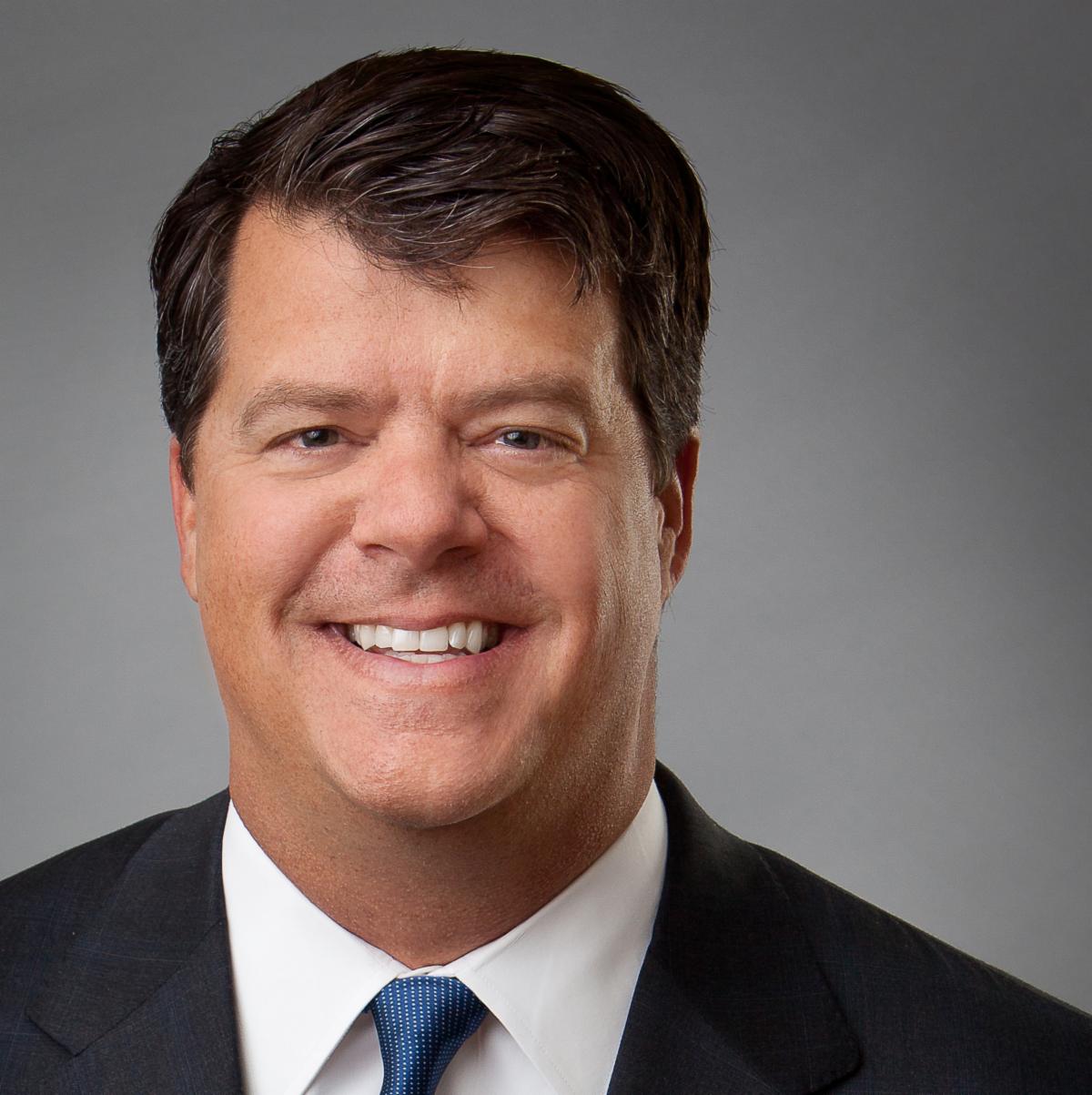
The Charlotte Metro Area offers access to capital, a talented and growing workforce, and an affordable cost of living. As a result, many companies and new residents are flocking to the region. Developers, however, must navigate the area’s competitive climate and tackle rising construction costs to materialize their projects. In an interview with Invest: Charlotte, SunCap Property Group CEO Flint McNaughton talks about the trend of companies relocating their headquarters to the area, the challenges for developers, and the outlook for the region amid continued growth.

What impact has the millennial workforce had on the region?

Companies continue to focus on recruitment and retention of millennials because they are a big and growing workforce. Many companies are adjusting their work schedules and environments to recruit and accommodate them. Many millennials are looking for lifestyle choices that provide flexibility. I think apartment life enhances that flexibility and is a major reason for the consistent positive absorption we have seen in the multifamily sector. In my opinion, there will continue to be growth in that area.

What are some challenges facing the commercial real estate development industry?

The biggest challenge today in the commercial real estate development industry is the rising cost of construction and land and how that affects underwriting. As costs rise, so must rents. When markets were trying to recover from the recession, contractors remained aggressive in their bidding and costs remained low. They were trying to keep the lights on. However, as the market recovered and their pipelines became full again, the aggressive bidding began to wane. Many contractors can pick and choose their projects now. In a hot Charlotte market, costs of labor and materials are up.  

What is driving the region’s headquarters relocation culture?

Labor is a big concern for companies coming to the region. South End has been a robust and interesting story for Charlotte. It’s where the millennials and younger crowds want to go. When companies compete for employees, particularly the millennial generation, many of the companies find a competitive advantage by co-locating where those folks live. If you can live, work and play in an environment like South End, it checks a lot of boxes, and gives companies a competitive advantage over those located in  smaller, less “amenitized” submarkets. 

The headquarters relocation trend happening in the Charlotte Metro Area is largely driven by a number of positive attributes. Probably the biggest driver is the cost of living in the area, which is significantly less expensive than the other major markets. The region has a large well-diversified workforce, land, access to capital through its banks, and it is a great place to raise a family. When you can attract and retain young talent, it is a boom across industries and sectors, and I don’t think that will change in the near future.  

What is the outlook for the region heading into 2020?

The different headquarter relocations to the Charlotte area serve as big milestones as to how the city is doing. From a macroeconomic perspective, the area has experienced tremendous, positive and sustained growth. The area has its challenges, but overall Charlotte is very healthy. 

I’m bullish on Charlotte and believe this wave of momentum will continue. One of our biggest challenges will be investing in infrastructure to keep pace with that growth. Our roads, hospitals and education systems in particular will have to keep pace with that growth. The private sector will also have to get involved in upward mobility initiatives and be actively involved in the community to help the less fortunate move forward. We have to be smart, disciplined and fair about how we grow.

To learn more about our interviewee, visit: https://www.suncappg.com/

Charlotte drops out of the Top 5 in US for tech jobs

Charlotte drops out of the Top 5 in US for tech jobs

By: Felipe Rivas

In 2019, the Queen City nurtured a culture of tech company headquarter relocations with giants such as LendingTree and Honeywell settling into the region. Despite recognized names establishing in the area, the Charlotte Metro Area slipped from the top spot for tech jobs, according to CompTIA’s annual report. The world’s leading tech association ranked Charlotte No. 6 on its “Tech Town Index” for 2019, dropping from last year’s No. 1 spot. Though Charlotte ranked out of the Top 5 cities for tech jobs in the nation, the report and local education leaders say there is an exciting energy in the region as it relates to technology that they will continue to develop and invest in.

CompTIA cites long-term job growth as “one of the reasons the Charlotte-Concord-Gastonia metro just missed the Top 5.” According to the report, in 2018 “the area showed signs of an 11 percent job growth over the next five years” but as the end of 2019 nears, the growth projection sits at 9 percent. However, the report says that when it comes to the technology industry, Charlotte is “still putting its money where its mouth is.” 

In the past 12 months, more than 52,000 tech jobs were posted, the majority of those positions being for developers, software engineers, and data analysts, the report states. As such, local educational leaders say institutions need to capitalize on the energy, diversification, and growth of the local technology industry. “What is going on with fintech, healthcare, and energy is exciting here,” said Queens University of Charlotte President Daniel Lugo to Invest: Charlotte. “The most exciting part is the growth of the technology sector. We want to be at the forefront of working with those businesses.” As an institution focused on liberal arts, Queens University of Charlotte is meshing tech skills, such as coding and data analytics, with its liberal arts curriculum. “We are actually training students with hybrid skills,” Lugo said. “We want to be in a position to have retained that general education of the liberal arts, but to look at pedagogy and the curriculum to empower our folks to understand coding and data analytics, to look at this whole 21st century and technology in a more robust way.”

Similarly, Catawba College is also upgrading its curriculum to account for the growth of the region’s technology industry. “We’re launching a master’s in data analytics, as well as a minor in data analytics to accompany almost any other major,” said President Brien Lewis to Invest: Charlotte. “We’re trying to take advantage of what’s in our region.” Going forward, the Charlotte Metro Area has the opportunity to continue to distinguish itself as a tech town. “The opportunities are to be cutting-edge in specific areas, such as data analytics,” Lewis said. “It’s a matter of capitalizing and investing further in what’s already in Charlotte to create an environment where people know we’re a leader in that area.” 

For 2020, As the Queen City continues to grow and attract companies and new residents, factors such as access to banks and capital, a diverse and growing talent pool, access to a robust logistics and distribution infrastructure, and a cost of living that is lower than the national average will prove advantageous for the local economy and those wishing to tap into its technology sector. 

To learn more about our interviewees, visit: https://www.queens.edu; https://catawba.edu/

Invest: Philadelphia 2020 Launch highlights region’s education, healthcare and key economic sectors

Invest: Philadelphia 2020 Launch highlights region’s education, healthcare and key economic sectors

December 6, 2019

Invest: Philadelphia 2020 Launch highlights region’s education, healthcare and key economic sectors 

Jerry Sweeney, President & CEO of Brandywine Realty Trust, gave the keynote address at the launch of Capital Analytics’ second publication focusing on Greater Philadelphia.

Philadelphia, PA – Greater Philadelphia’s robust education industry, healthcare, transit and development sectors were the focal points in Capital Analytics’ second launch event for Invest: Philadelphia. The 2020 edition highlights the five-county region of Greater Philadelphia, including Philadelphia, Montgomery, Bucks, Delaware and Chester counties, with a special focus chapter on Montgomery County. 

The event was attended by over 350 high-level guests and officials from some of Philadelphia’s key industries and economic institutions. 

The official launch of the publication took place on Dec. 5, 2019, at The Westin Philadelphia. Following a short networking breakfast, Jerry Sweeney, President & CEO of Brandywine Realty Trust, gave a keynote address that underscored some of the major achievements of Philadelphia’s real estate sector and economy over the past 12 months. The keynote address was followed by three robust panel discussions.

The panels addressed major themes dominating Philadelphia’s economy: education, healthcare and transportation-oriented development. Chris Fiorentino of West Chester University, Dr. Guy Generals of Community College of Philadelphia, Dr. Chris Domes of Neumann University, and Damian Fernandez of Penn State Abington participated in the panel, “Thinking outside the box: Educating today for the jobs of tomorrow.” Jack Miller of Capital Analytics was the moderator. “Healthcare hub: A look at the driving force behind Philly’s economy” featured Ron Dreskin of EisnerAmper, Ellen Rosenberg of Amicus, Barry Eckert of Salus University and R. Carter Caldwell of the University of Pennsylvania Health System, guided by moderator Lauren Murdza of DLA Piper. The panel, “Philly on the move: A city taking new form with transit-oriented development,” featured moderator Susanne Svizeny of OceanFirst Bank and panelists Tricia Marts of Veolia, Ed Reitmeyer of Marcum and Liam Brickley of Bryn Mawr Trust.

“Philadelphia has a thriving and diverse economy that in 2019 solidified its position as a formidable local force and continued to be a major player in the global market,” said Abby Melone, president of Capital Analytics. “Philadelphia has proven that not only is it resilient, it knows how to adapt and transform. Our second edition of Invest: Philadelphia touches on this transformation, depicting a city that is embracing change and innovation to ensure a modern future. ”  

The Invest: Philadelphia publication from Capital Analytics is a 208-page economic analysis that highlights business opportunities for investors, entrepreneurs and innovators in the Philadelphia area. These include Philadelphia’s housing market that remains one of the hottest in the country, and the region’s real estate industry that is attracting increased interest from investors both domestically and abroad, particularly in the multifamily space. Utilities and infrastructure are covered in detail as the city looks to alternative sources of energy to sustainably grow and develop. Transportation is another leading topic, with the Philadelphia International Airport continuing to expand its reach and SEPTA making improvements to help keep counties connected via extensive bus and train routes.

Spotlight On: Matthew Taylor, Chairman & CEO, Duane Morris LLP

Spotlight On: Matthew Taylor, Chairman & CEO, Duane Morris LLP

By Yolanda Rivas

2 min read

OCTOBER 2019 — As the Philadelphia legal market grows and consolidates, Philadelphia-based firm Duane Morris LLP is focused on expanding and strengthening its performance through its strategic plan, launched earlier this year. Chairman and CEO Matthew Taylor spoke recently with the Invest: Philadelphia team about the firm’s growth efforts, most in-demand practices and the future of the legal sector in the region.

What are some recent highlights or significant accomplishments for Duane Morris?

We went through a full year of a strategic planning process, which was intensive. It’s also been galvanizing in terms of realizing how well-aligned our partners are in terms of who we are and what we want to be. We rolled out our strategic plan in the first quarter of 2019, and it has been met with great excitement. The plan is focused on what we want in terms of growth, higher performance and how we are going to accomplish those goals. We were also able to strengthen the firm by growing in key regions, such as Texas, New York, Philadelphia and on the West Coast with key additions in Northern California. 

Where are you seeing the most growth in terms of your practice areas in Philadelphia?

Our trial litigation group, generally, is very busy. Our private equity and emerging company practice is very strong, too. Our employment and labor practice is particularly busy and, along with our intellectual property group, is a preeminent practice for us globally. We’re doing well across all sectors. Things have been a bit flat over the last few years for our bankruptcy and reorg group, but this year there has been an increased amount of activity in that area. We have seen a nice broad base and good performance in all our practice groups so far this year. 

As part of our strategic plan, we want to focus on our Top 5 sectors in terms of revenue. About 85% of our revenue is in the following industries: financial institutions, health and life sciences, technology and telecommunications, infrastructure (including construction and energy) and finally retail and consumer products. Those areas are our focus across the firm and in Philadelphia, which is our largest office with over 200 lawyers. Clients are focused on what you know about their industry and how you can help them, instead of where you are located. Philadelphia has done a good job in attracting great industries and keeping great corporations in the area, which benefits our law firm.

What is your outlook for Duane Morris and Philly’s legal sector in 2020?

My outlook for Duane Morris is bullish. We have high expectations for ourselves as a firm. I am just as bullish about Philadelphia. This is a gem of a city, of a region. We have great educational institutions and industries. The infrastructure in this city and its great healthcare, restaurants, sports and cultural sectors are the main drivers of new residents and visitors to the city. Philadelphia is a great place to live and do business. 

To learn more about our interviewee, visit:

Duane Morris LLP: https://www.duanemorris.com/

How Philly Universities Are Getting Ready for Jobs of the Future

How Philly Universities Are Getting Ready for Jobs of the Future

Writer: Yolanda Rivas

2 min read OCTOBER 2019 — The higher education sector is one of Philadelphia’s main economic engines. As technology and innovation disrupt every industry, Philly’s higher education institutions are revamping their curriculums to prepare students for the jobs of tomorrow. The Invest: Philadelphia team recently met with college leaders to explore their efforts around workforce readiness. 


Many higher education institutions are focusing on emerging fields and professions to meet the needs of local and international businesses. “There’s no question that professions like technology, medical, and financial services lead to gainful employment in today’s society,” Aaron Walton, president of Cheyney University of Pennsylvania, told Invest:

“A lot of our strategic planning aims to reshape our academic focus toward the jobs of the future. We’re talking about becoming a 21st century model institution in which there’s significant emphasis on the quest for excellence in academics, character and social responsibility. We are placing particular emphasis on the medical services arena,” Walton said. 

According to Pew’s State of Education in Philadelphia 2019 report, 28% of Philadelphians 25 or older have at least a bachelor’s degree — a lower percentage than in many U.S. cities — and 16 percent of Philadelphians have completed some college credits but do not have a degree. 

Aside from including new, innovative programs many schools are also reimaging the learning environment. “Twenty-first century learning has evolved dramatically, and so, too, have our learning spaces. Starting with our Business and Public Management Center, which we opened two years ago, the Sciences & Engineering Center and The Commons, and renovations such as Anderson Hall, West Chester University’s buildings are now being built to reinvigorate the learning environment based on the technological tools that students need to be successful,” Christopher Fiorentino, president of West Chester University, told Invest:. 

Due to the major presence of biomedical and pharmaceutical companies in the Philadelphia region there is a need for graduates in the life sciences and biomedical engineering arena. Widener University is helping students to advance into high-paying jobs through its health sciences, engineering and sciences programs. 

“Widener’s robotics engineering undergraduate program launched in fall 2018 and we opened a new state-of-the-art robotics laboratory with funding from a generous donor. We have also introduced a new occupational therapy doctoral program, which will be housed in a completely renovated building that will open in fall 2019,” said Widener’s President Julie E. Wollman in a recent interview with the Invest: Philadelphia team. 

Community colleges are also embracing innovative academic programs to provide qualified talent to the local pool. That is the case of Delaware County Community College, which is developing new methods to meet the needs of its students and integrating apprenticeship programs with regional business and industry partners.

“Technology has changed the way that we deliver education. We have an extensive Advanced Technology Center, which helps students navigate opportunities in areas such as manufacturing,  welding, transportation, logistics, automotive, advanced technology, skilled trades and others. Every program that we offer is infused with technology. That is what is changing the landscape; every career involves technology,” Joy Gates Black, president of Delaware County Community College, told Invest:. 

It is projected that 75 million to 375 million workers globally may need to switch occupational categories and learn new skills, according to a McKinsey & Company report. It is also expected that 8 to 9 percent of 2030 labor demand will be in new types of occupations that have not existed before.


To learn more about our interviewees, visit:

Cheyney University of Pennsylvania: https://cheyney.edu/ 

West Chester University: https://www.wcupa.edu/ 

Widener University: https://www.widener.edu/ 

Delaware County Community College: https://www.dccc.edu/ 

Philly Developers Quick off the Mark in OZ Race

Philly Developers Quick off the Mark in OZ Race

Writer: Sara Warden

2 min read OCTOBER 2019 — 
Philadelphia’s population growth has lagged other large metro areas in the last few years, according to data from JLL and ULI. From 2010 to 2016, the region experienced a modest 2.1% population expansion and between 2010 to 2017, economic expansion was 12.3%, below the 15.1% experienced nationally.


This means that when the Opportunity Zones (OZs) were announced in the 2017 Federal Tax reform package, Philadelphia businesses welcomed them with open arms. “We have seen significant demand from Philadelphia’s real estate industry,” said Paul Dougherty, Philadelphia partner-in-charge at EisnerAmper LLP. “Part of that demand has to do with the interest around the Opportunity Zones created under the tax reform.”

OZs are a mechanism through which developers can defer tax payments through reinvestment of capital gains, for a maximum tax burden reduction of 15%, among other benefits. The program was designed to incentivize development in slower-growth regions. Philadelphia is now home to 82 OZs and the private sector has wasted no time tapping into them.

“The new federal Opportunity Zones will be interesting, and we hope to see some growth in the market from those. There are some very strategic areas in Philadelphia, like the corridor leading up Broad Street toward Temple. It’ll be exciting to see what happens in those areas,” said Tim Pulte, senior executive vice president of Colliers International.

In Brewerytown alone, several developments have sprung up, including the $42 million conversion of the F.A. Poth Brewing Company building at 31st and Jefferson Streets. The $10 million investment made by Off Road Capital Management will create 128 apartments and 25,000 square feet of commercial real estate. At 2120 E. York St., north of Frankford Avenue in Kensington, developer Civetta Property Group will use $8 million in equity from a fund under PNC Financial Services Group to build a five-story, 56-unit apartment building. And developer Mosaic Development Partners has chosen a former medical supply factory on Wayne Avenue, north of Berkley Street in Germantown, to convert into a 39-unit mixed-use development with a $7.5 million investment.

With these kinds of investments made in such a small area over such a short period, it is easy to see how capital expenditures could reach the $100 billion goal touted by Treasury Secretary Steve Mnuchin. But as OZs attract buzz, some have suggested the initiative may fall short of expectations without the right participation.

However, for Ben Connors, President of the General Building Contractors Association (GBCA), there is no downside to the program. “Opportunity Zones are going to have either a positive impact or a minimal impact. They are certainly not negative,” he said. “These zones stand to be another tool to extend economic development. Some of the Opportunity Zones that have been selected in this region are prime for development, assuming that the funds are prepared to take advantage. What is unknown is the scale.”

It is not only developers that have seen the benefits these zones can bring. Companies providing auxiliary services aligned with the real estate industry have been able to tap into the new OZ reality. One of these companies is real estate information firm CoStar, which identified numerous companies looking for ways to better search properties for Opportunity Zone investments.

In response, this year the company added Opportunity Zone overlays onto its property mapping functions. “With this new functionality, our subscribers can set alerts that notify them anytime a commercial property comes up for sale in an Opportunity Zone they are interested in,” Adrian Ponsen, the company’s director of market analytics, told Invest:. “They can also search for off-market Opportunity Zone properties that have the nearby demographic criteria and lot sizes they need to be viable candidates for redevelopment.”

To learn more about our interviewees, visit:

https://www.eisneramper.com/

https://www2.colliers.com

https://gbca.com/

https://www.costar.com/


Technology Shaping Healthcare Sector in Miami

By Yolanda Rivas

2 min read JULY 2019 — The health sector in Miami, already known for its positive outcomes, is banking on innovation and technology to keep its high ranking as a healthcare provider. Artificial intelligence, telemedicine, virtual reality, electronic medical records, digitized healthcare and blockchains are some of the advances that are transforming the industry. 

The Renfrew Center of Florida is among the local institutions integrating virtual therapy to improve access for patients. Virtual healthcare allows patients to communicate with out-of-town healthcare providers without the necessity of traveling. It represents a more affordable and convenient way to receive care. 

“Virtual therapy is an area of significant growth in the mental health field that allows us to reach people who live in areas where there aren’t therapists or treatment facilities for eating disorders,” Gayle Brooks, chief clinical officer at The Renfrew Center, told Invest:. 

The center recently launched a telehealth therapy group in Florida, which provides support to anyone in the state who is struggling with any eating disorder. “This program works for two types of people: those who come into that group and discover that they need a higher level of care, or those who use it as a tool for their continuing care after they receive a higher level of treatment,” Brooks explained. 

According to a Deloitte survey, 58–69% of physicians expect to increase their use of technology. Tenet Health’s Miami-Dade Group CEO Jeffrey Welch, in an interview with Invest:, emphasized the importance of technology to provide faster and more effective solutions that can lead to healthier individuals living in healthier communities. 

“Every one of our hospitals in the area has at least one robot that can be used for thoracic general surgery, gynecological and colorectal procedures,” Welch said. “The goal is to utilize technology to provide minimally invasive treatment options that can reduce recovery time and get people their lives back, so they can do what they love,” he added.

Accenture’s Digital Health Tech Vision 2019 report showed that 94% of healthcare executives say that the pace of innovation in their organization has accelerated over the past three years due to emerging technologies.

Health institutions, like Miami Jewish Health Systems, are also integrating innovative programs to improve the delivery of care. The Florida PACE Centers (Program of All-Inclusive Care for the Elderly) is an example of how a diverse and innovative program can keep people out of institutions. 

“Miami Jewish Health has a reputation for being innovative in the delivery of healthcare for the elderly. Our PACE centers, which are responsible for the delivery of all primary, acute, long-term care and supportive services, continue to grow and expand,” Jeffrey Freimark, CEO of Miami Jewish Health Systems, told Invest:. 

Miami Jewish Health also has a major project underway called the S. Donald Sussman EmpathiCare Village, which will be wildly innovative in terms of its free-range open-living environment for patients with neurocognitive disorders.

According to Deloitte’s Healthcare and Life Sciences Predictions 2020 the top external factors that will shape the sector are: more informed and demanding patients, new business models due to digitized medicine, wearables and mHealth applications, Big Data and the influence of technology and science in regulations and patient safety. 

To learn more about our interviewees, visit:

The Renfrew Center: http://renfrewcenter.com/locations/non-residential/coconut-creek-fl 

Tenet Health Miami-Dade Group: https://tenetflorida.com/ 

Miami Jewish Health: https://www.miamijewishhealth.org/ 

Spotlight On: Gregory Stuart, Executive Director, Broward Metropolitan Planning Organization

By Max Crampton-Thomas


2 min read August 2019 — Almost a billion dollars a year are spent on transportation in Broward, and as the region continues to grow so will this number. With so much money being funneled into transportation, there must be an overseer to decide how to disperse these federal funds. This overseer is the federally-mandated agency The Broward Metropolitan Planning Organization. Invest: Greater Fort Lauderdale recently spoke to Executive Director of the MPO Gregory Stuart, who discussed how the passage of the penny sales tax will help fund new transportation initiatives, the more immediate changes Broward will see thanks to the sales tax and the challenges facing transportation in the county. 

What have been Broward MPO’s most significant highlights over the last year? 

There have been three. The first is possibly the most significant, which was the passage of the penny sales tax that added $350 million a year to our annual budget. We spend about a billion dollars a year on transportation in Broward, so adding this $350 million is a substantial increase in transportation spending for our region. Second, was the municipal portion of that sales tax, which was one of the most significant items to be included in the penny sales tax. While we can talk about the large-scale projects that the sales tax will generate for the region, the impact of 23% of that money being dedicated to our municipal partners to build quality of life improvements when it comes to the transportation system is going to be key. It will provide those dedicated funding sources for our community shuttles, which folks use to go to the grocery store, appointments and other short distances. Third, was the implementation of the quiet zones for the FEC and CSX tracks here in Broward. While this didn’t necessarily improve the overall condition of transportation, it improved the quality of life for the residents along both of those corridors. 

What will be some of the more immediate changes due to the passage of the penny sales tax for transportation? 

Realistically, the immediate changes aren’t going to result in construction. We are focusing on enhancing the traffic signalization program. This includes coordination between traffic lights and people’s vehicles through the installation of smart communication equipment. Another immediate change that has happened already but which we’re not going to notice for about another year, is the county transit agency’s purchase of another 130 buses. Considering they are operating a fleet of about 300 buses right now, this is a one-third expansion and a significant increase in the bus system. 

What are some of the biggest challenges facing transportation and transit in Broward County?

The biggest challenge that we face is just trying to get everybody on the same page, whether it is a local government, the county government, the state government, the federal government or homeowners and business associations. It can be a very difficult task, but it can be done. We are working to strengthen the relationship between the three counties: Miami Dade, Broward, and Palm Beach. They all need to be talking to one another if we are going to make real positive change when it comes to transportation needs across South Florida. 

To learn more about our interviewee, visit:

http://www.browardmpo.org/

Young Atlanta Forcing Real Estate Disruption

By Sara Warden


2 min read July 2019 — As demographics change, so does the way real estate is purchased. With a host of disruptive real estate companies entering Atlanta, such as Zillow, Redfin and Opendoor, all with their own added value, legacy real estate companies need to keep up.


Realogy, owner of Coldwell Banker, Century 21 Real Estate and Sotheby’s International Realty, has teamed up with none other than Amazon to tap into the younger generations and provide a new kind of real estate offering.

According to data from the 2017 American Community Survey carried out by the Census Bureau, Atlanta’s median age is 33.3 years. The largest demographic group is the 20-29 bracket, composing 21% of Atlanta’s residents, followed by the 30-39 group that makes up a further 17%. Only around 17% of the population of Atlanta is over 59 years old.

This is one reason why Amazon and Realogy chose Atlanta as one of the 15 cities to participate in the TurnKey service.

“Customers can be overwhelmed when moving, and we’re excited to be working with Realogy to offer homebuyers a simplified way to settle into a new home,” Pat Bigatel, director of Amazon Home Services, said in a statement. “The Amazon Move-In Benefit will enable homebuyers to adapt the offering to their needs — from help assembling furniture, to assisting with smart home device set up, to a deep clean, and more.”

The Amazon Move-In Benefit refers to up to $5,000 in Amazon products that come free with the purchase of a home through the platform, depending on the value of the purchase. For Realogy, the partnership adds value to its brand – its stock price jumped 20% the day the alliance was announced after having fallen from $48/share to $6/share over the prior four years.

For Amazon, the investment is practically risk-free. Realogy shoulders the cost for the program, allowing Amazon to drive traffic to its Home Services division in exchange for Realogy’s access to Amazon’s powerful platform. “For Amazon, this is a free way to experiment with attracting customers,” wrote Brad Berning, an analyst at research company Craig-Hallum.

Other platforms also see the value in Atlanta. This month, Zillow ranked it fourth-best as a location for first-time homebuyers to invest in real estate and earlier this year announced it was looking to establish its regional headquarters for Zillow Offers in the city.

“The area checks a lot of our boxes in terms that it is a well-connected part of the region, easily-accessible, and the talent pool is strong for both real estate professionals and tech talent,” said Zillow spokesperson Viet Shelton in an interview with Hypepotamus. “It just makes a lot of sense for a venture like Zillow Offers, which is trying to redefine and make (the experience) incredibly seamless for the consumer.”

Zillow Offers, a similar concept to Atlanta-based startup Knock, aims to tap into the hassle-free aspect of moving house and simultaneously find a new home for those selling on the platform. Since it was established in 2017, Knock has raised $400 million in equity and debt funding as it aims to expand nationally based on its Atlanta success.

As the Atlanta seller’s market transitions to a buyer’s market, it seems Amazon, Zillow and the others have found the sweet spot in between that favors all kinds of investment. “Some real estate experts say that if you’re going to enter this market, 2019 is the year to get it done,” said digital media strategist Brandon Barker in a blogpost for Roofstock.