Rate Increases on the Horizon

January 2018 —  Florida City Gas (FCG) recently filed its first rate case for natural gas service in 14 years. For typical residential customers, this means an average increase of $1.73, or 6.4 percent, per month on their annual natural gas bill.

FCG rates are currently the lowest in the region, and these rate increases are essential to providing safe and reliable natural gas to FCG’s more than 108,000 customers.

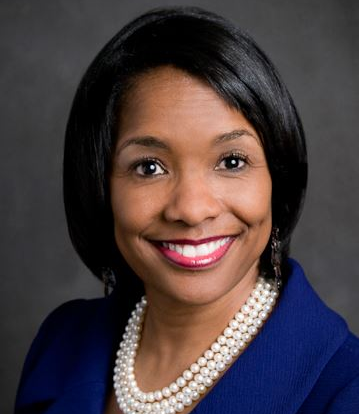
“Because of some recent changes at the federal and state levels, as well as the more than $284 million that we have invested since 2004 in improving our ground infrastructure and capturing greater operational efficiencies, this is now the right time for us to look at a rate case,” Carolyn Bermudez, Vice President of Operation for Florida City Gas, told Invest:.

Since the last rate case, FCG has added 400 miles of distribution mains, 55 miles of transmission mains and 5,800 customers. The rate increase will allow for further investment in capital projects to enhance the system, an increase of capacity needs to ensure reliability in the southern part of the system and employee development in the face of an aging workforce.

FCG is committed to containing costs and efficient management, but like everyone else in today’s economy, it’s not immune to rising costs.

“We have reduced our annual operating expenses by more than $9 million [since 2004],” Bermudez told Invest:. “In order to maintain the necessary standards of service and reliability for natural gas to meet consumers’ needs, the economic forces are going to push the rates slightly up.”

The rate increases are expected to take effect in late summer of 2018.

For more information, visit the FCG website: https://www.floridacitygas.com/
Small City, Big Impact

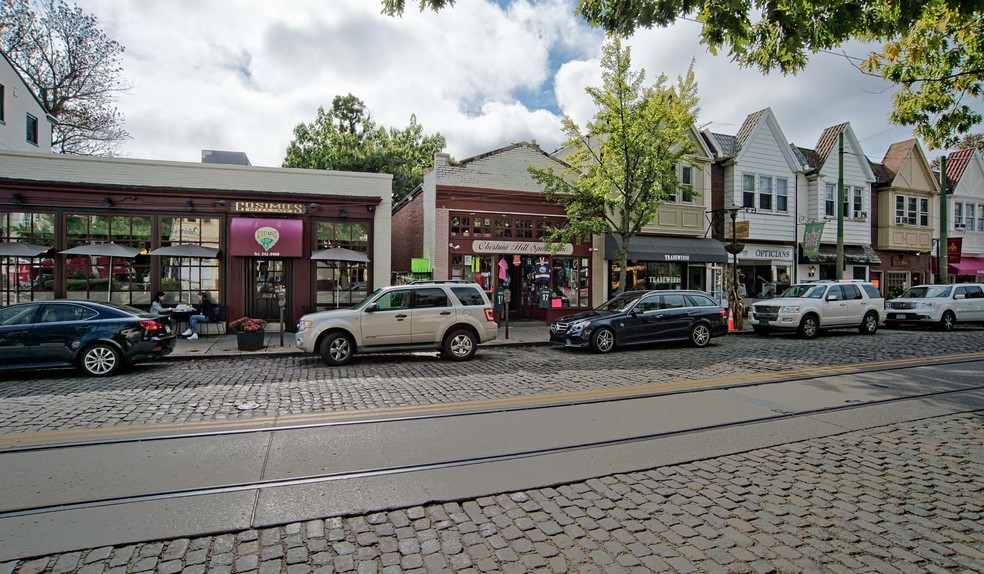
January 2018 — Celebrating an official 20 years as Philadelphia’s Garden District, Chestnut Hill now has something else to be excited about as it kicks off the new year.

A recently conducted Annual Economic Impact Snapshot reveals that Chestnut Hill has an approximate economic impact of $482 million on the five-county southeastern Philadelphia economy. This figure does not even include money spent by visitors who come to shop and dine in the Garden District.

The report was conducted by Econsult Solutions, which came up with the approximate number by analyzing a consortium of 10 nonprofit organizations based in Chestnut Hill. These 10 organizations represent a diverse group of economic sectors and industries; three of them are in education, one in healthcare, two in arts and culture, one in sports, two in gardening and natural resources and the last is the Chestnut Hill BID.

The 10 organizations provide a total of 3,480 jobs and $6.1 million in taxes for the city. The largest of the 10 — Chestnut Hill Hospital — employs 300 people and attracts various patients from neighboring cities. In fact, the City of Chestnut Hill is becoming a hub for residents of neighboring cities who are attracted by the schools, stores and arts and culture.

In terms of Chestnut Hill real estate, the report concluded that homes in the city sell for 136 percent more than average homes in the City of Philadelphia and represent a total of $2.1 billion in market value.

Moving forward, Chestnut Hill seeks to use this momentum to continue this positive pattern. Community institutions of Chestnut Hill are seeking investments from the state and surrounding areas in order to spur growth.

Invest: Philadelphia is keeping an eye on the up-and-coming Chestnut Hill neighborhood and is excited to see what the future holds for this city.

For more information on Chestnut Hill, visit their website: https://chestnuthillpa.com/

PA Governor Tom Wolf in Philadelphia

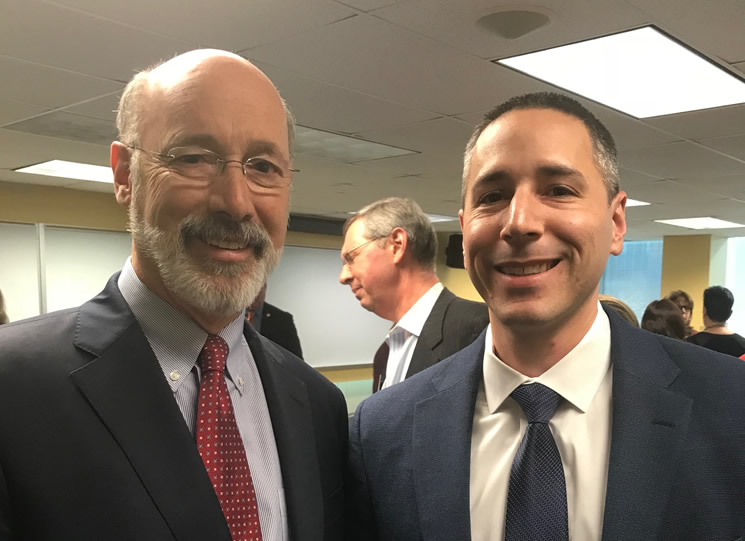
Pennsylvania Governor Tom Wolf and

Executive Director Josh Greenberg of Capital Analytics

When: January 17, 2018

Where: Temple University – Center City Campus, Philadelphia

Website: https://jhp.org/programs/jewish-business-network/

What: JBN January Power Lunch Presenting PA Governor Tom Wolf.  Each month, JBN invites prominent business people and community leaders who have reached accolades in their professional career to speak to our members, provide them with expertise, and offer all participants a unique and exciting networking opportunity.


Black Tech Week

When: Feb 6 – 10, 2018

Where: Tribe CoWorking and Urban Innovation Lab, 937 NW 3rd Ave., Miami, FL 33136

Website: http://blacktechweek.com/

What: BlackTech Week is a minority centric ecosystem building festival based in Miami. Blacktech Week partners with founders, corporations, and the community to create a valuable six-day national experience for investors, entrepreneurs, and techies of every kind. Since Blacktech Week’s inception in 2014 we have convened over 2700 participants, 150+ speakers, and 3 pitch competitions.


The Wait Is Over

 Brightline officially begins its introductory service


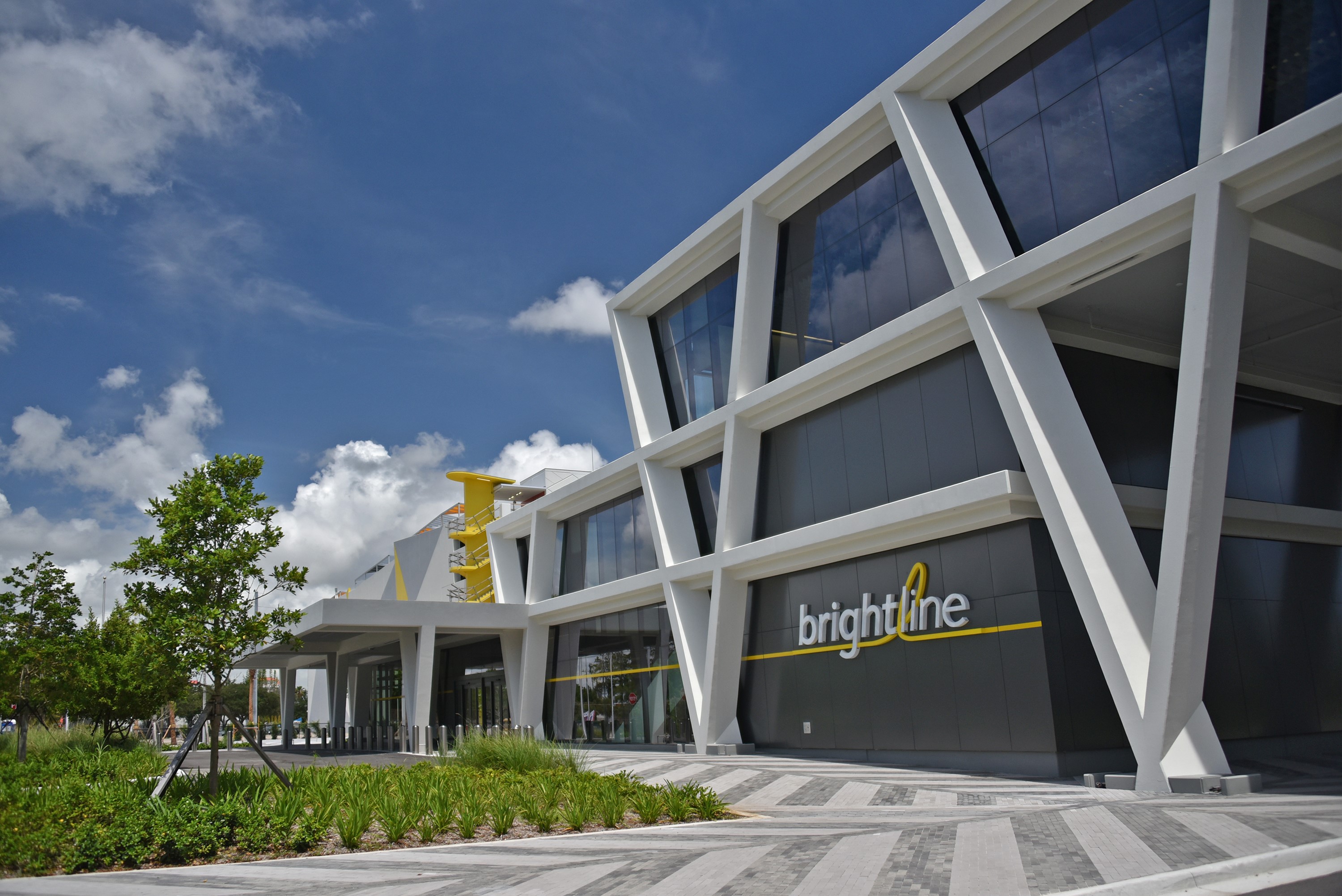
January 2018 — After much anticipation and a few delays, Brightline finally began its introductory service this past Saturday between Fort Lauderdale and West Palm Beach.

While Saturday’s rides were described as smooth, fast and comfortable by many excited passengers, the celebrations were dimmed by an unfortunate tragedy. During preview runs the night before, a 32-year-old woman was struck and killed by a northbound train when she ducked under the already lowered gates and tried to cross the tracks. Despite this dark cloud, riders are optimistic about the new service.

As the only privately owned, operated and maintained passenger rail system in the U.S., the Brightline train offers an unparalleled travel experience in South Florida. All passengers have access to free wifi, outlets and USB jacks while onboard.

A one-way ticket between Fort Lauderdale and West Palm Beach is $10 for its select service and $15 for its smart service. Seniors, active military and veterans receive a 10-percent discount, while children under 12 get a 50-percent discount. Trains will depart from 6:00 a.m. to 11:00 p.m. every day, and the high-speed train makes the trip in about 40 minutes.

The Brightline service to Miami is expected to open in the coming months, and an opening date for the Orlando station has not yet been set.

For more information or to book a ride, visit https://gobrightline.com/.

Governor Wolf Declares Statewide Disaster Emergency

January 2018 — Back in October, President Trump declared the opioid crisis a national health emergency. While the national rate of drug overdose is 16.3 per 100,000 people, that number is more than double in Pennsylvania: 36.5 per 100,000 people.

In 2016 alone, drug overdoses accounted for 4,642 deaths in the state of Pennsylvania, a 37 percent increase from 2015. These horrific numbers led Governor Wolf to declare the heroin and opioid epidemic a statewide disaster emergency on January 10, 2018.

Pennsylvania already has many responses to the epidemic in place. These include the expansion of Medicaid to help 125,000 access treatment, the creation of a support hotline, the establishment of 45 centers of excellence treatment programs that allow 11,000 Pennsylvanians to receive care and the provision of $2 million to expand specialty drug courts.


As part of Wolf’s most recent declaration — the first of its kind for a public health emergency in Pennsylvania — 13 key initiatives are mentioned as means to continue to combat the issue. These include the creation of an Opioid Operational Command Center at Pennsylvania Emergency Management Agency, widening access to the state’s prescription drug monitoring program and easing the drug treatment process. The three main concerns that the initiatives address are enhancing coordination and data collection to bolster state response, expanding access to treatment and saving lives.

Pennsylvania has the fourth-highest opioid-related deaths in the U.S., after West Virginia, Ohio and Kentucky. Governor Wolf’s recent declaration will hopefully spur the actions being taken against the opioid epidemic in the state, saving both lives and families.

For more information on the opioid epidemic and what the Pennsylvania government plans to do to counter it, visit: https://www.governor.pa.gov

Transaction Alley

January 2018 — Atlanta has recently been promoting itself as the global fintech capital, and rightfully so. The fintech sector generates approximately $72 billion in annual revenue for Georgia. Nearly 70 percent of all U.S. transactions are processed through a Georgia-based company, and 60 percent of all payment-processing companies are headquartered in or have operations in Georgia. Additionally, about 100 fintech companies operate in Georgia, including 6 of the 10 largest U.S. payment-processing firms.
With the pool of well-educated graduates from renowned local universities like Georgia Tech, University of Georgia and Georgia State, the industry gains a significant advantage for continued growth in Atlanta.
Focus: Atlanta spoke with a number of business leaders in the banking, finance and technology industries to get their insights on the booming fintech industry. Here is what they said:

Joe Brannen, CEO, Georgia Bankers Association

“We see money flowing into fintech, and we saw people thinking that this was going to disrupt our industry. A lot of money is going into these types of companies, but we have access to the customers. We have spent hundreds of years building a customer basis. The fintech companies developed something but have to find customers. The fintech companies that are now beginning to partner with banks are the ones that seem to be performing the best. There aren’t many Amazons out there, and the successful ones are able to do things smarter, better and faster. Banking is not a new product; it is just a new way of doing things.”

Jenna Kelly, President & CEO of Atlanta Division, SunTrust Bank

“Fintech is something that all banks are paying attention to because it is important to invest in the future. All banks are working out how to better deliver services to clients, so fintech plays a big role in that. It isn’t simply big payment processors; there are a lot of companies that make up the sector that have some innovative ideas, and SunTrust is also involved in this sphere. We were one of the first to develop a consumer online lending platform, called LightStream. It has issued about $5 billion in loans since it started in 2013.”

Cynthia Day, President & CEO, Citizens Trust Bank

“With rapid changes in technology, there are opportunities to explore valuable partnerships with fintech companies. We are keenly aware of how our local and global economies are becoming increasingly driven by rapid decisions and efficient delivery of services. Our ability to deliver financial solutions to our customers through technology creates a win-win for our customers, for developing partnerships and for the economics of our city.”

Eddie Meyers, Regional President of Georgia, PNC Financial Services Group

“Branches still matter, but 60 percent of PNC clients are using financial technology these days, compared to 39 percent four years ago. Many young professionals no longer have a need for retail branches and rely on technology for their banking needs. Our goal it is to make sure we offer the technology, service and convenience to help simplify their lives.”

Barry Mccarthy, Executive Vice President, Head of Network and Security Solutions at First Data, Chairman of FinTech Atlanta

“Very quietly over the past several years, Atlanta has become the global fintech capital. To be clear, Atlanta isn’t the financial services global capital — London and New York share that recognition. However, for fintech specifically, there is nowhere else like Atlanta.”

Allen Maines, Executive Partner, Holland & Knight

“If you’re in the fintech business and you want talented people to run your company, you need to go where the talented people live. Atlanta is home to the largest payment processors in the world and also some of the largest data aggregators. There is a healthy pool of trained people working directly in these industries, but there is also a great deal of related activity.”

Scott Meyerhoff, COO, Incomm

There are three main factors in Atlanta that help with the growth of fintech. One is government support on a state, county and city level. The second is talented workforce. We are blessed to have a number of fantastic universities that feed us with great talent on the technology side and the low cost of living in comparison to other technology hubs. This helps tremendously with talent retention. The third is the entrepreneurial spirit of the people in Atlanta. If you want to exist here, you have to be willing to contribute. The spirit of creation is alive, and with the support of the government, a good workforce and access to the rest of the country, this is a good place to create.”

To find out more about our interviewees above, visit their websites at:

Georgia Bankers Association: https://www.gabankers.com

SunTrust Bank: https://www.suntrust.com

Citizens Trust Bank: https://ctbconnect.com

PNC Financial Services Group: https://www.pnc.com/en/about-pnc.html

First Data: https://www.firstdata.com/en_us/home.html

Holland & Knight: https://www.hklaw.com

Incomm: http://www.incomm.com/Pages/default.aspx

PhilaPort Expansion Will Boost the Regional Economy

January 2018 — In December, PhilaPort was named by Forbes as one of the fastest-growing import ports by value. The port officially registered a $3.34 billion increase in imports in 2017; motor vehicle imports rose by 25.6 percent, oil by 212.3 percent, frozen beef by 4.6 percent, cocoa beans by 8.89 percent and non-alloy steel products by 98.1 percent. 

Now, PhilaPort is poised for more growth in the new year. The nearly completed Delaware River Main Channel Deepening Project, which deepened the port’s main channel from 40 to 45 feet, will allow for more efficient transportation of cargo. This project has an estimated economic impact of $13 million for the U.S. economy.

In 2017, PhilaPort announced its investment in four new cranes. Two of them will arrive in March 2018, and the other two — post-Panamax gantry cranes — are expected by April 2019. The cranes come with a total price tag of $23.5 million and will be able to unload cargo from the largest container ships in the world.

Due to the port’s growth, recent congestion has occurred as it handles an increasing amount of imports. In response, PhilaPort’s current priority is expanding warehouse space.

Last June, PhilaPort spent $10 million on its purchase of the former Produce and Seafood Terminal from Philadelphia Industrial Development Corporation. This site will be used to increase container capacity and warehouse space.

At Packer Avenue Marine Terminal, the port is completing its strengthening of ship berths. In Port Richmond’s Tioga Marine Terminal, the port is developing a 100,000-square-foot warehouse and is also creating a $93 million vehicle-processing center for Hyundai and Kia imports at the Southport Terminal of the Navy Yard. All of the warehouse improvements and construction is expected to be completed before the end of 2018.

These recent projects will undoubtedly have a profound impact on the regional economy. In fact, these improvements are expected to create approximately 7,000 jobs for truckers, rail workers, suppliers and port-related businesses over the next decade. They are also expected to create 2,000 new jobs within the port itself.

Capital Analytics covered a similar topic extensively when working with PortMiami for Invest: Miami during its expansion process and is excited to begin working with the City of Philadelphia.

For more information on PhilaPort’s expansion, visit their website at: http://www.philaport.com


 IC3 – The Institutional Capital & Cannabis Conference (East)

When: January 23-24, 2018

Where: Fontainebleau Miami Beach, 4441 Collins Avenue, Miami Beach, FL 33140

Website: https://www.imn.org/real-estate/conference/Institutional-Capital-Cannabis-Conference-IC3/

What: After a sold-out inaugural event in California, the most authoritative investor forum in the cannabis industry is making its East Coast debut in Miami Beach, Florida.

The first Institutional Capital & Cannabis Conference (IC3) drew investors and industry leaders to Silicon Valley where they gained critical insights into the fastest growing industry in North America. Cowen and Company projects legal marijuana sales will reach $50 billion annually by 2026, from an estimated $6 billion today. Marijuana is legal in some form in 29 states and Canada. Recreational use is legal in eight states, including the entire West Coast, and Canada is expected to legalize adult use in 2018. Public opinion in favor of legalization has reached record levels, and there is a growing movement within state legislatures and the U.S. Congress to end Prohibition.

MedMen, an industry leading cannabis management and investment firm, and IMN, a premier finance and investment conference organizer, have joined their expertise to bring a one-of-kind forum aimed at sophisticated investors seeking alternative asset classes and portfolio diversification. This event was created specifically with the needs of the institutional and accredited investor in mind.

The East Coast edition of IC3 will take place at the Fountainbleau Miami Beach. The program will provide an in-depth look into the emerging cannabis industry and show attendees how to evaluate investment returns in legal cannabis versus alternative investments.