Invest: Miami speaks with Nabyl Charania, Co-Founder and CEO
The lack of professionalized or institutional investment has been an issue for this market and affects companies needing to access growth capital. A startup can raise the initial $200,000 to $2 million from angel investors, but getting to that next phase is more difficult. Recognizing these challenges, Rokk3r Labs launched Cross Valley Capital, a $20-million venture fund, to back emerging fund managers at Iterative Instinct, another $20-million early-stage fund. But it’s not just us: established funds like Accelerate Ventures, Scout Ventures and Mosley are realizing that a lot of good ideas are coming out of Miami.
 South Florida has no shortage of wealth, but most investors do not know how to valuate tech investments. Many investors come here for the real estate, but once here, are open to other opportunities. However, unlike real estate, which is a tangible product, investors unfamiliar with tech need to be guided through the valuation of a tech investment. Everyone talks about exponential technologies and understands we are living in a special moment. The next step is to help a would-be investor understand the power of these technologies—to walk them through where we are and how far we have come in a few years.
Take drones. Eight years ago, you could not buy a drone. Six years ago, they were prohibitively expensive. Today, you can buy one for $30 and use it for your business. Communicating the potential of these technologies is crucial—someone may have made a lot of money on real estate, but where is the money to be made in the future? Opportunities lie at the intersection of exponential technologies. Seizing those opportunities requires, not just a certain knowledge base, but also a sense of imagination.
Building an ecosystem is a long-term project. We need support from public and private sector alike in innovation and entrepreneurship to develop the skillsets people need to become employable. We need to come up with a cohesive way for foundations, like the Knight Foundation, and government entities to become part of the framework as opposed to being the people you go to for money.
Invest: Miami speaks with Xavier Gonzalez, CEO
 Miami is becoming the technology hub of the Americas, and eMerge Americas plays a critical role as the pre-eminent B2B technology event of the Americas. eMerge Americas was established three years ago to catalyze the development of a tech ecosystem and encourage connections between the world’s most important technology companies and top decision makers from Latin America. Building on the foundation of the investments we have attracted and the name recognition we’ve established in South Florida and Latin America, we are becoming the premier platform for the advancement of technology, a launchpad for innovation and an idea exchange.
One of the drivers of our success is the summits under the eMerge umbrella. One of these is WIT (Women In Technology), inaugurated in 2015. Over 6,000 people attended the 2014 conference, 17 percent of whom were women. In 2015, we had over 10,000 attendees—over 33 percent women—and we attribute this increase to the success of WIT.
Another successful addition has been the eGov— Government Innovation Summit. eGov is crucial to world governments looking for ways to address issues affecting their constituents like transit. Meanwhile, the private sector, whether emerging startups or multinational corporations like Cisco, IBM and HP, is developing disruptive technologies and seeking to launch public-private partnerships. eGov brings these two groups together, allowing them to strategically connect.
The eMerge Americas Startup Showcase has featured the most innovative startup companies from Latin America, North America, Europe and Israel, with hundreds of investors connecting with the top entrepreneurs leading these companies. The connections between these innovators and strategic investors resulted in significant investments for many of the participants.
With partnerships with organizations like NBCUniversal, eMerge Americas has established itself as the Americas’ must-attend technology event. This success has helped Greater Miami and Latin America’s tech ecosystems grow slowly but surely.
How banks are evolving to meet the needs of small businesses
Joe Atkinson South Florida Region President – Wells Fargo
How have the needs of South Florida small businesses evolved in recent years?
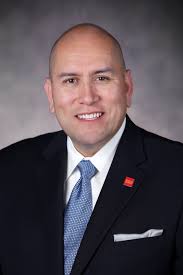 The studies we conducted in 2015 showed that small business owners are looking to make investments into their businesses, including owning their buildings. In addition, interest rates on five-year loans under the SBA 7(a) program have become fixed, so more small businesses are taking advantage of the program. As a result of these trends, small business owners are becoming more intentional about learning how to borrow money and manage credit. Wells Fargo is adding more bankers and opening new branches in Miami-Dade to respond to the needs of all of its customers, particularly in growth areas like Doral, as well as helping small business owners develop sound strategy, like building effective business plans through wellsfargoworks.com, a website designed for small business owners.
Miami-Dade is market dominated by small and medium enterprises (SMEs). What progress has been made to expand access to credit to these entities?
New models of lending are being created to suit the needs of SMEs. We have teams of experts who are familiar with the needs of particular industries and this understanding allows us to accept more types of borrowers. For example, we found that private medical practices need credit for certain types of medical equipment, which cost a certain amount. We subsequently created a lending model to help these practices based on our knowledge of their anticipated needs. We have also noticed that some SMEs are seeking to consolidate or acquire other businesses, and we are facilitating these needs as well.
One growing segment in Miami-Dade is tech startups. As with all startup businesses that are not traditional recipients of bank loans, banks still have a responsibility to help these businesses. Banks need to take an active role in serving startups by offering financial services, like facilitating cash flow and credit management.
What are some of the key challenges South Florida’s banking sector faces?
One challenge is addressing fraud, which, although is a global challenge, we see a high incidence of in Miami-Dade. Today, we are seeing more instances of click jacking, or the use of social media to mislead people into giving up their bank account information. In these schemes, people click on a link promising to deposit checks into their accounts and end up compromising their accounts. Banks have to pay close attention to how fraudsters are using technology and develop ways to counteract it, as well as invest in educating its customers of these dangers.
How operating in the middle space between big and small banks is a sound strategy
Jorge Gonzalez President & CEO – City National Bank
City National Bank was recently acquired by a large Chilean company. How does this event fit within other trends in South Florida’s banking sector?
What happened with City National is unique. Not many community banks in South Florida are foreign-owned. We will continue to 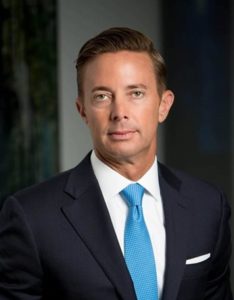 see a separation in the marketplace between the large banks and the smaller ones. Any organization that can fill that middle space, where you still have scale and technology, a good product offering and qualified bankers, but can conduct business in a small bank, “high-touch” way, is well-positioned. This is the niche that City National—which benefits from having a $40-billion parent company—occupies. From a broader standpoint, consolidation will continue to take place, in part because of the impact of regulations; in order to absorb the expenses related to providing proper oversight of a financial institution, you need more size. But the overall metrics in the industry—the costs of retaining talent and technology—also serve as contributing factors.
While consolidation is happening nationally, what developments set Greater Miami’s financial sector apart?
Miami is unique in that it has attracted capital from all over the world. One trend we are seeing is the entry of hedge funds and private equity firms in this market. This generates growth and brings greater liquidity to the marketplace, but also creates more competition. Much of the capital coming in, however, does not directly compete with traditional commercial banks. Non-banking financial institutions offer a different profile of investment than is needed in the marketplace. They complement what banks do and contribute to the maturation of this market.
What are some of the other indicators of the maturation of the South Florida market?
From a financial services standpoint, many banks here have already been through an economic cycle or two. These institutions have matured simply because they have been in existence and are seasoned, and the same can be said for local management teams. While Miami is relatively young compared to most major metro markets, this city has much more global visibility today than ever before. This means that even if we see a momentary pullback in values, either the capital is already here, or those who control it are already acquainted with this market and its offerings and will step in much sooner to deploy it. We are seeing capital coming from different markets— Europe, Asia, South America and even Mexico. It signals another stage of development when global investors feel there is enough opportunity and financial sophistication to warrant continued and large-scale investments. This is another indication of further development, progress and confidence in the overall marketplace.
How banking services are evolving to accommodate a more diversified market
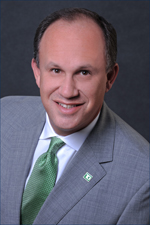
Ernie Diaz Florida Regional President – TD Bank
What does it mean to be a Canadian bank operating in the Florida market?
TD Bank has seen tremendous growth throughout South Florida and it caters to the entire market, not simply internationals. We are seeing growth in all product lines, in particular commercial, small business, health sector and real estate lending, as well as our in-store distribution. The fact that there is such an influx of Canadians in this market gives TD Bank a competitive advantage, as the brand is familiar amongst that demographic, who have been active here for many years. While they initially flocked to South Florida because of the favorable climate and quality of life, they are now seeing this market as advantageous for conducting business.
How have regulations impacted the local banking sector?
Banks have been greatly affected by the current regulatory environment, especially in the realm of international transactions. Regulations have particularly impacted the way we finance foreign trade. This means that Small Business Administration (SBA) loans and export-import programs become even more critical, especially for a market like Miami that relies so heavily on trade. What we are seeing is that as traditional financing options have stalled, private equity and finance firms are filling the gap in financing some of this trade.
What have been the drivers of growth for commercial lending in the past year?
Florida has become an increasingly important market within the U.S. The state’s population growth has outpaced New York’s. The state has seen healthy growth in manufacturing, wholesaling and services, as well as the number of startups. In South Florida, we are seeing high volumes of foreign investment. Real estate has rebounded. We are seeing more capital expenditures. Companies are starting to come back into the black.
As a banking executive and the incoming chair of The Beacon Council, how do you view the development of Greater Miami’s business community?
This is an exciting time in Miami-Dade’s development. There are high concentrations of financial and human capital. This factor, in addition to the fact that there are relatively low barriers to entry in this market, creates an inviting environment for new immigrants and businesses. We’ve proven we can recruit talent to this market—the question is how do we retain this talent. The Beacon Council has been actively cultivating mentorships and linking educational institutions and the private sector. These efforts are building a foundation for long-term growth.
How banks are strategizing to cater to middle market clients
Margaret Callihan President & CEO – SunTrust Bank South Florida
What types of businesses are expanding the types of services that South Florida banks offer in the area?
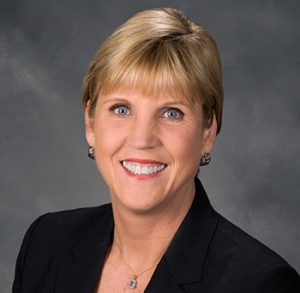 South Florida is comprised of many different businesses and at SunTrust, we focus on delivering our purpose of Lighting the Way to Financial Well-Being to meet all of their unique needs. In this year’s SunTrust Business Pulse Survey, we found that four out of five businesses across the U.S. are preparing for growth. They are planning to stimulate growth primarily by introducing new products or services and some anticipate M&A. We are seeing that trend not only nationally but in South Florida as well.
The entrepreneurial climate in South Florida has nurtured a variety of industries from multinational companies to local businesses. Some of the industries include information technology, life sciences, health care and trade and logistics due to our strategic location for serving the Americas. Moreover, businesses of every size are looking for access to capital and new and innovative exit strategies. As the financial needs in our community have become more complex and specific, specialized services have become more necessary than ever before in the market. Consequently, SunTrust has deployed a robust specialty strategy.
How does having investment-banking services accessible to the middle market impact South Florida?
The economy has changed significantly in recent years, becoming more global and less tied to specific markets. Today, a company headquartered in Miami can do business all over the world without ever having to open additional locations, giving business owners the ability to continue building and growing from Miami. In time, owners may seek to expand their business through acquisitions, sell their business or have a need to raise capital to undertake an expansion of facilities. Much of the business growth in our region can be found in the middle market. Our team of bankers has the ability to leverage the full suite of the investment banking capabilities of SunTrust Robinson Humphrey to better serve these needs when local companies decide it’s the right time to make those moves.
How has the influx of foreign investors and high-net-worth individuals into Miami-Dade County positively affected the economy in terms of local wealth?
What’s exciting is that so much of the wealth we see today is being generated locally, which is different from the historical trend of wealth being retired here. We also continue to benefit from foreign direct investment, as well as organic growth from local business and additional investments into new industries. All of these factors are contributing to the economy’s diversification. It bodes well for the health of a local economy.
How Miami’s thriving international population creates lucrative opportunities for the banking sector
Antonio Cassio Segura President & CEO – Banco do Brasil Americas
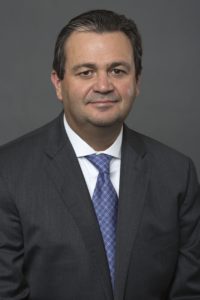
What encouraged Banco do Brasil, the largest bank in Brazil, to establish a presence in Miami?
Miami is an international gateway that welcomes foreigners who are both short-term tourists and long-term visitors. Given their different interests, this is a perfect opportunity for Banco do Brasil Americas, which seeks to provide comprehensive international banking solutions for foreigners, not simply people living in Brazil. The average foreigner stays in South Florida an average of three months a year. During their stay, they need full access to a variety of banking services. We provide valuable assistance to these foreigners by offering credit cards, checking accounts, auto loans, mortgages and investment options in their preferred languages: English, Portuguese or Spanish.
How has the perception of Miami evolved within the Brazilian business and investment community?
Brazilians love Miami. They see the city as an ideal second-home destination because it is very similar to the environment they are used to back home in Brazil. It has the same good weather, beautiful beaches, high-quality restaurants and amazing nightlife that they can find at home, as well as good infrastructure, good schools and security, both in terms of physical safety and safety of assets. Increasingly, Brazilians are buying businesses and commercial property as well.
For those Brazilian investors seeking business opportunities in Miami, what are their preferences and what interests them in terms of property?
There are two kinds of Brazilian investors we are seeing in South Florida. One type is looking to buy commercial property to lease later. These investors want income in U.S. dollars and are looking forward to further diversifying their investments. They don’t simply want to put their “eggs” (money) in different “baskets” (types of investments). They also want to put these “baskets” into different “wagons”—in other words, they want to invest outside of Brazil. These investors are buying stores like CVS and Walgreens, as well as strip malls and shopping centers. The second type of investors have already achieved great success in Brazil and want to further their reach to Miami. Because they want to expand on their assets in Brazil, they are opening affiliates or branches of their existing companies or institutions—especially clinics and schools— in Miami. However, these groups share similar goals for their activity in Miami in that they want to continue succeeding in the market for the long-term. From where the international market stands, it is clear that the investment flows going from Brazil to Miami and back is an irreversible trend. There is no going back.
Invest: Miami speaks with Kasra Moshkani, South Florida General Manager
Uber’s mission is to make Miami more livable and better connected. South Florida is one of the company’s fastest-growing markets, driven both by local and tourist demand. Tourists think of Miami as a world- class city and expect transportation options like Uber to exist here. Meanwhile, local riders tell us that Uber complements existing public transit options. Because ours is a 24/7 service, we are also providing an alter- native to drunk driving, which has traditionally been a concern for a city like Miami, which is known for parties and nightlife.
Over the next few years, we want to continue to leverage our partnerships with the government and the private sector and launch initiatives to create transportation solutions for the community. The transit challenges in the region mean that South Florida offers many opportunities for innovation. This is one reason that Miami is the eighth city where we’ve launched UberPOOL, our carpool- ing service. During Art Basel Miami Beach 2015, we launched UberBOAT in partnership with Stella Artois to provide an alternative transportation option connecting the mainland to Miami Beach. Innovation is also fostered by the fact that Miami is emerging as a center for tech innovation and entrepreneurship. This allows us to forge creative partnerships with those who want to change the area for the better.
Our impact on the local community is also seen in the economic opportunities we generate. Our driver-partners come from diverse socioeconomic backgrounds—some are students at Miami Dade College, while others are retirees looking for extra income. In 2015, Uber launched UberUP (our urban partnership program), an initiative to work with urban communities to recruit 50,000 drivers in the U.S. East Coast region by the end of 2016, and we expect to meet at least 20 percent of that target in South Florida.
How transit solutions are being devised for a geographically challenging metropolis
Alice N. Bravo Director – Miami-Dade County Department of Transportation & Public Works
What are the unique factors that shape transportation development in Miami-Dade?
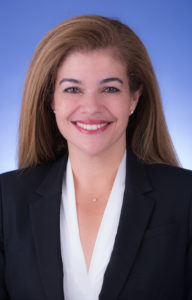 Congestion is a national issue, but it plays out differently at the local level. We have to provide our own solutions, and, thankfully, we have amazing assets: our Metrorail system, the free downtown people mover, and an expansive bus system that all together move nearly 350,000 people per day. As to unique factors, I think our geography provides some challenges. For example, Downtown Miami is on the water and we have to work with bridge systems. Moreover, Miami-Dade— bordered on the west by the Everglades and on the east by the ocean—is highly land-constrained. For transit purposes, the fact that our development is constrained to north-south is actually a benefit. We are fortunate we are not like, say, Denver, which doesn’t have natural boundaries that limit how far from the city center a person can live as the more remote someone finds themselves, the greater the challenge to provide a viable transportation option.
Finding transit solutions is a leading agenda item for the county. What are your department’s top priorities?
We want to ensure our transportation system is clean, safe and reliable. Another goal is improving convenience, and this is being done through adjusting existing routes using data analysis that tells us where the greatest bottlenecks lie. We are also integrating tech solutions to improve signal timing and rider information and developing mobile apps that provide accurate, to-the-minute information of the location and arrival times of buses. While expanding the current infrastructure is part of the long-term solution, this involves decisions that are made outside of our department’s control. For us, it is equally important to increase ridership and utilization of existing assets, not simply adding more to the mix.
How is the department working to increase ridership?
We have hired on team members whose work focuses on “ridership enhancement.” Our marketing initiatives involve developing critical partnerships with key stakeholders—for instance the Miami Downtown Development Authority (DDA), the Greater Miami Convention and Visitors Bureau (GMCVB), local chambers of commerce, as well as corporate entities. We want to spread the message to the public that “hey, you are part of the mobility solution—and what’s more, you can save money and make better use of your time by using mass transit.” Furthermore, we are working to promote the opportunity for employers to join the corporate discount pass program. Employers receive a $130 tax break per participant and can help employees save on parking and ease their commutes.
