Invest: Miami speaks with Brad Meltzer, Southeast President
Compared to major global cities, Miami is an infant. When folks look back on this market, they will say that this is the moment when Miami matured from a vacation destination to a city with strong cultural offerings and business opportunities. Many people in our industry are coming to Miami because of the growth opportunities, not just because their families are rooted here. The more highly trained and educated entrepreneurs that come here, the better “fertilized” this market will be.
A trend in the residential segment is a movement toward larger units. Luxury buyers want more space while out-of-town buyers are bringing their families here, not simply using units as investment property or vacation homes/rentals. Another key development is the 50-percent deposit requirement for pre-construction sales. This has strengthened the buyer pool and validates the market.
Though there is a labor constraint, it is not localized at the general labor level. The volume of development has dramatically increased and the industry is stressed, from general contractors to architects, engineers and developers. In addition, city inspectors are stressed, affecting our ability to get timely inspections needed to maintain schedules. To keep pace, we recruit qualified staff from outside South Florida, while firms in the market are routinely poaching labor from one another.
For a long time, South Florida was stigmatized as an unsophisticated market for construction and design. As an increased level of savvy buyers entered the market, and projects started to command higher prices, the quality of developments and design improved. Today, world-class architects are designing sophisticated and innovative projects here. Additionally, South Florida is emerging as a leader in green buildings. LEED requirements spur builders to integrate eco-efficient, low-voltage systems, temperature and climate control and glazing materials, to name a few.
Invest: Miami speaks to Jeffrey Gouveia, President and General Manager, Southeast Region
Miami is a progressive market when it comes to construction and development. The proof can be seen in the amazing projects 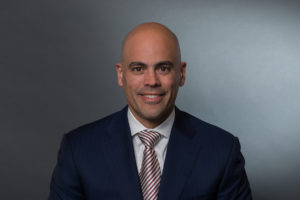 that have gotten approvals and are under construction. Buildings in Miami are getting more complex. They are not just functional, but they are making bold statements. This is a testament to the creative environment that Miami fosters. This creativity allows for a broad diversity of products to be developed. You don’t see much conformity here like you might in other cities.
One challenge to this market’s growth potential is labor costs. We have seen these surge tremendously, and it is a concern for the industry at large. Fortunately, we at Suffolk have a consistent group of trade partners that we work with on many of the larger projects that draw the most labor, allowing us to come up with the most efficient design and make decisions that are calculated, rather than reactive. Intensive planning is key. Part of our strategy is to get people involved as early as possible so that we can make the best plans and begin assembling our teams and allocating labor before construction begins.
The South Florida market continues to show strong potential. High-end luxury residential product remains viable, mostly because there is a limited number of the super high-end units, and these projects are intended for a select group of buyers. So long as the balance remains consistent, that market will continue to see strong performance. Another high-performing area is retail. The fact that there are two giant mixed-use projects— Brickell City Centre and Miami Worldcenter—with massive retail components being built so close to each other speaks to the level of demand for more shopping options in this city. When people think of Miami they think of style; they think of high-end brands. All of these things speak to the fact that Miami is an international city—a true global destination. There is a certain energy here. And because of these factors, people continue to come in droves.
How mixed-use developments are bringing world-class buyers to Miami and making it a global real estate destination
Stephen Owens President – Swire Properties
Does the fact that Brickell City Centre is a mixed-use development insulate it from the slowdown affecting other projects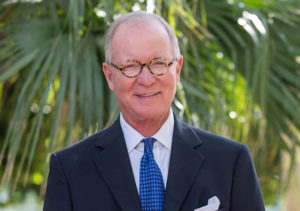 in the Miami market?
Today, retailers across the globe are a little more cautious about expanding because of economic conditions in Europe, Asia and Latin America—all of which have struggled in 2015. While Miami’s condo market remains active, and while Swire continues to sell units at a good pace compared to other developers, this activity is half of what we were seeing in 2013 and 2014. All of these factors have been exacerbated by the strong U.S. dollar, which contributed to the late 2015 cooling of Miami’s condominium market. On the other hand, Miami’s hotel market—the third best in the country—continues to be promising. The benefit of the multi-use concept is that—whether we find ourselves in a booming economy, or one that, like today’s, is a little bit more stable—the synergistic sum of the parts is collectively greater than the individual parts.
What does the future for mega projects in Miami look like?
As the conditions of the market become more diffcult, one’s ability to deliver another project with the same elements as Brickell City Centre becomes much more challenged. We can attest to the complexity of executing a project like this—and in our case, there was only one developer who controlled all aspects of the project. We did not have to coordinate between multiple developers, contractors, architects, owners and lawyers, and it was still a challenge. Developers will have to face these challenges in building mega projects while helping Miami’s transportation issues and contributing to the city’s economy.
In October 2015, Swire submitted building plans for the remaining undeveloped land on Brickell Key. What are the company’s plans for this land?
Some would argue that the undeveloped waterfront land on Brickell Key is the most valuable and prestigious real estate left in Miami’s urban area. We think the site is appropriate for luxury residencies. Moreover, the area’s proximity to Brickell City Centre, with all the new retail and dining options it will offer, will make this land even more valuable than it already is. The more value we create for Brickell City Centre, the more value is added to Brickell Key. It’s like having a fine wine in your cellar that you can only drink once in your lifetime. From our perspective, this land will only become more valuable the longer we wait as there are only a few sites left and we are thinking about what to do with the best one—there is an enhancement value in simply holding. We are going to take our time in the future developing this final site.
Invest: Miami speaks to Michael Wohl, Partner
In Miami-Dade, housing costs, relative to wages, is quite high. Demand for affordable housing continues to rise, but so do the costs of land and construction. Traditionally, affordable housing funds are comprised of federal, state and municipal subsidies. In Miami-Dade County, we have a surtax—an excess tax levied on the sale of land and commercial property— which annually generates between $50 million and $70 million, which can be used to facilitate affordable housing. Another financing vehicle is funds issued through the Local Housing Finance Agency.
Some of our projects are “mixed-income,” comprised of a ordable and market-rate housing. Funding from the affordable components covers the costs of building the parking garage, the infrastructure and much of the construction. Using the savings from that reduced expense, we are able to offer a rent that is below market rate. For instance, our rents at Brickell View Terrace, a project in West Brickell, will be 25 percent less than the market-rate. That project has 100 units of affordable housing and 76 units of market-rate housing. Our Gibson project in Coconut Grove has 56 units, six of which are market-rate. It will provide predominantly senior housing, and also have a school that offers daytime adult education.
We also invest heavily in the public spaces of our projects, installing prominent works of art and incorporating attractive design features. We want to change the public perception of affordable housing, as well as create an attractive community for our residents. Broadly speaking, I think there should be obligations for major developments to provide affordable housing, and these should be enforced. Frankly, I don’t think that major development should go on unless there is an indication that the workforce and the affordable housing needs of that community have been taken care of.
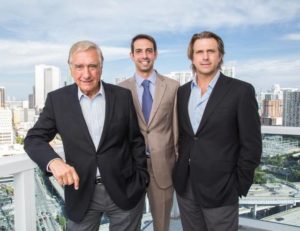
Invest: Miami speaks with Jose Luis F. Melo, Carlos F. Melo, and Martin F. Melo, Directors of Melo Group
 When Melo first began developing in the Edgewater neighborhood in 2001, there was nothing here, but we always understood that this was premium space. While many people believe it is easy to purchase property with water views in the City of Miami, today there are fewer and fewer lots that offer this. Edgewater is the last waterfront frontier in the City of Miami, and, as such, we began acquiring land with long-term plans to develop it.
Our current project, Aria on the Bay, is the last and largest parcel and we refer to it as the “queen of the block.” Apart from the cutting-edge design and world-class amenities, this building benefits from its Edgewater location, which offers excellent views, quick and easy access to Miami Beach, surrounding parks and proximity to important cultural institutions: the Perez Art Museum Miami, the Adrienne Arsht Center for the Performing Arts and, very soon, the Frost Museum of Science, which is currently under construction.
Edgewater is no longer the blighted area it was when we rst started, and word has gotten out. We have seen strong interest in our condominium projects from international buyers. These buyers are coming from very diverse places–from Austria, Morocco and Italy—in addition to the traditional markets from Miami: Argentina, Brazil, Colombia and Venezuela. With recently announced direct flights from Miami to Qatar and Turkey, we will see more newcomers to this market.
Because Miami’s real estate market relies heavily on international buyers, there is concern when you have a strong U.S. dollar like we have been seeing this year. While there has been some impact on condominium sales as a result of the exchange rate, the allure that Miami has for foreign buyers will outweigh the effects of currency devaluation. At the end of the day, the opportunity to live in the U.S.—with all of the associated political freedoms, the physical security, the stability of its economic system, the soundness of its judicial system and processes—is priceless.
How temporary slowdowns do not undermine the strength of Miami’s real estate
David Martin President – Terra
How are developers coping with the slowdown in the luxury condominium market?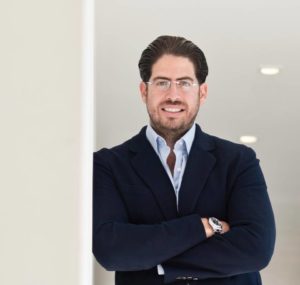
There is an assumption that demand has cooled, but you have to realize that Miami is comprised of different neighborhoods, some of which have higher barriers to entry than others. There is scarcity of oceanfront product, developable areas in Coconut Grove and land in Doral for single-family homes. With scarcity comes an opportunity to develop special projects, as Terra is doing in Coconut Grove, Weston and North Beach, areas that are still seeing thriving demand and price appreciation. In the end, the value proposition offered by certain real estate asset classes in particular submarkets will dictate what pricing will bear. That’s why Terra invests in neighborhoods with high barriers to entry and “voids” in the market. Real estate demand in Miami, whether for residential, office space, shopping centers or industrial, is vibrant and strong—especially over the long term.
For exurban development, what are the key trends?
Whether you are talking about urban or suburban development, people are looking for better quality of life. In the urban core, that exists in walkability, access to parks, shops, restaurants and culture. Buyers accustomed to life in a single-family home are drawn to the idea of living in a high-rise that is home to like-minded residents and new quality-of-life offerings. In suburban areas, you have peace, natural environments, top-rated schools, a village-like community. Critical mass is building in suburbs like Doral, Dadeland and Weston; we’re finding nodes with urban characteristics emerging. We’re seeing mini urban cores with office, hotel and residential being developed around anchors. In the case of Dadeland, it’s Dadeland Mall. In Weston, it’s Cleveland Clinic.
How might you characterize the evolution of the residential luxury product in this market?
Miami is about people discovering it, falling in love with it and then moving here or buying a place. Much of the world is looking to Miami as a stable place to invest. We’re seeing flight capital enter the market from Europe, Latin America and Asia, with the ultra-premium buyer segment being particularly active. What’s interesting is where and how they spend their money once here. Our developments are attracting worldly, sophisticated buyers coming from Latin America, New York and the U.S. If you can pique their intellectual interest with your product, then you are contributing something to the market. We’re seeing a shift toward “intelligent luxury,” which I define as buyers looking to “be” more, rather than “have” more.
How strong sector fundamentals and sophisticated design buoy Miami’s real estate market in trying times
Edgardo Defortuna President & CEO – Fortune International Group
Given that Miami’s real estate sector relies heavily on international buyers, how has the local market been impacted by a strong U.S. dollar?
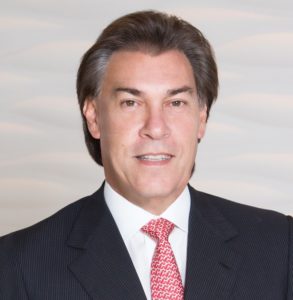 Miami is particularly sensitive to events taking place in other parts of the globe—whether this pertains to currency exchange rates or government policies. At Fortune, we believe that the world is in love with Miami so we don’t worry so much about what is happening in particular countries; rather, we focus our efforts on opening up new markets and forging new partnerships with those who may still be unfamiliar with Miami. Everyone wants a piece of the Miami pie. Our job is to find the right mix and the right timing for them.
Miami’s strategic location and good climate are no doubt attracting investors and buyers. What role do the actual buildings in the market play in elevating Miami’s global profile?
Developers today are not just concerned with how buildings look from the exterior, but also with how they function and interact with the environment. For instance, thorough sun studies are conducted, especially for buildings on the beach, to analyze how shadows are created and to ensure that said shadows do not render certain areas, like the pool, unusable after 1 o’clock.
We are also seeing innovations that make more efficient use of space. For example, our architecture partners Herzog and de Meuron came up with the brilliant idea for our Jade Signature project in Sunny Isles to put the parking underground—40 feet under water that is. It makes a big difference and makes everything in the building work—the integration of the pool, the beach, the restaurants and all the amenities. It really makes a difference in the lifestyle of the consumers. Having this level of attention to detail makes for really spectacular buildings and makes Miami far more attractive to a larger audience.
What are the greatest concerns facing Miami’s real estate market?
I worry most about perception because perception becomes reality. The media and others who report on this market often do not understand how the new financing model in Miami is working. They talk about a supply of 10,000 or 15,000 units, but don’t mention that 80 percent to 90 percent of those units have already been sold, with 50 percent deposit. Those deposits are used to finance construction so the leverage today is significantly below what it was in the previous cycle. We are financing less that 30 percent of costs through bank leverage, and these are signs of a healthy market.
How Miami’s world-class assets boost the long-term prospects of its real estate market
Carlos Rosso President of Condominium Development – The Related Group
What strategies have developers employed to adapt to a more challenging real estate market?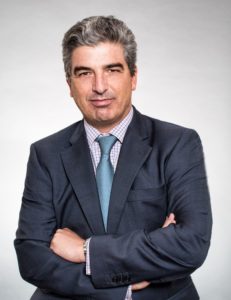
Identifying and tapping into new markets is very important to us. We travel to different countries to connect with potential buyerswho have the means and desires to live in and purchase in Miami. We are paying close attention to the Mexican market aswell as several smaller wealth centers such as Bolivia’s Santa Cruz de la Sierra.
Strong North American economies mean we can continue to source new buyers from the U.S. and Canada, and we continue to offer the best in design, amenities and locations to attract local buyers.
We are also about to launch new micro unit developments to appeal to Downtown Miami’s new younger demographic.
Bottom line, successful developers are those capable of adapting to market conditions quicker than others.
In what areas is Related looking to direct its e orts and investments?
We are looking at possible development sites in the neighborhoods of Wynwood and Edgewater and continuing projects in Coconut Grove and Sunny Isles. We are also focusing on developing the market for smaller apartments as we’ve noticed a large audience for them. There is a high demand for these units from local buyers because of the lower prices. At the same time, we are also looking at sites in Miami-Dade to develop luxury condominiums at $575 per square foot and $700 per square foot.
What challenges must urgently be addressed for Miami-Dade to continue on its growth trajectory?
The good news is that, compared to international cities like Los Angeles and New York, Miami offers the best value for real estate and is growing faster than any other city. Part of the allure is that more than a dozen world-renowned architects are living and working in Miami, attracting international buyers searching for a different look not found anywhere else in the world. They are looking for the best, and Miami is offering it. In fact, last year, we saw buyers of nearly 300 different nationalities, solidifying Miami’s reputation as a premier real estate destination. The biggest challenge now is to create a larger salary base that can support the real estate we’re building. The more cultural offerings there are in South Florida, the more the area will attract intelligent people to live and work here. Miami sells itself on its natural beauty, as the beaches and the weather are popular reasons people come to Miami. However, we also need to portray ourselves as a world-class city, whose identity is not so much rooted in having a good time or being retired, as much as it is in being a professional center attracting the best in nance, banking and innovation.
Invest: Miami speaks with Ozgur Atlan, Consul-General of Turkey in Miami
The opening of a Turkish consulate in Miami is part of Turkey’s strategic plan to expand its commercial, diplomatic and consular presence in the U.S., and to deepen ties to the Caribbean and South America; the Turkish government recognized that to be successful in Latin America it must have a presence in Miami. To fulfill our goals in Miami, we worked to bring Turkish Airlines back to Miami International Airport after 14 years. Direct flights to Istanbul commenced in late 2015. Our next step is to improve our commercial ranking in doing business within the city and the State of Florida. Miami is strong in real estate, tourism, hospitality, aerospace technology and medical equipment and has much to offer Turkey in those areas in terms of mutual trade.
There is already significant business being done with Turkey in Florida, especially in construction: a great deal of stone and marble—key Turkish exports—are being imported by major Florida cities. Other significant Turkish entries into the local market include a multimillion-dollar car modi cation center in Miami; Turkish conglomerate Suzer Group’s joint venture to develop a luxury hotel in Surfside; and the opening of Okan International University’s campus in North Miami. Turkey has also worked to established its local cultural footprint; for the past five years, Miami has hosted the Turkish Film Festival.
As an international medical tourism and cruise destination, and the sixth most-visited country in the world in 2014, Turkey shares many similarities with Miami, and there are many areas of collaboration between the two places. For instance, Miami has a vibrant cruising industry and serves as the headquarters of three of the major global cruise corporations. Since three out of four tourists traveling to Turkey are doing so to take a cruise, we see many opportunities for strategic cooperation. Turkey also has a thriving jewelry industry; with the continued growth of luxury shopping destinations, like the Miami Design District, there will be more Turkish participation. The cultural and commercial affinities between Turkey and Florida will only create more opportunities for growth and increased cooperation.
