How Florida International University is nurturing students to create the best opportunities
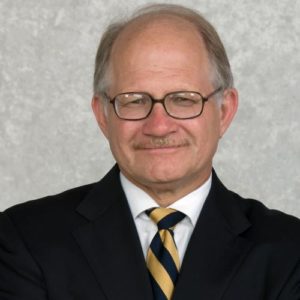
Mark Rosenberg President – Florida International University
 What policies could be implemented so as to further expand research?
We have to find a way to incentivize faculties to be more innovative and creative. That involves giving them a significant part of the revenue created by anything they might invent. Great faculties also need great graduate students, and they need postdoctoral scholars. Postdoctoral scholars are individuals who have got their PhD, but are willing to work as assistants to professors who have already been on the field for a long time.
What are the main challenges to remaining leaders in research? What differentiates the facilities of Florida International University facilities from others?
The main challenge is to continue to maintain the talent here and to continue hiring great professionals. The facilities are critical because advanced research is expensive we need great facilities. We are fortunate that the state has been willing to invest in science and laboratories, as well as engineering laboratories, at Florida International University (FIU). We have been able to double our research since 2009. In 2016, Forbes named us as one of the top large companies to work for in the U.S. We were ranked 64, with more than 5,000 employees, and were ranked second in Florida.
How can the universities better connect academia with industry?
You have to look at what we’ve done with The Beacon Council with the One Community, One Goal initiative where, of seven sectors, we identified six and developed a plan to work directly with industry. Secondly, we are in discussions with The Beacon Council’s advisory group, academia and the business community to determine how we can collaborate. Third, is that we set up the talent development network, which is a portal providing internships for students to work in industry. Industry often claims that we aren’t responsive to their needs but it’s a shared responsibility because the occupational spectrum is so specific and so detailed that it’s hard to believe that industry thinks that we could produce specialists for each of the specializations that they have in their respective company. The Talent Development Network, which isn’t just FIU, has placed over 200 students in careers. All of the institutions of higher learning in Miami-Dade County working together assure that students can understand what their career is going to look like and that they are going to have a potential opportunity with a company. The company can train students and they can come back and take full-time positions. The national data is that 65 percent of students who take internships eventually work with the same company at a salary premium of $12,000 to $13,000.
How University of Miami is capitalizing on the county’s unique location
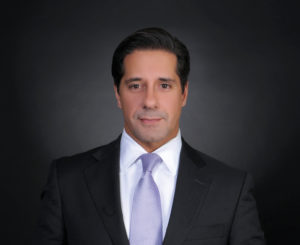
Dr. Julio Frenk President – University of Miami
What is the main role of University of Miami as an institution within Greater Miami?
This university was opened only 29 years after the City of Miami was founded. The founders realized, as early as 1925, that the city needed a higher education center. We have developed a hemispheric strategy, which has five pillars. First, we need to study the hemisphere. By this, I mean the entire continent from Canada to the southern parts of Latin America. Because our hemisphere is the New World, you cannot understand it without also understanding the Old World, emphasizing a global perspective. Our advantage in Miami is that we are truly a cross road between the cities of the Americas. To better study the hemisphere, we have created the University of Miami Institute for Advanced Study of the Americas. The second pillar surrounds education exchange. We want to take education exchange to a whole new level, and for this, we have created the Hemispheric University Consortium where students will be able to move around universities and get credits for the courses they take. The third pillar is research. We already have an extensive and vast network of very talented researchers. The fourth is technological innovation. By partnering with businesses, government and civic organizations in Miami-Dade and South Florida, we can become the most comprehensive research university of the region. And the last pillar is healthcare. Our aim is to expand our already vast amount of patients and forge strategic and collaborative arrangements.
What are the main challenges in preparing today’s youth for an ever-changing job market?
Our success will be measured in how well we prepare our students for the rapid changes they will face in the labor market. Our graduates are entering a labor market that has never changed as fast as it is doing so right now. This is mostly because of advances in automation and artificial intelligence. This means that machines will displace plenty of jobs, but it also means that an important number of new jobs will be created. Some studies show that children entering elementary school this year will, by the time they graduate, work in jobs that don’t exist today. The way to address this is to have a university with an open architecture that allows people to enter as many times as they need to keep themselves updated. In addition to developing certain specific skills in specific areas, we also develop cross-cutting competencies that have to do with critical thinking, creativity, good communication skills, emotional intelligence and entrepreneurship.
 How prepared is the county to compete for new funding?
We are well-poised for federal investment because we have demonstrated a high level of performance in the areas that matter most to Secretary DeVos, and we are working to further expand educational options. While there was once only one Design and Architecture Senior High School (DASH), today we have the Arthur & Polly Mays Conservatory of the Arts and the Miami Arts Studio, which give DASH, or at least its visual arts program, a run for its money. Similarly, there are now a number of programs on equal footing with the New World School of the Arts.
How do your standards compare to those of the rest of the country?
Ours are state standards. They are fairly new and reflect high-stakes accountability. Compared to the rest of the country, we do very well in terms of the levels of complexity, rigor and relevance to the future needs of our community, country and world. The expectations of our elementary education have been further aligned with those of the international community, and Florida’s fourth graders are performing extremely well on international assessments. However, the comparison is less favorable when we look at secondary education. Students in most West European countries, and in places like Hong Kong, Shanghai and Singapore, consistently outperform American students, particularly in reading, mathematics and science. To a certain extent, this reflects the demands of our secondary education, and it is why the requirements to graduate in Miami-Dade exceed those of the state. We demand participation in foreign language programs and exposure to higher-level math and science courses, particularly in choice programs.
How Miami Dade College is preparing its students for the future job market
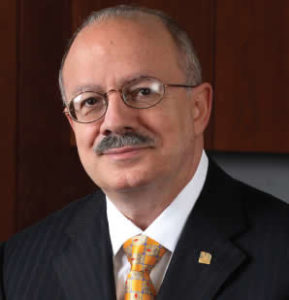
Eduardo Padron President – Miami Dade College
 How are programs at Miami Dade College helping to create a skilled workforce?
In 2016, we introduced a number of very important programs – some of them were a first not just for Miami, but also for Florida. They are designed to meet the needs of local businesses and industries and provide a trained workforce that is able to help with the economic development of the area. This will mean well paid jobs, which will improve and diversify the economy. This includes areas intended to embrace important aspects of Miami’s economy, such as animation, game development and big data. We are also doing a lot to transform the way we approach achieving student success. We want to make sure that all our students have the necessary tools to be able to excel in college. We’re an institution that is a microcosm of Miami, and as such, our student body is representative of this city, especially in terms of diversity. We have students from more than 180 different countries who speak over 90 different languages. Miami Dade College (MDC) is an institution that opens doors to everyone and, therefore, we must communicate effectively with all segments of our population.
What are the main challenges of offering affordable higher education?
The key is making sure those that fund us – meaning the State of Florida – are able to look at education as a vital investment, not an unnecessary expense. Unfortunately, nowadays too many decisions are made strictly in terms of cost analysis. The most important investment we can make in people is to give them the tools they need to help themselves. We are not getting enough support to be able to do the job, to provide a quality education program, to hire the best possible faculty or to introduce the modern technology that we need. This community needs to remind our legislators of this underlying principle of democracy: the institutions such as MDC need to be supported because the create the necessary informed, engaged and skilled workforce crucial to our nation’s success. Business leaders have a special role to play in this effort. What we need to keep in mind is that the world of work today is very different from 20 years ago. The skills that are necessary have changed significantly. When you talk to employers you find that their requirements are much higher than they used to be. They are not only looking for technical competency, but also strong soft skills, the ability to work in teams, be problem solvers, have critical as well as analytical skills and the ability to work collaboratively with other employees. Employers are looking for diversity and people who can be helpful in innovation.
 Consumer choice is becoming more prevalent because either employers are not covering as many of the healthcare needs of their employees, or some employers are no longer covering their employees at all. With federal and private exchanges, the landscape of how people are acquiring healthcare has changed significantly. People are now forced to make a choice in what plan to buy, and they’re generally not well informed. People know how to buy a car, but buying a healthcare plan is very different. You have to know what network it covers and what the deductibles are. Some consumers are buying plans based on price alone, without realizing they have high deductibles or a narrow network. Whether you go through a private or federal exchange, you have to be mindful of what you’re buying. You may not realize the deductibles could end up being thousands of dollars. There needs to be a lot more education. Private exchanges will continue to grow, and time will tell how well that works. It will be interesting to see how the acquisition of healthcare plans change for consumers, based on availability, price and network. As Baptist Health grows and evolves, so does our patient profile. Because some of our technology and services are unique to the area, we collaborate with other healthcare organizations, such as children’s hospitals, to provide services. In Latin America, there are few similar facilities so we communicate our capabilities to doctors there, and they refer patients when necessary. For example, we recently had more than 100 doctors from Latin America present as we opened the doors of our Miami Cancer Institute. We hosted a series of lectures to familiarize them with the Institute and let them know how we can work together. One of our special services in the area of medical tourism is the focus on continuity of care. After patients leave us and return to their home cities, we connect with their local physician to ensure the care loop is closed.
How Miami Cancer Institute’s role in the Memorial Sloan Kettering Cancer Alliance improves treatment options for cancer patients in South Florida
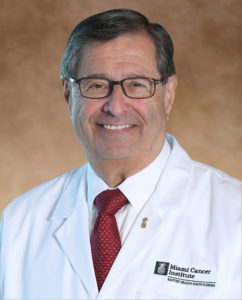
Michael J. Zinner Founding CEO & Executive Medical Director – Miami Cancer Institute
 As the third member of the Memorial Sloan Kettering Cancer Alliance, what is the importance of the hybrid academic and community cancer care model?
Around 85 percent of cancer care in this community is delivered in a hospital setting, not in highly academic research settings. A hybrid cancer center, of which there are now several in the U.S., is the marriage of a community hospital and an academic research institution. Our institution is Memorial Sloan Kettering in New York City. It means we are able to offer the same standards of care including clinical trials, resources and capabilities as one would receive in Manhattan. There is a distinction between what other national cancer centers do and what we are doing. Unfortunately, there are a lot of cancer centers that are branding exercises where the nationally-recognized name on a building creates the idea of better practices. This is not what we have done. For the past two years, Miami Cancer Institute has gone through a series of checks to ensure that the standards of care offered here in Miami are the same standards offered at Memorial Sloan Kettering and through the Cancer Alliance. For each cancer, there is a list of everything that needs to be done, for instance the preparation for surgery and during surgery in the operating room. There is a checklist the size of a telephone book that need to be prepared. This method is very different from other relationships and institutions around the country.
What are the advantages of proton therapy?
There is a difference between traditional X-ray therapy and proton therapy. Traditional X-rays are used to essentially burn a tumor. It burns the tissue on the way in, gets the tumor and then burns the tissue on the way out. There is a lot of harm to normal tissue. Proton therapy, however, has virtually no normal tissue side effects. It is very precise. Essentially, it only burns the tumor, but not the tissue around it. This is critical in children because if the normal tissue of a child is burnt, it interferes with development. It will also be critical in cases of brain tumors where you don’t want to damage the normal nerves around the targeted area. The same could be applied to spinal areas. We are expanding its use into other areas. For example, women who have had radiation therapy for breast cancer are at a higher risk of contracting a heart disease because of the cancer’s close proximity to the heart and the imprecise nature of that therapy. We might be able to eliminate that side effect by using proton therapy. The proton therapy unit is a very high-tech piece of equipment. It will take up to six months to get is calibrated and we expect to be treating patients in late summer 2017.
 What is the potential for telemedicine in South Florida?
I think the potential for telemedicine is tremendous. We have such a lack of primary care physicians here. If you need to go to the doctor right away, many times you can’t get an immediate appointment. Telemedicine would provide us with instant access to a network of doctors and allow employees to get their prescriptions without having to leave work, thus minimizing absenteeism. However, there is still a barrier to entry. We need to continue educating both doctors and patients on the benefits to ensure the concept takes hold.
What are the challenges in educating people about personal responsibility in using their healthcare insurance?
One of our biggest challenges is at the C-level. Executives look at their employee benefits as a costly line item as opposed to something crucial for their employees. Critical information is lost when using web portals as the whole landscape of healthcare is challenging. We have found that the employers that really believe in and care about their employees have less turnover and fewer claims.
How competitive is the health insurance market?
Miami has always been known as one of the most competitive and expensive insurance markets in the country. One of the reasons why is because the population has historically been on the older side. However, our population is getting younger and over the next decade, we will see a reduction in the average age. If we continue the wellness journey, people of all ages will be healthier and this will enable healthcare costs to come down, and continue the availability of affordable health insurance coverage. Another thing to consider is if in fact the ACA is repealed, this will allow insurance companies to sell across state lines, increase competition among each other and lower cost for both employers and employees.
 How was the demand for medical supplies in Miami-Dade in 2016?
The demographics in South Florida are compelling. Baby-boomers are aging, the population is living longer, and that translates to an increasing need for medical care and medical supplies. Demand continues to grow. We’re seeing mid to high single digit growth in our local economy. Nationally, access to quality medical care, products and services has been a bigger problem than it has been in Miami.
How do you address these challenges?
There is a major shift in the delivery of healthcare from traditional in-hospital care to alternative settings as patients start to exercise choice, and as insurance providers look to squeeze cost out of the system. Procedures are moving out of hospitals to surgery centers as more surgeries occur on an outpatient basis. Care is moving more to patient homes and physician offices and out of emergency rooms. The big move in the supply world for us is how to meet that challenge. In 2012, we acquired a company that focuses specifically on physician offices and surgery centers. We have a focus on investing in our e-commerce capabilities for all our clients. Supplies that normally would have only been consumed at a hospital or surgery-level are made publicly available to people accessing care in their homes with family members or other caregivers supporting the administration of those supplies.
What will be the main growth drivers in 2017?
There is no question that the move outside of hospital settings will continue. The question is what will happen to the access points that were provided through the Affordable Care Act. Will they go away? If they do, what will they be replaced with? Will care move backwards for those that are uninsured, will they no longer have access? These are the big questions for us. We’ve heard repeal, l and replace. Changing things rapidly is a relative term on the insurance bearer side.
While South Florida, like the state as a whole, has in past generations been known as a retirement hub, the changing wants and needs of the baby boomers is recalibrating what it means to age in ways that should cause all of us to rethink everything related to aging. South Florida in particular brings a unique mix of cultures as the “Gateway to the Americas.” As a membership organization, AARP is intent on finding ways to connect with the very diverse audiences within the market, and to do that, we must find innovative ways to engage locally. While the AARP Foundation has partnered with the Miami Dolphins to raise awareness about the realities that economically vulnerable elders face, the primary issues – adequate and affordable housing, financial stability, adequate nutrition, and connection to the broader community – extend to a much broader swath of South Florida. AARP Florida is focused on working with allies in the for-profit, non-profit, academic, governmental and philanthropic areas in South Florida who have joined the World Health Organization/AARP Age Friendly Network of Communities. This is a network to identify what communities in the region are doing well and how to improve livability for people of all ages and economic circumstances. Our focus is to identify the needs of members in the community as a whole, so we can meet in ways that empower them to choose how they live as they age. For some, that comes through our advocacy and for others, it comes through the opportunities to learn and grow that we offer and for some it’s through the products and services that AARP Services works with providers to offer. The key opportunity for us is to identify in this diverse market the needs that aren’t being met in our current value proposition and innovate new solutions that are consistent with our values. AARP Florida works with organizations on a variety of education, outreach and advocacy efforts, for which we share common goals, including for-profit companies as well as non-profit agencies and associations.
