How Miami Jewish Health is improving the lives of many of Miami’s elderly residents
Jeffrey P. Friemark President & CEO – Miami Jewish Health
What is the main concept behind the Memory Village, and how does it impact senior care when it comes to dementia and in particular, Alzheimer’s?
The Memory Care Village arose from an event we held on campus a couple of years ago to discuss the future delivery of care with the objective of a long-term master plan for the main campus. One of the things discussed was creating a new model of care for people who have some form of cognitive disorder, from early onset dementia all the way through the various stages of Alzheimer’s disease. One of the buzz terms in our industry is resident-centered care, and we intend to elevate this concept. There are several projects under development. The first is the village itself, designed to house 99 people in individual households. It will be in a setting with open and safe access to nature, other people, and a village square where residents can socialize, listen to music, shop or just relax in a serene environment.
How are centers like Miami Jewish Health System changing what it means to ofer care for an aging population?
There is no simple answer to that. The average age of our residents and patients has increased over the years. Of course, people are living longer and that creates both challenges and opportunities. At Miami Jewish Health, we work hard to keep our residents and our patients active. We are very proud of the quality of care provided. Miami Jewish Health actually provides care for more people in the community than in our facilities with the objective of keeping them out of nursing homes and institutions. Everybody wants to be able to live in their own home and neighborhood for as long as possible. We take care of several thousand individuals in South Florida, both in terms of case management as well as through the Program of All-Inclusive Care for the Elderly (PACE) with the objective of keeping people out of nursing homes.
How can hospitals, especially nonprofits, manage costs at a time when they are on the rise?
We are, by our nature, committed to providing services to our community that we are in. We would not do anything to cut back on quality of care. I am sure that the same response would come from hospitals. However, we have to overcome the issues. Not all organizations will be able to do that, so there will be changes. The marketplace is dynamic. Organizations such as Miami Jewish Health committed to providing services, and doing it the right way, will solve issues. At the same time, we are going to advocate strongly that we are treated equitably from a reimbursement perspective, and not punitively from a regulatory perspective.
How turning to technological solutions is improving the patient experience
Ben Riestra Chief Administrative Officer – Lennar Foundations Medical Center
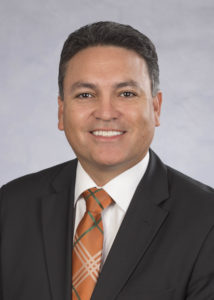 In a such highly competitive market, what makes the Lennar Foundation Medical Center unique?
We were able to bring our existing excellent medical expertise from our Downtown Miami campus into a more minimally invasive environment without compromising any quality of care and safety. The advances in technology combined with the techniques of our physicians, who are able to provide top care in this minimally invasive setting, make it possible for patients to come, have an operation and go home that same day, for operations that normally require a three to four-day hospital stay. That is why this center is essentially a hospital without beds. Providing high levels of care in an outpatient setting is where medicine is going, and it is what we are doing. We have the ability to recover our patients overnight within a 23-hour stay. What is also unique about this center is the interconnectivity we have to our Downtown campus. For example, in the operating room, a physician can consult with colleagues at the Downtown campus, through our interconnectivity system.
How do specialty centers such as the Sylvester Comprehensive Cancer Center and the Bascom Palmer Eye Institute ft into the overall ecosystem?
These centers will continue to have major locations Downtown, with the satellite locations offering the same services. This enables us to extend the reach of our services with an intensive use of technology to be able to take the maximum advantage of our human capital.
How will new technologies at the Lennar Foundation Medical Center affect the patient experience?
We have an app that directs patients straight to where they need to go, depending on their treatment and the doctor they are going to see. The app has unlimited capacity, meaning there are no limits on how many people it can manage at the same time. By telling patients the location of doctors, we can help them to find their way around our facilities as well as save time.
How is the healthcare industry responding to patients seeking higher quality treatments?
Healthcare is the only sector where consumers are not paying directly for what they buy. Historically, the bulk of the cost was in the insurance sector. However, as the costs are shifting toward consumers, they are making more informed decisions and are looking for the best quality to cost ratio. That is what we are delivering here at Lennar Center and across the UHealth system. This is where the greatest challenge is: to see how the industry is going to respond to a patient that is seeking for more value.
The population of South Florida is not only growing dramatically, but it is also aging. Because of our extensive data analysis, we know how the needs of this growing and aging population will translate, with emphasis on oncology, ophthalmology, sports medicine, dermatology and cardiovascular services, and are designing our process accordingly. First, we are restructuring our three hospitals into one medical center to allow us to accommodate more cancer patients. Second, we are recruiting a number of new positions to meet the needs of cardiovascular disease, surgical procedures and final clinical stages, focusing on the needs of the community to deliver care in the appropriate way. Finally, we are placing continued emphasis on expanding outpatient care through a growing regional network. Shifting to outpatient care, when appropriate, enables us to offer better care and will always help to reduce the cost of healthcare. We have continued to develop our services in Broward and Palm Beach Counties. We have also continued to add more services, such as our Bascom Palmer Eye Institute facilities in Naples. One aspect of the Walgreens relationship is for us to develop a regional urgent care presence. We will be providing urgent care services in conjunction with Walgreens in the stores throughout South East Florida. Additionally, as part of the relationship, Walgreens will be helping us manage our pharmacy benefits for employees at the University of Miami and will be working with us on hospital-based pharmacy services, particularly the 340B program, which is an important component in the way that we provide medications. As healthcare providers, we all have to become much more cost sensitive and start looking for ways in which to provide the same level of services while highly reducing the cost. The pressure will be to provide services that reduce costs and it is likely that the Federal Government will maintain the instead of reducing the rate of reimbursement for hospitals.
The development slowdown will most drastically affect luxury high-rise residential condominium buildings, which we are not in the space of financing. The high-rise condo market is extremely cyclical, while other property sectors are more stable and allow us to better manage risk. We have had a record year in residential mortgage. As for regulatory burdens, we are optimistic because all banks have to deal with them. It gets in the way of our agility, responsiveness and costs, which unfortunately get passed on to the consumer. There is a happy medium that is good for everyone, but the pendulum swung to another extreme after the most recent financial crisis. First and foremost, when dealing with a bank our size or smaller, it is with real people that know you. When taking a closer look at what happened during the crisis, the syndicated loan market and the decoupling of the individual with the financial institution, the stripping of residential mortgages on Wall Street and all of the complex structures are what caused the crisis. At the end of the day, if a client ever has a problem, they know they can call us, and we’ll figure it out together. On the positive side, factors propelling the strength of the real estate market – particularly commercial and industrial – have contributed to opportunities for the growth of FirstBank. Foreign capital continues to pour into Miami, and the bank’s expanding portfolio is a reflection of what is available. As the economy continues to do well, our job is to target the right sectors and to deliver on what we promise.
How the South Florida market is impacting banks of all sizes
Tony Coley President – South Florida Region BB&T
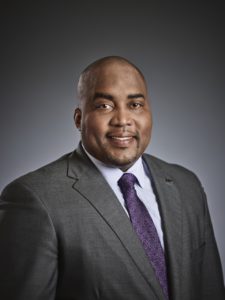 In 2015, Florida banks grew loans at more than twice the average percentage growth of other U.S. financial institutions. What are the main differences in such growth for the different type of institutions?
South Florida is such a dynamic market. There are always opportunities here because of the international influence and our tremendous diversity. For example, we may have a deceleration in a certain sector in the U.S., but internationally that sector may be growing. In that scenario, South Florida may still benefit because of the impact that international demand has on our market. These opportunities impact banks of every size. Therefore, it doesn’t really matter if you are a large bank, a community bank or a regional bank, there are always going to be new opportunities because of South Florida’s dynamic and fast-growing nature. However, there are some specific challenges depending on size. A good example of this is the competition community banks face from regional banks and big banks who have enough scale to provide a larger array of products to their clients and have a proportionally lighter burden when it comes to regulatory compliance. That being said, it is important to underline that all banks are doing better.
How could higher interest rates affect the mergers and acquisitions market?
One of the main impacts of an increase in interest rates is a higher profit margin for the financial sector. As a consequence, on the one hand, financial institutions will have more cash to spend on acquisitions, but on the other hand, the companies that would be willing to sell would get a better price. Therefore, the most likely scenario is an increase in mergers and acquisitions activity.
What are the main opportunities for community banks to grow in the corporate banking market?
The positive overall business environment in the region will naturally bring important growth opportunities for community banks. Another interesting aspect that will potentially benefit community banks; and all banks for that matter, will be the new regulatory environment that could arise from the changing political landscape. The hopes are that there will be fewer regulations and lower taxes, which should lead to higher overall growth. Of course, this is going to be phased in. Nothing happens overnight. But as companies get more confident with the direction of the economy, business activity and investment will rise and, therefore, the banking industry will benefit. In 2017, we will see a much better performance of the banking sector as a whole than 2016. We see plenty of business opportunities.
 There is a favorable tax environment here in South Florida and, when compared to other world-class cities, we are still relatively affordable. We will continue to see some adjustments in the condominium market. There were a lot of projects developers Total Bank was planning to go to market with but we have decided to see how current units are absorbed. I’m bullish about Miami and that ties in with our business. We want to continue to do all the right real estate projects. We have capacity to lend, and we want to continue to do more. We want to continue providing mortgages to foreign nationals in a very prudent and deliberate manner. When it comes to regulations, the general consensus in the industry is that this administration will be good for the banking industry, whether you are looking at Dodd-Frank or the other myriad regulations that have been applied to banks and other businesses. Regulations, in general, are not bad. We need them. But overall, it has increased the cost structure for banks tremendously, and community banks have been impacted more than regional or national banks. A reduction in some of the overall regulation would allow banks to operate with a lower expense structure, which would allow them to pass on savings to clients. Providing services faster would cause a positive ripple effect in way of job creation and economic stimulation. It’s an exciting time to be in Miami and an exciting time to be in our industry. We really made a point in the last 18 months to rapidly evolve and leverage our company’s core strengths.
 Mortgage lending is an area where Professional Bank has done exceptionally well. Even so, we are cautiously optimistic as the rates are increasing. While homes priced under £1 million are doing very well and are expected to continue to do so, rising rates, higher inventories and a stronger dollar have caused a slowdown in the upper end of the market. One item the banking industry anticipates is the possibility of some regulatory relief in the near future. Modifying the Dodd-Frank Act would be very welcomed by the banking sector as a whole, and by smaller- and medium-sized institutions in particular. Dodd-Frank has some good aspects, but it has also been very onerous on the residential lending front. We want to see some common-sense modifications to diminish the difficulties associated with compliance. Unintended consequences and costs occur because of these difficulties, like the distortion in the burden of compliance between big and small banks. The former has armies of people working on compliance but the latter does not. Going forwards, despite a strong dollar and the headwinds we are currently facing in Latin America, Miami continues to offer a strong business environment with expectations of growth in 2017. Our main growth driver in South Florida, commercial real estate, will continue to be a part of every community bank’s product set in Miami. One area in this space that will continue to grow and do well will be construction loans for the middle market homes. We see a lot of opportunity in areas like West and South Miami-Dade.
 The mortgage lending market has performed well. With rates as low as they are now, despite the Fed’s recent increase, buyers and homeowners continue to refinance. However, the new regulation on residential mortgage lending has made it tougher for clients to understand the process. After the 2007-08 debacle in the mortgage industry, we saw a complete pendulum swing to the other side. Now, there are greater requirements for documentation, making the overall process longer. If you haven’t applied for a mortgage since 2008, you’ll be shocked by how much harder it is today. Compliance will also cause issues, becoming a big part of the overall personnel cost for banks. When regulations get tougher, it gets harder for small banks to comply. That’s why there will be more mergers and acquisitions in the upcoming years. The concept that banking regulation is one-size- fits-all is flawed because not all banks are created equal. Putting the same burden on banks regardless of their size distorts competition. This is a factor that needs to be considered. However, deposits continue to be strong and have been for some time now. South Florida is a good market for deposits and rates will continue to help. The amount of small businesses and wealth we have is also positive for deposits. We will continue to see consistent deposit and loan growth, provided credit quality remains strong. There is growth in other asset classes such as retail, industrial and to a lesser extent, office. The short-term growth may be more evenly distributed among these business lines.
How global issues are impacting banking in South Florida
Pablo Pino Market President, South Florida Commercial – TD Bank
What are South Florida’s greatest needs in relation to market demands?
When we speak to business owners, everyone is optimistic about 2017. The recent administration seems very pro-business. People are optimistic, but cautious at the same time, because we are getting broad indications of potential changes, but we have to make sure there aren’t any unintended consequences. A lot of the business owners that we deal with are global players, buying and importing from different parts of the world. They are optimistic that it will be a great 2017, but they are careful about the unintended consequences that may come out of all of these changes. In general, people are positive. We are seeing companies investing in equipment and positioning themselves for 2017. We also see that interest rates are starting to climb a little bit. People that have been standing on the sidelines thinking of acquiring equipment or investing in real estate are moving quicker before the rates get away. Overall it is very positive.
What are the main growth drivers in South Florida?
We saw growth in commercial real estate because people were coming from different parts of the country buying commercial real estate, including shopping centers and apartment buildings. The stronger dollar did mean slight weakness in demand coming from Latin America. South Florida has always been a beneficiary of different parts of the world. If South America weakens a little bit, we see domestic customers come in and invest in South Florida. With the euro being a little weaker also, we haven’t seen a lot of demand from Europe. While demand has shifted from international to domestic, Miami is still one of the great places to do business. We have no state income tax. People with an investment portfolio outside of Florida can come down here and redeploy their assets down here. A lot of investors say doing business here is a lot friendlier than in New York, for example.
With a slowdown in Latin American investors in South Florida and a slowdown in real estate lending, what have been the effects on banks in South Florida?
We weren’t really affected by the slowdown in Latin America. We did see that companies that we deal with in South Florida slow down, but I think that toward the end of 2016, there was some positive things and the problems were more political than anything. Brazil and Argentina, for example, had new presidents. It was a step in the right direction and it created a lot of confidence. In Argentina, the new president is very pro-business. Here in South Florida, exporters are seeing a stronger demand than 18 months ago.
