How small businesses are driving South Florida’s economic growth
Jorge Gonzalez President & CEO – City National Bank
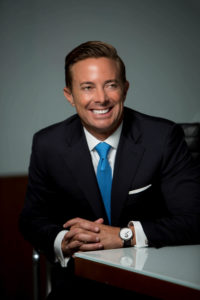 In which area of business do you expect to see the most growth for South Florida?
Small business will continue to be the main economic driver in South Florida, and this is an underserved segment when it comes to banking. Our value proposition is particularly attractive to small and midsized businesses that really want a partner, not just a bank. There are various growing sectors in South Florida, including distribution, technology, healthcare and professional services. We see great opportunity there. Small businesses will continue to grow and expand as the economy continues to strengthen, and we’ll see job growth and innovation across various of these sectors. City National Bank has added new segments – leasing and specialty finance – allowing us to support companies of all sizes with their equipment and financing needs. These new offerings allow us to provide more solutions to existing clients and broaden our ability to serve new clients of all sizes. The marketplace has really embraced our banking model based on personal relationships, local decision-making and providing an excellent client experience.
What regulatory frameworks would you like to see addressed?
I wholeheartedly believe that banks need to be closely regulated, but that regulation should focus on the areas where there is risk and exposure. There has to be a prioritization of regulation to focus on areas with the most risk. Technology is one area that I think we’ll see more regulation, and that makes sense, because of the risks associated with electronic fraud. Information security and cyber security are emerging areas that banks and regulators need to be focused on. It is a new and quickly growing threat that needs to be managed very carefully.
What challenges need to be overcome?
Miami is a brand that has tremendous national and international appeal, and it has emerged as one of the most important places for business in the world. But that growth comes with challenges. Our infrastructure needs to be properly developed to support long-term growth. This is best illustrated by the traffic situation. Affordable housing is another area that we need to find innovative ways to increase the inventory. Companies want to ensure employees have a certain quality of life and that includes being able to live closer to work. Education is an area that we need to continue focusing on. Our public schools have made great strides, but more work is needed, particularly in ensuring we provide opportunities for individuals to be productive members of our community.
Which business line saw the most growth in 2016?
I have the greatest interaction with the community banking line of business, which is our community, retail, consumer and small business focus. As I look at 2016, we benefitted from that distribution because our focus has always been on not only acquiring new customers, but also taking care of our existing customers. We want to build lifelong relationships and the best way to do that is to take care of your existing customers.
What are the expectations of the small business segment?
About 96 percent of businesses are small. They are the largest employer of people. In South Florida, it’s no different. We know that we have a high concentration of small businesses. We have people with entrepreneurial spirits who want to start businesses. Our expectation is that this will continue to grow. For us, it’s a really important segment of our business customer base. Recently, we launched through our Wells Fargo Works website, a new addition to give small businesses more access to credit. Through our small business credit center, now people who are in business can expand and grow. They can acquire other businesses and use our website to learn about what they need to apply for a loan. Once the loan is approved, they can learn about what options they have to use it. We found that, because we pay attention to our small business customers, we know that there is a huge need to develop access to credit in this way. Our expectation is that it will continue to be like it was in 2016.
How might recent regulatory changes, such as the Dodd-Frank, affect institutions in South Florida?
The administration needs time to get settled. We always value consumer protection. We know that good regulation is important. As we look ahead, our hopes will not change. We hope the regulation put in place will protect consumers, expand business and continue to allow us to provide products and services that are important to our customers and our communities.
How local banks are meeting the needs of the market in South Florida
Manny Perdomo CEO & President – SunTrust Bank
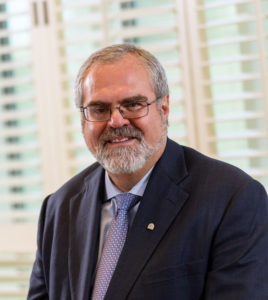 What were the main growth drivers for the sector in 2016?
We believe that healthcare, in all areas such as aging services, medical devices and treatment centers for substance abuse, is going to be a big growth driver in Miami. Other sectors that are rising very fast are ports and logistics, transportation, both international and domestic and education. As for consumer lending, it is safe to say that as employment growth continues, consumers will benefit. Residential real estate is a different story, especially because it has always seen waves of ups and downs. One market stabilizer we have seen is the steady demand from colder regions of the country and Europe. Comparative to some of the major cities like New York, San Francisco, Vancouver, Hong Kong or Singapore, prices in Miami are very reasonable. Crises in other parts of the world have also brought demand to our real estate and banking sectors. The fact that the U.S. has legal and economic stability allows us to offer some level of safety that our clients may not enjoy in their home country. We are seeing a lot of investment in the area now coming from Eastern Europe and Russia.
What are the main challenges regarding security automation? Where do the main opportunities for automation lie?
According to the National Center for the Middle Market, more than 54 percent of organizations in the middle market across the country have experienced at least one type of cyber-security incident over the past year, with 39 percent reporting two or more, meaning that in today’s economy, every business must take this issue seriously. Florida is a state with one of the largest number of fraud cases in the country. A good way for businesses to address this is to have better internal controls and employ the fraud protection services provided by their bank to improve security. A SunTrust study showed that 35 percent of fraud is internal, which illustrates the importance of how companies manage themselves.
With the population in Miami and South Florida in general being significantly younger than in the rest of the state, how has this affected the demand for retirement investment planning and long-term savings?
In 2017, we launched onUp, a program designed to promote financial confidence for all Americans, regard less of age or financial status. Our goal is to encourage 5 million people to take steps toward improving their financial confidence in the next four years. Already, more than 1 million people have taken action. SunTrust believes that this is a crucial issue for our country. Tackling the issue of financial stress is a core goal of onUp.
St. John Community Development Corporation (CDC) was founded by St. John Missionary Baptist Church in 1985. It was founded on the premise to help rid slum and blight in Overtown and to economically empower its residents through development. This long-awaited project will help fill the gap of the much needed “quality” affordable housing stock in Overtown. Much development is occurring around Overtown and projects such as this, within Overtown, will not only serve the residents, but also provide them with a sense of pride and empowerment knowing that they too can live in quality residences. St. John Plaza Apartment has a mix of efciencies – one-, two- and three-bed room apartments. We want to ensure that we cater to the vast array of families – such as the single mothers, single individuals and large families – all who need accommodation. A plus with St. John Plaza is that there is a child-learning center serving children from one to five years old which will be used as a feeder institution into the neighboring elementary schools. We are promoting ourselves as a “true community builder” and will remain in Overtown after the project is finished. We have to ensure that we produce a product that the community can appreciate and enjoy for years to come. Following our objective of empowerment, St. John Town Homes I was designed to enable the ownership of townhomes. It was a way to get those born in Overtown, or those with a close association, to move back and own in Overtown. With St. John Town Homes II we are mirroring that concept; however, as a workforce and affordable housing complex. As a community developer, we have heard the cry by many stating that they are over qualified for affordable housing, but cannot afford market rate housing as it’s offered today. There is a serious need for workforce housing in the Miami-Dade Downtown area. Those who work downtown want to live within minutes from work, but are unable to. Our response to the need is to develop a workforce and affordable housing mix.
The Community Redevelopment Agency (CRA) was created by state statute and our governing bodies are Miami-Dade County and the City of Miami. As such, the mission of the CRA is to eliminate slum and blight. Behind that, the mere elimination doesn’t paint the full picture. We are eliminating slum and blight in an effort to incentivize private investors to come and build projects that would increase the tax base. This would eventually provide more taxes so that we can continue to make investments that will improve the quality of life for the residents of the CRA. The CRA receives funding from both the city and the county through ad-valorem taxes. The county’s portion of those ad-valorem taxes is about 39 percent and the city’s portion is 61 percent. Being within the city, we are a municipal CRA and our board members are the five commissioners of the City of Miami. Any redevelopment efforts that we undertake is approved by our board, from the City of Miami commission. They are more hands on and they help create the vision for where we’re going with our redevelopment efforts. But because we also get funding from the county, the county approves our budget as well. We also have a working relationship with the county commissioner for this area. With the strategic location of Overtown, the CRA has been able to successfully attract large scale projects such as Miami Worldcenter and All Aboard Florida’s office headquarters. This is due to our proximity to Downtown Miami, the beaches and the airport that are also close to Overtown. Modality is a factor because Brickell, Miami Beach and the airport are all places within 30 minutes or less from Overtown. This attracts our partners. The land right now is also the least expensive in the area. The CRA also has the ability to provide incentives for their projects. We have tools such as tax increment financing, bond issuance and assistance with permitting. Additional tools include infrastructure upgrades, as well as land assemblage for large scale projects.
How the Southeast Overtown/ Park West Community Redevelopment Agency (SEOPW CRA) is making the city a better place to live
Keon Hardemon – Chairman, Miami City Commission – Chairman, SEOPW CRA
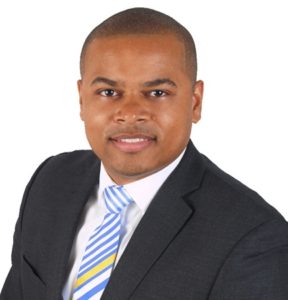 What are Overtown’s current major needs and how is the CRA and the board overall addressing them?
The needs of the Overtown community varies – affordable housing, infrastructure, and job training are the foundation. The CRA has invested millions into enhancing the quality-of-life. The agency is responsible for the creation of several new affordable housing developments, such as Island Living, Courtside Apartments and Plaza at the Lyric. In addition to creating new housing stock, the agency works to preserve existing structures. Town Park North, South and Village are housing communities that are recipients of the CRA’s rehabilitation grants that will restore and enhance the homes. This effort is intended to preserve homeownership within the community. In addition to housing, the CRA has also made investments in improving businesses. The restoration of Overtown’s historic Josephine and Dunn Hotel is an example of this effort. The formerly dilapidated structure will now operate as a bed and breakfast. We are taking community assets that were in disrepair, repairing them and providing destinations for visitors to come and experience Overtown. The development of the Overtown community also encompasses the development of its people. Here in the CRA, we have made a substantial amount of investment into job training for our residents. Programs such as Hospitality Employees Advancement and Training Inc. provide a curriculum for Food and Beverage, Culinary and Hotel Operations. This initiative will help to enhance resident’s ability to secure employment opportunities in South Florida’s growing industries.
What are Overtown’s plans for the workforce housing segment?
To me, workforce housing should be affordable housing because affordability is relative. Individuals such as our young attorneys, government employees, and educators struggle to pay market rate for housing. People who work, need an affordable place to live, that’s safe and appears in the same light as market-rate units. The CRA has plans to develop these types of properties. We have issued bonds that will generate funds to go towards developments. We also have financing that we are capturing money from through the development that’s happening with Moishe Mana in Wynwood. That will result in contributions upwards of $7 million. In the CRA, we are always looking at ways to involve new partners. Anytime we do a new development, we want to increase the number of housing units. The affordability part of the development, for the market and for the workforce is important to that mix.
How Florida Power & Light is investing in infrastructure to increase efficiency
Eric Silagy President & CEO – Florida Power & Light Company
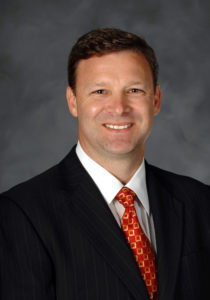
Eric Silagy in Juno Beach on March 10, 2008.
What have been the most important milestones for Florida Power & Light Company (FPL) in 2016?
This past year, in Miami, we invested more than $50 million in transmission and distribution in the Downtown area. The Miami construction boom has been tremendous, but it has also created a lot of challenges. A lot of planning needs to be done in advance to be able to meet the needs of the new developments. That’s why we try and work really closely with the developers, the city and the county to be able to understand what is going to be happening in the next six to 12 months – and even beyond– so we can anticipate and execute the proper investments in an orderly and efficient way. We have to find the right balance so we can have growth that is done in a way that is the least impactful to residents as possible, but also provides future opportunities for those who live and work in Miami. Another factor that we need to take into account is being prepared for hurricanes. It is very important that we continue to be able to respond quickly because otherwise, the economic damages could be far worse than the physical ones. For example, electric cranes operate PortMiami, meaning they need electricity to operate reliably. If the power goes out due to a storm, the port stops operating, which is why we made important investments to strengthen the infrastructure of the port.
What has been the impact of the smart grid technology in Florida’s electric grid?
We have one of the smartest grid systems in America. Smart grid technology has completely changed the way we see and operate the electric grid. All customers have smart meters, except a small handful that specifically requested not to have them. We have invested a significant amount of resources in technology that now allows us to anticipate possible problems with the grid. The electric grid sends us signals about how it’s operating in real time, showing us what possible failures we could experience so that we can correct them before a problem occurs. We are also using mini-drones to identify certain problems that arise. Once the drone shows us what exactly the problem is, we are able to go in with the correct resources to fix it. This allows us to approach day to day issues proactively instead of reactively, saving a lot of time and money, which helps to keep the electricity bills low. On average, we have been investing in Florida around $3 billion per year over the last six years; in 2016, we invested more than $3.5 billion, and in 2017 we plan to invest more than $5 billion. Yet, in the last 10 years, our bills to customers have gone down 14 percent – primarily because the efficiency gained through technology and process improvements provides greater benefits than the cost to invest in it.
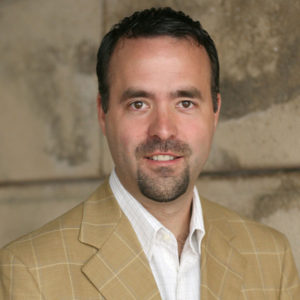 Consumer demand is an important driver of infrastructure development and what MasTec undertakes as a company. Telecommunications is a good example because it is not highly regulated like energy or water, and there is a lot of competition. Municipalities want their residents and businesses to have the best services and best internet speeds, so it is not difficult to get permission to build infrastructure. Local governments are also open as to how they deal with telecommunications companies. This is one of the main areas of infrastructure improvement. While the continued roll out of 4G has been a big driver of growth, there has also been a lot of activity in fiber-to-the-home infrastructure. The desire for increased internet speeds means fiber lines are an important product for us. More and more is being doing over the internet, so consumers are demanding higher speed at home. This is driving our business. Companies such as AT&T have been providing normal internet speeds of up to 50 Mbps. However, in the past year, a new product has come on the market, Gigabit Speed, which is 1,000 Mbps. AT&T already has significant infrastructure in the state because it has provided telephone lines for more than 100 years. Over time it has improved lines, eventually building internet infrastructure which has the main backbone of optical fiber lines, with the lateral, coaxial cables connecting homes and business. The next move is improving this with fiber lines to homes and businesses replacing coaxial cables. A lot of money is spent doing this work in Florida. New fiber infrastructure, called fiber-to-home, provides substantial speed improvements. The same demands are transferring over to the wireless space with mobile technology. This is where 5G will come into play, which is being discussed by all the major telecoms providers. It could be starting as early as 2018. This is a huge driver for our business and the infrastructure sector in general.

05/16/13– Miami– Kerri L. Barsh, with Greenberg Traurig.
Although the impacts of climate change are varied, two of the most important issues for residents and businesses in South Florida are sea-level rise and extreme storm events. But there are also less obvious, although equally important, concerns such as the effects of saltwater intrusion on the potable water supply. In Miami Beach, the local government has implemented a robust stormwater management program to protect from increased sea levels and flooding. The city has also raised roads up to six feet to combat the effects of rising sea levels. One of the challenges of climate change occurs when addressing unexpected consequences. For instance, a restaurant in Sunset Harbour experienced flooding during a torrential downpour and although the street had been raised, the elevation of the restaurant was below the crown of the road. The insurance claim was denied because the area was deemed to be a basement and no longer insurable. The impact on insurance and reinsurance raises critical issues related to climate change. What happens if you can’t insure beyond 15 years because you don’t have accurate projections of the impact of climate change? This issue is likely to have a considerable effect on the affordability of housing in coastal areas and other regions prone to flooding. Miami-Dade County officials have met with representatives of global insurance and reinsurance institutions to discuss methods of identifying and projecting risk, as well as ways to stabilize the market and minimize issues of insurance affordability. Miami-Dade is expected to employ greater usage of public-private partnerships as a means of funding future infrastructure needs, pointing to its recent multi-billion dollar investment in water and sewer infrastructure as one successful, large-scale example. The county is also exploring ways of engaging with the private sector to share the risk, and helping with the financial impact of infrastructure projects over time. Dealing with the effects of climate change will present unexpected issues and unintended consequences that will require considerable ingenuity to address. The success of these initiatives will require local governments and the private sector to work together and take the lead in connection with these critical issues.
