How construction is providing homes for a new demographic of young professionals
Albert Milo Principal & Senior Vice President – Related Urban Development Group
What have been the main achievements of the Liberty Square project?
By far, our biggest achievement is creating a redevelopment plan that fulfills the needs and desires of those that will ultimately call Liberty Square home. From the onset, we faced significant anxiety, fear of gentrification and displacement. We’ve taken those concerns and, along with the community, created a phased redevelopment plan that completely eliminates any displacement and greatly improves the lives of all residents. With Liberty Square, we have an amazing opportunity to not only redevelop 58 acres within Miami’s urban core, but to also create a catalyst for broader redevelopment throughout the area and the city as a whole. There are very few times in your career when you’re able to make such a drastic difference, where you can take something that is in a pretty desperate state as well as creating something that is truly magnificent.
What are the main benefits and challenges regarding workforce housing?
The main challenge of workforce housing is the significant number of young professionals with a salary that is above the cutoff point to qualify for affordable housing but not enough that they can afford to live downtown. So, we have a whole generation of Miamians stuck in limbo and unable to find a home that they can afford. In order to achieve the goal of creating middle income workforce housing, we have been advocating for policies and incentives that the local government can put in place to help us and other developers be able to build the type of housing Miami so desperately needs. We believe it is not only important to focus on areas like Downtown and Brickell, but also bring this approach to areas around the in desperate need of mixed-income housing solutions.
What public policies can be pursued to help build up Miami-Dade’s affordable residential real estate market?
The future of Miami-Dade’s residential market is mixed-income housing. It will require some changes at the local level, which is why we have been advocating specific initiatives such as the deferment of impact fees for workforce housing units, a measure that the City of Miami agreed to implement. Another measure that has been adopted are ordinances that allow for increased densities for mixed-income developments, specifically focused on low-income units. This means that developers can obtain additional density if they take a portion of their workforce and affordable housing projects and make units for extremely low-income residents.
How developers in Miami are adapting to a maturing real estate market
Edgardo Defortuna President & CEO – Fortune International Group
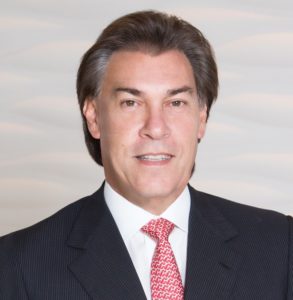 How was the performance of Fortune International Group during the slight sector downturn in 2016?
We are very happy with what we accomplished in 2016, even though, from a real estate standpoint, it was challenging in comparison to 2010 to 2015, where we saw very strong growth and plenty of activity. Toward the end of 2015 and throughout 2016, we saw a deceleration in terms of the speed of the sales and the projects being either built or launched. However, this shows that Miami, from a real estate point of view, has matured as a city. The economic cycles are not that extreme anymore. In 2016, even though there was a deceleration, the markets behaved very well. Developers weren’t selling as many as 20 units a month, but they did sell five to 10, which is considered a success in many cities around the world. The previous speed could not have been sustained for a prolonged period. Projects that are well funded with great sponsorship and great products will continue to be successful and continue to produce positive results. This may not be at the same pace as the period of 2010 to 2015, but they will still be producing value, without decreases in price.
Given that Miami’s real estate sector relies heavily on international buyers, how has the local market been impacted by the current global climate?
A lot of the pre-construction sales in Miami depend heavily on foreign buyers, mainly in Latin American countries. They all have been affected by the current slowdown of their economies and rate of exchange, making it a little bit more difficult to invest in Miami. However, in Latin America there is a culture of investing at least part of the wealth in safe tangible assets like real estate. Demand will continue to be strong. Miami is also seeing a strong focus from the Turkish market. Miami can provide the safety that they need to be able to diversify their assets. The U.K. is also an important market, not only because London has become incredibly expensive, but also because Brexit has forced many investors to look at diversifying their portfolio. Miami offers a lot to these investors.
In a market with many new players entering, how does Fortune International stay competitive?
We stay competitive by staying disciplined, concentrating in a small number of projects but at a high-end level. We love to do that for two reasons. First, with fewer projects, you are able to pay a lot of attention to the details. The key component of all of this is the people you surround yourself with. The quality of the architect and the interior designer, combined with the materials and spaces in which you create – the combination of all these assets together is what makes us successful.
Having just joined Swire from their Hong Kong headquarters, what can you tell us about Miami’s similarities and differences?
Hong Kong is geographically predisposed to be the trade link with China and the rest of the world. You have the protection of Hong Kong with rule of law as well as the professional services that trade requires. It is a great place to be headquartered while you are doing business in China or other parts of Asia. Similarly, Miami is the interface between U.S. and Central and Latin America. It is in a country with reliable laws as well as providing professional service infrastructure – legal, accounting, management consultancy – that a global company would expect. Much like Miami, Hong Kong has one of the busiest ports and airports, serving as an Asian transportation hub, as Miami is for Latin America. They are both geographically well positioned. In Hong Kong, you can quickly reach China, Singapore and Thailand, while in Miami, you can reach New York or Buenos Aires daily.
Brickell City Centre’s Phase One was released in 2017. How have sales for the tower performed?
The buyer profile remains largely overseas, but the mix is forever changing. We have seen a lot of Argentinean and Venezuelan interest, with a slight decline from Brazil. While those interested in buying are still representative of a largely international market, we are beginning to see more interest from people living in New York who are looking for an urban center with a beach. The market, has definitely slowed. There is a whole host of reasons why, from a strong U.S. dollar to political uncertainty in the region. However, what we are seeing, is just a pause for breath, which is healthy for the market. I don’t think there will be a large-scale correction because you can see the breaks already being applied.
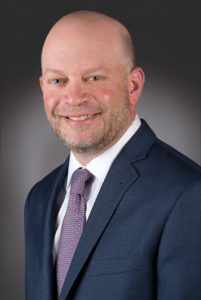 Plaza Construction has a strong year in 2016. South Florida’s population continues to grow while tourism figures remain strong, which is fundamental to continued opportunity. We are seeing a great deal of strength in the retail segment and marketplace requests for these services reflect that. High-end retail, restaurants, office build outs and mixed-use developments are in great demand. Overall, prices for real estate have continued to rise in Miami. International demand is driving some of our on-going projects such as the Ritz-Carlton Residences, One Thousand Museum and The Paraiso community. South Florida’s prices are still considered low in comparison to many international and domestic destinations and therefore more attractive to buyers. However, these rising prices are causing deal making to become more difficult as the spread between profitable and unprofitable projects is narrower. For this reason, increasingly fewer developers want to take this risk. This has led to growth in sectors that have a long-term view on investment as opposed to condominiums, which are a historically short-term marketplace analysis. This tells us that the long-term outlook for Miami is on all accounts, strong. Now that the election has passed, we are going to see growth in international demand, again, as political uncertainty has waned. In general, because Miami is a very young city, offering much investment opportunity, while being a safe haven for that investment, we have a competitive advantage that advantage will continue to burgeon growth in the near term. Allapattah, west of Wynwood, is one of the next frontiers that will be developed in the next 10 to 15 years. One of the factors behind this is the increasing land value in the east and the relatively lower land value in the west. Miami has the ocean to the east and a highly densifying urban core. We must explore new areas of the county to build in.
How Miami-Dade’s unique characteristics are creating an optimistic investment environment
Gerald Greenspoon Co-Managing Director – Greenspoon Marder
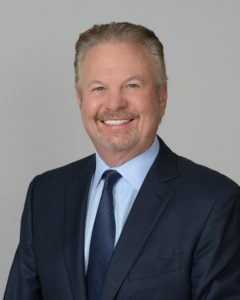 How do you assess the business climate for Miami?
We are quite optimistic and very positive about the continued growth of Miami’s economy. The real estate sector has been strong for several years, for both residential and commercial development. However, some of the high-end residential development could possibly be overbuilt, which could create a market correction and an opportunity for investors. In addition, we have seen strong commercial development, which is exciting to see because it generates additional growth, attracting businesses and creating jobs. This means there are new people joining the market looking for residential housing opportunities. The commercial and residential markets go hand in hand. We feel that the new administration is going to create more opportunity. Less regulation on the business world will create a more attractive business environment. We see Miami continuing to be one of the fastest growing regions of the U.S.
What is the current demand for legal services coming from international investors into Miami?
Miami is an attractive location and a hub for foreign investment. Whenever we think foreign investment is slowing down, another part of the world becomes interested. We continue to have strong investment and trade ties with South America and Central America. It all starts at PortMiami. The expansion of the Panama Canal created incredible opportunities in Miami, South Florida and the State of Florida. In addition to that, the reach has become even broader over the years. The European influx of interest and investors in real estate and business has taken of and continues. We are also seeing the same from parts of Asia. We have a tremendous transportation hub in South Florida and Miami that makes it extremely attractive and simplifies the access into our region.
What are some of the main challenges for Miami as an investment destination?
As with any major city with people visiting, we should watch out for the increase in the cost of living. The price of condominiums and residential property in prime areas has increased dramatically. Miami recovered very quickly from a major real estate recession in 2008 to 2009, and has now achieved the highest prices that we’ve ever seen. That is always problematic. In addition, we always want our political atmosphere in the region to be welcoming. We have to promote and fund the infrastructure that is required in order to handle the large increase in population and investment. This includes transportation and mass transit. These are all critical issues.
I come from Miami, so I want to make a difference in this area. I have friends and family who have fallen on hard times, either through bad luck or poor decisions, and they deserve support. When I first became successful, I tried to help by just giving out money. However, after a while, I realized this only helped so far and did not help people fully reach their potential. I wanted to find a way that I could have a positive impact on people’s lives without simply handing out money, which is why I started buying franchises. Licensing is a way of bringing more job opportunities to the city. Once people have real employment opportunities, you can see how invested they become in trying to improve their own situations. I refuse to invest money or time into something just to make money. I have to be passionate about it because I want to be involved. My career trajectory has been interesting. I had a great career in college basketball, but I started my professional career in Europe. While I was there, I dedicated myself to self-improvement, learning what it takes to become a real professional. Instead of blaming the NBA for making a mistake and not drafting me straight away, I asked myself “What can I do? How can I better myself? How can I put myself in a good situation to be successful?” Now I want to use what I have learned to help the Miami community. You can’t think about Miami without thinking about the Miami HEAT. There are the different cultures, great foods and excitement in this city, and the HEAT embraces all of that. However, there is also Overtown and the inner city life, which also need consideration. Since I have been a part of the HEAT organization, we have done a tremendous job of impacting the entire city. The HEAT has always been great in the community, and they have supported my children’s foundation as well as the City of Miami. We were a football town when I was growing up, and to be part of this team’s evolution, to contribute to our first, second and third championships, to have the opportunity to be coached by the great Pat Riley and have the Arison family be my bosses has been a dream come true.
How Miami’s growth is changing the demands of the real estate market
Ken Krasnow Executive Managing Director, South Florida Region – Colliers International
What changes has Colliers made to adjust to Miami’s fluctuating market?
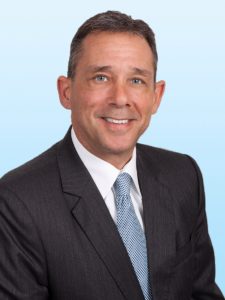 Miami is no longer a homogeneous market, it is a true global city, maturing and diversifying. It has many unique micromarkets that require professionals that are embedded in these areas. This is why we made this our strategic focus. We are no longer product-specific, but now also a neighborhood expert, understanding Miami on the microlevel. Miami is becoming a self-sufficient microcosm. Within three or four ZIP codes, you have an entire ecosystem of office, retail and multifamily that all talk to each other. Investors and occupiers need to understand this ecosystem to a degree that wasn’t necessary before. What we are finding is that new investors or occupiers can only find generic data. They are not well-equipped to know exactly what to build or where to locate; however, we are now providing that level of detailed data.
What kind of products are most in demand in Miami?
The Miami market is now calling for true mixed-use development. Companies and people want to be in self-contained, micro markets. Before, multifamily or condo developments were built with the retail and office component as an afterthought. Now, the market demand dictates that retail-office be planned and designed alongside the residential components. This is a paradigm shift in the way that we are approaching the business. The amount of information that is needed increases as pricing continues to escalate, something we foresee continuing for the years to come. What is happening in Miami is very similar to what happened in New York City: demand keeps coming from all over the world – not just from Latin America. Yet, our physical space is constrained, limiting the amount of building that can occur. When demand keeps increasing and supply has a limit, prices can only go up in the long term.
What can be done to increase amount of affordable housing in the county?
Affordable housing is a huge issue in Miami, and to address those concerns, we launched an affordable housing division in 2016. People should continue to be able to afford to live in Miami. We need to be able to provide workforce housing because if we want to continue to attract employers, we need to be able to attract and retain employees. When we look into all areas of the market, we need to take into account job, population and tourism growth. For the retail and condo segments, when you add in all of these factors our ratio is still at the low end. This means that there is much more to be built.
How the Miami Dolphins put the county on the sporting map
Don Shula Former Head Coach – Miami Dolphins
What are the main accomplishments in your career that you are most proud of? What do you want to be your legacy for the Miami Dolphins?
I’m proud of my two Super Bowl championships, including the 1972 “Perfect Season” Dolphins team, especially since no other team has gone undefeated in the history of the NFL. I’m also proud of winning more games than any coach in the league, because that’s a reflection of the quality of the players and coaches I worked with. The result of that success has made the Dolphins one of the flagship teams in the league, and I’m especially proud that goal was achieved by doing things the right way with hard work, professionalism, and integrity.
What role do professional sports play in helping Miami develop into a sophisticated global city?
We were the first professional team in South Florida, and I’d like to believe that our success helped bring all the different elements of the region together. For the many people here who rooted for us, regardless of their gender, age, income or any other difference, they all had one thing in common – they were all Dolphins fans. I think that common bond helped the city grow and become major league in so many ways.
What are your views on Coach Adam Gase and the current direction of the team?
Coach Gase is an outstanding coach and a great person, and it’s no surprise to me that his team did so well in 2016/2017. Coach Gase, his coaches and players were able to build a winning culture that will be a key to their future success. But that turnaround is also as a result of the leadership of the franchise, headed by Steve Ross, Mike Tannenbaum, Chris Grier, Coach Gase and Tom Garfinkel. They are totally unified in their goal of building a long-term winning team in Miami, and I think you saw the initial result of that philosophy this past season. They’ve been very welcoming every time I’ve been around them, and they’ve made everyone associated with the Dolphins feel like they are all part of the same family. That’s certainly a great foundation to build a successful team.
What impact has the current Miami Dolphins team had on Miami’s overall reputation?
I think the fact that our initial success came at the same time as the rejuvenation of Miami goes hand-in-hand. We helped shine a spotlight on the region, and that exposure helped show many of the great qualities of the city that makes it such an attractive place to work and live. With the Dolphins playing well again and bringing a sense of excitement throughout South Florida, it will add yet another positive characteristic to such a vibrant region.
How the real estate sector is adapting to regulatory and economic changes
Matt Allen Executive Vice President & Chief Operating Officer – The Related Group
With the slowing of economic growth across Latin America, Miami’s traditional real estate buyer, what has been the main impact on the market?
These kinds of market fluctuations are normal parts of the industry, and so it is key for developers to do their due diligence and only launch projects in line with the existing demand. Over the past couple of years, we’ve definitely seen less buyers from Latin American countries such as Venezuela and Brazil, but we’ve also seen a significant uptick in buyers from other, overlooked pools. Ultimately, this slowdown has ensured that only those projects with a strong development team, desirable location and bullet-proof financing structure will get built. This is key marker of a healthy industry and will ensure the continued growth of our city.
The new administration implied that we may see some changes in regulations affecting real estate financing. How can developers prepare for this?
There will be some lessening in the regulations surrounding residential and commercial lending. This will result in increased opportunities for both banks and builders. That said, it is critical both parties continue to do their due diligence and show sound judgment before embarking on new projects. The only other regulation in real estate that changes with every administration is the affordable housing incentives. Tax credits have been different under every president, and we are confident that the new administration will provide business friendly rules. Still, we need to wait and see what regulations will be put into place to include how corporations are affected by changes in the tax structure.
What areas of Miami-Dade present the most growth potential for the upcoming years?
Brickell and Downtown Miami are rapidly growing and have proven to be prime locations for not only renters, but also investors looking into the condo market. Nearby in Edgewater, we were one of the first developers to invest in the area and are expected to deliver one of four Paraiso towers this year, with the three towers following in the next 15 months. In Wynwood, we forsee the potential for the micro-condo market to thrive as the millennial population continues to flock to the neighborhood and surrounding areas. We are also currently witnessing huge demand for retail space in some of the city’s most overlooked areas, such as Miami Gardens and Doral. Doral, especially, is becoming the go-to place to live, work and play, which makes the opening of our CityPlace Doral project so exciting for us.
