How can Miami-Dade better support the growth of startups?
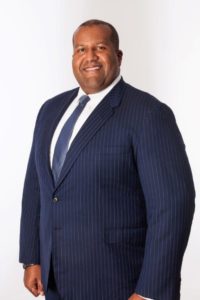 Miami is a robust and sophisticated ecosystem that supports startups. Opportunities for improvement include access to additional sources of capital – particularly on the seed level below $1 million and Series B funding with a level of $10 million to $20 million – and enhanced collaboration with universities and other innovators. It is important that large corporations in Miami-Dade support startups by purchasing their output. They should also provide input on market needs to ensure startups don’t innovate in a vacuum – producing products and services that don’t address market needs. Universities and other innovators in Miami-Dade have a powerful role in ensuring research is commercialized and students are trained in the technical skills the startup community requires.
How do you see The Beacon Council benefitting Miami-Dade’s growth moving forward?
The Connect and Grow initiative is very powerful. We have launched a new accelerator program formed through our trade and logistics committee. Trade and logistics is an important target industry responsible for more than 20 percent of our jobs in Miami-Dade. We have seen that Connect and Grow goes much further than just innovation, it brings together various aspects of Miami-Dade County. Our Urban Initiatives Task Force is doing great work to ensure all sectors of the county are connected, including those that have been historically underserved. We have brought marketing opportunities to those regions of Miami-Dade, such as South Dade, which have not received as much attention as other areas. These could be major game-changers for the region if they deliver as we anticipate. We’ve seen the power of Connect and Grow in achieving better connections with organizations such as the Greater Miami Chamber of Commerce, plus state and national players such as Enterprise Florida and SelectUSA.
How Miami-Dade is putting money where it is needed to encourage economic growth
Carlos A. Gimenez Mayor – Miami-Dade County
What infrastructure improvements are being worked on in 2017 to keep Miami-Dade County an attractive investment destination?
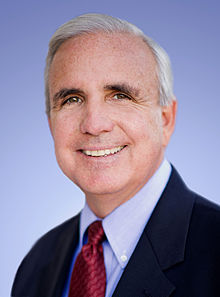 We are continuing our work on the multi-billion-dollar expansion and renovation of our water and sewer system. This is the largest Capital Improvement Project in county history and will continue for the next 15 to 20 years. At Miami International Airport, we are expanding our international carriers. We now have 109, which is the largest number of any U.S. airport. The downturn in Brazil and the impact of the Zika virus have had an effect here, not only at our airport, but also on tourism. Although it’s not a huge hit, it is a hit that we have to absorb. We have a partnership with Royal Caribbean for a $200-million project to expand Port Miami facilities and allow us to increase our passenger traffic. We expect to easily surpass 5 million passengers in 2017.
With the unemployment rate at 5 percent, what is being done to keep it low, attract a skilled workforce and ensure high-quality and high-paying jobs?
Employ Miami-Dade is a program that allows us to go into high-unemployment areas to recruit and train residents who have been chronically unemployed, underemployed or never employed. We train them to take jobs in the construction, culinary and hospitality industries. We’ve had close to 600 placements so far. A lot of those young people had never had a job in their life or definitely not like the type of job they have now. It’s very important that we provide opportunities to all areas of Miami-Dade. We have projects that will be providing job opportunities. We can be proud that we have led the state in job creation, and that the private sector has created 168,000 jobs since 2011. We have continued to diversify our economy by investing in various fields ranging from clean energy and ground transportation to art, film and entertainment. But we need to continue to create jobs for everybody in Miami-Dade. We also have to be cognizant of disruptive technologies arriving in Miami-Dade. The county should be in the best position possible to experience the least amount of disruption when technologies like autonomous vehicles, become common.
What are the main projects being implemented to provide affordable housing in Miami-Dade?
Liberty City Rising is a top priority in 2017. We are leveraging more than $50 million in public funds and $300 million in private investment. The project is going to replace about 700 public-housing units and then add another 800 to 1,000 affordable workforce housing units, transforming 50 acres. It’s probably the largest public-housing community redevelopment in the U.S.
The cruise industry has become the fastest-growing part of the global vacation sector. South Florida, and Miami in particular has reaped huge dividends as travelers from around the world descend on the region to enjoy what we have to offer. In an effort to create even more reasons for consumers to consider ocean vacations, Carnival Corporation has been developing the cruising’s next major transformation. The One Cruise Experience Access Network (OCEAN), creates the opportunity to deliver ever more personalized and memorable experiences to cruisers, through original, authentic broadcast content and our amazing vacation experiences. The centerpiece of OCEAN is a device called the Ocean Medallion. It can be worn or carried and provides the means to amazing personalized experiences based on a guest’s location, their personal preferences and cruise history. The Ocean Medallion leverages the internet of things to create a stress-free time filled with the things holidaymakers enjoy, personalized to their own tastes. The medallion changes everything about the cruise vacation experience by enhancing how our crew interacts with our guests in innovative ways with a focus on making the most of their vacation experience. Medallion Class vacations debut in November 2017 onboard the Regal Princess cruises departing Fort. Lauderdale, followed by the Royal Princess and Caribbean Princess, which will begin offering Medallion Class voyages in early 2018. Looking further ahead, Princess will transform all of the vessels in its feet to Medallion Class ships in coming years. And we as a corporation plan to expand the innovation to additional cruise brands in the future at a pace and schedule that makes sense for our guests, shareholders and operations teams. This is an extraordinary innovation that will not only change what consumers expect from the guest experience in the cruise industry, but in the broader vacation sector, with applications in other industries.
The New World Symphony (NWS) – America’s Orchestral Academy, began as an idea in the late 1980’s as a fresh approach to music education. It is a fellowship program that selects 87 talented graduates of distinguished music schools and conservatories for three years of study. The curriculum is based on the aspirations of each individual player and the faculty assessment of the future of the art form. Alumni of the New World Symphony are members of orchestras across the U.S. and in Europe, South America and Asia. The New World Center is an educational facility designed to engage indoor and outdoor audiences in the heart of Miami Beach. Its outdoor projection wall – an outward-facing expression of NWS’ institutional goal of engaging a broad public – has created instant community, attracting audiences that regularly assemble outdoors for New World Symphony concerts, weekly films, Art Basel Miami Beach video art and other cultural content. As part of New World Symphony’s practical curriculum, fellows are designing performance and engagement strategies to attract multiple audiences. Millennials are a specific target audience. They have come of age in a digital and visual environment. Fellows use social media and visual elements to make the musical experience more powerful. New World’s community programs, such as MusicLab and Side-by-Side, are investing in Miami’s youth, helping to position them for bright futures, while simultaneously giving fellows firsthand experience with mentorship. NWS fellows partner with local programs that have flourished based on the vision and hard work of their leaders. Two prime examples are the Miami Northwestern Senior High School band program and the Miami Music Project. The mission in the beginning is the same today – to prepare post-graduate music students to be leaders. Just now in Miami, donors are becoming investors in art forms and institutions, realizing the work of artists and institutions has direct impact on the economic sustainability and social viability of the community. New World is seeking philanthropic partners who are interested in building a city of the future.
How the legal industry is evolving in a dynamic, post-recession economy
Cesar Alvarez Senior Chairman – Greenberg Traurig, LLP
How has the notion of “legal expertise” evolved since the Great Recession?
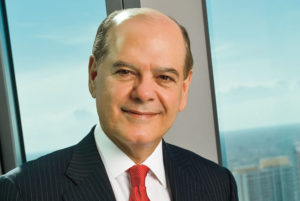 The legal industry is quickly changing and the value an attorney provides is more than about knowledge of legal statutes. The focus has to be on understanding a client’s business and how to solve problems—not just legal ones. The problems a client may encounter will have many facets, and a good attorney should always seek to serve as the quarterback. You want to become the first person the client consults to strategize on finding a solution. This flexible and dynamic approach is what attorneys today need in order to be competitive.
Given these trends, how do you see the legal industry changing in the medium term?
Technology has been the most disruptive factor shaping the legal industry. It starts with setting the expectations that clients have of our ability to provide immediate answers and also serves as an invaluable source of information. As technology evolves, it also presents new business opportunities as our clients face concerns about cybersecurity, white collar defense and related regulatory investigations.
These new challenges are touching everyone, including government, financial institutions, retailers, internet merchants, major corporations and consumers. Looking forward, we will be deploying our efforts to engage clients in these areas, where we have tremendous expertise.
How can you utilize technology to help drive change in the legal industry?
With more than 1,950 lawyers around the world, every attorney at Greenberg Traurig has a unique knowledge base. We need to better access that knowledge base in real time to meet the demands of clients looking for instant answers to solve their problems. We can learn from the Uber model how to utilize technology to instantly match a client with the right attorneys and expertise. Exactly what that is going to look like, I don’t know yet. But we can’t simply tweak the old model. We have to adapt our linear way of thinking to create a new non-linear approach that will work well into the future.
In crafting a growth strategy for a “big law” firm like Greenberg Traurig, what must be considered?
In 2015, Greenberg Traurig saw significant expansion, adding about 150 attorneys to our rosters and boosting our international capabilities. We opened a new office in Berlin, and grew our Warsaw and Mexico City offices, along with additional and important expansion throughout our existing U.S. offices. But it’s not just about growth for growth’s sake. We only look to add lawyers if it’s strategic growth that adds additional quality expertise and resources that align with our existing platform. For instance, hiring a specialist in a niche area, like complex real estate tax law would be leveraging and allow us to more comprehensively service our clients. For a firm our size, two and two must always add up to more than four.
How a long-standing legacy of victory becomes an asset for growth in a new era
Tom Garfinkel President & CEO – Miami Dolphins
What are the key components of the Miami Dolphins’ growth strategy for the medium term?
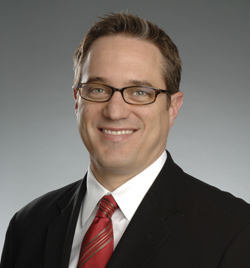 Our goal is to honor the proud winning tradition of the Dolphins and bring the team to a place where it is competing for championships every year. We celebrated our 50th season in 2015. For a part of that time, we were the only professional sports franchise in Florida and we had a lot of success. Because of that history, the team has a deeply emotional and meaningful connection with its fans, who are passionate and loyal. From a business strategy standpoint, we want to respect the passion of those supporters and find new ways to en- gage with them and enhance their experiences with the Dolphins. We are looking at the end-to-end experience, from concessions, security protocols, even bath- room conditions, and are measuring everything to try to set benchmarks and bring about improvements. Additionally, we are looking at new ways to open the dialogue with fans and make their voices more meaningful. We could presume to know what they want, but I find it’s a lot easier and more effective to simply ask them.
The Sun Life Stadium is a landmark infrastructure in the city. What is the strategic vision to grow its impact?
While the stadium is part of the Dolphins brand, our vi- sion is for the stadium to become a global entertainment destination that will host the biggest events in the world, including football. To reach this goal, we’ve invested more than $450 million in renovations, which included moving seats closer to the field and building new seating products and exclusive clubs that create a unique luxury experience. Over half of the tickets sold for the Jay Z and Beyoncé concert in 2014 were bought with credit cards from outside South Florida, indicating that people were coming from out of the area, so we know we can be a destination for big events that reach far beyond our region. We have plans to host more international soccer games and festivals and become a competitive venue to host football championships and hopefully even the World Cup. Finally, we are taking advantage of the fact that Miami is a global curator for culture by improving food offerings and curating artists from around the world to display their work at the stadium.
What are some of the challenges of operating a major league sports team in this market?
Miami offers many opportunities for leisure, whether it’s the beach, art events, music or other sports. Because of this, we have a lot of competition relative to other markets where entertainment options are more limited. However, this also means that we have a tremendous opportunity to engage consumers by creating a variety of experiences using the stadium.
How the internationalization of basketball and Miami mutually reinforce each other
Chris Bosh Player – The HEAT Group
Basketball has become an increasingly international sport. How have you experienced this as a player?
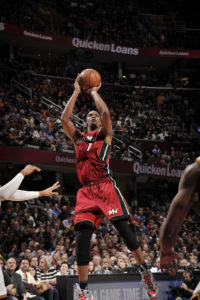
The evolution of technology has made the world smaller. The ability for the NBA to promote and broadcast games all around the world has definitely made a difference in making the sport more popular. I have been to Italy, Germany and many different parts of Europe, and nearly everywhere I go I get recognized. Not only that, but I hear people telling me, “Go HEAT!” They also tell me that they love Miami, or that they have always wanted to come here.
Why do you think that people around the world have this reaction to Miami?
Miami has its own unique flavor. When I think of Miami, I think glamour. I think electricity—the neon signs every- where, the electric pink and blue of the skies and also the energy of the place. There is the touristy side to Miami, but people are not just relaxing here all the time. They come here to play but also to work hard. There is that East Coast drive here. It’s not just a beach town. It’s a town full of ambitious people. It’s the best of both worlds.
How has living in Miami shaped you professionally, particularly in your development as an entrepreneur?
I’ve learned the most from meeting so many different types of people. Every businessperson, it seems, has been to Miami. Miami is also the Gateway to South America, and anyone who wants to do business there, or who is from there and wants to do business in the U.S., comes to Miami. One factor that is important to succeed in this area is being able to speak Spanish, which I have started to learn. This has helped me to connect with our Spanish-speaking fans, which are a very important group. The fact that so many international businesspeople working in different industries—whether it’s real estate or technology—pass through here provides a really amazing opportunity. Just that factor alone allows you to really build relationships and talk to people from all around the world you wouldn’t normally be able to talk to.
What role do you think that sports, and in particular the Miami HEAT, play in promoting economic growth and business development in this market?
Miami is becoming a true global city. It has always been known as this, but I think the infrastructure now is catching on. More opportunities are opening up and people from all over the world are hearing about them and starting to come. Having arts, culture and a world-class team like the HEAT based here attracts more of those people. They can take their employees or clients to a HEAT game, enjoy some entertainment, have a good time—but also do business.
Invest: Miami speaks to Adam Barrett, Director and IMG Executive Vice President
Each March, South Florida hosts the Miami Open in Crandon Park. Formerly the Sony Ericsson Open, the Association of Tennis Professionals (ATP) named the 31-year-old competition “Tournament of the Year” nine out of the last 13 years.
The 2015 tournament featured stars Novak Djokavic, Rafael Nadal, Andy Murray and Venus and Serena Williams. Over 300,000 people at- tend, and ticket prices rose 20 percent from 2014. Visitors enjoyed a beach volleyball tournament, a fashion show and “The Taste of the Open,” serving dishes from the world’s leading chefs. “The Miami Open emphasizes a range of high-quality food experience,” says Miami Open Director and IMG Executive Vice President Adam Barrett. “Whether you are getting a pretzel from a cart or enjoying a meal from one of three sit-down restaurants— of different styles and different levels—or having a drink from a champagne bar or a beer cart, there is something for everybody.” The 2016 tournament will continue its success from March 21 to April 3 with a “Kids’ Day” and a Duran Duran concert.
Lasting two weeks, the tournament generates over $380 million in economic impact, including 14,000 hotel rooms booked—equivalent to hosting the Super Bowl in Miami. Miami receives global exposure through 7,000 television hours broadcast to over 190 countries.
The tournament’s future may be in jeopardy as it lost an early 2016 court dispute regarding a $50-million expansion of Crandon Park. Though International Players’ Championship Inc. has an eight-year contract with the county, the tournament insists the agreement is invalid as it was contingent on upgraded facilities. Resolving the dispute depends on whether the National Parks Conservation Association approves the expansion. If unresolved, the tournament has proposed Orlando, Beijing and Dubai as alternate locations.
Invest: Miami speaks to David P. Samson, President
In 2015, the Miami Marlins saw its attendance, revenue and per capita spending grow—even our television and radio ratings 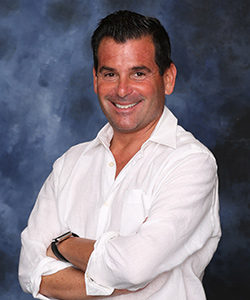 were up. While we had a setback last year when it came to on-the-field performance, we are back on the hope train for 2016 and looking forward to what it will bring as our plan is to bring another World Series Championship to Miami. Part of the success of the team hinges on having and maintaining an effective presence on social media. This is why we have an entire department devoted to marketing initiatives and the digital promotion of our team and baseball as a sport. The goal is very simple: to go viral. This is a challenge as it means having to make ourselves different from others in the digital marketplace, where our users’ desire for information about the Marlins can be fulfilled in myriad ways.
A further challenge is that the average baseball consumer is aging, while the number one growth demographic for sports and media in the world is the 18-to-34 age group. To capture this segment’s attention, we connect with fans on social media during and between games. We are looking for ways we can provide access to our players, our staff and our organization as a way to give users a unique online experience. These efforts seemed to have paid off and we turned the corner this year: our average fan age stayed the same and didn’t get older by even a year, so we have stemmed a 20- year tide.
You cannot have a great city without great sports teams, along with museums, public space, public parks and public transportation. Miami has always been a gateway city in terms of transportation and population, but we are becoming a gateway from an intellectual standpoint, as well. I am confident that, in my lifetime, Miami will become the greatest city in the Americas. But we can’t underestimate the importance of public transportation, public infrastructure and public park space—all of those things are required in order to achieve great city status and maintain it in the long term.
