Spotlight On: Reginald Blaber, Executive Vice President and Chief Clinical Officer, Virtua Health

Spotlight On: Reginald Blaber, Executive Vice President and Chief Clinical Officer, Virtua Health

By: Max Crampton-Thomas
2 min read April 2020 — Virtua Health is an award-winning nonprofit health system that provides a complete spectrum of advanced and accessible healthcare services. Executive Vice President and Chief Clinical Officer Reginald Blaber discusses the efforts at Virtua’s hospitals to fight the COVID-19 outbreak, including the formation of a dedicated team to battle the pandemic.


What accommodations are your hospitals making to handle the influx of patients due to the COVID-19 outbreak? 

Virtua Health has formed a team representing all divisions of our workforce that is dedicated to preparing for and responding to the COVID-19 outbreak. As a comprehensive healthcare system with more than 280 locations, Virtua has considerable flexibility in our ability to re-allocate resources. 


Virtua’s ICU footprint is likely to grow in the weeks ahead. We have close to 1,500 licensed beds among our five hospitals, and we are examining various configurations to ensure we can meet the need as the number of COVID-19 cases continues to grow. 


Virtua has also created temporary respiratory triage centers to support three of its emergency departments (ED). These centers are not specifically for testing for COVID-19, but help triage people who present to the ED with symptoms of respiratory illness, such as cough, sore throat or fever. Two of these centers are in tents outside Virtua Memorial and Virtua Voorhees hospitals. The auditorium inside Virtua Our Lady of Lourdes Hospital has been repurposed for this function, as well. Additional triage centers may be established at other Virtua sites, as needed. 

How is your system working to ensure that patients and healthcare professionals alike are maintaining a safe environment?

Virtua’s many classes and programs have migrated to online formats. This includes bariatric support, prenatal education and our cancer survivorship series. We believe it is vital to keep connected with our community, even if we can’t be in the same room. 


Of course, many hospital departments and services must carry on regardless of the virus. Virtua maintains its commitment to support all people who turn to us for care. As an example, we will still deliver dozens of babies every week, but we have established new protocols to help ensure those families have a safe, personalized and positive experience.


Given the widespread transmission of COVID-19 in our community and the many unknowns about this new virus, we have begun providing a face mask for all Virtua colleagues – clinical and nonclinical – working in our hospitals, patient care settings and physician offices. This includes our home-care providers. We hope that by making face masks available to every employee, we can alleviate some of the anxiety among both our staff and patients. 


Virtua’s supply chain team has worked tirelessly with both our traditional vendors and new connections to ensure sufficient supplies of masks and other PPE. Virtua has also received donated supplies from area businesses, which is greatly appreciated. We recognize that the supplies of masks and other PPE remain finite, and we are committed to being good stewards of these vital resources.

How can the community best assist the local healthcare providers in this time of need?

The best thing people can do for local healthcare providers is to help slow the spread of the virus. Therefore, we implore everyone to follow all the recommended precautions, including staying home and social distancing, abiding by travel restrictions, and keeping at least six feet or more from those you encounter. Also, make sure to wash your hands frequently, especially when returning home from outside, or use hand sanitizer when soap and water are unavailable. 


Virtua Health also asks the people of South Jersey to identify ways they can support the healthcare workers in their lives, such as assisting with chores or meal preparation. However, please be sure to remain physically distant (at least six feet apart) when providing such assistance. For instance, you could prepare a meal in your own home, and then leave it on the healthcare worker’s front porch. 

What would your message be to the local community that is sheltering in place and waiting for a return to normalcy?  

We would tell our community to remain calm and to know that by staying home, they help to improve the overall outcome of this crisis. In a time when the world beyond the front door feels out of control, it’s important to take things day by day and focus on the things you can control.

Do you feel you are receiving enough state and federal support for items you are in need of? What can the state and federal governments be doing better in this regard? 

Collaboration is essential during this national crisis, and Virtua Health is an active participant in the conversations happening on local, regional and state levels. No one could rightly say they were completely prepared for this outbreak, but as a health system, we maintain long-standing plans for 

disasters and emergencies, including pandemics. Our employees have trained for these scenarios, and they have demonstrated that they are prepared to guide our community through difficult and complicated times. They are often thought of as heroes, and I can’t think of a better word to describe them.

To learn more about our interviewee, visit: 

www.virtua.org/

Spotlight On: Dixieanne James, President & COO, Einstein Medical Center Philadelphia

Spotlight On: Dixieanne James, President & COO, Einstein Medical Center Philadelphia

By: Felipe Rivas

2 min read April 2020 — Einstein Medical Center Philadelphia is part of the Albert Einstein Healthcare Network, a nonprofit organization operating in the state of Pennsylvania. President and COO Dixieanne James discussed Einstein’s actions during the COVID-19 pandemic, including the network’s effort to ensure a safe environment and what the community can do to help during this time of crisis.


What accommodations is Einstein making to handle the influx of patients due to the COVID-19 outbreak?

Einstein activated our Incident Command Center very early in this outbreak and worked quickly to develop protocols around patient care, procurement of personal protective equipment and employee health among many others. During our work related to COVID-19, we have designated COVID-19-specific care units; developed detailed surge plans that include identifying and converting procedural areas into inpatient acute capacity, including short procedure units (SPU), post-anesthesia recovery area (PACU, Cath lab, endoscopy), cross training and redeploying staffing, including nursing, physicians and clinical technicians, and emergency department rapid assessment plans with additional surge tent capacity; installation of several additional negative pressure rooms; advanced renting and purchasing of additional equipment, including beds, monitors and ventilators; expanding to the extent possible PPE inventory (gloves, gowns, masks); and investing in new equipment and infrastructure to perform in-hospital COVID-19 l testing capacities.

How is the network working to ensure that patients and healthcare professionals alike are maintaining a safe environment?

We have established several policies to help ensure the safest environment possible for our staff and patients. These include: no visitor policy; all employee facemask policy with continually evolving guidelines; daily temperature screening for all visitors and staff; employee and patient COVID-19 testing in our practices; ongoing and real-time adjustment to practice/care recommendations based on guidance and safety updates from CDC and DOH; and additional cleaning, disinfecting and wipe downs in high traffic areas. 

How can the community best assist local healthcare providers in this time of need?

First, we ask that everyone stay home and stay healthy. Social distancing is critically important to help bend the curve.  We also encourage everyone to donate PPE when possible and look for opportunities to give blood through the Red Cross.

What is your message to the local community that is sheltering in place and waiting for things to return to normalcy?

We all have a big part to play.  The community’s part is to continue to stay home while our caregivers work each day to provide care to those in need. If we all do our part, we’ll get through this together and normalcy will return. We are incredibly resilient but it’s important that we wait until we can safely return things to normal. 

To learn more about our interviewee, visit: 

https://www.einstein.edu/

Spotlight On: Charles Muracco, CEO & Principal Consultant, CLM Advisors

Spotlight On: Charles Muracco, CEO & Principal Consultant, CLM Advisors

By: Felipe Rivas

2 min read April 2020 — Accounting and financial services are a market sector that has been on a steady growth trajectory for years, and with this growth comes a significant increase in competition and the need to differentiate. Charles Muracco, CEO and principal consultant at CLM Advisors, understands this and has evolved his firm into a pure consultancy. During his discussion with Invest:, he talked about his company’s mission, demand growth and his firm’s adaptability to dealing with the challenge of skilled labor. 


How do you differentiate your firm in a crowded marketplace? 

We are a boutique consulting firm that helps businesses with their long-term goals. Although our roots are in accounting services, we have gotten to the point where we rarely talk about tax or compliance with our clients. We focus on helping business owners think about where they want to take their business in the long term. We build businesses by creating their financial road map. We have evolved into a pure consultancy firm. Five years ago, our largest client was in the $35-million range, with the average in the range of $2 million to $5 million. Today, our largest client does $135 million in revenue, and our average is $25 million to $30 million.

Our mission is to help the economy one business at a time, by helping businesses and individuals to be fiscally responsible and understand the importance of a good fiscal strategy. We work our way back to a profit model, and then we build a series of financial projections based on a specific goal. Through this process, we can drive down metrics in every area and connect every aspect of the business to drive it to the long-term goal. 


What is one trend you have observed in recent years that you are currently navigating? 

The economy has improved in South Jersey over the last few years. Businesses are growing, but there’s always a big fear of taking risks. That is a trend we continue to see when it comes to investments and business expansion. In our approach, we devise profitability models and compare that information with what is actually going on in our client’s businesses to make sure they can make informed decisions.


In what sectors do you see the most demand for your services? 

We have a small concentration in the service industries and have been increasing our concentration in distribution companies. We are seeing growth in the construction, healthcare, retail, wholesale, and B2B types of businesses. We are seeing growth across the board, especially because we bring an outsider perspective to the companies we serve. Since we do not focus on just one industry, we are able to provide support to a variety of different types of businesses.


 What is the biggest challenge facing the firm? 

Our biggest challenge has been trying to recruit from among traditional CPAs. CPAs have been conditioned to think historically, and we’ve flipped the traditional model, using the historical information to look forward. We need professionals who have the discipline to dive deep into the numbers. Traditional CPAs are the best at that. It has been a real challenge to get these professionals to understand our business model. As a result, we have been developing our model mostly with younger professionals. In South Jersey, the biggest challenge is the labor pool. Younger professionals are leaving the state, and we need to find a way to retain them and attract more talent to the region.


To learn more about our interviewee, visit: 
https://www.clmadvisors.net/

Spotlight On: Steven McCraney, President & CEO, McCraney Property Company

Spotlight On: Steven McCraney, President & CEO, McCraney Property Company

By: Yolanda Rivas

2 min read April 2020 —  The strength of the commercial real estate sector relies on the major roadways that run in and around Orlando, Steven McCraney told Invest:. He also notes that the location of Orlando is a great anchor to position his business as it provides ease of access to everywhere the company needs to be, as well as how the primary growth of his company has clearly been the warehouse and distribution space. 

How connected is the strength of the commercial real estate market to the major roadways in Orlando? 

The strength of the commercial real estate sector relies on the major roadways that run in and around Orlando. The last 50 years in Florida were all about the I-95 corridor, from Jupiter to Coral Gables. If you were to drive that route today there is not an available parcel of land on the roadway. We believe the next 50 years for Florida are going to be primarily focused on the I-4 corridor, from Tampa Bay to Lakeland to Orlando and onto Daytona Beach. While Daytona has not started to pop yet, the thing that we know is that there are two major roadways in Daytona, I-4 and I-95, which leads us to believe that it will be a good market at some point in the near future.


Why is Orlando the most ideal location for your operations? 

The Orlando economy continues to thrive. It’s attracting new residents, it’s generating new jobs and the increased interest is driving industrial users into the market because of the ability to distribute out of the state of Florida from the region on a one-day basis. We relocated to Orlando because the area places us right in the middle of the state. We operate throughout the Southeast and Orlando, which anchors us in the middle of everywhere that we need to be. It also provides the ability to move easily throughout the Southeast because of the region’s dynamic airport.


In regard to your business operations, where have you seen the most growth?

We are industrial developers. That is our mainstay and focus. This is complemented by third-party property management. As of late, the growth has clearly been the warehouse and distribution space. The total industrial space in Orlando is 123 million square feet, which breaks down into roughly 100 million square feet of warehouse distribution, 13 million square feet of manufacturing and the remainder is made up of office, flex space and distribution product. Here’s what we know: warehouse is the new retail. If a person is ordering online, whether it’s products,  clothing or food, the merchandise is likely not coming from a store, it is almost certainly coming from a warehouse. This is attributed to e-commerce growth and third-party logistics. Over the next few years, we are going to see the markets continuing to change and expand. From an industry perspective, I believe we have a trajectory that is at least 15 years long. While the product may continue to change, that product is coming from somewhere and that somewhere is a warehouse. As social distancing is ever more important and various markets are now under a “shelter in place” order, it is clear that suppliers, like Amazon, are still delivering essentials through package products to each and every home.


What market trends have had an effect on your business? 

We are always looking for ways to leverage technology in our business. Whether it’s roofing systems, lighting or super-flat floors, we want a logistics facility to be plug and play for a customer. The biggest challenge in recent years is rising costs. This can be broken down into the rising labor cost and the cost of materials. For example, the cost to build out a 1,500-2,000-square-foot office space within a warehouse space today can easily run around $250,000. That number exceeds $100 per square foot. At the same time, we have seen strong rent growth and because of that we have been able to keep pace. As we presently enter an economic downturn due to this pandemic, one would expect the cost of goods – both labor and material – will correct. Most of us in the industry went through the last recession and we know how debilitating it was. Moving forward, we have to be cautiously optimistic as we enter this challenging economic cycle and be mindful of our leverage, occupancy, quality of tenancy and our construction exposure.  


To learn more about our interviewee, visit: 

https://www.mccraneyproperty.com/

Networking at Noon, webinars keep Burlington Regional Chamber members informed

Networking at Noon, webinars keep Burlington Regional Chamber members informed

By: Felipe Rivas

2 min read April 2020 — The novel coronavirus forced a global halt to major international, regional and local events. From the NBA season to networking conferences, all gatherings of any size stopped abruptly in an effort to flatten the curve and prevent COVID-19, the disease caused by the coronavirus, from spreading further. However, as the population at large becomes accustomed to social distancing, stay at home orders and self quarantining, many events went from a hard stop to full speed ahead virtually. As the business community adjusts to the challenges of the disruption caused by the coronavirus, many institutions are building value and maintaining relationships with patrons by maximizing the use of webinars, online classes, video conferences and even virtual happy hours.


In its “Staying Connected” series, Invest: is talking to leaders in various markets about their efforts to, well … stay connected.

South Jersey institutions like the Burlington Regional Chamber of Commerce are shifting to video meetings to stay connected and provide value to members and nonmembers alike in the current landscape. “We are providing as much digital content and opportunities as possible to both members and nonmembers. Our goal is to be a partner and resource for the business community at large,” President and CEO Kristi M. Howell told Invest: South Jersey. “We are offering several different options. Networking at Noon takes place every Monday and it is strictly a virtual business card exchange. We are providing webinars, both live and recorded, on issues and benefits around COVID-19. Most importantly, we are providing educational webinars to strengthen professional development. It’s important that we keep our eye on the future and continue to educate our members on essential business tools so that we all pull out of this stronger.”

For the chamber, it’s all about doing “what we do best for our members on a different platform. We have moved everything that we can online and it’s business as usual for most things, but remotely. We have modified communications and have suspended normal newsletters in favor of those that are pertinent to this ever changing situation. We are focusing on highlighting five to seven members a week in our Meet Our Members series and we continue to make introductions for those who are doing business or modifying their business model for today’s climate,” Howell said.  

The video conference platform, Zoom, has quickly become ubiquitous across the virtual events space. Across economic sectors, different institutions are taking advantage of Zoom and similar platforms. To host a successful virtual event, event planners must decide between hosting a virtual meeting or a webinar. “If you expect attendees to mostly just listen,” the best option is a webinar, Zoom advises as part of its digital event best practices. “When you need more back and forth between the audience and the host,” planners should choose a virtual meeting, the platform advises. 

Once the type of digital event has been narrowed down, hosts should hardwire the internet connection to prevent any Wi-Fi-related hiccups or virtual lag. In terms of audio, hosts should test speakers and audio prior to the meeting and minimize any background noise, according to Zoom. Additionally, hosts should dress to impress and make sure to start the virtual event on time. It is important to set the tone of the event and encourage Q&A’s during the virtual meeting or webinar. As a best practice, Zoom recommends the use of the Chat function to keep track of questions and comments. For larger webinars, Zoom offers a Paypal integration to charge the registration fees seamlessly. 

For the time being, social distancing will be part of the mainstream business landscape until at least May. However, many institutions are adjusting and pivoting more and more to the virtual hosting model to build value, share information and regain a sense of community in a time where residents are being asked to self-isolate as much as possible.  

To learn more visit: https://blog.zoom.us/wordpress/2020/03/04/best-practices-for-hosting-a-digital-event/

https://www.bcrcc.com/

Maintaining unity through webinars and industry-specific virtual talks

Maintaining unity through webinars and industry-specific virtual talks

By: Felipe Rivas

2 min read April 2020The novel coronavirus forced a global halt to major international, regional and local events. From the NBA season to networking conferences, all gatherings of any size stopped abruptly in an effort to flatten the curve and prevent COVID-19, the disease caused by the coronavirus, from spreading further. However, as the population at large becomes accustomed to social distancing, stay at home orders and self quarantining, many events went from a hard stop to full speed ahead virtually. As the business community adjusts to the challenges of the disruption caused by the coronavirus, many institutions are building value and maintaining relationships with patrons by maximizing the use of webinars, online classes, video conferences and even virtual happy hours. 


In South Florida, a region known for its events and conferences, different institutions have embraced virtual meetings to build value and maintain close relationships with clients in the midst of social distancing. For the Coral Gables Chamber of Commerce, a chamber known for its networking events focused on covering top-of-mind issues for its members, virtual meetings and webinars have become the go-to instrument to stay connected to its members and coach them through this new business landscape. “At this point in time, in an era of social distancing, we are gearing our efforts toward creating webinars that give our membership and beyond a chance to find out what resources are available to them, how to maintain their business in this socially disconnected economy and coaching them on how to bounce back when that time comes,” Spokeswoman Morgan Mongelia told Invest: Miami. “All our regularly scheduled monthly programming had to be moved to a virtual platform and format,” she said. As part of its virtual offerings, the chamber has a full slate of virtual webinars, in addition to industry-specific teleconferences. “We are also using this time to support fellow community organizations and businesses via personal phone follow-ups to ensure the long-term success of the Coral Gables business community as a whole,” Mongelia said. 

The video conference platform, Zoom, has quickly become ubiquitous across the virtual events space. Across economic sectors, different institutions are taking advantage of Zoom and similar platforms. To host a successful virtual event, event planners must decide between hosting a virtual meeting or a webinar. “If you expect attendees to mostly just listen,” the best option is a webinar, Zoom advises as part of its digital event best practices. “When you need more back and forth between the audience and the host,” planners should choose a virtual meeting, the platform advises. 

Once the type of digital event has been narrowed down, hosts should hardwire the internet connection to prevent any Wi-Fi-related hiccups or virtual lag. In terms of audio, hosts should test speakers and audio prior to the meeting and minimize any background noise, according to Zoom. Additionally, hosts should dress to impress and make sure to start the virtual event on time. It is important to set the tone of the event and encourage Q&A’s during the virtual meeting or webinar. As a best practice, Zoom recommends the use of the Chat function to keep track of questions and comments. For larger webinars, Zoom offers a PayPal integration to charge the registration fees seamlessly. 

Social distancing will be part of the mainstream business landscape until at least May. However, many institutions are adjusting and pivoting more and more to the virtual hosting model to build value, share information and regain a sense of community in a time where residents are being asked to self-isolate as much as possible.  

To learn more visit: https://blog.zoom.us/wordpress/2020/03/04/best-practices-for-hosting-a-digital-event/

https://www.facebook.com/CoralGablesChamber

https://site.coralgableschamber.org/events

https://coralgableschamber.org/


Spotlight On: Kate Saft, Partner, Greenspoon Marder

Spotlight On: Kate Saft, Partner, Greenspoon Marder

By: Max – Crampton Thomas

2 min read March 2020 — As the epicenter of the tourism and hospitality industries, Orlando affords many opportunities for businesses within those sectors and also to the service businesses outside those sectors. During her discussion with Invest:, Kate Saft, a partner with Greenspoon Marder, spoke on the opportunities the Orlando area affords her firm, the benefits of technology and how the COVID-19 crisis is affecting business as usual. 

How has the COVID-19 pandemic affected your firm? 

 We have seen consistent delays and pauses in our financing and real estate deals as a result of the COVID-19 pandemic. Some clients are anxious to complete as many pending transactions as possible given the uncertainty of what is ahead.  Others are seeing deals in which they can be competitive in light of the interest rate drop. We do anticipate some logistical issues, particularly in-person closings, which is why online notarizations are helpful.


How does the Orlando region provide opportunity for the firm? 

Orlando is the epicenter for the tourism and hospitality industries, including, specifically, the timeshare industry. Our Orlando office focuses heavily on representing timeshare clients, hotel operators and real estate developers, and that representation has led to many legal opportunities for Greenspoon Marder. 

Within the hospitality industry there are a plethora of legal issues that arise, including real estate transactional matters, marketing matters, lending and securitization transactions, consumer litigation, employment litigation, commercial litigation, and regulatory matters under various state and federal acts, including but not limited to the Fair Debt Collection Practices Act (FDCPA), the Telephone  Consumer Protection Act (TCPA), the Fair Credit Reporting Act (FCRA) and the Fair Labor Standards Act (FLSA). 

Our firm was founded with a focus on the core practice areas of real estate litigation. We have seen demand for those practices increase, not only throughout Central Florida but across the United States. We are pleased to be able to meet the needs and demands of our clients in these areas. We are consistently looking to expand our real estate, timeshare, corporate and litigation practice areas, not only in Orlando but on a national level, as well.


Is there any particular legislation that you are keeping a close eye on in 2020?

We are closely monitoring two Telephone Consumer Protection Act (TCPA) petitions pending in the Supreme Court that challenge the constitutionality of the TCPA. In particular, there is a petition pending that questions whether a single call necessarily results in injury that is concrete for the purposes of Article 3 standing and a petition that questions whether the restrictions on using an automated telephone dialing system or an artificial, pre-recorded voice violate the First Amendment. We are very interested in the results of these petitions and how they will affect our hospitality clients.


How does new technology benefit your practice and the legal sector overall? 

Technology makes it easier for us to connect with clients and reach potential new ones. All of our employees, from partners down to staff members, have access to virtual connections to safely access our clients’ information anytime and anywhere. We hold regular meetings through video conferences, sharing our expertise, so other attorneys are aware of the practice areas within our firm. In that way, we are able to utilize the specialties of all our attorneys to assist clients who present a diversified set of legal needs.

To learn more about our interviewee, visit: 
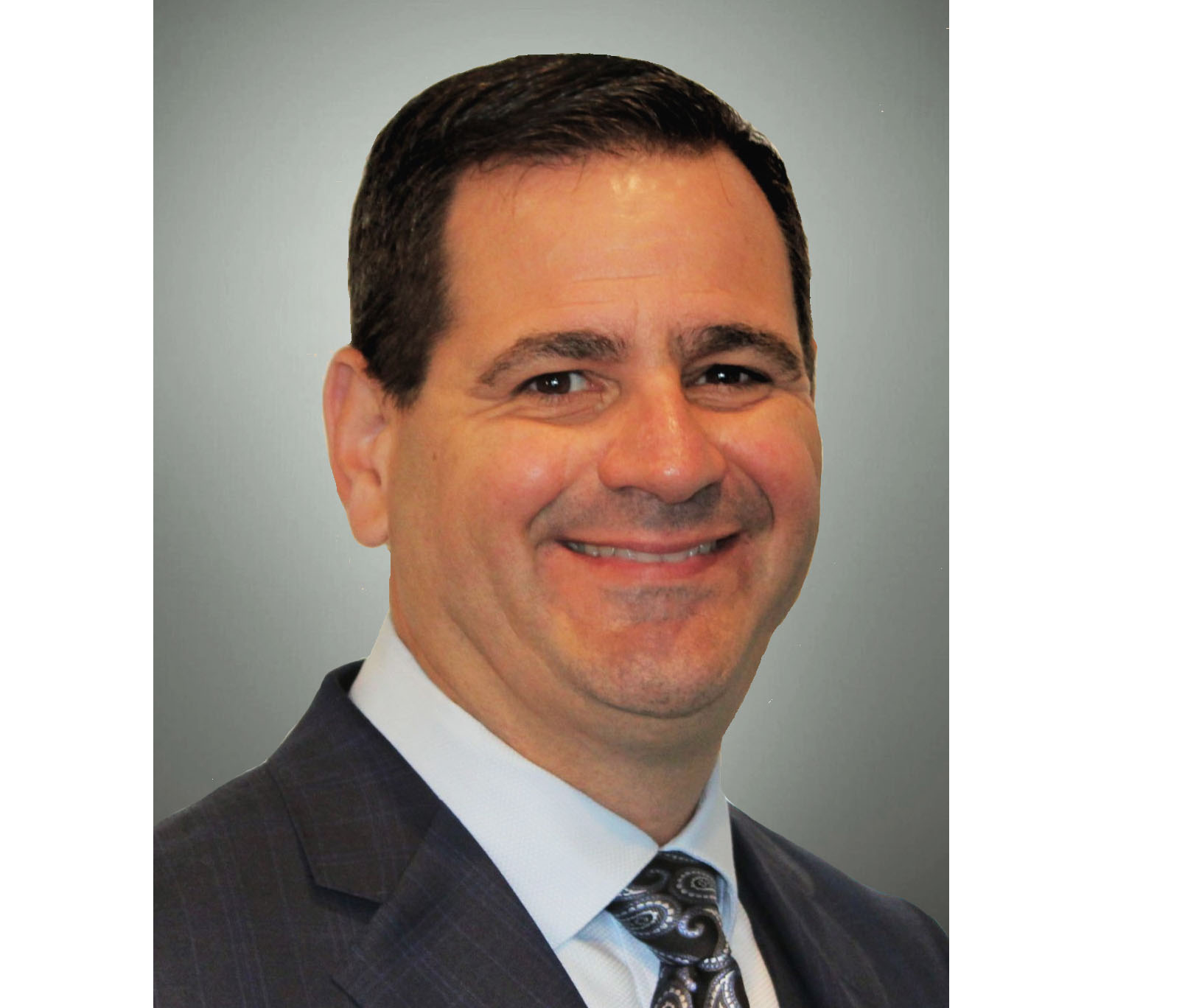
https://www.gmlaw.com/

Spotlight On: Larry Thompson, President, Ringling College of Art and Design

Spotlight On: Larry Thompson, President, Ringling College of Art and Design

By: Max Crampton-Thomas

2 min read March 2020 — While all higher education institutions operate with the purpose of preparing students for future lifelong careers, Ringling College of Art and Design is also working to shatter the myth of the starving artist, school President Larry Thompson told Invest:. He also spoke about the increased student interest in offerings from the school, positioning the college for future long-term success and identifying the issues that need to be addressed in higher education. 


What was one of the major successes for the college in 2019?

In December 2019, we opened the Sarasota Art Museum, which is a part of Ringling College. It is built on the site of a historic high school from 1926 located right in the middle of Sarasota. We took it over because the school system was trying to find a use for it and we were looking for space for a museum. We were able to turn it into a contemporary art museum and a space for continuing studies and lifelong learning. This project has been a long time in the making, so we are quite pleased to have this as part of our campus.

Where are you seeing the most growth in terms of student interest? 

We have seen growth in our virtual reality major and have launched a new major in entertainment design. We are also seeing a huge increase in the number of students who are interested in the Collaboratory. The idea of the Collaboratory is to help our students get real-world experience working with real-world clients. We invite clients to the institution and put together teams of students who work to help solve some of the problems that clients might be having. It is a wonderful tool for the clients, and it’s great for the students because they are getting to work with real people. The projects they are working on also have true meaning. I like to tell people that one of the great advantages for our students is that it helps with the recent college graduate dilemma: They can’t get a job if they don’t have experience, but they can’t get experience if they don’t have a job. The Collaboratory gives them that experience.

How is the college working to change the perception of art as a career? 

As an art and design college, we are fully committed to shattering the myth of the starving artist. Too many people have this feeling that art and design are more of a hobby than a career and that there are no real careers out there. This has never been true and it is certainly not true in today’s society. We focus on making certain that our students, when they graduate, have great careers. Over 100 national and international companies recruit here. These are corporations like Apple, Google, Pixar and Disney. The world has changed so much, having become a much more visual world. This has created more opportunities than ever before for artists and designers.

How are you positioning the college for future long-term success? 

We have to look at what the future holds, especially in this age of artificial intelligence (AI). AI is just in the early stages but many different jobs are going to be eliminated once it takes off. We also need to be looking at where the economy is headed. Everyone needs to be positioned for the next stage, which we are calling the Creative Age. In history, we have had the Agricultural Age, the Industrial Age and the Technology Age. The Creative Age is next because creativity is going to become one of the most essential skill sets people are going to need for success in the future. I believe this is already starting to be recognized on a global scale.

What do you view as the most significant challenges facing higher education? 

There are numerous challenges facing higher education, especially private nonprofit institutions. The whole basis for the business model needs to be rethought and recreated in some manner because being so tuition-dependent is not sustainable over the long term. Tuition is at such a high level that it is almost out of reach for many people, which leads to a huge issue with students having the ability to attend a school like ours. We are doing many things to mitigate this, such as offering financial aid and scholarships, which are among our greatest fundraising needs. Every college is trying to solve the problem of the business model.


To learn more about our interviewee, visit: 
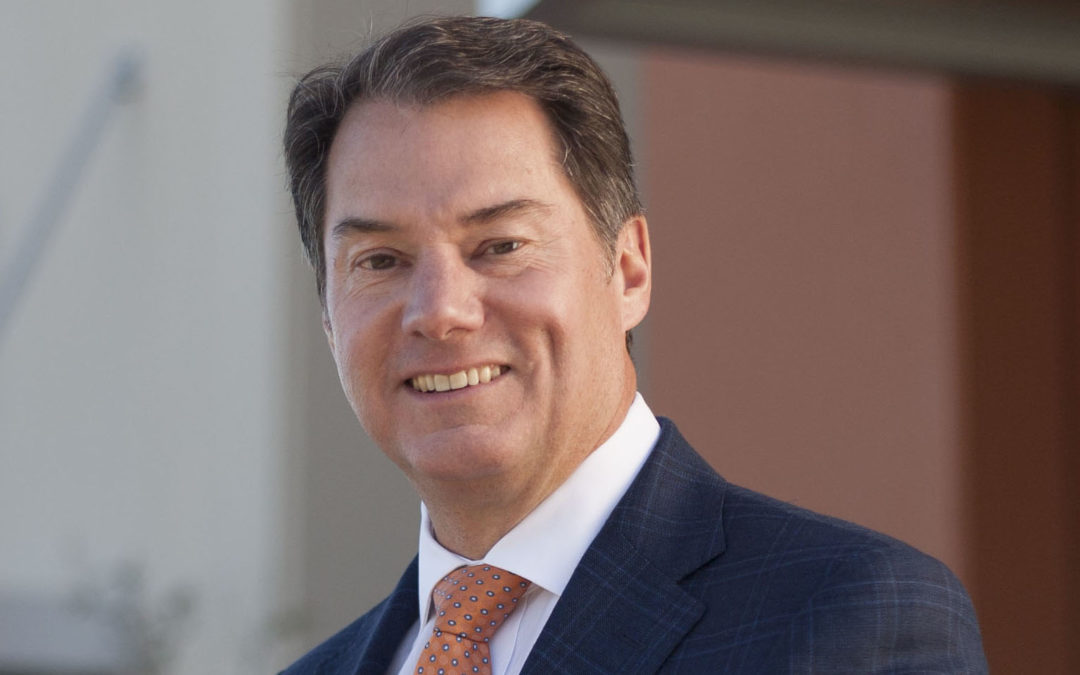
https://www.ringling.edu/

Home sweet office: How to make your home office work

Home sweet office: How to make your home office work

By: Max Crampton- Thomas

4 min read March 2020 The COVID-19 health pandemic has upended daily life in unprecedented ways amid calls from the government for people to social distance and stay home as much as possible. Many businesses have had to close their doors and ask their employees to work from home. While some individuals may be accustomed to working from a home office setting, for a large majority of the working world this is uncharted waters that could benefit from some guidance. Invest: offers some need-to-know tips for working from home during this time of crisis. 


Constant Communication 

Working in an office setting, you often take for granted the ease of communication between you and your colleagues. Situations that could have been resolved by simply walking to someone’s desk now require more effort via other methods of communication. The key is to establish a consistent flow of communication that starts with a daily understanding of what your employees’ schedules will look like on any given day. This can be easily accomplished by having them send out their daily schedules and workload in a quick email at the start of every business day. Communication can then be maintained based around this schedule and productivity can be more easily managed as well. For more direct communication in regard to smaller issues that may not require a phone call, office communication applications like Slack can help facilitate these quick discussions. 

Maintain a Daily Routine 

For almost any working person, maintaining a daily routine becomes second nature. When unforeseen circumstances like COVID-19 interrupt this daily routine, it can throw a person off course quite rapidly, which can result in less productivity and a decrease in focus. The key is to adapt and maintain your daily routine to the changing environment as much as possible. Something as simple as getting dressed in business clothing can seem unnecessary when working from home, especially when staying in pajamas all day may sound a lot more appealing, but maintaining this daily activity can be key in starting your work day off on the right foot and retaining as much normalcy as possible. Make the effort to try and stick to your normal work schedule throughout the day, including taking breaks as you would in the office, eating lunch around the same time you normally would and trying to stick to your typical working hours as best as possible. 

Maintaining Posture (Physical & Mental) 

There are many arguments in favor of the benefits of working from home but maintaining your posture, both physical and mental, is probably not high on that list. From a physical standpoint, in an office setting you are usually sitting in a proper desk chair with a relatively straight back or even standing straight up thanks to standing desks. The same cannot normally be said for a home office setting. In an interview with CBS, New York chiropractor Dr. Joseph D. Salamone said, “Everybody’s going to be in sitting postures, having text neck.These people really need to make precautions and live a healthier lifestyle while we’re in this quarantine state.” He recommended that those who find themselves working from home should practice regular stretching to help maintain posture. For those who have the means and access to the proper resources it would also be advisable to create a proper workstation, not unlike the one you are accustomed to in your own office, as opposed to trying to work from a slouched posture on a bed or couch.
Maintaining posture also relates to mental health as much as physical well-being. Going from working in a sociable setting like an office with other people to unexpectedly working by yourself at home can be quite jarring for the mind. It is vitally important to maintain the social connections that you have grown accustomed to in a normal workday, like lunch with coworkers. This social time does not have to be lost as technology has made it so you can use your lunchtime from home to speak with or even video call with coworkers and friends. There is also the underlying issue of potential for increased anxiety during this time of isolation, especially with the influx of nonstop news about COVID-19. It’s crucial that individuals limit the daily amount of time they spend consuming this news, and instead focus their attention on other matters like work, family and the home. 

Creating A Proper Workspace

A proper home workspace may help in maintaining posture but it is also important in helping to facilitate as normal a daily routine as possible. In theory, this workspace is where an individual will spend the majority of their eight-hour working day, so it is crucial that this space is not only comfortable but also practical for achieving daily tasks. Find somewhere in the house that you can maintain your workstation without much interruption, and if possible, somewhere that has access to natural light. Working from home can also be tricky as the lines become blurred between workspace and home space, resulting in it becoming harder to “switch off” after a full working day. It is important to try and establish this workspace in a section of the home that allows you to “step into” work at the beginning of the day and “step out” of work at the end. 

To learn more, visit:

https://www.cbsnews.com/news/coronavirus-health-tips-working-from-home-stretching-stress-anxiety/


https://www.themuse.com/advice/coronavirus-work-from-home-tips

For up-to-date advice on the Coronavirus response, you can check the CDC website here.  For Florida-specific information, click here