Community focus

Community focus

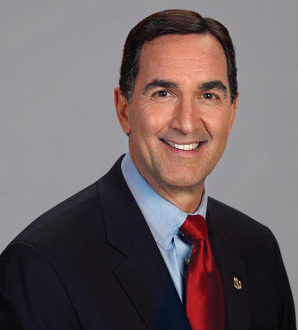
Wells Fargo South Florida Region President Joe Atkinson discusses the importance of community for large banks and small business alike

What are the notable growth trends in South Florida?
Small business is the engine that drives South Florida, and we are excited to be part of what’s happening here. Over 90 percent of businesses in this market are small and medium enterprises (SMEs). For Wells Fargo – a leading bank in South Florida in terms of deposits held, as well as the number-one small business association (SBA) lender of loans under $100,000 – the importance of SMEs to our bottom line cannot be overstated.
 The sectors exhibiting the most growth in this mar-ket are hospitality, construction, and those providing products and services to Latin America. In South Florida, Wells Fargo has been growing in small business banking – this is where we have been hiring the most personnel. We are also paying attention to a number of up-and-coming areas. For instance, we are seeing great growth potential in Doral and looking to expand our reach to that market.
 Miami-Dade is a highly dense market, and understanding that dynamic is key. If you drive by any one of our streets you will see small businesses clustered together in a fairly small space. That is a good indicator of both the professional and community growth that has led to a very large and stable deposit base in South Florida from a community and retail banking perspective.
 
How has post-recession lending reduced risk, while still providing adequate financing for homebuyers?
We have learned a lot from the Great Recession. We are better capitalized today and more cautious when it comes to mortgages, where in the past we may have been too aggressive. To do this we have had to remain close to our customers to make sure we understand their needs. Moreover, we have invested greatly in ensuring greater adherence to compliance procedures.
We also recognize that the density and growth of the market is a challenge to affordable housing and that we need to be proactive in helping provide housing options through community partnerships. For example, Wells Fargo has provided a significant investment to finance a 158-unit, low-income affordable housing project in Overtown.
 
What innovations have area banks implemented to adapt to an increasingly digital marketplace?
We hear that brick-and-mortar banking is dying, but the reality is that it is not going to go away. From this perspective, we are looking at developing technologically functional, eco-friendly neighborhood branches that integrate online, text and mobile banking technologies that can provide access to customers when they need their money, when they want to borrow and when they want advice, outside of normal business hours.

Local and global

Local and global

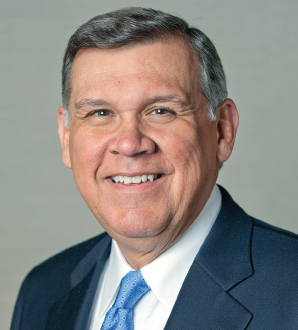
Mel Martinez

JPMorgan Chase & Co. Southeast U.S. and Latin America Chairman Mel Martinez discusses the blurring of the local and international in South Florida’s banking sector

As it pertains to the banking sector, what sets South Florida apart from other major U.S. markets?
South Florida is an economy dominated by small and medium enterprises, which means the middle market there is the predominant segment for us. South Florida also has a high concentration of high-net-worth individuals, which provides a strong base for our private banking business. In Miami, there is a strong international presence. While we predominantly service domestic clients, at times it is difficult to distinguish between what is local and what is international. Many aspects of local businesses are international, while many Miami-based businesses are actually branches of international businesses.
 
What developments in Latin America most influence Miami’s banking industry?
Mexico and Brazil have traditionally been the dominant economies in the region, but in the last two years growth in both countries have slowed and we saw a slight decrease in business from both. However, we are excited about the reforms the Mexican government has taken recently – in the areas of energy, education, tax reform – all of which we believe will make Mexico a very attractive place for business, investments and banking.
We anticipate an increase in trade activities coming to and from the region, which will undoubtedly have a profound impact on banking. This is due to the expansion of the Panama Canal, but also the free trade agreements we have entered into – NAFTA, CAFTA-DR, bilateral agreements with Chile and Panama – all of which enhance trade and commerce, and Miami is the largest participant and beneficiary from all of that commercial activity.
 
How do you see the executive action on Cuba impacting banking and commerce in Miami?
The biggest problem is how little we got in return.  Further, as it goes into implementation, the complexity of dealing with the Cuban government appears more clearly.  In the long run, I hope whatever our government does will improve the lives of the Cuban people, including the human rights conditions.
Ultimately, Cuba could be a great trade and commercial partner for South Florida and Miami. That will only happen when conditions for rule of law, including property and labor rights exist in Cuba.
 
What are the key components of JPMorgan Chase & Co.’s medium-term strategy for South Florida?
We will continue to consolidate the different lines of our business to better serve the client end to end; grow our market share and deepen our engagement in the community through our philanthropic and CSR initiatives.

Southern portal

Southern portal

Alex Wertheim

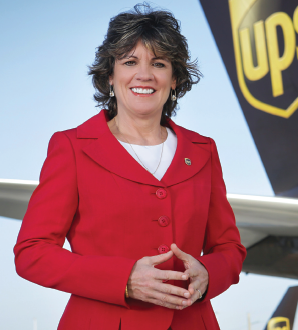
UPS Americas President Romaine Seguin discusses the strategic importance of South Florida as a critical trade and logistics pathway to Latin American markets

How is South Florida an advantageous logistics hub?
South Florida is the connection to Central America and South America, which are critical markets for us. The expanding middle classes in Latin America, along with healthy GDP growth and rising international influence, are creating attractive opportunities for commerce and investment. South Florida is a strategic location for American and European companies seeking to venture south to expand their business.
South Florida is an important northern entryway for Latin America as well. It’s amazing the quantity of perishables that come through here – just look at flowers. Over 90 percent of the flowers that enter the U.S. come through Miami. Flowers are the number one import, followed by other perishables, and after that fish. It is the starting point to feeding the U.S.
What are the areas of growth for the logistics sector?
One of our strategic imperatives is to capture more of the healthcare vertical in Mexico and throughout the Americas region. The medical equipment and biotechnology industries are experiencing tremendous growth and change, and these are the areas where our consumers are pushing us to go. The number of patents expiring each year continues to increase, which means that a generic, more affordable product is get-ting into the market.
It’s not an easy market to enter because of the complexities entailed, whether it’s related to temperature control, infrastructure or human capital. Moreover, the regulations and licensing requirements in each country are different; for instance, some countries require facilities to have a pharmacist on site.
 
What are some recent developments in trade policy?
The most recent free trade agreements (FTAs) the U.S. signed with entered into effect in late 2012, one with Panama and one with Colombia. Despite continuous political debate, there is a movement to take the barriers down and enhance free trade. What is important is to educate the private sector, especially companies here in South Florida who wish to expand their businesses to international markets, on what FTAs are and what they can mean for a company.
 
Within the logistics sector, what factors most impact cost of operations in South Florida?
The great expense in transportation in Latin America is the customs processes – they’re not automated and extremely tedious. Automation provides more security, more transparency, and more consistency. We are working with government officials to improve these procedures. For South Florida-based logistics companies, the bulk of whose business is trade with Latin America, these delays become quite problematic.

Striking a balance

Striking a balance

Alex Wertheim

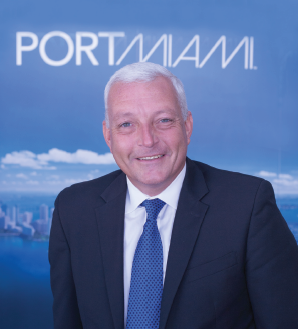
PortMiami Director Juan Kuryla discusses balancing the growth of the port’s two lucrative business lines – cruise and containerized cargo

How much of PortMiami’s business is comprised of the cruise versus containerized cargo segment?
Revenues are significant from both sides, with roughly 60 percent of the direct revenue to the port coming from cruise and 40 percent from cargo; however, cargo comprises nearly 80 percent of the economic impact to Miami-Dade County. The cruise industry is extremely significant, driving tourism and employment growth; it is the number one contributor to Miami-Dade’s hotel occupancy. In the fiscal year 2014, PortMiami had a record-breaking year, processing 4.77 million cruise passengers in our 45th consecutive year as the world’s largest cruise home port. We benefit from having Carnival Corporation, Royal Caribbean Cruise Lines, and Norwegian Cruise Lines – collectively comprising 75 percent of the global cruise market – headquartered in Miami-Dade County.
 
How will the completion of PortMiami’s Deep Dredge Project impact South Florida?
The Deep Dredge Project is a game-changer for this region. Upon the project’s completion in mid-2015, we will be the only U.S. port south of Virginia at a water depth of 50 feet. This will allow us to berth much larger vessels and reclaim some of the transshipment business we lost to ports in Panama and the Caribbean in the early 2000s.
This deeper draft capacity is of great interest to the large shipping companies, who save money, thus make money, by consolidating containers from multiple lines into a single larger vessel. The depth will enable us to capture new cargo business, particularly from Asia, on vessels that will now be able to transit the expanded Pan-ama Canal upon its completion in early 2016.
 
What is PortMiami’s strategy for the medium term?
Recapturing transshipment is a top priority. We lost much of this business after 9/11 because of high security-related costs and inspection protocols. Today we work closely with U.S. Customs and Border Protection to create a commercially friendly business environment at the port, while maintaining the highest standards of security. In conjunction with our partners at Florida East Coast Railway, we are targeting industries such as frozen poultry, beef, scrap metals, scrap paper, corn, soy, grains and other food products, to boost cargo volumes passing through the port.  Part of the port’s initiative is to export more loaded containers to complement the importation of products coming in from Asia and Europe. We also anticipate continued growth in trade to and from Latin America and the Caribbean as well as starting new trade routes with emerging markets such as India and Africa. On the cruise side, we are working on the construction of a new berth and terminal for completion within the next two to five years.  These improvements will expand our passenger capacity by approximately 20-25 percent.

Flying high

Flying high

Alex Wertheim

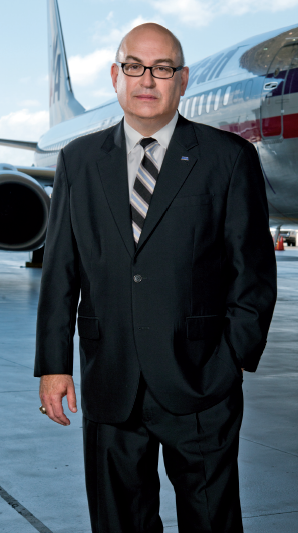
American Airlines Senior Vice President for Mexico, Latin America and the Caribbean Art Torno discusses the significance of Miami as a transport hub for the Americas

How has establishing a hub in Miami contributed to American Airlines’ business? 
In 2014, we celebrated the 25th anniversary of our Miami hub. This was momentous for both American Airlines and Miami-Dade; today, over 70 percent of departures from Miami International Airport (MIA) are American Airlines flights. We are privileged to be an airline company here, as Miami allows us to link North America to the rest of the hemisphere. This linkage has contributed greatly to American Airlines’ growth in MIA. In 1989, we had 19 flights a day and about 200 employees. That same year, we purchased assets from Eastern Airlines, which gave us access to routes in Latin America and the Caribbean. That investment was one of the smartest decisions American Airlines has made in its 80-year history. Today, we fly over 340 flights a day, to 126 different destinations, and employ 11,500 people.
 
What have been some recent developments in government relations in the hemisphere?
We constantly work with governments to develop the demand, to create the market, for air travel, particularly in the Caribbean, where we engage in cooperative advertising, work with hotels and travel agencies, to generate demand. Government relations are also the means by which we develop new routes. A great ex-ample is Brazil, where we’ve worked with, not just the federal government, but local governments as well, to increase access to locations that were previously isolated. As a result, American Airlines now controls 42 percent of traffic from Brazil to the U.S., from which Miami greatly benefits.
 
One challenge for Miami-Dade aviation pertains to lengthy customs processing. How can this be addressed?
Lengthy customs procedures could deter travelers from flying to MIA, thus hurting tourism and commerce. Addressing this matter – which is significant – has meant collaborating with the county and U.S. Customs and Border Patrol (CBP) to add additional officers; look at new technologies and staffing models and share different profiles of customers.
Most international airports in the U.S. have a lower split between foreign customers and domestic. At MIA, there is a larger percentage of foreign arrivals, so if MIA is being staffed with the same models used for other international hubs in the U.S., that model would be inadequate because a larger portion of our customers need a deeper level of scrutiny. In the last two years, we as an airport community entered into a pilot program with CBP where we would collectively fund overtime hours for their officers during peak travel times. So far, this initiative has been successful and is now being rolled out in two or three other airports in the country.

Soaring growth

Soaring growth

Miami International Airport Aviation Director Dr. Emilio T. Gonzalez, discusses infrastructural upgrades and plans to transform Miami-Dade into a global hub


Miami International Airport (MIA) has seen incredible growth in recent years. What is the strategy to keep pace?

Broadening capacity is a priority for this airport and at the core of both our medium and long-term strategies. We service 40 million passengers each year – roughly the population of Argentina – and the airport’s capacity is 50 million; at some point we will run out of space.

To anticipate these needs, we are undertaking a number of major infrastructural upgrades. One project is to build 40 hardstands to park planes. Until recently, air traffic operated on peaks and valleys. You see no arriving flights at 2 a.m., but at 6 a.m. there is a surge of planes. Some of our aircraft, particularly those originating from South America, fly here and go nowhere else. They arrive at, for example, 8 p.m. from Brazil and stay until 11 p.m. Because of American Airlines’ recent reorganization, we no longer have the peaks and valleys, but instead, have constant traffic. Consequently, we no longer have the luxury of avail-able empty gates for us to park idle planes.

We must also accommodate growth in air freight, another important driver in this economy. We operate five airfields. One of them, our training and transition airfield, located in the middle of the Everglades, has a 10,000-foot runway. We are looking to convert that into a cargo airport sometime in the distant future.


What is MIA doing to upgrade its terminals?

We are currently renovating Terminal E, which is part of the central concourse. Interestingly, we are only launching this project as a stopgap measure to buy us time before we can build new structures.

Eventually, Terminals G, F and E will become two terminals. We will start on one end of the airport and work our way in, knocking down terminals along the way. We are looking to break ground on this project in 2020 and it will take 10-15 years to complete the terminal.

Because of its central position within the airport, and because of added traffic from the slew of new flights that American Airlines has announced they will be adding, Terminal E will be where the action is. Subsequently, we are investing in modernizing it. We recently purchased a $90-million train system to improve connectivity within the airport. This will be delivered in the next two years and has a lifespan of 10 years. In the distant future, we are looking to erect a high-end mall, which will have all of the major luxury retailers, in the central terminal.


What are MIA’s plans for broadening connectivity with respect to passenger business?

MIA is the second-largest international passenger airport in the U.S. However, in looking at our existing network there are a number of gaps. With respect to Europe, we need to improve connections with Eastern Europe and Scandinavia. We are looking to develop routes like Warsaw-Miami and Stockholm-Miami.

Asia is another big untapped market for us, in terms of passenger service. We already have cargo business with Asian companies, namely China Air, Korean Air, and Cathay Pacific, and those are usually one-stop flights that go from East Asia to Alaska, refuel and go back. I have spoken to representatives from different Asian carriers, and they all want to come here; it’s not a matter of “if,” but “when.” The “when” will happen when these airlines get new, larger, aircraft, for instance, the Dreamliners. When they start getting A-380s, then we will start to see an increase in Asian traffic coming here.

We are also working on getting flights to Africa. These don’t necessarily have to be through African carriers but could be U.S. airlines with Miami-Johannesburg, Miami-Lagos or Miami-Cairo routes.

MIA is the number one international freight airport in the U.S. What are the growth fundamentals of this segment?Being a gateway city, Miami sees cargo both coming in and going out. Planes arrive full of goods, and the only way they can generate a profit is if they also leave with full loads. From a cargo perspective, Atlanta can’t be Miami because they don’t have much to send back. At MIA, thanks to South Florida’s robust distribution and logistics operations, all of our cargo planes come in full of goods and they leave full as well. They arrive with perishables – flowers, fish, fruit – and depart with high-tech exports, such as electronics, medical technology, mining equipment and automobiles.


How does MIA contribute to job growth and economic diversification in South Florida?

The airport is one of the largest employers in Miami-Dade County, contributing nearly 158,000 direct jobs to the economy annually. It also generates a significant number of indirect jobs in related and peripheral industries, such as tourism, logistics, and manufacturing.

For instance, although it may not be very visible, there is a robust aerospace industry in South Florida. One of the largest airplane manufacturing companies, the Brazilian-based Embraer, has its U.S. headquarters in Ft. Lauderdale. B/E Aerospace, which is headquartered in Palm Beach and manufactures interior cabin products, has more employees than U.S. Southern Command (SOUTHCOM). The French-Italian aircraft manufacturer ATR recently relocated their North American headquarters to MIA from Virginia.


What are the most pressing challenges of operating an airport of this size and significance?

There are a lot of moving parts – some of it operational, some financial. The operational aspect is tied to the fact that we have over 90 airlines that fly out of here and they need a lot of care. We also have over 200 concession locations, which would make us one of the largest malls in the U.S., as well as related businesses such as a hotel, parking facilities, etc.

On the financial side, MIA is the largest economic engine – not just in Miami-Dade County, but in the U.S. Southeast, from Washington, D.C., down. To put this in perspective, we generate $1 billion more revenue than Hatsfield-Jackson Atlanta International Airport; we are bigger than Disney World and bigger than the Tennessee Valley Authority. When you generate that much wealth and economic business, everyone wants a piece of the action. Consequently, I get lobbied frequently and must ensure that proper procedures, when it comes to bids, are enforced at all times.


What is your strategic vision for MIA and your outlook on South Florida’s economy?

Currently, Miami-Dade is the Gateway to Latin America. Ultimately, our goal is to transform it to a global hub. We have the fundamentals to support this – strong tourism, real estate, logistics and banking industries – and MIA’s capital projects will only boost this progression.

 

New Frontiers

New Frontiers

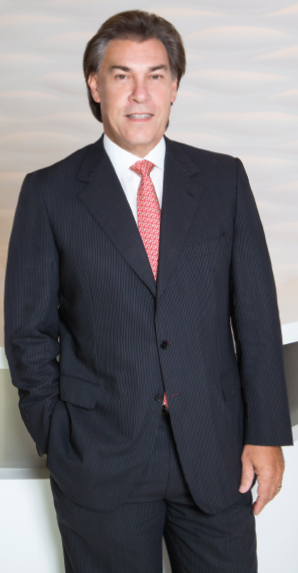
Fortune International Group President and CEO Edgardo Defortuna discusses Miami-Dade’s complex zoning landscape and the impact on luxury real estate development


One of your major projects at the moment is JADE Signature, located in Sunny Isles. What advantages does Sunny Isles offer to developers?

Oceanfront property has become increasingly scarce in South Florida. Sunny Isles is one of the few remaining areas where a developer can secure large parcels of land with a water view. Our Jade Signature project – designed by Herzog & de Meuron – the architects that created the Perez Art Museum Miami (PAMM) – sits on 2.5 acres of land right on the beach.

Sunny Isles is attractive to developers because it allows the space for creativity – literally. There are no other locations on the beach that permit you to build structures up to 650 feet tall. That sparks innovative thinking in design and presents an exciting opportunity for developers like Fortune International Group to have a significant impact on the skyline.


How would you describe the landscape for zoning and other regulations affecting real estate development?

The regulatory landscape in the region is complex, and in Miami, it is as diverse as the city itself. Twenty years ago when Fortune began developing here, there were zoning and land use guidelines in Miami and in Dade County. Over time, many smaller towns and municipalities started to form independent governments, each with its own set of zoning regulations.

For example, today the zoning rules in North Miami and Key Biscayne are different, just as they are in the Broward County cities of Hollywood and Hallandale. From a developer’s point of view – that kind of change significantly impacts your business strategy. You must be extremely knowledgeable of the area and the regulatory nuances from project to project.

In the City of Miami, where development now is fairly limited, you have one set of zoning guidelines, Miami 21, which is quite favorable to commercial developers because it is primarily a business district. However, it is challenging to find waterfront sites within the city. While in Miami Beach, the challenges arise due to the various historic designations and related restrictions. In many areas, existing structures cannot be demolished to make room for new development. You can refurbish a historic building, but you must maintain the existing structure.


How does this fragmentation impact development? Do you see the situation changing in the near future?

It’s important to understand that the main revenue stream for all of the cities and counties in South Florida today is real estate tax. The municipalities thought that taxes were unfairly distributed when they were concentrated into one place, so I don’t see the situation changing. There might be some agreements made between one area and another, but it would be difficult to create a unified government; if anything, more areas are going to break apart and try to generate their own pockets of zoning.

Not having a strong unified effort for infrastructure, transportation and other services needed for a major city like Miami to function presents a challenge. Hopefully the public sector can integrate a little bit more, and really create comprehensive plans for the major needs of the city as a whole so as to support the growth we are experiencing.


What are some of the comparative advantages Miami offers when it comes to real estate?

Prices here are competitive when compared to other major cities in the U.S. and the world. Prices in New York are three or four times what it is here, and the same goes for San Francisco and Los Angeles. From a U.S. investment proposition, Miami is still very attractive to outside investors, which is why we are seeing the high volume of individual buyers, as well as funds and groups, willing to invest equity in the different projects being developed here.

Miami has much to offer culturally as well. The museums have done marvels to the city. Art Basel has significantly changed the cultural aspect of Miami, as have the Adrienne Arsht Performing Arts Center and the New World Symphony. If you like sporting events, you have The HEAT and the Dolphins, and hopefully David Beckham can bring soccer here.

All of these things impact the overall perception of the city. Previously, higher-end Latin Americans would say, “Yes, I love Miami. I spend a few days there, but my apartment is in New York.” Now, they might still have their apartment in New York, but they are spending a significant amount of time in Miami, and they all want an apartment here.


What risks are present within the real estate market?

People talk about bubbles all the time, but it’s really a question of managing supply and demand, and the timing of when you launch the supply. As a developer, it’s important to be disciplined and mindful of what the market is like before moving forward.

Today, most prudent developments are supported by 50 percent deposits from the buyer; you don’t start construction until you have a significant number of presales. With all the money the buyers have put into the construction, it’s very difficult for them not to close at the end, which is what happened in the past when they were speculating with 10 percent or 20 percent.

As long as we keep this structure in place, we should avoid some major risks. But now that financing is becoming more available, this could create a temptation for developers to require reduced deposits of, say, 30 percent and get the remaining 70 percent from the bank. That’s when problems could potentially start.


How has the consumer profile for luxury properties changed in the current building cycle? 

In the past, the market was dominated by Latin Americans responding to the political and economic situations in their home countries. Today Europe is becoming a very strong player – England especially – because the exchange rate makes Miami prices attractive. Investment from the Asian market, which was previously almost nonexistent, is starting to pick up as well.

Brazil and Argentina continue to be key markets for us – as they have been for a long period of time – for different reasons. Brazil has been doing well for the past five years, while Argentina’s economy has been going the other way. People are attracted to Miami when their countries are either doing very well or very poorly. If they’re doing very well, then they’re diversifying and buying in Miami and if they’re doing poorly, then they’re taking the money out of their countries and buying in Miami. We’re also looking at Mexico because of the growth and wealth creation happening there.

I’m particularly excited about our new relationships in London because the market is so vibrant there. People are making significant amounts of money there and they all love the natural conditions of Miami. They just need to get more exposure to this type of product because they’re used to buying in Orlando or in the islands and they are just now really discovering Miami.


Invest: Miami speaks with Armando Codina, Chairman, Codina Partners

Invest: Miami speaks with Armando Codina, Chairman, Codina Partners

Alex Wertheim
Doral’s growth story is linked to the growth story of Miami-Dade. The highest employment concentration in Miami-Dade County is Airport West, the area where Doral lies. Carnival Corporation is headquartered in Doral, along with major media companies like Miami Herald and Univision, as well as the Federal Reserve, U.S. Southern Command, and a thriving logistics sector. Employment opportunities have brought an influx of residents into the city – as have greater affordability and a strategic location – both foreign and domestic. In recent years, Venezuelans, fleeing political and economic crises in their country, have come to Miami-Dade and settled in Doral. For them, and for many Latin Americans, the proximity to the airport is a great attraction and a reason to buy homes and start businesses here.
If Doral was to become a great city, it needed a heart, and a downtown is the heart of any city. This is why we’re building Downtown Doral. Doral is the first city in Dade County that offered the opportunity to build a core – a downtown – from the ground up, and for a developer, this is truly special. We are creating a master-planned community that includes high-end shopping, dining and living options, as well as the supporting infrastructure – bike paths, sidewalks, public green spaces etc. With so many businesses that also call Doral home, we have taken special care in developing the new office space that will be included in the project, creating a modern campus feel.
This project also features a great example of a public-private partnership (PPP) – Downtown Doral’s collaboration with Miami-Dade County Public Schools to build a charter school. In this arrangement, developers provide the land and finance the construction, while the school board administers the school. Private sector execution allows for greater efficiency, while public sector management allows all parties to benefit from the expertise and accomplishments of the county’s award-winning school board. The new school will be an added draw for prospective residents seeking an affordable community with strong infrastructure, while it allows the county to earn additional revenue from operating the school.

Growing rapidly and steadily

Growing rapidly and steadily

Alex Wertheim

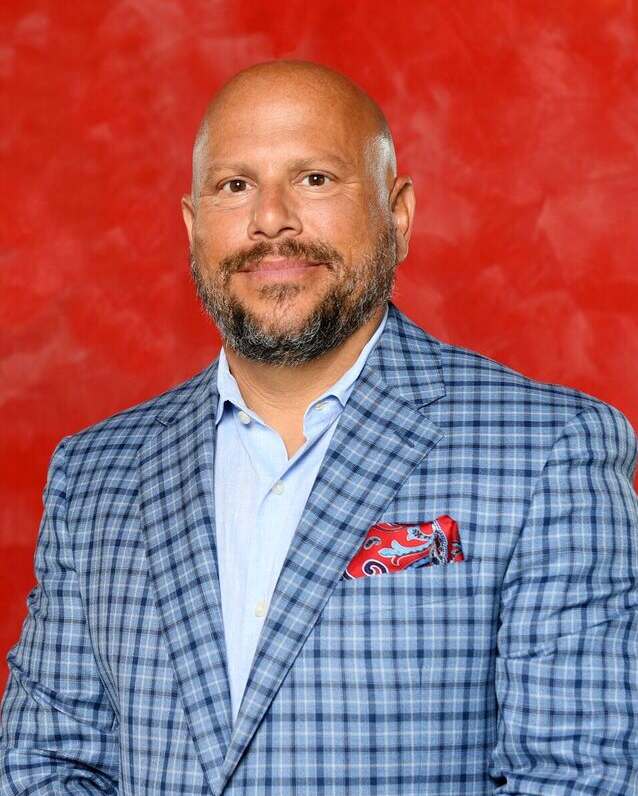
Invest: Miami speaks with Alex Wertheim, President, SPACiO Design Build

What demand is currently driving design services?

Over the years, we have seen significant growth in residential demand. Developers can execute large-scale projects, as the cost per square foot in South Florida is still much less expensive to buyers than in many other major cities within the U.S. This region offers a competitive cost of living as well as an advantageous tax structure. Growth in the residential segment has caused growth in the commercial segment as well, to the point that we are seeing more activity in the commercial real estate sector than in the residential market when it comes to construction in Miami.

What are the main profile trends of the client base for contractor and design services in Miami?

There was an important change in the profile of the clients after the crisis of 2009. We have started to see more Latin American clients reaching out to us to build-out their recently purchased high-end condos since then. This is expected to continue, as Miami is a melting pot for Latin Americans. However, in the past few years, we have begun to see an increase in the number of clients from the U.S. retaining our services, which makes me think the domestic market is coming back. Miami is attracting many retirees from the Northeast that are looking to take advantage of the lower cost of living. We have also seen an increase from international clients from other regions of the world such as Asia and Europe.

Miami is growing rapidly and continuously. In 2017, we will continue to see such growth driven by international and American buyers. We are also going to keep seeing continuous repositioning of real estate properties. As we run out of developable land, developers are rapidly buying up existing Class B and Class C properties in up-and-coming neighborhoods to turn them into Class A properties, from hotels to retail space. As a full-service general contractor, we are seeing – and we will continue to see in 2017 – an increase in retail space construction. We are currently involved in building out Breitling and very soon Swarovski in Brickell City Centre. The demand is a direct result of Miami’s evolution as a high-end shopping and dining destination.

Which sectors are expected to be the growth engines for design and contracting services the upcoming years?

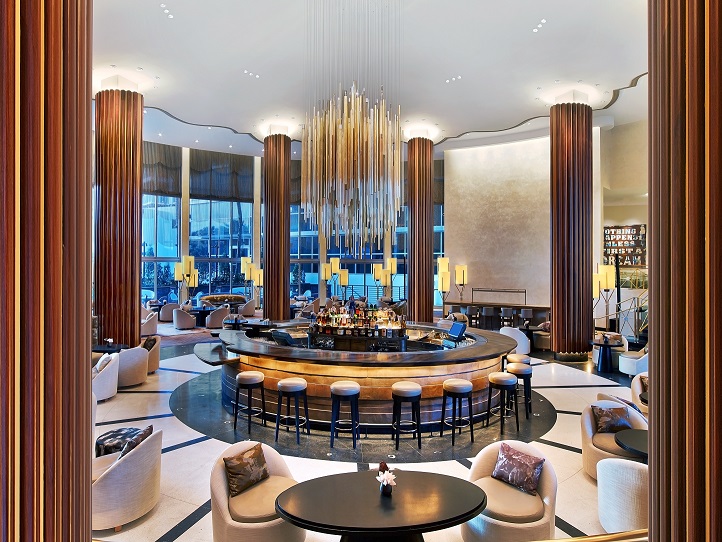
Even though both residential and commercial sectors are growing simultaneously, commercial will start to see an important increase in the hospitality sector, especially restaurants. Miami has developed its culinary offerings extensively over the past couple years.  These new restaurants have made significant investments in design services because they understand the importance of aesthetics for their businesses. The Nobu restaurant in Miami Beach is a perfect example. Chef Nobu Matsuhisa sought the “best of the best” to build out the space.  For example, the stone flooring was imported from Italy, the oak flooring from Denmark and many other finishes are derived from around the world. Nobu truly adds an extra level of sophistication to the iconic Eden Roc. We were very fortunate to work under Chef Matsuhisa’s leadership building out that amazing space. Hotels – both new and existing – have also made important investments in design with an important emphasis on quality and that will continue to happen in Miami

What would you identify as the current major challenges in construction?

From a business perspective, one of the main challenges for the developers is making sure they hire the right architect and designer. Doing all the correct due diligence and pre-construction work is extremely important. Not many people realize the amount of work that goes into pre-construction and its importance. When done poorly, this ends up being a problem for developers as they execute their projects. The way to tackle this issue is by making sure their pre-construction work is handled by highly qualified professionals.  Another challenge is finding qualified construction workers, especially when you are working on high-end projects. We make sure we take good care of our people because we see value in loyalty and having an A team that we can move from job to job.

For more information on Spacio Design Build, visit: http://spaciodb.com