Decatur embraces “hipsturbia”

Decatur embraces “hipsturbia”

By: Felipe Rivas
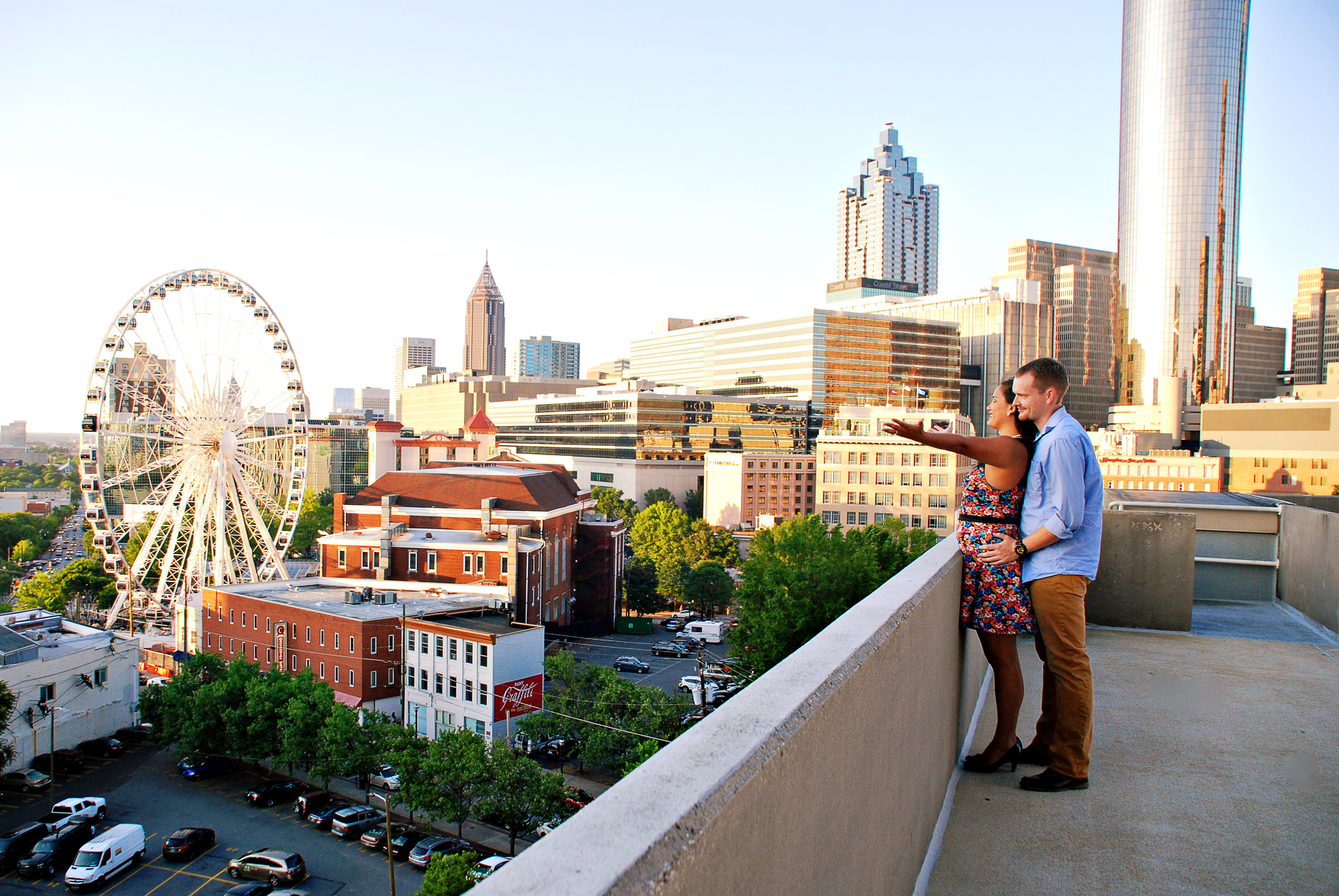
2 min read December 2019 — Downtowns throughout the nation are popular among millennials for their walkability and myriad retail, recreation and lifestyle choices. But as millennials settle down and begin to outgrow their trendy Downtown apartments, the need to find a suburban neighborhood that is affordable, yet vibrant and walkable, has solidified itself as a trend to watch out for in 2020. Aptly described as “hipsturbia,” millennials across the nation are trading their city lifestyle for the suburbs, without losing their affinity for walkability and access to cool, a-la mode restaurants, retail and recreation options. Developers are tapping into the hipsturbia trend as seen by the proliferation of affordable, multi-use suburban communities in cities like San Francisco, Chicago and Atlanta. As a result, in October, The Urban Land Institute named “hipsturbia” one of the top emerging trends for 2020. 

In essence, “hipsturbia” suburbs are characterized by their vibrant downtowns that offer walkability, public transit and a variety of “hip” restaurants, retail and recreation. In the Atlanta Metro Area, Decatur, located In Dekalb County, is quickly embracing “hipsturbia.” Approximately one-third of Decatur residents could be considered millennials, according to the population figures on Decatur’s official website. This year, Niche.com, the neighborhood ranking and review site, rated Decatur as the No. 1 place, and suburb, to live in Georgia. Downtown Decatur offers a bevy of bars, restaurants, coffee shops, and parks, that add to its “cool” factor. The area has an urban-suburban feel that fits in with the “hipsturbia” trend. According to the Urban Land Institute, people living in communities like Decatur, are discovering that smaller communities can have the same appeal as big cities. The institute predicts that millennials will continue to move to communities that offer walkable spaces and “hip” amenities. 

Once touted as cash-strapped and debt-ridden, millennials are making an impact in the national housing market. According to the institute, “hipsturbia” is happening in major cities like San Francisco and Chicago, as well as smaller cities such as Charleston and Phoenix. As the lack of home affordability draws young families away from big cities and into the suburbs, it is possible that it will not take long for “hipsturbia” to transform from a trend into the preferred suburban development style of the future.

For more information, visit:

https://www.decaturga.com/

https://ulidigitalmarketing.blob.core.windows.net/emergingtrendspdfs/ET2020FallMeeting.pdf

Art Basel: Miami Art Week Brings the City to a Standstill

Art Basel: Miami Art Week Brings the City to a Standstill

By: Sara Warden

2 min read December 2019 — Art Basel is in to town. When Swiss art dealers Ernst Beyeler, Trudl Bruckner and Balz Hilt began the show in Basel, Switzerland, in 1970, it was a cult hit. As the art fair gained momentum over the years it added two additional venues – Hong Kong and Miami Beach. Now, Art Basel Miami Beach brings the city to a standstill.


Started in 2002, the Miami Beach show itself draws in 70,000 visitors per year, 4,000 artists and over 250 of the world’s leading galleries participate. For those galleries accepted to exhibit in the main Art Basel space at the Miami Beach Convention Center, the cost starts at $100,000. Miami Beach also attracts over 20 satellite fairs, and there is so much art buzz around town during the dates that the week is now known as Miami Art Week. Tickets are available at $65 a pop, but for many, that’s a steal to access so many world-class artists all in one place.

Art Basel has played a significant role in democratizing access to these works of art and providing exposure for up-and-coming artists. In the 1980s, for example, the global art world was but a tiny network. “We knew every collector in the world then. Ninety percent of them were in New York or Germany,” collector Don Rubell told The New York Times. But now, times have changed. “Miami is not just bikinis and muscles anymore.”

UBS and Art Basel research shows that the global art market hit $63.7 billion in sales in 2017, with the United States the largest market, accounting for 42 percent. Art Basel Miami is responsible for about 10 percent of domestic sales, Alexander Forbes, executive editor of the art news website Artsy, told Marketplace. “$2 billion to $3 billion worth of art is usually on view,” he said.

Rubell and his wife Mera were instrumental in convincing Art Basel to set up shop in Miami in the early 2000s and the family collection now occupies a whopping 100,000-square-foot campus in Allapattah, which they purchased for $4 million. At the same time the Rubells purchased the plot, they bought a neighboring piece of land for $8.6 million.

According to Esther Park, a regular on the Miami art scene, Miami has just the right features to make it a haven for an event like Art Basel. “Miami was always going to blow up eventually,” she told Miami New Times. “It’s just that Basel propelled it.”

Samuel Keller, Art Basel’s director, acknowledged in an interview with The New York Times that Miami was a risky choice, but that it had all the ingredients for success. “Here there is a huge potential, economically but also culturally,” he said, calling the city “the gateway to Latin America, a melting pot of minorities from European to Jewish to gay.”

The four-day extravaganza attracts the most prestigious art buyers from all over the world, who enjoy splashing out. The trade fair has partnered with several major hotels in the area to offer preferential rates for attendees, but to stay in The W South Beach, The Standard Spa, Miami Beach or Nautilus by Arlo, prices still start at $422 per night and go right up to $1,650.

To learn more, visit:

https://www.artbasel.com/

https://rfc.museum/about-us

https://www.artsy.net

https://www.ubs.com/ 

https://www.miamibeachconvention.com/


Spotlight On: Scott Zuckerman, Principal, Domus Construction

By: Yolanda Rivas

2 min read November 2019 — Philadelphia-area general contractor Domus was established in 1976. The company has now become a $100-million construction firm with expertise in managing housing, restaurants, retail/commercial and academic construction projects. Domus Construction Principal Scott Zuckerman spoke with Invest: about the company’s diversity of place, construction trends and more. 

What are some highlights for Domus Construction in the past year?


One of our most recent projects is the Dwell at 2nd Street, which is expected to be completed by December 2019. The project will include 198 apartments with a variety of amenities including onsite parking, a swimming pool and a dog park. One hundred and twenty of the units will be modular, which is a concept that seems to be getting more of a push in Philadelphia because of increasing construction costs. 


What key trends have you observed in the sector?

Modular construction and smaller, efficiency-style apartments are trends we’ll continue to see in Philly. Domus introduced live streaming construction in 2019, beginning with our Dwell at 2nd Street project. It’s a good marketing tool because 120 units out of 198 are modular and a lot of people are very interested in seeing the process of installing them in real time. The modular process is also friendly to the environment since it provides more ways to control waste.


What actions are you taking to ensure diversity in the workplace?

Domus has a strong and long history of diversity. We actively participate in community outreach and advertising to increase minority participation for all our projects regardless if it’s a requirement. Minorities comprise between 30 and 40 percent of the workforce on our jobs.


What is your outlook for 2020?

The outlook for Philadelphia’s construction sector seems very positive. We’re booked up until the end of 2020. There are new hotels that are rising around the city of Philadelphia, which seems to be a big trend. Most professionals and companies in the sector seem to be busy, which is a great indicator.


To learn more about our interviewee, visit:

Domus Construction: http://www.domusinc.net/

Miami Dominates in Innovative Coworking Real Estate

Miami Dominates in Innovative Coworking Real Estate

By: Sara Warden

2 min read NOVEMBER 2019 — The traditional office space is changing fast. Hot-desking came first, and now with more pressure to recruit highly skilled personnel, workers are increasingly able to command perks such as home office and telecommuting. According to Fundera, telecommuting has grown by 40% in the last five years and employers offering the benefit save around $44 billion per year in total. The drive to home office also created a new real estate niche – coworking spaces – and that niche is now driving real estate growth in Miami.

“Coworking tenants continued to dominate absorption activity in Miami for the second quarter in a row as they continue to lease significant footprints in buildings throughout the market. Out of the seven largest lease transactions year-to-date, five were coworking tenants, with WeWork leading the number of coworking companies,” said Donna Abood and Michael Fay, Principals and Managing Directors-Miami at Avison Young in an article written for Rebusiness Online.

According to a special report by Yardi Matrix, coworking spaces accounted for one-third of leases over the last 18 months. Miami comes in third in terms of metros with most shared space as a percentage of real estate stock, at 3.5% –behind only Manhattan and Brooklyn. In the last 10 months, Miami has added around 1.1 million square feet of coworking spaces.

But one of the most highly-leveraged companies in the coworking arena is WeWork, a company that underwent a failed IPO attempt in the last year and wiped out around 80% of its value in the process. The company stretched itself too far, playing the Amazon tactic of taking on huge losses to undercut and wipe out the competition, but without having Amazon’s clout.

Alan Patricof, chairman emeritus of venture capital firm Greycroft and an early backer of Apple, does not believe the coworking space is a bad idea, but rather that WeWork simply bit off more than it could chew. “If you want to be a publicly traded company, you should act like a public company,” Patricof said in an interview with TechCrunch in September, adding that the board members “were all seeing the pot at the end of the rainbow.”

But the global value of coworking spaces is estimated at $26 billion, with growth of 6% expected in the United States to 2022 and 13% elsewhere. Despite WeWork’s errors in judgement, the market is there for a $49 billion valued unicorn, and Miami offers huge opportunities to those investing in the right way. According to Pandwe Gibson, founder and president of EcoTech Visions, a coworking space for manufacturing businesses, these spaces need to be constantly offering the next new thing. 

“Entrepreneurs in America don’t just need a WeWork. They don’t just need a desk. Entrepreneurs want to make stuff,” she told Moguldom. The Miami-based startup has 52,000 square feet of space and approximately $3.2 million in public and private investment to scale the business, while it carries out its first raise.

It doesn’t stop with manufacturing space. ShareMD recently spent $33.15 million to purchase a building in South Miami and one in Coral Gables in which to set up co-working spaces for doctors. “Because of the demographics in Florida, we are aggressively trying to expand in the metropolitan areas,” said Easton & Associates Vice President Elliot LaBreche, representing ShareMD in the deal in an interview with The Real Deal.

The attraction of this concept is accessibility to a doctor without the pressure to sign new clients, LaBreche added. “If you have a doctor, and their primary practice is in Fort Lauderdale, but they have some patients in Miami and West Palm, but not enough patients to support their practice, they can join the ShareMD network and use our offices as satellite offices.”


To learn more about our interviewees, visit:

https://www.avisonyoung.com/

https://www.yardimatrix.com/

https://www.wework.com/en-GB

https://www.greycroft.com/

http://ecotechvisions.com/

https://wesharemd.com/

http://theeastongroup.com/about/


Miami BIDs Put Customer First, Profits Later

Miami BIDs Put Customer First, Profits Later

By Sara Warden

2 min read October 2019 — As commercial real estate evolves and retail stores move online, Miami’s authorities are addressing vacancy rates with an innovative business improvement district (BID) program that unites private business and local store owners to take back Main Street.

A BID is a legal mechanism that has successfully been put in place in Miracle Mile, Coconut Grove, Lincoln Road and Wynwood, and most recently was established in South Miami. The South Miami BID provides a budget of $200,000 annually to provide services to businesses and commercial properties that include “enhanced safety, marketing, advocacy, promotions, and maintenance,” which are provided by the City Commission in addition to basic services.

Lincoln Road is one BID that, rather than focusing on vacancy rates, is focusing on creating a community for the public to attract foot traffic to the area. “I look at Lincoln Road differently,” said Lyle Stern, a member of the Board of the Lincoln Road BID to RE: Miami Beach. “I’m trying to encourage all of us who live in Miami Beach to look at Lincoln Road differently.” He believes that vacancy rates are the concern of individual property owners and that by creating an attractive environment, people will come.

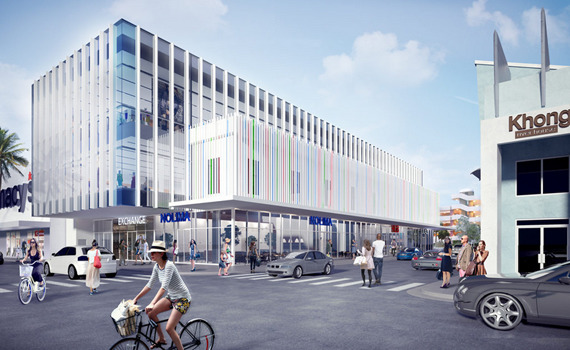
Despite a significant hole being created right in the middle of Lincoln Road by the collapse of shopping giant Forever 21, the BID is planning a $67 million makeover, with Miami Beach authorities contributing to the cost of construction. The private business owners in the area will foot the bill for the promotional events by increasing their own taxes.

The idea behind the BID is not directly to attract investment to a given area, but to nurture the area so that investment comes as an added bonus. The Wynwood BID has taken a look at what the public really wants, and one of its priorities was to re-open the beloved shuttered O Cinema. “O Cinema is a cultural icon in South Florida and a home for independent cinema,” said Albert Garcia, chairman of the Wynwood BID to the Miami Herald. “We were just as blindsided by the news of their closing as everyone else. As a long-time property owner in Wynwood as well as a member of the BID, it was important to me to see how we could keep O Cinema here.”

As the age of e-commerce dawns, BIDs are a way for traditional store owners to tune into the desires of the public, who now want more than just a traditional shopfront. Not only is investment being made in the community, but new business models are emerging that evolve with real demand.

“Nespresso has a very successful store on Lincoln Road,” Stern said to RE: Miami Beach. “As a company they’ve decided they don’t need cafés in the stores. They’re expensive and you have to maintain employees.” Instead, Lincoln Road’s Nespresso is downsizing from 4,500 square feet premises to 2,500 square feet, but staying on the same street, allowing it to maximize its value and provide its customers what they really want.


To learn more about our interviewees, visit:

https://www.southmiamifl.gov/563/Business-Improvement-District-BID

https://lincolnrd.com/lrbid/

https://wynwoodmiami.com/

It’s Go Big or Go Home for Miami’s OZs

It’s Go Big or Go Home for Miami’s OZs

Writer: Sara Warden

2 min read October 2019- When the Opportunity Zones (OZs) were created by the federal government in the 2017 Tax Cuts and Jobs Act, they were focused on 8,764 across the 50 states covering almost 35 million Americans. The program was designed to direct investment to regions with an average poverty rate over 32%, compared with the national average of 17%.

“We anticipate that $100 billion in private capital will be dedicated toward creating jobs and economic development in Opportunity Zones,” said US Treasury Secretary Steve Mnuchin in a press release. “This incentive will foster economic revitalization and promote sustainable economic growth, which was a major goal of the Tax Cuts and Jobs Act.”

Florida is home to 427 of these OZs and Miami-Dade houses 68 of them. “The creation of these new Opportunity Zones provides new investment opportunities for some of Miami’s economically distressed areas,” said Michael Finney, president and CEO of the Miami-Dade Beacon Council, in another press release. “This means greater consideration will be given to investing and providing jobs in areas of the county where they are needed most.”

The program works on the basis of deferral of taxes until either the property is sold or Dec. 31, 2026, whichever comes first. Investors can claim a 15% tax reduction if they invest over the entire 10-year period.

But the program is still new, and many investors are struggling to work out the best way to obtain returns. “Every real estate developer in the country is trying to figure out their Opportunity Zone strategy,” Reid Thomas, principal at NES Financial, told the Miami Herald. “Some are deciding it’s not worth the hassle, (and) that they’re not going to bother doing this kind of development.”

But those that do bet are betting big. Developer Russell Galbut closed a deal for the final piece of acreage from Northeast 29th to 32nd streets, and Northeast Second Avenue to Biscayne Boulevard. The $4.9 million purchase of 2901 Northeast Second Avenue brings Galbut’s total investment in the project to over $37 million. The site will house a major mixed-use development built by Galbut’s company Crescent Heights. It plans to build 800 residential units and use over 600,000 square feet for retail and office space.

Galbut told Miami-based real estate magazine The Real Deal that the OZ incentive was “some of the smartest legislation that has come out of Congress in a long time,” adding that his company is buying properties in all markets across the OZs.

But some investors saw the virtues in the Miami real estate market before the OZs arrived, and now there’s an added bonus to their investments. Developer BH3 invested $60 million in a retail and showroom and the space happened to be placed in one of Miami’s OZs. “The fundamentals, economics, and merits must stand on their own, whereby the tax benefits are purely an added bonus. A bad deal with good tax benefits is still a bad deal,” Greg Freedman, principal and founder of BH3, told the Miami Herald.

Although some are sceptical that the OZs will provide tangible benefits to anyone other than the investors, Neisen Kasdin, managing partner at law firm Akerman LLP, told the Miami Herald the zones are still in their infancy. “At the end of the day, these neighborhoods will benefit the most when people invest money in them,” he said. “Whether it’s a real estate development, or a capital-intensive project or businesses…You have to start with the assumption that investment in neighborhoods [that have] only seen disinvestment is a good thing.”


To learn more about our interviewees, visit their websites: 

https://www.miamigov.com/Home

Spotlight On: John Crossman, CEO, Crossman & Company

Spotlight On: John Crossman, CEO, Crossman & Company

Writer: Yolanda Rivas

2 min read October 2019 — The retail sector has remained steady in Orlando over the last few years. Far from affecting physical stores, e-commerce has contributed to the growth of many businesses and the retail market. Crossman & Company is a commercial real estate firm focused on serving retail landlords exclusively throughout the Southeast. CEO John Crossman spoke recently with the Invest: team about the performance of the Orlando and Central Florida retail sector and its latest trends. 


What are some trends and advantages of Orlando’s retail sector?


Retail is interesting in that it follows growth from other market sectors. When you look at the real estate industry, typically jobs lead, then housing and then retail. When you look at a market, there are two specific factors to consider in terms of retail performance: the number of people moving and vacationing in the area. If those two numbers are up, then there will probably be an up retail market. In Orlando, those numbers keep going up and the retail market is doing very well. In central Florida, we have healthy demographic growth and a big tourism industry that is making the retail sector substantially bigger. Orlando has one of the highest timeshare markets in the world and the exponential factor of tourist retail is amazing. 


There is also what we call “the halo effect,” which happens when an online retailer opens physical stores and, most times, their online sales go up. Similarly, when an online retailer closes physical stores, their online sales go down. When customers buy something online and return it to a physical store, they typically end up spending more money in the store. In the Orlando area, we’re not seeing people radically closing stores. We are seeing a combination between their physical and online presence. 


What areas of Orlando are seeing the most demand in retail real estate?


The areas that are closest to the I-4 corridor have typically done well. As more beltways have been added over the years, that has spurred additional growth. Submarkets like Oviedo, Lake Mary, Clermont and Kissimmee have done well, too, due to their proximity to the corridor’s beltways. I don’t think you can talk about Orlando’s retail without talking about Lake Nona. There’s no doubt that that area has a major significance. Retail activity starts with jobs, then residential and retail, and there are numerous jobs and growth in Lake Nona. In the tourism area, some significant deals were closed recently, specifically on International Drive and Disney. Disney Springs and Park Avenue Winter Park are some of the best retail experiences in Orlando. 


What are some challenges facing the retail real estate industry in Orlando?


The retail industry overall is doing well. Yet, it’s very dynamic and it can become overwhelming. The industry has significantly changed so much and now is more similar to that old school, post-1950s retail, where retail surrounded a property that was growing up in a certain area. We used to talk about mixed-use developments, but now we have the mixing of uses in developments. Now, you can have a retailer, medical providers, educational institutions, religious organizations and a different mix of tenants in the same place. That makes for healthier retail, but it also can be complicated due to the many dynamics in the same place. Another challenge is technology, augmented reality, and the rapid pace of innovation. We need to get together as an industry to explore the future impact of new technologies in the retail sector.   


To learn more about our interviewees, visit:

Crossman & Company: https://www.crossmanco.com/

Spotlight On: HBK CPAs & Consultants, James Bartolomei, Principal

Writer: Yolanda Rivas

2 min read SEPTEMBER 2019 — Technology is disrupting every industry in the world. From healthcare to banking and finance, numerous companies are reinventing themselves to be at the forefront of technology and innovation. In the accounting and finance segments, these innovative tools are rapidly transforming customer experience and data management. The Invest: Philadelphia team recently sat down with HBK CPAs & Consultants Principal James Bartolomei to get his insights about the performance of Philadelphia’s financial sector.

In what ways is technology disrupting the accounting and finance industry?

Technology is disrupting every industry. Innovation and technology allow companies to get creative and find ways to improve processes and, more importantly, customer experience. The biggest challenge faced by the financial industry is to improve customer experience while protecting sensitive data. To assist our clients in this area we recently developed a cybersecurity offering, which has been well-received. 

With the rapid and dynamic change in technology, businesses can be eliminated and displaced very quickly today. This represents a big challenge as the value one thought was built up in their business could vanish. This is why it is vitally important for business owners to build wealth both inside and outside their businesses. Our firm combines tax and accounting services with our wealth management services to help deliver on this objective and minimize risk for our clients.

What are the services and industries where you’re seeing the most demand?

We have seen increased demand from clients looking for our advice about the effects of the federal tax reform, especially because of the substantial changes in the privately-held business area. Clients are concerned that their accountants and tax advisers fully understand the new tax law and how it impacts them. There are significant changes to the way small businesses are taxed under this new law.

Philadelphia’s real estate and biotech sectors are growing. We have numerous clients in the real estate sector and we have seen a substantial uptick in activity and development, especially in rental properties. In the biotech sector, we have seen a high amount of activity in the medical technology segment.

What is your outlook for Philadelphia’s accounting and finance sectors?

We are continuing to see growth in the Philadelphia market. We are relatively new to the market and we are expanding our client base and attracting good, young talent. We have hired a number of recent college grads over the last two years with great results. Philly is one of the strongest and youngest markets in the United States and the outlook is great for HBK and the local financial services sector. 


To learn more about our interviewees, visit:

HBK CPAs & Consultants:  https://www.hbkcpa.com/

How e-commerce is feeding Orlando’s booming retail market

How e-commerce is feeding Orlando’s booming retail market

Writer: Yolanda Rivas

2 min read SEPTEMBER 2019 — At times when big retailers such as Sears, Charming Charlie’s and some malls are struggling to survive, Orlando’s retail sector continues to thrive. The city’s rapid population growth and robust economy present an ideal environment for retailers. Rather than having a negative effect on brick and mortar stores, e-commerce has had a positive impact in Orlando’s retail market, according to industry leaders who recently met with the Invest: team.

“We are seeing a blend of both online retail presence and brick and mortar, and that is a trend that we will continue to see for the next two to four years. Retail is going through an evolution, and that is not necessarily a negative thing. We will see significant changes over the next few years,” SRS Real Estate Partners Managing Partner and Market Leader for Orlando & Tampa Cindy Schooler, told Invest:.

Colliers International’s 2019 Q2 Central Florida Retail Market Report showed the area has a 5.3% vacancy rate. The report points out that Orlando’s regional growth has fueled investor demand for retail product to an all-time high. Rental rates have increased to $50 per square foot in Central Florida’s top retail corridors, while Orlando’s tertiary markets have increased in tenant demand. 

“There are two specific factors to consider in terms of retail performance: the number of people moving and vacationing in the area. If those two numbers are up, then there will probably be an up retail market. In Orlando, those numbers keep going up and the retail market is doing very well. In Central Florida, we have healthy demographic growth and a big tourism industry that is making the retail sector substantially bigger,” John Crossman, CEO of Crossman & Company, told Invest: in a one-on-one interview. 

Crossman explained the impact of “the halo effect,” which happens when an online retailer opens physical stores and, most times, their online sales go up. Similarly, when an online retailer closes physical stores, their online sales go down. 

“When customers buy something online and return it to a physical store, they typically end up spending more money in the store. In the Orlando area, we’re not seeing people radically closing stores. We are seeing a combination between their physical and online presence,” he said. 

An example of the e-commerce growth in Orlando is Kroger and Ocado’s second customer fulfillment center. Earlier this year, Kroger Co. and UK-based online grocery partner Ocado Solutions confirmed the location for a 375,000-square-foot fulfillment center in Lake County. The center will supply online customers only and its expected to create 506 jobs and add $63 million in annual economic impact. 

Orlando’s tourism sector also provides a particular advantage for businesses to test new products, according to Schooler. “We are a test field in the area because of the tourist market. A lot of entrepreneurs bring concepts here and test their brands because of the diversity in the area. That allows clients to test lines that they would never be able to test in traditional retail markets,” Schooler said. 

According to Colliers 2019 Q2 retail report, approximately 980,571 square feet of construction was underway by the end of the second quarter. This is the highest amount since before the Great Recession. 

To learn more about our interviewees, visit:

SRS Real Estate Partners: https://srsre.com/ 

Crossman & Company: https://www.crossmanco.com/ 

Colliers International: https://www2.colliers.com/en