A deeper look into how Philadelphia’s economy is recovering

A deeper look into how Philadelphia’s economy is recovering

By: Beatrice Silva

2 min read – Philadelphia is the seventh-largest metropolitan area in the United States. Its diverse population, affordable rents and urban atmosphere make it an ideal location for entrepreneurs to open up shop. So much so, that small businesses make up 99.7% of its economy, according to the U.S. Small Business Administration Office of Advocacy. The city was on a strong growth course before COVID-19. However, that all came tumbling down when all non-essential businesses were ordered to shut down in Pennsylvania on March 19. 


In an effort to limit the damage to the national economy, the federal government rolled out the Coronavirus Aid and Economic Security (CARES) Act on March 27. Part of the act, a loan called the Paycheck Protection Program, has played a particularly important role in Philadelphia’s recovery. The program set aside $349 billion for small business loans intended to help them stay afloat and keep their people employed during the pandemic. Within weeks, the federal aid was exhausted and small businesses were once again left with uncertainty. A second glimmer of economic hope presented itself  when Gov. Tom Wolf allowed Philadelphia to transition into the yellow phase of his recovery plan on June 5. Stay-at-home orders were lifted and in-person retail was again allowed. Despite rising coronavirus cases, most businesses were eager to open their doors under regulated CDC guidelines. 

Two weeks into Philadelphia’s reopening a new obstacle landed in the city’s lap. Some businesses experienced looting and vandalism due to nationwide protests in the wake of the killing of George Floyd, a black man who died after a Minneapolis police officer kneeled on his neck for nine minutes. On June 11, Philadelphia announced a new grant and loan program for small businesses affected by the COVID-19 shutdown and damages from recent lootings. The Restart PHl Loan Fund from the Philadelphia Industrial Development Corp. will be primarily for minority-owned businesses in low-income areas. The $3 million in loans to small businesses can cover costs for things like inventory, technology, staffing and employee training. Philadelphia also announced a $1.4 million “Restore and Reopen Program,” which will provide grants to independently-owned businesses that have suffered from property damage.

“These efforts are intended to provide equitable and immediate relief to ensure our small businesses can sustain themselves and return in a manner that allows them to thrive,” said Philadelphia Mayor Jim Kenney in a statement. 

It may be too early to tell how the region’s economy will fare as it heads into a post-COVID-19 landscape. However, there is one sector that is expected to thrive as a result of all of this. Now more than ever before technology has proven to be a vital aspect of everyday life. One key advantage the industry has is the ability to have its employees work remotely, unlike retail and food services. The tech sector could even play an essential role in igniting the reconstruction of the local economy, according to the Greater Philadelphia Economy League.


 

Spotlight On: Andrew Duffell, President, Research Park at Florida Atlantic University

Spotlight On: Andrew Duffell, President, Research Park at Florida Atlantic University

By: Felipe Rivas

2 min read March 2020 — Research Park at Florida Atlantic University is a public-private partnership that serves as a hub for translating new technologies into the marketplace. Over 32 companies are based there, working on discoveries and technology innovation for the medical and healthcare sectors among others, said President Andrew Duffell. Many of the companies at Research Park are growing past the startup stage, while at the same time the park places a keen focus on attracting established international, tech-based companies to the Palm Beach region, Duffell told Invest:. 


What were some major developments for Research Park at Florida Atlantic University in 2019?

In 2019, we had over 800 people working at the Research Park among the 32 companies that are based here. The really important metric that we saw emerge last year was the number of discoveries that were patented and the quality of collaborations that are happening between the various companies and FAU, which continues to improve year over year. A number of our companies are progressing through their life cycles from startups to second stage, benefiting from our economic gardening initiatives. We have seen an uptick in the budgets for research and development over the years that we expect to start yielding results this year and next.


What sectors are set to benefit from the discoveries made at Research Park?

The majority of the discoveries that were made are in the medical and healthcare space. We have companies working on mental health, medical devices, therapeutics and healthcare IT. We are excited to see a real concentration in the healthcare space, with an emphasis on the interface between healthcare technologies and how healthcare is delivered to patients, which synchronizes well with how we see Florida Atlantic University growing, particularly in the southern Palm Beach County and northern Broward County region. The healthcare industry as a whole is really ripe for innovation, and this is where we are starting to see commercial activity developing, which is very gratifying. While we are affiliated with the university, we are a separate organization: our focus is on economic development and the translation of new technologies into the marketplace. 


In what ways is the Palm Beach region advancing workforce development efforts?

In terms of workforce development, I think Florida is ahead of the pack. We have had a strong workforce development system for a number of years. Research Park at FAU companies and their employees can take advantage of continuing education courses at FAU that are flexible in terms of schedule and pricing: some are for credit, some are for certificates. These have been really valuable. Palm Beach State College also has some fantastic courses in degree and non-degree fields. I think we have held our own in that regard and the employers have seen the value in upgrading the skill set of their employees as a way to retain them. Many employers are investing more in their employees, using flexible work schedules, more work from home and more team-building activities.


What is the focus for Research Park heading into the future?

We’ve made a determination to follow FAU’s significant expertise in its strategic pillars. We want to work with technology companies that will complement those areas, which are the life sciences, sensors and embedded networks and A.I. We are looking for companies that are working in those spaces that will be able to add to work already being developed at FAU, or contribute new ideas to their research. We are seeing a lot of this activity and we think there is potential overseas as well, and would like to bring those companies to Palm Beach County and to scale up their business here. We are looking for companies that are in the second stage, beyond the startup phase, in their home countries and have their concepts developed, are seeing revenues and have investors. We want to find those really promising companies and bring them to Palm Beach County. That is what we are embarking on this year and we are seeing a lot of activity in the sensor and A.I. space in places like Brazil, Canada and Israel.


To learn more about our interviewee, visit: https://www.research-park.org/


Face Off: Leveraging tech in providing accounting and finance services

Face Off: Leveraging tech in providing accounting and finance services

By: Yolanda Rivas

2 min read March 2020 — Investment advisory, cybersecurity, business planning and strategy and other related advisory services are seeing a steady demand in the accounting and finance sector. Another change driver in the industry has been the advances in technology and AI. In separate interviews with the Invest: team, Reynold P. Cicalese, managing shareholder at Alloy Silverstein, and Carl H. Bagell, managing partner – Southern NJ at Friedman LLP, spoke about the areas of growth in their firms and how they are leveraging technology.

Reynold Cicalese

What services are seeing the most demand at your firm?

Carl H. Bagell: As a multidisciplinary firm with a growth mindset, we provide a wide variety of services and seek new opportunities to better serve our clients. In South Jersey, we focus on tax preparation, business valuation, forensic and matrimonial, international tax and tax controversy, and every area is expanding. For example, we expanded the number of our international tax practice partners in response to our clients’ growing needs in the face of ever-evolving global trends; the qualified Opportunity Zones segment of our real estate practice is seeing an increased demand for investment advisory; and our cybersecurity division is one of the fastest-growing areas in the region and abroad due to the cyber-threat landscape. 

Notably, SEC audits consistently play a major role in driving revenue for the firm and as such, we have offices in China with about 50 team members to address our clients’ needs. 

Not only has our client base expanded, but so have our employee numbers. To accommodate this growth, we almost doubled our size by relocating to a new office in Marlton. We have a lot of room for expansion and an amazing, flexible space where we can hold seminars, staff meetings and business events. We have a great collaborative working environment. 

Reynold P. Cicalese: All our consulting-related services are seeing growth. Business planning and strategy has been steadily growing. Our business analytics area is also in high demand. These advisory areas help to get our clients the information they need to make informed decisions.

We have engaged with a significant number of new businesses. We are getting more opportunities from nonprofit organizations. Giving back to the community is important for us, and we find we are getting more and more clients from the nonprofit sector. We are also getting more work from the for-profit sector. For the region, in the last six months there has been a big influx of micro businesses. As a result of e-commerce, there are more small, micro businesses starting out of their houses. These businesses may not need retail or office space, but they do need financial and tax advice.

Carl Bagell 

What impact is technology having on the accounting and financial sectors?

Bagell: Technology is a crucial part of our workflow. We have advanced technology at Friedman that allows us to leverage data to support our clients and attract new clients. Our cloud-based accounting software allows us to have faster, more effective internal communication. We also have a team specialized in cryptocurrency and blockchain, and we are now seeing more and more clients coming to us for advisory services. 

Cicalese: Technology has brought significant changes to our industry, allowing us to better serve our clients beyond just preparing a tax return or financial statement. We are on the cloud ourselves, encourage our clients to be on the cloud, and use technology to help and collaborate with clients on a daily basis. Our advisers are proactive in helping design our clients’ future, as opposed to only telling them what they historically have done. We use software and apps that allow us to create KPI dashboards for our clients so they can have real-time data to make better decisions based on today’s information – not from last month or last year. We also have clients all around the world and we use meeting apps to constantly communicate with them.

Artificial intelligence is severely disrupting the industry. The investment in AI will significantly increase within the next five to six years. We need to keep an eye on this trend and make sure we remain competitive. With regard to audits, for example, it is expected that AI can look at every transaction and provide an efficient audit report. For regional and smaller firms it will be a challenge to compete with larger firms that have the capacity to invest in AI. 

To learn more about our interviewees, visit:

Alloy Silverstein: https://alloysilverstein.com/ 

Friedman LLP: https://www.friedmanllp.com/ 

GFL Businesses Adapt as Coronavirus Threat Looms for US

GFL Businesses Adapt as Coronavirus Threat Looms for US

By: Sara Warden

2 min read March 2020 — Businesses across South Florida have been hit by the impact of the Coronavirus pandemic, as the government issued new advice urging people to stay home if possible. Drastic measures have been taken to prevent the further spread of the virus, but some Fort Lauderdale companies are taking the crisis in stride.


Fort Lauderdale made the decision to close all public beaches, bars, nightclubs and restaurants. All meetings of city boards and committees have been postponed until the end of March at the earliest. Only essential businesses such as pharmacies and grocery stores are excluded from the measures. The TSA reported that one of its agents at the Fort Lauderdale-Hollywood Airport tested positive for the virus, bringing the tally to two officers across the state.

“We have to do everything possible to minimize crowds and unfortunately, our beautiful beaches must be part of that plan,” said Fort Lauderdale Mayor Dean Trantalis to South Florida Business Journal. “I want to be clear that this is not an overreaction, but a way for us to help stop further cases of COVID-19 in our community.”

With the measures set to last until April 12, one of the biggest concerns for Fort Lauderdale residents – and for people all over the world – is of a potential shortage in supplies of essentials such as canned goods, medicine and toilet paper. 

As the virus response ramped up, Postmates and Walgreens announced an expansion of their partnership to allow customers to order Walgreens pharmacy goods through Postmates and have them delivered to their doors. The service was piloted in New York six months ago but its ramp up to cover a handful of cities including Fort Lauderdale comes at an opportune time to allow citizens to comfortably practice social distancing. 

Businesses are urging employees to work from home, but are threatened by a drop in productivity. Some forward-thinking businesses had already made preparations, having monitored the unfolding situation from its roots in China’s Wuhan region in December. Davie-based Bankers Healthcare Group implemented home office last Friday after extensive testing of its digital systems. 

“We’ve been preparing for this transition for more than a month, checking and testing our systems to ensure we could continue to do business as usual,” co-founder Eric Castro told South Florida business Journal. “We don’t anticipate any challenges or disruption to our business, and are confident we will not lose productivity.”


To learn more, visit:

https://www.broward.org/Airport/Pages/default.aspx

https://postmates.com/

https://www.walgreens.com/

https://bankershealthcaregroup.com/


For up-to-date advice on the Coronavirus response, you can check the CDC website here.  For Florida-specific information, click here 

Philly’s venture funds capitalize on momentum

Philly’s venture funds capitalize on momentum

By: Sara Warden

2 min read March 2020 — According to a recent report by the Philadelphia Alliance for Capital and Technologies (PACT) and Pitchbook, Philadelphia’s 2019 venture investment of $2.5 billion puts the city in seventh place nationally as a VC giant. And as more and more funding flows into Philadelphia, venture capital investment shows no sign of slowing down.


In 2019, 225 deals were recorded in Philadelphia, totaling just over $2.5 billion, up just slightly in number of deals since 2018, but notably, deal value has skyrocketed. In 2018, Philly’s VC deals were worth just under $1.5 billion. Across all stages, median deal values have increased, with angel and seed investment in 2019 coming in at a median $1.2 million compared with $600,000 in 2018, early VC doubling to $3.8 million from $1.9 million in 2018 and late VC reaching $7.5 million from $4.2 million in 2018.

The most active investor is Ben Franklin Technology Partners of southeastern Pennsylvania, according to the report, having funded 356 deals. It is a leader in seed capital investments with over $200 million invested over 35 years, launching over 2,000 companies. It is not just volume that counts, but also value. In a record for a Philly-based company, the largest funding round in 2019 was for food delivery service goPuff, which raised $750 million.

But despite this momentum, Philadelphia still has a way to go before it can catch up to VC hubs such as San Francisco, the report says. “Deal size inflation for Philly—though broadly consistent with the YoY persistence of rising valuations across the US—has yet to push median deal sizes to levels reached elsewhere,” the report said. “For example, the median for an early-stage deal in Philadelphia was $3.8 million—roughly half the US median.”

So what are Philadelphia investors doing about it? One lawyer, Ajay Raju, is setting up three new VC funds in the city to capitalize on its success. “There is no shortage of talented founders with great ideas and road maps who are designing the future,” he told the Philadelphia Inquirer. The three companies – 215 Capital, Backswing Ventures and Togo Ventures – will target different investors and aim funds at different sectors. 

215 Capital will be an exclusive, subscription-only Series A pledge fund with just 100 investors and a focus on technology, whether in software as a service or real estate technology. Togo Ventures will focus on the pharma industry, from digital health to clinical trials. And Backswing will be “sector agnostic” to bridge the gap for anything in between. 

“We are geography-agnostic and return-devout,” Raju told the Inquirer in an interview, but admitted that Philadelphia has plenty of opportunities ripe for investment and entrepreneurs hungry for capital to realize their ideas. “Philly’s innovation ecosystem needs capital and plenty of it,” he said.


To learn more about our interviewees, visit:

https://www.sep.benfranklin.org/

https://gopuff.com/home

https://www.215capital.com/

https://www.backswingventures.com/

https://philadelphiapact.com/

https://pitchbook.com/


Logistics Expo MODEX Going Ahead Despite Coronavirus Concerns

Logistics Expo MODEX Going Ahead Despite Coronavirus Concerns

By: Sara Warden

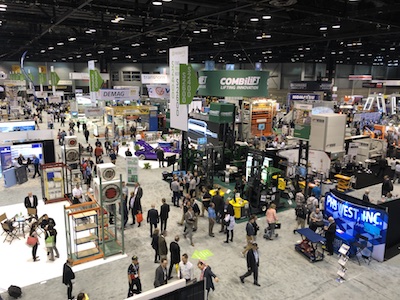
2 min read March 2020 — Despite Coronavirus concerns, this year’s MODEX conference is going ahead as scheduled on March 9-12 at the Georgia World Congress Center in Atlanta. The conference attracts 900 exhibitors and, as logistics companies, all have a stake in the developments currently fragmenting the supply chain.

The Covid-19 outbreak that began in China at the end of January has already shut down national and international borders, but this is one reason why expos such as MODEX are so important. The companies present in Atlanta will be supply chain and logistics optimization companies whose goal is to optimize operations by reducing or even eliminating human involvement. 

One of the technologies to be launched at the expo is the Puck 32MR, a joint venture between California’s Velodyne Lidar and South Korea’s Seoul Robotics. The technology is a lidar sensor that can detect obstacles in a warehouse setting, allowing for safe automated navigation. “Supply chain systems need to continue to become smarter and safer, more efficient and further automated. To address these requirements, companies are turning to lidar to play a key role in enabling the next generation of manufacturing and supply chain solutions,” said Jon Barad, Velodyne’s vice president of business development, in a press release. 

Another company presenting its portfolio will be industrial vehicle automation company Elokon, which has a global presence and U.S. operations headquartered in Atlanta. One notable product that will be presented at the expo is MHI Innovation Award-winning solution ELOshield, which is a sensor that detects proximity and provides collision warning with specific warning and protection zones.

And Atlanta-based Elemica provides a cloud-based supply network that provides tracking transparency and optimizes product shipment. “These enhancements improve use of inventory, streamline onboarding for inter-business connectivity, improve search, including hazardous material (Hazmat) criteria, and allow for more in-depth visualization for track and trace of product safety and knowing where orders and shipments are at all times,” said Arun Samuga, Elemica’s Chief Technology Officer in a press release.

The transportation management system (TMS) market in North America is poised to grow by $1.62 billion during 2020-2024 and Atlanta is at the forefront. American Software, an Atlanta-based supply chain software solutions provider, was recently upgraded to a Strong Buy rating by Zacks. The company’s president, Allan Dow, said in the company’s most recent earnings call that the software will allow customers to be “better positioned to overcome the growing supply chain talent shortage that may impact their profitable growth and ability to respond to rapidly changing market conditions or unanticipated supply chain disruptions.”

And with there being no signs of the Coronavirus slowing down and quarantine numbers growing by the day, more integrated, automated supply chains and logistics systems could be just what the economy needs to boost trade activity. 


To learn more, visit:

https://www.gwcca.org/georgia-world-congress-center/

https://velodynelidar.com/

https://www.seoulrobotics.org/

https://www.elokon.com/en-EN/

https://elemica.com/

https://www.amsoftware.com/

Tech and funding create GFL’s perfect innovation storm

Tech and funding create GFL’s perfect innovation storm

By: Sara Warden

2 min read March 2020 — The convenience economy means reality is increasingly becoming virtual, cloud-based and autonomous. Essentially, anything that can make life less complicated is likely to be a hit. From online banking to ride-sharing, the possibilities of technology are endless. Not only is Greater Fort Lauderdale developing the software, but it is also providing the venture capital funding.


Greater Fort Lauderdale is among the Top 50 U.S. tech talent hubs. No wonder, then, that so many tech startups are choosing the city as their home. Everything from semiconductors to security analytics, to telehealth and connected cars – you name it, Greater Fort Lauderdale has it.

Last month, GFL-based bookkeeping and accounting app Xendoo was chosen as one of 10 companies in South Florida that would receive $75,000 to scale their business via the Finance Forward US accelerator program, which is backed by the MetLife Foundation, PayPal and Village Capital. Previously, Xendoo had secured $3.5 million in funding.

Greater Fort Lauderdale’s technology chops are clear to see. Since 1994, Fort Lauderdale has been the headquarters of Microsoft Latin America. Motorola Solutions’ Plantation facility developed an advanced two-way portable radio for use by police, fire rescue and other first responders. Southeast Florida was home to the first IBM PC and the first smartphone.

GFL also knows how to foster talent. Citrix was established in Fort Lauderdale in 1989 as an IT company with market-leading cloud, collaboration, networking and virtualization technologies and now boasts $2.97 billion in annual revenue. And Plantation-based construction project management company e-Builder was acquired by Trimble for $500 million in 2018.

The region is not only bringing the technology and innovation, but also the funding. Fort Lauderdale-based AutoNation recently announced it would invest $50 million in Alphabet’s Waymo self-driving technology. “Waymo is the proven leader in self-driving technology, is the only autonomous vehicle company with a public ride-hailing service, and is successfully scaling its fully driverless experience,” Waymo operating board member Egon Durban told Silicon Valley Business Journal.

Another factor behind the marriage of tech and venture capital is the concerted effort of associations to continue to bring both sectors together. TechLauderdale promotes involvement in Broward County’s tech ecosystem by hosting events that bring together technology companies and funding. The association also promotes education and retraining for those who want to get involved in startup activity. 

“Our startups were having problems scaling up,” Richard Berkowitz, chair to the Broward Workshop’s technology committee, told South Florida Business Journal. “Our hope is that the rest of the business community and technology community in Broward County joins in creating this very strong platform to enhance our tech ecosystem.”


To learn more, visit:


TechLauderdale: https://techlauderdale.org

Xendoo: https://www.xendoo.com/

Citrix: https://www.citrix.com/

AutoNation: https://www.autonation.com/

Waymo: https://waymo.com/

Broward Workshop: https://www.browardworkshop.com/


Spotlight On: Reynold P. Cicalese, Managing Shareholder, Alloy Silverstein

Spotlight On: Reynold P. Cicalese, Managing Shareholder, Alloy Silverstein

By: Yolanda Rivas

2 min read MARCH 2020— Alloy Silverstein is a regional full-service accounting and advisory firm, headquartered in Southern New Jersey. In an interview with Invest: South Jersey, Managing Shareholder Reynold P. Cicalese discussed the changes in the sector and the firm’s support for small businesses in the area.


What changes have you experienced in the accounting sector over the last few years?

Technology has brought significant changes to our industry, allowing us to better serve our clients beyond just preparing a tax return or financial statement. We are on the cloud ourselves, encourage our clients to be on the cloud, and we use technology to help and collaborate with clients on a daily basis. Our advisers are proactive in helping design our clients’ future, as opposed to only telling them what they historically have done. We use software and apps that allow us to create KPI dashboards for our clients so they can have real-time data to make better decisions based on today’s information – not from last month or last year. We also have clients all around the world and we use meeting apps to constantly communicate with them.

Artificial intelligence is severely disrupting the industry. The investment in AI will significantly increase within the next five to six years. We need to keep an eye on this trend and make sure we remain competitive. With regard to audits, for example, it is expected that AI can look at every transaction and provide an efficient audit report. For regional and smaller firms it will be a challenge to compete with larger firms that have the capacity to invest in AI. 

How do you support the small-business community?


We find that many startups are underserved. We recently launched our Startup Hotline, which is a complimentary CPA Q&A for new and emerging businesses. Micro businesses may have questions regarding the type of entity they should start, for example. Through this tool, we give them access to our team of advisers and experts who can provide guidance on accounting, tax, payroll, and many other general business topics.


In addition, we add value for our clients and other small businesses in the community by hosting complimentary monthly lunch workshops, which we call “Alloy Academy.” What started as presentations on accounting software has evolved to bringing in guests so we can cover a wide variety of topics that may be important to a business owner or their employees.


To learn more about our interviewee, visit:

Alloy Silverstein: https://alloysilverstein.com/ 


Spotlight On: Michael Cioce, President, Rowan College at Burlington County

Spotlight On: Michael Cioce, President, Rowan College at Burlington County

By: Yolanda Rivas

2 min read February — Rowan College at Burlington County looks out for its students and has established several partnerships with the private sector to ensure a smooth transition from the classroom to the workplace. Still, shrinking birthrates on the East Coast present a challenge to remain competitive in the state, according to Michael A. Cioce, president of Rowan College at Burlington County.


What are the main qualities that distinguish Rowan College from other institutions in the region?

Access and affordability are built into the DNA of the institution. We have no direct competition within our county boundaries, but the state of New Jersey unfortunately has challenges. Many of our students have been recruited by Pennsylvania, New York and Delaware, among others, and it puts the responsibility on us to deliver a high-quality educational experience. 


We have approximately 9,000 students in any given semester, which makes us a medium-sized institution. Despite that number, my cabinet, my deans, directors and I all know our students. You are not going to come here and just be a transaction, and that matters to students because they have options and alternatives. We have competitors encroaching on our front door. Online education has grown exponentially over the last 20 years, so students can go wherever they want and I think that value that the personal connection provides differentiates us from many larger institutions.


In tandem with that, we have linkages directly into our local workforce, which assists students in gaining entry into the workforce.


What are the college’s most in-demand programs and courses?

Anything related to the health sciences sector. Our nursing program has a waiting list, and demand greatly outpaces available seats. Part of that is that students know they are going to be employed upon graduation. Our partnership with Virtua Health System, one the region’s largest healthcare employers, is amazing. Our students are not going to graduate with us simply saying, “good luck.” Through our workforce development programs and partnerships, such as that with Virtua and other employers, our students are getting real on-the-ground training that allows them to cross seamlessly into a job. Many of our students are offered employment prior to graduation.


We partnered with an economic analytics firm to conduct an economic impact study that uncovered three prongs where this institution drives value to the area. First, obviously, is training the students locally. They are coming to our campus, living nearby, buying food at local restaurants and working here. Second, as an employer. We employ over a thousand people in any given year, probably more than that. We are not the size of Virtua, but we are not a Mom and Pop store. Third is alumni: students who trained here, stayed here, and are also going to be champions of this institution. That is sort of our hat trick that scores big for the region. The report determined that RCBC’s economic impact on the Burlington County regional economy is $504.9 million in a year. 


What are the main challenges facing both Rowan College and the education system at large in South Jersey?

The birth rate has declined over the last 20 years and as a sector that is heavily reliant on high-school graduates, the enrollment curve is going to be challenging over the next couple of years. This is something that is larger than the college and the county, it is actually affecting the entire East Coast. As a community college, we enroll many adult students and we are not entirely reliant on that 12th-grade population. We have a higher percentage of adult learners than our peers, which gives us a little bit of a buffer, but the overall trend, is definitely going to be a challenge because as the main pool of students shrinks, there is going to be increased competition for them.


To learn more about our interviewee, visit:

Rowan College at Burlington County: https://www.rcbc.edu/