How South Jersey is celebrating the 4th of July during the pandemic

How South Jersey is celebrating the 4th of July during the pandemic

By: Beatrice Silva 

2 min read – Celebrating Independence Day is a big deal for most Americans. The Fourth of July officially became a national holiday in 1870. Then in 1941, a provision was expanded, making it a paid day off for all federal employees. People across the nation celebrate by setting off fireworks, watching parades, and having casual BBQs with their friends and family. This year however, festivities are going to look a lot different due to the constantly evolving COVID-19 virus. 

South Jersey skies will sparkle slightly less than they have in previous years, as most towns have canceled their usual spectacles. However, that doesn’t mean the holiday is completely up in smoke. There are still quite a few CDC-regulated activities you can enjoy that will keep you safe while satisfying your patriotic urges. Invest: South Jersey explores five of the top things to do this Fourth of July weekend during a pandemic. 

Middle Township Fireworks 

Mayor Tim Donohue let freedom ring when he decided to reverse his decision to cancel this year’s fireworks display. The town’s annual celebration will be held at dusk on Saturday, July 4 and gates will open one hour before start time. People are encouraged to wear masks and practice social distancing. The fireworks will also be streamed on the Middle Township Facebook page for anyone who wants to enjoy the festivities from the comfort of their home. 

For more information visit: https://www.facebook.com/photo.php?fbid=10217619152931637&set=a.1465495198362&type=3


Burlington County Virtual Contests 

Bordentown Township, Medford and Riverton have all canceled their fireworks celebrations. However, county officials are still encouraging their residents to hold family picnics on their lawns or driveways at 4 p.m. on the Fourth of July. They hope these festivities will help unite their community while still practicing safe social distancing. Officials also announced that they will be holding virtual house decorating, patriotic costumes and pet pageant contests. Contestants are asked to submit photographs of their entries. The winners will be announced on riverton4thofjuly.com, Facebook, and Instagram. 

For more information visit: https://www.riverton4thofjuly.com/covid

Ocean Gate 4th of July Parade

On June 20, Ocean Gate borough took to Facebook to announce that it will still be hosting its annual July Parade. Registration for the parade opens at 8 a.m. on July 4, at Adrian Hall. Try to come early because only a limited number of people will be allowed into the building at one time. The July Parade begins at 10 a.m. on Ocean Gate Avenue. To encourage social distancing, the parade route will be extended this year.

For more information visit: https://www.jerseyfamilyfun.com/event/independence-day-parade-oceangate/


North Wildwoods Family Parade, Kite-Flying Competition and more 

A few towns in Cape May County have canceled their celebrations but not Wildwoods. Independence Day Family Parade will begin at 9 a.m. at 9th and Atlantic Avenue in North Wildwoods. A barbeque will then be held from 3 p.m. to 7 p.m. for a minimum donation of $8. Fourth of July fireworks will be held on the beach at Rio Grande Avenue. Since the fireworks can be viewed from almost anywhere on the Wildwoods Boardwalk, visitors have been encouraged to enjoy the show from a distance. Anyone who is participating in the celebrations is required to follow CDC regulations. 

For more information visit: https://wildwoodsnj.com/events-calendar/?month=7-2020

Virtual Fourth of July Festivities

Celebrating a holiday from the comfort of your home has its perks, especially during these unprecedented times. For starters, you won’t have to worry about parking or overpriced drinks if you are hosting a small gathering at your house. Also, a majority of cities across the country are streaming their festivities live so anyone can join the fun no matter where you are. For example, viewers will be able to watch Houston’s “Shell Freedom Over Texas” at 8 p.m. Eastern on ABC12.com. The show will include performances by the Houston Symphony and country singer Pat Green. To make your at-home experience even more thrilling, try setting off a few fireworks from your backyard or get creative and decorate your front porch. We’re sure the neighborhood will enjoy your efforts as well.  

Orlando scores a win for its tourism sector

By: Felipe Rivas

2 min read June 2020 — Hospitality leaders and sports fans alike are cheering for the Central Florida region as the city of Orlando prepares to score a major win for its embattled tourism sector this summer. 


 Orlando will be the epicenter of professional sports this July as both the National Basketball Association and Major League Soccer set up camp at Disney’s ESPN Wide World Of Sports Complex in an effort to resume their respective seasons following the aftermath of the coronavirus outbreak. 

Earlier this month, Major League Soccer announced plans to restart the 2020 season with all 26 clubs competing in the “MLS is Back Tournament,” a month-long World Cup-style tournament set to begin on July 8. The tournament, which will be played without fans in attendance, allows the league to salvage its 25th season. 

“We are pleased to team up with Disney to relaunch the 2020 MLS season and get back to playing soccer,” said MLS Commissioner Don Garber, according to a press release. “The opportunity to have all 26 clubs in a controlled environment enables us to help protect the health of our players, coaches and staff as we return to play,” he said. 

In similar fashion, NBA fans will cheer for their favorite team from afar as players, coaches and staff settle in Orlando for the coming months. A 22-team NBA season is set to resume on July 31 with the playoffs slated to end in early October.  

Though the different games will be played without fans in attendance, these major sporting events will likely introduce visitors to the ESPN Wide World Of Sports Complex, further solidifying Orlando’s penchant for holding world-class events while helping mitigate the immediate impact of the coronavirus on Orlando’s hospitality and tourism industry. 

“Event organizers are familiar with Orlando as a destination, but for the public, they’ll learn an awful lot about what a wonderful venue the Wide World of Sports is,” Greater Orlando Sports Commission President and Chief Executive Officer Jason Siegel said, according to Front Office Sports. “It enhances the already great perception of the community for when we have the next conversations with FIFA as it relates to the World Cup or the bids we’ve put out for the 2022 to 2026 NCAA championship events. It just lends itself to an already robust portfolio of hosting marquee events,” he said.


Since March, 13 events have been canceled and not rescheduled, according to Front Office Sports, while another seven have been postponed, costing the region more than $49 million in economic impact. 

Another estimate by Orange County Comptroller Phil Diamond showed that tourism and development tax dollars dropped 97 percent in March, according to WKMG News 6. Diamond’s report said last year in March, the county collected nearly $27 million in tourism and development tax dollars. This March, less than $800,000 was collected, WKMG News 6 reported. 

Hoteliers and theme park officials are also rooting for the success of the region’s tourism sector. Hotels and parks are beginning to open up after more than three months of closures and severe layoffs and furloughs. 

Major parks like SeaWorld, Universal, and Islands of Adventures are operating under limited capacity and following the CDC guidelines, while Disney World is expected to begin its phased opening in July. “We are seeing the impact slowly coming back,” Visit Orlando CEO and President George Aguel told WKMG News 6. “Seeing Universal kicking off, SeaWorld following and naturally Disney coming into their own in July is big news.”


Charlotte: Toe to Toe with Coronavirus

Charlotte: Toe to Toe with Coronavirus

By: Felipe Rivas

4 min read June 2020—The tenacity of the coronavirus has challenged, and at times highlighted, the economic strength of cities across the nation. While the pandemic has severely bruised the Queen City’s economy, the city’s dexterity and sound fundamentals are helping to soften the blow as Charlotte recoups and prepares for an uncertain future. 


Marked by serious losses and promising victories, June has been a roller coaster of economic activity for the Charlotte Metro Region. Unexpectedly, the city’s hospitality sector, an already embattled segment of the economy, suffered a further blow when President Donald Trump and Republican leaders swiftly yanked the Republican National Convention (RNC) out of Charlotte after coronavirus-related concerns prevented North Carolina leaders from guaranteeing a fully operational Spectrum Center, hotels and other amenities. But as Charlotte reeled from this sudden blow, the region jabbed back at the coronavirus-related adversity with positive job expansion and promising rezoning announcements slated to be catalysts for growth in the near future. 

Two years of RNC preparations vanished as RNC leaders decided to move more than half of the August festivities to Jacksonville, Florida. Since winning the bid to host the 2020 RNC in 2018, the host committee and Charlotte’s hospitality and business leaders have toiled to ensure a smooth and enjoyable experience for the thousands of delegates, journalists, and visitors expected for the event. However, as government and business leaders entered 2020 confident about the state of the economy, the contingency plans unsurprisingly failed to factor in a global pandemic and the subsequent reduction in major events and large gatherings of people. 

In late May, in a letter to Gov. Roy Cooper, RNC leaders demanded that Charlotte, which remains in a state of emergency, guarantee a “full convention,” and “full hotels and restaurants, and bars at full capacity,” according to a response letter published by the governor’s office. Citing uncertainty and the state of the coronavirus come August, Gov. Cooper said planning for a scaled-down convention with fewer people, social distancing and face coverings is a necessity. “As much as we want the conditions surrounding COVID-19 to be favorable enough for you to hold the Convention you describe in late August, it is very unlikely,” Gov. Cooper wrote to the RNC leaders. “Neither public health officials nor I will risk the health and safety of North Carolinians by providing the guarantee you seek.” 

This lack of guarantee prompted RNC leaders and President Trump to move three of the four convention days to Jacksonville, according to different news sources. Charlotte will host the first day of the convention, with the traditional speeches and fanfare occurring in Jacksonville. The convention is scheduled to run Aug. 24-27.  

“We wanted to host the RNC because we hosted the Democratic National Convention in 2012 and so we want to prove to the world that we are capable of delivering high-quality events,” Charlotte Mayor Vi Lyles told Invest: Charlotte in the spring, before the RNC decision. She further explained the advantages for Charlotte: “It is a great branding opportunity for the city, as we expect up to 50,000 people, including many international journalists, to visit during the event. It will also provide a huge boost to our hospitality industry.” she said. The convention was expected to generate more than $150 million in revenue for the area’s restaurants, bars and hotels, the Charlotte Observer reported.  

As the hospitality and tourism sector begins to gather its composure after such a punch, Charlotte heavyweights aim to continue to strengthen the region’s foundation. Two significant redevelopments projects moved forward on Monday after receiving unanimous approval from city leaders. Rezonings were approved for the redevelopment of Atrium Health’s Midtown flagship campus and the former Eastland Mall property in east Charlotte, according to the Charlotte Business Journal. 

Atrium Health, the region’s largest employer, seeks to rezone close to 70 acres at the Carolina Medical Center to accommodate a live, work, and play environment, complete with a new bed tower, rehabilitation hospital, office space, affordable housing and more. In 2019, Atrium Health announced more than $1.5 billion investment in the Charlotte metropolitan area to help build new infrastructure, including new hospitals and medical facilities, President and CEO Gene Woods Told Invest:Charlotte in the spring. “This is about more than just adding brick and mortar. It’s about investing in this community because this is the place our friends, our neighbors and our loved ones call home, and we want to see it continue to thrive,” Woods said. “As the major healthcare system in the state of North Carolina, we know we can play a key role in helping our economy flourish as well.”

The Eastland rezoning includes close to 78 acres of mostly city-owned property, according to the Charlotte Business Journal. The site will be the future headquarters of the yet-to-be-named Charlotte Major League Soccer team, owned by business leader David Tepper. Similar to the Atrium Health project, Eastland will be the site of mixed-use development featuring residential units, office and retail space, and athletic fields. 

And while these projects are expected to pay dividends to the community in the future, the region scored significant economic development victories on Tuesday when Chime Solution and Ross Stores announced the addition of 250 and 700 jobs respectively to the region’s economy. 

Georgia-based Chime Solutions, a provider of customer contact services for several industries, will add jobs for licensed life and health insurance agents and will pay $16 an hour and include training and licensing,  WFAE reported Chime Solutions  opened an office in the University City area last fall. Leading off-price apparel and home fashion retail chain Ross Stores Inc. announced it will expand its distribution and warehousing operations in York County, according to the Charlotte Regional Business Alliance. The company’s $68 million investment is projected to create 700 new jobs over five years. 

To learn more, visit:

https://files.nc.gov/governor/documents/files/2020_06_02_RNC-Response-Letter.pdf

https://www.bizjournals.com/charlotte/news/2020/06/16/eastland-mall-atrium-health-rezoning.html

https://www.charlotteobserver.com/news/politics-government/rnc-2020/article243540772.html

https://charlotteregion.com/index.php?src=news&submenu=Relocation_Expansions&srctype=detail&category=Investor%20News&refno=8639&hurl=n

https://www.wfae.org/post/charlotte-says-chime-solutions-250-job-expansion-offers-economic-mobility#stream/0


Decatur Driving Global COVID-19 Response

Decatur Driving Global COVID-19 Response

Written by: City of Decatur 

2 min read June 2020 As the world seeks answers to the devastating impact of COVID-19, many of the most critical questions about the virus and how to eradicate it are being routed through Decatur. And while the CDC certainly plays an outsized role in this equation and generates most of the attention, The Task Force for Global Health in Downtown Decatur is quietly using its infrastructure to drive solutions.


“When it comes to our work, we take pride in operating mostly behind-the-scenes and shining the light on our partners rather than ourselves,” said Bill Nichols, executive vice president and COO for The Task Force for Global Health.


Behind the scenes or not, The Task Force has been a crucial force in the worldwide response to the coronavirus pandemic, including coordinating the distribution of 1.4 million pieces of personal protection equipment to hundreds of hospitals and healthcare facilities around the country, strengthening epidemiological and lab skills through training 14,000 individuals around the world, and hosting monthly teleconferences for health officials worldwide to connect and share best practices and treatments. 


Additionally, The Task Force is coordinating critical collaborations between the public and private sectors, aligning the contact tracing efforts of tech giants like Apple and Google with health officials around the world.


“This pandemic has clearly changed the way our country thinks about global health, and it’s up to all of us to ensure we don’t lose focus on this critical issue in the future,” said Nichols. “Being properly prepared for a pandemic requires billions of dollars, but it’s an investment worth making as an ‘insurance policy’ to protect against the type of economic fallout we are experiencing.”


While the coronavirus pandemic has thrust discussions about vaccines into the mainstream, The Task Force regularly works on coordinating the vaccine safety efforts related to epidemics affecting areas and regions that are often overlooked. Having this infrastructure in place has allowed the organization to continue its lifesaving work in underserved regions around the globe while also addressing COVID-19, including through its Brighton Collaboration, a worldwide network of over 5,000 vaccine researchers that ensures vaccine safety, and the Partnership for Influenza Vaccine Introduction (PIVI), a program that works with low and middle-income countries around the world to develop their influenza vaccine delivery infrastructure, which will better prepare them for when a COVID-19 vaccine becomes available.


“Now more than ever, our location in Decatur serves as a major asset when you consider how closely we are working with the CDC, Emory and other Atlanta-based institutions to address the pandemic,” added Nichols. “It also allows us to give back, as we are sharing our global expertise with the Dekalb County Coronavirus Task Force to guide our own community through a safe reopening in the days, weeks and months ahead.”


To learn more about this, visit: https://www.decaturga.com/


Florida’s phase 2 reopening and what it means for South Florida

Florida’s phase 2 reopening and what it means for South Florida

By: Beatrice Silva 

2 min read June 2020 On June 3, Gov. Ron DeSantis announced his plans to transition the majority of the state into the second phase of its recovery plan. However, the three southeast counties hit hardest by COVID-19 — Miami-Dade, Broward, and Palm Beach — will not be included in the reopening. 


 “We’ll work with the three southeast Florida counties to see how they’re developing and whether they want to move into phase 2,” DeSantis said during a news conference in Orlando on June 3. “They’re on a little bit of a different schedule.”


Gov. DeSantis will allow the three southeast counties to enter phase 2 under certain circumstances. The county mayors or county administrators will have to seek approval to enter phase 2 with a written request. Palm Beach County Mayor Dave Kerner and County Administrator Verdenia Baker wasted no time sending their request letter to DeSantis. 


“Palm Beach County is ready to go into ‘phase 2,” said Kerner at a news conference on Friday afternoon. “But we want to do it with some particular carve-outs that are necessary for the unique nature of Palm Beach County.” The county’s public officials are waiting for approval from Gov. DeSantis. 


As for Miami-Dade, their previous reopening date was pushed back by protests against police brutality. Miami-Dade Mayor Carlos Gimenez lifted the countywide curfew on June 8, and approved the reopening of gyms and fitness centers under Amendment 2 to Miami-Dade County Emergency Order 23-20. Although the city isn’t officially included in the initial phase 2 reopening date, Gimenez says he is working with the state on reopening locations very soon. 


Upon approval, restaurants may allow bar-top seating with appropriate social distancing. Bars will be able to operate at a 50 percent capacity inside and full capacity outside. Retail stores are going to be allowed to operate at full capacity and entertainment venues like movie theaters and bowling alleys will be able to welcome back guests at a 50 percent capacity. Residents who do decide to venture out will still have to follow CDC guidelines like wearing a mask, social distancing, and frequently washing their hands.


Although the north and south regions of Florida are on different opening schedules. State universities will have to submit their blueprints by Friday. The State University System of  Board of Governors recommends things like social distancing, disinfecting, face masks and student’s desks being as far away from one another as possible. School districts on the other hand, will be given the final say on their own social distancing protocols. It is expected that students will have a much different learning experience upon returning to the classroom. 


“We have a great opportunity to get back on good footing,” DeSantis said. “I know our kids have been in difficult circumstances. … Getting back to the school year is going to be really, really important to the well-being of our kids.”


Broward County school districts are in the process of surveying parents to gauge what they would like their child’s school to look like this coming fall. “We will have schools open. We will have teachers in schools. We will have students in schools … including hybrid models that some parents are rightfully demanding,” said Alberto Carvalho, superintendent of Miami-Dade County Public School, at Wednesday’s school board committee meeting. 


Within the past four months, there have been 70,971 confirmed COVID-19 cases and 2,877 related deaths in Florida, according to the Florida Health. 


For more information visit: 


https://floridahealthcovid19.gov/#latest-stats/


https://www.miamiherald.com/news/local/education/article243464791.html


https://miami.cbslocal.com/2020/06/11/governor-ron-desantis-plans-reopening-schools-fall/


https://www.abcactionnews.com/news/state/florida-state-universities-must-submit-fall-reopening-plans-by-friday


Spotlight On: William Pate, President and CEO, Atlanta Convention & Visitors Bureau

Spotlight On: William Pate, President and CEO, Atlanta Convention & Visitors Bureau

By: Max Crampton- Thomas

2 min read April 2020 — As the full wrath of the COVID-19 pandemic strikes the country, tourism is among the worst-hit sectors. Atlanta Convention & Visitors Bureau President & CEO William Pate calls the impact “unprecedented” and points to an expected 95% drop in business in May. Pate outlines the actions the bureau is taking to help businesses in the sector and also provides his outlook for the second half of the year.   


In comparison to where the numbers were last year, what have you seen in terms of drop off from the COVID-19 pandemic on the tourism and hospitality community in the region?

The hospitality industry is on the front line of those affected financially, and the impact is unprecedented. We experienced a 70% reduction in business in March and expect a 95% reduction in April and a 95% reduction in May. Smith Travel Research estimates hotel occupancy in the city of Atlanta for March was 33 percent, compared to 81 percent in March 2019 and March 2018. Destinations across the country are seeing similar downtrends or worse. Our priority is now on recovery. Atlanta Convention & Visitors Bureau is laser-focused on making sure our city’s hospitality industry comes back strong so we are able to spread the economic benefit throughout the city as quickly as possible.

How is your organization working to assist the tourism sector in mitigating the challenges and impact felt from the COVID-19 pandemic?

Many of our 850 members are facing extreme financial challenges. We have aggregated online resources on Atlanta.net designed to help them along with their employees. These include fundraising efforts on behalf of employees in our industry as well as restaurants that are providing pickup and delivery services. For locals and visitors, we list attractions offering virtual experiences as well as updates on event cancellations and venue closures.

How quickly do you believe the tourism and hospitality industry in Atlanta will be able to recover from this pandemic? 

Atlanta has a strong convention calendar in the second half of this year, and our sales team is actively working with the staff at Georgia World Congress Center to optimize space and bring additional meetings to the city. It is difficult to forecast how quickly travel will rebound. This is an unprecedented situation, and the length of this event and the rate at which people will travel again and attend conventions remains to be seen. Atlanta is a very attractive destination for travelers though, and we continue to see substantial activity in booking meetings and conventions over the next five years.


To learn more about our interviewee, visit:


https://www.atlanta.net/acvb/


Spotlight On: Michael Chin, General Manager and Regional Director for Eden Roc Miami Beach/Nobu Hotel Miami

Spotlight On: Michael Chin, General Manager and Regional Director for Eden Roc Miami Beach/Nobu Hotel Miami

By: Max Crampton-Thomas

2 min read March 2020 — The hospitality market in Miami-Dade may have started to feel a level of oversaturation but the market overall is still at an advantage in comparison to other large markets across the nation due to location and a friendly tax environment, Michael Chin, general manager and regional director for Eden Roc Miami Beach/Nobu Hotel Miami Beach, told Invest:. He also discussed embracing the sharing economy as an alternative rather than increased competition in the market and the difference in demographics that options like this attract. 


With new entries into the region, do you believe the hospitality market in Miami-Dade is nearing a level of oversaturation?  


Miami is in a position where some hospitality entities feel a level of oversaturation, but I don’t think we are in that kind of market yet, especially when compared to markets like New York, Chicago, Los Angeles or Las Vegas. We have a mix of boutique and local hotels, and we are starting to see developments for the larger hotels coming into the area. This includes the expansion of some larger properties in the Downtown  and Brickell areas. The demand is still there in regard to new hotels in Miami-Dade.


What is the biggest advantage to your location in Miami Beach? 


Our biggest advantage in regard to where we are located is right out our back doors: the beach. The number of properties that have direct beach access is what people come to South Beach for. Right now, some of the hotels, like in Downtown Miami, aren’t as attractive to certain visitors coming to Miami because they don’t want to be in an urban area. They do not want to just see the water, they want to be at the water. This is why our location on the beach is probably our biggest attraction for new guests. We also have an advantage thanks to our offerings in comparison to our neighbors. We thrive off of the proximity to the Fontainebleau. We may not have the capability to have a nightclub on our premises like the surrounding hotels, but the people who come in here and visit us prefer us as an alternative place to go to eat and have a different type of experience.


How do you view newer entries into the hospitality market like Airbnb and the sharing economy? 


My background comes from a corporate hospitality structure and we addressed the issue of the sharing economy on a corporate level years ago. Since then, my stance really has not changed. We cannot view services like Airbnb as competition, they are simply just an alternative. The consumer is going to stay where they want to stay. If their preference is to have longevity and a lot of space, then they are going to choose an option like Airbnb because it is something that they will not get in a hotel. People who stay at hotels, stay based on what they are looking for. Today, the demographics related to age, income and food preferences are going to determine where a person stays more than the price of a hotel or its location. The hospitality industry has corporate executives who sit in a room and  determine how they are going to capture every type of traveler out there and how they are going to define every generation, demographic and region to find a suitable hotel choice for them. At a hotel like ours, travelers are going to stay here because they want the features of convenience in regard to housekeeping, room service, amenities and entertainment. Hotels have the consistency value. You have expectations when you stay in a hotel. There are a lot of factors that go into why a person picks and chooses where they want to stay but it all comes down to preference. 


How does the hospitality sector in Miami have an advantage over other large markets across the nation? 


People still want to go to places like Orlando, Dallas or Las Vegas, but every city has its issues, whether that’s overtaxation like in California or overpopulation like in New York. We have the opportunity to attract those tourists to a new market like Miami that doesn’t have these issues. It is about us getting out there to advertise Miami as a viable option to host both tourists and business travelers. Events like the Super Bowl help strengthen this idea.


To learn more about our interviewee, visit: 

https://www.edenrochotelmiami.com/


Miami’s Events Calendar Rocked by Coronavirus Concerns

Miami’s Events Calendar Rocked by Coronavirus Concerns

By: Sara Warden

2 min read March 2020 — Sunshine, beaches, cruises, outdoor festivals … this is Florida’s bread and butter. But what happens when a global health crisis crosses international borders? Miami’s tourism industry is now finding out.


When the novel Coronavirus (Covid-19) outbreak began spreading in China at the end of January, there was very little overseas impact and China seemed to bear the brunt of the outbreak, shutting down logistics and imposing quarantines. But as cases began popping up globally, with Italy, Iran and Southeast Asian countries particularly affected, governments started to take action. The tourism industry, as a result, is suffering. The United States currently has 140 active cases of the virus, with 11 deaths, and officials confirmed two cases in Florida on Sunday. 

Florida very much intends to maintain open borders and air travel. Two of its economic strengths are international trade, with 40% of all U.S. exports to Latin America passing through Florida, and tourism, which added an estimated $111.7 billion to the state’s economy in 2016.

Already, Miami is feeling the impact of the outbreak. This week, the city was meant to host Zendesk Relate, a 2,300-attendee conference at Miami’s conference center held by San Francisco-based customer-service software company Zendesk. But the company announced the event’s cancellation on Monday, on the same day American Airlines suspended its Miami-Milan service as the number of active cases in Italy ballooned to 2,706, with 107 deaths registered.

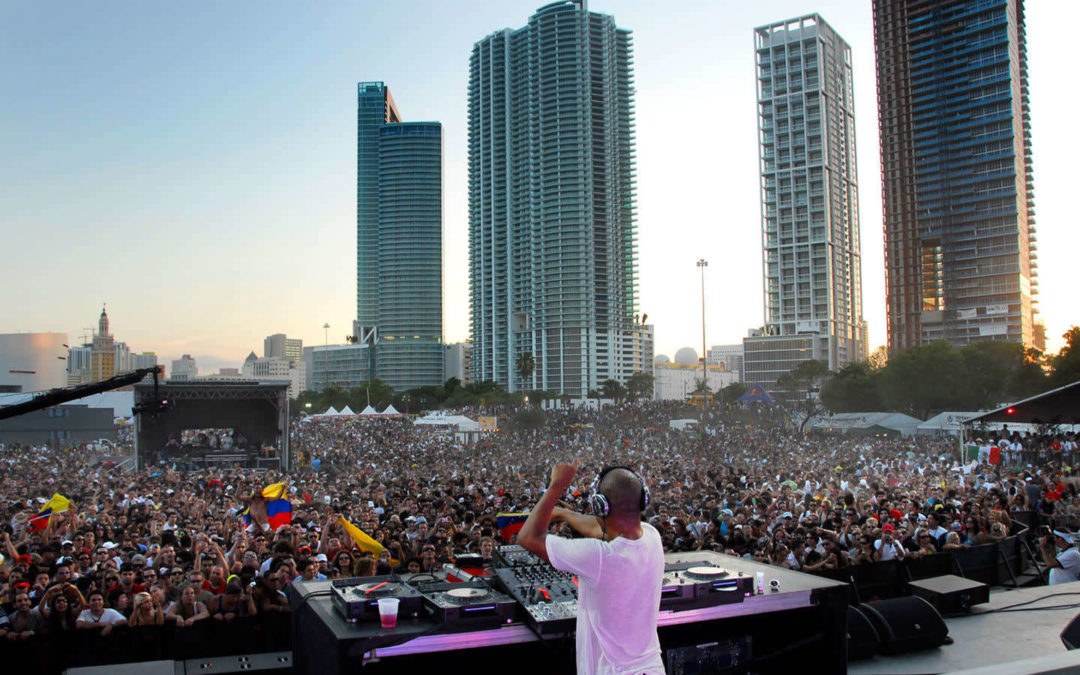
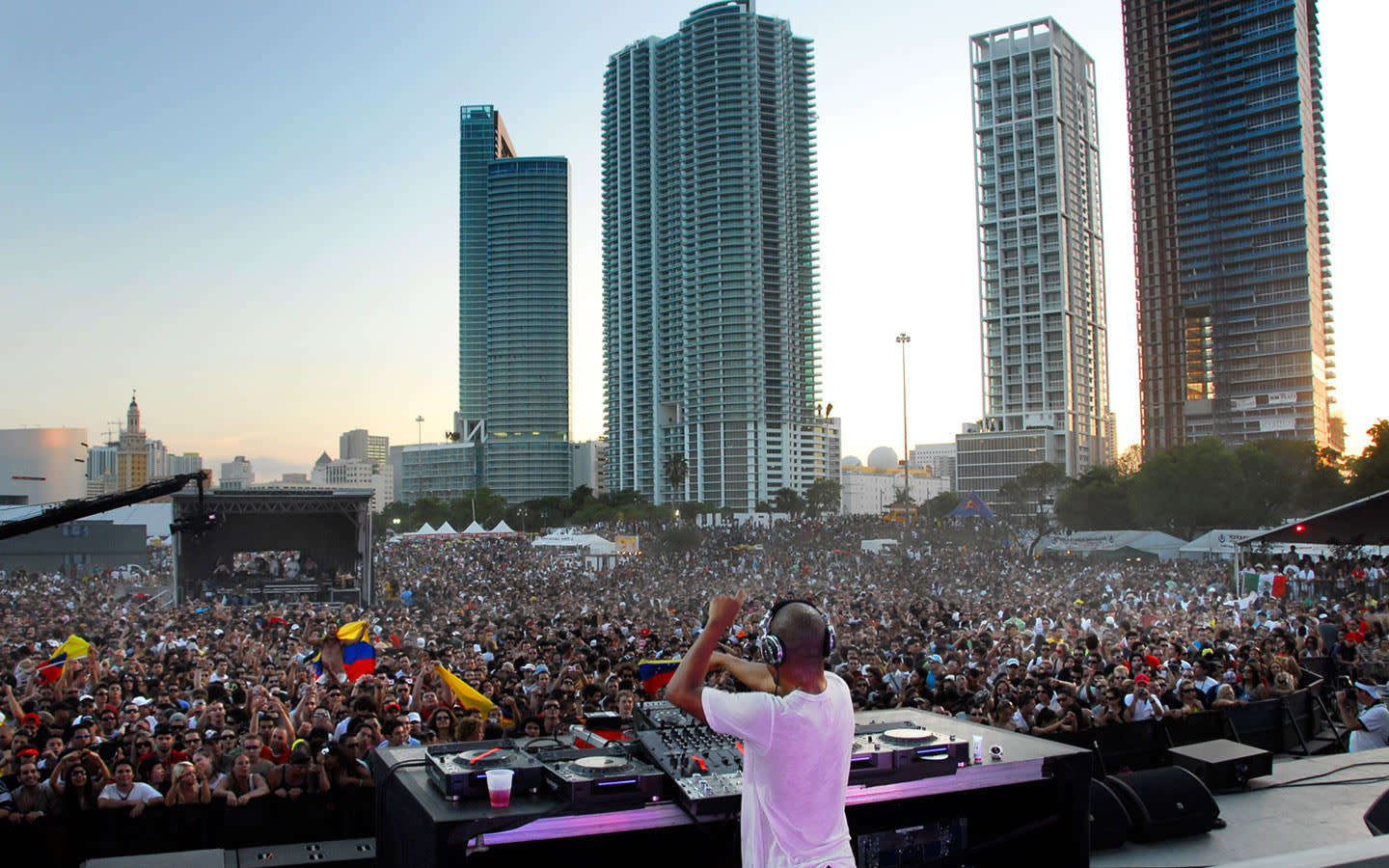
Another event impacted by the virus is the annual Ultra Music Festival, which organizers have reportedly postponed – potentially for a year, according to the Miami Herald. The electronic dance event typically attracts 55,000 people per day and the 2020 edition is due to be held on Bayfront Park. With tickets starting at around $300 and going up to $1,500, the impact of cancellation would be significant. “I agreed with the decision to postpone it,” City Commissioner Manolo Reyes told the Miami Herald. “And now I’m worried about the Calle Ocho Festival,” referring to the Latin music festival scheduled for March 15 in Little Havana.

Some conference organizers and attendees are attempting to postpone events until May, when there is hope the virus will be contained. But Florida Gov. Ron DeSantis is less optimistic about the impact on Florida, predicting more cases will emerge shortly.

The Medical Affairs Professional Society is scheduled to host a conference on March 9-11 but has already experienced some cancellations, according to CEO Travis Hege. The conference is still going ahead as scheduled, he told the Miami Herald. “Any deaths in Florida or outbreak in Florida is the biggest thing we are monitoring,” he said. “We’re continuing to monitor the latest developments. Otherwise, we will be proceeding as planned.”

And while cancellations of events like Zendesk Relate are not ideal, this is far from the biggest event Miami is due to hold this year. Art Basel may or may not take place in June after the Hong Kong edition was canceled and Miami Pride events will take place at the end of March and beginning of April.

But Miami-Dade Mayor Carlos Gimenez said Tuesday there is no need to cancel major events, and instead there needs to be a specific focus on protecting the elderly and vulnerable populations. “We will step up and make sure that those elderly get those services,” he told Local 10. He added that arriving visitors will be more thoroughly screened and that residents should “live your normal life (and) take just common-sense precautions.”


To learn more, visit:

https://www.zendesk.com

https://www.artbasel.com/miami-beach

https://ultramusicfestival.com/

https://www.miamiandbeaches.com/event/miami-beach-pride/2188

https://carnavalmiami.com/events/calle-ocho/ 

https://www.miamidade.gov/global/government/mayor/home.page

https://www.medicalaffairs.org/


Face Off: Bringing More Energy to the Bay

Face Off: Bringing More Energy to the Bay

By: Max Crampton Thomas

4 min read February 2020 As the Tampa Bay region continues to grow both in population size and new developments, the need for access to more energy and cleaner energy solutions grows with it. Invest: spoke with the leaders of two of the main sources of energy for the region and their innovative approach to creating cleaner energy solutions. T.J. Szelistowski serves as the president for Peoples Gas, which has provided Florida residents and businesses with reliable, environmentally-friendly, economical natural gas products and service since 1895. Nancy Tower leads Tampa Electric as its president and CEO. The utility has served the Tampa Bay area for 120 years, with more than 5,000MW of generating capacity. 

How is your company innovating in terms of technology?

T.J. Szelistowski: The last time we spoke, we discussed implementing gas-fired heat pumps that use natural gas instead of electricity for air conditioning. We are working with several customers on installations of this technology.  Additionally, we have installed the technology in three of our facilities and have been pleased with the performance.  

In terms of other technologies, we are targeting farming and waste facilities that release methane into the air. Our environmental solution is to capture that methane and clean it up to reinject it into the system. This not only provides a cleaner form of natural gas but also reduces methane emissions. We look forward to announcing some significant projects with this technology in the near future.

Nancy Tower: We believe battery storage is a part of our energy future. The technology is new, and we’re not ready to deploy that on a large scale until we figure out the true impact it will have on our system. We have put in place a battery storage project this year near our Big Bend solar project, which will give us really good information on how solar and battery storage interacts with our system. We’re really looking at how we can integrate battery storage into the complexity of the renewable energy ecosystem.

In other technologies, we are also in the middle of a large-scale installation of smart meters, which provide a lot more information and allow us to provide customers with superior service. 

T.J. Szelistowski

Why has investment in cleaner, more renewable energy and environmental sustainability been such a focus for your company?

Szelistowski: Natural gas is the perfect partner to renewable solar energy to provide capacity when the sun is not shining and to ensure energy is available to customers around the clock. Additionally, natural gas can provide great environmental benefits by replacing diesel fuel usage in large vehicles, such as buses and waste-management trucks.   

 A variety of ships are starting to convert to natural gas because of changing environmental regulations, specifically IMO 2020, which slashes permissible levels of sulfur permitted in fuel for seaborne vessels to minimal levels and opens the door for liquefied natural gas (LNG) as an alternative.

Tower: The biggest factor is that customers want it. When thinking back over the last few years, the number of people focused on a cleaner environment has increased exponentially. This is symbolic of the focus citizens and our customers have on environmental stewardship, and that is not going away. We are very happy with our progress.

I think it’s our obligation on behalf of customers to demonstrate that clean energy is not only our responsibility in terms of an environmental perspective, but also from a cost perspective. We are focused on both of those things simultaneously. As the entity generating electricity, we have the responsibility of doing that in the most responsible way.

Nancy Tower

How would you respond to the argument that clean energy is not yet cost-effective or readily available?  

Szelistowski: Natural gas interstate transmission pipelines are relatively new to Florida compared with the Northeast, having been introduced only in the 1950s. In addition, natural gas is a primary source of space heating in many parts of the country. With limited space heating in Florida, natural gas is primarily used for cooking, water heating and clothes drying in addition to industrial uses. We see a great desire for natural gas by people who have moved from other parts of the country and have enjoyed using natural gas in the past.  

In terms of misconceptions, people do not realize the widespread availability of natural gas in Florida. Additionally, they may not realize the affordable nature of home and business use of natural gas. With low and steady gas prices, natural gas provides a great alternative to both business and homes.  

Tower: It is our job to ensure that our generation portfolio is the most cost-effective for customers. Over the long term, we have carried out extensive cost modeling to ensure we can meet these expectations. In the next number of years, we will add more solar capacity and our generation will include more small-scale methods combined with battery storage. This doesn’t come without hard work and we need to find the right ways to keep costs low. This involves finding the right land close to our transmission infrastructure, ensuring suppliers are providing competitive prices and efficient cost management. Costs have come down, but we need to ensure we tightly manage this.

To learn more about our interviewees, visit:

https://www.tampaelectric.com/

https://www.peoplesgas.com/