Adaptability critical for private equity

Adaptability critical for private equity

By: Felipe Rivas 

2 min read October 2020 — Middle-market companies eyeing private capital investments in the technology, manufacturing, distribution and retail spaces, among others, during the COVID-19 era, will require flexibility and adaptability to emerge stronger in the new normal. The good news is that valuations remain steady and deals are expected to bounce back sooner rather than later. 

“Overall, both buyers and sellers have adapted to the pandemic-related restrictions, as well as the additional hurdles that have emerged,” DHG’s Private Equity Managing Partner Scott Linch, told Focus: Atlanta. “Generally speaking, we haven’t seen a significant drop in valuations. It has just been a less efficient deal process.” Deal activity in Q2 declined significantly as a result of the initial pandemic-related shocks but saw an increase in Q3. “We expect deal activity to be strong in the fourth quarter due to pent-up demand and concerns over the impact of potential tax changes on sellers,” Linch said. 

Dealing in the digital or remote landscape has not come without its fair share of challenges; however, professionals are adapting well. “Added flexibility is important to find times for all management teams, professional advisers and investors to be on virtual meetings,” Linch said. Months into working from home, the trend has highlighted new possibilities as virtual meetings yield complete transactions. “We are seeing transactions completed through solely virtual meetings where at the start we didn’t think that was possible,” he said. 

The pandemic has also resulted in a longer period of time to close transactions, with some deals addressing pandemic impacts via “earn-outs or creative solutions to cover downside exposure,” Linch said. “Virtual meetings certainly made things move at a slower and more deliberate pace. The coordination and organization of processes simply involves more obstacles and getting to closing has not been quick or easy. Good businesses are still being sold and we’ve seen quite a few processes that were paused during the initial onset of the pandemic that are now picking up and we are hopeful that closing will occur prior to year-end. We are seeing increased deal flow at the end of 2020 as a result of delayed processes.”

While many companies are taking advantage of PPP loans, the loans are not impacting completed transactions, though deals are being structured to protect buyers from any associated liabilities. “The key takeaway and advice we have for our clients (buyers) is to ensure ample funds are left behind to cover the debt in case it is not forgiven, or add legal language to protect the buyer from debt payments post-closing to ensure any funds taken don’t end up as additional purchase price,” Linch said. Buyers should be aware of deferred payroll tax liabilities that may exist as a result of the CARES Act, he advised. 

The pandemic-led disruptions have also propelled technology and digital presence to the top of the priority list for companies. “The crisis has driven retailers to have a larger and more efficient digital and online presence. If consumer product companies and retailers didn’t adequately shift channels in mid-March, they found a way to get there quickly,” Linch said. “We are seeing an increased focus on technology-enabled businesses that should drive businesses forward in the future. We have also seen businesses with products around the home, health and outdoor recreation segments thrive. During 2021, companies must continue to innovate, find unique ways to attract and retain customers and focus on safety and convenience.” 

Going forward, cities like Atlanta and Charlotte are poised to meet the demands of businesses in the technology and manufacturing, distribution and retail spaces. “Atlanta and Charlotte are home to two of the largest home improvement companies in the United States, which have performed well during the pandemic. Many businesses are part of that supply chain and have benefited from the increased focus on home improvement activities. Atlanta and Charlotte are also ideal for distribution and logistics operations based on location, infrastructure and various transportation assets such as international airports, railroads and interstates,” said Linch.   

During this unprecedented time for middle-market companies, information is vital. As part of its “Emerging Strong” webinar series, DHG is hosting “Private Equity Perspectives: Tech, Manufacturing & Distribution,” a discussion about 2020 from the private equity, technology and MDR (manufacturing, distribution and retail) perspectives. Featuring Scott Linch, and a seasoned team of industry leaders, the virtual event will happen on Oct. 15, 2020, from 1 p.m. – 2 p.m. EDT. In addition to Linch, participants are: Marcus Fariss, Managing Director, DHG Corporate Finance; Matt Williams, Vice President, Frontier Growth; and Kian Capital (panelist to be announced).

For more information, visit: https://www.dhg.com/event/private-equity-perspectives-tech-manufacturing-distribution 

 

Invest: South Jersey’s first digital launch conference highlighted the region’s resilient and innovative business community

Invest: South Jersey’s first digital launch conference highlighted the region’s resilient and innovative business community

By: Beatrice Silva

FOR IMMEDIATE RELEASE 

October 9, 2020

South Jersey’s economic resilience in the face of unprecedented challenges, innovation and adaptation highlighted the launch of Invest: South Jersey 2020.

CHERRY HILL, NJ—In this time of uncertainty, it has never been more important to demonstrate the strength and overall resilience of the local community and economy. On Thursday, integrated media platform Capital Analytics provided an opportunity to shed light on the challenges and opportunities in the region as it launched its annual analysis, Invest: South Jersey 2020, with a virtual business conference held via Zoom Webinar.

Known for its affordability, highly educated workforce, and reputation as a major banking hub, South Jersey is poised for continued growth and economic diversification even in the midst of current coronavirus-related challenges and uncertainty. Invest: South Jersey dives into the top economic sectors in the county, including real estate, construction, utilities and infrastructure, transportation and aviation, banking and finance, legal, healthcare, education and arts, culture and tourism. 

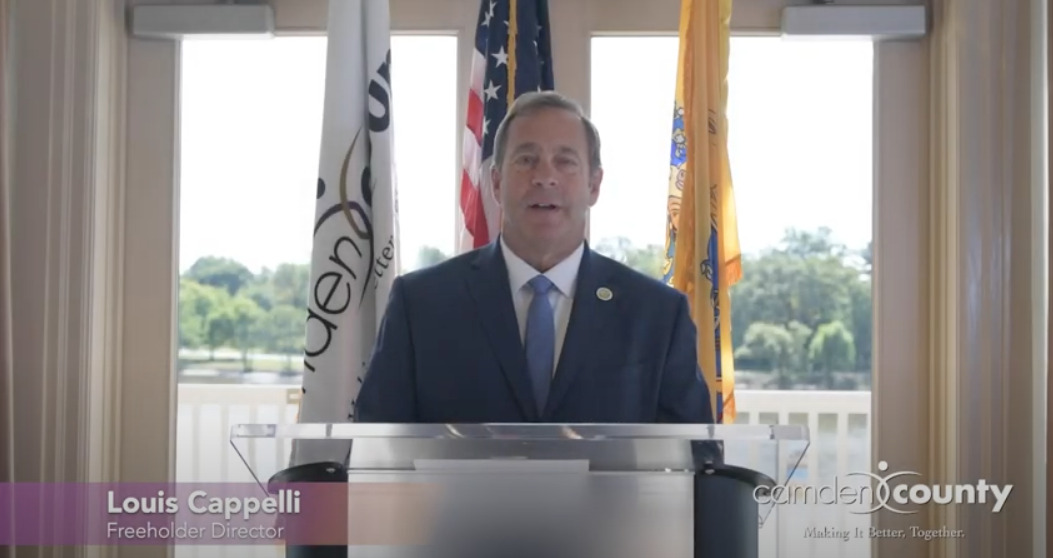
Like other parts of the nation, South Jersey has felt the economic constriction and health challenges created by the pandemic. But, it has also experienced notable job expansion and continued work on capital projects, Louis Cappelli, Director of the Camden County Board of Freeholders, told the virtual audience in his closing keynote address. The pandemic has also allowed city and business leaders to collaborate on addressing recovery efforts and creating solutions for the socio-economic challenges highlighted by the pandemic. “I hope the panel discussions have helped you discover new and exciting ways to think about the future of your business and our shared local economy. When I sat down with Invest: South Jersey for an interview in 2019, we didn’t discuss pandemics or viral outbreaks. No one had ever heard of COVID-19 and the idea of a nationwide economic shutdown would have seemed impossible. This year has looked a lot different than anyone could have ever imagined. But even during this challenging time, I’m frequently reminded that this pandemic will end and when it does the fundamentals that made South Jersey so hospitable to new and existing enterprises will remain intact. From the fast diversity in land and real estate throughout our region to our strategic location near Philadelphia, New York and Washington, D.C., South Jersey remains the place to be a place for growth, expansion and innovation,” said Cappelli.

“South Jersey was an important expansion for us because it is a unique and dynamic area that functions with the greater Philadelphia region. Our South Jersey expansion showcases how metro areas are more than just cities but rather a diverse ecosystem made up of many companies, locations and environments. Despite the challenges put upon us by COVID-19, Capital Analytics remains steadfast in our purpose: to deliver in-depth business intelligence through its print and digital platforms. Now more than ever, information is not only necessary, it is vital,” said Abby Melone, president and CEO of Capital Analytics. 

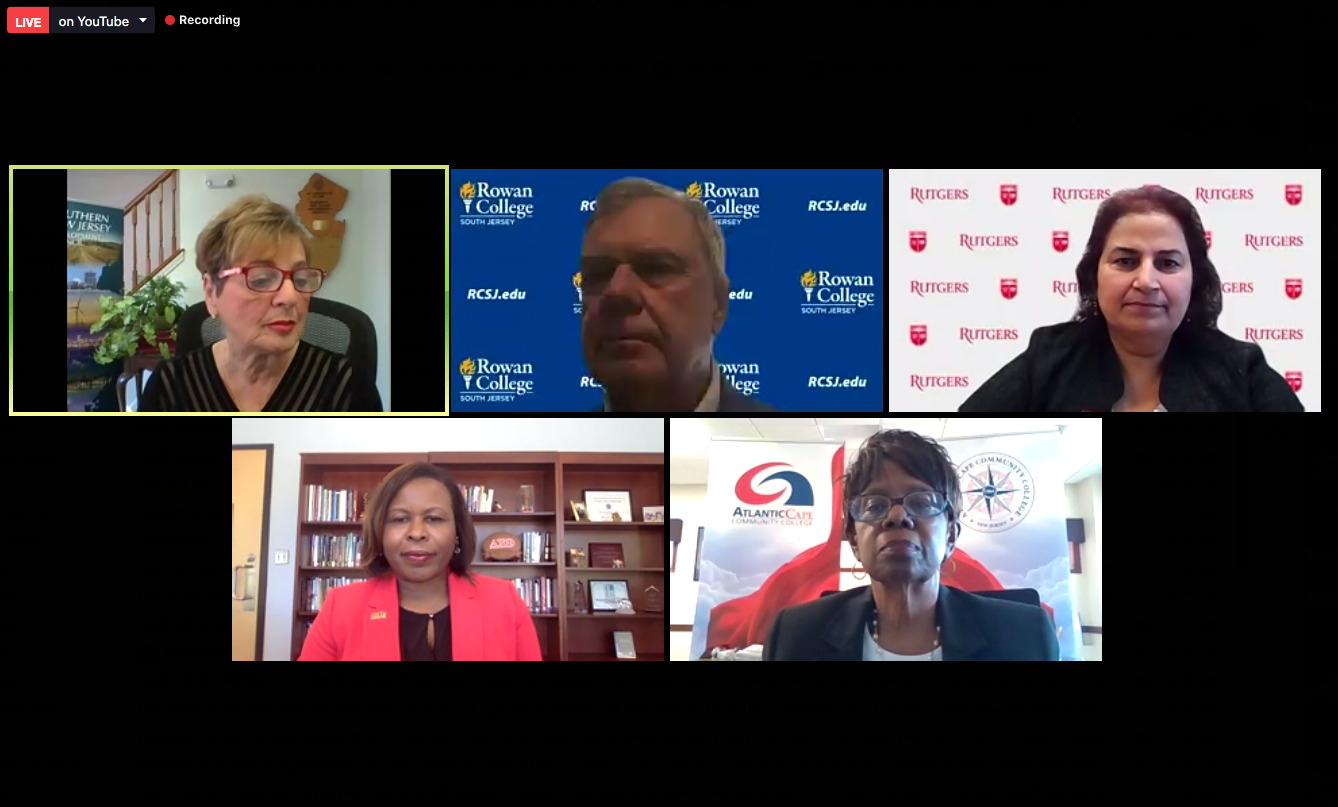
The panels addressed the current economic climate as well as prevailing themes dominating the South Jersey metro area’s economy: education and business growth in the time of a pandemic and the future of development in South Jersey. Southern New Jersey Development Council President Marlene Asselta kicked off the virtual conference as the moderator for “Innovation and adaptation: What this could mean for education post-pandemic,” which featured insights from Rowan College of South Jersey President Frederick Keating, Rutgers School of Business at Camden Dean Monica Adya and Atlantic Cape Community College President Barbara Gaba.

“Public-private education partnerships are critical at this time. Particularly because of what we are going to see in the next few years. We will be impacted by demographic trends in the following years to come. Educational institutions need to start thinking about how we are going to partner together. These partnerships with our communities, business leaders and public institutions will play an important role in our mission to impact the region,” said Moncia Adya, Dean of Rutgers School of Business at Camden. 

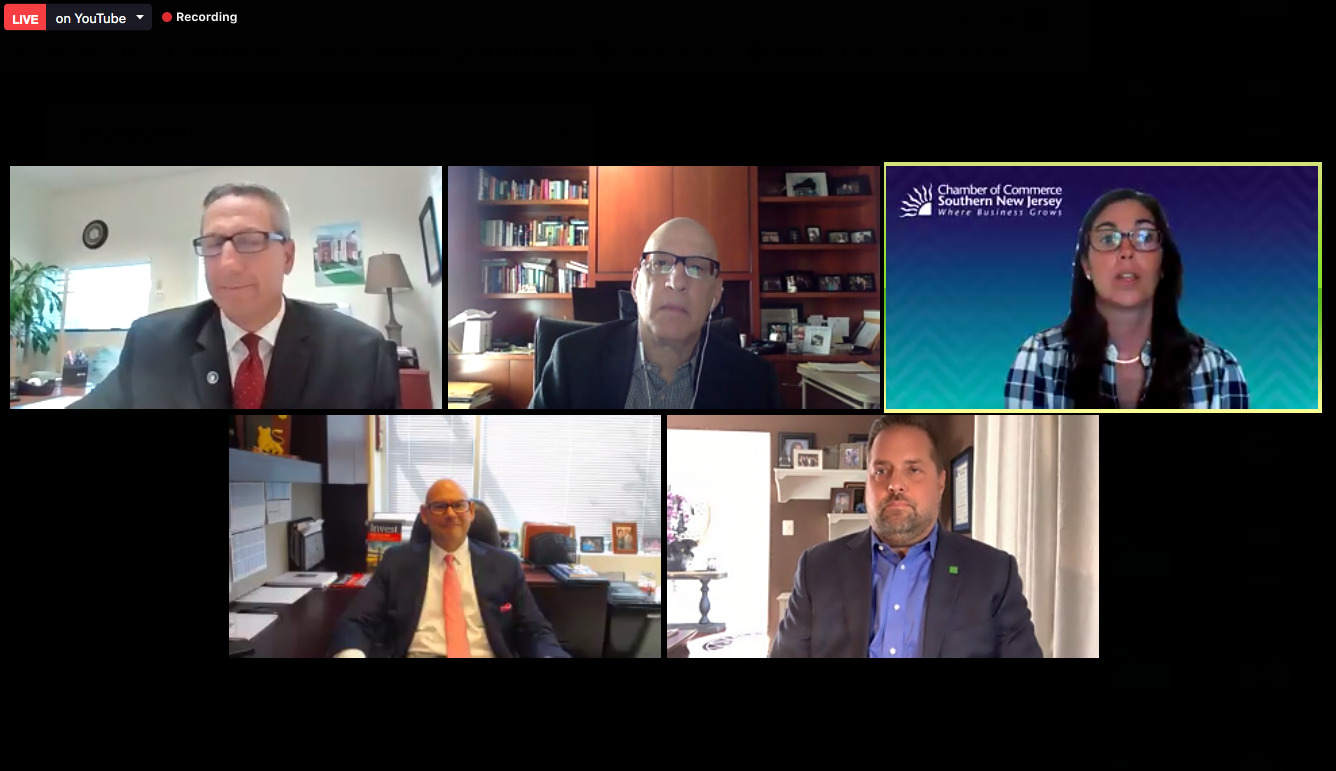
The second panel, “Best practices to promote sustainable business growth in a post-pandemic landscape,” was moderated by Chamber of Commerce Southern New Jersey President and CEO Christina Renna, and featured Fox, Penberthy & Dehn at Morgan Stanley Senior Vice President and Executive Director Al Fox, OceanFirst Bank Southern Region President Vincent D’Alessandro, TD Bank Market President of South Jersey Robert Curley and Alloy Silverstein Managing Shareholder Reynold Cicalese. 

“We’ve returned to the office at a very limited capacity but what we found was that there was an increased amount of productivity and an increased level of communication. I’ve been told for years that you can’t waste a good crisis so it necessarily became the mother of creativity. During this time we were able to figure out the depths of our team and the depths of our clients,” said Fox. 

Almost 400 high-level guests and officials from South Jersey’s key industries and economic institutions tuned into the event via Zoom Webinar. For those who missed the event or would like to revisit some of the highlights from the day, please visit: https://www.youtube.com/watch?v=Muf9YEiBX5Q

About Capital Analytics:

Capital Analytics produces in-depth business intelligence with a focus on providing comprehensive investment knowledge on markets within the United States for the domestic and global business community. Over a seven-month research period, it meets with more than 200 top political, commercial and industry leaders to deliver targeted information, in-depth analyses and strategic insights to the global business community on economic trends and investment opportunities.

Capital Analytics has a global readership and includes among its readers top executives working in real estate, finance, technology, trade and logistics, health, hospitality and others. Books are distributed locally, nationally and globally to trade and investment boards, executives of Fortune 500 companies, institutional investors, consulates and embassies, hedge funds, leading chambers and associations, as well as high-level summits and conferences.

For more information, contact: 

Max Crampton-Thomas

Content Manager 

305-523-9708 Ext: 233

Claro Development has a clear picture of the Charlotte market

Claro Development has a clear picture of the Charlotte market

By: Felipe Rivas

2 min read October 2020 While the national real estate and development sector continues to adjust to the ever-changing pandemic landscape, this period is also a time to strategize and think about future opportunities and expansions. To that end, Charlotte often tops the list for developers and service providers looking to expand their operations across the Southeast. 

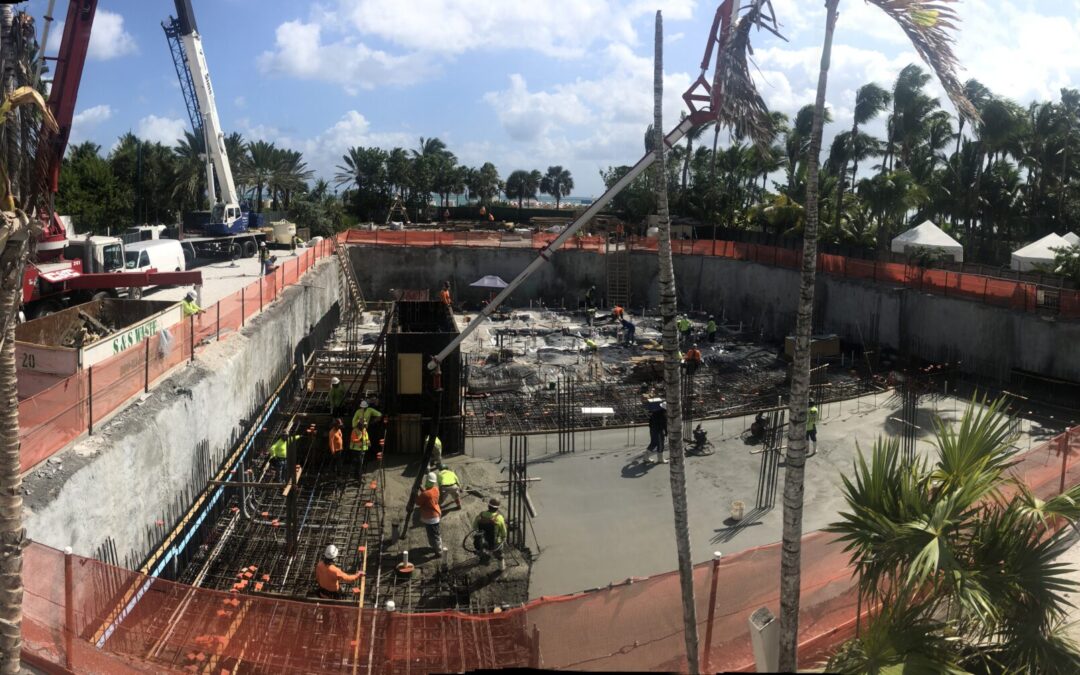
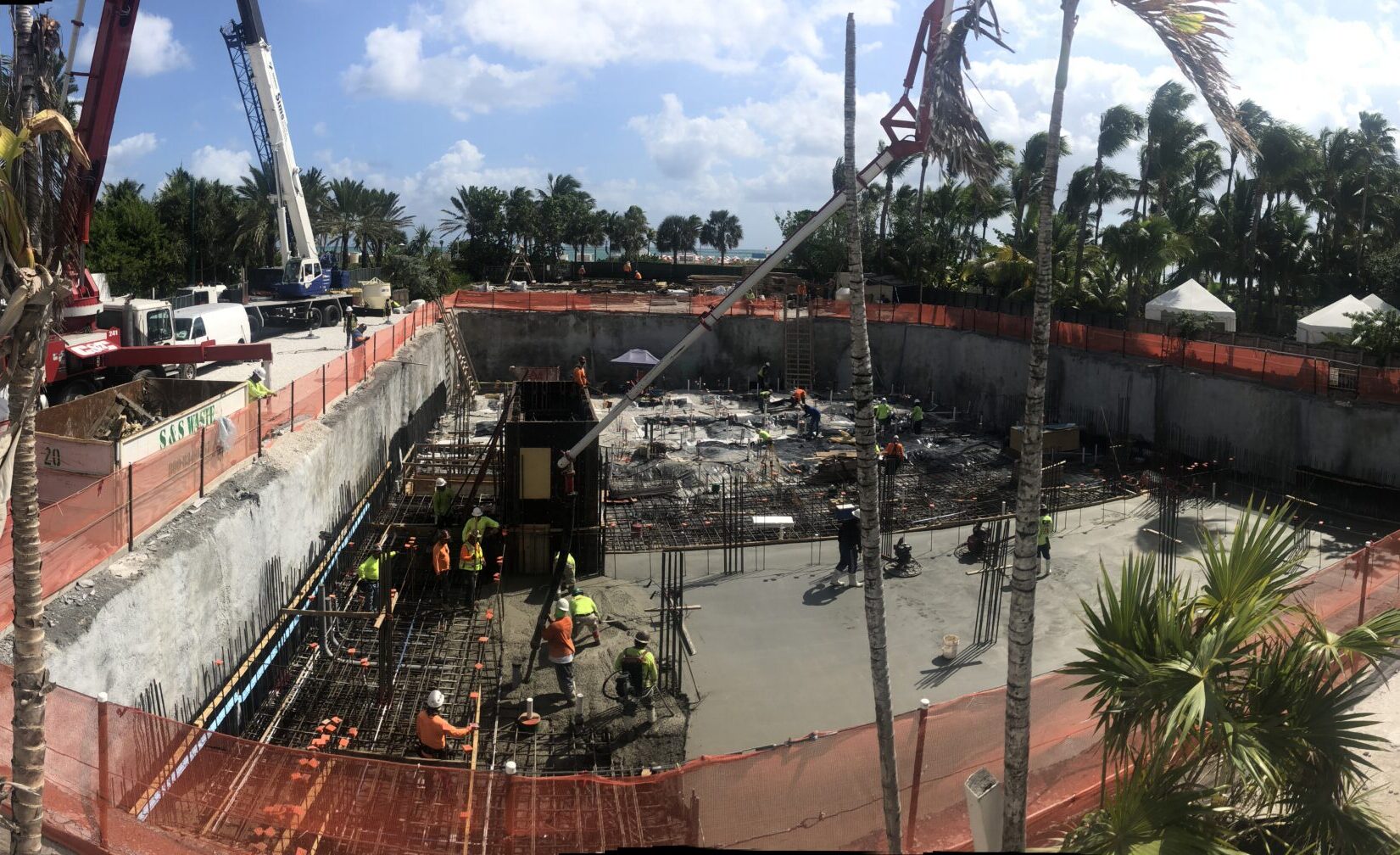
Factors such as the Queen City’s robust banking sector, access to capital, growing population, educated workforce and sound public transit infrastructure are driving the region’s development activity and owner representatives like Claro Development, a South Florida-based development services firm, are taking notice. Claro Development has its eyes set on the Queen City as it seeks to expand its expertise in commercial, residential and hospitality development across the Southeast.

“Charlotte has a tremendous foundation in finance and banking and the city is growing in so many sectors. With our experience in project and construction management we feel this is an excellent opportunity to be a part of that growth,” Sandor Scher, owner of Claro Development, told Invest: Charlotte.

With a strong focus on client relationships, having a client request representation cemented the decision to expand into the Queen City, Scher said. “The most important thing to Claro Development is our client relationships and so when the opportunity arises to go where clients need us, we welcome that relationship of trust and confidence. As with our expansions, it happened organically. A client asked for our help and here we are, looking forward to bringing our knowledge, experience and expertise to this historical city.”

The firm’s previous experience working with projects in the North Carolina and Atlanta metro market made the expansion into Charlotte the natural next step. Claro Development recently completed the Even Hotel in Alpharetta, Georgia. The IHG-branded hotel has 16 locations and Claro Development is providing project management services on the 150-room Even Hotel in Akers Mills, Georgia. In South Florida, the firm has managed over $1 billion in hospitality and commercial developments with notable engagements at Soho House, Faena, The Raleigh and The Standard. 

“We look at Charlotte as being a great place to invest, with access to capital, excellent population growth and the fact that it is pro-business. We also greatly admire how the city has held onto its heritage and its historic structures,” Scher told Invest:Charlotte.

Hospitality and historic restorations is where Claro Development thrives, as evidenced by the firm’s work in Miami Beach. In fact, historical preservation is a major part of the company’s expertise and has been its bread and butter for the last 15 years. “Miami Beach itself is the largest historic district in the country and because of that, and because of our expertise with these historic buildings, we’ve carved out quite a niche for ourselves,” Scher said. It’s a niche that could serve Charlotte’s historic restoration needs. “No other firm comes close to the number of high-quality, historic renovations that we’ve accomplished in the last decade.”

The company is also looking forward to bringing its knowledge and experience to the hospitality, office, retail and multifamily segments in the Charlotte market. Although the COVID-19 pandemic is a concern, planning for the expansion in the current landscape was not terribly difficult, Scher said. “We have excellent talent that is local and we have a very strong financial base to leverage off of with our existing clients. (The pandemic) certainly changes our expectations in terms of growth but this is a long-term commitment, so it is built on the same foundation regardless,” he said. 


To learn more, visit: https://www.clarocorp.com/

Medical Marijuana – Florida’s current gold rush

Medical Marijuana – Florida’s current gold rush

By: Max Crampton-Thomas

2 Min read October 2020 It has been almost four years since the State of Florida passed Amendment 2, also known as the Florida Medical Marijuana Legalization Initiative, and since then business has been booming. Despite only being legal since November 2016, the medical marijuana industry in Florida has quickly become a multibillion-dollar operation that has shown no indication of a slowdown in growth. 

The rapid progression of the industry has attracted the attention of savvy investors, businesses and entrepreneurs, all looking to capitalize on what seems to be Florida’s next “gold rush.” Tower Commercial Real Estate, one of South Florida’s leading full-service commercial real estate brokerage firms, was one of the organization’s to take early notice of the opportunity in medical marijuana. After closing $50 million worth of cannabis-related industrial and retail transactions in Florida, which equated to successful transactions for 35 dispensaries, the firm announced in July 2019 the creation of a cannabis division as part of its Tenant Representation platform. 

“Working with cannabis companies requires a different level of service, attention and an immense amount of time,” noted Tower CRE’s Senior Director Rob Foster in a press release. “Through experiencing the pitfalls early on in our tenure, we have been able to create and implement a process that is efficient and effective. We have a full team that navigates through each requirement from the infancy phase to move-in. The number of transactions we have completed to date has allowed us to hone in on a precise formula to uncover new opportunities, and we have found tremendous success leading rapid expansionary efforts for our clients.”

Even now as most businesses are reeling and recovering from the challenges caused by the COVID-19 pandemic, the medical marijuana industry has thrived. As displayed by the 134 million milligrams of medical marijuana sold statewide between Sept. 11 and Sept. 17, the industry has seen more people than ever turning their attention to the benefits of medical marijuana to help treat their anxiety, pain and ailments during this uncertain time. 

While opportunity abounds in Florida’s medical marijuana space, the state has been noted as having a licensing process that still needs some refining. Florida’s Supreme Court is in the process of deliberating on whether or not the regulatory structure in place favors some businesses receiving medical marijuana treatment licenses over others. This case was brought to the court by Tampa-Based Florigrown, which is arguing that Amendment 2 was written in a way that favored specific medical marijuana companies. 

“This is everything but a free market. It has created a monopoly,” Florigrown attorney Katherine Giddings said about the company’s challenge to the legislation.

To date, 22 companies have medical marijuana treatment licenses in the state of Florida. Despite the challenges presented by the structure of Amendment 2, these organizations are growing and expanding their operations all over Florida, hoping to capitalize on the prime opportunities present in the region. One of the most recent entries to the market is California-based Cookies, which is eyeing South Beach as its first retail location. 

“Our team is excited and extremely humbled to be able to own one of the few licenses in Florida,” rapper Berner, CEO and founder of Cookies, told the South Florida Business Journal.  

Despite the controversies, medical marijuana in Florida appears poised to continue its upward trajectory, solidifying its reputation as Florida’s green gold. 

City of Westlake is on an upward trajectory.

City of Westlake is on an upward trajectory.

By: Felipe Rivas

2 min read October 2020 Located in western Palm Beach County, the city of Westlake continues to attract new homeowners, even in the midst of a pandemic.Minto Communities USA, the master developer and lead home builder, is overseeing the growth of the county’s newest city as Westlake, established in 2016, matures into an affordable, family-focused community. 


“There are roughly 3,790 acres of land within the city limits,” City Manager Kenneth Cassel told Invest: Palm Beach. “Since the inception to date, there are now some 500-plus homes occupied, a sales center constructed, an amenity center, a stand-alone emergency surgical center and a 400-acre solar power site within the city limits. All the respective infrastructure for the current development pods has been constructed. The city continues to develop at a rapid pace.” 

Following the success of its first two neighborhoods, Minto Communities this July began the selling process for its newest neighborhood, The Groves of Westlake. The neighborhood immediately sold out its first 17 lots, and Minto Communities sold 24 homes overall throughout the first weekend on sale, the developer reported. The overwhelming interest from customers prompted Minto Communities to release an additional 19 home sites.

“We were extremely pleased with the success of our first two neighborhoods, The Hammocks, which is sold out, and The Meadows, which is over 80% sold out,” President Mike Belmont said in a press release. “With the increased demand for living in more wide open spaces, we anticipate this incredible momentum to continue with The Groves.” 

Home sales in Westlake continue to beat projections as Minto Communities has sold more than 640 single-family homes since opening in October 2017, the developer reported. A census report in July 2019 showed that the city of Westlake is the fastest-growing city in Florida. 

“We have a good mix of elderly couples, young families and single individuals buying property and moving to Westlake,” Cassel said. “There is an elementary, middle and high school in the city to support young families; additionally, another school site has just been conveyed to the school board for another elementary school.” 

Major companies like Florida Power & Light and Wellington Medical Center are settling in the area. In 2018, Florida Power & Light announced plans to construct 400 acres of solar panels set to produce 74.5 megawatts of power, Cassel said. “The company also constructed the solar farm and a substation in the city that feeds Westlake and other nearby communities on the grid,” he said. Last year, Wellington Regional Medical Center opened a new stand-alone emergency department and last December, it acquired the adjoining 35 acres for a future medical campus.

All in all, Westlake is quickly moving past its infancy and maturing into a city to rival other great Palm Beach County municipalities. “If interest rates remain steady, we are forecasting the same growth pattern over the next several years,” Cassel said. “The developers are delivering an affordable product and people will continue to relocate to the city. The city of Westlake offers competitive living costs and a great lifestyle for current and future residents.”

For more information, visit:

 www.WestlakeFL.com

https://www.minto.com/usa/new-homes/projects.html


What Phase 3 of reopening means for Broward County

What Phase 3 of reopening means for Broward County

By: Beatrice Silva

2 min read October 2020 — Gov. Ron DeSantis’ decision to move Florida into Phase 3 has led to a scramble among local government officials to make sense of which public health regulations remained in place. In the aftermath of the announcement, confusion has quickly swept across Broward County to the point where Fort Lauderdale Mayor Dean Trantalis issued a New Declaration of Emergency Regulations that clarifies the rules and regulations for businesses and individuals during this phase of economic reopening. 

 DeSantis announced his plans on Sept. 25, just three weeks after Broward and Miami-Dade County entered Phase 2 of reopening. Phase 3 is outlined within the Safe. Smart. Step-by-Step plan. It has minimum recommended health protocols and lifts the majority of restrictions on restaurants, bars and other businesses. Moving forward, such establishments will be allowed to operate at full capacity with limited social distancing protocols. Local governments were given the permission to limit some bars to 50% of capacity. However, the new bill prevents cities and counties from ordering them to close or penalizing them for not following the rules. “I think we need to get away from trying to penalize people for not social distancing and work with people constructively,” DeSantis said in a statement. 

Fort Lauderdale’s Trantailis responded to the Phase 3 reopening plan in a letter to the public. His message highlighted the importance of opening business but under regulated guidelines. “As I have long said, we have needed to begin reopening our businesses and amenities but that we also must do so in a way that continues to protect public health. Given the broad nature of the governor’s order, I am attempting to maintain a measure of protection that an urban area like ours needs since the virus can easily spread. For the month of September, the daily infection rate in our area has remained consistently under 5 percent. We want to continue to keep it there and avoid another spike in COVID-19 infections…My new order conforms with the governor’s expansion, but still maintains our old local rules of six feet of separation between tables and between people who are standing or waiting in line. Employees must wear masks as must customers except when they are eating,” said Tranalis. 

Gyms, fitness centers, state parks, public beaches and other large venues were also permitted to open at full capacity with limited social disconnecting protocols. The Safe. Smart. Step-by-Step plan is promoted to help get small businesses up and working again. During the height of the pandemic, Broward County’s unemployment rate leaped to 14.5% in March. 

“The re-opening of our economy has not been easy, but it is being done right in most states. Of course, things change, but as we gather more knowledge on this virus, I believe we can combat it and not have to close our economy. Florida Gov. Ron DeSantis’ approach of Safe. Smart. Step by Step is proving to be the right way to re-open the economy,” Alex Sanchez, president and CEO of Florida Bankers Association wrote in an opinion piece

Just two days after Florida entered Phase 3 of reopening, Florida’s COVID-19 Data and Surveillance Dashboard reported 1,868 new cases. Some public officials are questioning if Gov. DeSantis overstepped his power while others are adamant about reopening to full capacity.


Invest: Orlando 2020 Press Release

Invest: Orlando 2020 Press Release

By: Beatrice Silva 

FOR IMMEDIATE RELEASE 

October 2, 2020

Orlando’s economic resilience in the face of unprecedented challenges to highlight the launch of the inaugural edition of Invest: Orlando 2020.

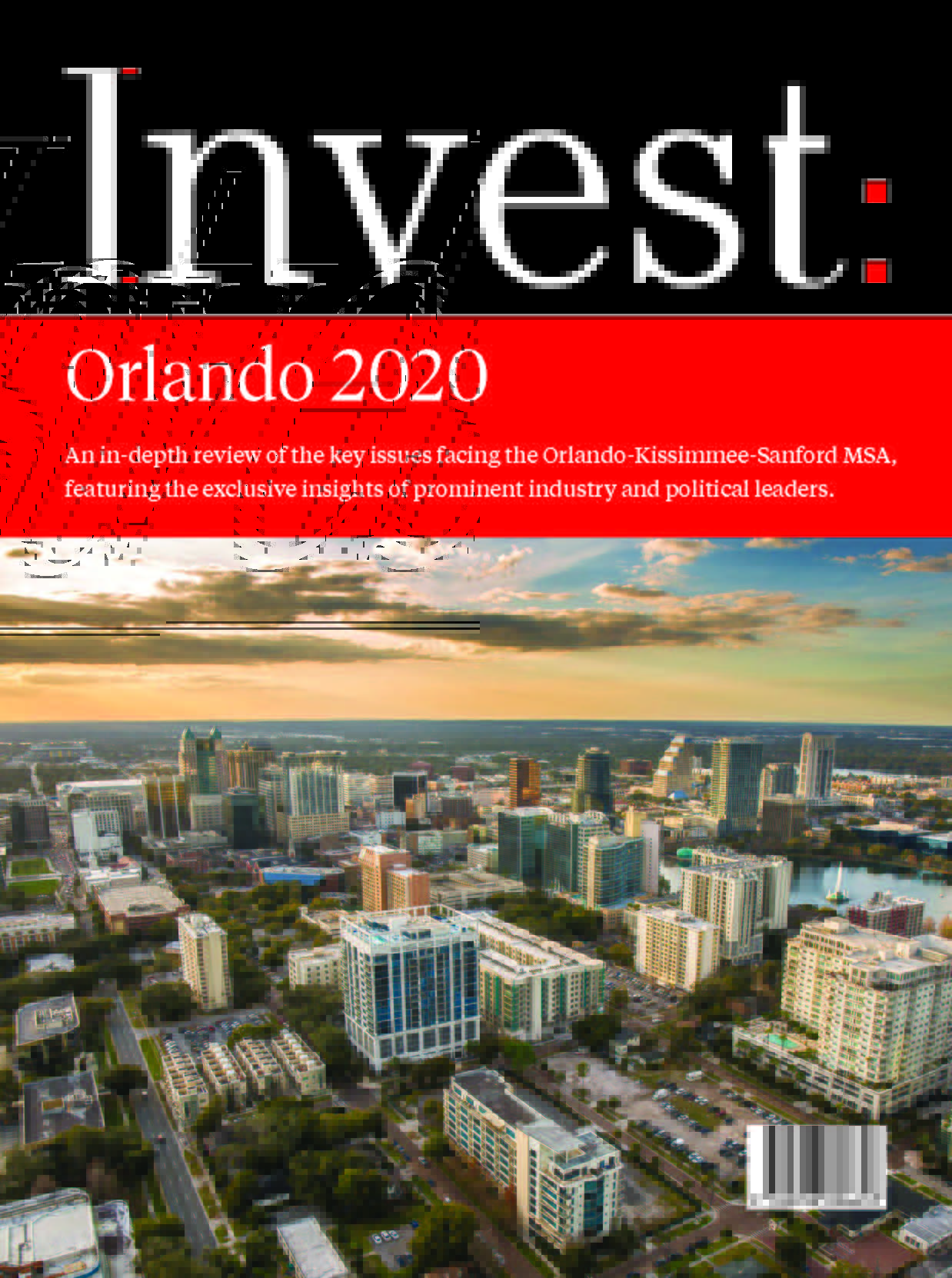
Orlando, FLA    Capital Analytics’ in-depth research into the Orlando market has never been more important. Invest: Orlando, one of an annual series of business reports from media platform Capital Analytics, offers comprehensive business intelligence during a time of economic uncertainty. With 120 pages of thoroughly researched analysis, the inaugural edition of Invest: Orlando 2020 highlights the economic opportunities in the Orlando metro area through C-level insider insights and key business intelligence. 

The official launch of the publication will take place on October 22, 2020. via Zoom Webinar. This event will consist of a brief introduction by Capital Analytics’ CEO Abby Melone, followed by two robust panel discussions.

The panels will address the current economic climate as well as prevailing themes dominating the Orlando metro area’s economy: The current and upcoming landscape of the healthcare sector and the future of development in Central Florida. Buddy Dyer, Mayor of  Orlando, will kick off the virtual conference as the keynote speaker. Moderator Dr. Folakemi Odedina, professor at the Florida-California CaRE2 Center will lead the first panel, “Keeping Orlando healthy: Current and future landscape of the healthcare sector,” which will feature insights from Tony Jenkins, market president of Central Florida Region Florida Blue; Jennifer Wandersleben,president & CEO of Acute Care Services at Adeventhealth Central Florida; and Babette Hankey, CEO of Aspire Health Partners. The second panel, “Continued development of Central Florida in the wake of a pandemic,” will be moderated by Jason Perkins, shareholder of Carlton Fields, and will feature insights from Phil Brown, CEO of Orlando International Airport; Mark Israel, CEO of Universal Engineering Sciences; and Gary Huttman, executive director of MetroPlan Orlando. Hundreds of high-level guests and officials from Orlando’s key industries and economic institutions will be tuning into the event. We are inviting all attendees and those wanting to register for the event to participate in the following survey, the results of which will be presented at the Invest: Orlando 2020 launch conference. 

“Many of the interviews in Invest: Orlando 2020 were conducted prior to the pandemic’s outbreak, but we have endeavored to reflect recent events throughout our editorial. Those interviewees who were able to comment on the potential long-term impact agree that the U.S. economy remains resilient, and most are optimistic that any downturn will be relatively short-lived. The economy’s underlying strength, many business leaders believe, will provide for greater growth over the long term. Capital Analytics remains steadfast in our purpose: to deliver in-depth business intelligence through its print and digital platforms. Now more than ever, information is not only necessary, it is vital,” said Abby Melone, president and CEO of Capital Analytics.

***

About Capital Analytics & Invest: Orlando

Capital Analytics is an integrated media platform that produces in-depth business intelligence through its annual print and digital economic reviews, high-impact conferences and events and top-level interviews via its video platform, Invest: Insights.

Invest: Orlando is an in-depth economic review of the key issues facing Orlando’s economy, featuring the exclusive insights of prominent industry leaders. Invest: Orlando is produced with two goals in mind: 1) to provide comprehensive investment knowledge on the Orlando region to local, national and international investors, and 2) to promote Orlando as a place to invest and do business.

The book conducts a deep dive into the top economic sectors in the region, including real estate, construction, utilities and infrastructure, transportation and aviation, banking and finance, legal, healthcare, education, and arts, culture and tourism. The publication is compiled from insights collected from more than 200 economic leaders, sector insiders, political leaders and heads of important institutions. It analyzes the leading challenges facing the market and uncovers emerging opportunities for investors, entrepreneurs and innovators.

To register or learn more, go to:  https://zoom.us/webinar/register/WN_z34pLBUwQlSCObV80dyE7w

For more information, contact: 

Max Crampton-Thomas

Regional Editor

305-523-9708 Ext: 233

Tampa Bay is once again home to the Stanley Cup

Tampa Bay is once again home to the Stanley Cup

By: Max Crampton-Thomas

2 min read October 2020 It’s been 16 long years but the Stanley Cup has made its way back to Tampa Bay. After a six-game battle with the Dallas Stars, the Tampa Bay Lightning were able to close out the NHL finals series with a dominant 2-0 performance. And while they may have been playing to an empty arena, nothing can take away from the fact that the Lightning are now two-time Stanley Cup winners and their victory has brought some much-welcomed excitement back to the Bay. 

This was a NHL season like no other, as the COVID-19 pandemic resulted in a stoppage of the regular season. The decision was ultimately made to finish out the 2020 season in a “bubble” environment, not dissimilar to the one created by the NBA. All games were played in two hub cities: Edmonton and Toronto. The Lightning entered the bubble as the No. 2 team in the Eastern Conference with a solid record of 43 wins to 21 losses.

Expectations for the team weren’t just high because of their 2020 standing. The Lightning had finished the 2019 season with a historic 62 wins. Yet, despite that phenomenal regular season, a quick first-round sweep by the Columbus Blue Jackets that same year ultimately resulted in Tampa Bay’s home team playing this season with a serious chip on their shoulder. Lightning coach Jon Cooper spoke to Sportsnet about using last season’s failures as the team’s primary motivation to win it all this year. 

“Sometimes in failure, you find success,” Cooper told Sportsnet. “It doesn’t come easy. People say you never know when you’re going to go back. I truly believe it was the heartbreak we suffered that brought us here today.”

This championship for the Tampa Bay Lightning was also a win for a Tampa Bay community that, like the rest of the world, has seen the year lambasted by the ongoing pandemic. In celebration of their hockey team’s Stanley Cup victory and the region’s first major sports championship in 16 years, Tampa Bay held two large celebratory events, one on water and one on land. On Wednesday Sept.30, a variety of boats floated up the Hillsborough River to Downtown Tampa carrying with them the Lightning’s roster, staff and some fans to celebrate the triumph.

This boat parade, which saw thousands of fans gather along the river’s edge to get a glimpse of their champions, was followed by a victory rally at Raymond James Stadium that was attended by an estimated 11,000 socially distanced fans. 

Tampa’s Mayor Jane Castor spoke at the celebration and highlighted what the momentous achievement meant for the region as well as drawing the comparison between Tampa Bay’s resilience and the team’s as it made its way along its playoff run. 

“This is an incredible day for Tampa Bay, I tell you I could not be more excited,” Mayor Castor remarked. “Now, these are difficult times for us, there’s absolutely no doubt about that, but we are used to difficult times and difficult undertakings like bringing home the Stanley Cup. And these guys define what it is to be from Tampa Bay. They showed the resilience, the determination and the grit that we have all shown as a community here and we could not be more excited to bring home the Stanley Cup for the second time.”  

Her sentiment and this victory both serve as a positive moment and breath of fresh air for the Tampa Bay region in what has otherwise been a tumultuous year. 

Best practices for sustainable business growth in a post-pandemic world

Best practices for sustainable business growth in a post-pandemic world

By: Beatrice Silva

3 min read September 2020 — Coming off a record economic year for the Philadelphia region, no one could have ever predicted the hurricane that is COVID-19. Crawling through the muddied trenches of lost revenue, businesses are having to find a way out. To promote sustainable business growth in a post-pandemic world, companies across all sectors are making tough decisions and developing innovative strategies.

In the second quarter of 2019, South Jersey’s unemployment rate was at an all-time low, according to The Federal Reserve Bank of Philadelphia’s quarterly South Jersey Business Survey. Just one year later, the Second Quarter 2020 Survey of Professionals reported job losses at a rate of 7,647,800 per month. In the midst of uncertainty, hundreds of businesses decided to furlough employees in an effort to manage the effects of the new coronavirus. Rather than simply laying off a staff member, furloughs allow employees to keep their employment benefits and hopes of returning to work while also helping to reduce labor costs. Keeping top talent in the company is vital to an organization’s growth. 

Inspira Health, a South Jersey nonprofit healthcare organization, was one of the many health systems in the region that had to furlough employees, impacting around 200 workers, because of reduced revenues during the height of the pandemic. “As a first response to the resulting changes in staffing needs, some employees were redeployed to areas where additional staff were needed,” Inspira said in a statement. “With the expanded suspension and reduction in services over the past month, we have had to make the difficult decision to temporarily eliminate regularly scheduled work hours for some employees.”

Reducing staff is one way to save money during a flash recession. However, to survive in a post-pandemic landscape, businesses must also develop strategies that allow them to pivot when necessary and leverage competitive advantages. Heading into 2021, new business models that offer more sustainable options are expected to emerge. “In terms of embedding sustainability into long-term plans, this is best done, at least initially, by putting sustainability on every meeting agenda. If business leaders continually ask, ‘What is the environmental effect of this and is there a better option?’ then sustainability becomes institutionally embedded very quickly,” Ben Stansfield, partner of Gowling WlG, told Financier WorldWide.

COVID-19 shook the core of the economy and altered almost every aspect of life around the world. As society finds new ways to adapt so will the businesses that shape local communities. In the midst of uncertainty, the one thing that is clear is that a post-pandemic future will be fundamentally unlike anything that came before. “The post-COVID-19 world will no doubt look different in many ways – more remote work, less flying and the namaste possibly replacing the handshake forever … My hope is that there will be a great rise in employee and consumer activism and companies that continue their old ways of profit maximization at all costs, without regard for people and planet, are shamed and starved and ultimately booted out,” CB Bhattacharya, chair of sustainability and ethics at the University of Pittsburgh’s Katz Graduate School of Business, told Financier Worldwide. 

During this period of evolution, sound insights and collaboration between business leaders will be pivotal across all sectors. To learn more about best practices to promote business growth in South Jersey, register now for the Invest: South Jersey 2020 Virtual Launch Conference. The conference takes place on Oct. 8 at 11:30 a.m. The virtual business conference will feature two robust panels, including, “Best practices to promote sustainable business growth in a post-pandemic landscape,” moderated by Christina Renna, president and CEO of South New Jersey’s Chamber of Commerce, and featuring insights from Albert Fox, senior vice president and executive director of Fox, Penberthy & Dehn at Morgan Stanley, Vincent D’Alessandro, southern region president of OceanFirst Bank, Robert Curley, South Jersey/Coastal market president of TD Bank and Reynold Cicalese, managing shareholder of Alloy Silverstein. 

To learn more, visit:

https://zoom.us/webinar/register/WN_z34pLBUwQlSCObV80dyE7w