Spotlight On: Stephanie Immelman, CEO,  Delray Beach Chamber Of Commerce

Spotlight On: Stephanie Immelman, CEO, Delray Beach Chamber Of Commerce

By: Felipe Rivas

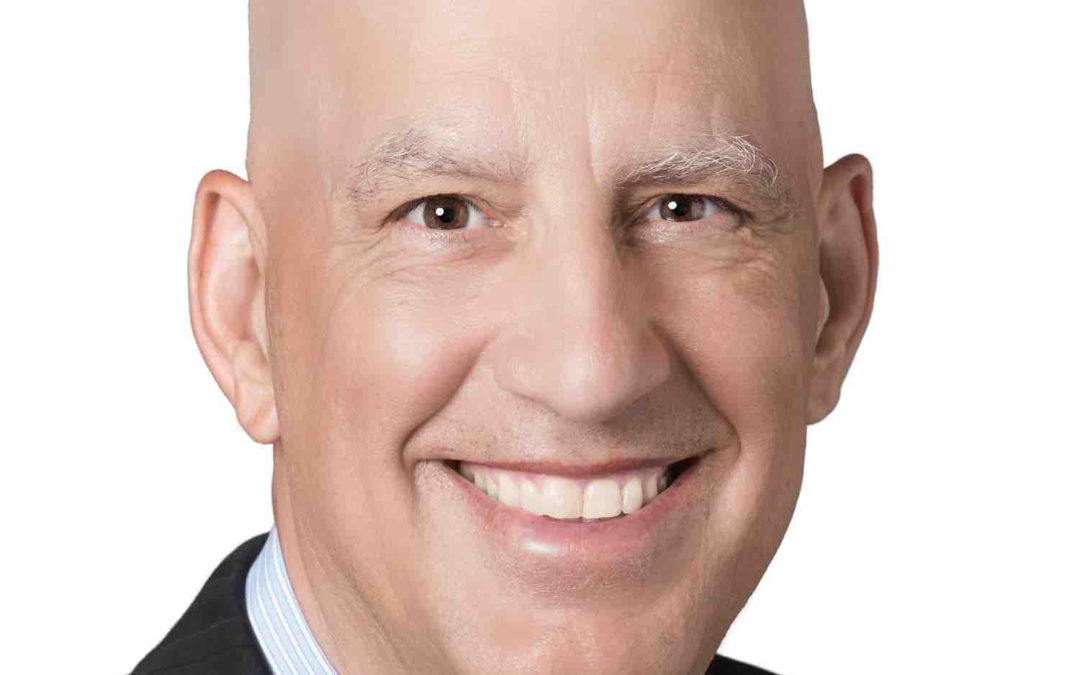
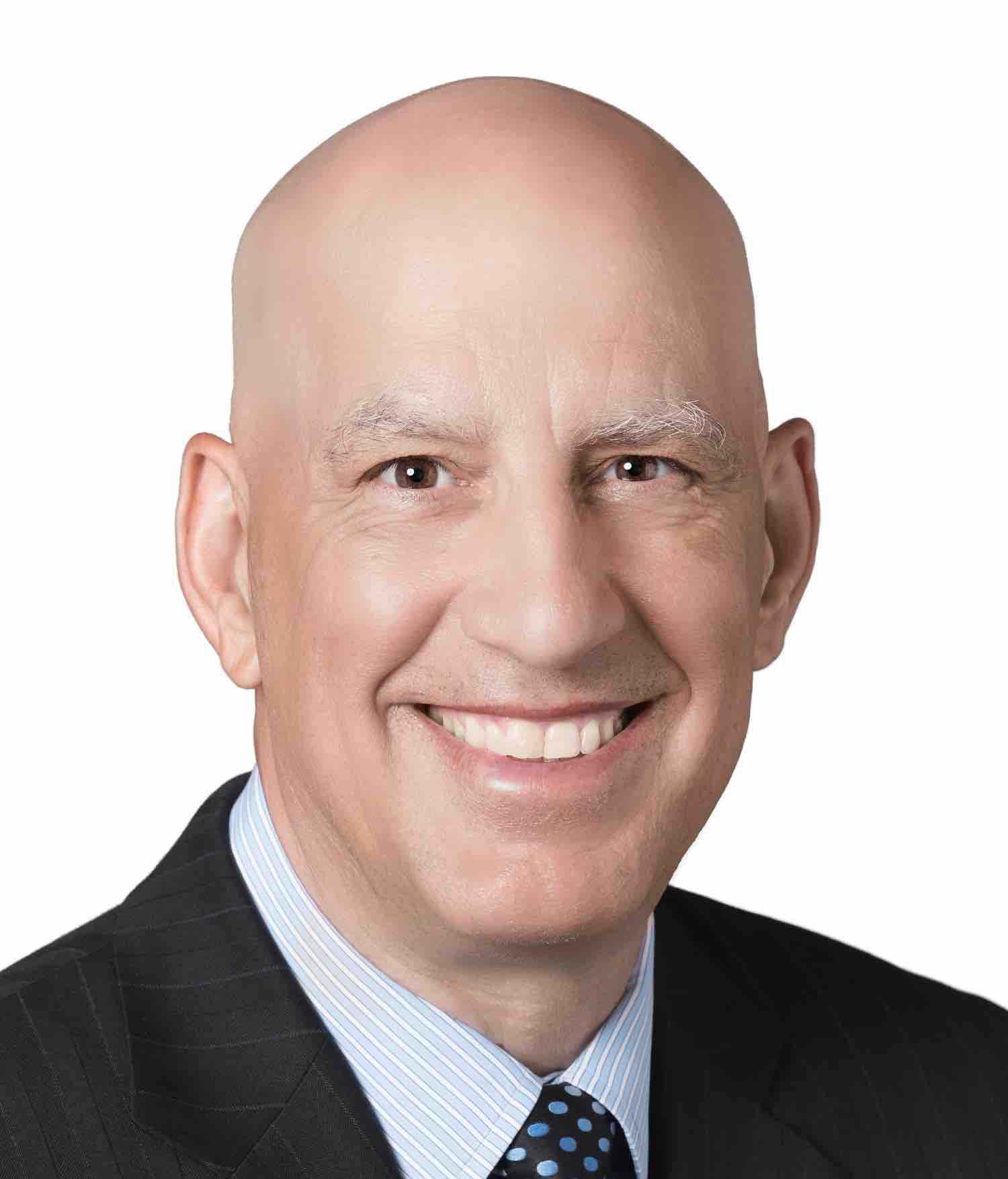
2 min read March 2020 — Once known as America’s most fun small town, Delray Beach is quickly transforming into a much bigger town with a more diverse local economy, while still maintaining its fun atmosphere. The Palm Beach healthcare and financial sectors continue to grow and solidify in cities like Delray Beach. The Delray Beach Chamber of Commerce is working closely with the business community to help diversify the economy further and continue to attract talent to Delray Beach, CEO Stephanie Immelman told Invest: Palm Beach. The city has not had problems attracting young talent due to its favorable tourism roots and fun atmosphere. With its diverse economy, the city is well-positioned for future growth as there is available land for new development outside of the Downtown area, Immelman said.

How is the chamber working with the business community to improve hiring in a tight labor market?

Delray is more than a tourism town, though we have built a reputation based on tourism. There is a lot of diversity here in terms of business. We have one of the largest automobile sectors in South Florida, for example. Also, our healthcare and financial services sectors are very strong. In terms of the tight job market, this year we are hosting job fairs. We have done job fairs for the automobile and hospitality and tourism sectors. We are working very closely with our business community and members to drive those people in Delray Beach who need jobs to the businesses that have them. That is a big focus for 2020. We want to make sure that the economy works for everybody. This will make our community stronger in the long run.


How have Delray’s demographics changed in the last few years?

We have not had a difficult time attracting young people to Delray Beach because of our tourism roots. We are known for being the most fun small town and that is attractive to young people. Today, you can work anywhere you want to. Financial advisers and managers from the Northeast are starting to relocate to the area because of their ability to work anywhere, for example. We have a lot of working spaces and incubators targeting entrepreneurs. Our economy started with tourism because we have a beautiful and charming town, but we are branching out and targeting entrepreneurs and businesses.


How is Delray preparing for future growth?

There are many places for the wealth to spread to. In our core Downtown area, the rents are really high, but there is a great deal of room to spread to other areas. There are many ways to make other areas in Delray as charming and amazing as Downtown. We are well-positioned for this growth in the county and South Florida in general. The city is hyper-focused on affordable housing. Any development in the region is going to have an affordable housing component. There is space to develop further.


In what new ways is the chamber connecting with the community?

We are really big on video. We have a weekly Delray Morning Live video show where we talk about what is happening in the city in the coming week. That has had a lot of traction and is doing very well. We want to expand it to culinary- and tourism-related content. We are all about communicating that way. It is important to create content and speak to people in a way that relates to them today. 


To learn more about our interviewee, visit: http://delraybeach.com/

Spotlight On: Daniel Zagata, Managing Partner, Evershore Financial Group

Spotlight On: Daniel Zagata, Managing Partner, Evershore Financial Group

By: Yolanda Rivas

2 min read March 2020 — Orlando’s diversifying economy has been attracting a high amount of investment to the region. The population of high-income earners and the number of high-income jobs continue to grow, according to Daniel Zagata, managing partner at Evershore Financial Group. Zagata shared the latest market trends and changes in an interview with the Invest: team. 

How did 2019 develop for Evershore Financial?

We have multiple locations in Florida: Orlando, Boca Raton, Palm Beach Gardens and The Villages. In Orlando, we purchased our first office building in 2019 and are looking at real estate acquisitions over the next couple of years as our firm expands. Overall, as a financial services company, we have been working to help people with their concerns over the market’s 12-year bull run, which has been the longest we have ever seen. Market volatility has pushed the consumer to engage us for financial advice and financial services due to the uncertainty that is emerging. Younger clients and people just getting started in the financial game are moving toward the automated system of robo-advisers, demonstrating a more of a do-it-yourself preference. The more affluent client has been engaging financial planners because they require more dynamic, complex, and customized solutions. On top of that, wealth management has changed drastically. It is not just about ROIs anymore. There are more family dynamics, multiple marriages, divorces, legacy issues and tax issues, just to name a few.


What shifts are taking place in the financial services sector?

There is an increasing demand for customized advisory services and guidance. We have been dealing with a greater number of business owners looking to not only sell their business but also looking for succession plans. The logistics behind planning have become extremely important. Most recently, the term “fiduciary,” and being able to engage a financial planner and adviser as a fiduciary, has become paramount and top of mind with most clients. That type of advice and engagement with clients is growing in demand while several financial advisers are either not properly licensed or do not have the capacity to work as a fiduciary. It has always been a priority for our firm to engage clients on their terms at the level they need. 


What trends are emerging in retirement and succession planning?

Many business owners do not have a written, executable succession plan, and have not identified the person who will take over. The problem becomes who to transfer the business to, how to bring that person in, whether or not they have a vested interest, if they have the required resources to purchase the business and if the resources are delivered as a lump sum or serial payment. It is often said that the top concern of a business owner relating to a succession plan is the impact on employees, along with preserving the business’ reputation. We have seen several business owners resort to repossessing their business when the transition was poorly executed or did not have the intended consequences.  


What is your outlook for 2020 and what are your areas of focus?

Election years tend not to be volatile because there is pressure to keep the economy stable. However, there are always events that are unpredictable, such as the Coronavirus, that can cause immediate volatility. From the firm’s standpoint, we continue to expand. We are looking to bring in highly qualified advisers to add value to what we do. As big proponents of education, clients today want to receive advice and information that are valuable to their investment strategies. I teach retirement classes at the Rollins College STARS program and Celebration Foundation for Lifelong Learning, to name a few. Our reputation, high-quality content and transparency has many schools and universities using Evershore Financial to deliver education. We understand people, and how behavior impacts investing and life. We will continue to grow and expand our firm as we help our clients navigate life’s transitions. 


To learn more about our interviewee, visit:

Evershore Financial Group: https://www.evershore.com/

Logistics Expo MODEX Going Ahead Despite Coronavirus Concerns

Logistics Expo MODEX Going Ahead Despite Coronavirus Concerns

By: Sara Warden

2 min read March 2020 — Despite Coronavirus concerns, this year’s MODEX conference is going ahead as scheduled on March 9-12 at the Georgia World Congress Center in Atlanta. The conference attracts 900 exhibitors and, as logistics companies, all have a stake in the developments currently fragmenting the supply chain.

The Covid-19 outbreak that began in China at the end of January has already shut down national and international borders, but this is one reason why expos such as MODEX are so important. The companies present in Atlanta will be supply chain and logistics optimization companies whose goal is to optimize operations by reducing or even eliminating human involvement. 

One of the technologies to be launched at the expo is the Puck 32MR, a joint venture between California’s Velodyne Lidar and South Korea’s Seoul Robotics. The technology is a lidar sensor that can detect obstacles in a warehouse setting, allowing for safe automated navigation. “Supply chain systems need to continue to become smarter and safer, more efficient and further automated. To address these requirements, companies are turning to lidar to play a key role in enabling the next generation of manufacturing and supply chain solutions,” said Jon Barad, Velodyne’s vice president of business development, in a press release. 

Another company presenting its portfolio will be industrial vehicle automation company Elokon, which has a global presence and U.S. operations headquartered in Atlanta. One notable product that will be presented at the expo is MHI Innovation Award-winning solution ELOshield, which is a sensor that detects proximity and provides collision warning with specific warning and protection zones.

And Atlanta-based Elemica provides a cloud-based supply network that provides tracking transparency and optimizes product shipment. “These enhancements improve use of inventory, streamline onboarding for inter-business connectivity, improve search, including hazardous material (Hazmat) criteria, and allow for more in-depth visualization for track and trace of product safety and knowing where orders and shipments are at all times,” said Arun Samuga, Elemica’s Chief Technology Officer in a press release.

The transportation management system (TMS) market in North America is poised to grow by $1.62 billion during 2020-2024 and Atlanta is at the forefront. American Software, an Atlanta-based supply chain software solutions provider, was recently upgraded to a Strong Buy rating by Zacks. The company’s president, Allan Dow, said in the company’s most recent earnings call that the software will allow customers to be “better positioned to overcome the growing supply chain talent shortage that may impact their profitable growth and ability to respond to rapidly changing market conditions or unanticipated supply chain disruptions.”

And with there being no signs of the Coronavirus slowing down and quarantine numbers growing by the day, more integrated, automated supply chains and logistics systems could be just what the economy needs to boost trade activity. 


To learn more, visit:

https://www.gwcca.org/georgia-world-congress-center/

https://velodynelidar.com/

https://www.seoulrobotics.org/

https://www.elokon.com/en-EN/

https://elemica.com/

https://www.amsoftware.com/

Tech and funding create GFL’s perfect innovation storm

Tech and funding create GFL’s perfect innovation storm

By: Sara Warden

2 min read March 2020 — The convenience economy means reality is increasingly becoming virtual, cloud-based and autonomous. Essentially, anything that can make life less complicated is likely to be a hit. From online banking to ride-sharing, the possibilities of technology are endless. Not only is Greater Fort Lauderdale developing the software, but it is also providing the venture capital funding.


Greater Fort Lauderdale is among the Top 50 U.S. tech talent hubs. No wonder, then, that so many tech startups are choosing the city as their home. Everything from semiconductors to security analytics, to telehealth and connected cars – you name it, Greater Fort Lauderdale has it.

Last month, GFL-based bookkeeping and accounting app Xendoo was chosen as one of 10 companies in South Florida that would receive $75,000 to scale their business via the Finance Forward US accelerator program, which is backed by the MetLife Foundation, PayPal and Village Capital. Previously, Xendoo had secured $3.5 million in funding.

Greater Fort Lauderdale’s technology chops are clear to see. Since 1994, Fort Lauderdale has been the headquarters of Microsoft Latin America. Motorola Solutions’ Plantation facility developed an advanced two-way portable radio for use by police, fire rescue and other first responders. Southeast Florida was home to the first IBM PC and the first smartphone.

GFL also knows how to foster talent. Citrix was established in Fort Lauderdale in 1989 as an IT company with market-leading cloud, collaboration, networking and virtualization technologies and now boasts $2.97 billion in annual revenue. And Plantation-based construction project management company e-Builder was acquired by Trimble for $500 million in 2018.

The region is not only bringing the technology and innovation, but also the funding. Fort Lauderdale-based AutoNation recently announced it would invest $50 million in Alphabet’s Waymo self-driving technology. “Waymo is the proven leader in self-driving technology, is the only autonomous vehicle company with a public ride-hailing service, and is successfully scaling its fully driverless experience,” Waymo operating board member Egon Durban told Silicon Valley Business Journal.

Another factor behind the marriage of tech and venture capital is the concerted effort of associations to continue to bring both sectors together. TechLauderdale promotes involvement in Broward County’s tech ecosystem by hosting events that bring together technology companies and funding. The association also promotes education and retraining for those who want to get involved in startup activity. 

“Our startups were having problems scaling up,” Richard Berkowitz, chair to the Broward Workshop’s technology committee, told South Florida Business Journal. “Our hope is that the rest of the business community and technology community in Broward County joins in creating this very strong platform to enhance our tech ecosystem.”


To learn more, visit:


TechLauderdale: https://techlauderdale.org

Xendoo: https://www.xendoo.com/

Citrix: https://www.citrix.com/

AutoNation: https://www.autonation.com/

Waymo: https://waymo.com/

Broward Workshop: https://www.browardworkshop.com/


Spotlight On:Bruce Cohen, CEO, OrthoCarolina

Spotlight On:Bruce Cohen, CEO, OrthoCarolina

By: Felipe Rivas

2 min read March 2020 Shifting from the traditional fee-for-service environment prevalent in the U.S. healthcare system to value-based care programs requires innovative processes and outside-the-box thinking, all to the benefit of the patient. Bruce Cohen, CEO of OrthoCarolina, shares how the company is spearheading this transition.

What are the drivers of OrthoCarolina’s success and what does that entail for 2020?

OrthoCarolina is a large, independent musculoskeletal group. Our geography stretches outside of Charlotte, all the way up into the Piedmont Triad and Winston-Salem, including Hickory, Shelby and Laurinburg, with our hub in Charlotte. What makes us different is that we are on the cutting edge, embracing value-based care, seeking to lower care costs for our patients, getting them to the right facilities and providers. Our No. 1 goal is to increase access. Historically, healthcare has lacked transparency, leading to poor access and communication and resulting in high costs. We had close to a million patient visits in 2019. OrthoCarolina has 40 locations, including offices, physical and occupational therapy. We are also involved in outpatient surgery centers, which are critical for orthopedic care. 


How is OrthoCarolina bolstering accessibility from a business standpoint?

The transition from the traditional fee-for-service environment into an innovative, outside-the-box, value-based care program is complex. Physicians are resistant to change so empowering and engaging them, promoting the fact that this transition comes out of a true necessity and obligation is a lengthy process. We are on the forefront at the national level in that regard. The first step is to educate people that this new option translates into better care and better access, providing different choices for our patients. We have to look at our patients as consumers, inject transparency over treatment costs and inform them what their options are. Wait times at doctors’ offices or hospitals that go for hours on end, for instance, are no longer acceptable. The challenge is to provide quality care and service without the patients feeling like a commodity or that they are on an assembly line. We developed a set of benchmarks relating to patient satisfaction, which we published online and internally so our doctors know where they stand.


How can your success move to the larger healthcare systems?

North Carolina is a Certificate of Need (CON) state, which has attracted powerful healthcare organizations that we work with closely. It is difficult from a regulatory standpoint because they often have much more control over the healthcare dollar than the rest of us do. That is all changing, however, with much more ongoing collaboration than there used to be. The systems are open to it and Charlotte is a great example. Healthcare systems are starting to embrace and acknowledge the fact they have to look at costs and stress quality and state-of-the art facilities and offer all services. Charlotte is one of the higher-cost healthcare markets in the country. It is not a sustainable model. 


What health trends have you identified in Charlotte?

Our community has a primarily young component to it parallel to an aging population. On the one hand, it is healthy but more active, which creates the need for orthopedic services given the training-related injuries and other issues related to an active population. On the other hand, we are witnessing big retirement communities coming to town. Those needs, especially on the musculoskeletal side, are growing. The technology and advances in orthopedic care have enabled people to do well and be more active. 


How is OrthoCarolina tackling the talent issue?

It is a competitive field. As we expand and look to provide more access, we are facing two large healthcare systems in town that make their presence felt when they open a new facility and launch a hiring campaign. Charlotte’s workforce is also highly competitive. Unemployment rates are low, it is a nice place to live, people want to be here. On the provider side, 2018 was the first time in orthopedics that more professionals finishing their training went into hospital employment positions rather than joining an independent practice.  


What is on the near-term horizon for OrthoCarolina?

We are leading the charge particularly on joint and spine replacements. We launched our coordinated care program to tackle episodic care, which up until 2019 had amounted to 150 patients a year, and we are looking at potentially 1,000 cases for 2020 to become a part of this program. It includes a care navigator that checks on our patients throughout the whole episode, preoperatively and postoperatively. Our outcomes have shown close to zero complications or readmissions for program participants. 

The next step is population health. This revolves around developing a program to manage the entire health of the population in coordination with different stakeholders: physicians, hospitals, insurance companies. For us, it means focusing on the musculoskeletal aspect of the program. That is when algorithms and protocols come into play to avoid redundancies, unnecessary tests and undergoing procedures at the right time and for the right patient. Our priority is to serve our community. 


To learn more about our interviewee, visit: https://www.orthocarolina.com/

South Jersey’s higher-ed sector at the forefront of workforce readiness

South Jersey’s higher-ed sector at the forefront of workforce readiness

By: Yolanda Rivas

2 min read March 2020 — Education affordability, talent retention and the demographic change of fewer students going onto college are some of the challenges facing the industry. Educational institutions in South Jersey and the state government are placing a particular focus on affordability and workforce readiness. 

 Many universities and colleges now see that workforce development and curriculum updates are necessary to meet the demands and needs of employers and the jobs of tomorrow. That is the case of the Rowan University/Rutgers-Camden Board of Governors. Part of its mandate is to facilitate collaboration between Rutgers-Camden and Rowan University in the development of curricula and programs related to health sciences. 


“Presently, we are working together to respond to projected employment growth in healthcare professions,” said Dana Redd, CEO of the Rowan University/Rutgers-Camden Board of Governors, in an interview with Invest:. “Some of the initiatives that we have launched include a Medical Assistant workforce development and training program for graduating high-school students from Camden’s traditional public schools.”


Another projected demand is the increased need for healthcare providers to assist individuals diagnosed with Alzheimer’s and dementia-related disorders. In anticipation, the board launched the Alzheimer’s Navigator Program in 2017. “The curriculum is taught by Camden County College. Inspired by the Patient Navigation model in oncology, Alzheimer’s Journey Coordinators aim to improve access to care and treatment for people with Alzheimer’s,” Redd said.


A challenge not only affecting South Jersey but the whole country is declining enrollment rates. Data from the State of New Jersey’s Office of the Secretary of Higher Education shows that the overall number of people attending higher education institutions in the state slightly declined over the last decade.


Unlike some universities that are struggling with declining enrollment, Rowan University doubled enrollment in the past 10 years to 19,600. During that time, the university transformed from a well-regarded regional university to a nationally ranked, Carnegie-classified R2 research university. According to Ali A. Houshmand, President of Rowan University, the STEM fields and businesses are the areas seeing the greatest growth. “We built new facilities for our colleges of engineering and business three years ago and doubled enrollment in their programs,” he said.


“Another growth area is our medical schools. We are one of only three institutions in the nation to offer both M.D. and D.O. medical degrees. Our commitment to medical education is important given the nation’s growing physician shortage,” Houshmand stated in an interview with Invest:.


Community colleges also play a key role in the workforce development of any community. In the southern New Jersey region, Camden County College (CCC) offers the most certification programs. According to CCC’s President Donald Borden there is great demand for machinists in the region. “Companies come to hire them as soon as they become proficient,” Borden told the Invest: team. 


“Students trained in robotics, automobile tech and optometry all find work after graduating. We offer some of those programs that are not traditionally seen as higher ed, but they have been in very high demand,” Borden said. Business and education and criminal justice are also in-demand programs at CCC. 


To fulfill the needs of the employers and provide access to education for all students, it is imperative that colleges, universities and government provide initiatives for education affordability. In February 2020, Gov. Phil Murphy announced the “Garden State Guarantee,” which is a $50 million investment in four-year senior public colleges and universities through his proposed FY2021 budget that would allow all eligible New Jersey undergraduate students to attend any public college or university in the state tuition-free for two years.


“We know students drop out of college — or worse, rule it out as an option for them — because they believe the price tag is unaffordable. After more than a decade of decreased state investments in higher education, our administration’s innovative plan creates a path for broader college affordability,” Gov. Murphy said in a written statement. “This complementary program underscores New Jersey’s continued commitment to tuition-free community college. We remain laser-focused on retaining in-state talent through our Jobs NJ initiative and expanding opportunities for low-income communities and communities of color.”

The program complements similar existing efforts at William Paterson University, Rutgers-Camden, Rutgers-Newark, and New Jersey City University. According to the “Garden State Guarantee” official press release, the guarantee builds on existing state programs to make college affordable, including financial aid provided to students through the Community College Opportunity Grant, Tuition Aid Grants and New Jersey Student Tuition Assistance Reward Scholarships. 


To learn more about our interviewees, visit:

Rowan University/Rutgers-Camden Board of Governors: https://rurcbog.com/ 

Camden County College: https://www.camdencc.edu/ 

Rowan University: https://www.rowan.edu/

State of New Jersey: https://nj.gov/governor/index.shtml 


Spotlight On: Reynold P. Cicalese, Managing Shareholder, Alloy Silverstein

Spotlight On: Reynold P. Cicalese, Managing Shareholder, Alloy Silverstein

By: Yolanda Rivas

2 min read MARCH 2020— Alloy Silverstein is a regional full-service accounting and advisory firm, headquartered in Southern New Jersey. In an interview with Invest: South Jersey, Managing Shareholder Reynold P. Cicalese discussed the changes in the sector and the firm’s support for small businesses in the area.


What changes have you experienced in the accounting sector over the last few years?

Technology has brought significant changes to our industry, allowing us to better serve our clients beyond just preparing a tax return or financial statement. We are on the cloud ourselves, encourage our clients to be on the cloud, and we use technology to help and collaborate with clients on a daily basis. Our advisers are proactive in helping design our clients’ future, as opposed to only telling them what they historically have done. We use software and apps that allow us to create KPI dashboards for our clients so they can have real-time data to make better decisions based on today’s information – not from last month or last year. We also have clients all around the world and we use meeting apps to constantly communicate with them.

Artificial intelligence is severely disrupting the industry. The investment in AI will significantly increase within the next five to six years. We need to keep an eye on this trend and make sure we remain competitive. With regard to audits, for example, it is expected that AI can look at every transaction and provide an efficient audit report. For regional and smaller firms it will be a challenge to compete with larger firms that have the capacity to invest in AI. 

How do you support the small-business community?


We find that many startups are underserved. We recently launched our Startup Hotline, which is a complimentary CPA Q&A for new and emerging businesses. Micro businesses may have questions regarding the type of entity they should start, for example. Through this tool, we give them access to our team of advisers and experts who can provide guidance on accounting, tax, payroll, and many other general business topics.


In addition, we add value for our clients and other small businesses in the community by hosting complimentary monthly lunch workshops, which we call “Alloy Academy.” What started as presentations on accounting software has evolved to bringing in guests so we can cover a wide variety of topics that may be important to a business owner or their employees.


To learn more about our interviewee, visit:

Alloy Silverstein: https://alloysilverstein.com/ 


Spotlight On: Michael Chin, General Manager and Regional Director for Eden Roc Miami Beach/Nobu Hotel Miami

Spotlight On: Michael Chin, General Manager and Regional Director for Eden Roc Miami Beach/Nobu Hotel Miami

By: Max Crampton-Thomas

2 min read March 2020 — The hospitality market in Miami-Dade may have started to feel a level of oversaturation but the market overall is still at an advantage in comparison to other large markets across the nation due to location and a friendly tax environment, Michael Chin, general manager and regional director for Eden Roc Miami Beach/Nobu Hotel Miami Beach, told Invest:. He also discussed embracing the sharing economy as an alternative rather than increased competition in the market and the difference in demographics that options like this attract. 


With new entries into the region, do you believe the hospitality market in Miami-Dade is nearing a level of oversaturation?  


Miami is in a position where some hospitality entities feel a level of oversaturation, but I don’t think we are in that kind of market yet, especially when compared to markets like New York, Chicago, Los Angeles or Las Vegas. We have a mix of boutique and local hotels, and we are starting to see developments for the larger hotels coming into the area. This includes the expansion of some larger properties in the Downtown  and Brickell areas. The demand is still there in regard to new hotels in Miami-Dade.


What is the biggest advantage to your location in Miami Beach? 


Our biggest advantage in regard to where we are located is right out our back doors: the beach. The number of properties that have direct beach access is what people come to South Beach for. Right now, some of the hotels, like in Downtown Miami, aren’t as attractive to certain visitors coming to Miami because they don’t want to be in an urban area. They do not want to just see the water, they want to be at the water. This is why our location on the beach is probably our biggest attraction for new guests. We also have an advantage thanks to our offerings in comparison to our neighbors. We thrive off of the proximity to the Fontainebleau. We may not have the capability to have a nightclub on our premises like the surrounding hotels, but the people who come in here and visit us prefer us as an alternative place to go to eat and have a different type of experience.


How do you view newer entries into the hospitality market like Airbnb and the sharing economy? 


My background comes from a corporate hospitality structure and we addressed the issue of the sharing economy on a corporate level years ago. Since then, my stance really has not changed. We cannot view services like Airbnb as competition, they are simply just an alternative. The consumer is going to stay where they want to stay. If their preference is to have longevity and a lot of space, then they are going to choose an option like Airbnb because it is something that they will not get in a hotel. People who stay at hotels, stay based on what they are looking for. Today, the demographics related to age, income and food preferences are going to determine where a person stays more than the price of a hotel or its location. The hospitality industry has corporate executives who sit in a room and  determine how they are going to capture every type of traveler out there and how they are going to define every generation, demographic and region to find a suitable hotel choice for them. At a hotel like ours, travelers are going to stay here because they want the features of convenience in regard to housekeeping, room service, amenities and entertainment. Hotels have the consistency value. You have expectations when you stay in a hotel. There are a lot of factors that go into why a person picks and chooses where they want to stay but it all comes down to preference. 


How does the hospitality sector in Miami have an advantage over other large markets across the nation? 


People still want to go to places like Orlando, Dallas or Las Vegas, but every city has its issues, whether that’s overtaxation like in California or overpopulation like in New York. We have the opportunity to attract those tourists to a new market like Miami that doesn’t have these issues. It is about us getting out there to advertise Miami as a viable option to host both tourists and business travelers. Events like the Super Bowl help strengthen this idea.


To learn more about our interviewee, visit: 

https://www.edenrochotelmiami.com/


Miami’s Events Calendar Rocked by Coronavirus Concerns

Miami’s Events Calendar Rocked by Coronavirus Concerns

By: Sara Warden

2 min read March 2020 — Sunshine, beaches, cruises, outdoor festivals … this is Florida’s bread and butter. But what happens when a global health crisis crosses international borders? Miami’s tourism industry is now finding out.


When the novel Coronavirus (Covid-19) outbreak began spreading in China at the end of January, there was very little overseas impact and China seemed to bear the brunt of the outbreak, shutting down logistics and imposing quarantines. But as cases began popping up globally, with Italy, Iran and Southeast Asian countries particularly affected, governments started to take action. The tourism industry, as a result, is suffering. The United States currently has 140 active cases of the virus, with 11 deaths, and officials confirmed two cases in Florida on Sunday. 

Florida very much intends to maintain open borders and air travel. Two of its economic strengths are international trade, with 40% of all U.S. exports to Latin America passing through Florida, and tourism, which added an estimated $111.7 billion to the state’s economy in 2016.

Already, Miami is feeling the impact of the outbreak. This week, the city was meant to host Zendesk Relate, a 2,300-attendee conference at Miami’s conference center held by San Francisco-based customer-service software company Zendesk. But the company announced the event’s cancellation on Monday, on the same day American Airlines suspended its Miami-Milan service as the number of active cases in Italy ballooned to 2,706, with 107 deaths registered.

Another event impacted by the virus is the annual Ultra Music Festival, which organizers have reportedly postponed – potentially for a year, according to the Miami Herald. The electronic dance event typically attracts 55,000 people per day and the 2020 edition is due to be held on Bayfront Park. With tickets starting at around $300 and going up to $1,500, the impact of cancellation would be significant. “I agreed with the decision to postpone it,” City Commissioner Manolo Reyes told the Miami Herald. “And now I’m worried about the Calle Ocho Festival,” referring to the Latin music festival scheduled for March 15 in Little Havana.

Some conference organizers and attendees are attempting to postpone events until May, when there is hope the virus will be contained. But Florida Gov. Ron DeSantis is less optimistic about the impact on Florida, predicting more cases will emerge shortly.

The Medical Affairs Professional Society is scheduled to host a conference on March 9-11 but has already experienced some cancellations, according to CEO Travis Hege. The conference is still going ahead as scheduled, he told the Miami Herald. “Any deaths in Florida or outbreak in Florida is the biggest thing we are monitoring,” he said. “We’re continuing to monitor the latest developments. Otherwise, we will be proceeding as planned.”

And while cancellations of events like Zendesk Relate are not ideal, this is far from the biggest event Miami is due to hold this year. Art Basel may or may not take place in June after the Hong Kong edition was canceled and Miami Pride events will take place at the end of March and beginning of April.

But Miami-Dade Mayor Carlos Gimenez said Tuesday there is no need to cancel major events, and instead there needs to be a specific focus on protecting the elderly and vulnerable populations. “We will step up and make sure that those elderly get those services,” he told Local 10. He added that arriving visitors will be more thoroughly screened and that residents should “live your normal life (and) take just common-sense precautions.”


To learn more, visit:

https://www.zendesk.com

https://www.artbasel.com/miami-beach

https://ultramusicfestival.com/

https://www.miamiandbeaches.com/event/miami-beach-pride/2188

https://carnavalmiami.com/events/calle-ocho/ 

https://www.miamidade.gov/global/government/mayor/home.page

https://www.medicalaffairs.org/