Atlanta’s public schools eye phased return to the classroom

Atlanta’s public schools eye phased return to the classroom

By: Felipe Rivas 
2 min read September 2020With Atlanta’s transition into Phase II of the City’s Five Phase Reopening Plan earlier this month, the Atlanta Public Schools system now looks to follow suit with its return to face-to-face instruction. Superintendent Lisa Herring reportedly will present a proposal for Phase II of the schools reopening plan on Monday, Oct. 5 at the Atlanta Board of Education’s monthly meeting, according to the school district. At the university level, despite coronavirus related-challenges, some universities saw record-breaking enrollment figures while ranking No.1 in a variety of categories, according to the U.S News & World Report. 

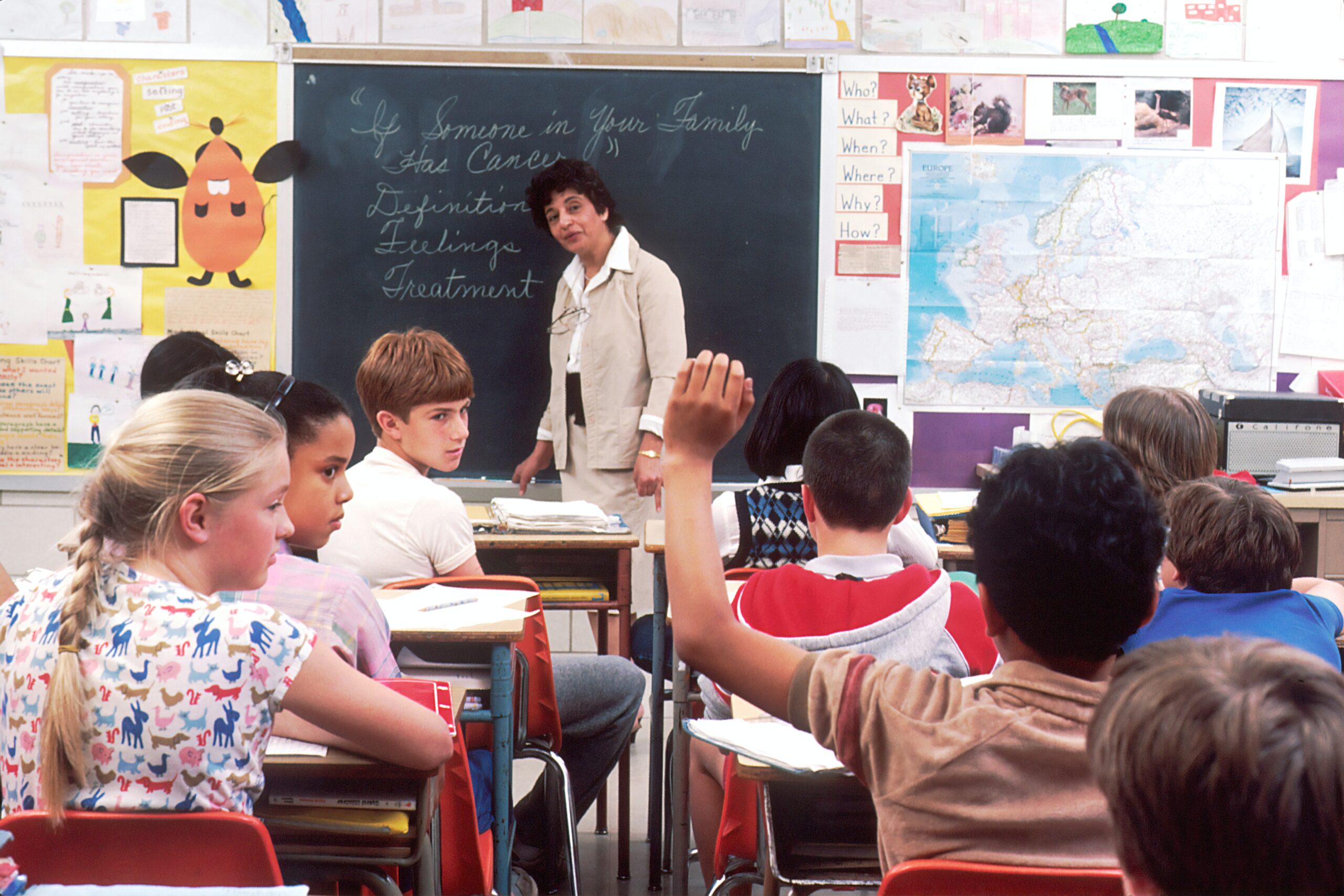
Atlanta Public Schools’ proposed plan calls for the district to allow certain students to return to face-to-face classes on Monday, Oct. 26, which marks the start of the school year’s second nine weeks. Students identified for the phased classroom returns are all students with special needs and those in Pre-K through grade 2. Last week, the school district hosted a town hall to allow parents to ask about the district’s reopening plan. Among parent’s concerns were the students’ ability to retain the curriculum material in a remote setting and shattered expectations of going back to the classroom by the start of the 2020-2021 academic year. 

While the region’s higher education sector faces similar challenges, as it relates to social distancing and balancing remote learning with student wellness, universities in the region are experiencing record enrollment numbers. The Georgia Institute of Technology saw record enrollment across the board for the summer and fall semesters with record-breaking numbers in first-year, transfer and dual enrollment students. Georgia State University set new records for the largest enrollment and freshman class size in the school’s history. The university saw 54,000 students enrolled in the fall 2020 semester, compared to last year’s record of about 53,000. Similarly, Kennesaw State University reached record enrollment figures with 41,000 students. Comparatively, the university reported around 37,000 enrolled in the 2019 fall semester. 

To go along with the healthy enrollment figures in the midst of a pandemic, several Georgia colleges and universities topped the U.S. News & World Report 2021 edition of Best Colleges in a number of categories. The Georgia Institute of Technology ranked first in the nation in civil engineering, cybersecurity, and industrial and systems engineering, solidifying Atlanta as a leader in STEM education. Agnes Scott College, a private women’s liberal arts college, ranked first in first-year experience and most innovative liberal arts college in the country. Similarly, University of Georgia’s undergraduate insurance/risk management program ranked as the nation’s best. Spelman College, another private women’s liberal arts college, ranked as the nation’s top Historically Black College & University. Berry College topped the list for best value in the regional southern universities category. 

To learn more, visit:

Atlanta Public Schools 

https://www.usnews.com/best-colleges/rankings/national-universities

 

Miami Heat are on fire in their playoff run

Miami Heat are on fire in their playoff run

By: Max Crampton-Thomas

2 Min read September 2020 After missing the chance to qualify for the playoffs last year and a sound beating in the first round of the playoffs the year prior, the Miami Heat were viewed as a team that was in the middle of what looked to be a long-term rebuild. This would have most likely been true had it not been for the masterminds working behind the scenes for the franchise, namely President Pat Riley and long-time Head Coach Erik Spolstra, and their emphasis on finding players that truly fit the well-known and regarded Heat Culture. Now only one win away from being declared the Eastern Conference Champions in 2020, the Miami Heat are on a mission to continue to shock the National Basketball Association. 

While this sudden success may come as a surprise to the casual fan, those well-versed in the game could see that Miami wasn’t making the moves of a franchise looking to enter into a complete rebuild. Starting with the offseason acquisition of NBA superstar Jimmy Butler in July 2019, the Heat began to find pieces to compliment both their newly acquired star and solidified role players like Goran Dragic, Bam Adebayo and Duncan Robinson. After putting together what was well-regarded as one of the best rookie classes of 2020, with players like Tyler Herro, Kendrick Nunn and Chris Silvia quickly becoming a true embodiment of Heat Culture, the in-season acquisitions of veterans Andre Iguadola and Jae Crowder only added fuel to the fire of what was already shaping up to be a scorching hot regular season for the Heat. 

An unexpected pause of the regular season due to the COVID-19 pandemic, saw the NBA make the announcement that they would be finishing out the remaining games in a “bubble” setting in Orlando, which would also host the playoffs and finals immediately following. The slightly shortened season and significant additions to the team resulted in the Heat finishing at fifth overall in the Eastern Conference with a record of 44 wins and 29 losses. 

The Heat have since flourished inside the bubble, with a quick 4-0 routing of the Indiana Pacers in the first round of the playoffs and a slightly tougher 4-1 series win over the No. 1 seated Milwaukee Bucks in the second round. The Heat, who are currently up 3-1 against the Boston Celtics in the Eastern Conference Finals, will look to close out the series tonight and advance to their first Finals appearance since 2014. 

But what does the team’s success this year mean for Miami-Dade? Unlike playoff runs from years past, these games are not being played in the host city for each team and ultimately the economic impact for Miami-Dade County will not be the same. That being said, the positive effects of this historic run come by way of providing some much-needed visitation of local residents to restaurants in the county, who were only recently allowed to once again have indoor dining at 50% capacity. Miami restaurants, namely sports bars, can rejoice at the Heat’s playoff run as fans congregate once again in their establishments to collectively share in the enjoyment of watching their team play and, most importantly, continue to win. 

For more, please visit: 

https://www.nba.com/heat/

His Airness bullish on NASCAR

His Airness bullish on NASCAR

By: Felipe Rivas

2 min read September 2020 — After conquering every imaginable feat on the basketball court, His Airness is ready to let it fly on the asphalt. Charlotte Hornets owner Michael Jordan, together with NASCAR driver Denny Hamlin, will own the newest car racing around the track come the 2021 season. Driver Bubba Wallace, coming off a career-best season, will drive the basketball icon’s car, after announcing his departure from Richard Petty Motorsports earlier this month. 

 Jordan will be the majority owner of the single-car NASCAR Cup Series team with Hamlin slated as the minority owner. Hamlin, a Jordan Brand athlete, has long enjoyed a friendship with Jordan. 

The Jordan-Hamlin ownership is set to announce the organization’s name, car number and further details at a later date. The group indicated that it struck an agreement to acquire the team charter from Germain Racing, the NASCAR organization reported. 

“We proudly welcome Michael Jordan into the NASCAR family, and look forward to watching Michael, Denny Hamlin and Bubba Wallace compete in 2021,” the NASCAR organization said in a press release. “Michael is an iconic sports figure and celebrated champion whose fiercely competitive nature has placed him among the greatest athletes of all time. His presence at NASCAR’s top level will further strengthen the competition, excitement and momentum growing around our sport. We wish Michael and his team tremendous success.”


Jordan has long had an affinity for fast cars, motorcycles and racing. Many of his shoes have taken design cues from racing car staples such as Ferrari, Porsche, and even fighter jets. But this is not Jordan’s first foray into the racing world. In 2004, shortly after His Airness hung up his namesake sneakers for good, Jordan dove into the world of motorcycle racing, forming a motorsports team with the help of Nike and Pete Mauhar, a racing team manager with a decade of experience, according to his official website.

Reportedly, Jordan hopes that this venture into NASCAR will help create diversity in ownership and driving talent. “Growing up in North Carolina, my parents would take my brothers, sisters and me to races, and I’ve been a NASCAR fan my whole life,” Jordan said, according to the NASCAR organization. “The opportunity to own my own racing team in partnership with my friend, Denny Hamlin, and to have Bubba Wallace driving for us, is very exciting for me. Historically, NASCAR has struggled with diversity and there have been few Black owners. The timing seemed perfect as NASCAR is evolving and embracing social change more and more.”

Reportedly, Hamlin will remain a driver of the No. 11 Toyota for Joe Gibbs Racing,  where he has been racing since 2005. Hamlin has six wins this year and is one of the favorites to win the 2020 championship.

To learn more, visit:

https://www.nascar.com/

https://air.jordan.com/ 

The Fort Lauderdale International Boat Show must go on

The Fort Lauderdale International Boat Show must go on

By: Beatrice Silva

2 min read September 2020  — The Fort Lauderdale International Boat Show (FLIBS) must go on despite challenges surrounding COVID-19. For decades, the Marine Industries Association of South Florida has hosted the annual event, which showcases boat innovations and trends while steadily generating millions of dollars for the region. 

In 2019, the show produced $1.3 billion, which was an $800-million increase since 2015, according to an Intelligence Report by SuperYacht Times. “The importance of FLIBS to the local and statewide economy cannot be overstated. Not only does the show have a bigger economic impact than any Super Bowl, FLIBS sustains the $12-billion South Florida marine industry and its 142,000 jobs for the remaining 360 days of the year, solidifying the region’s reputation as, not just the yachting capital of the world, but the refit and repair capital of the world, as well,” Phil Purcell, CEO and President of the Marine Industries Association of South Florida told the Boating Industry

It comes as no surprise that this year’s event will be vastly different than anything from the previous years. It has been reported by WLRN that the Fort Lauderdale International Boat Show will duplicate some of its safety guidelines from Walt Disney World. The five-day event, taking place on Oct. 28 – Nov. 1, will welcome around 100,000 visitors. It is expected that wearing face masks and practicing social distancing will be enforced. However, additional safety guidelines, such an increased number of entrances, temperature screening, site reservations and modified boat experiences, might also be implemented. A public event of this size will be one of the first for South Florida since the pandemic. Its success is crucial to the current fragile tourism industry. 

“I am extremely pleased that the County Commission gave clear direction today that the Fort Lauderdale International Boat Show can take place as planned next month. It is vital that we get our economy back on track. The upcoming Boat Show is critical to accomplishing that because the show has a major positive economic impact on Fort Lauderdale by supporting local businesses and their employees. Public health will be protected. Fort Lauderdale has been a leader in addressing the COVID-19 pandemic, and we have worked with the Boat Show to put together a solid plan to ensure it will be held with the utmost safety,”Dean Trantalis, Mayor of Fort Lauderdale, told CBS Miami

Some of the event’s main attractions include gazing at the incredible array of boats and marine accessories, ranging from super-yachts to runabouts. Visitors of all ages can also learn or sharpen their sea skills by taking courses like “Take the Helm,” sponsored by Carefree Boat Club, or “Kids Fishing Clinics,” hosted by Hook The Future.  

Tourism is Fort Lauderdale’s second-largest industry, accounting for more than 114,000 jobs. As Broward County begins to transition into its phase two of recovery, every responsible regulated public event held will be a small victory toward normalcy. Discovering new ways to safely entertain tourists is going to be the key to South Florida’s economic success. 


For more information, visit: 

2020 Fort Lauderdale International Boat Show


Palm Beach County’s unemployment rate back to single digits

Palm Beach County’s unemployment rate back to single digits

By: Felipe Rivas

2 min read September 2020 Recovery efforts in Palm Beach County are trending in the right direction toward Q4. Palm Beach County’s unemployment rate is back to single digits, according to newly released data. The county’s jobless rate fell from 11.5% in July to 8% in August, according to the latest monthly reports released by CareerSource Palm Beach County and the Florida Department of Economic Opportunity. 

The state of Florida posted a 7.4% unemployment rate, according to the report. Both Palm Beach County and the state unemployment rate sit below the national average of 8.5%. 

The county’s nonagricultural employment increased to more than 580,000 in August compared to 570,800 in July. The labor force in the county increased to more than 698,000, according to the report. The figure indicates there were more people employed, or looking for work, in August than in July. Palm Beach County’s unemployment rate sits lower than other parts of Florida, including Miami-Dade, Broward and Orange counties. These are highly touristic areas that continue to suffer from the aftermath of travel restrictions and overall pandemic-related challenges to the travel and hospitality industries.

“The unemployment rate’s return to the single digits, Phase 2 reopenings and an uptick in hiring for the tourist season suggest that recovery is gaining some traction,” said CareerSource Palm Beach County Interim President and CEO Julia Dattolo in a press release. 

The county’s Phase 2 plan may have played a large role in the August unemployment decrease as businesses prepared for a post-Labor Day reopening process. The majority of Palm Beach County industries were allowed to reopen following Labor Day weekend after Gov. Ron DeSantis agreed to the easing of coronavirus-related business restrictions.The county now sits in Phase 2 of its multistep reopening plan, which allowed movie theaters, bowling alleys, playhouses and other entertainment venues to reopen. 

Statewide, Florida’s labor force increased 1.4% month over month, or about 143,000 Floridians entering the workforce since July, according to the report. In comparison, Florida lost more than 1,178,000 jobs from February to April and has since gained back over half of the lost employment, the report pointed out. 

“Florida’s job creators have faced significant challenges this year, forcing many of them to make difficult strategic decisions; however, August’s employment data reflects their commitment to Florida families,” said Dane Eagle, Executive Director of the Florida Department of Economic Opportunity.

Florida businesses gained 46,000 private-sector jobs over the month while the private-sector job creation on-year rate of decline of 5.8% was less than the national over-the-year decline of 7.4%, according to the report.


For more information, visit:

CareerSource PBC

Florida Jobs 


Florida is in the midst of an aviation renaissance

Florida is in the midst of an aviation renaissance

By: Beatrice Silva 

2 min read September 2020 — Despite a dismal year for the aviation industry, Orlando Melbourne International Airport is experiencing a period of exponential growth. Companies such as Made in Space and Aerion Supersonic have announced plans to relocate their headquarters to central Florida, which will help bring hundreds of jobs to the region. 

Aerion Supersonic plans to relocate its headquarters from Reno, Nevada, to Melbourne, Florida. The American aircraft manufacturer received a substantial investment from Space Florida that will help bring an estimated 675 jobs to the region over the next six years. Aerion Supersonic and Space Florida also have plans to build a $300-million state-of-the-art campus at Melbourne International Airport. Located on 60 acres of undeveloped property at the northwest corner of the airport, Aerion Park will boast a center for research along with facilities for manufacturing, design and production. 

The AS2, a supersonic business jet, will be the first aircraft manufactured at Aerion Park. Production of this ultrafast fleet is scheduled to begin in 2023. “Our engineers call it science, but we call it time travel,” Aerion said in a tweet. “Why? At the speed of 1,000 MPH, we’re taking you from JFK to Sydney in 13 hours and 43 minutes instead of 18 hours and 6 minutes. Use those hours with your family instead.” 

Florida is in the midst of an aviation renaissance. Despite an unsettling year, the industry has remained resilient. Space Florida has high hopes that the creation of Aerion Park will help captivate other aviation and aerospace corporations to the area, which will only bring more exploration and innovation to the region. 

“This is a truly transformational project for Florida that changes the game for high-speed air transportation as well as for advanced aerospace manufacturing in the state,” Frank DiBello, president and CEO of Space Florida, told AINonline. “The decision to locate design, engineering, and manufacturing of this technologically advanced supersonic flight vehicle here in Florida is a testament to the growing strength and global recognition of the importance of Florida as a world-leading aerospace state.”

Aerion Supersonic isn’t the only corporation that has received investments from Space Florida to help relocate its operations to the Sunshine State. Earlier this year, Made In Space, announced its decision to move its headquarters from Mountain View California to Jacksonville. The engineering company specializes in the manufacturing of three-dimensional printers for use in microgravity.

“Relocating our headquarters to Jacksonville is a strategic step to position the company for long-term growth,” Andrew Rush, Made In Space president and CEO, said in a statement. “By expanding our presence in Florida, we can leverage a skilled aerospace workforce, large-scale infrastructure to support our growth, and key strategic partners like Space Florida that will accelerate our momentum as we continue to develop world-class space technology.”

Bucs primed for success this year in the Bay

Bucs primed for success this year in the Bay

By: Max Crampton-Thomas

2 min read September 2020 There were points this summer where it seemed impossible to fathom how the National Football League would be able to reorganize itself to work in a pandemic landscape. Fast forward to present day and the league has been able to return in a resounding fashion, with telecasts like Week 1’s New Orleans Saints versus the Tampa Bay Buccaneers attracting an average audience of 25.85 million viewers, which FOX credited as its most watched telecast since Super Bowl LIV in February 2020. And while this game may have ended in a loss for the Buccaneers, there is a lot to be excited about in Tampa Bay for this upcoming season on and off the field. 

March 2020 marked a momentous moment for longtime fans of the Bucs when the announcement was made that six-time Super Bowl-winning quarterback Tom Brady would be taking his talents to Tampa Bay. Brady’s Buccaneers jersey quickly became the league’s highest selling football jersey prior to the start of the 2020 season. With Brady at the helm, it wasn’t long before multiple big name free agents fixed their sights on the Bucs franchise and were quickly added to the roster, including tight end Rob Gronkowski, linebacker Jason Pierre Paul, running back LeSean McCoy and defensive tackle Ndamukong Suh. The addition of Tom Brady and increased talent level on the overall team has ultimately resulted in financial benefits as well. The Tampa Bay franchise, which in 2018 was valued at an estimated $2 billion, is now worth an estimated $2.3 billion.  

This reinvigorated roster has also reignited the fanbase for Tampa Bay’s football team who have not seen a postseason victory or success since their sole Super Bowl win in 2002. The team, which ranked 30th in fan attendance in 2019 with an average of 51,898, now faces a new challenge, but this time, it’s not due to lack of ticket sales. Although the return of football may have returned some sense of normalcy to people’s daily lives, there are still the constant reminders of the current pandemic that the world finds itself in. For football, one of those reminders is the limited capacity of fans allowed at stadiums across the league. The Bucs, who saw a surge in season tickets sales for this season, have now also had to come to terms with what these crowd restrictions will mean for the near-term future. This has resulted in the team making the decision to hold their first two home games with no fans in attendance, much to the dismay of Gov. Ron DeSantis who hoped these games would serve as an example of how Tampa Bay is prepared to host this season’s Super Bowl. 

“I really want to be able to show that Tampa is going to be a great place to host the Super Bowl,” DeSantis told the Tampa Bay Times. “Showing this community is ready to host a great Super Bowl, having some fans there would’ve been a good first step. It’s not where we need to be.” The Bucs are currently looking toward a tentative reintroduction of some fans to Raymond James Stadium in their game against the Green Bay Packers on Oct. 18.

Nonetheless, residents of Tampa Bay can take comfort in knowing that the region they call home will also be home to this year’s Super Bowl. Tampa Bay has, seemingly overnight, become one of the football meccas in the nation. 

Innovation and adaptation: What this could mean for education post-pandemic

Innovation and adaptation: What this could mean for education post-pandemic

By: Beatrice Silva

2 min read September 2020 — The pandemic forced educational institutions to pivot all of their operations to a completely virtual landscape. Many university leaders were planning on returning to normalcy at some point in the upcoming months, but that looks increasingly unlikely. The keys to a successful academic future are in the hands of those educators who are willing to adapt and use innovative technology to their advantage. 

For the majority of universities the rapid transition into an entirely digital world came as a rude awakening. It showed just how fragile the framework of higher education could be without a contingency plan in place. Nevertheless, within days institutions like Drexel University and  Rowan University worked tirelessly to develop new strategies that would not only keep them afloat but would help unify the educational community.  

“Between the financial impact of COVID, the demographic changes, the situation in terms of bringing international students here, and with so many constraints on the system … institutions are really going to have to step back and begin to rethink their model because the sector is not going to be spared continued disruption going forward,” John Fry, president of Drexel University, told DrexelNOW. “More than ever, partnerships — or joint ventures, or mergers, or whatever you want to call them — are the way to go. I think the sector is going to see an almost healthcare system-like response to what’s going on. Healthcare started on its own consolidation and rethinking its model decades ago and it’s obviously still in the middle of it. I think it’s time for higher ed to go through the same types of dynamic changes. I think you’re going to see fewer institutions. I think you’re going to see more networks of institutions. I think you’ll see more hybrid, more online. Hopefully we keep face to face, but that’s just part of what we do.

As Fry mentioned, in the years to come, almost the entirety of higher education’s traditional model could be shifted, not only the logistics concerning profitability but also the student’s overall learning experience. Despite implementations caused by COVID-19, it seems as if a new institutional network was inevitable. Even before the recent pandemic, consumers have been transitioning into the digital realm. Students and parents had started craving alternative options for higher education that involve more flexibility, innovative delivery models and seamless transitions between face to face lectures and online learning. 

Universities are starting to require students to download applications like the DUO, a two-factor authentication system, that helps with the onboarding process. The software works with third-party technology providers to verify a student’s identity. Biometric tools, commonly used by financial technology corporations, are also gaining popularity in this space. “New users will now be asked to take selfies before uploading them to the (UK fintech company) Curve platform alongside pictures of their driver’s license, passport or other official ID documents. FinTech will then use its partner’s biometric capabilities to compare the two images and verify potential customers’ identities,” according to PYMNTS, a B2B platform for the payments industry. 

During this period of evolution, sound insights and collaboration between the public and university leaders will be pivotal for the education sector’s success. To learn more about the future of education in South Jersey, register now for the Invest:South Jersey 2020 Virtual Launch Conference. The conference takes place on Oct. 8 at 11:30 a.m. The virtual conference will feature two robust panels, including “Innovation and adaptation: What this could mean for education post-pandemic,” moderated by Marlene Asselta, president of Southern New Jersey Development Council, and featuring Frederick Keating, president of Rowan College of South Jersey, Monica Adya, president of Rutgers School of Business at Camden, and Barbara Gaba, president of Atlantic Cape Community College. 

To learn more, visit:

https://zoom.us/webinar/register/WN_z34pLBUwQlSCObV80dyE7w

Atlanta finishes fiscal year on top despite global pandemic

Atlanta finishes fiscal year on top despite global pandemic

By: Felipe Rivas 

2 min read September 2020—The pandemic has soured the business climate globally and through the United States for the better part of the year. However, in Georgia, consistently ranked as the top state to do business by different publications, though 2020 has been far from peaches and cream, the Peach State closed out the fiscal year with an increase in economic development projects and billions in new investments. In the midst of the pandemic, the state saw an increase in economic development projects and closed out fiscal year 2020 with a total of more than $7 billion in new investments made in the state, the governor’s office announced. 

During fiscal year 2020, ending June 30, economic development project locations increased compared to the year prior while the state reported a 30% increase in jobs created outside the metro Atlanta area. From July 2019 to June 30, 2020, and despite the global implications of COVID-19 during the second half of the fiscal year, the Georgia Department of Economic Development (GDEcD) supported the creation of more than 24,000 new jobs, generating more than $7.4 billion in total investment. The location of 350 projects constituted a 4% increase from fiscal year 2019, according to the governor’s office. 

“These numbers are proof that the fundamentals that have made Georgia a leading competitor for investment remain strong. Businesses far and wide understand that, and the result is more jobs for hardworking Georgians,” said Gov. Brian Kemp in a press release.

Since mid-March, when the governor’s executive stay-at-home order was in place, the whole business landscape changed. “But thanks to Georgia’s approach to business during COVID-19, we still saw 72 new projects, over 7,800 new jobs announced and $2 billion in investments to date,” GDEcD Commissioner Pat Wilson told Focus: Atlanta. Many companies recognized both the challenges and need for long-term plans for the post-pandemic future, providing an opportunity to automate and change business lines, Wilson said. “Some of our companies that were planning toward the 2021 horizon to invest in automation and upgrade facilities are doing so now,” he said. 

Industries that experienced significant growth in both jobs and investment during fiscal year 2020 include the manufacturing, logistics, software development and tech industries, according to the governor’s office.  “The tech sector has been one of the real hot points for job growth in the last few months,” Wilson told Focus: Atlanta “As COVID-19 deeply transforms the retail industry, tech jobs are booming as a result of the bustling e-commerce activity.” GDEcD is keen on supporting workforce development efforts and the talent pipeline needed to fill the jobs coming to the Peach State. “We continue to focus on ensuring we can provide the workforce to supply those jobs and keep them going. We are only as good as the long-term workforce in the pipeline for these companies,” Wilson said. The department’s strategic partnerships with Georgia’s robust trades and higher education system have been instrumental in the success of its economic development efforts. “There is a strong focus on growing jobs, especially the new jobs of the future, and making sure the graduating workforce is anchored in the latter,” Wilson said. 

Balancing recovery efforts while keeping momentum in the growing sectors of the economy are among the main priorities as Georgia enters its new fiscal year. “For the upcoming phase of recovery, we intend to keep a close eye on our strategic and growing industries to continue their momentum,” Wison said. “Parallel to cybersecurity, fintech and e-commerce, food processing is going to be a renewed strategy for companies, bringing it closer to their supply chain. Georgia’s massive agricultural base recognizes a sizable opportunity within that niche.” Supply chain disruptions as a result of the pandemic can potentially create economic development opportunities in the state. “We are also monitoring companies looking to pull their supply chain back into the United States. We continue to see ripple effects from overseas shutdowns and how they impact companies involved in real-time supply chains. A company that has to shut down because it does not have enough inventory of critical components impacts local production. A number of companies are thinking about diversifying their supply chain and we are focused on working with Georgia companies that experience these problems, assisting them by recruiting their suppliers into the state,” Wilson said. 

To learn more about our interviewees, visit: https://gov.georgia.gov/