Spotlight On: Vito S. Pantilione, President & CEO, Parke Bank

Spotlight On: Vito S. Pantilione, President & CEO, Parke Bank

By: Yolanda Rivas

2 min read anuary 2020 —  Parke Bank is expanding its lending business, including construction lending, from the South Jersey and Philadelphia areas to North Jersey and New York’s Brooklyn and the Bronx with its lending expertise. Parke Bank has a major Asian client base, which makes it important to keep a careful eye on the politics of the country toward China. Parke is also one of the few banks that provide banking services to the cannabis industry, which also requires careful monitoring of Washington’s ever changing position on the emerging cannabis business, says Vito Pantilione, president & CEO of Parke Bank, in an interview with Invest:.


What main changes have you observed in the banking and loan business in the South Jersey market?


We are in a great location to provide lending and banking services in New Jersey, and the Philadelphia area, in addition to expanding up into the Lehigh Valley area. Because of our growth, we’ve also grown our lending operation to North Jersey, Brooklyn and the Bronx.


The banking industry is always changing, I don’t think there is any other industry except maybe insurance where there are as many regulatory changes. There is also a lot more competition, even from nonbanking entities. We embrace competition because it makes you pay more attention and sharpen your pencil.


What services are most in demand for an institution like Parke Bank?


One of the services we’ve offered since we opened the bank is construction lending. It is a very attractive product, especially because many banks have discontinued this banking product. Even though the regulations for construction lending have become much more stringent, our structure allows us to handle it because we are well-capitalized and we have the experience and expertise. We find that our construction lending product is very attractive in the Philadelphia and South Jersey area and most recently in the Bronx and Brooklyn. We carefully entered the Bronx and Brooklyn markets and now have multiple multifamily projects and commercial loans in these areas.


How does the bank support the small business community in South Jersey?


We are very active in commercial lending, which includes small business lending. Some of our commercial lending is related to real estate as we have financed many investment properties. We also look at some of the South Jersey markets that need extra services, like startup companies and small companies that need to expand to remain competitive, where it is more difficult to get financing. We look at those sectors and try to establish loans and banking relationships to help support those markets. 


Small business lending is important to us. We are a Small Business Administration (SBA) lender, which allows us to provide funding for projects to small businesses that may not fit into the standard bank  financing. The SBA is a perfect vehicle to provide the needed credit enhancement to make those loans possible. That type of lending with small business banking also provides the opportunity for full service banking, bringing much needed deposits.


Are there any worries or challenges in the banking industry that Parke Bank is watching?


One area in which we’ve been very fortunate is our Asian business. I used to be president of a Chinese bank in Philadelphia, and when I opened this bank in 1999, I was fortunate that a lot of my clients and friends from the Asian bank followed us to Parke Bank. The current Chinese trade situation with the United States is a concern to me personally, which can reduce growth in the Asian market. As far as actual business, it has not really affected us that I can see. We are still getting new Asian customers and we have a branch right in the heart of Chinatown in Philadelphia, with a multilingual staff. We are very proud of that.


Another potential challenge is the Banking Secrecy Act, which is of major importance to us because we are one of the few banks in the country to provide banking services to the cannabis industry. We entered the market totally by accident because we had a major customer of the bank who received a permit to open a cannabis dispensary and asked us to finance the building. We loaned him millions of dollars over the years and it wasn’t until two years later that we realized what a major step that was for Parke Bank. At that time, we were one of the very few banks that was even banking cannabis. Now we have about 130 customers, and that is an industry where government regulations are having a big impact. We are very careful to follow the regulations that are in place, given there are really no clear regulations yet in place because it is not legal at the federal level. We are a state-chartered bank doing business with state-approved cannabis businesses. 


To learn more about our interviewee, visit:

Parke Bank: https://www.parkebank.com/ 


The Best Is Yet to Come in the Bay

The Best Is Yet to Come in the Bay

By: Max Crampton-Thomas

2 min read January 2020 2019 is officially in the books and was another monumental year for the Tampa Bay region. All sectors of the local economy were firing on all cylinders this past year, from the always popular tourism market to growing sectors like technology and healthcare. The continuing economic boom was complimented by a slew of memorable events that truly showcased the growth of the Tampa Bay region. As we now turn our focus toward 2020, it can be hard to imagine topping the success of the past year’s events but that is exactly what looks to be in store for residents and visitors in Tampa Bay. This comes as no surprise to leaders in the community like Santiago Corrada, the president and CEO of Visit Tampa Bay, who told Invest: that, “This region is starting to become everybody’s must-visit destination, which is awesome.”


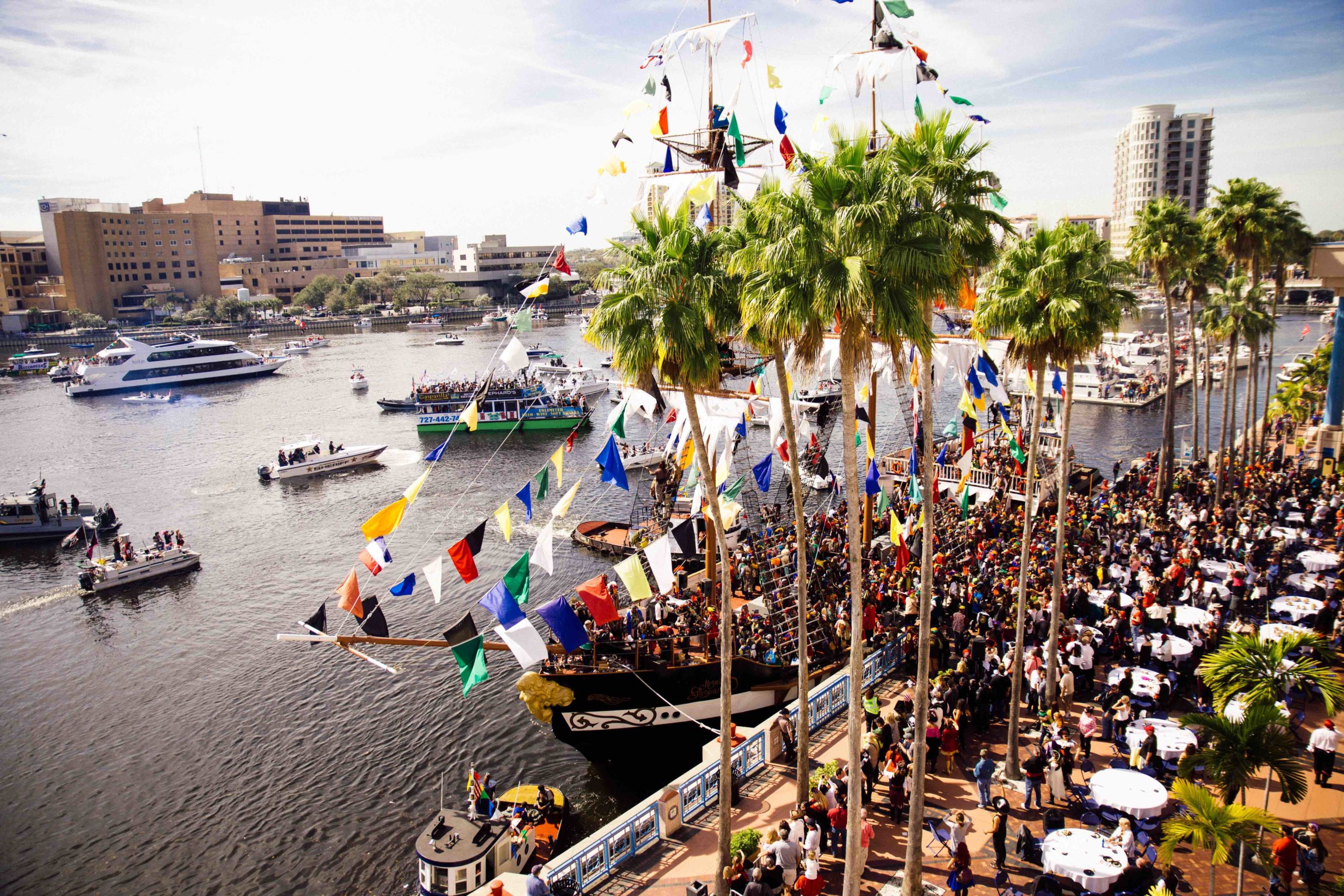
Starting the year off is the historic 2020 Gasparilla Pirate Festival. This annual event has been held in the Tampa Bay region for over 100 years, and has grown into an eight-week extravaganza that is bustling with activities for families and adults alike. It should be noted that the event kicks off on Jan. 25 with the nation’s third-largest parade, and also features memorable events throughout the eight-week run like the Gasparilla Distance Classic on Feb. 22 and 23 in which people can participate in various types of running events. There is also the Gasparilla Festival of the Arts and Gasparilla Music Festival, which is being headlined by national acts like Portugal. The Man. The event concludes with the Gasparilla International Film Festival. 

While all of the festivities that make up Gasparilla Pirate Festival lay the foundation for a great year of events, 2020 is also shaping up to be a historic year for the Tampa Bay region as it prepares to host it’s fifth Super Bowl and it’s first Wrestlemania. Super Bowl LV will mark the third time the event has been held at Raymond James Stadium, with the last one being played there in 2009. While the game itself won’t happen until Feb. 7, 2021, the region is already buzzing with hype and there will no doubt be multiple must-attend events in 2020 leading up to the big game. On the chance that the Buccaneers are able to have a big turnaround season in 2020, their home games will undoubtedly also become can’t-miss events. 

Perhaps the biggest Tampa Bay-based event actually happening in 2020 is Wrestlemania 36, which will also take place at Raymond James Stadium on April 5. Wrestlemania has been ranked by Forbes as the sixth-most valuable sports brand in the world, so the fact it is taking place in Tampa Bay is no small accomplishment. What is expected to be a sellout event at Raymond James Stadium is a testament to just how far the region has come from both an economic and tourism standpoint.   

Also on the list of incredible events happening within the region for 2020 is Florida’s largest annual celebration of the LGBTQ+ community, which takes place in St. Petersburg and is gearing up for what will most likely be another record-shattering attendance year. St. Pete Pride 2020 takes place this year from June 26-28 and is expected to attract over 250,000 people celebrating the beauty of diversity and inclusion, a true testament to the inclusive environment of the Tampa Bay community. 

2020 promises to be a lot of things for the Tampa Bay region: a year of more growth, more opportunity, more collaboration and definitely more unforgettable events. 

To learn more, visit:

https://www.visittampabay.com/


Georgia Wraps Up Decade as Top State for business

Georgia Wraps Up Decade as Top State for business

By: Felipe Rivas

2 min read January 2020Development and growth in Atlanta remain strong as the decade comes to an end, and the economic activity and favorable business climate characteristic of Atlanta looks just as peachy for the entire state of Georgia. In November, Georgia was recognized by Site Selection Magazine as the top state for business for a record-breaking seventh year in a row. Similarly, Area Development Magazine also named Georgia as the top state for business for the sixth-consecutive year. 

Georgia Gov. Brian Kemp said continuing to foster a thriving business climate has been a major part of his vision for the state since assuming office in January 2019. “From Day One of my administration, we have been laser-focused on creating opportunities for hardworking Georgians in every corner of the state,” Kemp  announced at the Georgia Cyber Center in Augusta, Georgia in November . “Our efforts to cut burdensome regulations, continue developing a world-class workforce, and market all regions of the Peach State through the formation of a Rural Strike Team have not gone unnoticed, and this announcement affirms that.” 


The state’s workforce training program, Georgia Quick Start, was also recognized as one of the best in the nation. The state reported around 29,000 new jobs were created for fiscal year 2019. According to the Atlanta Regional Commission, 2.5 million residents are expected to move to the region by the year 2040, bringing the total population to 8 million. 


Heading into the new decade, technology will be a key area of growth for the region and state. The Metro Atlanta Chamber identified bioscience, financial technology, supply chain and Internet of Things as economic segments poised for growth. Additionally, Georgia’s logistics hub legacy is one of the state’s main competitive advantages. Logistics hubs like the Port of Savannah and Hartsfield-Jackson Atlanta International Airport connect businesses to their customers with ease. The workforce training programs, and logistic hubs, coupled with the state’s pro-business policies make Georgia a frontrunner for companies looking to relocate. 

“The nation’s leading site consultants see opportunity for growth across our state. Our top-ranked workforce development initiatives – combined with a conservative, pro-business policy approach, world-class higher education system, and a logistics network that puts the global economy within arm’s reach – make Georgia a top competitor for investment from businesses large and small – across the country and around the world,” Kemp said. 


To learn more, visit:

https://www.metroatlantachamber.com 

https://www.georgia.org https://atlantaregional.org/

Public-Private Partners Devise Future of Queen City

Public-Private Partners Devise Future of Queen City

By: Felipe Rivas

2 min read January 2020In the last decade, Charlotte rose from the devastating effects of the Great Recession to become the 16th-most populous city in the United States. The Queen City has experienced continuous years of growth thanks to the diversification of its economy, its budding headquarters relocation culture, steady commercial and residential development, and its “cool” appeal favored by the young workforce moving to Charlotte and its surrounding region. As the city prepares for another decade of evolution, growth, and development, public and private partners have their eyes set on the year 2040. Several complementary plans are underway that will help guide the future of Center City, the city of Charlotte and Mecklenburg County for the next 20 years.

Spearheaded by nonprofit Charlotte Center City Partners, in partnership with the city and county, the “ALL IN 2040” plan aims to establish a new blueprint for the growth and development of Center City, an area that encompasses Uptown and South End. Simultaneously, the city of Charlotte is working on its 2040 Comprehensive Plan, which will guide the growth of Charlotte overall, while Mecklenburg County rewrites its Park and Recreation master plan.

Michael Smith, president and CEO of Charlotte Center City Partners, said the Queen City has a strong legacy of careful planning for long-term development. “We’ve had four decades of deliberate planning and this decade has really defined Charlotte,” Smith told Invest: Charlotte. “Charlotte has launched a new, renewed Center City vision for 2040, called the ‘ALL IN’ plan. This is a great opportunity for Charlotte to carry on its legacy of planning. This is a 50-year tradition of creating these blueprints, each time looking several decades ahead, but renewing that vision every 10 years. This provides us with an opportunity to listen to our community, and to bring subject-matter experts in to help us understand some of the best practices around the world,” he said.


Much of the successful growth and development in Charlotte that occurred in the past decade was a result of strong public-private partnerships, which the “ALL IN 2040” plan will continue to develop and strengthen. “The plans and projects are co-created and co-owned with the private sector. In Charlotte over the last 50 years, we’ve had the public sector making transformative, shaping, stimulating investments in infrastructure, and the private sector responding in a collaborative way,” Smith said.


Infrastructure will be a strong focus of the “ALL IN 2040” plan, as well as the city’s 2040 Comprehensive Plan. “With the growth we have, we know we have to invest in transportation,” Smith said. Both plans account for major transit expansions to the city’s rapid bus transit and light rail systems. “All that infrastructure development is really needed as the city is booming with construction on the residential, office and hospitality fronts. Right now, there are almost 2.2 million square feet of office space under construction. Of that, there are about 700,000 square feet in South End, and more in Uptown. This is not speculative; there is a lot of pre-leased space in South End. As a matter of fact, about 90% of what’s under construction is pre-leased. It provides us with great confidence,” he said.


The “ALL IN 2040” plan and similar city and county efforts are meant to complement one another. Throughout 2020, residents are encouraged to attend public engagement sessions where they can give their input regarding the future of Charlotte and Mecklenburg County. 

By the end of the process, a final draft will be created that will eventually head to the city council for approval and implementation.


To learn more, visit:

https://www.charlottecentercity.org 

https://www.allin2040.com/plan

Spotlight On: Michael Feuerman, Senior Vice President & Managing Director, Berger Commercial Realty

Spotlight On: Michael Feuerman, Senior Vice President & Managing Director, Berger Commercial Realty

By: Max Crampton-Thomas 

2 min read January 2020 — The commercial real estate market in Palm Beach County has drawn major interest and investment over the past several years. In 2019, the market has remained strong and looks to remain steadfast on this positive track into 2020. Invest: spoke with Michael Feuerman, senior vice president and managing director for Berger Commercial Realty’s Palm Beach Office, about what he has observed in the market over the last year and why the region has become so attractive for development in the commercial real estate space. 


What were the company’s highlights from the past year? 


The last year has been productive for us. We hired two new brokers, one in Broward and one in Palm Beach, and we’re continuing to add to our portfolio. Right now we have about 7.5 million square feet of commercial property under management, and roughly 6.5 million square feet listed.


What makes this region a compelling area for investment?


South Florida in general is a cosmopolitan region. In Palm Beach County, we have a population close to 1.5 million. The workforce is just under half of that. That’s a good population size with a solid workforce. Palm Beach also has a substantial office market at around 55.6 million square feet and an industrial market around 62 million square feet, but our rents are lower than our neighbors to the south.


In which sectors are you seeing the most growth in Palm Beach County? 


The medical industry has grown substantially in the Palm Beach area and as a result, many of my clients are in the healthcare sector and looking to expand their footprint. Another trend we’re seeing is that office users are needing more efficient spaces, or smaller office spaces that can fit the same or more people comfortably. Because these are usually the same buildings with the same structural footprint, parking has become a challenge. Rideshares, autonomous vehicles, public transportation and parking decks are all floated as possible solutions for this.


To learn more about our interviewee, visit their website:

https://www.bergercommercial.com/


Orlando’s convention center starting 2020 strong

Orlando’s convention center starting 2020 strong

By: Yolanda Rivas

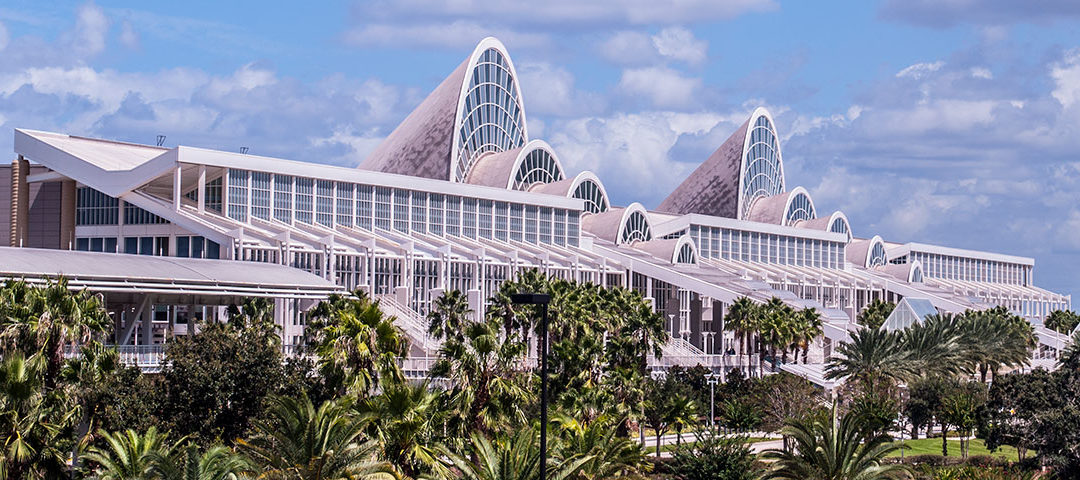
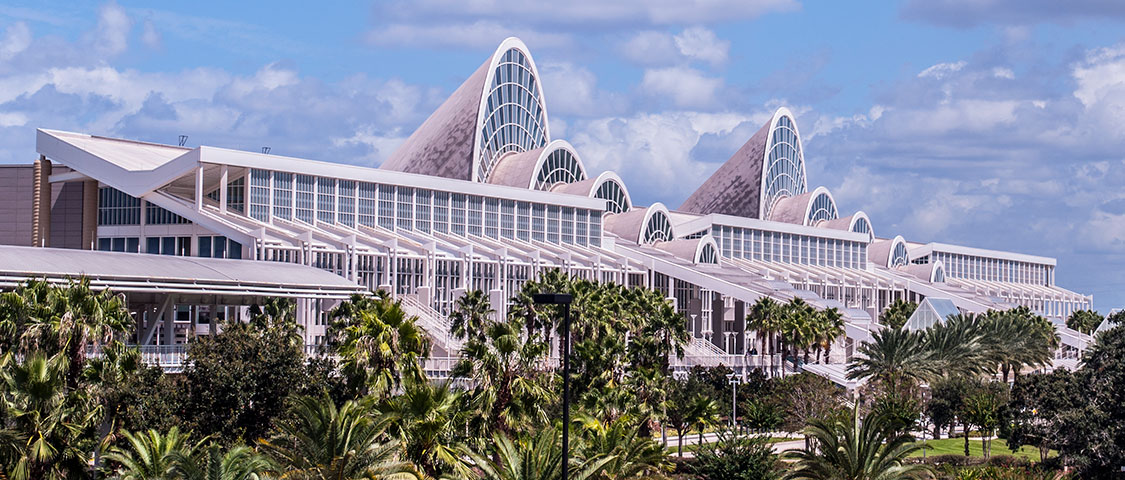
2 min read December 2019 — The Orange County Convention Center, one of Orlando’s economic engines, is entering 2020 with a robust variety of events and conventions. As the end of 2019 has been a busy one for the OCCC, the beginning of 2020 is starting strong with the convention center looking to host thousands of visitors during its busiest season.  


The OCCC brings over 200 events to Orlando each year, with 1.4 million attendees. During the first four months of 2020, the OCCC is hosting some of their biggest events, including:

PGA Merchandise Show 2020 – Jan. 22 – Jan. 24, the event is looking to attract 43,000 attendees. The event gathers PGA and golf industry professionals to showcase the latest trends in golf equipment, technology, apparel and accessories, and more. 

AHR Expo Feb. 3 – 5, OCCC will host the world’s largest HVACR event, which is expected to attract 50,000 manufacturers and industry professionals to the region. The event showcases the latest technology, trends and applications on HVACR technology. 

HIMSS Global Conference & Exhibition 2020 – From March 9 – 12, this even is expected to attract nearly 43,000 attendees to Orlando. The health information and technology event connects health information and technology professionals from around the world to discuss education, innovation and collaboration around health and wellness. 

American Academy of Orthopaedic Surgeons 2020 Annual Meeting – From March 25 – 27, the meeting is expected to gather 30,000 orthopaedic and health professionals. The meeting provides educational opportunities, exhibits and tools and tips.

MegaCon Orlando – From April 16 – 20, the comics, sci-fi, horror, anime, and gaming event is looking to attract over 75,000 attendees. The event will feature professional comic artists sketch duels, “How To” workshops and over 400,000 square feet of shopping space.

To expand its capabilities and reach, the OCCC is undergoing a $605 million upgrade for two master plan projects that will bring the OCCC total exhibit space to 2.3 million square feet. The expansion project will add an additional 200,000 square feet of exhibit space, 60,000 square feet of meeting space and an 80,000-square-foot ballroom. The project is expected to be completed in 2023. As the second-largest convention facility in the nation, the OCCC provides approximately $3 billion in economic impact annually. 


To learn more, visit:

Orange County Convention Center: www.occc.net

PGA Merchandise Show 2020: www.pgashow.com

AHR Expo: www.ahrexpo.com

HIMSS Global Conference & Exhibition 2020: www.himssconference.org

American Academy of Orthopaedic Surgeons 2020 Annual Meeting: www.aaos.org/annualmeeting/ 

MegaCon Orlando: www.megaconorlando.com

Spotlight On: Sean Beuche, Regional Manager, Marcus & Millichap

Spotlight On: Sean Beuche, Regional Manager, Marcus & Millichap

By: Yolanda Rivas

2 min read December 2019 — 2019 was a steady year for Philadelphia’s commercial real estate. The market’s affordability, the city’s position as a logistics hub and its attractive environment for startups has driven strong demand. One of the areas seeing a high amount of activity is King of Prussia. Commercial real estate firm Marcus & Millichap recently relocated to the area, attracted by the growth in the region. Regional Manager Sean Beuche discussed with the Invest: team the neighborhoods seeing the most growth in commercial real estate and his outlook for the sector as we enter 2020. 

Marcus & Millichap relocated its Wynnewood location to King of Prussia. What makes that community attractive?

This relocation highlights our commitment to the area and our optimism about the local economy. The construction and new development activity going on in the King of Prussia market is very attractive. Numerous businesses and baby boomers are moving to the area, where there is more land available, beautiful housing stock, good school districts and less traffic congestion.  King of Prussia is a nexus of a variety of different interstates and that strategic location amid emerging growth and development is much more desirable for us. In addition, we are expanding in a nicer Class A office space that provides our clients and agents with a much brighter and enjoyable place to do business.


Which areas are the fastest-growing for commercial real estate in Philadelphia?

We’re seeing fast appreciation in the Point Breeze market, while Fishtown and Kensington have been hot for some time. We are also seeing numerous investments in areas further along the Main Line region. The Lehigh Valley and Central PA markets are both driving a lot of new investors into Pennsylvania. As the yields continue to deliver in some of these secondary and tertiary markets, investors want to move outside of areas where they’re getting squeezed by some popularity. There is a bit of a ripple effect being created by the economy being strong for a long time, and many of the investments that have been made or taken in these core markets are pushing investors further out. 


What is your outlook for Philadelphia’s real estate sector over the next 12-18 months?


The outlook is positive. There is uncertainty from a political standpoint, we are dealing with some of the trade wars and we are very interested in seeing where that shakes out. We focus on private and middle market clients and, in times of uncertainty, we provide them with market research about existing opportunities. From an income standpoint, rents in the Center City market and many of our urban infill markets are pushed up, and we would need to see some relevant margin changes in household income to afford a greater rent increase. Our clients are seeing strong fundamentals in the main groups that we focus on, which are multifamily, industrial, office and retail. As that financing loosens up and remains affordable, deals are very quickly moving off our shelves and into the hands of investors.


To learn more about our interviewee, visit:

Marcus & Millichap: https://www.marcusmillichap.com/ 


Philadelphia, South Jersey Prioritize Transit, Affordability, Sustainability in 2020

Philadelphia, South Jersey Prioritize Transit, Affordability, Sustainability in 2020

By: Sara Warden

2 min read December 2019 — Although under slightly different time frames, both South Jersey and Philadelphia’s local and state governments are prioritizing investment in three key axes for the coming years: transit, affordability and sustainability.


In 2011, Philadelphia’s City Planning Commission outlined Philadelphia2035, a comprehensive plan for managing growth and development in the city. Updated every year, the first phase includes a Citywide Vision, that encompasses broad planning goals, while the second phase will build upon these with specific policies related to 18 different planning districts. The program invites public and private investment for the development of the city over the medium term. The blueprint is based on three key themes: Thrive, Connect and Renew.

According to the 2035 planning document, the Thrive element will focus on promoting affordability in housing, strong neighborhood centers, economic development and land management. Connect will center around improving transportation and utilities, including transit, streets and highways, ports, airports and rail. Finally, with an eye on sustainability, Renew is all about creating more open spaces, effective use of water resources, air quality and historic preservation.

“Philadelphia 2035 envisions a city with an expanded transportation network that better connects home and workplace; ensures convenient access to sources of healthy food; supports the productive reuse of vacant land; and provides modern municipal facilities that serve as the anchors of strong neighborhoods,” said former City Mayor Michael Nutter when launching the plan in 2011.

The new year was already off to a good start for the City of Brotherly Love even before the calendar turned. National Geographic Traveler in November named Philadelphia one of the top 25 must-visit destinations in the world in 2020.

And across the Delaware, South Jersey faces many of same issues are at the top of Gov. Phil Murphy’s priority list. The four pillars of the 2020 budget signed in June 2019 include creation of over $1.1 billion in sustainable savings, stabilizing New Jersey’s credit-worthiness and ensuring tax fairness for the middle class. This foundation will support the final priority of investments in education, infrastructure – in particular NJ TRANSIT – and an innovation-driven economy.

“The budget enacted today is a victory for working families in New Jersey in many different ways—it supports middle-class priorities, invests in education, makes a record investment in NJ TRANSIT, provides property tax relief, and so much more,” said Murphy when he signed the budget into force.

But Murphy also has his eye on further priorities to strengthen the 2020 plan amid more effective tax revenues. “This is a budget that does not include tax fairness, does not ask opioid manufacturers to help fund addiction services, and does not raise gun fees that have been untouched since 1966,” he said. “These common-sense revenues would have allowed us to save for a rainy day and sustainably fund necessary investments for New Jersey’s nine million residents.”

To learn more, visit:

https://www.phila.gov/departments/philadelphia-city-planning-commission/ 

https://www.jerseycitynj.gov/cityhall/mayorfulop


South Florida to Address Heavy-Hitting Priorities Ahead of Election 2020

South Florida to Address Heavy-Hitting Priorities Ahead of Election 2020

By: Sara Warden

2 min read January 2019 — With its status as one of the most important swing states in federal elections, Florida’s voting pattern generally serves as a bellweather for the overall outcome. With President Donald Trump running for re-election in November 2020, South Florida’s agenda for the year is packed with contentious issues, such as gun reform, climate change and foreign policy.


 On Dec. 23, an appeal was filed by the state government against several Florida cities, including Miami Beach, Fort Lauderdale and West Palm Beach, arguing the cities were flaunting the law by applying harsher restrictions on guns than exist on a state level. “If allowed to stand, the decision will not only invite the development of a patchwork regulatory regime in the area of firearms but also render the Legislature impotent to deter power grabs by local officials in other areas,” the brief argued. The issue of gun reform is set to remain a key issue as the 2020 election nears.

Another issue coming back to the forefront is climate change, and South Florida is disproportionately affected by rising sea levels and potable water availability. In November, Gov. Ron DeSantis appointed the state’s first chief science officer and the 2020 legislative session is expected to put more emphasis on climate issues. “State agencies are now beginning to collaborate on these important issues and gather at a leadership level to talk about resilience and how to plan for sea level rise,” Noah Valenstein, secretary of Florida’s Department of Environmental Protection, told the Herald Tribune.

But by far, one of the most headline-grabbing issues leading up to the election will be President Trump’s flagstone immigration campaign. According to the most recent census data, about 23% of the population of Palm Beach County identify as Hispanic or Latino, and the same is true for around 19% of the Fort Lauderdale population. The Democrats chose to host their first presidential debate in Miami, a city where more than 70% of the population is Hispanic, partly because of the immigration platform.

“Latinos are still seen as a monolith,” says Liz Alarcon, a Venezuelan-American Democratic activist and author of Caracas Chronicles, told TIME magazine. “Politicians as a whole still don’t get it, and that’s a problem.”

U.S. Latin America policy is expected to play a major role in the South Florida 2020 electoral result, and Trump has been largely praised by the Latin American community for his tough stance toward Venezuelan President Nicolas Maduro. “Florida elections always come down to margins,” Frank Mora, a professor of politics at Florida International University, told the New Yorker. “Foreign policy is intensely local in South Florida.” Because of the high concentration of Latinos in South Florida, foreign policy related to Latin America hits close to home.

It could also help decide who wins Florida in 2020.


To learn more, visit:

https://www.flgov.com/

https://www.caracaschronicles.com/author/lizrebeccaalarcon/

https://pir.fiu.edu/people/faculty-1/faculty/frank-mora/

https://floridadep.gov/sec