Spotlight On: Neil Callaghan, Brand Manager, Cigar City Brewing

Spotlight On: Neil Callaghan, Brand Manager, Cigar City Brewing

By: Max Crampton-Thomas
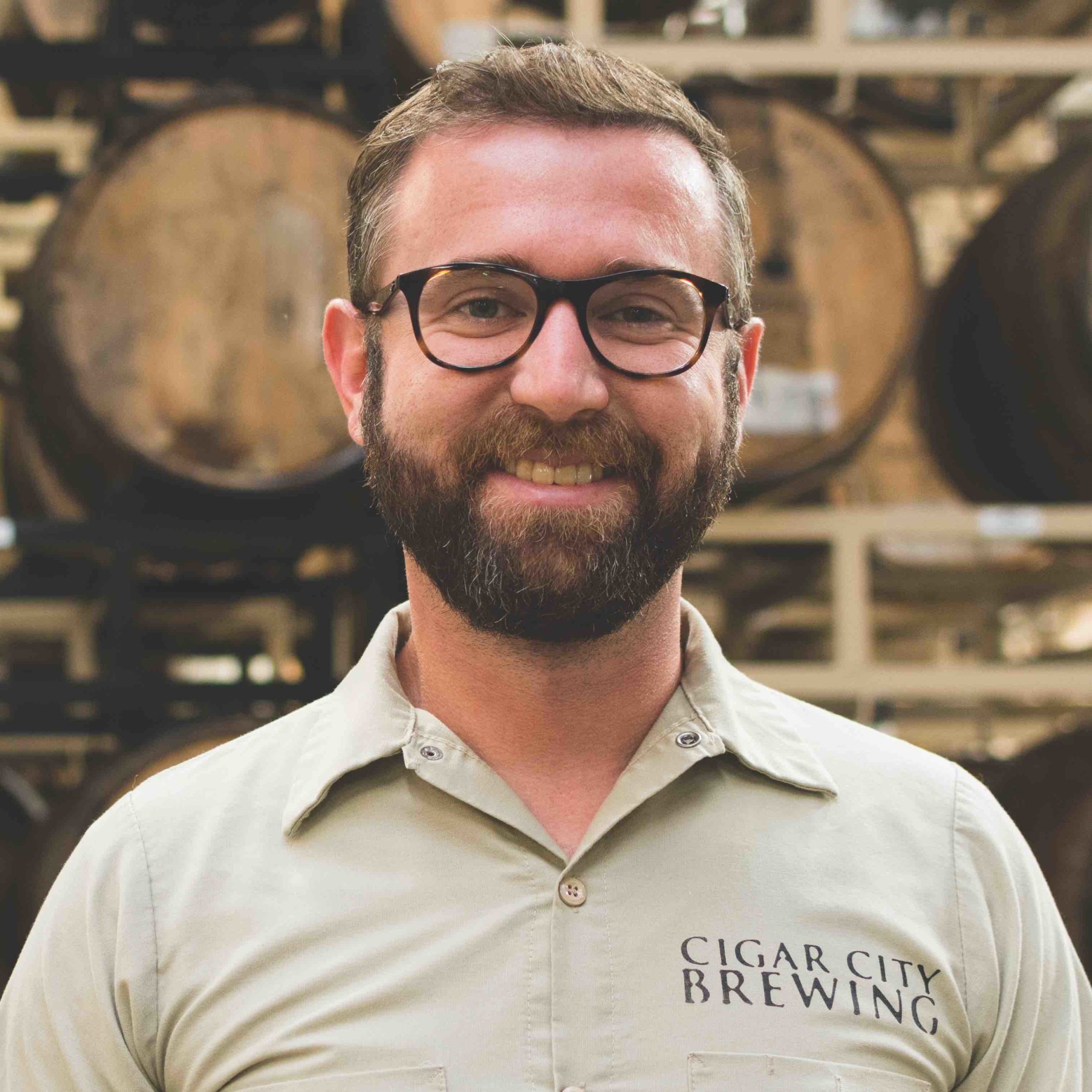
2 min read November 2019 — The Tampa Bay region is known for having and being headquarters to a wide variety of business types. While all these businesses contribute to the local economy and community in various ways, perhaps one of the most sought after and visited are the local breweries that call Tampa Bay home. One of the most well-known is Cigar City Brewing, which started as a local brand and has now expanded to become a widely recognized national presence. Invest: spoke with Brand Manager Neil Callaghan about how Tampa Bay has shaped the company, being stewards of the environment and the impact the brewery has on the local economy.


How has Tampa Bay influenced the brand and culture of your business? 


Our Brewery is unique in that so much of what we do is really influenced by the culture, the cuisine and the history of Tampa Bay. We feel like our success has really been part and parcel of the story of Tampa Bay resonating with people outside of the Florida area. We are extremely fortunate because we do get a lot of tourism to this region for a number of reasons, whether to visit family or go to the beach. Tampa Bay has really molded what we are doing as a company, from the names of our beers to how we market ourselves. This speaks to the way outsiders have responded to the culture of Tampa Bay as a whole. Tampa is still our biggest market by a long shot, and we are still growing at a double-digit rate in the Tampa Bay area, which is exceptional.


How important is consistent innovation to your business? 


The questions we constantly ask ourselves are: How do we keep people engaged? How do we keep them excited? And how do we keep that growth trajectory where it has been for the last few years? The answer is innovation. We are not a company that puts out a beer and just keeps pushing it for years. We have been incredibly fortunate with our brands like Jai Alai, which is our biggest seller, but at the same time it is the new brands, styles of beer, new ingredients and new processes that we are working with that keep people interested. Our innovation is really going to help us continue to grow for the foreseeable future. We are not just brewing the same beers that we were brewing five years ago. We always want to maintain the quality and consistency that we have never deviated from since day one, but our innovation is really where we are putting a lot of our chips these days.


How is Cigar City Brewing promoting environmental sustainability in the region? 


In the last year, one big innovation that we have worked on in regards to environmental sustainability is our move away from the clear plastic rings that hold the six-packs together. While they are sustainable, we felt like there was a better option and a better way to not only help our brand from a branding perspective but also to help the environment. We have now moved to cardboard wraps and these are much more environmentally friendly and recyclable. It has been a big project for us to literally change the whole way that we are packaging our beer, but again, it is an opportunity for us. We get more of our branding out in front of consumers because they are now looking at a box that is a lot more engaging than a collection of cans. Our vendors have a heightened focus on environmental sustainability as well. 


What is the economic impact of the brewery on the local region? 


We are employing around 70 people full time in the Tampa Bay area, and we are also employing sales teams all over the country. We are helping impact the local economy by this employment, but also by the amount of beer that we are selling. Because beer is a relatively highly taxed commodity we, along with the rest of the beer community in Tampa Bay, are helping to bring in millions of dollars in tax revenue. This goes directly to our local communities, counties and the state of Florida. Certainly, as one of the larger breweries in the area, we are proud of the direct impact that our brewery is making. At the same time we think the more compelling story is that there are now over 80 breweries in the Tampa Bay area, which is incredible because 10 years ago there were six. Our industry is helping to directly impact the local economy in a meaningful way. 


To learn more about our interviewee, visit: 

https://www.cigarcitybrewing.com/
 

Spotlight On: Scott Zuckerman, Principal, Domus Construction

By: Yolanda Rivas

2 min read November 2019 — Philadelphia-area general contractor Domus was established in 1976. The company has now become a $100-million construction firm with expertise in managing housing, restaurants, retail/commercial and academic construction projects. Domus Construction Principal Scott Zuckerman spoke with Invest: about the company’s diversity of place, construction trends and more. 

What are some highlights for Domus Construction in the past year?


One of our most recent projects is the Dwell at 2nd Street, which is expected to be completed by December 2019. The project will include 198 apartments with a variety of amenities including onsite parking, a swimming pool and a dog park. One hundred and twenty of the units will be modular, which is a concept that seems to be getting more of a push in Philadelphia because of increasing construction costs. 


What key trends have you observed in the sector?

Modular construction and smaller, efficiency-style apartments are trends we’ll continue to see in Philly. Domus introduced live streaming construction in 2019, beginning with our Dwell at 2nd Street project. It’s a good marketing tool because 120 units out of 198 are modular and a lot of people are very interested in seeing the process of installing them in real time. The modular process is also friendly to the environment since it provides more ways to control waste.


What actions are you taking to ensure diversity in the workplace?

Domus has a strong and long history of diversity. We actively participate in community outreach and advertising to increase minority participation for all our projects regardless if it’s a requirement. Minorities comprise between 30 and 40 percent of the workforce on our jobs.


What is your outlook for 2020?

The outlook for Philadelphia’s construction sector seems very positive. We’re booked up until the end of 2020. There are new hotels that are rising around the city of Philadelphia, which seems to be a big trend. Most professionals and companies in the sector seem to be busy, which is a great indicator.


To learn more about our interviewee, visit:

Domus Construction: http://www.domusinc.net/

Philadelphia celebrates 100th Thanksgiving Day parade

Philadelphia celebrates 100th Thanksgiving Day parade

By Yolanda Rivas

2 min read November 2019 — It is well-known that Philadelphia is a city of firsts in terms of the nation’s history and the development of key industries. It shouldn’t be a surprise then that the City of Brotherly Love also hosts the oldest Thanksgiving parade in the nation. 

This year marks the 100th celebration of the Philadelphia 6ABC Dunkin’ Donuts Thanksgiving Day Parade. What is now one of Philadelphia’s treasured traditions began as a marketing strategy by former department store Gimbels to promote the beginning of the holiday shopping season. The first parade took place in 1920, shortly after the Benjamin Franklin Parkway was completed. Gimbels hosted the parade until 1986, when the company went out of business, and WPVI-TV took over the parade production. 

“The first parade was started with 15 cars, and 50 store employees,” said Todd Marcocci, a co-producer of the 6abc/Dunkin Thanksgiving Day Parade, in a written statement on the parade’s official website. “It was specifically described that those 15 cars were lavishly decorated in crepe paper.”

Decade after decade, the parade has been a special celebration for families around the region. One of the most exciting moments of the parade was the tradition of Santa climbing a fire department ladder several stories up the Gimbels building to Uncle Wip’s Toyland.

“The route was down the parkway around City Hall, down Market Street to the original Gimbels building. And then Santa would get off and go up the ladder and into the building,” said Robert DiBenedetto of Blue Bell, Pa, in a statement on the parade’s website. 

After five years, the parade started to gain more recognition. Today, the Philadelphia parade features 15 balloons, 16 floats, over 20 marching bands, 66 youth tap, dancing and choir groups and more than 20 celebrities and special guests.

“It’s a family tradition. The streets are filled with happy people,” said 6abc meteorologist and parade co-host Cecily Tynan in a written statement on the parade’s website. “It’s just a perfect way to start your holiday season.” 

To celebrate the 100th Thanksgiving Day parade, the public will have the chance to win several prizes, including a Florida trip for six, tickets to an Eagles vs. Cowboys game, and more. 

This year’s parade will kick off at 8:15 a.m. from 20th & JFK in Philadelphia, and will be broadcast on 6abc from 8:30 a.m. to 12 p.m. 

To learn more, visit:

6abc Dunkin’ Thanksgiving Day Parade:

https://dig.abclocal.go.com/wpvi/html/tdp100/index.html

Spotlight On: Donna Chamberlain, Managing Principal, BDO USA

Spotlight On: Donna Chamberlain, Managing Principal, BDO USA

By: Felipe Rivas

2 min read November 2019 — Rapid growth in Charlotte is attracting families and young professionals, as well as local and international companies. BDO USA, with help from the Charlotte Regional Business Alliance, has been at the forefront of helping potential foreign investors move into the Charlotte market. BDO USA Tax Office Managing Principal Donna Chamberlain talks about Charlotte’s appeal to international companies and efforts to use technology to improve efficiency in an interview with Invest: Charlotte. 

What unique opportunities are emerging as the region grows?


“In the past 12 months, while working with the Charlotte Regional Business Alliance and other internationally focused organizations, the global opportunities have really come to light. We focused on joining the alliance’s international advisory council, which aims to attract international investors to the Charlotte Metro Area. It was eye-opening to see how this city is appealing to prospective international investors. BDO’s consultants help potential investors with site selection and tax and accounting requirements, which is very exciting. Newly expanding companies from Europe and Latin America are also looking at what Charlotte has to offer. The area is attracting many foreign investors as well as corporate relocations from established companies.”


What makes Charlotte a desirable city for companies looking to relocate?


“Charlotte has seen an incredible amount of growth and infrastructure development, and the city is paying great attention to detail. Also, education as a whole is very high in the area, which is creating a diverse, educated and skilled workforce for companies to choose from. The industry make-up is becoming more diversified, from high tech and manufacturing to healthcare. It is not just financial services, which Charlotte is known for, but also the diversification into other industries that is very appealing for companies looking at the Charlotte Metro Area.” 


In what ways is BDO USA leveraging technology to improve customer experience?


“BDO is investing in technology that helps create processes across the firm nationally that are integrated seamlessly. Investments in software and technology make our practice efficient and portable. BDO has global offerings that feel very local. Data analytics improves efficiency and we want clients to access that data quickly. We offer global portals that allow our clients to see real-time statistics related to what we are doing for their company.


How is BDO collaborating with the Charlotte Regional Business Alliance to improve service offerings?

We are supportive of the Charlotte Regional Business Alliance and joining their internal councils has been beneficial. It hass been really collaborative. The alliance is reaching out to the local business community for support as it continues to expand. Working with the alliance has been helpful in understanding what companies need, especially in the current atmosphere, and how we can help them shape their business. We want to provide customized HR, tax and accounting solutions specific to our clients.”


To learn more about our interviewee, visit: https://www.bdo.com/about/us-locations/charlotte-office

Thanksgiving in the Queen City

Thanksgiving in the Queen City

By: Felipe Rivas

2 min read November 2019— Gratitude, family, fellowship, outdoor activities, turkey, gravy, and shopping are some of the characteristics closely associated with Thanksgiving Day, and the Queen City offers no shortage of any of these during the fourth Thursday of November through the long weekend. The signature North Carolina cold weather allows for some outdoor, family fun while the feast cooks slowly in the kitchen. From famous parades, Black Friday shopping preparations, and ice skating, Thanksgiving Day in Charlotte offers plenty of activities for the entire family. 

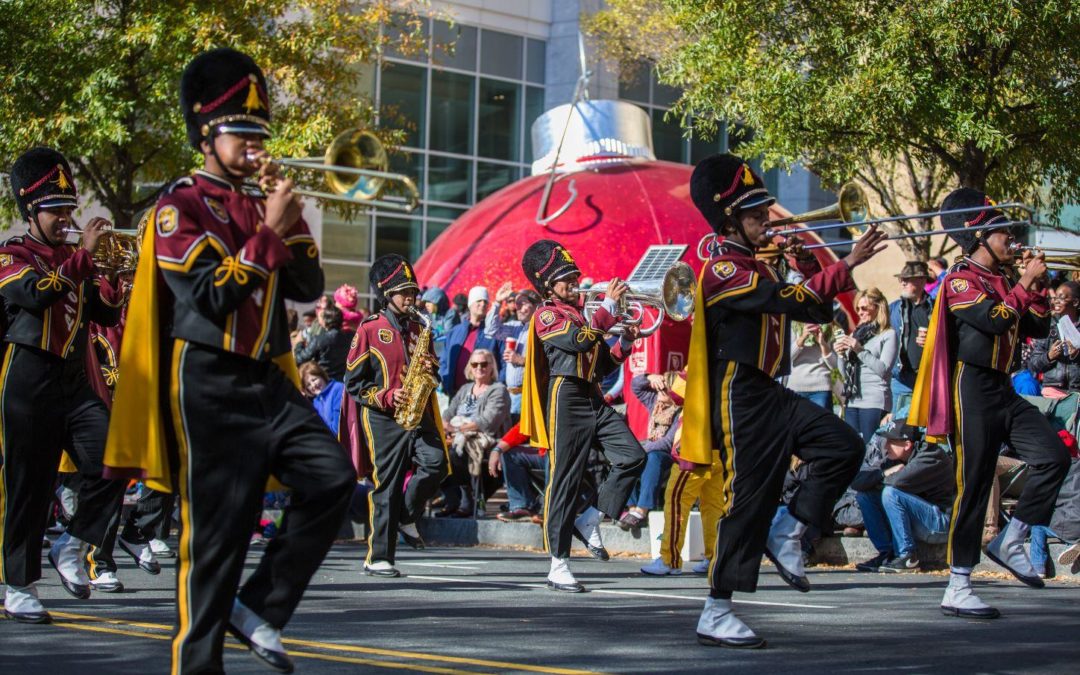
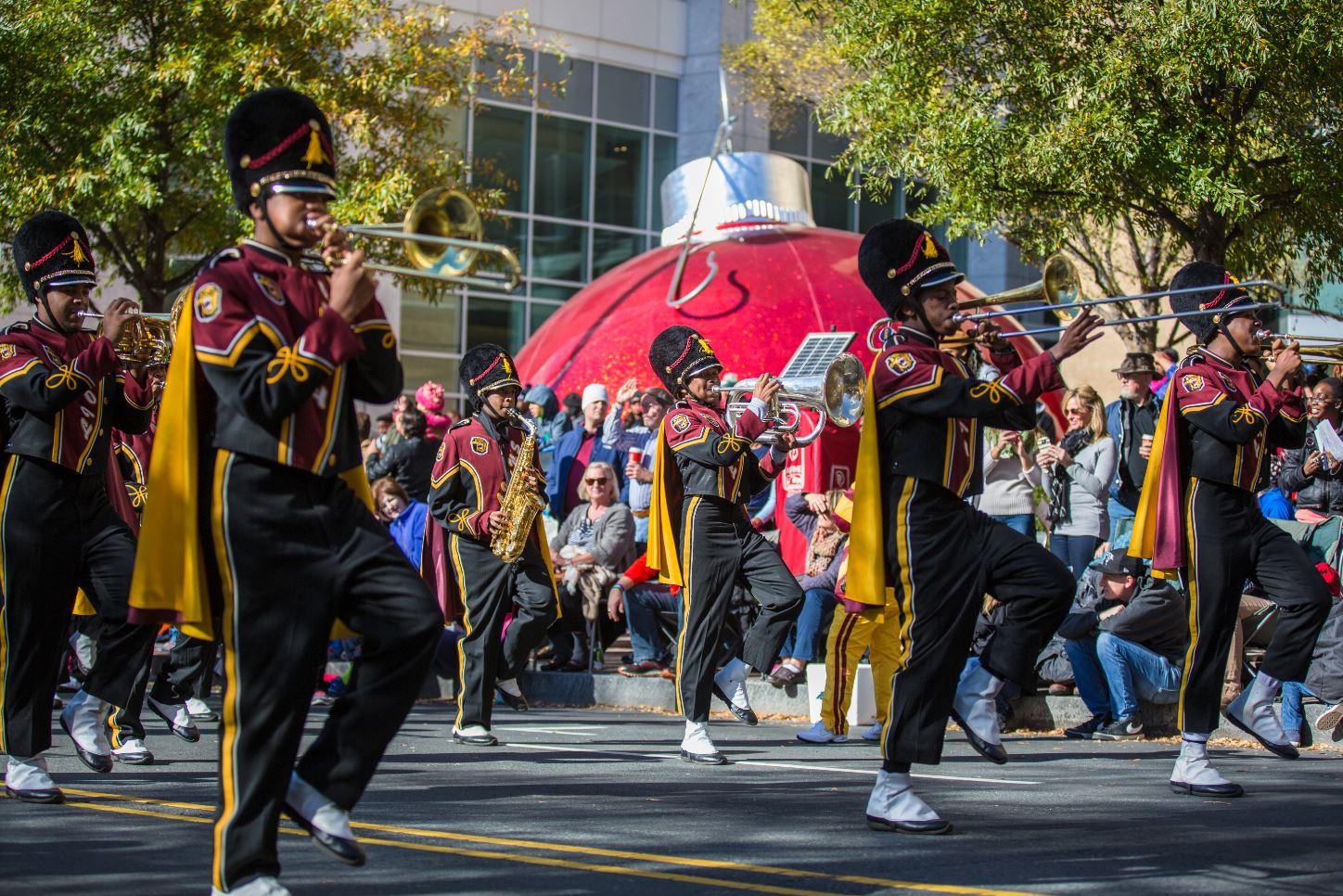
While New York City has the Macy’s Parade, Novant Health, one of the region’s largest employers, has wowed Charlotteans with fancy parade floats, marching bands, live music, and recognizable cartoon characters for the past 72 years. Known as the “Mile of Smiles,” The Novant Health Thanksgiving Parade is a beloved tradition drawing families from across the southeast to Uptown to kick off the start of the holiday season. The parade starts at 9 a.m. on Thanksgiving Day and draws more than 110,000 attendees. The parade begins on 9th Street heading South on Tryon Street to Stonewall Street, where different ethnic organizations display their pride and colors, while marching bands from a variety of educational institutions keep the energy upbeat as they make their way through the Mile of Smiles. The party continues at the end of the route with performances from a bevy of local talent. For those who would rather snooze a bit longer on Thanksgiving morning, the parade will be broadcast online and on local TV stations. 


While Thanksgiving Day is a time for reflection, it also marks the start of the holiday shopping season. Black Friday has become a national tradition, and the area’s local shopping malls are gearing up for the influx of shoppers expected to get a leg up on the holiday shopping season. In the spirit of enjoying time with the family, many recognizable stores have chosen to close on Thanksgiving Day and open early during Black Friday. According to bestblackfriday.com, a website that tracks Black Friday deals and news, stores such as Burlington Coat Factory, Costco, Lowe’s, Marshalls, Neiman Marcus, Nordstrom, Petsmart and Sam’s Club, among others, will be closed on Thursday nationwide. Locals looking for deals can head to Concord Mills, SouthPark and Northlake shopping malls early Friday morning, as they have adjusted their schedules to accommodate shoppers. 


Families looking to avoid a turkey stupor can also head to the NASCAR Hall of Fame to stretch their legs and ice skate under the night sky. During this time of the year, the mecca for all things NASCAR turns into a magical winter wonderland, known as Holiday on Ice and featuring one of Charlotte’s best ice skating rinks. Families can enjoy selfies with a giant polar bear, or a large Christmas tree, or a walk through the Ceremonial Garden that features thousands of holiday lights. A trip to Holiday on Ice is the perfect way to finish Thanksgiving and embrace the upcoming holiday season. 


For more information, visit:

https://www.nascarhall.com/plan-a-visit/holidays-at-the-hall

http://novanthealththanksgivingparade.com/

Spotlight On: Jeff Burns, Founder & CEO,  Affiliated Development

Spotlight On: Jeff Burns, Founder & CEO, Affiliated Development

By: Max Crampton-Thomas

4 min read November 2019 — To be a successful developer in today’s real estate climate, a company must not only be professional but also in tune with regional and global trends as well as stewards for fulfilling a community’s needs. Affiliated Development focuses on building mixed-use multifamily developments in underserved areas of the market. Invest: spoke with CEO and Co-Founder Jeff Burns who provided his insights on the company’s approach to Opportunity Zones and their potential in Broward County, as well as highlighting the regions that have the most demand for multifamily development.


What are the most interesting highlights for Affiliated Development over the last year?


We have been working on projects in Broward County and we have also made some fairly aggressive moves into Palm Beach County. In Broward, we just topped out the construction of our 142-unit mixed-use apartment building in Downtown Fort Lauderdale, named The Six13. We are going to start leasing efforts for The Six13 in spring 2020, and delivering apartments on June 1. We are also in the beginning stages of additional projects in three other Broward cities, including another in Fort Lauderdale.  In Palm Beach County, we got underway on a 230-unit apartment project on Dixie Highway in Lake Worth Beach called The Mid. We are also moving on other opportunities in Lake Worth Beach. In May, we closed on the purchase of a 20-parcel assemblage in Downtown West Palm Beach, a couple of blocks from the Virgin Trains station to construct a 289-unit mixed-income workforce housing project called The Grand. My partner and I are very proud of what our Affiliated team has accomplished this year. We are workaholics and have had a busy year, but are focused on keeping the momentum going into 2020.


How have you leveraged the new Opportunity Zones in the state and what is their potential in Broward?


In April (prior to the IRS posting its regulations) we closed our The Six13 project with Qualified Opportunity Zone (QOZ) funding. We are one of the first companies to implement QOZ financing for a project of this kind in the state of Florida. These zones are definitely getting a lot of thrust, but there are more people talking about it than implementing it. The QOZs are definitely going to have an impact, but it is becoming more challenging to find sites that make sense due to unrealistic landowners and sellers.  There might be a reality check setting in with landowners who found themselves in a QOZ and have priced their land ridiculously high. It could have the adverse effect of preventing projects from happening in some areas because of false expectations.


Our philosophy is to remain disciplined. If we strip away the QOZ benefit, is this still a deal we’d do? If the answer is yes, we’ll take an aggressive position. Some people are doing deals that they would not otherwise pencil-out (without the QOZ rules). The program was intended to incentivize investment into these areas, not make a bad deal good. 


Which areas of the region have the most demand for multifamily developments? 


Fortunately for us, all of South Florida is booming. More and more people are moving here from the Northeast and other high-tax states because our business climate is favorable and our quality of life is second to none. Certain markets have experienced a tremendous amount of urban growth during this latest cycle, such as the Flagler Village submarket in Downtown Fort Lauderdale. We are getting a lot of people who are moving to Fort Lauderdale from Miami to avoid the chaos, but who still want the benefits of a big city lifestyle.


We made a major investment in Lake Worth Beach, which is a perfect example of a place in close proximity to the largest employment center in Palm Beach County (West Palm Beach), which is about 10 to 15 minutes up the road. Lake Worth Beach historically has not seen much development or investment, but it is starting to happen because not everybody wants to live in a major downtown metropolis (and pay the rents these markets demand). In some places, it is getting a little bit too crowded and some people are moving into tertiary markets that are near where they work but that maintain their character and are less hectic.


How important is it to be able to offer affordable and workforce housing to the region?


It’s critical. Our region is one of the most cost-burdened places in the entire country when comparing the cost of living to income. It’s necessary to offer a high quality of life for our current residents, many of whom support our area’s largest industry, tourism. It’s necessary for economic development and to attract and maintain major employers and high-quality talent.


Many companies are moving here from the Northeast, looking to locate their offices into these urban areas. I think the days of large office parks in the suburbs are becoming fewer and fewer because companies understand that to attract top-tier employee talent they need to offer an atmosphere that caters to the young workforce who graduate from school and prefer urban living. Younger professionals don’t want cars; they want to be close to where the activities are. I believe that to be able to attract a high-quality workforce, urban living is key. But in areas like Fort Lauderdale, every landowner knows what they are sitting on, and it is very challenging to find any reasonably priced land where you can build anything that is not going to be very expensive.


We focus very heavily on being close to employment centers. In Palm Beach and Broward County, the average workforce renter commutes 30 minutes in each direction each day for work. People get in their cars and do that because they can’t afford to live near their workplaces. Meanwhile, as some of these cities keep growing, people are starting to complain about traffic. If these cities can offer housing that the workforce can afford, we’ll see a lot more people walking around, utilizing public transportation and a lot less traffic congestion. I also see great opportunities in cities like Lake Worth Beach and Boynton Beach (Palm Beach County), Pompano Beach, Hollywood and Hallandale (in Broward) that are a few minutes away and are becoming really nice options. 


What are the prospects for the real estate business in the area looking into 2020?


We are obviously at the top of the cycle. I think most developers realize that. Thus, we will be measured in our approach and watch market indicators very closely. As 2020 is an election year, we will no doubt see some volatility. Affiliated is going to continue to stick to our core competency, which includes attainably priced luxury rental housing. There is so much need for that here that we could build thousands of units over the next couple of years and only scratch the surface.  


For more on our interviewee visit:


http://affiliateddevelopment.com/

How Did Thanksgiving Become Game Day for the NFL?

How Did Thanksgiving Become Game Day for the NFL?

By: Sara Warden

2 min read NOVEMBER 2019 — On Thanksgiving, there is only one thing that comes close to turkey in importance for Atlanta sports fans, and that’s the NFL’s game schedule. This year, the Atlanta Falcons will be one of three teams hosting the Thanksgiving Day games, facing off again the New Orleans Saints. 

This will be the Falcons’ fourth Thanksgiving Day game, and having lost against the Saints last year on their home turf, this one is sure to be a must-watch. Those fans going to watch the game live could also feel a little pain in their wallets: Last year’s Saints-Falcons game was the most expensive Thanksgiving Day game for fans, with an average ticket price of $518 on the secondary market.

No doubt, Thanksgiving football is big business for the NFL. In 2018, NBC’s primetime viewing of the Falcons-Saints game brought in an 11.4/24 rating, up 18% from 2017’s Washington-New York Giants primetime game on NBC and the network’s best Thanksgiving night NFL performance since 2015. For the rights to a selection of high-profile games that includes the Thanksgiving game, Super Bowl Broadcasts and Thursday Night Football, NBC is paying $1.1 billion a year to the NFL.

That explains why the tradition stuck, but why did it start? Although it doesn’t quite go back to The Mayflower, the Thanksgiving game is a long-standing tradition spanning back as far as 1920. Political upheaval during the time meant the games were sporadic, but eventually in 1934, George A. Richards bought the Portsmouth Spartans, renamed them the Detroit Lions and gave Thanksgiving another try. 

This was largely a solution to the problem of low attendance during the year, but the Thanksgiving game became a rousing success. First, people already had the day off work and second, it became an escape for those looking to perhaps spend less quality time with family. More than 26,000 people booked tickets weeks in advance and reportedly thousands more were turned away at the gate.

In 1966, the Dallas Cowboys saw the success of the “Detroit Lions vs…” games and decided to get in on the action. Since then, both teams have played each year, with one additional game added to the roster. This year’s Falcons-Saints game will be played in the new, state-of-the-art Mercedes-Benz stadium – “the finest sports and entertainment facility in the world,” according to Dan Corso, president of the Atlanta Sports Council.

The stadium was funded by a largely taxpayer-based system, in a $2.4 billion investment based on bonds and hotel taxes. And Mayor Keisha Lance Bottoms believes the stadium may allow Atlanta to host many more high-profile sporting events, including these popular Thanksgiving games. “I think it’s well worth the investment, and when you look at the long-lasting impact and our ability to showcase Atlanta, sometimes you have to spend a little money to make a little money,” she told USA Today.

To learn more, visit:

https://www.metroatlantachamber.com/councils/atlanta-sports-council

https://www.atlantaga.gov/government/mayor-s-office/meet-the-mayor

Florida: Home of the Real First Thanksgiving?

Florida: Home of the Real First Thanksgiving?

By: Sara Warden

2 min read November 2019 — When we think of Thanksgiving, generally we conjure up images of hats with oversized buckles, turkey, cranberry sauce, pumpkin pie and The Mayflower. But according to historian Kathleen Deagan, research curator emerita of historical archaeology at the Florida Museum of Natural History, the first Thanksgiving was not exactly as we may imagine. Rather than taking place in Plymouth, the first Thanksgiving feast was actually celebrated in Florida.


The meal was shared by the Spanish Conquistadors and the native Timucuans, more than 50 years before the Mayflower arrived on American shores, according to historians. Don Pedro Menéndez de Avilés, a Spanish explorer and 800 soldiers and sailors landed on Florida’s shores near St. Augustine before holding the Mass of Thanksgiving.

“The holiday we celebrate today is really something that was invented in a sense,” said Deagan in an interview with the University of Florida. “By the time the Pilgrims landed at Plymouth, the people who settled America’s first colony with Menéndez probably had children and grandchildren living there.”

So instead of buckled shoes and hats, think suits of armor and 16th century Spanish garb. Instead of turkey, think salted pork, and instead of pumpkin pie, think garbanzo beans, olives and hard sea biscuits. “It was the first community act of religion and thanksgiving in the first permanent settlement in the land,” wrote University of Florida professor emeritus of history Michael Gannon in his book The Cross in the Sand.

Other sources say there were many other “Thanksgiving” ceremonies in Florida well before even Menéndez, including the landing of French explorer Rene Goulaine de Laudonnière at Jacksonville in 1564, Hernando de Soto in 1529 and Juan Ponce de León in 1513. After approximately 70 days at sea, all most likely would have had to depend on the kindness of the natives for food and shelter when they landed on American shores.

Some argue that the Plymouth mass is remembered as the first Thanksgiving because it was the first that spawned a yearly tradition. “None of these events were made anything of historically, or even rediscovered, until the 20th century, and thus did not contribute to our modern American holiday tradition,” said James W. Baker, author of Thanksgiving: The Biography of an American Holiday. 

But regardless of where the first holiday was held, the true meaning behind Thanksgiving has evolved to symbolize coming together with friends and neighbors to break bread and overcome differences. There is no doubt that this tradition has immense relevance for states such as Florida, with their rich patchwork of cultures. “The fact is, the first colony was a melting pot and the cultural interactions of the many groups of people in the colony were much more like the U.S. is today than the British colonies ever were,” said Gifford Waters, historical archaeology collection manager at the Florida Museum.

To learn more, visit: https://www.floridamuseum.ufl.edu/


Spotlight On: Keith Koenig, CEO & Chairman, City Furniture/Broward Workshop

Spotlight On: Keith Koenig, CEO & Chairman, City Furniture/Broward Workshop

By: Max Crampton-Thomas

4 min read November 2019 — Acting as both the CEO of his company City Furniture and the Chairman of the Broward Workshop, Keith Koenig provides a unique perspective and insight on various facets of business and progress being made in Broward County. He not only discusses how the Workshop is working to address the  effects of climate change on the county, but also the progress it has made on the goals set forth last year. In regards to his business, Koenig reveals his key to longevity in the marketplace as well as what today’s consumers are looking for when choosing where to shop. 


How is the Broward Workshop addressing the issues related to climate change in Broward County?

Wherever anyone stands on the science of climate change, one issue is undeniable, and that’s the economics of resiliency. Smart people in the insurance world believe that our risks and insurance costs will go up in the years to come if we do not get ahead of resiliency. Broward Workshop members understand that issue and want to lead a public, private effort to improve the resiliency not only of South Florida, but to create opportunities for coastal communities around the world to partner and learn. We are still in the process of setting our priorities for our annual goals, but in all likelihood they will include supporting the Army Corps of Engineers’ $20-million research project. In addition, our members are supporting Broward County’s efforts to jump-start our resiliency efforts. We will also be supporting South Florida water management efforts to finish phase two of the C-59 reservoir, which is an important step forward in our resiliency efforts. 

What progress has been made on the goals set by the Broward Workshop last year?

When we look back over the last year, we have really moved all our goals forward. At the top of the list was addressing homelessness. A little over a year ago, we had a major encampment of close to 100 homeless in Downtown Fort Lauderdale and they were in an area right next to the library. Earlier this year, we worked to help place these homeless people into more permanent housing. The best way to end homelessness is to provide people with housing that is respectful and valuable. Our second goal revolved around education, particularly K-12 education in Broward County. When Superintendent Bob Runcie arrived in 2011, the Broward County school system was in disarray. Members of the school board had been accused of improprieties, morale was low and we were facing over $20 million in fines for not meeting state-mandated class size. Runcie has worked diligently to address those issues and to move our Broward County school system forward. The good news is that our school system has improved greatly with higher graduation rates and higher rated schools. Broward County Public School System nearly achieved an overall A rating in 2018 and they are working to continue to improve. We set a goal to support the Broward County public schools and our measure of success was to make sure Bob Runcie stayed as superintendent. I’m proud to say Bob Runcie is still our superintendent today.

The third big goal was the transportation sales tax initiative. Last year, county leaders put this sales tax increase on the ballot to fund transportation initiatives. It was a major initiative and members of Broward Workshop fell on both sides, but like any good organization we listened to the majority. We put our support behind it and the sales tax initiative passed. The last goal we set was around tourism. Tourism is Broward County’s biggest industry, and the biggest need we have is an expansion of our convention center and to build a convention center hotel. We were active both on the forefront and behind the scenes, and the expansion and the convention center hotel are going forward. 

How has City Furniture maintained its longevity in the market? 

The key to City Furniture’s longevity in the Broward County marketplace has been reinvesting back into our business. We operate financially conservative, meaning that we are careful and never try to bite off more than we can chew. That being said, growth has been a cornerstone of our business. If you do not have growth as a cornerstone strategy for your business, you can’t attract the talent you need or want. For instance, millennials all want to see opportunity to advance, grow and succeed, so they are attracted to companies that embody that vision. In our case, we just opened up big stores in Orlando, and we are planning to open in Tampa over the next few years. The other key to this business has been private ownership. We are able to invest for the long-term benefit of our associates, our customers and our community. 

How have you seen priorities shift in regards to consumers making a decision on where to shop?  

Retail needs to be more of an experience. What will drive you to a store as opposed to buying online is the experience. When the consumer is given a choice, they prefer to do business with local companies that genuinely support the local communities that they are in and companies that move in a direction of sustainability toward a carbon neutral footprint. Mostly, our shoppers and customers learn that City Furniture does these things after they come to our stores. It becomes a better value proposition for them to do business with us. All of these elements are aimed at tilting the customer experience factor a little more in our favor. 


To learn more about our interviewee, visit:


https://www.cityfurniture.com/


https://www.browardworkshop.com/