Charlotte Demographics Catalyze Office-Space Boom

Writer: Sara Warden

2 min read AUGUST 2019 – Charlotte is gaining more than 1,000 new residents a week, according to the 2017 Census. In the second quarter of 2019, Charlotte added 26,700 new jobs and kept unemployment down, at around 3.7% on the year. By 2050, another 1.8 million people and nearly 1 million more jobs will be added.

Research has shown that Charlotte is able to attract younger generations due to its affordability and quality of life. Cincinnati-based Growella conducted research on the friendliest cities for under-35s, measuring indicators such as entry-level job availability, time spent commuting and strength of paycheck, and Charlotte came out No. 5, with an A grade.

“With a growing tech workforce, a booming financial industry and a strong millennial growth rate, Charlotte is poised to be a forerunner of economic expansion not only in the Southeast but in the United States,” said real estate firm Cushman & Wakefield in a report on the city.

Charlotte ranked seventh in Growella’s research for strength of paycheck, which indicates how high salaries are compared with the cost of living. The city also boasts solid infrastructure, transport links and a dynamic nightlife. With characteristics that allow it to entice more of the young workforce, Charlotte is becoming a titan in attracting disruptive industries, such as tech and innovative financial services.

The predominant US tech hub is undoubtedly Silicon Valley in San Francisco. But it seems more and more startups are looking to more affordable cities that have favourable demographics. The frontrunner is Charlotte.

One company that decided to headquarter itself in Charlotte is SmartSky Networks, which aims to transform aviation using disruptive technologies. Another is Passport, a provider of digital parking software. MapAnything, Sitehands, PeraHealth and many others have also chosen Charlotte to lay down roots. This is all serving as a boon for the city’s real estate industry, and office space in particular.

At the end of the second quarter, Charlotte’s average rental rates increased 13% on the year, above markets such as San Jose, California, which saw an 11.8% rise and even the home of Silicon Valley, San Francisco, which saw a 9.4% increase.

But even though property is rapidly increasing in value, it is still far more affordable than many business hubs, making it a no-brainer investment opportunity for many forward-thinkers. “Rent as a percentage of household income is still substantially below the likes of much larger cities like Boston, Chicago, Seattle and Miami,” said Dave Welk, Director of Acquisitions of private equity real estate firm Origin Investments in an article written for the company.

Nearly 5.1 million square feet of office space is under construction in Charlotte, the majority in the Central Business District (CBD). Most recently, real estate investors The Spectrum Companies and Invesco teamed up to break ground on a 577,000-square-foot mixed-used development in Charlotte’s CBD that will eventually house two 11-story office buildings.

As demand drives up prices, existing assets are also selling for eye-watering amounts, with the top five transactions so far this year totaling $855 million.

“As space is leased and rental rates continue to rise, owners are expected to sell properties for record-high amounts as Charlotte demonstrates it is a viable and highly sought-after investment market,” said Cushman & Wakefield.

Our Picks: Top 5 Miami Neighborhoods to Live, Work and Play

By Yolanda Rivas

2 min read AUGUST 2019 — With warm weather, a diverse population and a strategic location, Miami is a magnet for new residents. From luxury condos to mixed-use developments and single-family homes, the city’s residential sector remains strong. These are five thriving neighborhoods to live, work and play.

Wynnwood

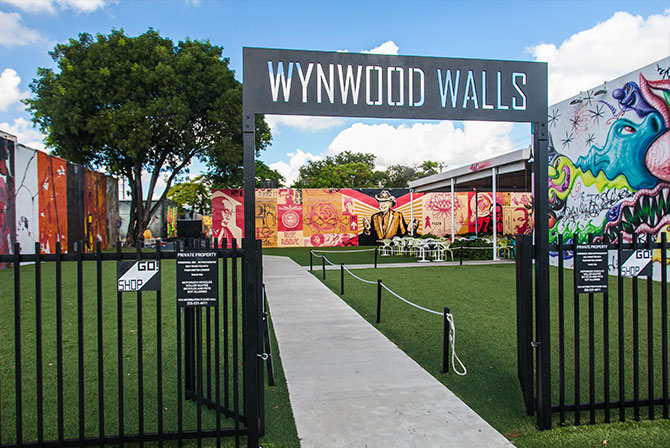
The popular art district is a must for many visitors. What once was an area with shuttered factories and warehouses is now recognized as a premier destination for arts, culture and innovation. Wynwood is home to over 400 businesses, including art galleries, antique shops, artisanal food and beverage restaurants and innovative companies. The neighborhood’s street art and hundreds of murals and graffiti are a main driver to the area. The 2018-19 Wynwood Market Report states both multifamily and office inventory in the Wynwood Business Improvement District market are poised to double over the next three years, as projects that are under construction are delivered.

Brickell

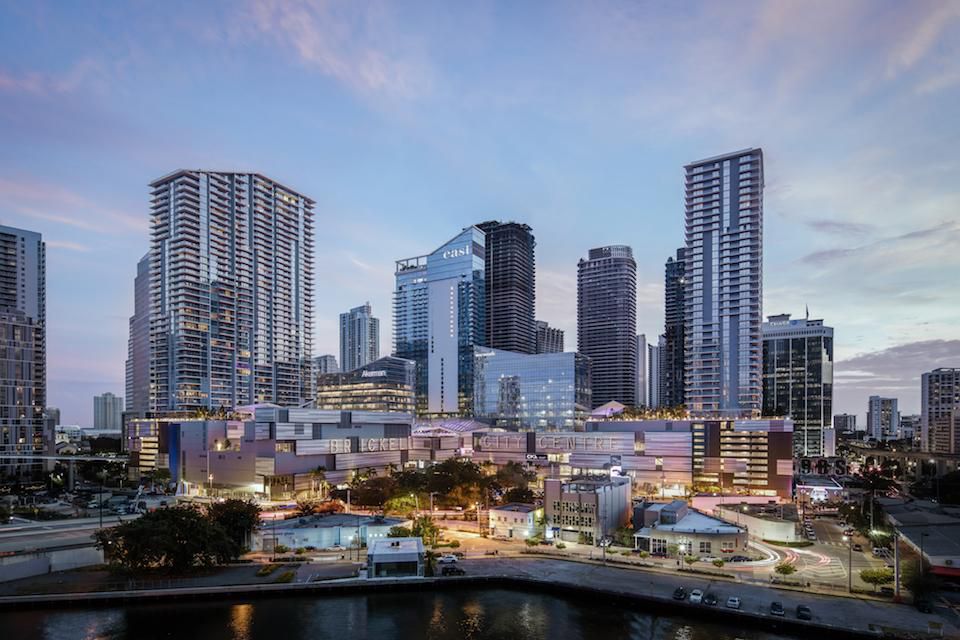
Known as the financial district of Miami, Brickell has much more to offer than just business and office space. With many trendy bars and restaurants, hotels, condominiums and business opportunities, Brickell is among the fastest-developing areas in Miami. The opening of the $1.05-billion shopping and mixed-use Brickell City Centre in 2016 has been a catalyst for growth. The walkability in Brickell and access to the metromover are also some of the benefits for families and businesses in the area. 

“Brickell offers the ultimate live, work and play lifestyle. Apart from its walkability and nightlife, it also serves as a central point between the best Miami has to offer. It’s minutes from Coconut Grove, Key Biscayne, Wynwood and Miami Beach,” Diego Valencia, founder of WeRentBrickell.com, told Invest:.


Coconut Grove

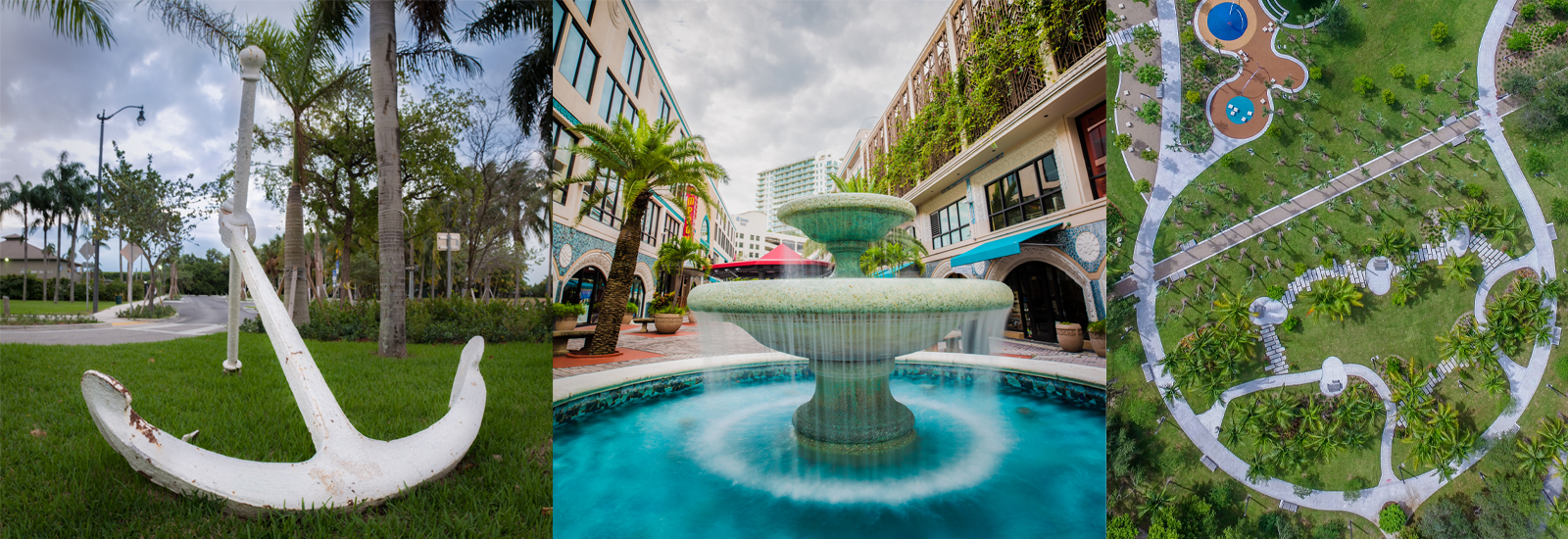
Located south of Downtown Miami, Coconut Grove is a pedestrian- and bike-friendly neighborhood that is perfect for an escape from the city’s noise. It has been the sailing capital of Miami and it is known for its lush green landscape, bohemian setting and the beautiful Biscayne Bay waters. The renovation of the iconic, open-air mall CocoWalk is expected to attract national and international brands to the area. “The entire retail and office landscape of Coconut Grove is being redeveloped, and there are a significant number of baby boomers who are living in large homes and are reaching a stage in life where relocation makes sense. This creates opportunities for new buyers and developers,” Jay Phillip Parker, CEO of Douglas Elliman Real Estate, said in an interview with Invest:.


Edgewater

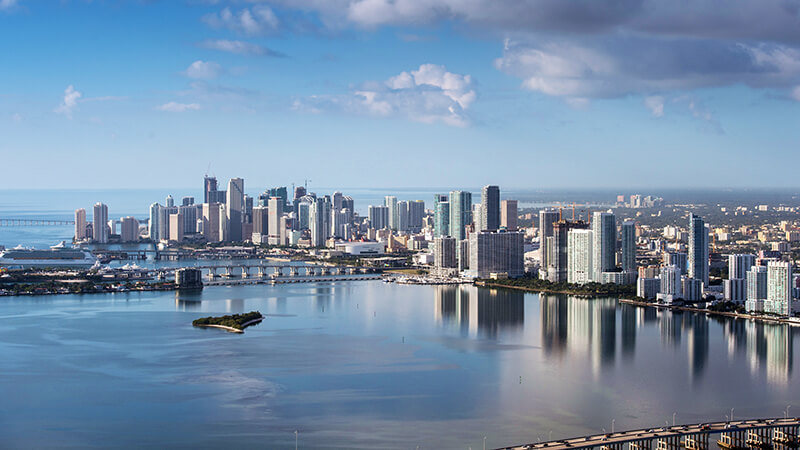
Located north of Downtown, next to Wynwood Arts District and south of the Design District, this neighborhood has great potential as a live, work, play community. Residential and office towers in the area have great views to Biscayne Bay and a strategic location near some main highways, major neighborhoods and arts and culture offerings. Property prices are usually lower than those in Miami Beach or Downtown and construction activity is on the rise.


Doral

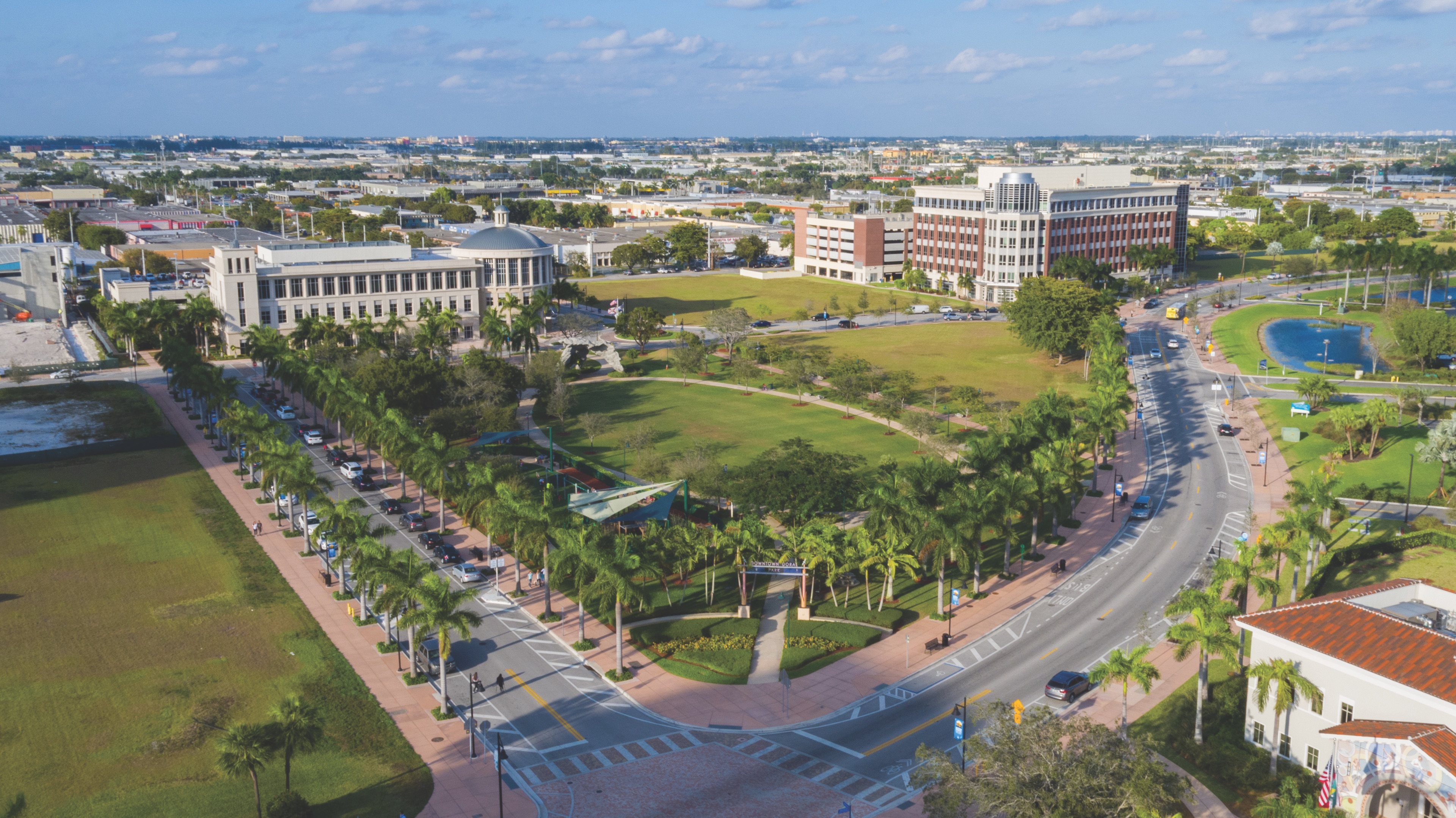
Doral is one of the fastest-growing cities in Miami-Dade. The city’s population has grown 77% in the last eight years and is ranked No. 2 in Forbes Magazine’s America’s Top 25 Towns To Live Well, which cites the city’s cultural amenities, pro-business environment, and highly educated workforce. 

“Doral is one of the best locations to live, work and play. It has the parks, restaurants and amenities, and it’s located between the major highways and near the airport. A lot of major companies are headquartered in Doral, and many of the industrial players are located in the city as well. The government is very approachable and they understand business needs,” Rich Guertin, regional vice president of PS Business Parks, told Invest:.


To learn more about our interviewees, visit:

WeRentBrickell.com: http://www.werentbrickell.com/ 

Douglas Elliman Real Estate: https://www.elliman.com/florida 

PS Business Parks: https://www.psbusinessparks.com/ 

Buccaneers Hope Offseason Moves Score Touchdown

Writer: Max Crampton-Thomas

2 min read August 2019   There is perhaps nothing more synonymous with Tampa Bay than its football team, the Tampa Bay Buccaneers. Since officially joining the NFL in 1976, the Bucs have become a staple in the Tampa Bay region. The team’s history includes the highest highs and lowest lows, from a dismal 0-14 inaugural season to a Super Bowl title in 2003. Now only weeks away from the start of the 2019-2020 season, the Bucs are looking to bounce back from last year’s tumultuous campaign that resulted in a 5-11 win-loss record and a last-place divisional finish for a second straight year.

The Bucs have not allowed last year’s disappointing season to distract them from what could possibly be a comeback season in the making. After the final loss last season, the Bucs dismissed head coach Dirk Koetter. They have since hired two-time Associated Press NFL Coach of the Year Bruce Arians, who has been swift in his moves to strengthen the team’s defense and instill a winning culture within the locker room. The Buccaneers added some significant depth to their defense with their 2019 first round pick, linebacker Devin White, and with the addition of five-time Pro Bowl defensive end Ndamukong Suh.

While the city of Tampa Bay is eager to see the team return to its glory days as Super Bowl champs, there may be no one more focused on having a winning season this year than Bucs’ quarterback Jameis Winston. The national championship and Heisman Trophy winner has had what can be best described as an inconsistent NFL career. Entering the fifth and final year of his rookie contract, the former first round pick will undoubtedly look to use this season as his campaign to remain the team’s franchise quarterback. 

The Buccaneers franchise and fanbase can also look forward to an improved Raymond James Stadium, which underwent a $160 million renovation in the offseason. The stadium, and more broadly the City of Tampa Bay, will be home to Super Bowl LV in 2021, marking the fifth time Tampa Bay has hosted football’s biggest event. Invest: Tampa Bay spoke with Brian Ford, COO of the Tampa Bay Buccaneers, who discussed what it means to host this event once again. “It’s going to be Tampa’s fifth Super Bowl, which is great when you think about all the many, very exciting cities that can host the Super Bowl. We’re very proud of that. Tampa hosts a ton of big events, and we do them well. We worked closely with Rob Higgins of the Tampa Sports Commission, Eric Hart and Mickey Farrell of the Tampa Sports Authority, Commissioner Ken Hagan of Hillsborough County and the city of Tampa in putting together the best bid and best format for this mammoth event. When you sit down and look at it, it’s truly remarkable that so many in Pinellas County and Hillsborough County all came together for one event. And there’s no way that we would’ve been offered this opportunity if we hadn’t made a major investment in the renovations, of which we’re also very proud.”

The only thing that could make hosting a Super Bowl better for the Tampa Bay region would be to see the home team competing in it. While that may be a long shot at this point, the Buccaneers will have this season and next to prove they are a franchise that can compete at the highest level. It’s still early, but all signs seem to be pointing to a brighter future for the Tampa team. 


To learn more about our interviewee, visit:

https://www.buccaneers.com/

Spotlight On: Hala Sandridge, Shareholder and Tampa Co-Office Head, Buchanan Ingersoll and Rooney PC

Writer: Max Crampton-Thomas

2 min read August 2019 — Demand in most job sectors ebbs and flows with the economy. One sector that seemingly goes against this narrative and remains relatively consistent is the legal industry. As a new generation makes its way into the field, law offices are having to prepare for the next wave of legal professionals. Invest: Tampa Bay recently spoke with Hala Sandridge, shareholder and Tampa co-office head for Buchanan Ingersoll and Rooney PC. She spoke about her firm’s approach to talent retention and attraction, the red-hot market for young legal talent and what the next year will hold for the legal sector in Tampa Bay.

How is the firm preparing for the next generation of legal professionals? 

Every company has to manage their external and internal sustainability, with a focus on the next generation of the workforce to optimize for long-term success. We at Buchanan are continuously building that next generation of attorneys who are going to continue the work of the senior leaders after they retire. We have strong succession plans in place as well as various programs that help those who are not yet at the partner level to become stronger in their practice, better at business development and immersed in the business of our clients.


I have noticed that many law firms do not plan for the future workforce and for the retirement of their more senior partners. It is crucial for business continuity to have attorneys trained and ready to pick up responsibilities and relationships. The next generation needs to be ready to sustain the growth that the company has accomplished and continue to take advantage of this market. When our attorneys are near retirement age, we have a conversation with them to make a plan for their retirement. We require our attorneys to take on these young people and integrate them with their clients so that the relationship continues smoothly after they have left. 

What is the state of the job market for law students nearing graduation? 

The job market for law students has seen a bit of fluctuation over the past several years and right now there are many opportunities for fresh law school graduates. Three years ago, we were not hiring too many law students shortly after graduation, but that has changed. We have hired a number of past summer associates upon their graduation and continue to seek out talented graduates. I cannot say enough great things about this next generation. They have their heads on straight, are incredibly goal-oriented and are willing to learn. 

What does the next year look like for Tampa Bay’s legal sector? 

I believe that the market is going to stay hot for the next year. However, in the event that there is an economic slowdown, many of us in the legal sector, including Buchanan will continue to do well as we thrive in a down market too. As a successful law firm we must stay nimble, so when the market changes we are prepared. For example, we have a nationally-recognized bankruptcy group whose work tends to increase during economic downturns, while other attorneys who typically perform transactional work use their market knowledge to advise on bankruptcy work. The key for any successful law firm is to diversify your staff and not have all your eggs in one basket.


To learn more about our interviewee, visit:

https://www.bipc.com/

Spotlight On: Drew Melville, Real Estate and Land Use Attorney, Melville Law, P.A.

By Max Crampton-Thomas


2 min read August 2019 — South Florida’s economic boom has resulted in increased migration to the area, a rise in small businesses and most significantly, an abundance of real estate and transit development projects. While these development projects are a positive sign that the economy is thriving, they are also associated with a litany of legal paperwork, proceedings and barriers as well as the negative side effects for the environment in South Florida. Invest: Greater Fort Lauderdale recently spoke with Drew Melville, real estate and land use attorney for Melville Law, P.A. He spoke about some of the more negative side effects from this increased development in South Florida, how Broward County should be an example in regards to environmental sustainability and his outlook for the next year given the region’s growth.

What has been one of the most significant negative effects of increased development in South Florida? 

Our mission statement has always been about redeveloping the urban corridors and preserving rural and agricultural lands in Florida, which are dwindling. We are losing farmers, and wilderness land as well. The whole concept of putting highways in places where there is nothing but agricultural land is terrible and only caters to specific groups of large landowners. This issue is so much bigger than the interests of a couple of large, rural landowners, and I am hoping Florida moves past the never-ending sprawl development. 

How should Broward County be viewed in regards to environmental sustainability? 

The biggest challenge for South Florida is environmental sustainability. Many people from all over the world are investing in this high-growth area, and we have to hope that they are not only investing in developing here but also in the sustainability and resilience of the area. Broward is very forward thinking and environmentally conscious, and the county should be looked to as an example for some of these areas that are developing without regard to the effect they are having on the environment. 

What is your outlook for Broward County over the next year? 

“Fort Lauderdale is still growing, and there are a ton of projects in the approval process. The city is also growing while preserving its history and keeping its historic buildings intact, which is great for the community and our identity. There are also a lot of towns around Broward that have Opportunity Zones and they are trying to capitalize on them now. I’d like to see more development along the Dixie corridor in Pompano and Deerfield. It would also be great to see more food operators in areas that are considered “food deserts,” which is defined as more than a mile stretch without an option for healthy food.”


To learn more about our interviewee, visit:

https://www.melville.law/

Spotlight on: Kenneth Lawrence Jr., Commissioner, Montgomery County

Writer: Yolanda Rivas

2 min read AUGUST 2019 — Montgomery County is the third-most populous county in Pennsylvania and the state’s the No.1 county for manufacturing. With an extensive trail network, the largest indoor mall in the country, a growing population and diverse economy, Montco presents unique opportunities for businesses among several industries. Commissioner Kenneth Lawrence recently spoke with Invest: about the county’s efforts to grow its economy, attract businesses and embrace sustainability.

What were some highlights for Montgomery County over the last 12 to 18 months?

Montgomery County had its AAA bond status restored by Moody’s. We are working hard on our transportation and infrastructure, repairing our roads and bridges, and making sure these are in good, working condition. We implemented a parental leave policy for our employees. The new policy is not gender-specific and employees can get six weeks off for the birth, adoption or guardianship of a child. We believe that will spur area companies to implement similar initiatives. Montgomery County has the best trail network in the region. We have over 90 miles of trails, including the Schuylkill River Trail, which is the most popular trail in the region, and we are working on expansion, improvements and new connections for many of our trails.

What are some business opportunities unique to Montgomery County, in relation to other counties in the region?

Montgomery County is the No. 1 county in Pennsylvania for manufacturing. We have more manufacturing jobs than any of the 67 counties in the state. There are numerous opportunities in manufacturing, especially in the biotech and pharmaceutical industries. For example, Thomas Jefferson University recently opened the Jefferson Institute for Bioprocessing in Lower Gwynedd, which is a specialized education and training institute for biopharmaceutical processing. Upper Merion is the third-largest employment hub in this region, following Center City and University City. We are working with SEPTA (Southeastern Pennsylvania Transportation Authority) on King of Prussia Rail to connect University City, Center City, and Upper Merion with public transportation. This is a 10-year project, but we are working very hard to connect the three major employment hubs in the region.

The pharma and healthcare sectors keep growing in the county. Tourism in Montgomery County is a $1.2 billion industry. Valley Forge National Historical Park gets over 2 million visitors a year. King of Prussia Mall is the largest shopping mall on the East Coast.

What is the county doing to develop sustainable operations?

Sustainability is very important for us as a county government and we want to take a leadership role. We recently announced a wind energy purchase that will power all of the county’s electrical accounts. The commissioners also made a commitment to transition to

renewable energy for heating all county-owned buildings and powering all county-owned vehicles by 2050. Another major project is a new justice center, which is part of six individual construction projects in downtown Norristown to address service, operational and energy inefficiencies and modernize county buildings for the future. We are taking every step possible to make sure that sustainability is a major part of that project so that we’re not increasing our energy footprint. We are also working with our municipalities across the county to explore options for sustainability.


To learn more about our interviewees, visit:

Montgomery County: https://www.montcopa.org/ 


Record Numbers Flock to Philly, Again

by Yolanda Rivas


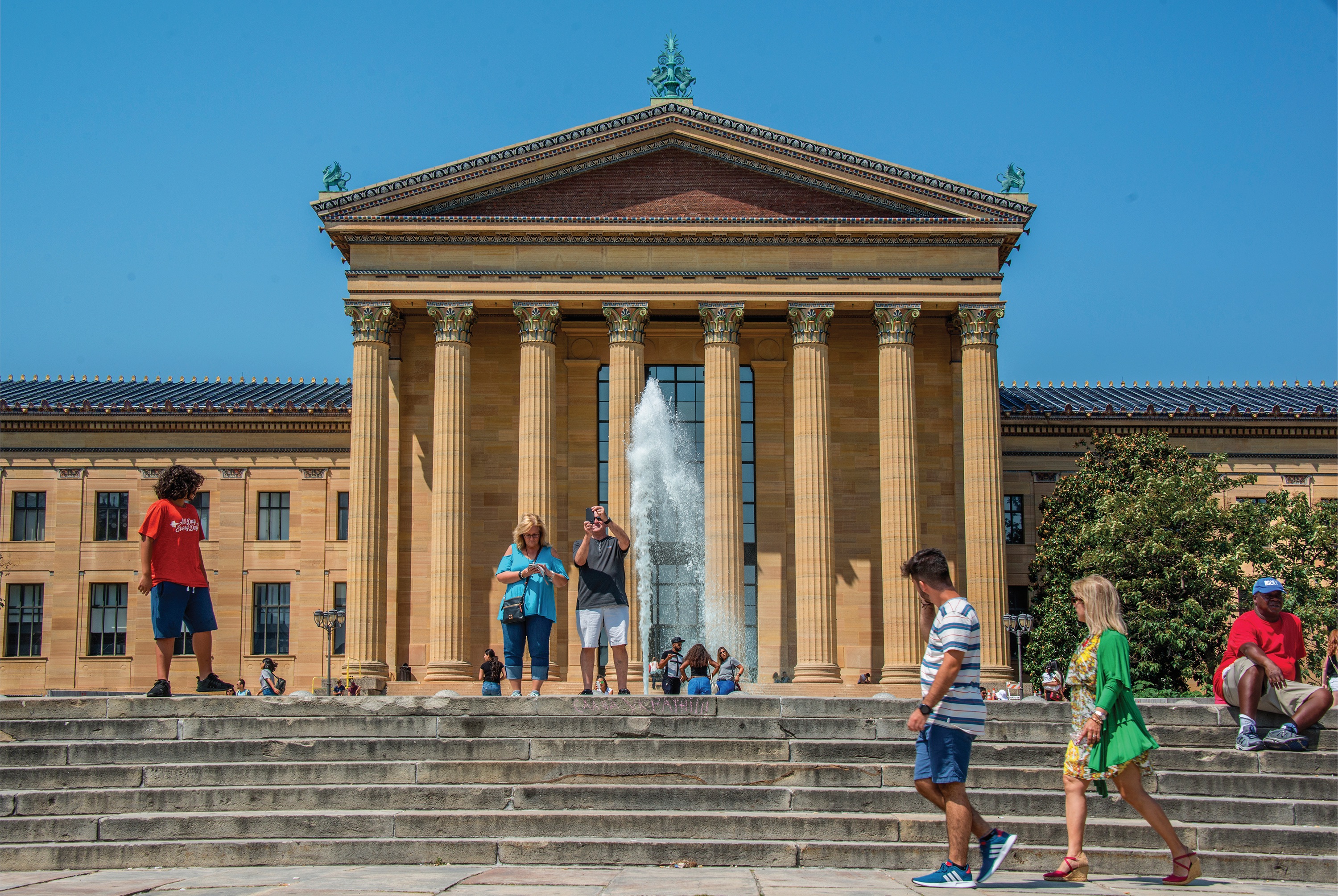
2 min read AUGUST 2019 — Greater Philadelphia experienced its ninth straight year of record tourism in 2018. Public and private organizations in the sector are making multiple efforts to elevate tourism to the city and maintain its record-setting pace. 

Enhancements to the city’s historical, cultural and dining options, such as the Pennsylvania Convention Center, the stadiums in South Philadelphia, the Philadelphia Museum of Art renovations and a number of new hotels on the horizon are some of the examples of improvements to the city’s offerings. 

“We’re working on a partnership to significantly grow our brand globally while also making a further commitment in Philadelphia with a new project that will dramatically enhance the architectural canvas for residential real estate,” Larry Korman, president of luxury extended-stay brand AKA Hotel Residences, told Invest:. 

Philadelphia’s weekend occupancy rate remains in the low- to mid-90%, also record highs, as the city of brotherly love attracts both business and leisure travelers. Local hotels, such as the Cambria Hotel Philadelphia Downtown, are committed to highlighting and complementing the communities where they operate through area-inspired decor and modern design.  

“We have locally commissioned art in our hotel, and since we sit on the Avenue of the Arts, our decor is themed with a nod to arts and music. We sourced most of the art and decor from local artisans, vendors and companies to ensure that we are supporting the community in every way possible,” Jerry Rice, General Manager at Cambria Hotel Philadelphia Downtown, said in an interview with Invest:.

To meet the demands of those who want a unique and intimate experience, some local brands are making the transition to boutique hotels. That is the case of former Courtyard by Marriott, which has been reborn as The Notary Hotel. According to the hotel’s general manager, Jim McSwigan, some of the elements of renovation include reimagined rooms, public workspaces for guests, a new shower experience in all rooms and a modern fitness center. 

“We have maintained an element of history with 1920s-inspired decor and furnishings, while introducing a modern feel. We offer the latest and greatest when it comes to providing guests with a great space, not only for business meetings, but for social events, weddings and any type of celebration,” McSwigan said.  

Another main driver for visitors and a key economic developer is the arts sector, and Philadelphia’s world-class music institutions are putting the city in the global spotlight. Such is the case of Opera Philadelphia and its Festival O, for example, which has had a  local, national and international impact. David Devan, general director and president of Opera Philadelphia, pointed out in an interview with Invest: the importance of the festival in creating local, enlarged artistic partnerships and developing a new, mostly young audience. “That is the biggest impact; we now have more customers than five years ago. We work with Visit Philadelphia, PHL Convention and Visitors Bureau, and other agencies that promote the city and create local pride,” he said.

“Because we do so much new work, what we are doing is affecting the field of opera nationally in terms of the field celebrating and participating in contemporary art activity. Internationally, we have become recognized as one of the most innovative opera companies in the United States,” Devan stated.

This year, Philly’s official tourism marketing agency VISIT PHILADELPHIA is focusing on opportunities in the multicultural market, specifically Latinx, LGBTQ and African American audiences. 


To learn more about our interviewees, visit:

AKA Hotel Residences: https://www.stayaka.com/ 

Opera Philadelphia: https://www.operaphila.org/ 

Cambria Hotel Philadelphia Downtown: https://www.choicehotels.com/pennsylvania/philadelphia

The Notary Hotel: https://www.marriott.com/hotels/travel/phlak-the-notary-hotel-autograph 

VISIT PHILADELPHIA: https://www.visitphilly.com/


Universal’s Epic Orlando Investment

by Sara Warden

2 min read AUGUST 2019 – The theme park industry in Orlando is about to get an Epic addition. Comcast NBCUniversal, parent company of Universal Studios, announced a fourth theme park to add to its Orlando portfolio. Although it is keeping its cards close to its chest, the company has made no secret of the significant economic opportunities Epic Universe will open up for the entire state of Florida.

“Our new park represents the single-largest investment Comcast NBCUniversal has made in its theme park business and in Florida overall,” said Brian L. Roberts, chairman and CEO of Universal’s parent company Comcast Corporation.  “It reflects the tremendous excitement we have for the future of our theme park business and for our entire company’s future in Florida.”

According to the World Travel & Tourism Council, for every $1 spent on travel and tourism, $3.2 are returned to the economy. An economic impact study for Universal conducted by UCF economics professor Sean Snaith found that construction of the new park alone will inject around $11.5 billion in direct and indirect economic benefit into the Florida economy.

In particular, Universal will fund 50% of the Kirkman Road extension, which will allow access to the area where the new park will be located. “The Kirkman extension will improve transportation through a busy and growing portion of our county and open up the entire area for additional development, including an important expansion of our Convention Center,” said Orange County Mayor Jerry Demings.

According to research by WeSwap, the average daily spend by real travellers in Orlando comes in at around $144 per day, with $52 spent on eating out, $66 on entertainment, $27 on transport and $43 on shopping.

Although no concrete details have been announced on capacity, the new park will be built on a 750-acre site. As of July 2019, the current Universal theme park covered 840 acres, meaning this new development has the potential to almost double the theme park’s current 75-million capacity.

Taking just a conservative estimate of an additional 25 million visitors per year, that’s still a whopping $3.6 billion in income for the park. According to Universal, it contributes more than $302 million in annual state and local taxes, a number that will nearly double when the new theme park opens.

Universal Orlando’s combined direct and indirect economic benefit to the Florida economy since Universal Studios opened in 1990 is $73 billion, and the industry continues to grow. In 2018, the theme park segment of Comcast’s balance sheet came in at $5.7 billion, up 4.4% on 2017.

The direct investment being made by Universal is substantial in itself, but the knock-on effects for the economy are undeniable. The new theme park will increase the 25,000-strong staff at the theme park by another 14,000, significantly boosting quality of life and opportunities in the area and allowing the region to flourish.

“The investment Universal is making in our community and the benefit all of us will see is substantial,” said Demings. “This will benefit nearly every segment of our economy, from tourism to high-tech.”

Spotlight On: Mayor Sandra Bradbury, City of Pinellas Park

Writer: Max Crampton-Thomas

2 min read August 2019 — The unprecedented economic growth the Tampa Bay MSA, including Pinellas County, is enjoying comes with both benefits and challenges. At the very center of Pinellas County is it’s fourth largest city, Pinellas Park. Invest: Tampa Bay recently spoke with Mayor of Pinellas Park Sandra Bradbury. She discussed how the city is handling the region’s growth, its focus on remaining economically and environmentally sustainable, and her outlook for the next year.


What efforts are being made to encourage environmental sustainability in the city? 

In a partnership with the Wounded Warriors Abilities Ranch, we just started development on a new park called Lurie Park. This park is going to be completely accessible for all handicapped people, from children to the elderly, and will be geared toward our veterans. We also just purchased a four-acre property that was a horse stable, which we are in the process of converting to a farm. It is an extension of the existing Helen Howarth Park. Our goal is to work with the U.S.-based network of youth organizations 4-H and bring students to the farm to teach them how to sustainably raise and grow their own food.

How are you supporting local business growth? 

Businesses come to us all the time because we have a relatively large amount of commercial area that’s available for development. The city council and voter referendum created a package of incentives that we could use to retain businesses that want to grow and expand. These incentives allow businesses the flexibility to move offices or add square footage to their buildings. We are one of the few places that has this ability. It is within our ordinances to allow our economic development manager and her team to offer incentives to local businesses, which revolves around how much they are growing and how many employees they will be hiring with the expansion. So far, city council has provided seven packages to different companies that have grown in Pinellas Park. 

What does the next year look like for Pinellas Park? 

We think the future is bright. We have a lot of businesses that are still looking at us as a place to expand into. Our position is unique because we are at the very center of the county. We are also one of the few cities that still has vacant land available, especially in our industrial area. This gives a business the opportunity to come here and develop their work space. With the economic growth in the region, our homes have gone up in value over the years, but overall the Pinellas Park area is still affordable. We have parks in the area, and our citizens assist in the conservation and revitalization of those parks as necessary. Overall, we feel extremely positive about the next year. 


To learn more about our interviewee, visit:

https://www.pinellas-park.com/