Face Off: The Development of Fort Lauderdale
By Max Crampton-Thomas

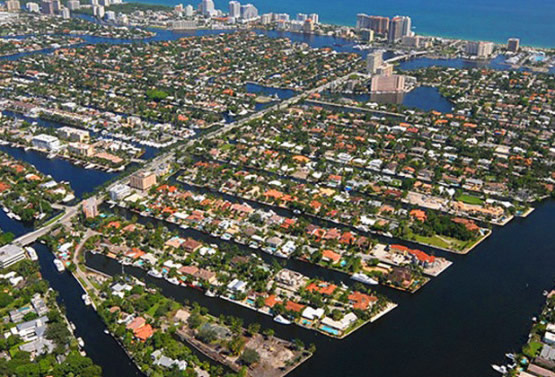
4 min read August 2019 — Home to more than 180,000 people and growing, Fort Lauderdale continues to work tirelessly to position itself as the premier economic powerhouse in South Florida. This growth and economic development of the city has not happened by chance, but rather, has been a result of well thought out, deliberate and collaborative initiatives from both the local government and community organizations. Two of the leaders driving this development are the independent taxing district known as the Fort Lauderdale Downtown Development Authority and the primary economic development organization for the city, the Greater Fort Lauderdale Alliance. Invest: Greater Fort Lauderdale had the good fortune to speak with both Bob Swindell, the president and CEO of the Greater Fort Lauderdale Alliance, and Jenni Morejon, the president and CEO of the Fort Lauderdale Downtown Development Authority. The conversations explored how the community is addressing climate resiliency, challenges facing development in the city and ultimately how they are working to help Fort Lauderdale achieve its true potential.


How have you seen the business community address resiliency as it pertains to climate change?

Jenni Morejon: Nearly 10 years ago, South Florida became a national and global leader in addressing climate change by developing the Southeast Florida Regional Climate Compact made up of Monroe, Miami-Dade, Broward and Palm Beach counties. Following this sophisticated public sector collaboration, the compact engaged the business community to explain why economic resiliency should be on their agenda. Now, groups like the Greater Fort Lauderdale Chamber of Commerce, the Alliance and the Broward Workshop, and their private sector members, better understand the importance of climate change and why investments in resiliency today will have an ROI and long-term tangible benefit.

Bob Swindell: One of our partner organizations, the Broward Workshop, hosted a scientist from Holland. The Dutch have been dealing with this issue for years, and if you look at their coastal cities, many are below sea level. Our limestone foundation is a little different from what they have in Holland and there are definite differences in geographic qualities, but they have been working to solve flooding issues for years. People in Broward County want to talk about solutions now because they understand that this is a real threat when they see high tides and king tides causing flooding. We really need to think about solutions and how we can work block by block to mitigate this threat. The reality is that it’s going to take more thought to identify the science that will build a system that truly works.

What are some of the most significant challenges facing Fort Lauderdale?

Morejon: Housing affordability is one of the most important issues affecting the present and long-term prosperity of our community. Increasing the supply of housing units in the urban core has been the traditional focus of the Fort Lauderdale DDA. With 5,000 new units under construction in Downtown Fort Lauderdale, this legacy issue requires a more complex and comprehensive solution, incorporating higher-paying jobs and better mass transit to reduce the cost of living. Last year, Broward County voters approved an Affordable Housing Trust Fund and the DDA is now advocating for the use of public land and local financial contributions from the Trust Fund to incentivize new subsidized housing.

Swindell: One challenge we talk about frequently, and this is where publications like Invest: are a real asset, is encouraging investment in Greater Fort Lauderdale. This is not necessarily a problem right now because we still have investment dollars flowing into the area, but I think reinforcing that this community is a good investment destination is vital to our sustainability. As a region, we must be reinforcing and supporting what companies like Stiles are doing when they make a private investment in Fort Lauderdale to create office space inventory, which we can use to attract new companies to the area. Stiles is building the first new corporate commercial high-rise building in 10 years, The Main. That is a great example of creating additional inventory, and I believe that our job is to try to help fill that building. It is important to have that inventory available.

What is the outlook for Greater Fort Lauderdale for the rest of 2019 and into 2020?

Morejon: Over the past 18 years, close to 6.8 million square feet of office, retail, multifamily and hotel space has been built in Downtown Fort Lauderdale. Today, another 6.2 million square feet is under construction with 4,600 new residential units, 600 hotel rooms, and two new Class A office buildings. A combined 400 floors of development are being added to the skyline, effectively doubling the scale of Downtown in just a handful of years. This new critical mass of people will help support the growing retail and restaurant scene and provide a range of housing options to attract a diverse workforce. We’ll also see progress on three important civic projects. The City of Fort Lauderdale and Broward County will be moving forward on the development of a new joint government campus, the site for a new Federal Courthouse will be determined, and with the recent passage of a $200 million parks and open space bond, the city and DDA will be kicking off investments in our Downtown public realm.

Swindell: We conduct an annual poll of chief executives in the region and it came back very positive. South Florida tends to enter a downturn or recession a little bit after the rest of the country has already felt the effects, and we tend to exit these situations quicker. A lot of that is due to international investment, and we do not see that slowing down this year. Based on the construction leasing rates that I’m seeing, the demand is there. With some of the federal tax law changes and what you can deduct for state income tax and state sales tax, there have been some additional opportunities created for the region through people seeking lower tax environments. We have branded our community for many years as providing a “Life. Less taxing.” Florida has been well-managed financially, we don’t have unfunded pension obligations and our state has a surplus every year. South Florida will continue to have another strong year.

To learn more about our interviewees, visit:

https://www.gflalliance.org/

https://www.ddaftl.org/

Spotlight On: Andrew Verzura, Principal, VCM Builders, Inc.

By Max Crampton-Thomas


2 min read August 2019 — The amount of construction in a region is almost always an effective gauge of how the local economy is doing. Broward County is among those regions that has become synonymous with an abundance of ongoing and future construction projects, which speaks volumes to its strong and growing economy. Invest: Greater Fort Lauderdale recently spoke with Andrew Verzura, Principal of VCM Builders, Inc, one of the construction companies benefiting from the strong market in Broward County. Verzura discussed trends in the market, how Broward County compares to other markets and what the future of the construction industry in Broward County may look like.

What trends are emerging in the renovation projects VCM is working on?

In construction, we have to constantly regroup because the market changes. In recent years, our company decided to focus on renovations. Some of the trends we are seeing call for cleaner designs because people want to get away from heavy woods and marble, which don’t hold up well. We are seeing more porcelain, lighter colors, fewer moldings and more technology-based demands. Most of these condo buildings that were built 15 years ago did not have the technology we have today, so I’m challenged in every condo building with elevator integration, security integration and package rooms. Millennials want the ability to run almost everything off their phones, and we have to try and meet that demand. 

How does Broward County compare with the other markets you work in? 

The difference with Broward County is that it’s a very small, close-knit community. You can meet the commissioners, public officials or the building official and they all remember you. They are extremely friendly to do business with because they have a set of rules and regulations they follow. Whenever we have issues, I can go speak with somebody. I would say that over the last 15 years, I’ve been able to work with the city to solve 95% of the problems we’ve had. People are coming here because the business environment is so friendly.

How have rising construction costs affected your business? 

Construction costs are very expensive, and they have not gone down. Compared to when we started building spec houses in 2013 to where we are now, construction costs are up 30%. Construction costs are deal breakers for a lot of projects that we are looking at because they just do not make financial sense. The banks are not going to finance projects when the numbers do not make sense and will not work. We have seen many of the large rental communities being funded by pension funds. Most of these projects, which are primarily funded by pension and real estate funds, have been looking for a 6% return.

How does the next year look for the construction industry in Broward County? 

My outlook for Broward is still very strong. There is competition but that is a good thing. I believe we will still see people buy properties here. We have a friendly environment for developing and a government that is pro development. As long as we have builders and developers continuing to focus on sensible building, then we should be in good shape for the next year. We have to be very careful and look at deals that make sense because there are a lot of inflated deals out there right now. People all think their property is worth so much money but in reality it is only worth as much as people are willing to pay for it. The market is leveling off, which is not a bad thing, and it will be interesting to see how the market accepts all the new rental buildings in downtown. 


To learn more about our interviewee, visit:

http://vcmbuilders.com

Spotlight On: Angelo Bianco, Managing Partner, Crocker Partners

By Max Crampton-Thomas


2 min read August 2019 — There are a multitude of reasons why people choose to relocate to Florida including a beneficial tax climate, ideal weather, and a bevy of real estate opportunities. Perhaps nowhere is that more evident than in Palm Beach County, and developers of commercial real estate in the region are reaping the benefits. Invest: Palm Beach recently spoke with Angelo Bianco, Managing Partner for one of the premier owner-operator and developers of commercial real estate in the region, Crocker Partners, who also happen to be the largest office landlord in Florida. Mr Bianco discussed with Invest: the impact Crocker Partners has in Palm Beach County, benefits of practicing commercial real estate in the county and what is on the horizon for investment within commercial real estate.

What impact does Crocker Partners have in Palm Beach County and South Florida? 

In the state of Florida, we are currently the largest office landlord. In Boca Raton, we are the largest office owner. We own thirty percent of all the office space in Boca Raton. We usually buy assets that have something wrong; for example, they are often poorly occupied and haven’t been operated the way that we would at Crocker Partners. We will perform renovations, reposition the assets and find new tenants. Then we either sell or re-capitalize the project to someone who wants to own more stable, secure assets. 


What are some of the benefits of practicing commercial real estate in Palm Beach County?

The best part of real estate in Palm Beach County is that people want to be here. Every year, more people move here. Because of our tax policies, Florida is an attractive place for the wealthy, and they tend to gravitate towards certain areas such as Palm Beach County. It’s fantastic because whenever you’re in a place where a lot of people aspire to be, they require office buildings and homes, so in turn there’s demand for new construction. Then the economy expands; people need to have rentals, apartments, storage and stores. It’s a great place to invest because, from one peak of the market cycle to the next, there’s always growth here. 


What trends are on the horizon for commercial real estate investment and growth in Palm Beach County?

Office development should be muted in the coming year. The reason is that a good majority of those moving here are wealthier people; they don’t drive a lot of demand in office space as most of them have hedge funds or family offices that do not require a lot of space; plus it costs so much to build new office buildings. You will have some projects, but it’s not going to be like it was in the past when there would be a tremendous number of cranes in the sky. But when it comes to multi-family development, we will continue to see growth. There will be a lot more rentals than we have had in the past. The United States by large is turning into more of a rental market than it has been, which doesn’t mean that single family homes are gone; it just means that people are much more comfortable renting.


To learn more about our interviewee, visit:

https://crockerpartners.com/

Spotlight on: Gary Jonas, President & Principal, The HOW Group

Writer: Yolanda Rivas

2 min read AUGUST 2019 — Philadelphia’s real estate market has been growing steadily over the last few years. Many international and national investors are targeting the sector, where rents are affordable, when compared to surrounding markets, and there are numerous low-risk investment opportunities. This week’s “Spotlight On,” with Gary Jonas, president and principal of the The HOW Group, illustrates the landscape for the city’s real estate industry, including the most in-demand services, top neighborhoods and the trends in the sector.

What HOW Group business lines are seeing the most growth in Philadelphia today? 

The two divisions that are seeing the most growth are construction and real estate. We attribute that to the hole in the market between companies working for themselves and building a small number of units and companies building hundreds of units. There is a spot in the middle where people need contractors to build 50 to 100 units. It is hard to find companies to fill that space because of the labor shortage. It is also hard to find companies that are capitalized enough to work in that space. Because we are able to fill that gap, we have seen significant growth in our construction division over the last year. There is a huge need for that type of work.

Our real estate company does a lot of new construction sales, which speaks to the Philadelphia market. We expect this division to double its business this year. We made a big investment three to five years ago to launch this division, and now we are seeing significant growth. Between those two companies, we are going to do north of $100 million this year.   


What areas of Philadelphia are most in demand in residential real estate?

There is a huge growth opportunity in neighborhoods where you can provide housing that is in the $300,000 to $400,000 range. That is an underserved market and there is a lot of development starting to happen in that price range. For example, Mantua is a neighborhood right on the edge of Schuylkill Yards, education centers and the development going on in the area, and it is a great place for these types of projects. University City has a 17% to 20% homeownership rate, but it’s the second-biggest job hub and there is a need for affordable housing in the area. The edges of University City are primed for significant growth. There is a neighborhood next to Grays Ferry, known as the forgotten bottom, which is another great area for development because of its location and access to major highways. We also expect to see growth in south Philly. 


What are some trends in Philly’s real estate sector?

We are seeing people who want to do co-living spaces. We are seeing a lot more buildings that provide a product similar to Airbnb. We are also starting to see more micro units because affordability is starting to become an issue. As construction and land costs continue to rise, we are seeing unit size starting to decrease and become a popular option. Because of the inadequate labor pool, we are also starting to see more manufacturing stock like modular and prefab units being placed.

We are always looking to create advancements within the construction division. We are working with manufactured housing developers to figure out ways to use technology to build in a more efficient and cost-effective way. We are working with foundation companies that use proprietary systems and build foundation walls that are more energy efficient and cost-effective than concrete. We are doing these things to differentiate our products.


How does The How Group impact the community?

Our charity division, HOW Charities, supports underserved families with homeownership and financial literacy. We want to get people to financial freedom and this year, we are donating two houses. We are working with the Building Industry Association of Philadelphia (BIA) to figure out ways to duplicate this effort on a broader scale. Along with the BIA, we are looking at solutions with the private sector toward affordable housing and job placement within the industry. There is a lot of momentum because of how great the sector and the city are performing.


To learn more about our interviewee, visit:

The HOW Group: https://howgroup.com/ 

Top Philly Neighborhoods for Commercial Real Estate

by Yolanda Rivas


2 min read AUGUST 2019 — Philadelphia’s real estate sector has been in growth mode for a long time. Affordability, a strong economy and the city’s strategic location are some of the drivers behind investment. According to local market leaders, King of Prussia, Fishtown and Kensington are among the neighborhoods experiencing a high volume of commercial real estate activity.

“The construction and new development activity going on in the King of Prussia market is very attractive. Numerous businesses and baby boomers are moving to the area. There is more land available, beautiful housing stock, good school districts and less traffic congestion,” Sean Beuche, regional manager of Marcus & Millichap, said in an interview with Invest:.

King of Prussia’s proximity to a variety of interstates, strategic location and the emerging growth and development going on in the area, makes it an attractive destination for real estate investors. In addition, King of Prussia is home to the largest mall in America by leasable space, which is another major driver for retail activity. 

Another area of high activity is the I-78/I-81 Corridor, especially in the industrial and logistics space. 

“The shift to e-commerce and modernized supply chains have not only created one of the largest warehouse distribution markets in the world in our backyard, the Pennsylvania I-78/I-81 Corridor, but demand continues to be robust for Philadelphia industrial properties. A variety of users, including retailers and third-party logistics companies, are driving demand so they deliver goods to consumers more efficiently than ever before,” Adam Mullen, market leader for the Greater Philadelphia Region at CBRE, told Invest:.

CBRE’s Pennsylvania I-78/I-81 Corridor Industrial MarketView Q2 2019 report showed that the corridor saw occupancy gains of 1.9 million square feet and observed a total of $135 million in capital investment. 

Other areas attracting interest are Point Breeze, which is gaining value, while Fishtown and Kensington have been hot for some time. According to Beuche, areas further along the Main Line region are also seeing numerous investments. Lehigh Valley and Central PA markets, for example, are driving many new investors into Pennsylvania

“As the yields continue to deliver in some of these secondary and tertiary markets, investors want to move outside of areas where they’re getting squeezed by some popularity. There is a bit of a ripple effect being created by the economy being strong for a long time, and many of the investments that have been made or taken in these core markets are pushing investors further out,” Beuche said. 

Opportunity Zones are also an attractive area to build market rate, workforce housing and to expand commercial development. 

“In Philadelphia, land is still relatively cheap compared to other getaway northeastern markets. Some of the most attractive undeveloped parts of the city are in Opportunity Zones. For example, in Center City East, on the west side of University City, on North Broad Street and in South Philadelphia,” Managing Partner at Alterra Property Group Leo Addimando told Invest:.  


To learn more about our interviewees, visit:

Alterra Property Group: https://alterraproperty.com/ 

CBRE: http://www.cbre.us/people-and-offices/corporate-offices/philadelphia 

Marcus & Millichap: https://www.marcusmillichap.com/about-us/offices/philadelphia-pennsylvania 


Spotlight On: David Gwynn, District Seven Secretary, Florida Department of Transportation

Writer: Max Crampton-Thomas

2 min read July 2019 — Challenges with transportation, traffic and transit options are not new issues for the Tampa Bay region. As the area continues to make strides in its economic and population growth, there is a heightened emphasis on finding solutions. Invest: Tampa Bay recently sat down and discussed these issues with David Gwynn, District Seven Secretary for the Florida Department of Transportation. Gwynn spoke about how FDOT is working to mitigate these challenges, enact forward-thinking initiatives and his outlook for transportation in Tampa Bay for the next year.

What is the biggest initiative for Florida Department of Transportation in District 7? 

We have been working on a program called Tampa Bay Next. Over the last two and a half years, we have had hundreds of public meetings with big and small interest groups, elected officials and general members of the public, which we used to gather some great input. A key issue that we identified was transportation. Although we recognize that our interstate needs some work, there are other areas, like the downtown interchange, where infrastructural improvement would have a pretty massive impact on the surrounding neighborhoods. As a result, we are focusing on ways we can improve transit and intersections in those areas to help make them safer, while also not requiring a significant expansion of the highway footprint.

How are you working to mitigate the traffic issues in the region? 

We have come to the conclusion that simply widening and continuing to build more roads is not going to completely mitigate this issue. We have shifted our efforts to also look at multimodal solutions, like the streetcar system in downtown Tampa. Until last year, it was underutilized, but we recognized that this could be a good part of a transit system. The question was how to make it more attractive for people to start riding it. What we found was because there was not a lot of local money to fund it, it was only running from 11 in the morning until 8 at night. We were able to get a grant to allow the streetcar to run from 7 in the morning until 11 at night and on a more frequent basis. The ridership has since tripled, and that is important because we now have a strong case for the federal government to invest in expanding that streetcar system further out into Tampa Heights. If we can get federal funding, they will put 50% of the cost in, the locals put in 25%, and then our department covers the last 25%. 

What is the outlook for the transportation sector in Tampa Bay for the next year?

The passage of the sales tax in Hillsborough County was a big step forward because the local money allows us to do things with state and federal matching money. We will start to see an increased frequency of buses, better stations and more opportunities to expand the systems. On the highway side, we continue to build road and safety improvements. Four hundred of our signalized intersections that had the highest number of crashes are in the process of receiving new LED lighting that will illuminate these intersections at night much better than they have been. We are going to start the Howard Frankland Bridge project, and the Gateway Expressway will probably be completed in another two years. 

To learn more about our interviewee, visit:

https://www.fdot.gov/home

Top 5 Reasons St. Petersburg is the Place for Young Professionals

Max Crampton-Thomas

2 min read July 2019   St. Petersburg, a community and city deeply entrenched in Florida’s history since being incorporated in 1903, is now in the midst of a revitalization and what is being deemed the city’s second golden age. Thanks to collaboration between the city and organizations like the St. Petersburg Area Economic Development Corporation, who have been spearheading the “Grow Smarter Strategy,” which aligns the many community organizations involved in economic development efforts while providing a road map for each organization to operate towards the same goal, St. Pete has built an identity that conjures a balanced mix of tradition, innovation, forward thinking and sustainability, all culminating in a shared sense of pride in both its younger and older demographics. With the recent economic and community growth in St. Pete and the Tampa Bay region, there has naturally been an influx of young professionals and their families into the area.

Invest: Tampa Bay explores the Top 5 reasons why St. Petersburg is the place for young professionals to live, work and play. 

The Arts Scene: Home to seven distinct arts districts, world-famous museums and many cultural attractions, St. Petersburg is recognized as an arts and cultural hub. Anchored by widely recognized institutions like The Salvador Dali Museum, the Mahaffey Theater, which is home to the Florida Orchestra, the Museum of Fine Arts and many more, the city should be a draw to any young professional with an interest in consuming, partaking or even working within the arts. 

Walkability: While traffic, transportation and transit issues run rampant through most metropolitan areas in Florida, downtown St. Petersburg boasts a walkability score of 91 and a bike score of 92, according to walkscore.com. These scores, combined with St. Petersburg’s emphasis on environmental sustainability, make Downtown St. Pete a paradise for those young professionals who are looking to ditch their car for alternative forms of transportation. The walkability factor in Downtown is also ideal for those who desire the live, work, play lifestyle as more restaurants, businesses and residential developments continue to become available in what is already a vibrant and bustling area.

The Beaches: Access to even a single beach is a luxury that many people may never know, but for those in St. Petersburg there are a multitude of options to choose from. Each of St. Petersburg’s beaches offers a unique experience, ranging from Ft. DeSoto Beach located on a 900 acre county park to Spa Beach and North Shore, the two beautiful, public beaches along the St. Pete Downtown waterfront. The accessibility of these beaches to the residents of St. Petersburg are sure to appeal to any young adults looking for the beach lifestyle in an urban environment.

Vibrant LGBTQ+ Scene: For the young professionals seeking an environment where all are welcomed, the city of St. Petersburg is that place. As best expressed on stpete.org, “St. Pete, FL extends a warm welcome to all who share in the city’s vision that the sun shines on all who come to live, work and play here, including the LGBT population.” Aside from having a progressive and forward-thinking leader in Mayor Rick Kriseman, USA Today’s 2019 No. 2 Pride Festival to attend and a slew of other inclusivity initiatives, St. Pete has earned a perfect score of 100 on the Human Rights Campaign’s Municipal Equality Index four years in a row. 

Career Opportunities: St. Petersburg is home to nearly 16,000 businesses, a population of almost 260,000 residents, a vibrant tech scene and an annual growth rate that has tripled since 2010. With growth opportunities in major industries like marine sciences, financial services, creative arts and more, the city is an ideal location for those who are looking to develop and grow in their professional careers. 


For more information visit:

http://www.stpete.org/

https://www.walkscore.com/FL/St._Petersburg/Downtown

Spotlight On: Brett Forman, President & CEO, Trez Forman Capital

By Max Crampton-Thomas


2 min read July 2019 — The demand for residential and commercial real estate development in Palm Beach County is at a high, and developers are jumping at the opportunity to capitalize. This spike in demand has not only been beneficial to developers but also to those who are helping fund this development. Invest: Palm Beach recently sat down with Brett Forman, President and CEO of Florida-based, commercial bridge lender Trez Forman Capital. He discussed how Palm Beach County is uniquely positioned for real estate development, and how his company is benefiting from the boom in the market.

Where are you seeing the highest demand for your services? 

We experience the highest demand from developers of condominiums or multifamily rental apartments. There are a variety of financial firms pursuing these type of deals, but we offer something slightly different. We’re competing with banks every day, and we’re competing with more traditional mezzanine players and preferred equity investors. As a result, we have to be creative and offer a unique one-stop shop, including higher proceeds than the banks and non-recourse options. 

How is Palm Beach County a unique market for real estate development? 

Palm Beach County is home to some of the most expensive residential real estate in the world. On the opposite end of the spectrum, it’s also home to some of the poorest areas. So when you talk about Palm Beach real estate, you’re talking about a very diverse asset mix.

Trez Forman is more or less asset-agnostic; we lend against residential real estate, whether it’s apartment communities for rent, single-family houses for rent or condominiums for sale. We don’t necessarily construct homes, but we finance the lot on which developers do the horizontal development. 

What differentiates Trez Forman Capital from a traditional bank? 

It’s very easy to understand what differentiates us from the banks, since the banks are highly regulated. They have to do things according to what the regulatory agencies prescribe, and their leverage is usually much lower and typically requires recourse. What we’re offering is a much higher loan-to-cost solution. Trez Forman basically can take what the bank and the preferred equity investor offers and combine it to provide our clients with a one-stop solution that has surety of execution. We like to under-promise and over-deliver. We can fund a deal in 30 to 45 days, unlike a bank that may not be able to lend in that timeframe.


To learn more about our interviewee, visit its website:

https://www.trezforman.com/

Top 5 Trendiest Neighborhoods in Fort Lauderdale

By Max Crampton-Thomas


2 min read July 2019 The growth of the Fort Lauderdale area is a true testament to the collaborative efforts of the city’s private and public sectors. The positive effects of this growth can be witnessed in the development, redevelopment and preservation of the city’s neighborhoods. 

Here, Invest: Greater Fort Lauderdale explores Fort Lauderdale’s five trendiest and up-and-coming neighborhoods.

Victoria Park: A beautiful mix of traditional “Florida” homes and new development, Victoria Park has long been a staple neighborhood in Fort Lauderdale. The revitalization of the area is thanks to its close proximity to Fort Lauderdale Beach, Las Olas Boulevard and cultural centers like the Broward Center for the Performing Arts. 

Invest: Greater Fort Lauderdale spoke with Doron Broman, managing partner of Moderno Development Group, about its investment in the development within Victoria Park. “We are tapping into the near downtown areas because more people are seeking to live in more walkable areas, where they need to spend less time commuting to work and experience a more urban lifestyle,” Broman said. “We are building very modern, urban townhouse rental communities in trendy Victoria Park.”

Tarpon River District: Located just north of Davie Boulevard and west of Andrews Avenue, Tarpon River District is a neighborhood whose appeal is thanks to its proximity to downtown Fort Lauderdale and emphasis on family life. With a recent influx of mixed-income homes and apartments, access to some of the cities best parks and the locally famous Tarpon River Brewing company, this neighborhood will continue to be a top choice of young families. 

“We are keen on Tarpon River District, which we believe is the new cool work-live-play hub, located right in the center of Fort Lauderdale,” Broman told Invest:. 

Flagler Village: Twenty years ago, this neighborhood was a rundown warehouse and residential district. Today, Flagler Village is one of the trendiest areas in Fort Lauderdale. The collaboration between artists and developers has transformed the neighborhood into a premier arts district with offerings of luxury rental apartments, restaurants and arts and culture. The Village is also home to the Brightline train station, which supplies a steady flow of traffic into the neighborhood daily. 

“Many developers have looked to the beach and Flagler Village areas in Fort Lauderdale. We are also invested in Flagler Village,” Broman said

Las Olas Isles: Due to its proximity to Las Olas Boulevard and Fort Lauderdale Beach, Las Olas Isles is the perfect mix of retail, restaurants and a coastal lifestyle. Luxury living like this comes with a hefty price tag. Homes in the area range from $1 million to $40 million and rental units are in the thousands. 

Colee Hammock: Not only is this one of the oldest neighborhoods in Fort Lauderdale, it is also one of the most diverse and eco-conscious in the city. Situated next to the Intercoastal Highway and the New River, Colee Hammock offers residents a wide variety of homes and walkability to theaters, restaurants, retail and entertainment venues. This eclectic neighborhood is home to a wide demographic, from the working class to the wealthy. 

Invest: Greater Fort Lauderdale discussed development in Colee Hammock with Andrew Verzura, principal of VCM Builders, Inc. “We are working on a residential project in Colee Hammock, a historic neighborhood in Fort Lauderdale established in 1913. We are constructing a home that is being built around some of the area’s oldest and mature foliage. This is a neighborhood that has a special relationship and respect for the nature within it.” 


For more information visit:

http://vcmbuilders.com/

https://www.modernodev.com