How e-commerce is feeding Orlando’s booming retail market

How e-commerce is feeding Orlando’s booming retail market

Writer: Yolanda Rivas

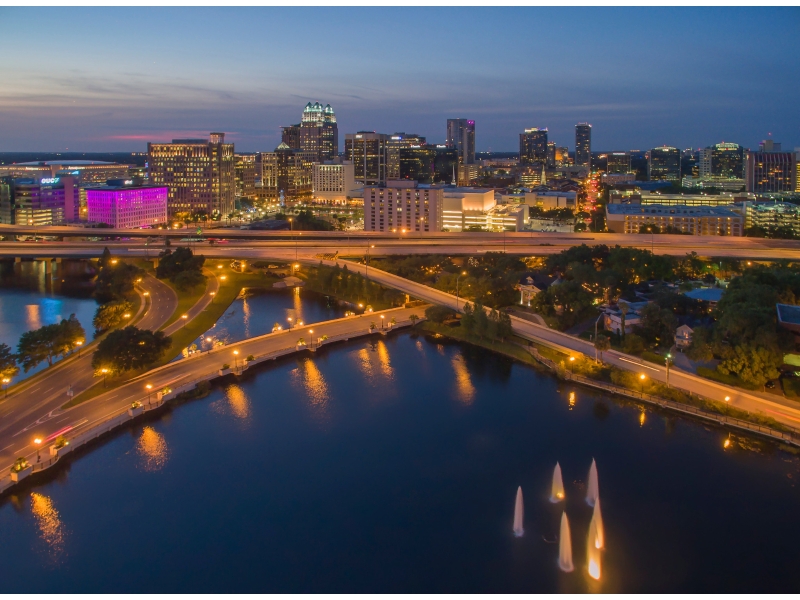
2 min read SEPTEMBER 2019 — At times when big retailers such as Sears, Charming Charlie’s and some malls are struggling to survive, Orlando’s retail sector continues to thrive. The city’s rapid population growth and robust economy present an ideal environment for retailers. Rather than having a negative effect on brick and mortar stores, e-commerce has had a positive impact in Orlando’s retail market, according to industry leaders who recently met with the Invest: team.

“We are seeing a blend of both online retail presence and brick and mortar, and that is a trend that we will continue to see for the next two to four years. Retail is going through an evolution, and that is not necessarily a negative thing. We will see significant changes over the next few years,” SRS Real Estate Partners Managing Partner and Market Leader for Orlando & Tampa Cindy Schooler, told Invest:.

Colliers International’s 2019 Q2 Central Florida Retail Market Report showed the area has a 5.3% vacancy rate. The report points out that Orlando’s regional growth has fueled investor demand for retail product to an all-time high. Rental rates have increased to $50 per square foot in Central Florida’s top retail corridors, while Orlando’s tertiary markets have increased in tenant demand. 

“There are two specific factors to consider in terms of retail performance: the number of people moving and vacationing in the area. If those two numbers are up, then there will probably be an up retail market. In Orlando, those numbers keep going up and the retail market is doing very well. In Central Florida, we have healthy demographic growth and a big tourism industry that is making the retail sector substantially bigger,” John Crossman, CEO of Crossman & Company, told Invest: in a one-on-one interview. 

Crossman explained the impact of “the halo effect,” which happens when an online retailer opens physical stores and, most times, their online sales go up. Similarly, when an online retailer closes physical stores, their online sales go down. 

“When customers buy something online and return it to a physical store, they typically end up spending more money in the store. In the Orlando area, we’re not seeing people radically closing stores. We are seeing a combination between their physical and online presence,” he said. 

An example of the e-commerce growth in Orlando is Kroger and Ocado’s second customer fulfillment center. Earlier this year, Kroger Co. and UK-based online grocery partner Ocado Solutions confirmed the location for a 375,000-square-foot fulfillment center in Lake County. The center will supply online customers only and its expected to create 506 jobs and add $63 million in annual economic impact. 

Orlando’s tourism sector also provides a particular advantage for businesses to test new products, according to Schooler. “We are a test field in the area because of the tourist market. A lot of entrepreneurs bring concepts here and test their brands because of the diversity in the area. That allows clients to test lines that they would never be able to test in traditional retail markets,” Schooler said. 

According to Colliers 2019 Q2 retail report, approximately 980,571 square feet of construction was underway by the end of the second quarter. This is the highest amount since before the Great Recession. 

To learn more about our interviewees, visit:

SRS Real Estate Partners: https://srsre.com/ 

Crossman & Company: https://www.crossmanco.com/ 

Colliers International: https://www2.colliers.com/en 

Spotlight On: Ronnie Felder, Mayor, City of Riviera Beach

Spotlight On: Ronnie Felder, Mayor, City of Riviera Beach

By Max Crampton-Thomas


2 min read September 2019 — When Ronnie Felder won the runoff race for mayor in March, he had campaigned on the idea of revitalizing the city of Riviera Beach. Invest: Palm Beach sat down the mayor to discuss how he is encouraging economic revitalization and development in the city by rebuilding relationships with the local business community, specific industries he is targeting as part of his economic development plan and what the next few years will look like for Riviera Beach.

How are you working to strengthen the city’s relationship with local businesses? 

One of our goals is to meet with every business in this city to become more familiar with the organizations that are out there and their needs. We are learning through these relationships that a lot of these companies want to hire individuals from Riviera Beach but there is a lack of experienced workforce. We want Riviera residents to know that these job opportunities exist, and as the mayor, I feel it is my responsibility to make sure that happens. In past years, Riviera Beach did not have this established dialogue with the business community. For us to progress as a city and to have the trust of the business community, we must continue to build and strengthen this dialogue.


What are some industries you are targeting to help grow the city’s economy? 

We need more hotels and restaurants, which is a significant way for us to begin to push this city into the future. We do not have enough hotels to accommodate a large influx of tourism, which is impeding our growth. We have to be aggressive in our development efforts. I want to see cranes throughout Riviera Beach because when you see cranes in the city, that means economic growth, it means we are tapping into our potential and other businesses will see this and also want to be part of our city.


What are your short-term goals for the city’s economic development? 

We want to see exponential growth in the next two years. We will be working with businesses to encourage them to hire our young people when they graduate so we can retain some of that local talent. We have to begin to address the long-neglected infrastructure improvements and redevelopment of our public facilities like city hall, the police station and our schools. Everyone from the private and the public sectors should start seeing the benefits from our efforts to grow the local economy.


To learn more about our interviewee, visit:

http://www.rivierabch.com/

Spotlight On: Joseph Cox, President & CEO, Museum of Discovery and Science

Spotlight On: Joseph Cox, President & CEO, Museum of Discovery and Science

By Max Crampton-Thomas

2 min read September 2019 — To be considered a staple within the growing economic landscape of Broward County is no small accomplishment, especially as new options seem to become available to the public on a weekly basis. There has to be a real sense of connection and purpose formed with the public, as well as being an established economic driver, for a business or institution to achieve this status. Invest: Greater Fort Lauderdale had the opportunity to speak with Joseph Cox, the President & CEO of one of the staples of Broward County the Museum of Discovery and Science. Throughout the course of the discussion Mr. Cox made note of how the museum is working to address the lack of STEM workforce in Broward, how they are using new technology to their benefit, the counties support of institutions like the museum and the museum’s important role as an economic driver in the region.

How is the museum helping to address the lack of STEM workforce in Broward County? 

South Florida is powered by industries that thrive on a strong, vibrant STEM workforce. From aviation to tech, there is a unique voice in the local workforce of innovators, tinkerers and problem-solvers.  The Museum of Discovery & Science plays a crucial role in the community by introducing children of all ages to the exciting opportunities offered by careers in STEM. We recently opened The Leighton Family Hangar, our innovative Makerspace exhibit, a hands-on collaborative experience that fosters the learning of new skills, creating products and sharing ideas. Through partnerships with corporations, universities, technical colleges and, of course, our local school system, we will be offering an exciting range of programs and events that allow students to gain valuable skills for their future and ultimately our community’s future. The Hangar will inspire new generations to embrace the engineering design process as they develop, innovate and problem-solve.


How important is the adaptation of new technologies to a science museum?  

One of our goals at MODS is to connect people to inspiring science, and this includes state-of-the-art technology. Technology at the Museum is powered by our most vital resource: our staff and their creativity. Innovative technology is one of the tools our staff uses to help bring the exhibitions and programs to life. We are experimenting with the integration of augmented and mixed reality in exhibits and educational programs, as it truly is an opportunity to contribute to a new path of learning in museums. We are thrilled to have strong partnerships with Broward-based technology companies such as Citrix, Florida Power & Light and Magic Leap that allow us to drive innovation and technology forward in an accessible and meaningful way.


What is your view of the county’s support for arts and cultural institutions?

The Broward County Cultural Division clearly champions the arts in our community. The Cultural Division’s ongoing investment in cultural programming, public art and capital projects reflects the value attributed to the arts by the County.  We are fortunate to have an incredibly vibrant cultural community where collaboration is celebrated. The Museum considers the Cultural Division a partner as we work together to strengthen local cultural offerings, from exciting exhibits and award-winning education programs to breathtaking IMAX documentaries.


How is the museum an economic driver in the Broward County region? 

Beyond the cultural impact of the Museum, we also play a role in the local economy, with 150 employees and more than 400,000 visitors annually. A recent Americans for the Arts survey estimated our economic impact to be more than $22 million. The Museum purchases goods and services locally, hires and trains staff and supports many social service agencies with free and reduced admission. Whether having lunch in the neighborhood or traveling from out of town for the weekend, our visitors help drive the local economy and, with over 15% of our visitors coming from overseas, we are supporting the diverse offerings of our destination.


To learn more about our interviewee, visit:

https://mods.org/

Miami A Bridge for US-Latam Tech Investment

Miami A Bridge for US-Latam Tech Investment

Writer: Sara Warden

2 min read SEPTEMBER 2019 — It seems that more and more US cities are being labeled tech hubs every day, but Miami-based companies see a unique opportunity in the state that cannot be provided elsewhere. Instead of locking themselves into one market, Miami can provide startups a launch pad into the vast untapped Latin American market, and tech startups are flocking to the city in droves to take advantage of these opportunities.

Possibly the most famous is SoftBank Group, a Japanese investment firm that has set up roots in Miami to gain access to Latin America’s infant venture capital market. SoftBank has pledged $5 billion to the Latin American market, with some of that amount already invested to date. In fact, by the first half of 2019, these kinds of investments in Latin America have almost reached the $2.4 billion invested in all of 2018 – and it could not be done without Miami.

“This is the kind of capital that has never been seen before in Latin America,” Andre Maciel, a managing partner at SoftBank Group told Bloomberg.

About 70% of Miami’s population is composed of Latinos, providing the city with a unique workforce that can capture the attention of untapped Latin American entrepreneurs from a US base. “Part of our secret sauce is that we’re a city built by immigrants. Miami is a very young city, but we have the grit and resiliency of those people. Miami is a startup in and of itself. If you’re willing to roll up your sleeves, you can make it here,” Felice Gorordo, the CEO of eMerge Americas told Forbes.

But Miami is not just a base for investment in other regions. It also has the credentials that make it one of the best places to invest in the US. It comes seventh nationally for venture capital investments and in the first half of 2019 alone, around $1.54 billion was invested in South Florida tech companies.

SoftBank also made a multimillion-dollar investment at the end of 2018 in ParkJockey, making the company Miami’s first unicorn and one of the most valuable parking companies in the world. Building on the sharing economy model, ParkJockey allows landlords to rent parking spaces to large-scale companies like Uber and Lyft. The reception to this technology says “a lot about the ability to build a business in Miami and take it to significant size,” founder Ari Ojalvo told the Miami Herald.

“Miami has a tremendous tech talent pool, and we’re fortunate to be located in this burgeoning tech market,” said Taunia Kipp, says Executive Vice President of Corporate Marketing & Communications at Kaseya, an IT management software company, on Refresh Miami.

Kaseya is one of the most recent success stories for a Miami-based tech firm. Last month, the company attracted a $500 million investment from San Francisco-based investment firm TPG. Kaseya CEO Fred Voccola said in a press conference that the Miami growth will not stop as the company heads for an IPO within the year. “We want to open up people’s eyes to the talent that is here—and that it can be scaled,” Voccola said.

Another IPO that’s on the cards could be Buenos Aires-headquartered firm Technisys. In May, it closed a $50 million funding round. And when it wanted to establish a footprint in the United States, Miguel Santos, one of the three founders told Forbes that there was no question that Miami should be the location. “We are here to stay and the plans are big. The next stage is probably a public offering in say, three to four years,” he said.

To learn more about our interviewees, visit:

https://group.softbank/en/

https://www.technisys.com/

https://www.kaseya.com/

https://www.parkjockey.com/

https://www.emergeamericas.com/insights/

Miami’s Industrial Real Estate Has Buyers Lining Up

Miami’s Industrial Real Estate Has Buyers Lining Up

Writer: Sara Warden

2 min read SEPTEMBER 2019 — Miami is an attractive place to live and a business hub, but that also means its real estate doesn’t come cheap. In the huge land expanses involved in industrial real estate, assets cost a pretty penny. But the dynamics of the Miami market mean developers are not shying away from putting their hand in their pocket.

A key example of this is the recent sale of the three-building, 74-acre Centergate development at Gratigny in Hialeah for $178 million, Florida’s biggest sale of the year. Real estate giants CBRE closed the sale on behalf of the buyer.

“Centergate is one of the largest industrial offerings to come for sale in South Florida in recent years,” said CBRE Executive Vice President Jose Lobon in a news release. “Given the challenges to aggregate square footage in our market, Centergate presented a unique opportunity to acquire critical mass in one of the most desirable logistics markets in the nation.”

The sale can be broken down to a price of $111.25/ft2, a steal compared to recent deals in the greater Miami area. At the end of last month, institutional investor The Blackstone Group bought the 14-acre Airport Trade Center property west of Miami International Airport for $56 million, or $152/ft2.

Also this month, CBRE closed another multimillion-dollar industrial real estate deal, selling the five-building Miramar industrial portfolio to Stockbridge Capital. This deal equates to an eye-watering $192/ft2.

“It’s hard to buy industrial real estate in South Florida. It’s very competitive. Particularly when you see something of this size, multiple buildings,” Lobon added. “The opportunity to be able to buy in one stroke over 600,000 square feet of Class A, high-quality institutional industrial real estate in South Florida, those opportunities don’t come around that frequently.”

With these values, it’s not hard to see why other industrial real estate investors have made Miami a prime focus in their business plans. NYSE-listed real estate corporation Terreno has made Miami a cornerstone in its six-market strategy. 

“Terreno acquires, owns and operates industrial real estate in six major coastal US markets. Exclusively. Functional, flexible, infill real estate located at the intersection of growing demand and limited, or even shrinking, supply,” the company says on its website.

E-commerce is one of the reasons why industrial real estate close to the city limits is in such high demand in recent years. Miami is the sixth-most densely-populated city in the United States and the metropolitan area is home to over 6 million people. 

A 2017 study by San Francisco technology company Trove Technologies found that Florida is No. 1 for discretionary income in the South Atlantic region. Discretionary income is the amount left over after paying for the essentials such as rent and bills.

A huge captive population combined with sizeable disposable income is not only good news for e-commerce, but also for the US industrial real estate giants that are betting on the greater Miami area.


To learn more about our interviewees, visit:

https://www.cbre.com/about

https://www.blackstone.com/

https://stockbridge.com/

https://terreno.com/

Spotlight On: Bret Perkins, Vice President, External & Government Affairs, Comcast Corporation

Writer: Yolanda Rivas

2 min read SEPTEMBER 2019 — The Comcast Technology Center just received one of the development industry’s biggest awards: the 2019 Urban Land Institute’s annual Global Awards for Excellence. The Philadelphia building won the recognition along with 11 other projects from around the world. The $1.5 billion development was designed for namesake tenant Comcast, which has 4,000 employees in the tower. The American telecoms company has had an enormous impact on Philadelphia’s economy and the Invest: Philadelphia team sat down with Comcast Corporation Vice President of External & Government Affairs Bret Perkins to explore the company’s impact and future plans for the Philadelphia region.

What impact will the Comcast Technology Center have on Philadelphia’s economy over the long term?

Comcast has had an unwavering commitment to the city of Philadelphia for over 55 years, and the addition of the Comcast Technology Center to our campus is the latest example. We have approximately 4,000 engineers, software developers, and technologists developing next-gen products in the Comcast Technology Center, and we are recruiting and trying to retain world-class technology talent here in Philadelphia. The fact that we have invested and built this campus in Philadelphia is a statement unto itself and gives a sense of what we think about this city, which is our home. This is a space where we can recruit, retain and grow a talent base to build world-class products. 

The Comcast Technology Center is also the new home of NBC10 and Telemundo62, providing them a state-of-the-art studio to deliver the best news to the Philadelphia community.  The top floors are occupied by Four Seasons Hotel Philadelphia, which will offer five-star accommodations with magnificent views, fantastic restaurants, and will deliver an unparalleled experience…all contributing to and supporting the success of Philadelphia.


How does Comcast support the local startup community?

LIFT Labs and our team that does entrepreneurial engagement is our front door to the startup community around the country. LIFT Labs in Philadelphia is particularly unique because we have a space that is really intended to be a convening spot for the startup and entrepreneurial community. It’s about us working with the startup community and entrepreneurs to help them build their businesses, but also for us to learn from them. We also have the Comcast NBCUniversal LIFT Labs Accelerator, powered by Techstars, which is designed to support connectivity, media and entertainment startups. Our inaugural Comcast NBCUniversal LIFT Labs Accelerator took place in summer 2018, and eight out of the 10 companies that participated ended up with some sort of proof of concept partnership with Comcast NBCUniversal. The participants get to meet with mentors and coaches who are world-class in everything they do. This a way for us to help build this ecosystem and partner with startups. 


What impact will the 3,500-seat esports arena have on the city? 

Comcast Spectacor and The Cordish Companies recently announced they will build the first purpose-built facility of its kind in the country dedicated to esports. It will also be the home of the Philadelphia Fusion, our Overwatch League esports team. This is a great development for the city. It will bring additional energy and become a hub for esports. There are a number of businesses that have built up around esports, such as N3rd Street Gamers, an amateur and semi-pro esports network. Our dedicated esports arena is part of a huge investment we are making in the Philadelphia Sports Complex, which includes the $250 million renovation of the Wells Fargo Center; the creation of Pattison Place, an $80 million, Class-A office tower; and Fusion Arena, which is a $50 million investment. That is a significant amount of investment in Philadelphia and another vote of confidence in our home city.


To learn more about our interviewee, visit:

Comcast Corporation: https://corporate.comcast.com/ 

LIFT Labs: https://lift.comcast.com/ 

Comcast Spectacor: http://www.comcastspectacor.com/  

Fusion Arena: https://fusionarenaphilly.com/

Blue Zoning Orlando

Writer: Yolanda Rivas

2 min read SEPTEMBER 2019 — A new community assessment and feasibility analysis in Orange County is aiming to transform and improve local residents’ wellness and reduce health risks to make the county a more prosperous place to live, work and play.

The program is being brought to Orange County by the Orlando Economic Partnership’s Foundation for Orlando’s Future and leaders in the business community, who are working with Blue Zones to begin building a plan for a well-being transformation.

“As one of the fastest-growing metro areas in the country, Orlando is attracting 1,500 new residents every week. The Foundation is responding in innovative ways to make sure the region’s rapid urban expansion goes hand-in-hand with equitable and inclusive growth,” Orlando Economic Partnership President and CEO Tim Giuliani said in a prepared statement. 

Blue Zones helps people live longer and better through community transformation programs that lower healthcare costs, improve productivity and boost national recognition as great places to live, work, and play, according to its website. Becoming a Blue Zones Community is a three-phase process, which starts with Phase I, the Readiness Assessment. During this phase,  experts collaborate with leaders to assess readiness and build a plan for change.

“Working with local leaders, we will find the best way to apply global solutions to the local context. The final roadmap for community transformation will include strategies for optimizing built environment, food systems, financial literacy, tobacco, alcohol, happiness, and well-being policies so that people are constantly nudged toward healthier choices, behaviors, and lasting habits,” Dan Buettner, Blue Zones founder and National Geographic fellow and explorer, said in a written statement.

Blue Zones Project communities have experienced double-digit drops in obesity, smoking and BMI (body mass index), millions of dollars of savings in healthcare costs and measurable drops in employee absenteeism. As stated in its website, through its community-wide approach to well-being, Blue Zones improves or optimizes city streets (smoking policies, bike lanes, sidewalks), public spaces (parks, lakes, walking paths), schools (cafeterias, safe walking paths to school), restaurants, grocery stores, employers, faith-based organizations, and community involvement.

From Sept. 9-13, Buettner and his world-renowned team of experts will meet with community leaders to create the framework for a well-being policy bundle that it hopes will transform Orange County.

“This effort is part of the mission of the Foundation for Orlando’s Future, created by the Orlando Economic Partnership, to equip the region’s leaders with research and strategies that help them plan for the future,” said Giuliani.


To learn more, visit:

Orlando Economic Partnership: https://www.orlandoedc.com/Home.aspx 

Blue Zones: https://www.bluezones.com/activate-orange-county/

Spotlight On: Mark Hardy, Vice President & Regional Manager, Universal Engineering Sciences

Spotlight On: Mark Hardy, Vice President & Regional Manager, Universal Engineering Sciences

Writer: Max Crampton-Thomas

2 min read August 2019 — Growth in the Tampa Bay construction industry has not only benefited construction and real estate development companies in the area, it has also been a massive plus for engineering firms. Quality development and construction is dependent upon the availability of highly professional and proficient engineers, and demand can quickly outweigh supply. Invest: Tampa Bay recently sat down with Mark Hardy, vice president and regional manager for Universal Engineering Sciences’s Tampa Bay office. Among the many topics covered, Hardy discussed the growth in demand for building inspection services, a growing focus on environmental sustainability and what the next year will hold for his office.

Which of your services are seeing the most growth in demand? 

We are seeing tremendous growth in demand for our building inspection services. A new law signed by Gov. DeSantis, allows companies like ours to provide plan review and inspections that municipalities would normally conduct. While the private provider option has been available since 2002, the new law reduces the time frame and cost that this would normally entail. As a private firm we can help accelerate the process during a time when municipalities are overwhelmed.


How much of a focus is environmental sustainability to your clients? 

As new projects get underway, they are hitting some roadblocks because they are infringing on wetlands. We have hired an individual who specializes in wetlands and endangered species so we can better assist clients in finding the balance between being able to do a new development and still remain cognizant of those environmental areas. Another area where we are seeing a lot of expansion is renewable energy projects, like solar farms; we are getting frequent calls to provide expertise on how to get them planned and constructed.


What does the next 12 months look like for your office? 

We have a lot of projects on the books that haven’t started yet but are on the horizon for the new year. This includes a new performing arts center and new contracts with Pasco County Schools, Hillsborough County Public Schools and Hillsborough County for infrastructure improvements. This year, we surpassed 100 employees at this office and we will look to build off that momentum. The remainder of 2019 and 2020 are shaping up to be really great years for the company.


To learn more about our interviewee, visit:

https://universalengineering.com/

Face Off: Tampa’s Transportation Task Forces

Writer: Max Crampton-Thomas

4 min read September 2019 Whether it is Hillsborough, Pasco or Pinellas County, transportation issues seem to plague the entirety of this growing region. Mitigating these challenges requires innovative thinking and collaboration between the community, local government and both public and private organizations. Invest: Tampa Bay recently spoke with Beth Alden, executive director for the Hillsborough Metropolitan Planning Organization, and Whit Blanton, executive director of Forward Pinellas. These two organizations, whose primary focus is addressing the transportation and transit issues in the Tampa Bay region, discussed how they are gauging community needs in regards to these issues, facilitating better transit options and how they are turning dollars into solutions.

How do you gauge the community’s needs in regards to new transportation options?

Beth Alden: We have been engaging the public with an online survey, which is an interactive, gamified survey to ask folks about their priorities in regards to transportation. We received 5,200 responses, and it is amazing how many people are saying that they want a better rapid transit system. We have also discovered that they are very interested in reusing the freight rail tracks. That would require an agreement with CSX, which owns those tracks, but it’s a very underutilized asset. There’s no freight rail track between Downtown Tampa, the airport and the Westshore Business District, and it will take some extra steps to create that.

Whit Blanton: Our challenge in Pinellas County is that we are not growing like Pasco, Hillsborough, or Manatee County. We are expected to add about 90,000 people by the year 2045, which is a small fraction of what the other counties are expected to have. We have to plan and think differently. We have a situation here where the average new worker in Pinellas County is almost 50 years old, so we are not attracting young workers, except maybe in St. Petersburg, but most young people can’t afford to live there. Our strategy is really aimed at the future of our workforce, how do we draw talent and how do we retain this talent. We believe the solution is investing in housing and better mass transit services.

How are you facilitating better transit options?

Alden: In regards to transit, having some form of passenger rail system or rapid transit system would be one way we could do that. The important point with a rapid transit system is that we provide a way for it not to get stuck in traffic, so we need to provide some space for it to run and get out of traffic. We can do this with our bus system by providing special bypass lanes for buses where there is room on major roads. The walk and bicycle infrastructure is really important as well. People do not realize how many trips they make that are less than two miles long. If there are safe ways to walk or bicycle, then they do not necessarily have to be putting another car on the road to make that short trip. This also relates to our Vision Zero project, which is the vision of zero traffic deaths in Tampa Bay.

Blanton: ITS (Intelligent Transportation Systems) 2.0 is our plan for moving toward more intelligent transportation systems. Since the early 2000s, we’ve done a good job of implementing smart signals for moving traffic, responding to hot spots of congestion and facilitating traffic flow.  ITS 2.0 is intended to reimagine what the next phase of that investment is going to look like, which will focus more on real-time information and also ensuring the safety of bicycling and walking. Our advanced traffic management system has been focused on moving cars through intersections and keeping the flow going, but the next phase will include recognition of pedestrians at crosswalks. We also have an integrated transit fare payment system, called Flamingo Fares, that has been under development for a couple of years. That should go live in the next year. It will be a one-fare payment that can be used all over the region, whether someone is in Hillsborough or Pinellas County.

What specific plans are being implemented to move transportation development forward?

Alden: We will start with the essentials: resurfacing, safety and smart traffic signal projects. Almost half (the new Hillsborough transportation tax) is for transit, starting with expanding the bus service so it runs on evenings, weekends and often enough that you do not have to spend an hour waiting for a transfer. This is an amazing opportunity to implement the changes we have been planning for years. There are many more exciting projects in the pipeline. We finally have the resources to make the changes that the community wants to see in Tampa Bay.

Blanton: The Gateway District is our economic engine in Pinellas County. It is where the St. Pete-Clearwater International Airport is located, and there are a significant number of manufacturing and office jobs in that area. The challenge is that it is a loose and segregated type of development that is in need of an update. The Gateway is in four different jurisdictions, so it can be hard to design a cohesive plan for that area. We asked all four local governments, Pinellas Park, St. Petersburg, Largo and Pinellas County, to contribute $100,000. Forward Pinellas then put in $100,000 and the Department of Transportation put in another $500,000. With all this funding, we were able to put together a million-dollar master plan that is about to be finished. It is a reimagining of how the Gateway will develop in the future and focus on sustainable development because a lot of the gateway is in a coastal, high hazard, flood-prone area where businesses and potential development are vulnerable. The plan addresses how we are looking at higher density development to support transit in that area because we need to get our workers between the counties.


To learn more about our interviewees, visit:

http://forwardpinellas.org/

http://www.planhillsborough.org/