Philly Legal: These Sectors Are on the Right Side of the Law

by Yolanda Rivas

2 min read SEPTEMBER 2019 — Over the last few years, Philadelphia’s legal sector has seen a steady flow of law firms entering the market as well as local firms expanding in and outside the region. As the market gets more concentrated, many firms are betting on key growth areas to expand their practices. 

According to Invest: interviews with leading legal voices in the Philly area, health and life sciences, technology, real estate and finance are some of the sectors keeping attorneys busy. With a diverse business ecosystem in Philadelphia, firms like Zarwin Baum DeVito Kaplan Schaer Toddy, P.C. are experiencing high demand in commercial business, especially in the areas of banking, leasing, real estate financing and real estate development.

“We also have seen growth in our employment practices area, in part due to the #MeToo movement, which is generating many more workplace claims. Commercial litigation is also a growth area for us,” Mitchell Kaplan, managing shareholder at Zarwin Baum, told Invest:. “But we are currently seeing the most growth in our data privacy and cyber-liability department. That department gets involved in the training of businesses to prevent data leaks and breaches. We provide training, prevention and breach response,” Kaplan said. 

Similarly, St. Louis-based Armstrong Teasdale LLP is growing its intellectual property presence in Philadelphia as a result of the increasing demand in technology litigation around the country. “Intellectual property services, whether it be trademark, patents or copyrights, are required by any business. We support our clients with many trademark and retail issues. For example, in the science, healthcare and pharmaceutical fields, we do a lot of patents and protection of intellectual property. There is high demand for intellectual property services in Philly,” Armstrong Teasdale’s Eastern U.S. Partner and Leader Richard Scheff said in an interview with Invest:. 

According to an article from The Legal Intelligencer, Pennsylvania-based firms saw demand growth of 2.6 percent last year, slightly above the industry average of 2.3 percent. One of the benefits of Philadelphia’s legal sector is the presence of 20 Fortune 500 companies and over 75 Fortune 1000 companies. 

Besides technology and intellectual property services, financial institutions and real estate companies are particularly robust areas for Philadelphia’s legal sector. “Blank Rome’s Real Estate and Financial Services practices are very strong, particularly in Philadelphia. Both continue to be core areas of our law firm with a strong national presence,” Alan J. Hoffman, chairman at Blank Rome LLP, told Invest:.

Finance and technology also form part of Duane Morris LLP’s Top 5 sectors in terms of revenue and areas of focus. “About 85% of our revenue is in the following industries: financial institutions, health and life sciences, technology and telecommunications, infrastructure (including construction and energy) and finally, retail and consumer products. Those areas are our focus across the firm and in Philadelphia, which is our largest office with over 200 lawyers,” Matthew Taylor, chairman & CEO at Duane Morris LLP, told Invest: 

Citi Private Bank Law Firm Group’s Q2 2019 report projects a good year in 2019 relative to earlier post-recession years, although it will be a challenge for the industry to see a repeat of 2018’s strong performance.


To learn more about our interviewees, visit:

Zarwin Baum DeVito Kaplan Schaer Toddy, P.C.: https://www.zarwin.com/ 

Armstrong Teasdale LLP: https://www.armstrongteasdale.com/ 

Blank Rome LLP: https://www.blankrome.com/ 

Duane Morris LLP: https://www.duanemorris.com/ 

Atlanta’s Westside: Where Opportunity Meets Walkability

By Sara Warden


2 min read September 2019 — There are 26 qualified Opportunity Zones in the city of Atlanta, with the majority of them running down west of the I-75 in the city’s Westside. The qualified Opportunity Zones were born from a fiscal effort to drive private business into low-income communities. But it is more than just tax incentives that make Atlanta’s Westside one of the city’s fastest-gentrifying areas.

“There is demand,” Avison Young Principal Casey Keitchen told Bisnow. “There’s way more capital chasing qualified Opportunity Zone deals than there are qualified Opportunity Zone deals.”

This week, the Arthur M. Blank Family Foundation awarded a $17.5 million grant to Atlanta BeltLine Partnership to support development of Westside Park. The 280-acre park is slated to be the largest greenspace in Atlanta when it opens, with the first phase set to be inaugurated in 2020. The donation will be combined with $26.5 million from the city.

“Westside Park is a transformational project that will set an exciting new precedent for greenspace development across Atlanta,” said John Dargle, Jr., Commissioner for the city’s Parks & Recreation department in an interview with Atlanta Daily World.

According to Arthur M. Blank, Chairman of The Arthur M. Blank Family Foundation, the aim of the project is to create a community in an area that did not have the facilities to do so. “We want these Westside communities to feel like this is their park where residents, neighbors, and visitors are connecting and gathering because that is when Atlanta is at its very best,” he told Atlanta Daily World.

In the last few years, private developers have flocked to the area to take advantage of the qualified Opportunity Zone, among other features. 

“Westside is all the rage creative office. That makes sense,” Banyan Street Capital Principal Taylor White told Bisnow. “It makes a lot of sense for Opportunity Zone investors to go to that market.”

The magic of the Westside is that it is the point of crossover between most qualified Opportunity Zones and the Atlanta BeltLine project, meaning this real estate is worth its weight in gold. It can offer easy mobility, green spaces, social spaces and entertainment. Added to this is the Westside’s easy access to educational facilities, in particular Georgia Tech, which means that for developers, the sky is the limit. 

One developer that saw opportunity in the area is CrossStone Management, a firm that purchased several land parcels and is now looking to build retail, residential and commercial space. “I was attracted to the areas before Opportunity Zones were even discussed,” said the firm’s founder, Greg Todey, to Bisnow.


To learn more about our interviewees, visit:

https://beltline.org/about/the-atlanta-beltline-project/atlanta-beltline-overview/

https://blankfoundation.org/

https://www.atlantaga.gov/residents/parks-recreation

http://www.banyanstreet.com/

Spotlight On: Rickelle Williams, Executive Director, Dania Beach Community Redevelopment Agency

Spotlight On: Rickelle Williams, Executive Director, Dania Beach Community Redevelopment Agency

By Max Crampton-Thomas


2 min read September 2019 — A community redevelopment agency’s main purpose is to encourage public and private investment into an area to help promote economic growth and improve the quality of life of residents. In a flourishing county like Broward, CRA’s play an important role in helping to grow the local economies and development activity throughout the region. A prime example is the Dania Beach Community Redevelopment Agency. Its work is helping to revitalize and redevelop the city of Dania Beach. Invest: Greater Fort Lauderdale had the opportunity to speak with Rickelle Williams, Executive Director for the Dania Beach CRA. Her passion for promoting and spearheading economic growth in Dania Beach was front and center during our conversation, in which she discussed the work the CRA is doing to promote this growth, the status of the new City Center initiative and how the CRA’s focus has broadened to include residential revitalization.

How is the CRA working to promote economic growth in Dania Beach? 

The CRA has been spearheading a rebranding initiative on behalf of the city of Dania Beach to promote economic growth. Last year, the city adopted a new logo and slogan: “Sea it. Live it. Love it.” We have been implementing the rebranding initiative through signage at our parks and in neighborhoods as well as through advertising, marketing and public relations. 

These are some of the methods we are using to get the Dania Beach brand out there and to let people know that if they have not discovered Dania Beach yet, now is a great time. To attract business, we promote our incentive programs, Opportunity Zones, and proximity to Port Everglades and Fort Lauderdale International Airport. In addition, the CRA produces an award-winning staple event going into its eighth year, the Dania Beach Arts and Seafood Celebration, recently drawing 19,000 people over a two-day weekend to one of our public parks. This free event is a way to bring people together for art, music, kids’ activities, and to showcase the quality of life in Dania Beach. We’ve also added a monthly street festival and art walk called Dania After Dark to add vibrant activity to our Downtown in preparation for our City Center Redevelopment initiative. 

How is the process going for the new City Center initiative? 

The Dania Beach Community Redevelopment Agency is leading a public-private partnership redevelopment initiative for Dania Beach City Hall, parking garage, library, and fire station as a new mixed-use City Center. The reconceived 6.5-acre site would provide an improved customer experience, a better working environment, needed housing, job creation, commercial and entertainment development, and stimulate a broader redevelopment of the city’s Downtown. We engaged FIU Metropolitan Center to research the city’s market capacity, engage the public in a discussion of possibilities and priorities and provide the city with an action agenda to move the City Center concept from idea to development. We later engaged with Colliers International South Florida through its government division to market the property and issue a request for proposals for parcels collectively appraised at $12.3 million. Three proposals were submitted and are under evaluation. 

How has the CRA’s focus changed or broadened over the last year? 

The CRA has traditionally focused on commercial investments and incentives, but for the first time we’ve incorporated residential revitalization into our cache of programs and initiatives. We started the At Home Dania Beach Program to make people feel at home in their community. This is a comprehensive approach to residential revitalization that encompasses several strategies. Those strategies include down-payment assistance, where we offer up to $20,000 to first-time homebuyers who meet our eligibility criteria. We are also developing single-family homes through our affordable housing development program. We have several homes that are in the development process, and we anticipate adding more homes in the coming months. We also provide a residential beautification grant where eligible homeowners can receive some financial help for landscaping or painting. When people recognize that there is an investment in the community, they take more pride in their homes and improve the quality of life and tax base. 


To learn more about our interviewee, visit:

http://www.daniabeachcra.org/

Face Off: Broward’s Construction Boom

Face Off: Broward’s Construction Boom

By Max Crampton-Thomas


4 min read September 2019 It seems like more cranes are dotting the downtown Fort Lauderdale skyline every week as new developments emerge from the ground at a record rate. Invest: Greater Fort Lauderdale recently had the opportunity to speak with two of the leading constructors in South Florida, Ryan Romanchuk, the Fort Lauderdale business unit leader for DPR Construction, and Brian Sudduth, the president of Miller Construction. The wide-ranging conversations touched on trends in the sector and how their companies are adapting to these, along with the challenges the industry faces.

What emerging trends are impacting the construction industry and how are you adapting to these?

Ryan Romanchuk: There is a strong movement toward prefabrication similar to what we’ve seen in other parts of the world outside of the United States. It is a movement to become smarter as an industry as our labor costs go up and we move more into a manufacturing environment. We are looking for different components that we can prefabricate off-site, which in turn helps to limit the amount of manpower needed on-site, making our project safer and resulting in a higher quality product. One of the constraints of prefabrication is that it requires a certain level of repeatability to make economic sense for a project. However, as our technological tools get more sophisticated we are going to start to push toward digital fabrication. It’s the idea that every project can be unique but still be prefabricated based on building it virtually first.

Brian Sudduth: Office space construction has been slower over the past several years, but we are now starting to see more opportunities for development and redevelopment of office space. The need for construction in hospitality has continued to offer opportunities, and there is still heavy demand for our services in the industrial market. The residential, multifamily market is slowing down, but we have not typically participated in these sectors. I think this is part of the reason why we are seeing opportunities for Miller Construction growing and why 2020 will be just as good if not better for our business.

What is an ongoing challenge the construction industry faces?

Romanchuk: We are working to incorporate data-driven decision-making into all aspects of the business and really moving toward predictive analytics. Every construction project produces so much data but at the same time every project is so unique, which makes it challenging to harness the data produced. Our ability to harness our data as an industry will make us more predictable and at the end of the day that is what most if not all our clients want: predictable outcomes.

Sudduth: The challenge of finding labor in construction is not limited to just identifying people for management roles; it is also finding quality craftsmen to work on these jobs. There are more opportunities than available workers in the marketplace. People leaving Florida and leaving the industry all together during the recession was one factor, but we also have a skills gap because for the last decade, high-school students were encouraged to go to college rather than consider vocational training for things like electrical, plumbing and welding. Those programs are finally seeing a resurgence, but that gap has had an effect on available labor.

What are the factors that contribute to the longevity of your company?

Romanchuk: DPR is and always has been a self-performing general contractor. It really centers around the belief that we are builders at heart and our central belief as a company to respect the individual. This is why we don’t believe in “piece work” and believe in a fair and honest hourly wage and benefits such as health, 401K and paid care leave for all our craft employees.  We have had high levels of retention and are investing in training our employees to make sure they continue to grow their skillset and have upward mobility within DPR. Being a self-performing contractor requires additional resources, time and capital, but we control our own destiny, carry forward respect for the individual and can be part of our industry working to solve the labor gap. 

Sudduth: The longevity of our company is attributed to our business model of always putting our clients first. We never try to chase a revenue number or a product type. Instead, we focus our efforts on quality clients, and through the years we have done a good job of selecting clients that are looking for a long-lasting partnership. We always look out for their best interests, and in return people appreciate that and come back to us whenever they have new projects. We have never been a company that tries to be the biggest. Our goal has always been to be the best construction company.

To learn more about our interviewees, visit:

https://www.millerconstruction.com/

https://www.dpr.com/

Spotlight On: Rick Gonzalez, AIA, President, REG Architects, Inc.

Spotlight On: Rick Gonzalez, AIA, President, REG Architects, Inc.

By Max Crampton-Thomas


2 min read August 2019 — Development of commercial and residential facilities is reliant upon well-thought-out and deliberate architecture and design. In a region like Palm Beach County, where there is a flurry of development and redevelopment happening, architectural and design firms like REG Architects, Inc. are in increasingly higher demand. REG Architects specializes in architecture, historic preservation, interior design and community planning, and Invest: Palm Beach had the opportunity to speak with company President Rick Gonzalez. He spoke to Invest: about the firm’s growth, its approach to design work, services that are in the highest demand and emerging trends due to the influx of young professionals into Palm Beach County.

What were some highlights for REG Architects in the past year?


One of the highlights was the celebration of our 30th anniversary last spring. We have been awarded some nice projects, like the campus for the Seacoast Utility Authority in Palm Beach Gardens, and we have also been doing new residential work. Last year was probably the best year in a decade, when we had the big recession, and 2019 has started very well.

What are some unique qualities that set REG Architects apart from other firms in the area?


Besides our longevity, our approach to design work sets us apart. We do a lot of historic preservation in our office; we like to use historic context when designing to be inspired by a historical place. For example, we worked on Mar-a-Lago for President Trump. We used the design of the place as inspiration. We try to use that in all of our projects, whether it is commercial, residential, equestrian, historic or mixed use. Most companies today tend to focus on cutting-edge or modern architecture, and I think there’s a good place for modern architecture, but we like to have a tie to the community.


Which of the firm’s services are seeing the most demand today?


We have a healthy balance between commercial, residential and governmental projects. In terms of design services, we do all our work now in Revit, which is a robust architectural design and documentation software application with a 3D modeling system. Animation is now important for clients and it is seeing high demand. We are also known for our design preservation work, and we get a lot of requests in those areas as well. 


Have you seen any emerging trends with more young professionals moving to the area?


People are picking the place first, and then they’re looking for the job. They want to come to exciting, invigorating places like downtown West Palm Beach or downtown Boca Raton — cities that are unique and well-positioned, where they can live, work, play and study in the same area. People also want to work in interconnected, open office spaces, and they want to live in smaller units with diverse community features, such as outdoor areas, swimming pools, decks, restaurants, shops and easy ways to get around town.


To learn more about our interviewee, visit:

http://www.regarchitects.com/

Capital Analytics Shines a Spotlight on Charlotte

Capital Analytics Shines a Spotlight on Charlotte

Invest: Charlotte to highlight key investment opportunities in the city


September 2019 – FOR IMMEDIATE RELEASE

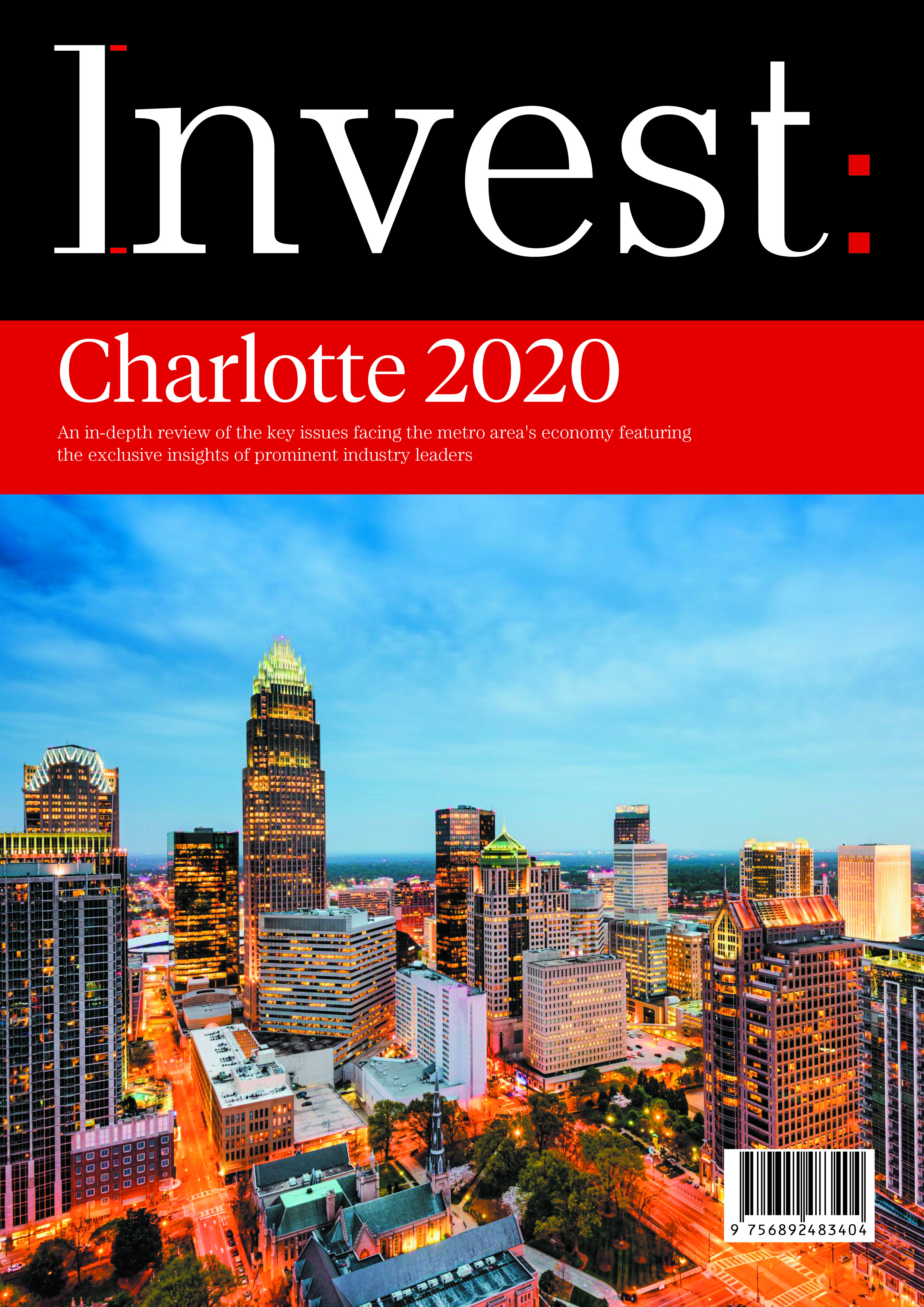
Seasoned media firm Capital Analytics has chosen Charlotte as the next destination to launch a focused annual report on investment opportunities offered by the city. Invest: Charlotte will bring together key industry leaders across the public and private sectors to provide commentary on Charlotte’s rise as an attractive investment destination in recent years.

Entering its sixth year publishing the highly praised flagship project Invest: Miami, Capital Analytics identified Charlotte as the next key market in its portfolio annual economic reports. This newest edition will focus on the growing importance of Charlotte as a business hub and spotlight opportunities for investment.

Capital Analytics’ successful Invest: Miami venture allowed it to establish footholds in Atlanta, Greater Fort Lauderdale, Philadelphia, Tampa Bay, Palm Beach and Orlando, and the company has high expectations for its Charlotte undertaking.

“This business intelligence publication will complement the other publications we produce in the region. The strength of Charlotte’s diversified economy in transportation and logistics, sports and energy combined with the city’s status as a major U.S. financial center create an encouraging environment for further investment,” said Jack Miller, Regional Director at Capital Analytics.

The Capital Analytics team has already started laying the groundwork for Invest: Charlotte and is looking forward to replicating its success in other markets, speaking to high-profile executives and leaders of key organizations in the area. This will be the most comprehensive independent report available on Charlotte’s vibrant business climate, seen through the eyes of those at the forefront.

North Carolina’s Gross State Product (GSP) is expected to reach $589.8 billion by the end of the year. Charlotte has a high level of education, with 15 research universities and 300,000 students, meaning new high-paying jobs in tech and science are opening up. Add to that a local government that understands the importance of attracting investment and Charlotte is the perfect place for investors to focus their attention. 

“At Capital Analytics we are excited to begin conducting interviews and compiling research on the Charlotte market in anticipation of the first edition of Invest: Charlotte,” said Miller. “We look forward to discussing Charlotte’s opportunities and challenges with local public and private sector leaders over the months to come.”

Capital Analytics produces in-depth business intelligence with a focus on providing comprehensive investment knowledge on markets within the United States for the domestic and global business community. Over a six-month research period, it meets with more than 200 top political, commercial and industry leaders to deliver targeted information, in-depth analyses and strategic insights to the global business community on economic trends and investment opportunities.

Its first publication, Invest: Miami, has a global readership and includes among its readers top executives working in real estate, finance, technology, trade and logistics, health, hospitality and others. Books are distributed locally, nationally and globally to trade and investment boards, executives of Fortune 500 companies, institutional investors, consulates and embassies, hedge funds, leading chambers and associations, as well as high-level summits and conferences.

For more information contact 

contact@capitalaa.com

TEL: 305-523-9708

Miami Dolphins Kick Off Season With New Training Complex, Partnerships, Roster Moves

By Yolanda Rivas

2 min read AUGUST 2019 — With a new head coach and a rebuild underway, the Miami Dolphins will field a re-tooled look when the NFL’s 100th season kicks off next week. That look extends beyond the players and coaches, with a new training complex in the works and fresh partnerships that emphasize community involvement and impact. 

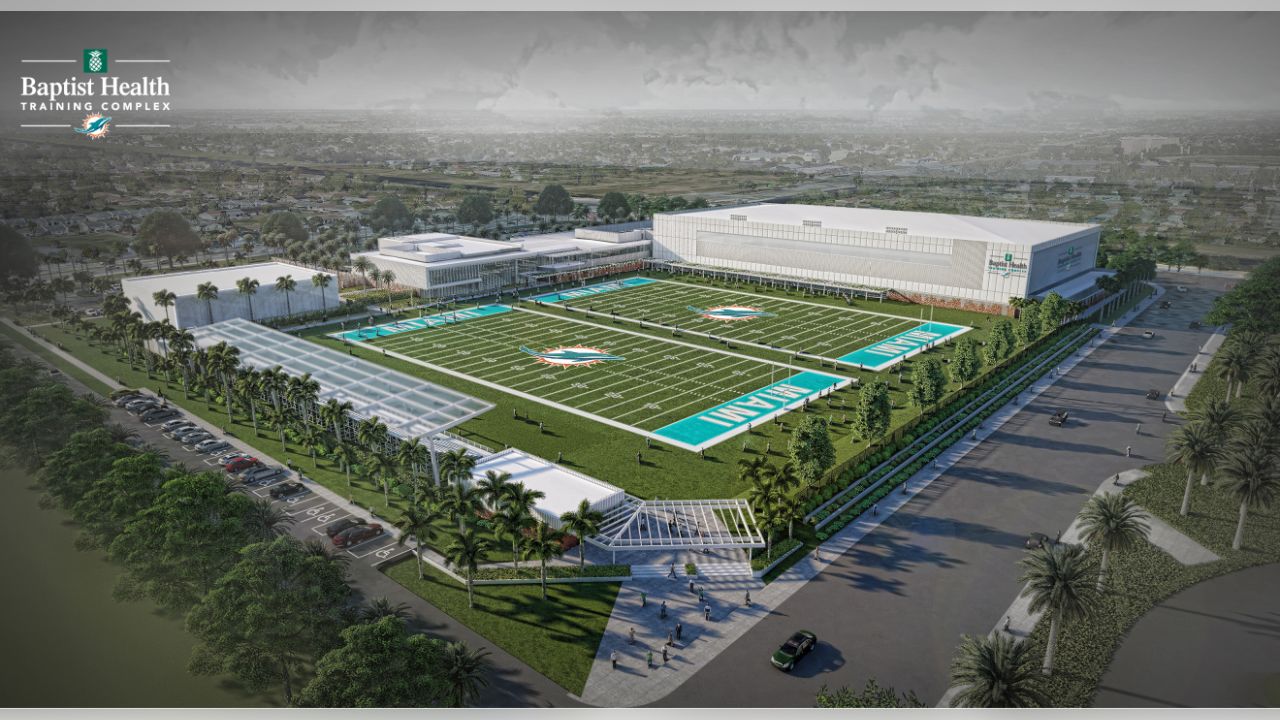
The Dolphins recently broke ground on the $135 million state-of-the-art training complex and sports performance clinic in Miami Gardens. The facility, named Baptist Health Training Complex, is part of a multiyear partnership with Baptist Health that is projected to open in spring 2021. 

“The Baptist Health Training Complex will be a state-of-the-art football facility with Baptist Health providing a world-class sports performance clinic available to the public so people can have access to the same care the players get,” Miami Dolphins Chief Executive Officer Tom Garfinkel said in a written statement.

The 125,000-square-foot training facility and 92,200-square foot indoor field will be significantly larger than the team’s current facility. The complex will also house an innovation hub, a state-of-the-art hydrotherapy area, a dedicated recovery area that includes cryotherapy and isolation tanks, an athletic training room with an expansive rehabilitation space, meeting rooms, an outdoor practice area with two full natural-grass fields, full indoor practice facility and other amenities. 

Another significant announcement by the Dolphins and its FOOTBALL UNITES™ program was the partnership with Miami-Dade County Public Schools (M-DCPS) through Values Matter Miami, which promotes education and values among the city’s students. According to an official announcement, starting in September, the Dolphins will recognize a student each month who best exemplifies a specific value.

“The Miami Dolphins are proud to strengthen our relationship with M-DCPS by supporting the Values Matter Miami Program to directly impact the students of Miami-Dade County,” Jason Jenkins, Miami Dolphins’ senior vice president of communications and community affairs, said in a written statement about the partnership. 

These initiatives are part of the Dolphins goal to inspire a healthier, more educated and united South Florida community. 

To learn more about our interviewees, visit:

Miami Dolphins: https://www.miamidolphins.com/ 

Baptist Health: https://baptisthealth.net/en/pages/home.aspx 

Miami-Dade County Public Schools: http://www.dadeschools.net/ 

Values Matter Miami: http://osi.dadeschools.net/valuesmatter/

Capital Analytics Shines a Spotlight on Charlotte

Big Banks’ Long-Term Investment Vision for Charlotte

Writer: Sara Warden

2 min read AUGUST 2019 — Charlotte has long been the eastern hub of Bank of America (BofA) and is one of the headquarters of Wells Fargo. But this year it has been attracting attention from the third bank belonging to the Big Four, which together hold around 45% of total U.S. deposits. JP Morgan Chase announced earlier this year that it will add up to 21 branches in Charlotte in the next three years.


“We’ve been serving the Carolinas for more than a decade and opening branches allows us to lend to more consumers and small businesses, and offer good paying jobs,” Thasunda Duckett, CEO of Chase Consumer Banking, said in a press release.

JP Morgan Chase will be entering a market where many are seeing huge potential. In April this year, U.S. Bank announced it will open 10 branches in the city by 2020. The bank, which emerged from the $66 billion merger between BB&T and SunTrust, will also be headquartered in Charlotte.

Despite Wells Fargo and BofA controlling around 89% of the area’s deposits, the new entrants seem confident there will be a big enough piece of the pie for them to get their teeth into. “This expansion marks a major milestone for our firm by allowing us to serve more customers, small businesses and communities across the country,” said Duckett. “To us, this is so much more than building branches. This is about new customer relationships, better access to credit and local jobs.”

Charlotte is home to 425 corporate headquarters in the finance industry. At 2.5%, the city has the lowest corporate tax rate in the country. For three years consecutively, North Carolina’s annual residential growth has exceeded 100,000 people.

“I don’t think there’s any industry that’s having an easy time staffing with the kind of human capital that they need, so one of North Carolina’s biggest advantages right now continues to be population growth,” says Christopher Chung, CEO of the Economic Development Partnership of North Carolina told WeWork publication FiveThirtyEight.

Charlotte’s finance industry is the second-largest banking hub in the country behind only New York City, with banks holding more than $2.3 trillion in assets. The city has added more than 200,000 jobs since 2001.

“We’ve built a great city that helps companies attract and retain today’s best talent,” Frances West, business recruitment and retention leader in Charlotte’s Economic Development Office, said to FiveThirtyEight. “Where we are today is not by happenstance and where we will be in 10 years is not by happenstance — it’s all by intentional growth.”

And the financial institutes have Charlotte in their crosshairs for the long run. U.S. Bank announced it reached an agreement with the city’s authorities this month to be the lead sponsor of a delayed pedestrian bridge project that connects Charlotte’s uptown and South End. U.S. Bank will contribute $1 million to the $11 million infrastructure project.

“Bridging the gap between uptown and South End will provide additional connectivity for residents, workers and guests, while further knitting together two of our great urban neighborhoods,” Michael J. Smith, CEO of Charlotte Center City Partners, said in a press release.


To learn more about the companies mentioned, visit:

https://www.charlottecentercity.org/

https://charlotteregion.com/eco-dev/charlotte-regional-business-allianceeconomic-development/

https://edpnc.com/

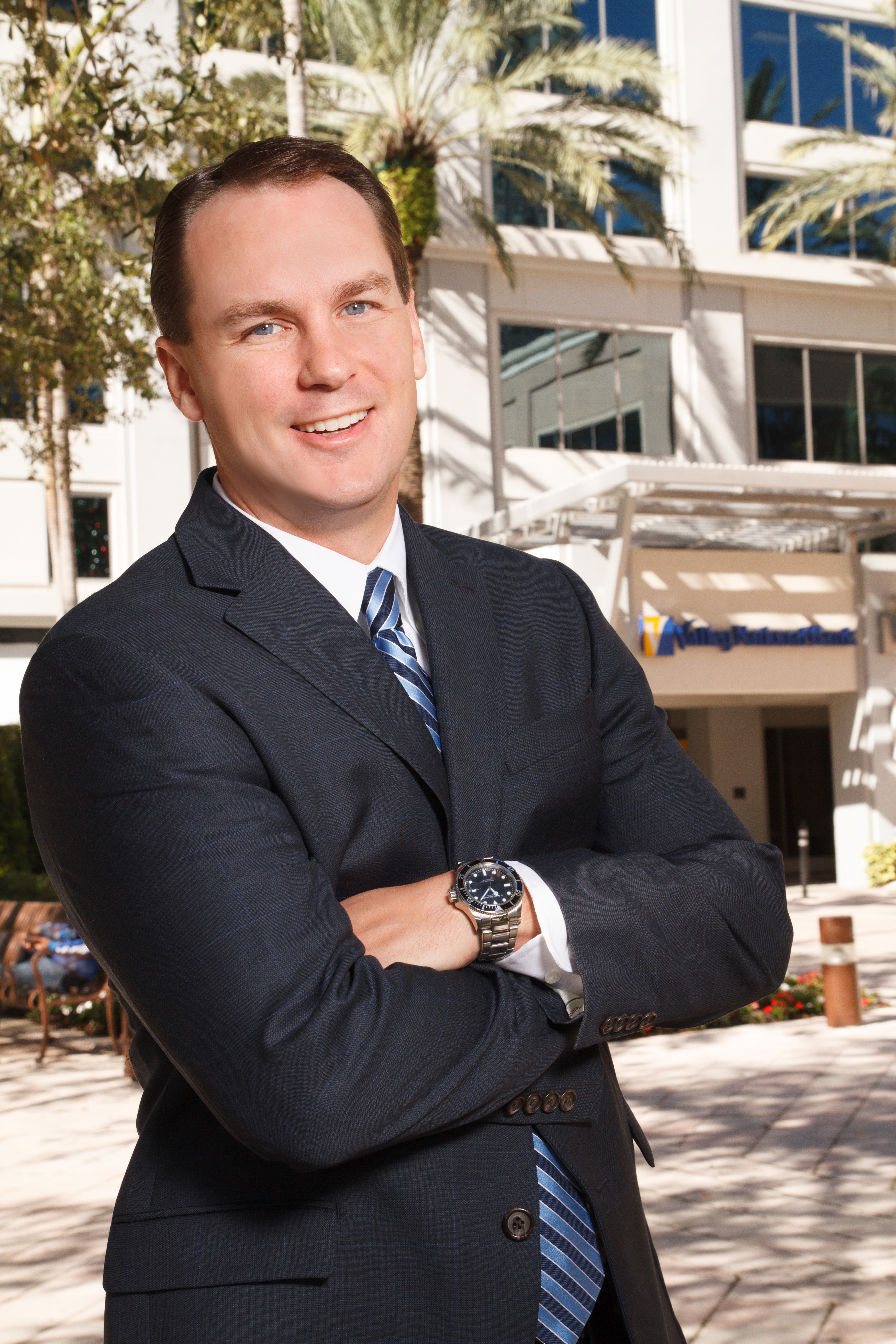
Spotlight On: Jeffery Klink, First Senior Vice President & Southern Florida Regional President, Valley Bank

Spotlight On: Jeffery Klink, First Senior Vice President & Southern Florida Regional President, Valley Bank

By Max Crampton-Thomas


2 min read August 2019 —During times of economic prosperity, the banking sector is primed to benefit the most, but when the economy begins to slow, or a recession hits, lenders normally feel the harshest effects. This forces banks and financial institutions to be innovative and mindful of how they approach their day-to-day business. There are, of course, the outliers like Valley Bank, which, as noted on its website, has never produced a losing quarter since its founding in 1927. Invest: Greater Fort Lauderdale recently spoke with Jeffery Klink, first senior vice president and Southern Florida regional president for Valley Bank, who spoke about the bank’s efforts to ensure great customer experience, how it differentiates itself in a crowded South Florida marketplace and the biggest challenge facing the banking sector. 

How does Valley Bank ensure a community bank feel while still providing the services of a large regional bank? 

We are a community bank with a regional overlay and that is how we choose to operate. What has been really interesting is that our clients in many cases do not realize that we are a large regional bank unless they need access to loans that are $25 million to $35 million or above. Our core business clients that are looking to borrow $500,000 to $5 million still view us as a community bank because that’s the space that we operate in.

How does Valley Bank differentiate from the competition in the region? 

Being client-centric is really our main differentiating factor in banking. Valley Bank, like most regional and national banks, has a similar technology platform. These systems allow users to access their accounts remotely, and they may very rarely come into our branches. How we mitigate this so the banking experience doesn’t become impersonal is to ensure that each client has a core group of bankers who they know and who know their needs. When customers call our bank, they are actually talking to somebody who knows the client not just from a business standpoint, but also on a personal level. This personal service combined with our technology platform has really allowed us to compete from a service perspective with the community banks.

What is the biggest challenge facing the banking sector? 

The main challenge in banking is balancing interest rate movements. Throughout 2018, we saw Treasury rates increase significantly and that was allowing banks to adjust and increase the rates they were collecting on new loans. In 2019, we have seen interest rates pull back, which has been to the benefit of borrowers because rates have dropped to nearly historical lows. Banks are going to have to address and combat margin compression throughout 2019 because we are collecting less on the loan side and we are paying more than we have for close to 10 years on the deposit side of the balance sheet.


To learn more about our interviewee, visit:


https://www.valley.com/