Main drivers

How small businesses are driving South Florida’s economic growth 

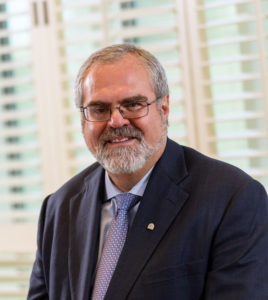
Jorge Gonzalez President & CEO – City National Bank


In which area of business do you expect to see the most growth for South Florida?

Small business will continue to be the main economic driver in South Florida, and this is an underserved segment when it comes to banking. Our value proposition is particularly attractive to small and midsized businesses that really want a partner, not just a bank. There are various growing sectors in South Florida, including distribution, technology, healthcare and professional services. We see great opportunity there. Small businesses will continue to grow and expand as the economy continues to strengthen, and we’ll see job growth and innovation across various of these sectors. City National Bank has added new segments – leasing and specialty finance – allowing us to support companies of all sizes with their equipment and financing needs. These new offerings allow us to provide more solutions to existing clients and broaden our ability to serve new clients of all sizes. The marketplace has really embraced our banking model based on personal relationships, local decision-making and providing an excellent client experience.

What regulatory frameworks would you like to see addressed?

I wholeheartedly believe that banks need to be closely regulated, but that regulation should focus on the areas where there is risk and exposure. There has to be a prioritization of regulation to focus on areas with the most risk. Technology is one area that I think we’ll see more regulation, and that makes sense, because of the risks associated with electronic fraud. Information security and cyber security are emerging areas that banks and regulators need to be focused on. It is a new and quickly growing threat that needs to be managed very carefully.

What challenges need to be overcome?

Miami is a brand that has tremendous national and international appeal, and it has emerged as one of the most important places for business in the world. But that growth comes with challenges. Our infrastructure needs to be properly developed to support long-term growth. This is best illustrated by the traffic situation. Affordable housing is another area that we need to find innovative ways to increase the inventory. Companies want to ensure employees have a certain quality of life and that includes being able to live closer to work. Education is an area that we need to continue focusing on. Our public schools have made great strides, but more work is needed, particularly in ensuring we provide opportunities for individuals to be productive members of our community.

Latin lives

Governor Rick Scott talks about the Latin America Summit

Hosted by the Governor of Florida, Rick Scott, the 2017 Latin American Summit on October 2 in Miami will bring together leaders from the region to discuss important issues such as human rights, democracy and ensuring economic prosperity. The summit focuses on Florida’s relationship with the region and will help to build and solidify partnerships between the two areas. Governor Scott spoke to Capital Analytics about the summit:

What is the main focus of the summit?

This summit seeks to address two key areas: trade and democracy. We will have a variety of people from both Latin America and the U.S. speaking to address how these two themes are ultimately intertwined. When we have strong democracy, we have strong trade partners.

If you look at Latin America and compare some of the more recent challenges we have seen, and how it has affected Florida’s economy, you get widely different stories. Take the difference between Venezuela and Argentina. Venezuela was once a huge trade partner of ours, but now, under Maduro, our trade had drastically decreased. Then you consider Argentina and President Macri’s transition to power. Florida is experiencing an increase in trade. Democracy in Latin America is a big deal for our country, but even more so to Florida as trade often comes here first.

But it is also about bringing businesses together to network and create more even business. Aside from the one-day conference’s agenda, we will be coordinating lunches and dinners for more intimate and targeted networking opportunities.

How will the Summit address regional challenges like the situations in both Venezuela and Cuba?

The summit will facilitate a dialogue and enable key leaders to talk about where we as a region are and where we need to go.

The Trustees of the Florida State Board of Administration (SBA) unanimously approved my proposal to prohibit the State of Florida from doing business with any organization that supports the Maduro regime. As Floridians and Americans, we are against the brutal treatment of the Venezuelan people. We must look to do anything we can to support freedom and democracy, and that is what this summit intends to support.

It was important for me that we address what is happening in Venezuela at the summit particularly because a lot of people in Florida are from Venezuela, and they have family that are in Venezuela still.  They’re struggling and not getting the materials or medicine they need. Additionally, it’s important to the world economy that we continue to promote democracy, and the summit seeks to do this.

What does hosting this type of conference in the State of Florida say about its position as a leader in the region?

We are a leader for Latin America and I hope will continue to be. We are one of the largest trade partner to many countries in the region, and many Latin Americans live, own property and work in Florida. From my position as governor, I have the opportunity to serve in one of the fastest growing states in the country. It has cut taxes while increasing revenue, has unparalleled job growth and has an education sector that is becoming increasingly competitive. All this enables us to be a strong model of democracy, business growth, prosperity and more for the region at large.

Some of the confirmed speakers include:

Congresswoman Ileana Ros-Lehtinen, Florida’s 27th Congressional District
Congressman Lincoln Diaz-Balart, Florida’s 21st Congressional District
Congressman Mario Diaz-Balart, Florida’s 25th Congressional District
Congressman Francis Rooney, Florida’s 19th Congressional District
Donna Hrinak, President, Boeing Latin America
Archbishop Thomas Wenski, Metropolitan of the Province of Miami
Emilio T. González, Ph.D., Director and Chief Executive Officer, Miami-Dade Aviation Department.
Paul F. Browning, President and Chief Executive Officer, Mitsubishi Hitachi Power Systems Americas (MHPS-AMER), Inc.
Romaine Seguin, President, UPS Americas Region
Paulo Cesar de Souza e Silva, CEO, Embraer S.A
Susan Segal, President and CEO, Americas Society/Council of the Americas
Marcelo Mindlin, Chairman and CEO, Pampa Energía S.A.
Juan M. Kuryla, Port Director and CEO, PortMiami

You can find out more information:

http://www.flgov.com/2017/07/24/governor-scott-to-host-2017-latin-american-summit/

State and Federal Disaster Loan Programs Now Available to Florida Businesses Impacted by Hurricane Irma

Brought to you by the Beacon Council

The Miami-Dade Beacon Council, the official economic development partnership, is working closely with public and private sector leaders to help Miami-Dade’s business community recover and get back to work as soon as possible. We are working with our partners including the Small Business Administration, Federal Emergency Management Agency, Florida Department of Economic Opportunity, Small Business Development Center and others to:

1) assess damage to businesses and evaluate needs;
2) provide information on available resources;
3) facilitate connections to service providers.

The Council is using its Banking & Finance Committee to provide coordinated resources and outreach to businesses seeking loans in the wake of Hurricane Irma. Also, the Small Business Committee is meeting next week to hear directly from community partners and bankers about next steps to ensure communication and resources continue to flow.

Florida Small Business Emergency Bridge Loan Program
Governor Rick Scott has activated the Florida Small Business Emergency Bridge Loan Program to provide short-term, interest-free loans to businesses damaged by the storm.
Administered by the Florida Department of Economic Opportunity (DEO) in partnership with the Florida SBDC Network and Florida First Capital Finance Corporation (FFCFC), the Florida Small Business Emergency Bridge Loan helps businesses bridge the gap between the time damage is incurred and when a business secures other financial resources, including payment of insurance claims or longer-term Small Business Administration loans. Up to $10 million has been allocated for the program.
Under the program, eligible small businesses in all 67 Florida counties with two to 100 employees may apply for short-term, interest-free loans for $1,000 to $25,000 for 90 or 180-day terms. To be eligible, a business must have been established prior to September 4, 2017, and demonstrate economic injury or physical damage as a result of Hurricane Irma.
Apply for the Florida Emergency Bridge Loan program. The deadline to apply is October 31, 2017.
Business Damage Assessment Survey
DEO is assessing the damage caused by the storm. Small businesses that have incurred losses due to Hurricane Irma are asked to complete a Business Damage Assessment Survey. The survey will help the State Emergency Response Team determine the needs and level of assistance for impacted businesses. Take the survey.
Federal Assistance
Following President Trump’s major disaster declaration, impacted businesses may now apply for low-interest loans through the U.S. Small Business Administration.
Through the declaration, businesses and nonprofits in Broward, Charlotte, Clay, Collier, Duval, Flagler, Hillsborough, Lee, Manatee, Miami-Dade, Monroe, Palm Beach, Pinellas, Putnam, Sarasota and Saint Johns counties are eligible for both Physical and Economic Injury Disaster Loans from the SBA.

In adjacent counties, small businesses and most private non-profit organizations are eligible to apply only for SBA Economic Injury Disaster Loans: Alachua, Baker, Bradford, Desoto, Glades, Hardee, Hendry, Highlands, Marion, Martin, Nassau, Okeechobee, Pasco, Polk, and Volusia in Florida.

Business Physical Disaster Loan Program
Business Physical Disaster Loans are intended to help repair or replace disaster-damaged property. Businesses and nonprofit organizations may apply for up to $2 million to repair or replace property, including real estate, equipment, inventory, machinery, and other business assets.
Economic Injury Disaster Loan Program
Businesses in qualifying adjacent counties may apply for up to $2 million for working capital through the SBA Economic Injury Disaster Loan program. The Economic Injury Disaster Loan program provides working capital loans to help small businesses, small agricultural cooperatives, small businesses engaged in aquaculture, and most private, nonprofit organizations meet financial obligations and operating expenses through the disaster recovery period.
Interest rates are as low as 3.305 percent for businesses and 2.5 percent for nonprofit organizations. The SBA customizes loan amounts and terms up to a maximum of 30 years for each applicant.
Applicants may also be eligible for a loan amount increase up to 20 percent of their physical damages to protect property from future damage, including adding a safe room or storm shelter.

To Apply for Physical and Economic Injury Loans
Businesses must first register with the Federal Emergency Management Agency (FEMA) at www.disasterassistance.gov or call the toll-free helpline at 800-621-3362. Those who use 711-Relay or Video Relay Services should call 800-621-3362 (800-462-7585 TTY).

Upon registration with FEMA, businesses may apply for a disaster loan a number of ways:
• Submit an online application at https://disasterloan.sba.gov/
• Download an application from www.sba.gov/disaster and submit to a SBA disaster recovery center or mail to U.S. Small Business Administration, Processing and Disbursement Center, 14925 Kingsport Road, Fort Worth, TX 76155;
• Visit a SBA recovery center for one-on-one assistance; or
• Visit their local Florida SBDC for assistance.
The filing deadline to return applications for physical property damage is November 9, 2017. The deadline to return economic injury applications is June 11, 2018.
Florida SBDC Network Stands Ready to Assist
As a principal responder in the state’s Emergency Support Function for Business and Industry, the Florida SBDC Network stands ready to assist businesses with disaster loan applications and with other post-disaster challenges.

“The recovery efforts from Hurricane Irma will take some time, however, the SBA’s implementation of disaster assistance in the impacted areas will help usher along the process,” said South Florida District Director Francisco “Pancho” Marrero. “As soon as it’s clear to do so, I encourage everyone in the listed counties to complete their respective damage assessments and after completing FEMA disaster requirements, apply for assistance from the SBA’s Disaster Assistance Center.”
The Florida SBDC Network supports disaster preparedness, response, recovery, and mitigation through its Business Continuation Services. As part of the network’s service offering, the Florida SBDC will also be deploying its Mobile Assistance Centers (MACs) into affected communities to deliver small business owners on-site assistance with loan applications and with other post-disaster challenges. The Florida SBDC is working with state and federal officials to determine the MACs’ locations and will release that information soon.
For questions about the Emergency Bridge Loan Program, the U.S. SBA Physical and Economic Injury Loan Programs, and how the Florida SBDC can help, please contact the Florida SBDC Network at (850) 898-3489 or Disaster@FloridaSBDC.org. The phone line will be answered during regular business hours; all voice mails and emails will be responded to within 24 hours.

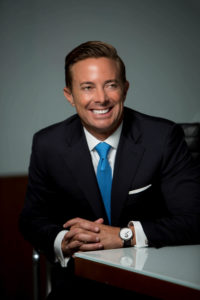
Invest: Miami speaks with Joe Atkinson, Regional President, South Florida Region, Wells Fargo


Which business line saw the most growth in 2016?

I have the greatest interaction with the community banking line of business, which is our community, retail, consumer and small business focus. As I look at 2016, we benefitted from that distribution because our focus has always been on not only acquiring new customers, but also taking care of our existing customers. We want to build lifelong relationships and the best way to do that is to take care of your existing customers.

What are the expectations of the small business segment?

About 96 percent of businesses are small. They are the largest employer of people. In South Florida, it’s no different. We know that we have a high concentration of small businesses. We have people with entrepreneurial spirits who want to start businesses. Our expectation is that this will continue to grow. For us, it’s a really important segment of our business customer base. Recently, we launched through our Wells Fargo Works website, a new addition to give small businesses more access to credit. Through our small business credit center, now people who are in business can expand and grow. They can acquire other businesses and use our website to learn about what they need to apply for a loan. Once the loan is approved, they can learn about what options they have to use it. We found that, because we pay attention to our small business customers, we know that there is a huge need to develop access to credit in this way. Our expectation is that it will continue to be like it was in 2016.

How might recent regulatory changes, such as the Dodd-Frank, affect institutions in South Florida?

The administration needs time to get settled. We always value consumer protection. We know that good regulation is important. As we look ahead, our hopes will not change. We hope the regulation put in place will protect consumers, expand business and continue to allow us to provide products and services that are important to our customers and our communities.

HURRICANE IRMA RESTORATION INFORMATION UPDATE

Brought to you by the Beacon Council

In the aftermath of Hurricane Irma, this edition of The Miami-Dade Beacon Council’s (MDBC) weekly newsletter has been abbreviated in order to concentrate on information the business community can use in its recovery from the storm.
The first step in any recovery process should be to download a business-oriented recovery guide. The MDBC, Small Business Development Center (SBDC) and Miami-Dade County have combined their knowledge to develop a one-stop Disaster Recovery tool kit for Florida businesses recovering from Irma.
The kit includes contact and other information about organizations and agencies that have now been activated to provide crisis support to local businesses.
Process for Seeking Assistance
Damage Assessment Survey & Bridge Loan Resources
The Department of Economic Opportunity (DEO) damage survey is now active. Businesses are encouraged to complete the damage assessment survey.. The survey assists theState with determining which resources should be deployed to properly assist businesses following the storm. We encourage you to do this as soon as you can since the information shared on this survey will determine the amount allocated for Bridge Loans in Miami-Dade.
Once the damage is determined, the Small Business Development Center (SBDC) will make the bridge loan application form available online to local partners and businesses. Additional information about the Florida Small Business Emergency Bridge Loan Program can be found at www.floridadisasterloan.org.
The SBDC loan committee then actives a process where it reviews the applications and recommend loan decisions. Florida First Capital (FFC) reviews the SBDC committee recommendations to finalize payments. The FFC then issues payment information and SBDC disburses funds to loan recipients.
Additional Details and Resources:
•          Bridge Loan – up to $25,000, term up to 6 months, 0% interest, no payment until end of loan term;
•          SBA Loan – up to $2 million, term up to 30 months, interest rate 3% to 8%, physical and economic damage;
•          FEMA – resources will be communicated by DEO if a disaster plan/allocation has been assigned.
 As we have mentioned in previous communiques, bridge loans are intended to be temporary funds to keep your business operational until a more permanent funding source can be secured.
The SBA loans were put in place as a lower rate long term lending option for businesses to consider.
Banks are also options that should be considered. Steve Leth, Miami-Dade Beacon Council’s Banking & Finance Committee Chair said, “we extend our support to our community’s businesses. Please know that our doors are open to assist with business recovery efforts in the aftermath of Hurricane Irma.”
In case you have questions about filling out the survey or requesting a bridge loan, call 305-468-5842 or Email: esf-18@miamidade.gov

Steady growth

How local banks are meeting the needs of the market in South Florida

Manny Perdomo CEO & President – SunTrust Bank


What were the main growth drivers for the sector in 2016?
We believe that healthcare, in all areas such as aging services, medical devices and treatment centers for substance abuse, is going to be a big growth driver in Miami. Other sectors that are rising very fast are ports and logistics, transportation, both international and domestic and education. As for consumer lending, it is safe to say that as employment growth continues, consumers will benefit. Residential real estate is a different story, especially because it has always seen waves of ups and downs. One market stabilizer we have seen is the steady demand from colder regions of the country and Europe. Comparative to some of the major cities like New York, San Francisco, Vancouver, Hong Kong or Singapore, prices in Miami are very reasonable. Crises in other parts of the world have also brought demand to our real estate and banking sectors. The fact that the U.S. has legal and economic stability allows us to offer some level of safety that our clients may not enjoy in their home country. We are seeing a lot of investment in the area now coming from Eastern Europe and Russia.

What are the main challenges regarding security automation? Where do the main opportunities for automation lie?

According to the National Center for the Middle Market, more than 54 percent of organizations in the middle market across the country have experienced at least one type of cyber-security incident over the past year, with 39 percent reporting two or more, meaning that in today’s economy, every business must take this issue seriously. Florida is a state with one of the largest number of fraud cases in the country. A good way for businesses to address this is to have better internal controls and employ the fraud protection services provided by their bank to improve security. A SunTrust study showed that 35 percent of fraud is internal, which illustrates the importance of how companies manage themselves.

With the population in Miami and South Florida in general being significantly younger than in the rest of the state, how has this affected the demand for retirement investment planning and long-term savings?

In 2017, we launched onUp, a program designed to promote financial confidence for all Americans, regard less of age or financial status. Our goal is to encourage 5 million people to take steps toward improving their financial confidence in the next four years. Already, more than 1 million people have taken action. SunTrust believes that this is a crucial issue for our country. Tackling the issue of financial stress is a core goal of onUp.


Invest: Miami speaks with Ola Aluko, CEO & President, St. John Community Development Corporation


St. John Community Development Corporation (CDC) was founded by St. John Missionary Baptist Church in 1985. It was founded on the premise to help rid slum and blight in Overtown and to economically empower its residents through development. This long-awaited project will help fill the gap of the much needed “quality” affordable housing stock in Overtown. Much development is occurring around Overtown and projects such as this, within Overtown, will not only serve the residents, but also provide them with a sense of pride and empowerment knowing that they too can live in quality residences. St. John Plaza Apartment has a mix of efciencies – one-, two- and three-bed room apartments. We want to ensure that we cater to the vast array of families – such as the single mothers, single individuals and large families – all who need accommodation. A plus with St. John Plaza is that there is a child-learning center serving children from one to five years old which will be used as a feeder institution into the neighboring elementary schools. We are promoting ourselves as a “true community builder” and will remain in Overtown after the project is finished. We have to ensure that we produce a product that the community can appreciate and enjoy for years to come. Following our objective of empowerment, St. John Town Homes I was designed to enable the ownership of townhomes. It was a way to get those born in Overtown, or those with a close association, to move back and own in Overtown. With St. John Town Homes II we are mirroring that concept; however, as a workforce and affordable housing complex. As a community developer, we have heard the cry by many stating that they are over qualified for affordable housing, but cannot afford market rate housing as it’s offered today. There is a serious need for workforce housing in the Miami-Dade Downtown area. Those who work downtown want to live within minutes from work, but are unable to. Our response to the need is to develop a workforce and affordable housing mix.

Invest: Miami speaks with Clarence E. Woods, Executive Director, Southeast Overtown/ Park West Community Redevelopment Agency


The Community Redevelopment Agency (CRA) was created by state statute and our governing bodies are Miami-Dade County and the City of Miami. As such, the mission of the CRA is to eliminate slum and blight. Behind that, the mere elimination doesn’t paint the full picture. We are eliminating slum and blight in an effort to incentivize private investors to come and build projects that would increase the tax base. This would eventually provide more taxes so that we can continue to make investments that will improve the quality of life for the residents of the CRA. The CRA receives funding from both the city and the county through ad-valorem taxes. The county’s portion of those ad-valorem taxes is about 39 percent and the city’s portion is 61 percent. Being within the city, we are a municipal CRA and our board members are the five commissioners of the City of Miami. Any redevelopment efforts that we undertake is approved by our board, from the City of Miami commission. They are more hands on and they help create the vision for where we’re going with our redevelopment efforts. But because we also get funding from the county, the county approves our budget as well. We also have a working relationship with the county commissioner for this area. With the strategic location of Overtown, the CRA has been able to successfully attract large scale projects such as Miami Worldcenter and All Aboard Florida’s office headquarters. This is due to our proximity to Downtown Miami, the beaches and the airport that are also close to Overtown. Modality is a factor because Brickell, Miami Beach and the airport are all places within 30 minutes or less from Overtown. This attracts our partners. The land right now is also the least expensive in the area. The CRA also has the ability to provide incentives for their projects. We have tools such as tax increment financing, bond issuance and assistance with permitting. Additional tools include infrastructure upgrades, as well as land assemblage for large scale projects.