Invest: Miami speaks with Juha and Johanna Mikkola, Co-Founders
There is a real renaissance taking place in Miami right now, but it faces challenges when it comes to workforce development. We are looking to address those needs by providing education, training and job placement in the technology sphere. The fact is, today, every company is a technology company. Every industry is a tech industry. By 2020 there is expected to be 1.4 million open computing jobs, for which there are only a projected 400,000 candidates. As a result, there is a growing demand for developers that isn’t being met by traditional education outlets.
Since it was launched in May 2014, Wyncode has graduated 138 students and maintained a job placement rate of 90 percent within three months of completing the program. Our model is unique in that we focus, not on theory, but on developing practical skills. We have experienced developers training new developers.
Following this success, we opened a new school in Fort Lauderdale in spring 2015. In 2015, we also became the first code school to be licensed by the Florida Department of Education. The issue of how to license code schools is a nationwide matter, and we are proud to be leading the nation in this matter. We have been invited to the White House twice to consult as part of the New Economy Skills Training Association (NESTA), an initiative of U.S. Chief Technology Officer Megan Smith.
Looking ahead, Miami will only continue to build o of its existing tech ecosystem. The biggest obstacle to this growth is the ability to acquire senior-level developers locally, but in time this will change. There continues to be a critical mass of local entrepreneurs who want to stay here, build here and seize on the opportunities offered by this dynamic market.
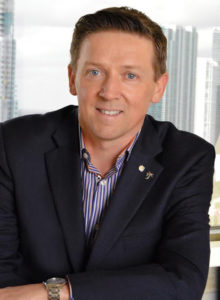
What are the main factors attracting visitors to Miami-Dade County, and how can it build on its strengths to attract more people?
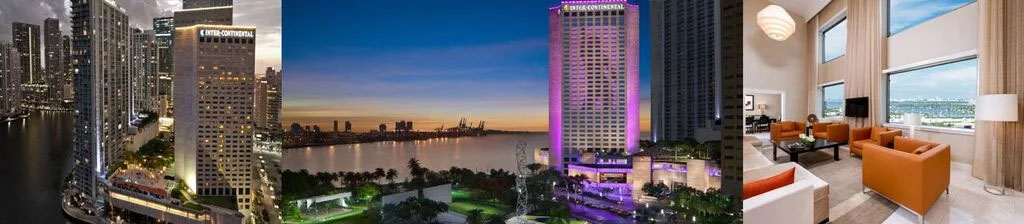
Miami-Dade and Downtown in particular have come a long way since I moved back to Miami to become GM of the InterContinental Miami in 2009. I remember when the streets around the hotel were empty once the clock struck 5 pm, but now there is activity at all hours of the day. The residential growth of the past decade has had a positive effect on our neighborhood, because tourists are naturally drawn to areas where locals spend their time. Today, downtown is a destination for business and lifestyle, and it’s up to us to manage that growth. We’re making strides through investments in our new science and art museums, improvements along Flagler Street and innovative projects like Biscayne Green, but challenges still exist as we look for new ways to improve access and mobility. Traffic is problematic, major events cause road closures, and we need to upgrade our public transit systems, which is something that visitors from around the world expect when they arrive in a world-class city.

How well has the hospitality industry weathered the recent problems of Zika and falling currencies in traditional overseas markets?
Last year, we experienced only a nominal impact from Zika at the InterContinental Miami. Two corporate events were postponed by risk-averse groups, but our leisure travel business remained intact throughout the summer and 2016 was another strong year for us. Since then, we’ve been working year-round with the authorities and our hotel peers to create and implement a 10-point plan that will make sure we’re ready to mitigate any mosquito-borne threat that South Florida faces in the future. We’ve also managed to sustain our strong occupancy amidst a strong dollar. We credit this to our hotel’s popularity among business travelers and groups hosting large meetings and events.
To what extent does the current growth of hospitality and home-sharing apps such as Airbnb create competition for the traditional hospitality sector? Is there enough regulation to keep the playing field even?
Miami is reportedly one of Airbnb’s top-five markets in the country, and that’s no surprise given our rise as a global destination. Some have sought to ban these services outright, but that’s unrealistic. The reality is that we’re already co-existing with home-sharing services. The difference is that a property like InterContinental Miami appeals to business and leisure travelers seeking the comforts of a luxury hotel – from daily housekeeping and a top-notch restaurant and bar downstairs, to a pool deck overlooking Biscayne Bay and a luxurious spa. Short-term rentals may cater to a specific niche in the market, but there’s no substitute for the exceptional hospitality that a full-service hotel can deliver. That being said, we need to protect our visitors and residents by ensuring short-term rental properties are safe and regulated appropriately. Also, we must preserve the tourist tax revenues that conventional hotels have been collecting for years and which support critical services.
How much of an impact would the reducing of Visit Florida’s budget have on the tourism and the meetings and convention industry in Miami?
The budget was in jeopardy, but the elected officials in Tallahassee saw the value of marketing Florida’s brand around the world. We are deeply thankful for Gov. Scott’s support, as well as the support of Florida’s legislature for fully funding Visit Florida in 2018. The state legislature’s decision to fund Visit Florida means that Florida, and Miami in particular, will continue to attract millions of tourists every year, strengthening this city’s already thriving hospitality industry and growing its local economy, including new jobs.
With a growing amount of hotel rooms in the Downtown area, how can the InterContinental differentiate itself from the competition? What are the midterm goals, plans and outlook for the InterContinental in Miami?
There have been new hotels opening their doors around downtown Miami over the past few years, so we’re always looking for new ways to keep our competitive edge. Earlier this year, we remodeled and relaunched Toro Toro, complete with a new menu, an expanded lounge, and a new private dining room, “El Matador Room”. We’re also introducing new technologies. One of my favorites is an app called Zingle that allows guests to request any service – from the morning paper to milk and cookies – from their smartphone. We even host a local competition each year to choose new skyline dancers for our digital canvas (we take nothing for granted!). The InterContinental Miami has been operating for almost 35 years and many of our team members have been with us for more than half that time. I like to think that longevity and consistency define who we are and set us apart in an increasingly competitive field. Looking ahead, we’re going to keep our focus on providing exceptional hospitality to our business and leisure travelers, while ensuring the services and amenities we offer stay creative and innovative.
What can be done to further promote the meetings and conventions industry in Miami?
Miami knows how to host a large event, be it the Super Bowl, the Major League Baseball All-Star Game, Art Basel, Ultra Music Festival, and more. We’re also making sizable investments in our local infrastructure through the renovation of Miami Beach Convention Center, improvements at Miami International Airport and the launch of the Brightline rail system, both of which will make getting to Miami easier. Now we’re working with our partners at the GMCVB to spread the word out and send a message that Miami is a great destination for business and vacation.
For more information on InterContinental Miami, please visit icmiamihotel.com
Twitter: InterConMIAMI
Instagram: interconmiami
Facebook: InterContinental Miami
 Once the domain of the science fiction fantasy, experts are predicting a cashless society in the U.S. by 2030. As Apple Pay, Bitcoin and contactless cards are taking the place of traditional bills and coins, electronic payment is becoming one of the most crucial segments of the fintech sector. With the launch of the P20 Payment Conference, Atlanta, Georgia is consolidating its position right in the center of this lucrative system.
June 2017 – In an April 2017 survey conducted for ING Bank, 38 percent of respondents from the U.S. said that they would like to “go completely cashless.” For a generation of professionals raised with debit cards, the idea of making even the smallest of transactions without resorting to traditional bills and coins is becoming more reasonable. However, with this new era for day-to-day financial transactions comes an increased demand for processing infrastructure, security, and innovation.
 Atlanta has been on its way to becoming a center for credit card payment processing since the late 1980s when caps on the credit card fees were lifted and credit card companies flocked to Georgia. In 2017, around 70 percent of all transactions in the U.S. were going through Atlanta, according to the American Transaction Processors Coalition (ATPC), earning is the title of “Transaction Alley”. Around half of all global payments are currently processed in Atlanta and the surrounding region.
“Atlanta sits at the intersection between financial technologies and a large number of payment companies. The cost of living and operating makes Atlanta a good prospect for companies, and the educational environment here is very good. It makes sense to have a concentration of fintech companies here.“ Joan Herbig, CEO of ControlScan told Focus: Atlanta 2017.
To build upon this already impressive standing and with an eye to the future of international payments the first P20 conference, run in partnership with the City of London, UK will be taking place in October 2017. The conference will alternate between Atlanta and London and will bring together 20 of the most important payment processing institutions, as well as bankers, politicians and other members of the international finance industry.
“The P20 conference will be great for Atlanta. London is often considered a financial capital and so having bilateral cooperation between London and Atlanta is itself advantageous. The P20 conference will be a great launching pad for more awareness and the promotion of Atlanta on the global stage.” Barry McCarthy, executive vice-president of First Data told Focus: Atlanta in May 2017.
The aim of P20 is to bring together key innovators and stakeholders to work on a range of issues such as security, regulation and developing technology. It will create a direct connection and partnership between Atlanta and London, leading to long-term synergies and importantly, facilitating dialogue surrounding issues such as growing security risks and the need for regulation.
“The P20 conference is our international platform that will bring together regulatory thought leaders with industry thought leaders from the U.K. and the U.S. It will nurture new ideas around the future frameworks. We want to set up global regulatory frameworks and we want to do this in an inclusive fashion.” H. West Richards, executive director of ATPC told Focus: Atlanta 2017.
The Fintech industry supports more than 40,000 jobs in Georgia, and is worth more than $30 billion per year. Despite uncertainty as to its place in the EU, London held onto its title of financial capital of the world in 2017. The P20 partnership will bring the international recognition that Atlanta deserves, and help to grow its already vibrant fintech industry even more.
How Miami International Airport is expanding to better serve the city
Emilio Gonzalez Director & CEO – Miami-Dade Aviation Department
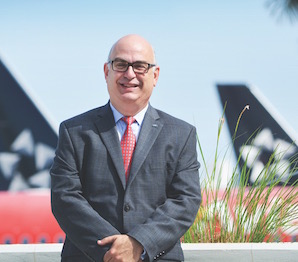 How will the increased investment in infrastructure lead to sustainable development of the economy?
Each daily international passenger fight at Miami International Airport (MIA) generates $33 million annually in business revenue, making international air service one of the biggest drivers of economic development locally and one of our community’s greatest assets. Our infrastructure improvements are focused squarely on international air service expansion. On the heels of successful north and south terminal redevelopment projects, the Miami-Dade Aviation Department (MDAD) is continuing to renovate MIA’s central terminal six of the Concourse E-Satellite’s nine gate areas and its second and third foor lobbies were upgraded and re-opened in 2016. MIA’s Terminal Optimization Program is a 10-year capital improvement plan for MIA’s Central Terminal, which began in 2015. Phase I of the TOP includes pre-construction work that began in 2016 to completely replace the baggage screening systems in MIA’s south and central terminals. The project, partially funded by a $101-million grant from the Transportation Security Administration, will double the systems’ current screening speed by installing the latest in Explosives Detection Screening (EDS) technology. MIA is also partnering with U.S. Customs and Border Protection to renovate and re-open the Concourse E international arrivals facility by the summer of 2017. In another innovative approach by MIA, the redesigned facility will be one of the frst in the country to screen passengers primarily via self-service technologies such as Global Entry, Automated Passport Control kiosks, and the Mobile Passport Control app.
What is your strategy to continue expanding into new markets for both passengers and cargo?
MIA is continuing its reinvention from being the Gateway of the Americas to a truly global gateway. Three of 2016’s new carriers are European-based, and two more European airlines have announced Miami launches in 2017. MDAD fortified its existing global business ties and established new ones in 2016 by investing in mission trips to strategic locations around the world. MDAD representatives traveled to Dublin, Ireland in June to participate in the International Air Transport Association (IATA) Annual General Meeting (AGM) and World Air Transport Summit, the world’s largest gathering of airline leaders. MIA was one of only a handful of airports in the world invited to attend the event, which drew more than 1,000 delegates. During the three-day gathering, I led an MIA team that met with high-level executives.
How PortMiami is growing to accommodate bigger vessels and larger volumes
Juan M. Kuryla Port Director & CEO – PortMiami
What were the major highlights for PortMiami in 2016?
If you look at our business model and our achievements in 2016, we had a very strong year for both cruise and cargo. It was the first time in 11 years that more than 1 million twenty-foot equivalent units (TEUs) have passed through the port two years in a row. That is a big accomplishment. We entered into our first private-public partnership with Royal Caribbean to build a large cruise terminal. It will be funded, operated and maintained by Royal Caribbean. We also received commitments from almost all cruise lines to renew their agreements and build upon their 2016 volumes at the port. We saw some steady cargo volumes in 2016. We are excited about 2017 in terms of seeing larger vessels come to the port of Miami because of the completed Deep Dredge and expanded Panama Canal projects. Panama deepened its canal, which allows larger ships to go through. Today PortMiami is the only port south of Virginia that can accommodate the largest ships that are laden and can go through the canal. We are already receiving larger ships transiting via the Canal.
What are the expectations for the cruise terminal? What are better ways the port can better its infrastructure?
One project that has been approved by the county commission is with Royal Caribbean. They are going to fund, construct, operate and maintain probably the largest terminal in the U.S. It will be able to berth the largest cruise vessels that exist today. That terminal and the commitments from Royal Caribbean, as a result of that construction, should take us from about 5 million cruise passengers to 6 million by the fiscal year 2018 to 2019.
With the completion of recent projects, such as the Panama Canal project, how has the cargo sector economically impacted Miami-Dade?
We are seeing an incredible investment that was put on the table by our elected leadership that allows us to invest in the port. We have received unanimous support from our mayor, our board and our governor, with a commitment of more than $100 million to fund the dredge and other projects. Recent figures say the port represents more than 207,000 jobs with an economic impact of around $28-billion impact. Those numbers were generated when we were doing about 20 percent less volume in cargo and 25 percent less for cruises. We anticipate our economic impact that we will be well above that.
What has the PortMiami’s 2035 Master Plan achieved so far?
In 2011, the board approved the 2035 Master Plan, and requested installation of additional cranes, which we have completed. They also mentioned the additional cruise ship berths, which we are building. We are beating the projections, particularly on the cruise side. By 2021, there’s going to be close to 7 million passengers per year. According to the plan, Miami was not supposed to experience that many until the late 2020s. This means we have to speed the project up.
Invest: Miami speaks with Greenberg Traurig’s Jaret Davis
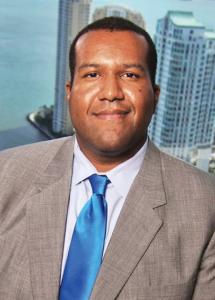 June 2017 – With a growing number of young, educated entrepreneurs and a location that offers global connections, it is easy to understand why the Miami Metropolitan Area has such a thriving startup environment. The county’s potential is further bolstered with an excellent support network with Miami’s Economic Development Agency, The Beacon Council, playing a major part.
As of May 2017, the Kauffman index of entrepreneurial activity, one of the leading indicators of new business activity for the U.S., ranks Miami as best large metropolitan area in the country when it came to startup activity. In 2016, there was a rate of new entrepreneurs of 0.56 percent – meaning that for every 100,000 adults, there were 560 starting a business venture.
In addition to advising new companies on important business and law issues, Miami-based international law firm Greenberg Traurig runs a series of events and seminars aimed at educating people on the need for a healthy startup culture, and how startups can make an international impact. Capital Analytics spoke to Jaret Davis, Miami co-managing shareholder of Greenberg Traurig, on how to support new companies and the role of the Beacon Council in Miami’s development.
How can Miami-Dade better support the growth of startups?
Miami is a robust and sophisticated ecosystem that supports startups. Opportunities for improvement include access to additional sources of capital – particularly on the seed level below $1 million and Series B funding with a level of $10 million to $20 million – and enhanced collaboration with universities and other innovators.
It is important that large corporations in Miami-Dade support startups by purchasing their output. They should also provide input on market needs to ensure startups don’t innovate in a vacuum – producing products and services that don’t address market needs. Universities and other innovators in Miami-Dade have a powerful role in ensuring research is commercialized and students are trained in the technical skills the startup community requires.
How do you see The Beacon Council benefiting Miami-Dade’s growth moving forward?
The Connect and Grow initiative is very powerful. We have launched a new accelerator program formed through our trade and logistics committee. Trade and logistics is an important target industry responsible for more than 20 percent of our jobs in Miami-Dade.
We have seen that Connect and Grow goes much further than just innovation, it brings together various aspects of Miami-Dade County. Our Urban Initiatives Task Force is doing great work to ensure all sectors of the county are connected, including those that have been historically underserved. We have brought marketing opportunities to those regions of Miami-Dade, such as South Dade, which have not received as much attention as other areas.
These could be major game-changers for the region if they deliver as we anticipate. We’ve seen the power of Connect and Grow in achieving better connections with organizations such as the Greater Miami Chamber of Commerce, plus state and national players such as Enterprise Florida and SelectUSA.
To learn more about Greenberg Traurig, visit: www.gtlaw.com
How the Department of Transportation and Public Works is using information sharing to make a better transport system
Alice Bravo Director – Miami-Dade Department of Transportation and Public Works
 What are the most important milestones achieved by the Department of Transportation and Public Works in 2016?
When I started in this position, we were focused on the basics: clean, safe and reliable transportation. Along the way, we worked on the merger of the Miami-Dade Transit Department with the Public Works Department, which was formally approved in February 2016. We have been working with both sides to increase their synergies and leverage by pulling our resources together. In addition to paying more attention to cleaner trains, buses and other forms of transport, we have stepped up security by developing an app so people can report immediately if something happens to them. We will also soon launch new Metrorail cars, which use improved technology to run their systems and enhance reliability.
How has the investment in new technology helped to market transit services?
Investing in technology is one of our top priorities. Our buses have real-time tracking. We have revamped our app to make it more user-friendly and provide real-time tracking information. Recently, we debuted EASY Pay. This mobile ticketing system does two things. First, it eliminates the hurdle of dealing with a ticket vending machine. Second, it will help us provide incentives because we will be able to do cross-promotions with local businesses. With the data gathered, we know where our passengers get on and off. With this information we can, for example, offer coupons to use in the shops near the stops they use. With an account-based system, we can communicate better with our customers, enhancing information availability and thus encouraging people to increase their use of public transport. We believe that public transportation could work for a lot of people, but it has just never crossed their minds. Therefore, the first thing we need to do is to get them thinking about public transport. Second, we need to get them to use the app and trip planner to understand its ease and convenience. Lastly, we need to get people to realize that they can take Metrorail to the airport.
Which is being done to help promote awareness of the advantages of using public transportation?
We are combining better information with increased knowledge. A good example of this is the fact that we have uploaded information to our website about our corporate and student discounts. We also added other promotions, such as taking Metrorail to the airport. We know that many of our corporate clients will want to take advantage of these offers. For this, we teamed up with the Greater Miami and the Beaches Hotel Association, which has been actively promoting this option.
As the hub carrier for Miami International Airport (MIA), we produce just over 70 percent of the total volume in traffic and travel in and out of Miami. We understand our responsibility in delivering a world-class product that is reliable and safe. Our view of 2017 is to make sure that we improve our delivery of services and continue to find ways of improving the experience for our passengers. Miami is a unique hub – it is built to connect domestic and international traffic; it is the gateway to Latin America and the Caribbean; and it is a transit point from the Atlantic to South America. We are keenly focused on improving the connecting experience as well as our reliability. As MIA is the largest cargo hub in the U.S., we also want to produce a good product for our cargo customers. In 2016, we moved close to 50 million tons of cargo. We want to improve systems, platforms and tools to enable better delivery and weight management of our aircrafts. The biggest advantage of MIA has been Miami’s location, which has been a mutual benefit for both the county as well as American Airlines. We are the Southeastern most point of the U.S., centrally located within the Americas. From a distribution standpoint, Miami is incredibly well positioned. There is substantial local demand, which is well supported by connecting traffic. There will be a lot happening in 2017. We are focused on having the best network and schedule and want to enable the right timing, capacity and destinations. We are working on designing the next generation’s schedule. In 2017, We will have the third iteration of a Miami fight structure that we developed in 2014. We are looking at the directional plans of our fights, making sure they are optimized. We are looking at our feet, rationalizing and managing it optimally. At the same time, we are incredibly focused on ensuring that we build the schedule to capitalize on demand, but also operable and reliable. We have seen great improvements relative to the last decade, and we are expecting this trend to continue in 2017.
Invest: Miami speaks to Nicholas Remillard, President & CEO, World Strategic Forum
What was the initial vision of the World Strategic Forum, and how has it developed over the years to what we see today?
A lot of the forums in Miami deal with solely Latin America, but we want to bring all the regions together. There’s still a strong component of the Americas, but there’s also a large component for Asia and Europe. Miami has a mixed population. There is an increasing amount of Europeans living here, as well as people from Africa and Asia. People come from all over the world to Miami to do business.
The airports and ports are increasing the amount of trade they do and expanding their shipping mandates beyond Latin America. A lot of the cargo shipping contracts are with China, for instance. Miami International Airport is running daily flights to the Europe and the Middle East.
What is the significance of holding the forum in a place such as Miami and how does the audience here differ from other locations like Paris or in Canada?
Miami, it’s a brand by itself. It has a lot of appeal, and people tend to come here with their spouses or family so that they can have a vacation as well as attend the forum. The Biltmore in Coral Gables is a perfect location for us. It’s a nice area, and on the practical side, we don’t lose our clients up to 2 o’clock on the beach.
There has been a lot of infrastructure development in Miami. So in the 2017 program, we had a bigger component on infrastructure. There’s also a large section on cybersecurity, which is another big issue in Miami. But it’s a work in progress. We’re developing new content for 2018. It will bring a different identity to the Miami conference that will make a difference from all the other events.
We don’t want to have an event in Miami and then have a similar one in Paris because they would be competing even though the same organization. However, the branding makes a big difference. Those attending the event in Miami have a unique experience.
How can we ensure that innovation and ideas are nurtured across borders?
There’s not enough communication between countries. Latin America is a perfect example in that it is a group of countries that don’t connect enough on a regular basis. They are a number of countries with a lot to share, but there isn’t enough dialogue. In our mind, unity is the key to everything. For example, even though the UK has voted to leave the European Union (EU), Europe has never been so strong. It’s amazing how the different EU states communicate and trade with each other. They exchange policies, and they have regulations that don’t just affect one country, but the entire union.
Given the recent political change in the U.S. What are the biggest challenges to cross-border corporation in the Americas?
President Donald Trump wants to redefine all the agreements between Canada, Mexico and the US. This is not exactly a bad thing, because they’re old agreements that need updating for all parties. Now it’s an opportunity to go back to the drawing board, but the biggest obstacle is the change in governments.
There next general election in Mexico is scheduled for 2018, so we’ll get a chance to see what the reaction is there. Mexico is a huge market for the US, and it’s bad to have economic or commercial conflict with your next door neighbor.
What is the biggest issue that has an impact on the global economy?
The threats to cyber security are worrying. The autopilot systems in airplanes and computer systems in cars make them vulnerable to hacking. There are a lot of smart technologies and innovation in industry at the moment. Yet there isn’t enough regulation to stop hackers. Smart technology is becoming a part of our everyday life, with the Internet of Things. It is even being used in the healthcare industry. Threats to cybersecurity can mean life-threatening situations. There needs to be industry-wide best practices to prevent serious incidents caused by hacking. This takes some kind of international consensus, which means cross-border cooperation.