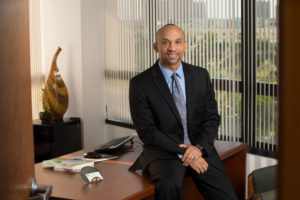
How can the universities better connect academia with industry to better facilitate praxis?
Generally speaking, all higher education has a desire to create a balance between theory and practice, or praxis. We know that is how students learn best. From my perspective, that is a good refection of who we are at Johnson & Wales University (JWU). This is why we have been implementing project-based learning for some time now. Of course, the perfect combination is always aspirational, but it is our goal and where we want to be. For this, we have been investing our efforts in training our faculty members to better balance both. For example, if a faculty member is specialized in research and theory, we will train him or her to also implement practical problem-solving, and vice versa. We train our professionals who are specialized in practical cases to also give theory the importance it deserves so students can maximize their learning opportunities. JWU creates partnerships with industry. Our curriculum is designed in concert with industry, which serves as a great benefit to our students, as well as industry leaders seeking to hire top talent.
What efforts is JWU making to ensure diversity at the institution?
Diversity is not the end-game. It all begins with diversity. I believe that diversity becomes the foundation of any institution. We have created a campus environment that respects diversity in a high level. But I believe that hiring is just as important. It is not enough to say that we can bring in students who are reflective of a diverse environment. We have to be able to introduce them to individuals who provide that same level of variety. We also integrate diversity into our programs. A good example of this is every year we collaborate with the Multicultural Foodservice and Hospitality Alliance. Recently, the Wall Street Journal published a ranking of diversity in the country and JWU came in No. 1 in South Florida and No. 3 in the nation. This is a reflection of our commitment to welcoming a diverse mix of students and faculty.
What incentives does North Miami offer to investors?
Through the North Miami Community Redevelopment Agency (NMCRA) we have a lot of incentive programs such as assistance 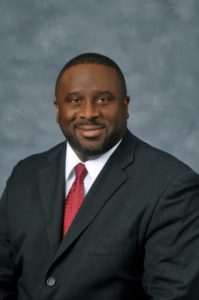 for acquisition, buildout and renovation grants. Through the NMCRA we are able to help pay the county impact fees for businesses in North Miami. These figures can be high for some of these businesses and we are able to help them. One of our new programs with the NMCRA is tax rebates. We do it through a tax increment finance agreement where, if you bring your business and create a number of jobs, we will give you a rebate of a portion of the property taxes generated by the business.
How are cities such as North Miami setting a good example when it comes to combating crime?
We have seen a reduction in our crime over the past several years. Our police department engages in the community and tries to be responsive to get ahead in areas where we see potential issues. We have added a number of resource officers into downtown and into the 7th Ave. corridor. These officers will be on Segways so that they are accessible to the community. Their presence creates an air of safety, and they have been successful in stopping crimes. This then creates awareness. Crime has not been a great issue in our city.
What is your vision for North Miami?
My vision is to help internally with the things people don’t see, such as improving our processes and making it easy to do business. We can provide incentives, attract businesses and provide basic services, but we also need to attract big projects. We are working diligently to invite the world into our city. We want to embrace the past and keep the charm of what was North Miami, with new developments and businesses. You have the opportunity to live, work and play in our city. We are open for business.
How the city of North Miami is attracting commercial interest to create positive growth
Smith Joseph Mayor – City of North Miami
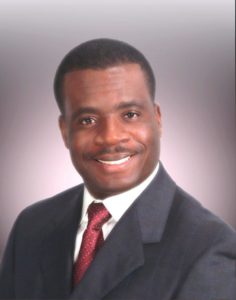 What are the most important aspects of the North Miami comprehensive plan?
To me, the single biggest opportunity from the plan is the height increase that we have implemented as part of our North Miami downtown development campaign. The new height restrictions should encourage more development projects downtown as well as bring more activity to the area. Another aspect of the plan is that we are the first city to take on the leading role in dealing with the threat of rising sea levels. Global warming is a major concern and, as a city government, it is important to take the appropriate steps to address these concerns. As part of community planning and development, we have policies in place for existing construction and programs to pinpoint buildings that may be at risk if we should have any incident of sea-level rise. My vision is to have a city that is resilient and able to withstand any adverse weather or climate change that will cause damages. I’m very proud of the fact that we took the leading role after Miami-Dade County.
What are the city’s current strategies to continue to attract and retain businesses?
Attracting new business or having them join this community is one our highest priorities. As mayor, I started a campaign to bring businesses and tackle unemployment in our city. Our unemployment rate was at 9.8 percent. First, I made sure that the North Miami Community Redevelopment Agency (NMCRA) was extended. The NMCRA is key in attracting investment into the area, and it will benefit many of the small businesses planning to come to North Miami, even offering partial subsidies. The Solē Mia Local Preference Office (LPO) managed by Garth Solutions will be very important in increasing community involvement, not only for residents but also small businesses. The LPO offers free job training and scholarship opportunities to North Miami residents in addition to offering essential consulting services to local firms. These local businesses are part of the fabric of our city, so it’s important to look after them. We have to make sure that they stay in the city and become part of the economic machine.
What would you identify as the biggest areas where new businesses or investors can get involved?
We have several main corridors. The main one is 125th street, heading east to west. West Dixie Highway is an area that I would really like to see developed. We need to attract more investment into these areas, because there is so much potential, but the city cannot development it alone. We are trying to encourage public-private partnerships.
How construction is providing homes for a new demographic of young professionals
Albert Milo Principal & Senior Vice President – Related Urban Development Group
What have been the main achievements of the Liberty Square project?
By far, our biggest achievement is creating a redevelopment plan that fulfills the needs and desires of those that will ultimately call Liberty Square home. From the onset, we faced significant anxiety, fear of gentrification and displacement. We’ve taken those concerns and, along with the community, created a phased redevelopment plan that completely eliminates any displacement and greatly improves the lives of all residents. With Liberty Square, we have an amazing opportunity to not only redevelop 58 acres within Miami’s urban core, but to also create a catalyst for broader redevelopment throughout the area and the city as a whole. There are very few times in your career when you’re able to make such a drastic difference, where you can take something that is in a pretty desperate state as well as creating something that is truly magnificent.
What are the main benefits and challenges regarding workforce housing?
The main challenge of workforce housing is the significant number of young professionals with a salary that is above the cutoff point to qualify for affordable housing but not enough that they can afford to live downtown. So, we have a whole generation of Miamians stuck in limbo and unable to find a home that they can afford. In order to achieve the goal of creating middle income workforce housing, we have been advocating for policies and incentives that the local government can put in place to help us and other developers be able to build the type of housing Miami so desperately needs. We believe it is not only important to focus on areas like Downtown and Brickell, but also bring this approach to areas around the in desperate need of mixed-income housing solutions.
What public policies can be pursued to help build up Miami-Dade’s affordable residential real estate market?
The future of Miami-Dade’s residential market is mixed-income housing. It will require some changes at the local level, which is why we have been advocating specific initiatives such as the deferment of impact fees for workforce housing units, a measure that the City of Miami agreed to implement. Another measure that has been adopted are ordinances that allow for increased densities for mixed-income developments, specifically focused on low-income units. This means that developers can obtain additional density if they take a portion of their workforce and affordable housing projects and make units for extremely low-income residents.
Invest: Miami speaks with Jose Parrilla, CEO & president of InvestQuest Partners
What were InvestQuest Partner’s most important successes and milestones for 2016?
We achieved many important milestones in 2016. From the business standpoint, we were able to open an important number of developments. Our primary business is buying, renovating and flipping assets. We wiped out over $10 million in liens held by the local municipalities and completed over 200 flips. Our success this year has allowed us to grow the company to 300 employees.
With the deceleration of real estate growth, what is the expected impact on real estate investment in 2017?
The current slowdown in the market is a temporary one. We strongly believe that Miami will continue on a path of long-term growth because of its history of continually attracting affluent investors. We are confident that in a two-year period we will be able to sell our new projects at similar or higher prices to the ones today. Even when you take into account that, for Latin American investors, it has become more expensive to invest in the U.S. due to the strengthening USD and that the proportion of foreign money in the market has decreased in the last few years, there have still been an increase in foreign investors with significant presence, such as those coming from Spain and Canada.
What has been the performance of the REO vs the short sale market?
The Real Estate Owned (REO) market has completely dried up. According to our data, which is very conservative, there are people in that market segment who are overpaying for properties. This might be related to some speculation in the market, with many players assuming that the market is slowly going to increase. However, our data suggests that we should be preparing for a slight downturn.
The opposite situation is happening in the short sale market. It is an important opportunity in Miami because it not only gives players a chance to help people by taking them out of a difficult situation offering “cash for keys,” but it also is the most lucrative investment in real estate because of its many revenue sources: commissions from the banks, commissions from the mortgage holder, and the property at a huge discount.
How can investors take advantage of the zoning in Miami?
The optimum zoning we are currently focused on is T6-80, which allows the developer to build up to 12 stories with a density of 150 units per acre. One of the main challenges for developers that are trying to build under Miami21 is compliance with the parking spaces that are required in order to be allowed to build the units. However, since one of our projects is near the border between Downtown and Brickell, we received the first permission to build our units without the required parking spaces. This shows that the city is evolving and adapting to a structure better suited for high population density.
To learn more about Invest Quest partners, visit their website at: http://investquestpartners.com/
How developers in Miami are adapting to a maturing real estate market
Edgardo Defortuna President & CEO – Fortune International Group
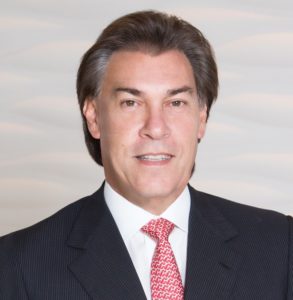 How was the performance of Fortune International Group during the slight sector downturn in 2016?
We are very happy with what we accomplished in 2016, even though, from a real estate standpoint, it was challenging in comparison to 2010 to 2015, where we saw very strong growth and plenty of activity. Toward the end of 2015 and throughout 2016, we saw a deceleration in terms of the speed of the sales and the projects being either built or launched. However, this shows that Miami, from a real estate point of view, has matured as a city. The economic cycles are not that extreme anymore. In 2016, even though there was a deceleration, the markets behaved very well. Developers weren’t selling as many as 20 units a month, but they did sell five to 10, which is considered a success in many cities around the world. The previous speed could not have been sustained for a prolonged period. Projects that are well funded with great sponsorship and great products will continue to be successful and continue to produce positive results. This may not be at the same pace as the period of 2010 to 2015, but they will still be producing value, without decreases in price.
Given that Miami’s real estate sector relies heavily on international buyers, how has the local market been impacted by the current global climate?
A lot of the pre-construction sales in Miami depend heavily on foreign buyers, mainly in Latin American countries. They all have been affected by the current slowdown of their economies and rate of exchange, making it a little bit more difficult to invest in Miami. However, in Latin America there is a culture of investing at least part of the wealth in safe tangible assets like real estate. Demand will continue to be strong. Miami is also seeing a strong focus from the Turkish market. Miami can provide the safety that they need to be able to diversify their assets. The U.K. is also an important market, not only because London has become incredibly expensive, but also because Brexit has forced many investors to look at diversifying their portfolio. Miami offers a lot to these investors.
In a market with many new players entering, how does Fortune International stay competitive?
We stay competitive by staying disciplined, concentrating in a small number of projects but at a high-end level. We love to do that for two reasons. First, with fewer projects, you are able to pay a lot of attention to the details. The key component of all of this is the people you surround yourself with. The quality of the architect and the interior designer, combined with the materials and spaces in which you create – the combination of all these assets together is what makes us successful.
Invest Miami speaks with Robert Reffkin, CEO, Compass Florida
This is a transcript of the interview, which has been edited for grammatical and editorial purposes. It is not the final article, but rather the text from which quotations shall be selected for the final article to be published. Kindly review the transcript to confirm that its contents reach your approval. Highlight specific quotes you feel are most relevant or of particular interest. You may also add information you think important. Please return any comment you wish to make regarding your interview within 5 working days.
How would you assess Miami as a growth market?
We are launched in New York, and New York clients have the greatest crossover with Miami of any market. A lot of our clients want to buy in Miami. Because of that, we want to be here. Miami is a true international hub. It is very important to have a strong, international brand and a strong client base. One can build that reputation in Miami. Third, this is an active real estate investment market. It has a lot of development, and a lot of transactions.
Compass incorporates a lot of technology for its selling platform. Can you comment on what Compass is working on?
Our “Compass Markets” app provides real time analytics that help you look at prices and transaction volume, over periods of time. Secondly, we have a very extensive valuation tool called “Value Properties,” which was build in house. Then there is “Collections,” which is really for buyers, where it is almost like Pinterest for real estate. You can put all the properties that you want, with your added notes and share the information with your relatives, so everyone can comment. The alternative now is many emails from your broker, each with its own set of email chains. Technology creates simplicity, and this is an industry that has one of the most complicated processes. We are trying to simplify all the processes and these apps accomplish that.
What have been your observations of trends in Miami, when compared with other markets?
We can tell you that across the country, we have seen an uptake in real estate transactions. We see that one of the greatest benefits is the second home market. The Hamptons, Aspen, Santa Barbara and Miami. The stock markets have gone up, and when that happens, people feel more confident. In 2016, the luxury market, in general, was depressed. The highest level of luxury is the second home. That hurt places like Miami. Now that the market is bouncing back, we are starting to see more activity.
To learn more about Compass Florida, visit their website at: https://www.compass.com/
Having just joined Swire from their Hong Kong headquarters, what can you tell us about Miami’s similarities and differences?
Hong Kong is geographically predisposed to be the trade link with China and the rest of the world. You have the protection of Hong Kong with rule of law as well as the professional services that trade requires. It is a great place to be headquartered while you are doing business in China or other parts of Asia. Similarly, Miami is the interface between U.S. and Central and Latin America. It is in a country with reliable laws as well as providing professional service infrastructure – legal, accounting, management consultancy – that a global company would expect. Much like Miami, Hong Kong has one of the busiest ports and airports, serving as an Asian transportation hub, as Miami is for Latin America. They are both geographically well positioned. In Hong Kong, you can quickly reach China, Singapore and Thailand, while in Miami, you can reach New York or Buenos Aires daily.
Brickell City Centre’s Phase One was released in 2017. How have sales for the tower performed?
The buyer profile remains largely overseas, but the mix is forever changing. We have seen a lot of Argentinean and Venezuelan interest, with a slight decline from Brazil. While those interested in buying are still representative of a largely international market, we are beginning to see more interest from people living in New York who are looking for an urban center with a beach. The market, has definitely slowed. There is a whole host of reasons why, from a strong U.S. dollar to political uncertainty in the region. However, what we are seeing, is just a pause for breath, which is healthy for the market. I don’t think there will be a large-scale correction because you can see the breaks already being applied.
When: Wednesday, March 15th from 6:00 – 7:00 pm
Where: The Conroy Martinez Group, 300 Sevilla Ave, Suite 311, Coral Gables, FL 33134
Find out the latest on the International Summit and Business Leadership Awards and enjoy cocktails and hors d’oeuvres at this evening reception.