Florida: Home of the Real First Thanksgiving?

Florida: Home of the Real First Thanksgiving?

By: Sara Warden

2 min read November 2019 — When we think of Thanksgiving, generally we conjure up images of hats with oversized buckles, turkey, cranberry sauce, pumpkin pie and The Mayflower. But according to historian Kathleen Deagan, research curator emerita of historical archaeology at the Florida Museum of Natural History, the first Thanksgiving was not exactly as we may imagine. Rather than taking place in Plymouth, the first Thanksgiving feast was actually celebrated in Florida.


The meal was shared by the Spanish Conquistadors and the native Timucuans, more than 50 years before the Mayflower arrived on American shores, according to historians. Don Pedro Menéndez de Avilés, a Spanish explorer and 800 soldiers and sailors landed on Florida’s shores near St. Augustine before holding the Mass of Thanksgiving.

“The holiday we celebrate today is really something that was invented in a sense,” said Deagan in an interview with the University of Florida. “By the time the Pilgrims landed at Plymouth, the people who settled America’s first colony with Menéndez probably had children and grandchildren living there.”

So instead of buckled shoes and hats, think suits of armor and 16th century Spanish garb. Instead of turkey, think salted pork, and instead of pumpkin pie, think garbanzo beans, olives and hard sea biscuits. “It was the first community act of religion and thanksgiving in the first permanent settlement in the land,” wrote University of Florida professor emeritus of history Michael Gannon in his book The Cross in the Sand.

Other sources say there were many other “Thanksgiving” ceremonies in Florida well before even Menéndez, including the landing of French explorer Rene Goulaine de Laudonnière at Jacksonville in 1564, Hernando de Soto in 1529 and Juan Ponce de León in 1513. After approximately 70 days at sea, all most likely would have had to depend on the kindness of the natives for food and shelter when they landed on American shores.

Some argue that the Plymouth mass is remembered as the first Thanksgiving because it was the first that spawned a yearly tradition. “None of these events were made anything of historically, or even rediscovered, until the 20th century, and thus did not contribute to our modern American holiday tradition,” said James W. Baker, author of Thanksgiving: The Biography of an American Holiday. 

But regardless of where the first holiday was held, the true meaning behind Thanksgiving has evolved to symbolize coming together with friends and neighbors to break bread and overcome differences. There is no doubt that this tradition has immense relevance for states such as Florida, with their rich patchwork of cultures. “The fact is, the first colony was a melting pot and the cultural interactions of the many groups of people in the colony were much more like the U.S. is today than the British colonies ever were,” said Gifford Waters, historical archaeology collection manager at the Florida Museum.

To learn more, visit: https://www.floridamuseum.ufl.edu/
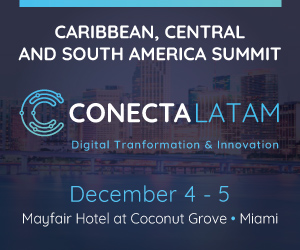
 

ConectaLATAM – Digital Transformation & Innovation

ConectaLATAM – Digital Transformation & Innovation

Capital Analytics is proud to sponsor with ConectaLATAM

Date: December 4-5
Location: Mayfair Hotel & Spa Miami, FL
CONECTA Latam | December 4 - 5 - Miami
Caribbean, Central and South America Summit
Speakers confirmed
How to reinvent a growth model for the Telco Industry?
  Digital Transformation
• Network Transformation
• B2B opportunities
• AI
• Data and IoT drive
• Preparing for 5G
• The role of NFV and SDN

  • Big Data and Analytics
• Future of Carriers and anticipating Scenarios
• How is Society Seeking Digital Services
• Blockchain
• BSS / OSS Implementation
• FTTH

 
Networking coffee break, lunch and cocktail dinner!
Para más informaciones acerca de agenda: renata.covos@conecta-latam.com Para más informaciones acerca de opciones de patrocinio y branding: raquel.freitas@conecta-latam.com
www.conecta-latam.com/latam
Sponsors and Partners
Miami Dominates in Innovative Coworking Real Estate

Miami Dominates in Innovative Coworking Real Estate

By: Sara Warden

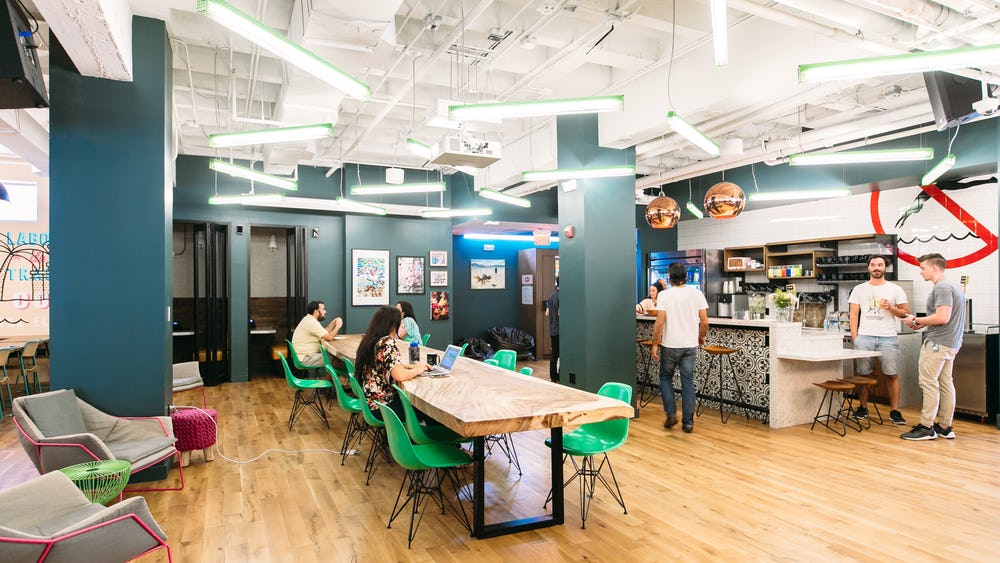
2 min read NOVEMBER 2019 — The traditional office space is changing fast. Hot-desking came first, and now with more pressure to recruit highly skilled personnel, workers are increasingly able to command perks such as home office and telecommuting. According to Fundera, telecommuting has grown by 40% in the last five years and employers offering the benefit save around $44 billion per year in total. The drive to home office also created a new real estate niche – coworking spaces – and that niche is now driving real estate growth in Miami.

“Coworking tenants continued to dominate absorption activity in Miami for the second quarter in a row as they continue to lease significant footprints in buildings throughout the market. Out of the seven largest lease transactions year-to-date, five were coworking tenants, with WeWork leading the number of coworking companies,” said Donna Abood and Michael Fay, Principals and Managing Directors-Miami at Avison Young in an article written for Rebusiness Online.

According to a special report by Yardi Matrix, coworking spaces accounted for one-third of leases over the last 18 months. Miami comes in third in terms of metros with most shared space as a percentage of real estate stock, at 3.5% –behind only Manhattan and Brooklyn. In the last 10 months, Miami has added around 1.1 million square feet of coworking spaces.

But one of the most highly-leveraged companies in the coworking arena is WeWork, a company that underwent a failed IPO attempt in the last year and wiped out around 80% of its value in the process. The company stretched itself too far, playing the Amazon tactic of taking on huge losses to undercut and wipe out the competition, but without having Amazon’s clout.

Alan Patricof, chairman emeritus of venture capital firm Greycroft and an early backer of Apple, does not believe the coworking space is a bad idea, but rather that WeWork simply bit off more than it could chew. “If you want to be a publicly traded company, you should act like a public company,” Patricof said in an interview with TechCrunch in September, adding that the board members “were all seeing the pot at the end of the rainbow.”

But the global value of coworking spaces is estimated at $26 billion, with growth of 6% expected in the United States to 2022 and 13% elsewhere. Despite WeWork’s errors in judgement, the market is there for a $49 billion valued unicorn, and Miami offers huge opportunities to those investing in the right way. According to Pandwe Gibson, founder and president of EcoTech Visions, a coworking space for manufacturing businesses, these spaces need to be constantly offering the next new thing. 

“Entrepreneurs in America don’t just need a WeWork. They don’t just need a desk. Entrepreneurs want to make stuff,” she told Moguldom. The Miami-based startup has 52,000 square feet of space and approximately $3.2 million in public and private investment to scale the business, while it carries out its first raise.

It doesn’t stop with manufacturing space. ShareMD recently spent $33.15 million to purchase a building in South Miami and one in Coral Gables in which to set up co-working spaces for doctors. “Because of the demographics in Florida, we are aggressively trying to expand in the metropolitan areas,” said Easton & Associates Vice President Elliot LaBreche, representing ShareMD in the deal in an interview with The Real Deal.

The attraction of this concept is accessibility to a doctor without the pressure to sign new clients, LaBreche added. “If you have a doctor, and their primary practice is in Fort Lauderdale, but they have some patients in Miami and West Palm, but not enough patients to support their practice, they can join the ShareMD network and use our offices as satellite offices.”


To learn more about our interviewees, visit:

https://www.avisonyoung.com/

https://www.yardimatrix.com/

https://www.wework.com/en-GB

https://www.greycroft.com/

http://ecotechvisions.com/

https://wesharemd.com/

http://theeastongroup.com/about/


The Unsolved Mysteries of the Everglades

The Unsolved Mysteries of the Everglades

By Sara Warden

2 min read October 2019 – The Everglades is a sprawling wonder of nature – over 1.5 million acres of swampland that is home to 350 species of birds, 300 species of fresh and saltwater fish, 40 species of mammals, and 50 species of reptiles, as well as several protected animal species. Coming in just after Yellowstone as the third-largest national park in the United States, its vast and difficult-to-navigate terrain has swallowed up many an unprepared traveler. Here are just three of the unsolved mysteries buried deep in the swamplands.

 1. The Lost Patrol

South Florida lies just at the tip of the Bermuda Triangle, and is not exempt from its fair share of missing aircraft, especially in the deep swamps of the Everglades. One such case that remains unsolved today is that of The Lost Patrol in 1945. As World War II was coming to a close, a training flight of five Grumman Avenger aircraft left Fort Lauderdale Naval Air Station and were never seen again.

A wreckage was found in 1989 but this was later attributed to a later crash, in 1947. But a research team led by entrepreneur Andy Marocco is convinced that, rather than flying east out of Fort Lauderdale and getting lost in open water over the Atlantic, the flight went down over the Everglades. As it stands, there are no known unexplained wrecks of Avengers in or near Florida, and the Lost Patrol remains to be found.

2. Eastern Air Lines Flight 401

In 1972, Eastern Air Lines Flight 401 took off from New York to Miami but crashed over the Everglades, killing 101 of the 176 on board. Among the dead were pilot, Bob Loft, and flight engineer Don Repo. The crash was found to have been caused by a minor technical fault, which was then fixed by Lockheed. Some of the parts of the downed craft were able to be salvaged for use in other airliners. 

But pilots, flight officers, even a vice president of Eastern Airlines, later reported seeing the two on flights that had reused the components from the crashed aircraft. The Eastern Airlines VP reportedly had a conversation with someone he assumed to be the captain, but as soon as he realized it was Loft, the apparition vanished. On board one aircraft, a galley oven was mysteriously repaired despite the insistence of the plane’s engineer that he did not carry out the repair and there was no other engineer on board. A flight attendant sighted a man that resembled Repo seemingly carrying out repairs on the oven.

But one of the most startling incidents happened on the Tri-Star 318, where flight attendant Faye Merryweather saw Repo’s face staring out from a galley oven. Two more witnesses backed her claims, and all three heard Repo say “Watch out for fire on this airplane” before he disappeared from sight. Later in the flight, the plane encountered serious engine trouble, and the last leg had to be canceled. Interestingly, the galley oven had originally been aboard Flight 401.

3. The Everglades Ghost Ship

According to the legends, the Everglades Ghost Ship was originally a pirate vessel in the 18th or 19th century, which targeted a merchant ship to pillage. The merchant ship led the pirate ship on a lengthy chase, and when it was finally caught in Cape Florida, the pirates were so incensed that they made every man aboard walk the plank to their death in the murky swamp. But having been forced to watch the slaughter of the crew, the wife of the skipper reportedly cursed the pirates and immediately an enormous tidal wave dragged the pirate ship far inland. To this day, it is doomed to roam the twisting waterways and labyrinthine swamplands of the Everglades, searching for a way back to sea. Natives, locals and hunters have all reported seeing the spectre of the rusted ship wandering aimlessly through the depths of the swamps.


Solar: The Ray of Light in Miami’s Clean Energy Bid

Solar: The Ray of Light in Miami’s Clean Energy Bid

By Sara Warden

2 min read October 2019 — This month, youth climate advocates came together around the world to highlight the global climate emergency, and Miami Beach listened. The city declared its own climate emergency in response and vowed to prioritize climate change on its agenda.

“We are so proud of the youth leaders and their allies who worked hard to make this declaration a reality. We hope the city of Miami Beach will continue this leadership trend by taking concrete action to reduce emissions, like transitioning to 100% clean and renewable energy,” Emily Gorman, a representative for environmental group Sierra Club, told the Miami Herald.

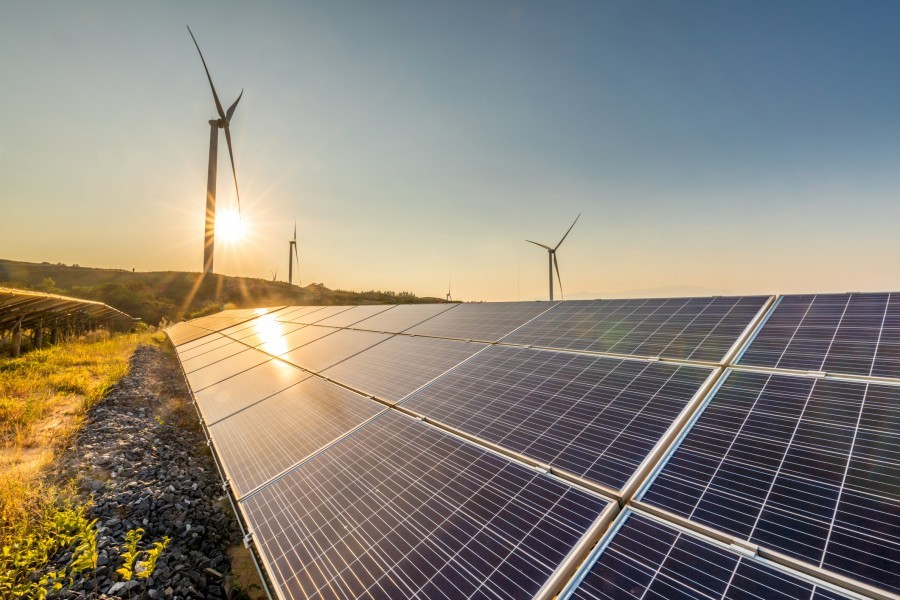
The city has dabbled in renewable energy over the years but certain technologies, like wind, are simply not viable. Land is becoming more expensive, meaning there are few options for wind power developers to install turbines in a cost-effective way. Miami Beach has access to the sea, but offshore wind turbines would be vulnerable to hurricane activity off the Gulf Coast, which could ultimately be more costly for the city. Hydro energy has been generated by Florida for decades in the city of Tallahassee, but now solar power undercuts it economically and the city proposed the closure of one of its two plants in 2017 due to inefficiencies.

Now, developers in The Sunshine State, are focusing on the shining beacon of hope for renewable energy policies: solar power. Initial outlay for solar energy in Miami-Dade is still relatively expensive, coming in at between $11,645 and $15,755, equating to around $2.74/W. But Miami’s privileged position means it has on average 248 sunny days per year, compared with the national average of 205, meaning its residents can reap greater rewards from solar power.

Major U.S. utility Florida Power & Light Company (FPL) is taking advantage of the opportunity to transition to renewables by launching the FPL SolarTogether initiative. “Based on the substantial interest and support that we’ve received on this innovative, voluntary and affordable program from such a diverse array of customers, community partners, businesses, local governments and national clean energy advocacy groups, we’re confident that the time is right for this program,” said Eric Silagy, president and CEO of FPL, to Renewable Energy Magazine.

In the largest community solar program nationwide, FPL SolarTogether will expand solar energy access across Florida by investing in the installation of almost 1,500MW of solar energy across 20 solar plants. FPL will offer access to its solar energy at a fixed monthly subscription cost and credits will be added to bills over the life of the plants. The utility expects most customers will receive a higher bill initially, which will reduce over three to five years and a full payback will be seen within seven years. 

The program could generate up to $249 million in net savings for FPL customers, according to the utility. But the main benefit of the program is democratization of access to solar energy, since not all citizens have the resources to install their own solar panels given the still-pricey initial outlay. “FPL SolarTogether is designed to remove many of the financial burdens associated with private solar generating systems while also providing direct savings in the form of bill credits, making it an affordable option for any customer. Participants could also utilize the program to meet state and federal sustainability goals,” said the utility in a press release.


To learn more about our interviewees, visit:

https://www.fpl.com/

https://www.sierraclub.org/


A Show 60 Years in the Making

A Show 60 Years in the Making

By Max Crampton-Thomas

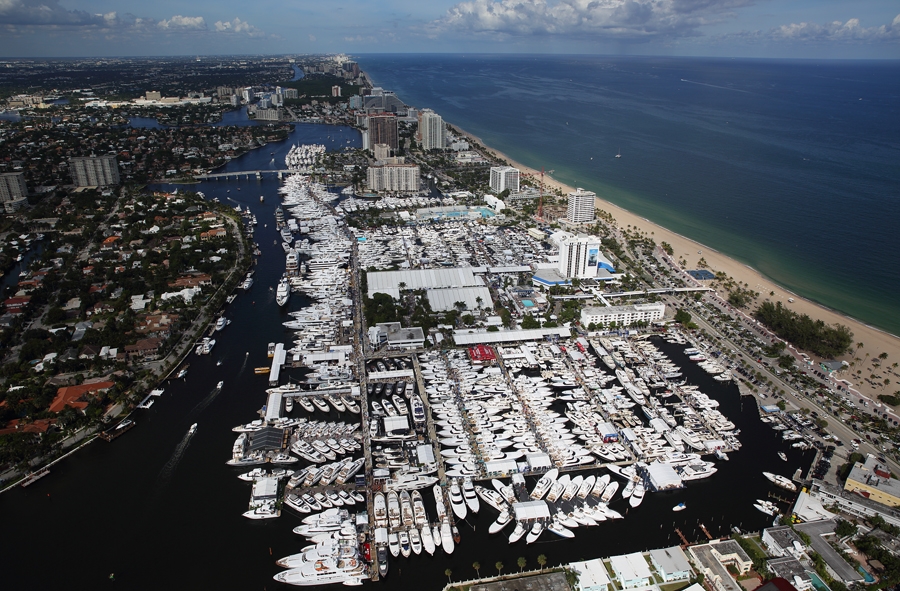
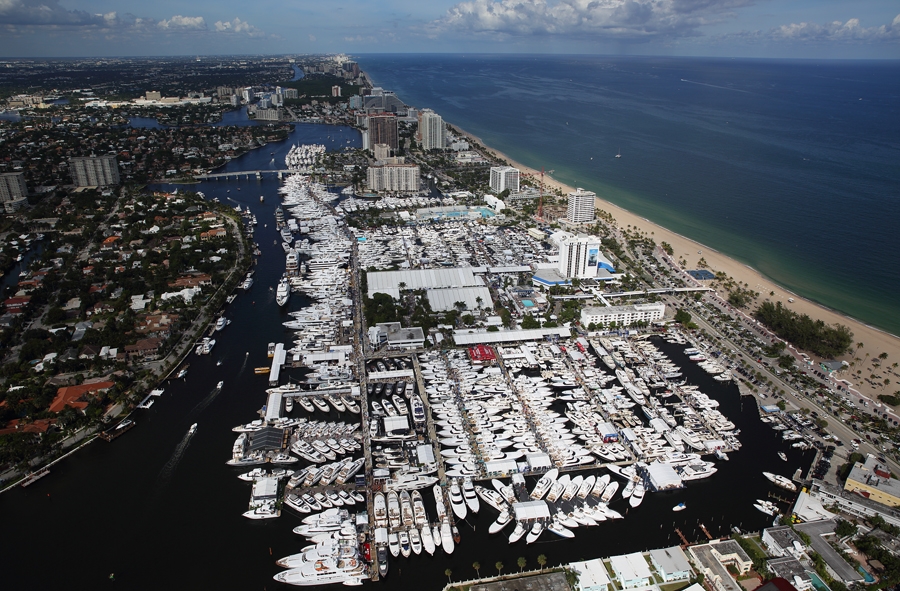
 2 min read October 2019 — Oct. 30 to Nov. 3 are probably the most important couple of days for the city of Fort Lauderdale and for Broward County. Over the course of these five days, the city opens its doors to over 110,000 boating enthusiasts from around the world representing over 50 countries, all here for the purpose of attending the Fort Lauderdale International Boat Show. While this event is always a highlight for the year, this year has special meaning: it’s the 60th anniversary for the Boat Show.

The success and longevity of the event comes as no surprise as Fort Lauderdale has been dubbed the “Yachting Capital of the World” with its economic roots deeply cemented in the marine industry. This event is not just a chance for visitors to see these boats up close and personal; it serves primarily as a platform for yacht brokers and various other exhibitors to showcase their marine products and services. 

The economic benefits to the region brought on by a boat transaction cannot be understated, and were highlighted by Paul Flannery, executive director for the International Yacht Brokers Association, when he spoke to Invest:. “A boat is an economic engine for the community. When a boat comes to a community, 10% of the value of that boat is injected into the local economy on a yearly basis. When there is a transaction involving a boat, an additional 13% of the value of that boat is injected into the local economy in the first year after the sale,” Flannery explained. He continued: “When a person wants to sell their boat, then we need to make sure they know that there is no better place to do business than South Florida, the yachting capital of the world. The impact of that boat sale happening in South Florida benefits the local economy through the yacht broker and marina owner, as well as all the people engaged in that transaction.”

The show this year will not only feature the debut of the show’s largest megayacht, Madsummer, it will also include the 2nd Annual Sunset Soiree and Yacht Chef Competition, a superyacht village and a mansion yacht. Perhaps most unique about this year’s event is the FLIBS 4 Bahamas initiative that will be in support of the Bahamas relief efforts in the Abacos and Grand Bahama, two of the islands devastated by Hurricane Dorian. The proceeds from both the raffle of a Pioneer Sportfish 180 and the Yacht Chef Competition will be going directly to charities working on hurricane relief for the islands.

With more than $4 billion worth of product on display at the Boat Show, the event has not only become a staple for the South Florida community, but the global marine community as well. The event is owned by the Marine Industries Association of South Florida, whose CEO and President Phil Purcell perfectly summarized to Invest: just how important the Boat Show is to the region. “We are the refit and repair capital of the world, the yachting capital of the world. When you think of Fort Lauderdale International Boat Show’s impact on the state of Florida, it generates an $857 million economic impact, with 110,000 visitors from 52 countries around the globe. Keep in mind that $100 million a day changes hands in sales during the five days of the show. The marine industry has an economic value to Broward County of $8.9 billion.”

To learn more about our interviewees, visit:

https://www.flibs.com/en/home.html

https://www.miasf.org/

https://iyba.yachts/

Miami BIDs Put Customer First, Profits Later

Miami BIDs Put Customer First, Profits Later

By Sara Warden

2 min read October 2019 — As commercial real estate evolves and retail stores move online, Miami’s authorities are addressing vacancy rates with an innovative business improvement district (BID) program that unites private business and local store owners to take back Main Street.

A BID is a legal mechanism that has successfully been put in place in Miracle Mile, Coconut Grove, Lincoln Road and Wynwood, and most recently was established in South Miami. The South Miami BID provides a budget of $200,000 annually to provide services to businesses and commercial properties that include “enhanced safety, marketing, advocacy, promotions, and maintenance,” which are provided by the City Commission in addition to basic services.

Lincoln Road is one BID that, rather than focusing on vacancy rates, is focusing on creating a community for the public to attract foot traffic to the area. “I look at Lincoln Road differently,” said Lyle Stern, a member of the Board of the Lincoln Road BID to RE: Miami Beach. “I’m trying to encourage all of us who live in Miami Beach to look at Lincoln Road differently.” He believes that vacancy rates are the concern of individual property owners and that by creating an attractive environment, people will come.

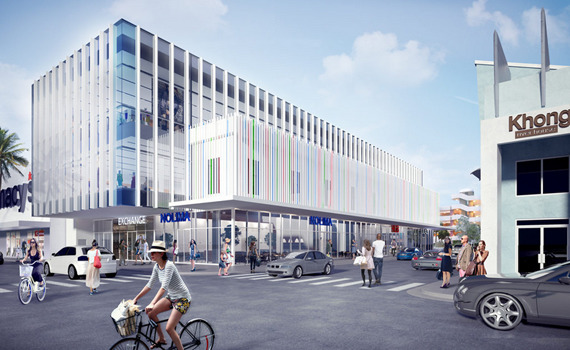
Despite a significant hole being created right in the middle of Lincoln Road by the collapse of shopping giant Forever 21, the BID is planning a $67 million makeover, with Miami Beach authorities contributing to the cost of construction. The private business owners in the area will foot the bill for the promotional events by increasing their own taxes.

The idea behind the BID is not directly to attract investment to a given area, but to nurture the area so that investment comes as an added bonus. The Wynwood BID has taken a look at what the public really wants, and one of its priorities was to re-open the beloved shuttered O Cinema. “O Cinema is a cultural icon in South Florida and a home for independent cinema,” said Albert Garcia, chairman of the Wynwood BID to the Miami Herald. “We were just as blindsided by the news of their closing as everyone else. As a long-time property owner in Wynwood as well as a member of the BID, it was important to me to see how we could keep O Cinema here.”

As the age of e-commerce dawns, BIDs are a way for traditional store owners to tune into the desires of the public, who now want more than just a traditional shopfront. Not only is investment being made in the community, but new business models are emerging that evolve with real demand.

“Nespresso has a very successful store on Lincoln Road,” Stern said to RE: Miami Beach. “As a company they’ve decided they don’t need cafés in the stores. They’re expensive and you have to maintain employees.” Instead, Lincoln Road’s Nespresso is downsizing from 4,500 square feet premises to 2,500 square feet, but staying on the same street, allowing it to maximize its value and provide its customers what they really want.


To learn more about our interviewees, visit:

https://www.southmiamifl.gov/563/Business-Improvement-District-BID

https://lincolnrd.com/lrbid/

https://wynwoodmiami.com/