It’s Go Big or Go Home for Miami’s OZs

It’s Go Big or Go Home for Miami’s OZs

Writer: Sara Warden

2 min read October 2019- When the Opportunity Zones (OZs) were created by the federal government in the 2017 Tax Cuts and Jobs Act, they were focused on 8,764 across the 50 states covering almost 35 million Americans. The program was designed to direct investment to regions with an average poverty rate over 32%, compared with the national average of 17%.

“We anticipate that $100 billion in private capital will be dedicated toward creating jobs and economic development in Opportunity Zones,” said US Treasury Secretary Steve Mnuchin in a press release. “This incentive will foster economic revitalization and promote sustainable economic growth, which was a major goal of the Tax Cuts and Jobs Act.”

Florida is home to 427 of these OZs and Miami-Dade houses 68 of them. “The creation of these new Opportunity Zones provides new investment opportunities for some of Miami’s economically distressed areas,” said Michael Finney, president and CEO of the Miami-Dade Beacon Council, in another press release. “This means greater consideration will be given to investing and providing jobs in areas of the county where they are needed most.”

The program works on the basis of deferral of taxes until either the property is sold or Dec. 31, 2026, whichever comes first. Investors can claim a 15% tax reduction if they invest over the entire 10-year period.

But the program is still new, and many investors are struggling to work out the best way to obtain returns. “Every real estate developer in the country is trying to figure out their Opportunity Zone strategy,” Reid Thomas, principal at NES Financial, told the Miami Herald. “Some are deciding it’s not worth the hassle, (and) that they’re not going to bother doing this kind of development.”

But those that do bet are betting big. Developer Russell Galbut closed a deal for the final piece of acreage from Northeast 29th to 32nd streets, and Northeast Second Avenue to Biscayne Boulevard. The $4.9 million purchase of 2901 Northeast Second Avenue brings Galbut’s total investment in the project to over $37 million. The site will house a major mixed-use development built by Galbut’s company Crescent Heights. It plans to build 800 residential units and use over 600,000 square feet for retail and office space.

Galbut told Miami-based real estate magazine The Real Deal that the OZ incentive was “some of the smartest legislation that has come out of Congress in a long time,” adding that his company is buying properties in all markets across the OZs.

But some investors saw the virtues in the Miami real estate market before the OZs arrived, and now there’s an added bonus to their investments. Developer BH3 invested $60 million in a retail and showroom and the space happened to be placed in one of Miami’s OZs. “The fundamentals, economics, and merits must stand on their own, whereby the tax benefits are purely an added bonus. A bad deal with good tax benefits is still a bad deal,” Greg Freedman, principal and founder of BH3, told the Miami Herald.

Although some are sceptical that the OZs will provide tangible benefits to anyone other than the investors, Neisen Kasdin, managing partner at law firm Akerman LLP, told the Miami Herald the zones are still in their infancy. “At the end of the day, these neighborhoods will benefit the most when people invest money in them,” he said. “Whether it’s a real estate development, or a capital-intensive project or businesses…You have to start with the assumption that investment in neighborhoods [that have] only seen disinvestment is a good thing.”


To learn more about our interviewees, visit their websites: 

https://www.miamigov.com/Home

Miami Working to Solve Affordable Housing-New Talent Conundrum

Miami Working to Solve Affordable Housing-New Talent Conundrum

Writer: Sara Warden

2 min read September 2019 As business hubs grow, the private sector must attract more talent to the area. But the Catch 22 for the government is that, as more people come, the more neighborhoods gentrify and the less affordable housing is available. Given this reality, how can Miami’s thirst for new talent be maintained? Through inventive new tax incentives, according to the city and state governments.

Since 2012, Miami-Dade’s population has been growing at a steady rate of about 1% per year, but the cost of living in Miami is well above the national average. According to Best Places, which ranks U.S. cities in relation to a national average of 100, Florida scores 110.9 and Miami 137.1. The cost of housing in Miami is by far the biggest expense, coming in at a whopping 174.3 to the US average of 100.

The median home cost in the United States is $219,700, while in Florida it is $225,200 and in Miami the number stands at just over $350,000. But Miami’s GDP is projected to stay strong, with GDP per capita set to increase to $49,293 by 2022 from today’s $48,601 despite a steadily growing population.

One reason for this is the state of Florida’s attractiveness as a workplace. It has a 6% sales tax on items bought, but there is no personal income tax on earnings, although federal income taxes still apply. However, this means that a Floridian earning $30,000 per year would not owe any of this to the state in personal income tax, while a New Yorker earning $30,000 per year would take home around $28,837 per year after paying state income taxes.

Florida’s corporate income tax rate also comes in at the lower end of the scale, especially in comparison to other major cities. At just 5.5%, it is lower than New York at 6.5%, California at 8.84% and Illinois at 9.5%. “Hedge funds and finance firms in places like New York, Chicago and California are feeling the burden of operating in high-tax states,” said Nitin Motwani, managing director of Encore Housing Opportunity Fund, to the New York Post.

This seems to be one reason why billionaire investor Carl Icahn this month announced his company would be moving from New York to Miami. But more than this, over half of his employees decided to move with the company, receiving a $50,000 relocation benefit each.

Icahn’s company will be moving to Magic City, in Little Haiti. As the name would suggest, the area was built on an influx of immigrants and refugees coming from Haiti in the 1970s. Now, with the $1 billion Magic City development, the neighbourhood is gentrifying fast. “Even if Magic City did not come today, the pace of gentrification is so rapid that our people will not be able to afford homes here anyways,” Marleine Bastien, a community organizer, told CNN. “Magic City is not the government. Affordable housing policies have to come from the government.”

Miami’s Mayor Francis Suarez is facing the issue head on. He championed the $400 million Miami Forever bond, designed to make Miami living sustainable. “We actually created in our first tranche of Miami Forever, a sustainability fund for people to renovate their homes so that they can stay in their properties rather than having to sell their properties,” he told CNN. So far $15 million has been allocated to these purposes.

Another development is a public-private partnership between Pinnacle Housing Group and the government to build Caribbean Village in South Miami Heights, which will have 123 units for older residents, with rents ranging from $420 to $1,070 per month. The need for that housing is more acute today than ever, and it’s exciting to be delivering Caribbean Village to the residents of South Miami-Dade County,” said David Deutch, co-founder and partner at Pinnacle, to Miami Today News.

To learn more about our interviewees, visit:

https://carlicahn.com/

https://www.encorecm.com/

https://www. pinnaclehousing.com/

https://www.miamigov.com/Government/City-Officials/Mayor-Francis-Suarez

Miami A Bridge for US-Latam Tech Investment

Miami A Bridge for US-Latam Tech Investment

Writer: Sara Warden

2 min read SEPTEMBER 2019 — It seems that more and more US cities are being labeled tech hubs every day, but Miami-based companies see a unique opportunity in the state that cannot be provided elsewhere. Instead of locking themselves into one market, Miami can provide startups a launch pad into the vast untapped Latin American market, and tech startups are flocking to the city in droves to take advantage of these opportunities.

Possibly the most famous is SoftBank Group, a Japanese investment firm that has set up roots in Miami to gain access to Latin America’s infant venture capital market. SoftBank has pledged $5 billion to the Latin American market, with some of that amount already invested to date. In fact, by the first half of 2019, these kinds of investments in Latin America have almost reached the $2.4 billion invested in all of 2018 – and it could not be done without Miami.

“This is the kind of capital that has never been seen before in Latin America,” Andre Maciel, a managing partner at SoftBank Group told Bloomberg.

About 70% of Miami’s population is composed of Latinos, providing the city with a unique workforce that can capture the attention of untapped Latin American entrepreneurs from a US base. “Part of our secret sauce is that we’re a city built by immigrants. Miami is a very young city, but we have the grit and resiliency of those people. Miami is a startup in and of itself. If you’re willing to roll up your sleeves, you can make it here,” Felice Gorordo, the CEO of eMerge Americas told Forbes.

But Miami is not just a base for investment in other regions. It also has the credentials that make it one of the best places to invest in the US. It comes seventh nationally for venture capital investments and in the first half of 2019 alone, around $1.54 billion was invested in South Florida tech companies.

SoftBank also made a multimillion-dollar investment at the end of 2018 in ParkJockey, making the company Miami’s first unicorn and one of the most valuable parking companies in the world. Building on the sharing economy model, ParkJockey allows landlords to rent parking spaces to large-scale companies like Uber and Lyft. The reception to this technology says “a lot about the ability to build a business in Miami and take it to significant size,” founder Ari Ojalvo told the Miami Herald.

“Miami has a tremendous tech talent pool, and we’re fortunate to be located in this burgeoning tech market,” said Taunia Kipp, says Executive Vice President of Corporate Marketing & Communications at Kaseya, an IT management software company, on Refresh Miami.

Kaseya is one of the most recent success stories for a Miami-based tech firm. Last month, the company attracted a $500 million investment from San Francisco-based investment firm TPG. Kaseya CEO Fred Voccola said in a press conference that the Miami growth will not stop as the company heads for an IPO within the year. “We want to open up people’s eyes to the talent that is here—and that it can be scaled,” Voccola said.

Another IPO that’s on the cards could be Buenos Aires-headquartered firm Technisys. In May, it closed a $50 million funding round. And when it wanted to establish a footprint in the United States, Miguel Santos, one of the three founders told Forbes that there was no question that Miami should be the location. “We are here to stay and the plans are big. The next stage is probably a public offering in say, three to four years,” he said.

To learn more about our interviewees, visit:

https://group.softbank/en/

https://www.technisys.com/

https://www.kaseya.com/

https://www.parkjockey.com/

https://www.emergeamericas.com/insights/

Miami’s Industrial Real Estate Has Buyers Lining Up

Miami’s Industrial Real Estate Has Buyers Lining Up

Writer: Sara Warden

2 min read SEPTEMBER 2019 — Miami is an attractive place to live and a business hub, but that also means its real estate doesn’t come cheap. In the huge land expanses involved in industrial real estate, assets cost a pretty penny. But the dynamics of the Miami market mean developers are not shying away from putting their hand in their pocket.

A key example of this is the recent sale of the three-building, 74-acre Centergate development at Gratigny in Hialeah for $178 million, Florida’s biggest sale of the year. Real estate giants CBRE closed the sale on behalf of the buyer.

“Centergate is one of the largest industrial offerings to come for sale in South Florida in recent years,” said CBRE Executive Vice President Jose Lobon in a news release. “Given the challenges to aggregate square footage in our market, Centergate presented a unique opportunity to acquire critical mass in one of the most desirable logistics markets in the nation.”

The sale can be broken down to a price of $111.25/ft2, a steal compared to recent deals in the greater Miami area. At the end of last month, institutional investor The Blackstone Group bought the 14-acre Airport Trade Center property west of Miami International Airport for $56 million, or $152/ft2.

Also this month, CBRE closed another multimillion-dollar industrial real estate deal, selling the five-building Miramar industrial portfolio to Stockbridge Capital. This deal equates to an eye-watering $192/ft2.

“It’s hard to buy industrial real estate in South Florida. It’s very competitive. Particularly when you see something of this size, multiple buildings,” Lobon added. “The opportunity to be able to buy in one stroke over 600,000 square feet of Class A, high-quality institutional industrial real estate in South Florida, those opportunities don’t come around that frequently.”

With these values, it’s not hard to see why other industrial real estate investors have made Miami a prime focus in their business plans. NYSE-listed real estate corporation Terreno has made Miami a cornerstone in its six-market strategy. 

“Terreno acquires, owns and operates industrial real estate in six major coastal US markets. Exclusively. Functional, flexible, infill real estate located at the intersection of growing demand and limited, or even shrinking, supply,” the company says on its website.

E-commerce is one of the reasons why industrial real estate close to the city limits is in such high demand in recent years. Miami is the sixth-most densely-populated city in the United States and the metropolitan area is home to over 6 million people. 

A 2017 study by San Francisco technology company Trove Technologies found that Florida is No. 1 for discretionary income in the South Atlantic region. Discretionary income is the amount left over after paying for the essentials such as rent and bills.

A huge captive population combined with sizeable disposable income is not only good news for e-commerce, but also for the US industrial real estate giants that are betting on the greater Miami area.


To learn more about our interviewees, visit:

https://www.cbre.com/about

https://www.blackstone.com/

https://stockbridge.com/

https://terreno.com/

Miami Dolphins Kick Off Season With New Training Complex, Partnerships, Roster Moves

By Yolanda Rivas

2 min read AUGUST 2019 — With a new head coach and a rebuild underway, the Miami Dolphins will field a re-tooled look when the NFL’s 100th season kicks off next week. That look extends beyond the players and coaches, with a new training complex in the works and fresh partnerships that emphasize community involvement and impact. 

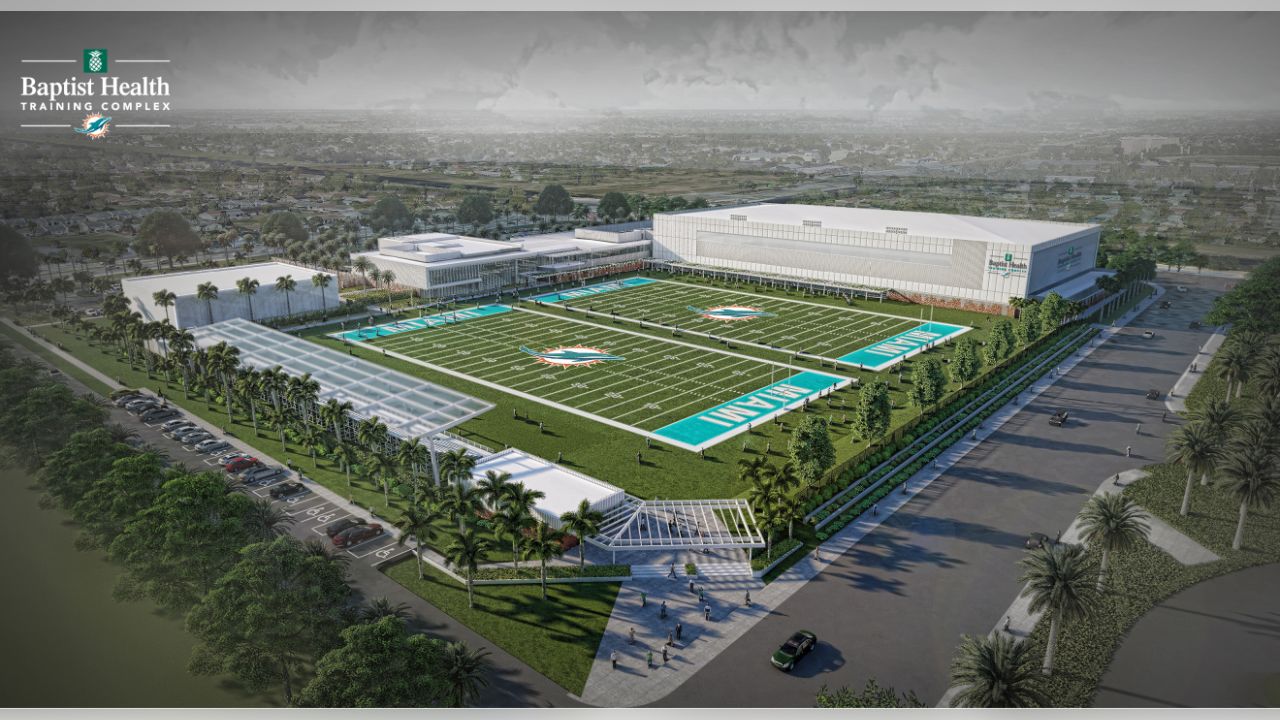
The Dolphins recently broke ground on the $135 million state-of-the-art training complex and sports performance clinic in Miami Gardens. The facility, named Baptist Health Training Complex, is part of a multiyear partnership with Baptist Health that is projected to open in spring 2021. 

“The Baptist Health Training Complex will be a state-of-the-art football facility with Baptist Health providing a world-class sports performance clinic available to the public so people can have access to the same care the players get,” Miami Dolphins Chief Executive Officer Tom Garfinkel said in a written statement.

The 125,000-square-foot training facility and 92,200-square foot indoor field will be significantly larger than the team’s current facility. The complex will also house an innovation hub, a state-of-the-art hydrotherapy area, a dedicated recovery area that includes cryotherapy and isolation tanks, an athletic training room with an expansive rehabilitation space, meeting rooms, an outdoor practice area with two full natural-grass fields, full indoor practice facility and other amenities. 

Another significant announcement by the Dolphins and its FOOTBALL UNITES™ program was the partnership with Miami-Dade County Public Schools (M-DCPS) through Values Matter Miami, which promotes education and values among the city’s students. According to an official announcement, starting in September, the Dolphins will recognize a student each month who best exemplifies a specific value.

“The Miami Dolphins are proud to strengthen our relationship with M-DCPS by supporting the Values Matter Miami Program to directly impact the students of Miami-Dade County,” Jason Jenkins, Miami Dolphins’ senior vice president of communications and community affairs, said in a written statement about the partnership. 

These initiatives are part of the Dolphins goal to inspire a healthier, more educated and united South Florida community. 

To learn more about our interviewees, visit:

Miami Dolphins: https://www.miamidolphins.com/ 

Baptist Health: https://baptisthealth.net/en/pages/home.aspx 

Miami-Dade County Public Schools: http://www.dadeschools.net/ 

Values Matter Miami: http://osi.dadeschools.net/valuesmatter/

Lights, Cameras … Showcasing Miami’s Rich Movie History

Lights, Cameras … Showcasing Miami’s Rich Movie History

Writer: Yolanda Rivas

2 min read AUGUST 2019— Miami’s beautiful beaches, art-deco buildings and culturally diverse neighborhoods have been the setting for numerous movies and TV shows over the years. To showcase the city’s history in the film industry, Miami Beach recently launched its “Filmed on the Beach” interactive portal.

The digital film tour webpage features an in-depth look at the movies and shows shot on the island through the years. The portal features maps of South Beach, Mid Beach and North Beach that indicate locations where movies, TV shows and music videos have been shot. 

“We want our residents to better connect to our city’s history as well as inspire future filmmakers to follow in some of the famous footsteps,” Matt Kenny, the city’s director of tourism and culture, stated in a press release. “The interactive tool will be monumental in doing so and reminding individuals why Miami Beach was, and still remains, a cultural icon on the silver screen,” he said. 

Users can explore the locations, types of films and fun facts about each production by scrolling through key points of the city, marked with stars, on the interactive maps. South Beach is the neighborhood with the highest number of productions. This internationally recognized neighborhood has had a total of 32 productions.

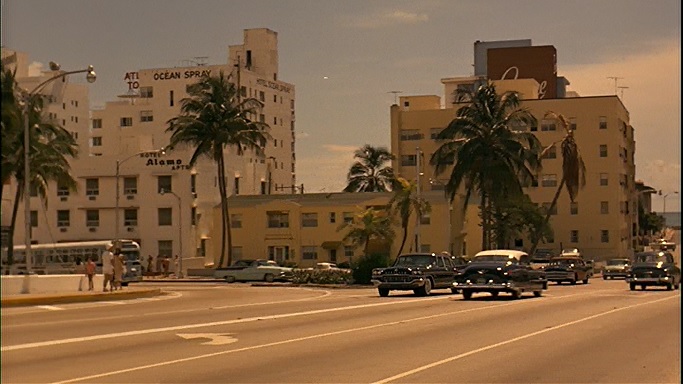
In 1964, international attention descended on South Beach with Muhammad Ali’s famous 5th Street Gym and his upset victory over Sonny Liston at the Miami Beach Convention Center. Among the 1960s shoots that stand out are The Jackie Gleason Show TV series and the filming of Elvis Presley’s Clambake. In the 1980s, South Beach and Ocean Drive were transformed into magnets for film, advertising, fashion, art and culture with shows such as Miami Vice

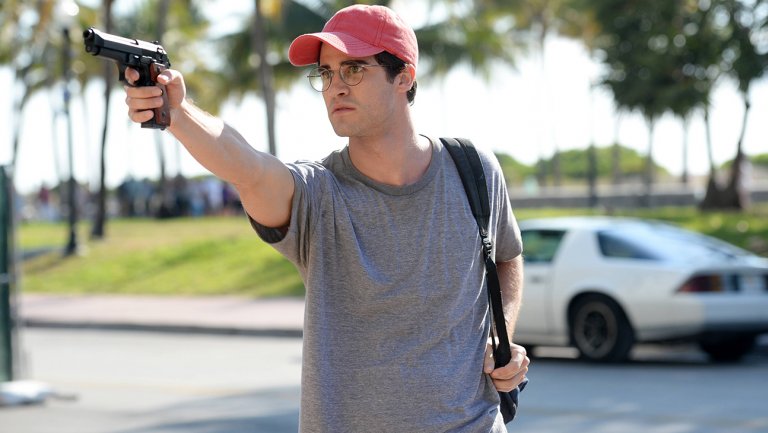
Hollywood’s love for South Beach continued with movies such as Scarface, The Birdcage, the Bad Boys trilogy, TV shows such as The Assassination of Gianni Versace, Burn Notice and Marvelous Mrs. Maisel and numerous music videos.


Distinguished by its luxury hotels, Mid Beach has also been the setting for several films. Many of these notable movies took place around the Fontainebleau Miami Hotel, which according to Filmed on the Beach was the favorite hang-out of Frank Sinatra and served as the backdrop for his 1960 television special. The iconic scene of the golden-painted Bond Girl in 1964’s Goldfinger movie and scenes from Scarface and The Bodyguard were also filmed in the Fontainebleau. 

Last but not least, the beautiful North Beach, which is often a place to get away from the noise of South Beach, has attracted many movies and music video producers as well. Among the most iconic films recorded in the area: The Godfather II. The Beatles’ live performance on The Ed Sullivan Show was also shot here. According to Filmed on the Beach website, it is said that the Beatles spent eight days a week in Miami Beach. Bad Boys III, Bay Watch and music videos from the Jonas Brothers and Pitbull are some of the recently recorded productions in the area. 

To maintain this rich history of the local film industry, Miami’s Film Production Grant Program is offering grants for at least nine feature films, music videos, television shows, documentaries, short films and web series who choose to shoot in Miami Beach.  


To learn more about our interviewees, visit:

Filmed on the Beach:http://www.mbartsandculture.org/filmed-on-the-beach/ 

City of Miami Beach: https://www.miamibeachfl.gov/ 

Miami Beach Arts & Culture: http://www.mbartsandculture.org/ 

Film Production Grant Program: https://filmiamibeach.gosmart.org/ 

Our Picks: Top 5 Miami Neighborhoods to Live, Work and Play

By Yolanda Rivas

2 min read AUGUST 2019 — With warm weather, a diverse population and a strategic location, Miami is a magnet for new residents. From luxury condos to mixed-use developments and single-family homes, the city’s residential sector remains strong. These are five thriving neighborhoods to live, work and play.

Wynnwood

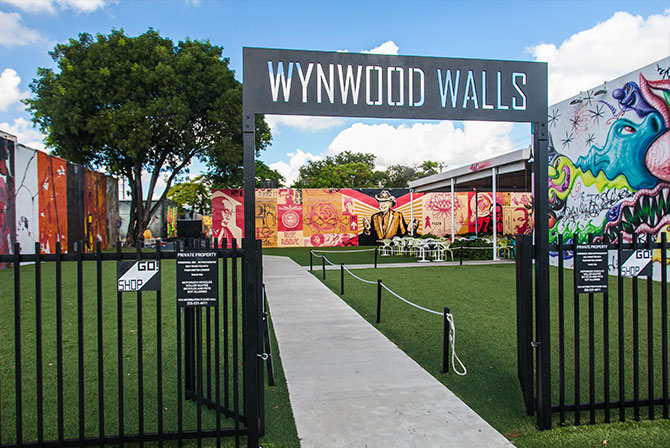
The popular art district is a must for many visitors. What once was an area with shuttered factories and warehouses is now recognized as a premier destination for arts, culture and innovation. Wynwood is home to over 400 businesses, including art galleries, antique shops, artisanal food and beverage restaurants and innovative companies. The neighborhood’s street art and hundreds of murals and graffiti are a main driver to the area. The 2018-19 Wynwood Market Report states both multifamily and office inventory in the Wynwood Business Improvement District market are poised to double over the next three years, as projects that are under construction are delivered.

Brickell

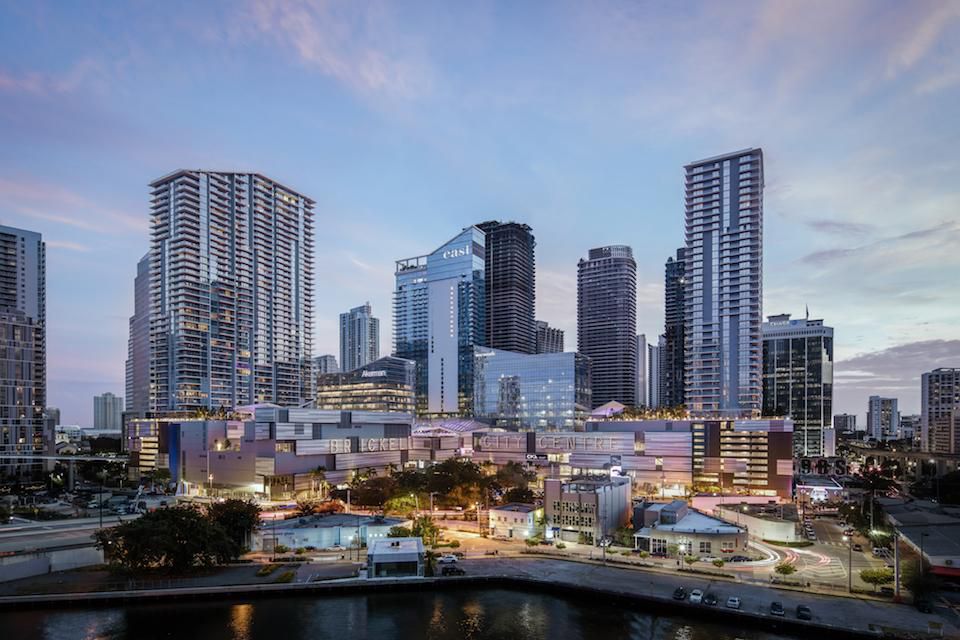
Known as the financial district of Miami, Brickell has much more to offer than just business and office space. With many trendy bars and restaurants, hotels, condominiums and business opportunities, Brickell is among the fastest-developing areas in Miami. The opening of the $1.05-billion shopping and mixed-use Brickell City Centre in 2016 has been a catalyst for growth. The walkability in Brickell and access to the metromover are also some of the benefits for families and businesses in the area. 

“Brickell offers the ultimate live, work and play lifestyle. Apart from its walkability and nightlife, it also serves as a central point between the best Miami has to offer. It’s minutes from Coconut Grove, Key Biscayne, Wynwood and Miami Beach,” Diego Valencia, founder of WeRentBrickell.com, told Invest:.


Coconut Grove

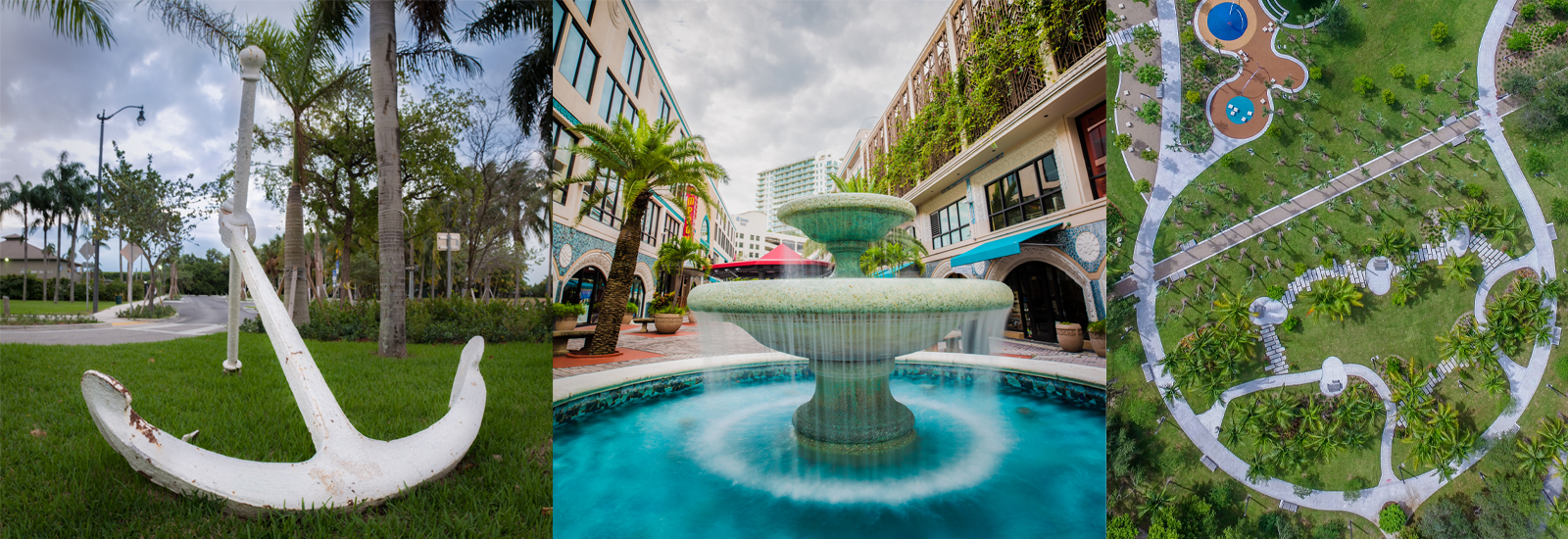
Located south of Downtown Miami, Coconut Grove is a pedestrian- and bike-friendly neighborhood that is perfect for an escape from the city’s noise. It has been the sailing capital of Miami and it is known for its lush green landscape, bohemian setting and the beautiful Biscayne Bay waters. The renovation of the iconic, open-air mall CocoWalk is expected to attract national and international brands to the area. “The entire retail and office landscape of Coconut Grove is being redeveloped, and there are a significant number of baby boomers who are living in large homes and are reaching a stage in life where relocation makes sense. This creates opportunities for new buyers and developers,” Jay Phillip Parker, CEO of Douglas Elliman Real Estate, said in an interview with Invest:.


Edgewater

Located north of Downtown, next to Wynwood Arts District and south of the Design District, this neighborhood has great potential as a live, work, play community. Residential and office towers in the area have great views to Biscayne Bay and a strategic location near some main highways, major neighborhoods and arts and culture offerings. Property prices are usually lower than those in Miami Beach or Downtown and construction activity is on the rise.


Doral

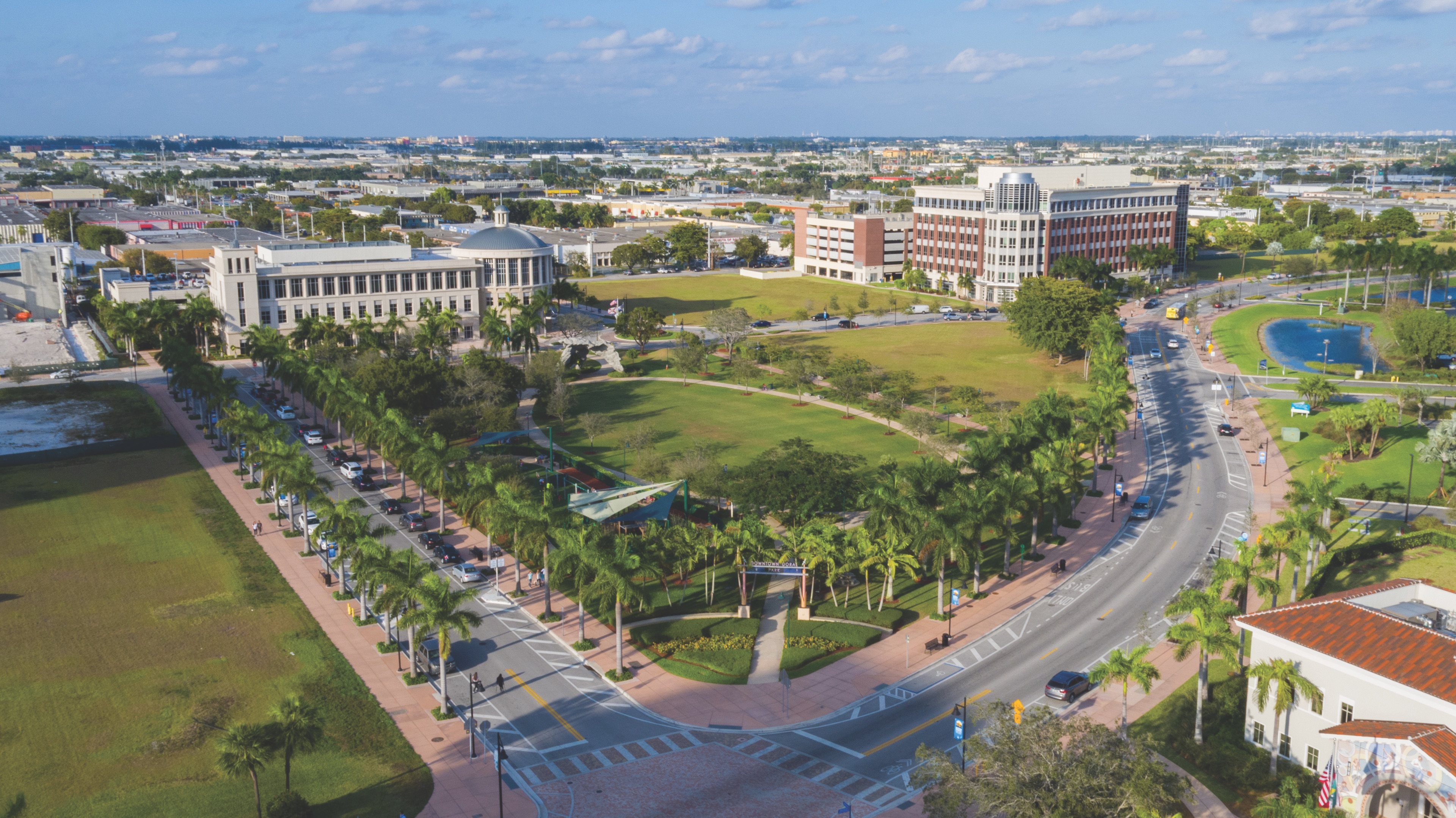
Doral is one of the fastest-growing cities in Miami-Dade. The city’s population has grown 77% in the last eight years and is ranked No. 2 in Forbes Magazine’s America’s Top 25 Towns To Live Well, which cites the city’s cultural amenities, pro-business environment, and highly educated workforce. 

“Doral is one of the best locations to live, work and play. It has the parks, restaurants and amenities, and it’s located between the major highways and near the airport. A lot of major companies are headquartered in Doral, and many of the industrial players are located in the city as well. The government is very approachable and they understand business needs,” Rich Guertin, regional vice president of PS Business Parks, told Invest:.


To learn more about our interviewees, visit:

WeRentBrickell.com: http://www.werentbrickell.com/ 

Douglas Elliman Real Estate: https://www.elliman.com/florida 

PS Business Parks: https://www.psbusinessparks.com/ 

Technology Shaping Healthcare Sector in Miami

By Yolanda Rivas

2 min read JULY 2019 — The health sector in Miami, already known for its positive outcomes, is banking on innovation and technology to keep its high ranking as a healthcare provider. Artificial intelligence, telemedicine, virtual reality, electronic medical records, digitized healthcare and blockchains are some of the advances that are transforming the industry. 

The Renfrew Center of Florida is among the local institutions integrating virtual therapy to improve access for patients. Virtual healthcare allows patients to communicate with out-of-town healthcare providers without the necessity of traveling. It represents a more affordable and convenient way to receive care. 

“Virtual therapy is an area of significant growth in the mental health field that allows us to reach people who live in areas where there aren’t therapists or treatment facilities for eating disorders,” Gayle Brooks, chief clinical officer at The Renfrew Center, told Invest:. 

The center recently launched a telehealth therapy group in Florida, which provides support to anyone in the state who is struggling with any eating disorder. “This program works for two types of people: those who come into that group and discover that they need a higher level of care, or those who use it as a tool for their continuing care after they receive a higher level of treatment,” Brooks explained. 

According to a Deloitte survey, 58–69% of physicians expect to increase their use of technology. Tenet Health’s Miami-Dade Group CEO Jeffrey Welch, in an interview with Invest:, emphasized the importance of technology to provide faster and more effective solutions that can lead to healthier individuals living in healthier communities. 

“Every one of our hospitals in the area has at least one robot that can be used for thoracic general surgery, gynecological and colorectal procedures,” Welch said. “The goal is to utilize technology to provide minimally invasive treatment options that can reduce recovery time and get people their lives back, so they can do what they love,” he added.

Accenture’s Digital Health Tech Vision 2019 report showed that 94% of healthcare executives say that the pace of innovation in their organization has accelerated over the past three years due to emerging technologies.

Health institutions, like Miami Jewish Health Systems, are also integrating innovative programs to improve the delivery of care. The Florida PACE Centers (Program of All-Inclusive Care for the Elderly) is an example of how a diverse and innovative program can keep people out of institutions. 

“Miami Jewish Health has a reputation for being innovative in the delivery of healthcare for the elderly. Our PACE centers, which are responsible for the delivery of all primary, acute, long-term care and supportive services, continue to grow and expand,” Jeffrey Freimark, CEO of Miami Jewish Health Systems, told Invest:. 

Miami Jewish Health also has a major project underway called the S. Donald Sussman EmpathiCare Village, which will be wildly innovative in terms of its free-range open-living environment for patients with neurocognitive disorders.

According to Deloitte’s Healthcare and Life Sciences Predictions 2020 the top external factors that will shape the sector are: more informed and demanding patients, new business models due to digitized medicine, wearables and mHealth applications, Big Data and the influence of technology and science in regulations and patient safety. 

To learn more about our interviewees, visit:

The Renfrew Center: http://renfrewcenter.com/locations/non-residential/coconut-creek-fl 

Tenet Health Miami-Dade Group: https://tenetflorida.com/ 

Miami Jewish Health: https://www.miamijewishhealth.org/ 

6 New Areas of Study You Didn’t Know Were in Miami

By Yolanda Rivas

2 min read JULY 2019 — Technology has reshaped not only how education is delivered but what courses are being taught, with universities and colleges revamping their curriculums to better prepare students with the skills employers demand. 

In Miami, local public and private higher education institutions have upgraded their academic offerings and have focused on working with local businesses to provide opportunities for more than a quarter-million students. 

Invest: Miami spoke with local leaders in the sector to get an update on their new offerings.

Florida International University (FIU)

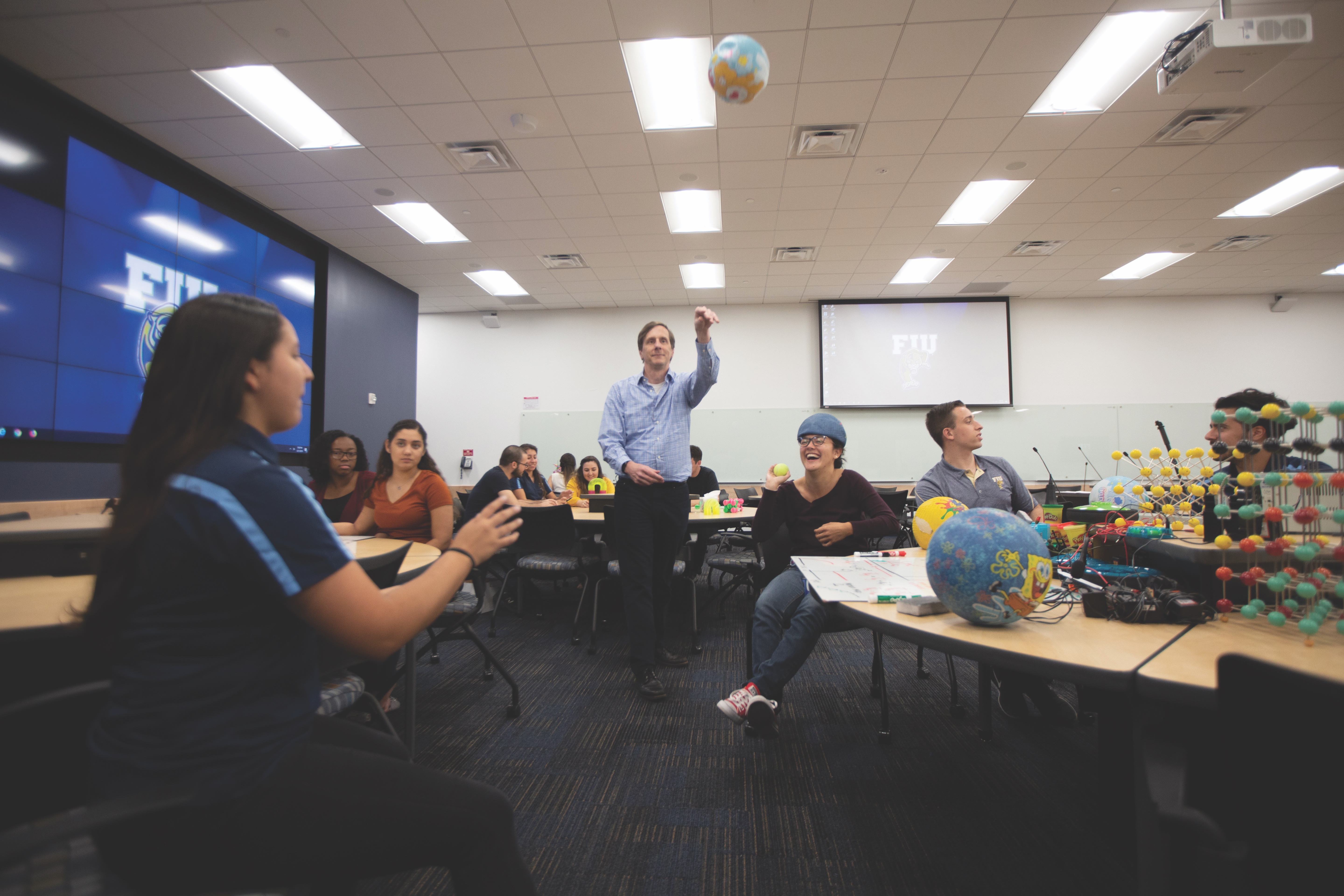
FIU recently added a bachelor’s of science in the Internet of Things to provide knowledge and expertise in modern digital communication devices. It is also beginning to develop lifelong learner programs, including weekend, just-in-time and certificate programs related to technological and data-literacy development.

“Skill sets are increasingly becoming multidisciplinary in almost all areas. It’s a whole new world out there, and we want to make sure that our students are at the cutting edge of that,” said FIU President Mark Rosenberg, when he recently sat down with the Invest: Miami team.  

University of Miami Graduate school: 

UM Graduate School will add a degree program centered on climate change and health as part of a set of new interdisciplinary programs in the works. 

“We have to continue to push the envelope and be innovative. Educational programs tend to be concentrated, and I believe we need to continue developing interdisciplinary programs. We must give students an opportunity to practice some of their non-discipline-specific skills as well,” Guillermo “Willy” Prado, dean of UM Graduate School, said.

University of Miami Miller School of Medicine:

The school is revamping its curriculum to focus on using “entrustable professional activities” to determine the competency of a medical student, as opposed to the traditional four-year structure. The approach will allow students to complete an earlier transition from medical school to residency. 

“We are in the process of designing a Miller-specific curriculum that we believe will be the model that other institutions will mimic for years to come. There has been a lot of evolution in the field, and we believe we have an opportunity to innovate and help lead in that domain,” said Dr. Henri Ford, dean and chief academic officer of Miller School of Medicine, in an interview with Invest:. 

Miami Business School (MBS): 

MBS is starting a 10-month M.S. in sustainable business next August. “That will be the first STEM-certified M.S. in sustainable business degree in the country,” Dean of MBS John Quelch told Invest:.

University of Miami School of Law:

The law school established joint degrees with University of Miami schools covering at least 10 specialties. “We’re the most interdisciplinary unit within the university. Many of our curricular offerings and our rich, intensive clinical education program in various substantive areas such as human rights, immigration and environmental justice are deeply interdisciplinary,” Patricia White, dean of the University of Miami School of Law, told Invest:.

UM Division of Continuing & International Education:

UM Division of Continuing & International Education launched certificates in coding and cybersecurity as part of its academic focus on STEM. The division’s dean, Rebecca MacMillan Fox, told Invest: that both certificates “have exceeded our expectations for enrollment and industry demand.” 

The division is also launching a GPRO Certificate Program (Green Professional Building Skills Training) that is customized for the climate and regional needs of South Florida.


To learn more about our interviewees, visit their websites:
Florida International University (FIU): https://www.fiu.edu/ 

University of Miami Graduate School: https://www.grad.miami.edu/ 

University of Miami Miller School of Medicine: http://med.miami.edu/ 

Miami Business School (MBS): https://www.bus.miami.edu/ 

University of Miami School of Law: https://www.law.miami.edu/ 

UM Division of Continuing & International Education: https://www.dcie.miami.edu/