How Florida is tackling unemployment by encouraging growth and education
Rick Scott Governor – State of Florida
Florida has seen the second biggest drop in unemployment in the U.S. What have you and your administration done to achieve these figures?
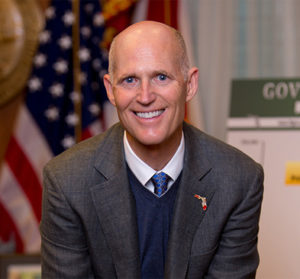 Unemployment is at 4.9 percent, and we’ve added some 1.26 million private-sector jobs, which is double the national rate. Four years before I was elected, Florida lost 832,000 jobs. To tackle this, we cut 4,600 regulations, cut taxes 55 times and recruited 900 companies either to come to Florida or expand into the state. We’ve gone on trade missions around the world, and we’ve made sure that our universities are focused on where the greatest job needs are. We’ve asked “how can we help businesses here to be more successful than they are anywhere else?” That is our attitude, and we are better than anyone else in the country. We have to keep cutting taxes and reducing regulations. U.S. News & World Report has said Florida is first for higher education, but we have to keep getting better. We have to make education more affordable and make sure the colleges and universities are very focused on where the jobs are. We now have 25 percent of universities’ budgets tied to three things: What does it cost to get a degree? What field can you get a job in? How much money do you make? We’ve got to make sure we are focused on getting people ready for careers and dealing with the system.
Technology, life sciences and healthcare are all growing sectors in the State of Florida. What is being done to encourage the growth of these sectors?
We’ve got to make these sectors more successful here than in any other place in the world. We have to build relationships, which is why one of the things we do as part of Enterprise Florida is consultations with businesses to help them do better. We make sure they have the right workforce, and we do that through a variety of programs through our state colleges and universities. We’ve got to keep reducing their taxes so they can reinvest in their businesses because when they reinvest in their businesses, we get more jobs.
What impact has a greater emphasis on developing education had on Florida? How will education develop in the future?
Tuition fee increases have been halted. They were increasing at 15 percent plus inflation every year when I came into office. We haven’t seen an increase in four years at our universities or state colleges. We reimburse the schools according to what’s important to students, lower tuition fees and getting a good-paying job when they finish. We have the highest graduation rates of the 10 most populous states. We’ve increased our funding for universities by almost 50 percent since I got elected. The most important thing is that every child has opportunity. It doesn’t matter where you live or how you grew up, I want every child to have the dream of this country
How Miami is experiencing great tourism numbers despite setbacks
William D. Talbert III. President & CEO – Greater Miami Convention & Visitors Bureau
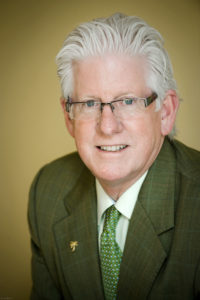 What were the main achievements of Greater Miami Convention & Visitors Bureau (GMCVB) in 2016?
Tourism was up 2 percent in 2016, making it a record year. That is a significant achievement, accomplished as a result of partnerships the bureau has with government, the private sector, Visit Florida and BrandUSA. This is despite a number of serious challenges, including the Zika virus. The governor declared a statewide alert for Zika in February 2016. Miami-Dade County, and specifically the mosquito control division, along with the state health department and various cities, aggressively went after the mosquitos carrying the virus. By December, we had eradicated locally transmitted Zika. It is the first place in the world to do that. The development of a vaccine is now being fast-tracked, so we are really pleased. Hurricane Matthew hit in October 2016, closing the airport over a holiday weekend. Also, tourism from Brazil, which has been our top international market, saw a sharp drop in the first nine months of 2016. For the calendar year 2016 to have record tourism with overnight visitors up 2 percent in the face of Zika, a hurricane, fluctuation in international currency exchange rates and our largest international market down almost one-third, is impressive. Other markets, such as Colombia and Argentina were up double digits. Also of note is that the Miami Beach Convention Center, the region’s largest convention center, is undergoing renovation and expansion. This reduced the amount of business coming to Miami, yet we still had a successful year. That shows the brand is very strong.
Are you concerned about the strengthening of the U.S. dollar and the impact on visitors coming to Miami?
Even with currency issues in countries such as Brazil, visitors from our other top-10 destinations were up. Columbia and Argentina were up double digits. Germany was up a point and a half, the UK was up 5 percent, the Bahamas up 8.5 percent, Costa Rica 1 percent and France 3 percent. So we’ve had these currency issues over time, but only two out of 10 were down.
What are your expectations for the high-end tourism?
Miami is a luxury destination, ranked in the top domestic markets based on hotel inventory. In 2016, we were in the top-five tourist destinations in terms of revenue, which reflects the luxury segment. Much of this is due to the strategy of year-round tourism – with each of the four quarters of the year having about the same number of visitors. Spending increases a little during certain periods, such as during the summer months of July and August, when it is winter is the Southern Hemisphere.



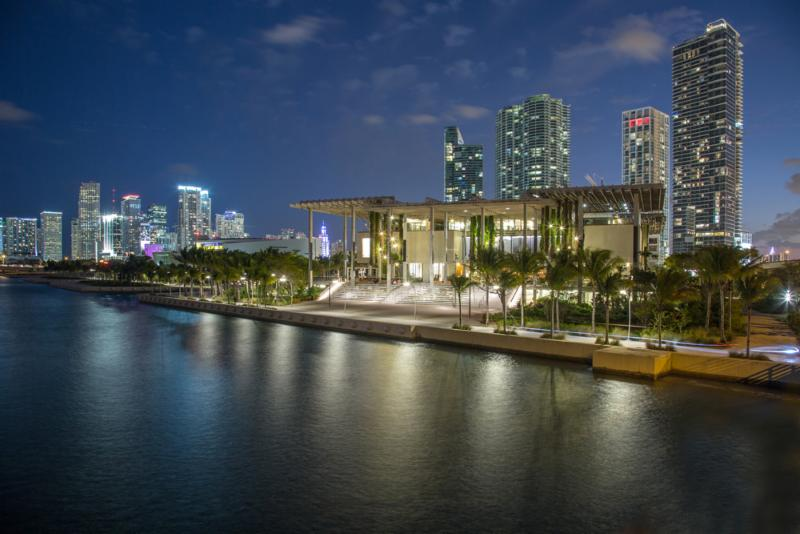
 When people think about Miami, often, they think about private art collections that have historically driven the arts scene. We are trying to reshape that conversation to include the importance of an institution. Our goal is to be one of Miami’s great public institutions, dedicated to international contemporary arts, reflective of our surroundings, representing the work of the Caribbean and Latin America and a place for community conversation and dialogue. Miami is rapidly evolving right now and is home to more and more arts institutions. There is a real sense of collectivity and a relationship to art and cultural institutions. But, we are also a city that is growing in every single way. Our artists are choosing to live here. We have great programs at the preschool levels up to high school like New World and DASH. Undergraduate programs at Florida International University and the University of Miami are also doing well. There is a foundation strengthening and the conversation is evolving. One of the most important trends has been the evolution of Miami as a year-round destination for arts and culture. There was a time when one talked about an “arts season” but over the years an explosion in the Miami arts scene has led to Miami- Dade being a must-visit location to see important work by a variety of artists throughout the year. One example of this is PAMM’s first major exhibition focused on Jean-Michael Basquiat’s notebooks that ran from August until mid-October. The beautifully organized retrospective of this very important artist and accompanying interactive gallery was well received by visitors and journalists alike during a time that was once considered “out of season.” Miami has indeed become a global arts capital. The biggest challenge is getting people to understand a level of civic interaction that is still part of a young, growing city with people who are coming from all over the world. The biggest challenge is getting everybody to buy in on the idea of representing who we are through our institutions, as opposed to as individuals. That is what we are working on.
 How have changes in the Miami tourism sector impacted the cruise market?