Rays’ Sights Set on Game 5

Rays’ Sights Set on Game 5

Writer: Max Crampton-Thomas

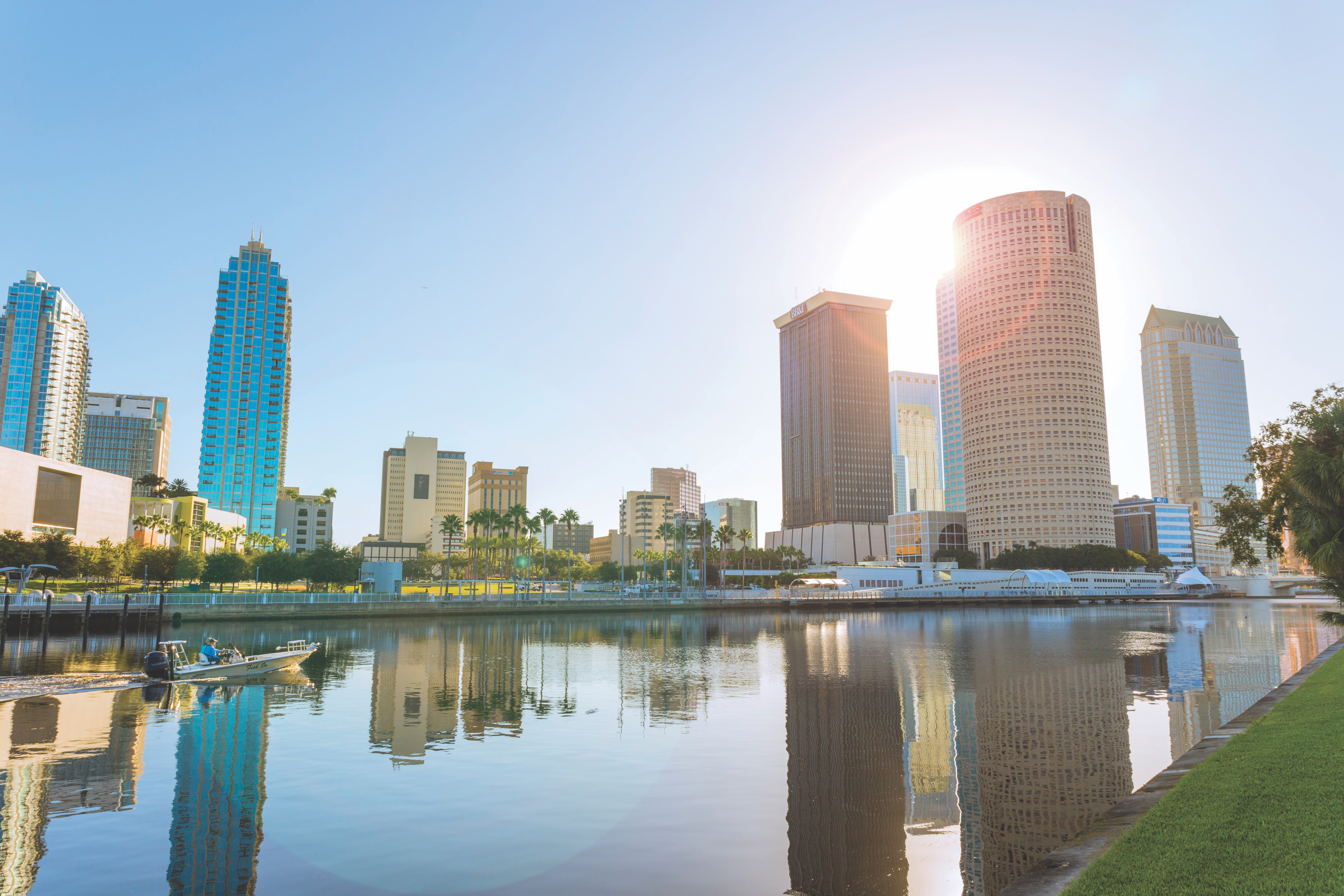
2 min read October 2019 Tampa Bay can be called a lot of things: a tech hub, a thriving economic ecosystem, an arts and culture destination. After last night’s 4-1 win over the Houston Astros, let’s add the true epicenter of baseball in the state of Florida. Now only one win away from advancing to the American League Championship Series, the Tampa Bay Rays are looking to capitalize on the momentum of this successful season. 

Before the 2019 season began, expectations were tempered. The Rays entered the season with the second-worst fan attendance in Major League Baseball, the lowest player payroll at about $60 million and having not reached the postseason since 2013 when they lost to the Boston Red Sox in the American League Division Series. These factors coupled with the ongoing trouble of finding the right location in the Tampa Bay region for their new stadium, left most fans wondering what this season might hold in store. 

It was not all bad though, as there were quite a few positives entering the season, including having three Rays players listed among Sports Illustrated’s Top 100 MLB players of 2019. These players were Blake Snell, Charlie Morton and Tommy Pham, who had the first home run of the game against the Astros last night. Even with the uncertainty swirling around their future home in the region, there was a shared desire expressed by the team to keep Tampa Bay their base for the long term. Brian Auld, the club’s president, expressed this desire to Invest: when he spoke with us earlier in the season. “We’ve been forthright with the community that we want to be here in Tampa Bay for generations to come. That’s the most important thing to us at this moment. It’s also what keeps me up at night because in order to make that happen we will need a new facility,” Auld told Invest:. He continued: “Tropicana Field is among the oldest facilities in all of Major League Baseball, especially without major renovations. We have to figure out where we can put a new ballpark and how we’re going to fund it in such a way that our attendance increases and we become more of a sustainable enterprise.”

Fast forward to the end of the regular season, and the Rays would finish with a record 96 wins against 66 losses. This would be enough to propel them into the Wild Card game against the Oakland Athletics at the A’s home field. The game itself scored record-setting attendance for a wild card game with over 54,000 people. The Rays would ultimately parlay their success from the regular season into a dominant 6-1 win over the A’s. 

After last night, the series against the Astros, who are only two years removed from winning the 2017 World Series, is tied 2-2. While this series started with the Rays giving up the first two games to the Astros, they have swung the momentum and are coming off back-to-back wins to even the series. Sights are now set on a winner take all Game 5 to be played on Oct. 10. The winner of this series will face the New York Yankees in the American League Championship Series. 

No matter the outcome, this is a season that the Tampa Bay Rays can look back on with pride. They have not only exceeded expectations and provided a glimpse into what promises to be a great future, but have also brought excitement back to baseball in Florida. 

To learn more about our interviewee, visit:

https://www.mlb.com/rays

Spotlight On: Brian Katz, CEO & Founder, Katz Capital

Spotlight On: Brian Katz, CEO & Founder, Katz Capital

Writer: Max Crampton-Thomas

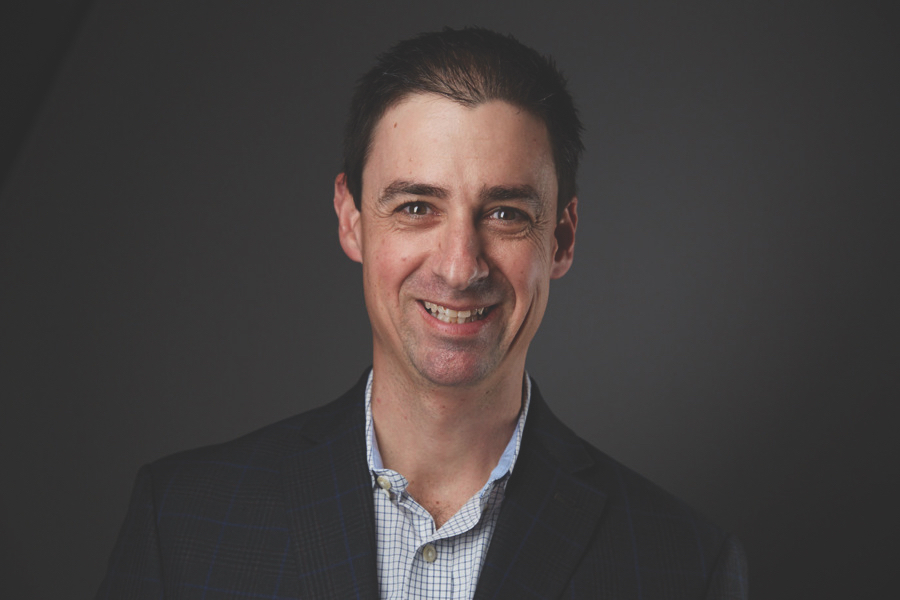
2 min read October 2019 —There has never been a more perfect time to invest in Tampa Bay then the present. With seemingly all sectors of the economy in expansion mode, it is not a surprise that both foreign and domestic investment has been streaming into the Bay area at a rapid rate. Invest: Tampa Bay spoke with Brian Katz, the CEO and founder of Katz Capital whose business is headquartered in Tampa Bay  and focused on investing in the real estate and financial services sectors. Katz covered the advantages of being headquartered in the region, keeping his company’s growth sustainable and what makes Tampa Bay resilient in the face of real estate market changes.  

What makes Tampa Bay a conducive environment for your business? 

From a pricing standpoint, although nationally we are in a low interest rate environment, Tampa relative to Orlando, South Florida or places like Atlanta is still an affordable market. My personal feeling is that we are soon going to have negative interest rates. Six months ago, the collective mindset was that we would be in a rising rate environment, but that is simply not the case. A good analogy for what Tampa Bay is in terms of the scope of the market is that the region is a value stock. As a real estate and financial services private equity firm, this is a really great time for us to be in this market.

How does a business like Katz Capital sustain its growth in Tampa Bay’s business environment? 

Our various businesses employ different investment strategies for us to be able to remain sustainable. When I think of being an investor, I view the business world in terms of hunting and farming, so psychologically I am more of a farmer and all of these businesses are my crops that I can reap the benefits of on a regular basis. The problem with a hunter mentality is you can get the big kill, but it can be a long time before getting another kill, which is risky. To remain sustainable in this business environment, it’s better to diversify your business so that you’re not reliant on one source of income.

How susceptible is Tampa Bay to fluctuations in the real estate market? 

The fact that real estate pricing in Tampa is still relatively attractive versus other markets, I believe insulates Tampa Bay to a degree from real estate sector cycles and general market cycles. This is the opposite of South Florida, where there tends to be more dependency on these market cycles. When the South Florida market is hot, there is tons of money pouring in and prices push up. Although it’s increasingly on investors’ radar, Tampa Bay still has a lower modulation in these cycle waves. The big concern is that asset values keep rising. If we look at real estate development in the region, land values are up, labor costs are up and material prices are up. That means to achieve the same return for the amount of risk an investor is taking, you have to raise the exit price. This is going to be one constraint that Tampa Bay is going to face, and will have to figure out how to navigate that. 


To learn more about our interviewee, visit:

https://katzcapital.com/

Face Off: The Bay’s Banking Bosses

Face Off: The Bay’s Banking Bosses

Writer: Max Crampton-Thomas

4 min read September 2019 The health of the banking sector is a great way to gauge the overall health of the economy, so when the banking sector is prospering it is normally on par with a healthy economy. This remains true in Tampa Bay as the local economy has been experiencing a long and healthy growth that is also shared by the banking sector in the region. Invest: Tampa Bay recently spoke with David Call, Florida regional president of Fifth Third Bank, and Allen Brinkman, region president for Seacoast Bank, two of the premier banks in the Tampa Bay region. Discussions with both banking institutions covered their view of the current state of the market in Tampa Bay, how emerging technologies are impacting their banking practices, and ways to keep growth in the sector and Tampa Bay sustainable for the future.

What is your view of the local market in light of the burgeoning economy in the region?

David Call: Everything is moving at a fast pace in the Tampa Bay region, and from my perspective there is not one particular sector or segment of the market that is doing better than another. Our bank has five lines of business in the region: commercial, small business, retail, wealth and mortgage. All five of those lines are doing well and we are still seeing strong momentum. We have seen this growth for the last four years, and while we are prepared for any kind of slowdown, we haven’t seen any sign of that for the near future.

Allen Brinkman: As long as the economy does well and as the spirit of Tampa Bay continues to rise, the market will remain prosperous. There is a growing sense of pride in the city. This pride is creating opportunities for new businesses to start, established businesses to expand and investments into the business market to remain lucrative. It has been a great market for quite some time, and outside of a global economic issue, Tampa Bay is going to continue to do well. I believe that even if the global economy slows down, Tampa Bay is somewhat insulated because it is a place that people want to be, for both a younger and older demographic. There is almost nowhere else in Florida that is as cost-effective, beautiful and offers as many cultural and economic opportunities as Tampa Bay.

With the prominence of emerging technologies in the financial sector, how can banks find the balance to still deliver a personal experience?

Call: Technology has not taken the place of our physical centers, but everything that we do around technology has definitely taken off. Whether that is depositing a check or checking an account balance, all of these uses are being adopted at a much quicker pace than how technology was adopted in the past. That being said, we believe at least 60% of our clients still want to come to a branch and bank with a human being. That does not mean that they do not want technology, because they do, so it is a balancing act. We are still building branches in the state of Florida, and we will have more branches in the Tampa Bay area too. We want to offer all these various channels for people to use because ultimately we need to stay in line with the voice of the customer and keep them at the center of what we do.

Brinkman: The online and digital experience is more of a convenience vehicle than it is an alternative to all banking. Simple transactions like depositing a check or finding a branch can be accomplished with technology,  but more complicated transactions are usually going to involve an interaction with a banker. Banks are somewhat of a commodity today, and the only way to set yourself apart from other banks is by the advice you give. Our bankers are trained and spend a lot of time on their consultative approach. For example, in the past, we knew that the mortgage business was about borrowing as much as you could to get the biggest house, and hopefully everything worked out. Today, bankers give a little more advice and guidance on what is a responsible financial decision for a customer to make. This type of personal interaction could not be accomplished by technology.

What are some ways to keep banking sector growth and that of Tampa Bay sustainable and recession resilient?

Call: When we adapt to this influx (of high-net-worth investors), it has a positive affect on our business, and this is true for all of Tampa Bay, not just our bank. There are a lot of businesses and people bringing money to Tampa Bay because they see the growth. Outside investment is a huge part of keeping this growth sustainable because we need an infrastructure that matches the influx of people coming to Tampa Bay. In regards to our bank, we are investing our time and resources into making sure that we are a part of the change so we can help our communities thrive.

Brinkman: We are quite conservative in terms of our approach to lending, which some could misinterpret as not offering loans. However, we do offer loans just as much as most banks, we just tend to be conservative in how we advise our customer. Our bankers sit down with customers to understand why they need a loan, what the purpose is and inform the customer of whatever risk elements are out there that they may not have thought of. When a loan is done with Seacoast, a relationship is formed. We make the decision jointly versus just providing a loan that may not be right for the customer. Our role as a bank is to protect the customer, which creates a greater sense of responsibility to really develop a product that’s customized to their needs. If there is another recession, we believe we will fair well because of this practice.

To learn more about our interviewees, visit:

https://www.seacoastbank.com/

https://www.53.com/

Spotlight On: Randy Avent, President, Florida Polytechnic University

Spotlight On: Randy Avent, President, Florida Polytechnic University

Writer: Max Crampton-Thomas

2 min read September 2019 — The Tampa Bay region is home to a slew of world-class and innovative higher education universities, the newest being Florida Polytechnic University located in Lakeland, Florida. This innovative university has quickly become a training ground for the future technical workforce in Florida. Invest: Tampa Bay recently sat with Randy Avent, the founding president for Florida Polytechnic University who expressed his excitement about the possibilities for the university. During the course of his interview, he spoke about how Florida Polytechnic is playing a major role in the economic development of Polk County, the greatest challenge facing the school and what the near-future will look like for the university.

How is Florida Polytechnic University a key to economic growth in Polk County? 

Technical research universities have a tremendous influence on growing the economies in the areas that surround them, and that is what we plan to do for Polk County and the entire state of Florida. Economic growth begins by creating high-skilled, high-wage, high-tech jobs and you do that through excellence in education. Each of these jobs is accompanied by several midwage positions that support it, which ultimately leads to a stronger overall economy. Companies want to be located near universities known for producing graduates in high-demand fields with low supply. They feed from this pipeline of high-technology talent that is ready to lead in industry and to create the next innovations that will disrupt the status quo. 


What is the biggest challenge facing the university? 

As a new university, there are always challenges. The day we opened the university we had a full student body and were doing $30 million dollars worth of business. The university is still a startup because we are only six years into this and most universities have been around for more than 50 years. It will take time for the dust to settle and one challenge will be to continue attracting students who can be successful in a curriculum like this. We want to retain high-quality students in Florida by offering them a curriculum that is different from the institutions they’re looking at out of state. We are also an attractive option because only 11% of our students are graduating with debt and the average debt is only $7,000. 


What is on the horizon for the university? 

We will continue growing and developing our curriculum. We are very fortunate that we were able to hire the provost from Colorado School of Mines, which USA Today ranked as the No. 1 engineering school three years in a row. He has led an effort to rebuild and grow the curriculum, and that includes making sure that it meets national standards. We are also hoping to break ground on the new Applied Research Center where we will continue to grow our research efforts. In the past, we grew the student body extraordinarily fast as part of our startup, and we have been trying to catch up on growing the faculty body. We are focusing less on growing the class now and more on shaping it and that has allowed us to catch up with faculty hiring. We also want to continue building our graduate program because a graduate program is the lifeblood of a research university, so that is an area that we will be focusing on as well. 


To learn more about our interviewee, visit:
https://floridapoly.edu/

Spotlight On: Mark Hardy, Vice President & Regional Manager, Universal Engineering Sciences

Spotlight On: Mark Hardy, Vice President & Regional Manager, Universal Engineering Sciences

Writer: Max Crampton-Thomas

2 min read August 2019 — Growth in the Tampa Bay construction industry has not only benefited construction and real estate development companies in the area, it has also been a massive plus for engineering firms. Quality development and construction is dependent upon the availability of highly professional and proficient engineers, and demand can quickly outweigh supply. Invest: Tampa Bay recently sat down with Mark Hardy, vice president and regional manager for Universal Engineering Sciences’s Tampa Bay office. Among the many topics covered, Hardy discussed the growth in demand for building inspection services, a growing focus on environmental sustainability and what the next year will hold for his office.

Which of your services are seeing the most growth in demand? 

We are seeing tremendous growth in demand for our building inspection services. A new law signed by Gov. DeSantis, allows companies like ours to provide plan review and inspections that municipalities would normally conduct. While the private provider option has been available since 2002, the new law reduces the time frame and cost that this would normally entail. As a private firm we can help accelerate the process during a time when municipalities are overwhelmed.


How much of a focus is environmental sustainability to your clients? 

As new projects get underway, they are hitting some roadblocks because they are infringing on wetlands. We have hired an individual who specializes in wetlands and endangered species so we can better assist clients in finding the balance between being able to do a new development and still remain cognizant of those environmental areas. Another area where we are seeing a lot of expansion is renewable energy projects, like solar farms; we are getting frequent calls to provide expertise on how to get them planned and constructed.


What does the next 12 months look like for your office? 

We have a lot of projects on the books that haven’t started yet but are on the horizon for the new year. This includes a new performing arts center and new contracts with Pasco County Schools, Hillsborough County Public Schools and Hillsborough County for infrastructure improvements. This year, we surpassed 100 employees at this office and we will look to build off that momentum. The remainder of 2019 and 2020 are shaping up to be really great years for the company.


To learn more about our interviewee, visit:
https://universalengineering.com/

Face Off: Tampa’s Transportation Task Forces

Writer: Max Crampton-Thomas

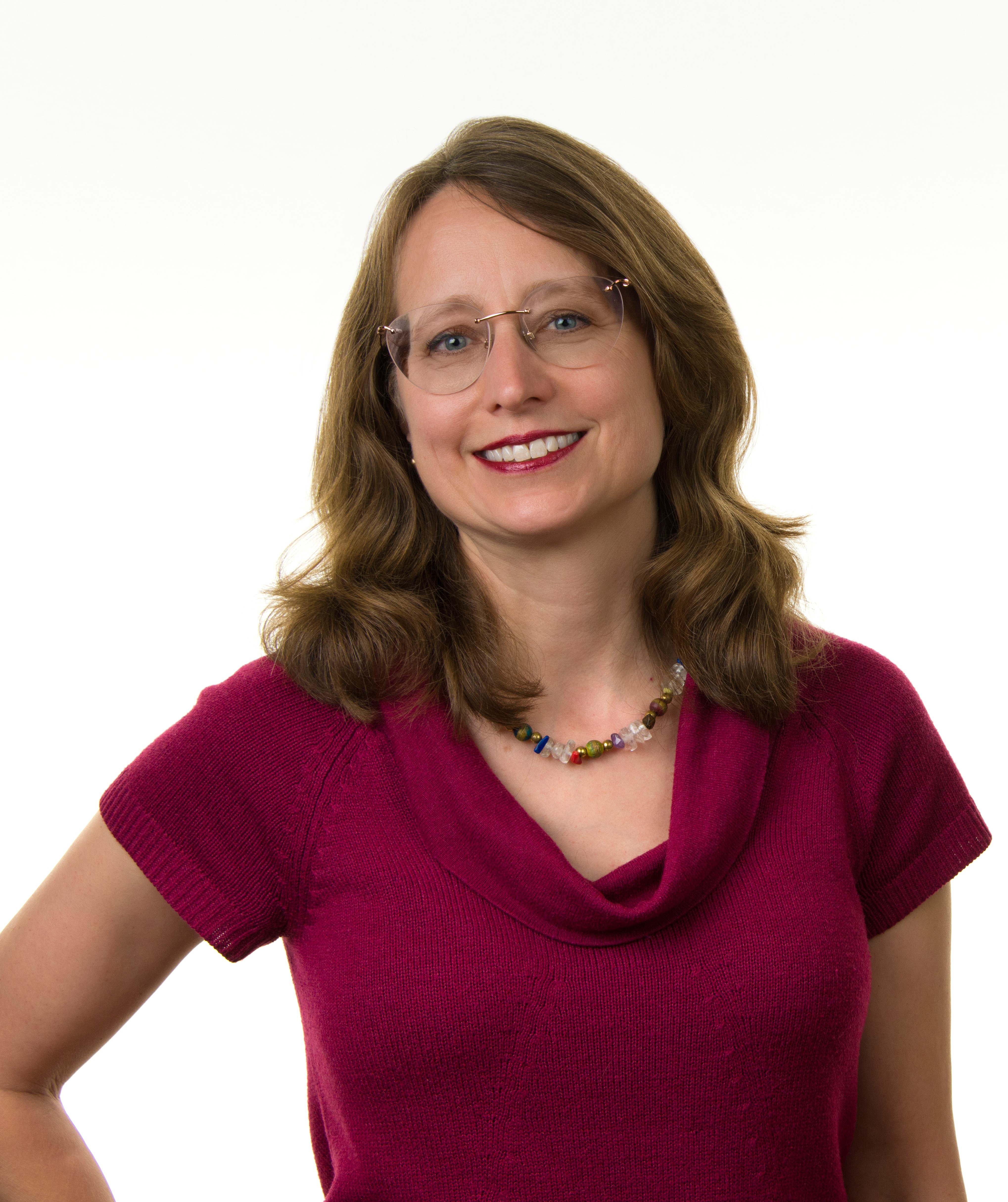
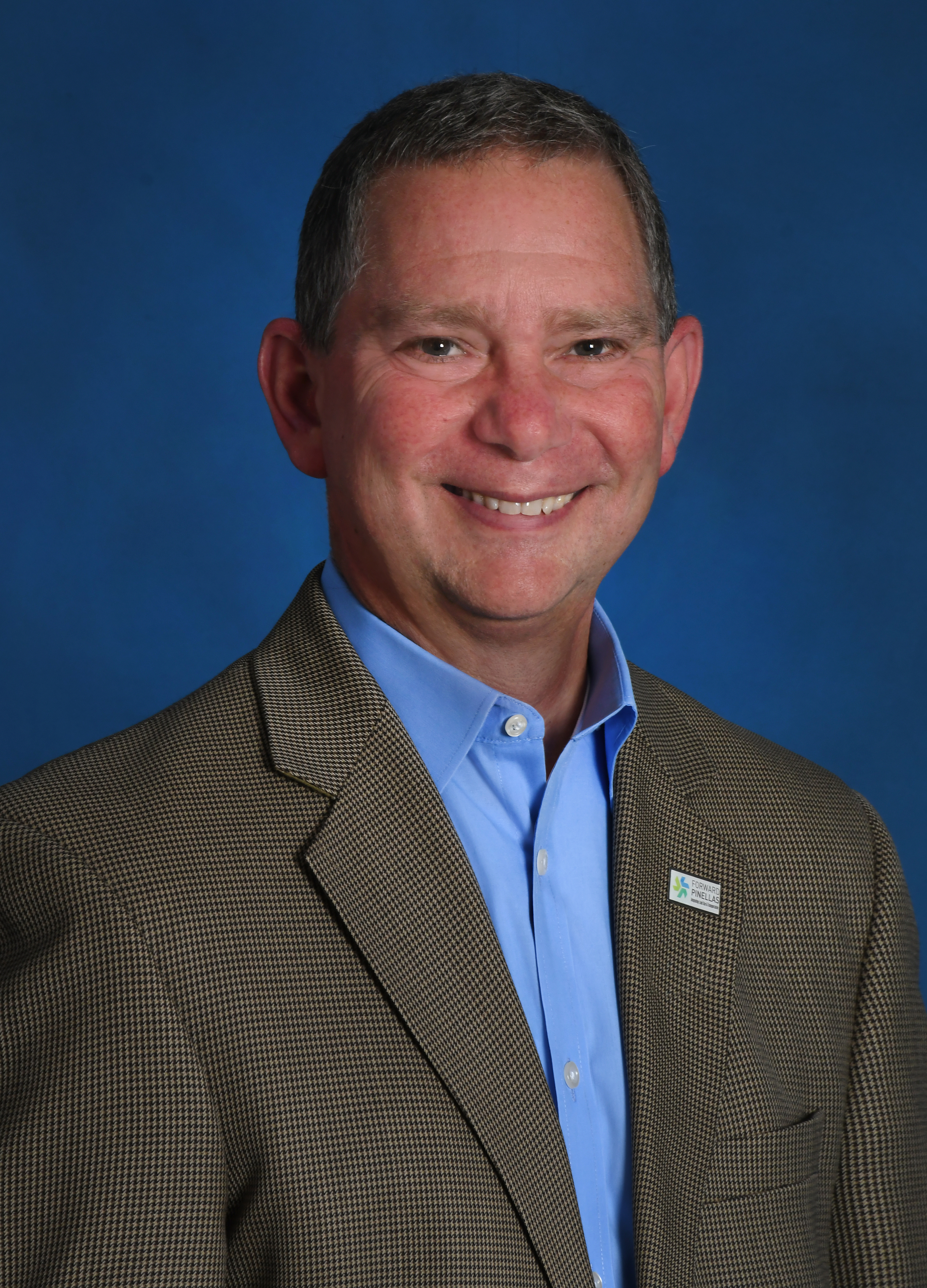
4 min read September 2019 Whether it is Hillsborough, Pasco or Pinellas County, transportation issues seem to plague the entirety of this growing region. Mitigating these challenges requires innovative thinking and collaboration between the community, local government and both public and private organizations. Invest: Tampa Bay recently spoke with Beth Alden, executive director for the Hillsborough Metropolitan Planning Organization, and Whit Blanton, executive director of Forward Pinellas. These two organizations, whose primary focus is addressing the transportation and transit issues in the Tampa Bay region, discussed how they are gauging community needs in regards to these issues, facilitating better transit options and how they are turning dollars into solutions.

How do you gauge the community’s needs in regards to new transportation options?

Beth Alden: We have been engaging the public with an online survey, which is an interactive, gamified survey to ask folks about their priorities in regards to transportation. We received 5,200 responses, and it is amazing how many people are saying that they want a better rapid transit system. We have also discovered that they are very interested in reusing the freight rail tracks. That would require an agreement with CSX, which owns those tracks, but it’s a very underutilized asset. There’s no freight rail track between Downtown Tampa, the airport and the Westshore Business District, and it will take some extra steps to create that.

Whit Blanton: Our challenge in Pinellas County is that we are not growing like Pasco, Hillsborough, or Manatee County. We are expected to add about 90,000 people by the year 2045, which is a small fraction of what the other counties are expected to have. We have to plan and think differently. We have a situation here where the average new worker in Pinellas County is almost 50 years old, so we are not attracting young workers, except maybe in St. Petersburg, but most young people can’t afford to live there. Our strategy is really aimed at the future of our workforce, how do we draw talent and how do we retain this talent. We believe the solution is investing in housing and better mass transit services.

How are you facilitating better transit options?

Alden: In regards to transit, having some form of passenger rail system or rapid transit system would be one way we could do that. The important point with a rapid transit system is that we provide a way for it not to get stuck in traffic, so we need to provide some space for it to run and get out of traffic. We can do this with our bus system by providing special bypass lanes for buses where there is room on major roads. The walk and bicycle infrastructure is really important as well. People do not realize how many trips they make that are less than two miles long. If there are safe ways to walk or bicycle, then they do not necessarily have to be putting another car on the road to make that short trip. This also relates to our Vision Zero project, which is the vision of zero traffic deaths in Tampa Bay.

Blanton: ITS (Intelligent Transportation Systems) 2.0 is our plan for moving toward more intelligent transportation systems. Since the early 2000s, we’ve done a good job of implementing smart signals for moving traffic, responding to hot spots of congestion and facilitating traffic flow.  ITS 2.0 is intended to reimagine what the next phase of that investment is going to look like, which will focus more on real-time information and also ensuring the safety of bicycling and walking. Our advanced traffic management system has been focused on moving cars through intersections and keeping the flow going, but the next phase will include recognition of pedestrians at crosswalks. We also have an integrated transit fare payment system, called Flamingo Fares, that has been under development for a couple of years. That should go live in the next year. It will be a one-fare payment that can be used all over the region, whether someone is in Hillsborough or Pinellas County.

What specific plans are being implemented to move transportation development forward?

Alden: We will start with the essentials: resurfacing, safety and smart traffic signal projects. Almost half (the new Hillsborough transportation tax) is for transit, starting with expanding the bus service so it runs on evenings, weekends and often enough that you do not have to spend an hour waiting for a transfer. This is an amazing opportunity to implement the changes we have been planning for years. There are many more exciting projects in the pipeline. We finally have the resources to make the changes that the community wants to see in Tampa Bay.

Blanton: The Gateway District is our economic engine in Pinellas County. It is where the St. Pete-Clearwater International Airport is located, and there are a significant number of manufacturing and office jobs in that area. The challenge is that it is a loose and segregated type of development that is in need of an update. The Gateway is in four different jurisdictions, so it can be hard to design a cohesive plan for that area. We asked all four local governments, Pinellas Park, St. Petersburg, Largo and Pinellas County, to contribute $100,000. Forward Pinellas then put in $100,000 and the Department of Transportation put in another $500,000. With all this funding, we were able to put together a million-dollar master plan that is about to be finished. It is a reimagining of how the Gateway will develop in the future and focus on sustainable development because a lot of the gateway is in a coastal, high hazard, flood-prone area where businesses and potential development are vulnerable. The plan addresses how we are looking at higher density development to support transit in that area because we need to get our workers between the counties.


To learn more about our interviewees, visit:

http://forwardpinellas.org/

http://www.planhillsborough.org/

Tackling Affordable Housing in the Bay

Tackling Affordable Housing in the Bay

Writer: Max Crampton-Thomas

2 min read August 2019   Growth in the Tampa Bay region has been twofold, with a  significant boom in the economy and the population. As the population grows so does the need for more affordable housing options in the region. While there has been a notable increase in the development of luxury apartments and multifamily units, which are popping up all over Downtown, there is a notable deficit of affordable housing options. Mayor Jane Castor, her administration and community organizations like the Tampa Housing Authority recognize that they must work together to find- a solution for this problem.

Since her election in April, Mayor Castor has identified access to affordable housing solutions as one of her top priorities, as noted when she spoke with Invest:. “In reality, the most pressing issues in our community are transportation, affordable housing and workforce development.” She has since taken action to address the housing issue with the recent formation of the Affordable Housing Advisory Team as part of her “Transforming Tampa’s Tomorrow” transition. The role of the advisory team will be to ensure home ownership for all residents in Tampa regardless of economic status. It  will be one of five advisory teams guiding the mayor’s strategic vision for addressing key issues in Tampa Bay. 

One of the members of the Affordable Housing Advisory Team is Leroy Moore, the senior vice resident and chief operating officer for the Tampa Housing Authority. The Authority is not only focused on providing housing assistance to low-income residents. Its role has evolved over the years to better address the affordable housing issue in the region. Invest: recently spoke with Moore, who discussed how the Authority is addressing this need. “The Housing Authority has evolved to not only manage affordable housing, but also to redevelop this housing into real estate that functions as more than just a roof over someone’s head. We consistently ask ourselves what else does a community need? A community needs jobs, quality food and transportation accessibility, which brings in the need for collaboration with transportation agencies in the region. We can meet the needs of the community by developing housing, especially affordable and attainable housing, around accessible transit options. Great transit translates into better housing costs.” 

The Authority’s actions to tackle affordable housing include the redevelopment of a 28-acre superblock of public housing that will be known as the Encore District. In his discussion with Invest:, Moore spoke about the Authority’s approach to this development and how it differs from the original construction., “Seventy-five years ago, the Tampa Housing Authority developed a 28-acre superblock of public housing on the doorstep of what is now Downtown. Seventy-five years later, we are redeveloping that site and realizing that its potential today is far greater than what was ever imagined back then. Instead of just having a 28-acre single-use affordable housing community, we now have 12 city blocks of diverse development called the Encore District.” He continued: “Encore will be a LEED Gold neighborhood development community. All the buildings have a commitment to be LEED Silver or higher. We replaced the affordable and workforce housing and increased the number of affordable units on that exact same footprint. We are also adding other uses like hotels, museums, schools, market-rate housing and grocery stores all within the same 28-acre area.”

The need for more affordable housing is not an issue that will resolve itself and will only continue to manifest into a larger challenge as the population in Tampa Bay grows. The solution is not clear-cut, but community leaders like Mayor Castor and Moore are working to find actionable answers.  

To learn more about our interviewees, visit:

https://www.tampagov.net/


https://www.thafl.com/

Spotlight On: Brian Kornfeld, President and Co-Founder, Synapse

Writer: Max Crampton-Thomas

2 min read August 2019 — The growth of Tampa Bay’s entrepreneurial ecosystem is a testament to the boom of innovation, collaboration and economic rise that the region is experiencing. The key to keeping this growth sustainable comes down to multiple factors, including attracting more venture capital into the region, improving connectivity between startups and the continuous marketing of Tampa Bay as the place to start a business. One of the leading forces behind Tampa Bay’s entrepreneurial ecosystem is a nonprofit 501(c)(3) organization known as Synapse. Invest: Tampa Bay recently sat down with President and Co-Founder of Synapse Brian Kornfeld to discuss how the organization is attracting and retaining quality talent, how their program Synapse Connect will help to improve connectivity between entrepreneurs, the key to attracting more venture capital to Tampa Bay and the challenges still facing the startup community.

How is Synapse working to help retain quality talent in the Tampa Bay workforce ecosystem?

Talent is one of the most important focus areas for Synapse because talent attraction and retention in Florida are vital to our future. Synapse helps to tell the top stories of growth and success on a statewide and national level. This helps to ensure people know about all the great things happening in Tampa Bay. We enable connections between talent, startups, and companies through our Synapse Summit, Synapse Challenges, and the Synapse Connect digital platform. By enabling the right stories and the right connections to take place, people can truly see a bright future in Tampa Bay.

How is Synapse Connect helping to connect entrepreneurs and bring their ideas to life?

When we first started Synapse, the idea was this platform that has become Synapse Connect. The thought of running a conference was not even on our radar, so it is interesting that our conference is what we are now best known for while Connect is still up and coming. The goal is that in the future Synapse Connect will be at the center of Florida’s innovation community. It will be the logical first step when somebody joins the innovation community, so they can find what they need or share what they have. We feel it will be vital because the geographic regions in Florida are so separate. If we can shrink the state virtually than we can help people find the right resources no matter where they may be physically located. 

What is the key to attracting venture capital to Tampa Bay?

Steve Case, founder of AOL, noted that 75% of venture capital is spent in San Francisco, New York, and Boston. That is three markets receiving 75% of all available venture capital in this country, while the state of Florida only sees 3% of all venture capital. One of the main reasons we do not see more venture capital across the state is because we do not have the volume and critical mass of startups quite yet. This will change in Florida as we are starting to see more people rapidly getting into the startup and innovation worlds. As more quality companies build and grow, we will see more money put to work.  Organizations like Florida Funders are doing a great job as the leading edge and thinking differently on investing, helping to enable and encourage more of the state’s accredited investors to get involved.

What is the most notable challenge facing the startup and entrepreneurial community in Tampa Bay?

Part of the challenge with the startup community in Tampa Bay is trying to find our identity. We are pretty wide in terms of the different industries that we are trying to service, but we need to focus our efforts on being great in just a couple areas. This will allow us to be an inch wide and a mile deep. We have core leading industries, such as cybersecurity, digital health, and financial tech. We need to continue to play to our strengths. Startup companies also need to be educated on how to build for a customer’s needs, to solve a problem and learn how to create a product better than their competitors. After these companies have mastered this, then they can learn how to grow and scale. 


To learn more about our interviewee, visit:

https://synapsefl.com/

Buccaneers Hope Offseason Moves Score Touchdown

Writer: Max Crampton-Thomas

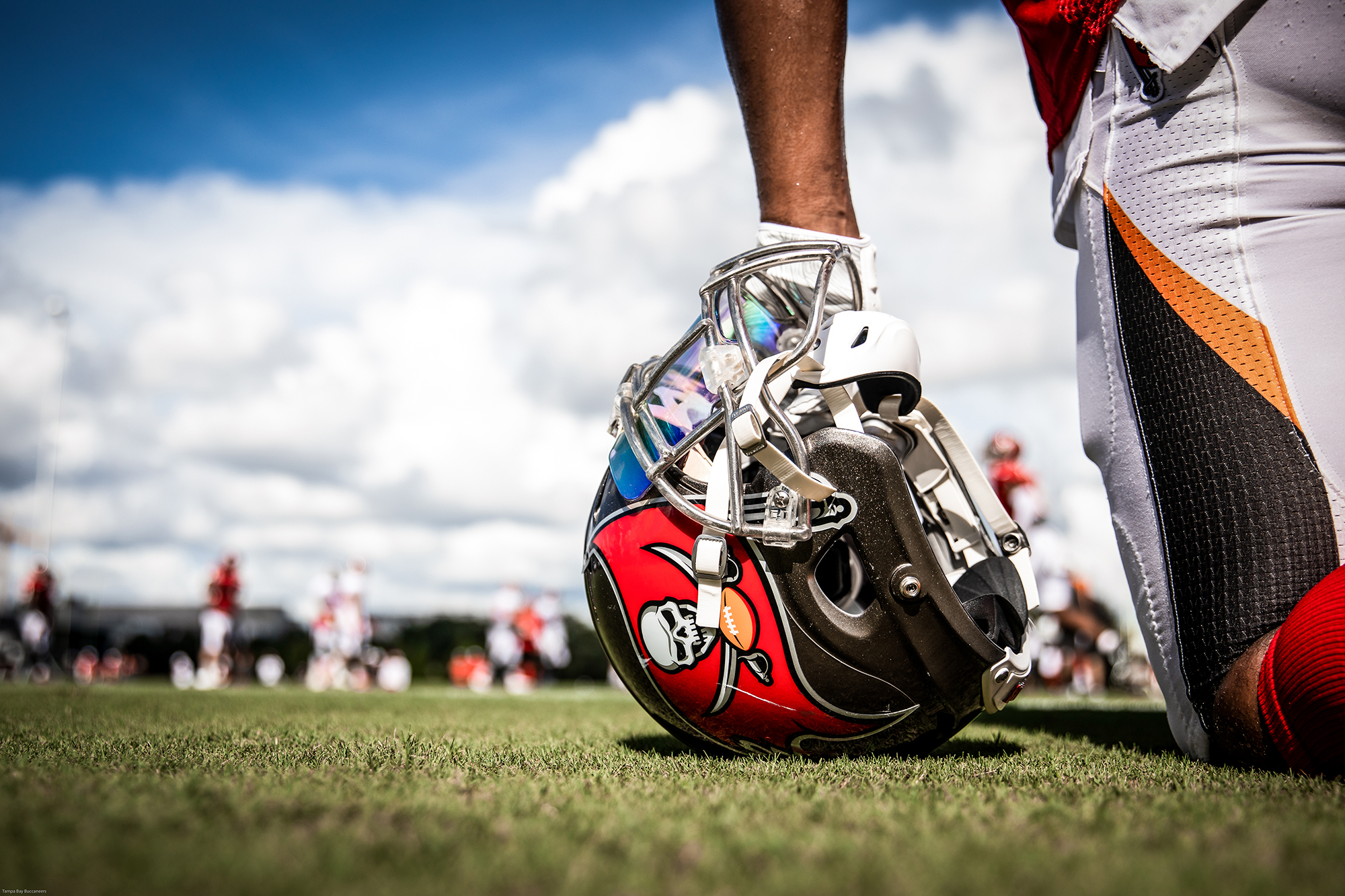
2 min read August 2019   There is perhaps nothing more synonymous with Tampa Bay than its football team, the Tampa Bay Buccaneers. Since officially joining the NFL in 1976, the Bucs have become a staple in the Tampa Bay region. The team’s history includes the highest highs and lowest lows, from a dismal 0-14 inaugural season to a Super Bowl title in 2003. Now only weeks away from the start of the 2019-2020 season, the Bucs are looking to bounce back from last year’s tumultuous campaign that resulted in a 5-11 win-loss record and a last-place divisional finish for a second straight year.

The Bucs have not allowed last year’s disappointing season to distract them from what could possibly be a comeback season in the making. After the final loss last season, the Bucs dismissed head coach Dirk Koetter. They have since hired two-time Associated Press NFL Coach of the Year Bruce Arians, who has been swift in his moves to strengthen the team’s defense and instill a winning culture within the locker room. The Buccaneers added some significant depth to their defense with their 2019 first round pick, linebacker Devin White, and with the addition of five-time Pro Bowl defensive end Ndamukong Suh.

While the city of Tampa Bay is eager to see the team return to its glory days as Super Bowl champs, there may be no one more focused on having a winning season this year than Bucs’ quarterback Jameis Winston. The national championship and Heisman Trophy winner has had what can be best described as an inconsistent NFL career. Entering the fifth and final year of his rookie contract, the former first round pick will undoubtedly look to use this season as his campaign to remain the team’s franchise quarterback. 

The Buccaneers franchise and fanbase can also look forward to an improved Raymond James Stadium, which underwent a $160 million renovation in the offseason. The stadium, and more broadly the City of Tampa Bay, will be home to Super Bowl LV in 2021, marking the fifth time Tampa Bay has hosted football’s biggest event. Invest: Tampa Bay spoke with Brian Ford, COO of the Tampa Bay Buccaneers, who discussed what it means to host this event once again. “It’s going to be Tampa’s fifth Super Bowl, which is great when you think about all the many, very exciting cities that can host the Super Bowl. We’re very proud of that. Tampa hosts a ton of big events, and we do them well. We worked closely with Rob Higgins of the Tampa Sports Commission, Eric Hart and Mickey Farrell of the Tampa Sports Authority, Commissioner Ken Hagan of Hillsborough County and the city of Tampa in putting together the best bid and best format for this mammoth event. When you sit down and look at it, it’s truly remarkable that so many in Pinellas County and Hillsborough County all came together for one event. And there’s no way that we would’ve been offered this opportunity if we hadn’t made a major investment in the renovations, of which we’re also very proud.”

The only thing that could make hosting a Super Bowl better for the Tampa Bay region would be to see the home team competing in it. While that may be a long shot at this point, the Buccaneers will have this season and next to prove they are a franchise that can compete at the highest level. It’s still early, but all signs seem to be pointing to a brighter future for the Tampa team. 


To learn more about our interviewee, visit:
https://www.buccaneers.com/