Spotlight On: Hala Sandridge, Shareholder and Tampa Co-Office Head, Buchanan Ingersoll and Rooney PC

Writer: Max Crampton-Thomas
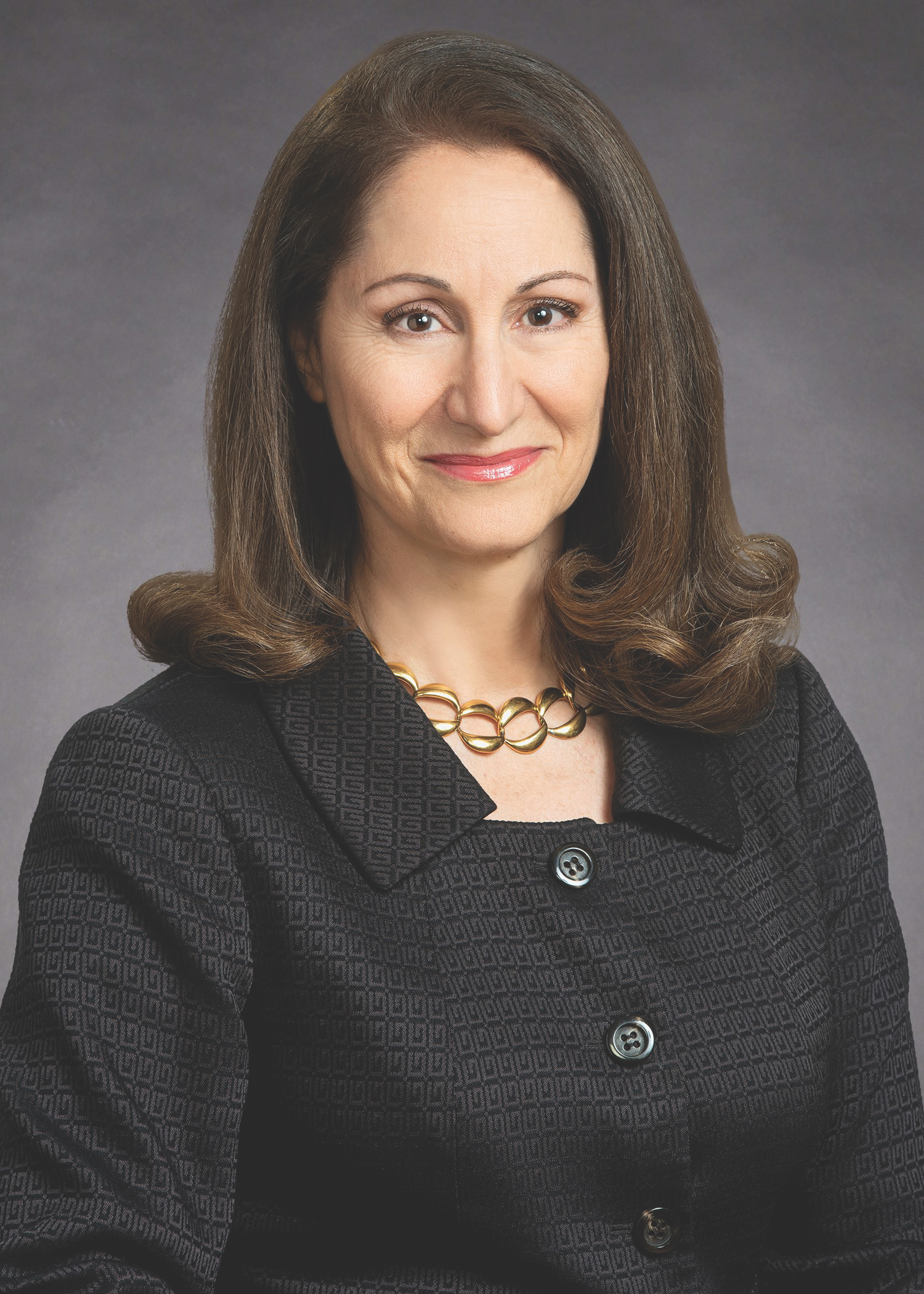
2 min read August 2019 — Demand in most job sectors ebbs and flows with the economy. One sector that seemingly goes against this narrative and remains relatively consistent is the legal industry. As a new generation makes its way into the field, law offices are having to prepare for the next wave of legal professionals. Invest: Tampa Bay recently spoke with Hala Sandridge, shareholder and Tampa co-office head for Buchanan Ingersoll and Rooney PC. She spoke about her firm’s approach to talent retention and attraction, the red-hot market for young legal talent and what the next year will hold for the legal sector in Tampa Bay.

How is the firm preparing for the next generation of legal professionals? 

Every company has to manage their external and internal sustainability, with a focus on the next generation of the workforce to optimize for long-term success. We at Buchanan are continuously building that next generation of attorneys who are going to continue the work of the senior leaders after they retire. We have strong succession plans in place as well as various programs that help those who are not yet at the partner level to become stronger in their practice, better at business development and immersed in the business of our clients.


I have noticed that many law firms do not plan for the future workforce and for the retirement of their more senior partners. It is crucial for business continuity to have attorneys trained and ready to pick up responsibilities and relationships. The next generation needs to be ready to sustain the growth that the company has accomplished and continue to take advantage of this market. When our attorneys are near retirement age, we have a conversation with them to make a plan for their retirement. We require our attorneys to take on these young people and integrate them with their clients so that the relationship continues smoothly after they have left. 

What is the state of the job market for law students nearing graduation? 

The job market for law students has seen a bit of fluctuation over the past several years and right now there are many opportunities for fresh law school graduates. Three years ago, we were not hiring too many law students shortly after graduation, but that has changed. We have hired a number of past summer associates upon their graduation and continue to seek out talented graduates. I cannot say enough great things about this next generation. They have their heads on straight, are incredibly goal-oriented and are willing to learn. 

What does the next year look like for Tampa Bay’s legal sector? 

I believe that the market is going to stay hot for the next year. However, in the event that there is an economic slowdown, many of us in the legal sector, including Buchanan will continue to do well as we thrive in a down market too. As a successful law firm we must stay nimble, so when the market changes we are prepared. For example, we have a nationally-recognized bankruptcy group whose work tends to increase during economic downturns, while other attorneys who typically perform transactional work use their market knowledge to advise on bankruptcy work. The key for any successful law firm is to diversify your staff and not have all your eggs in one basket.


To learn more about our interviewee, visit:

https://www.bipc.com/

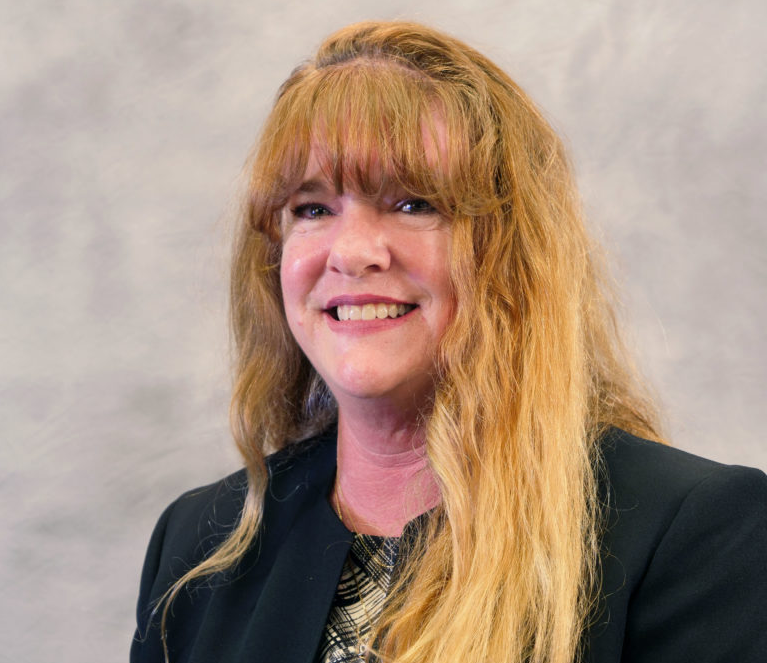
Spotlight On: Mayor Sandra Bradbury, City of Pinellas Park

Writer: Max Crampton-Thomas

2 min read August 2019 — The unprecedented economic growth the Tampa Bay MSA, including Pinellas County, is enjoying comes with both benefits and challenges. At the very center of Pinellas County is it’s fourth largest city, Pinellas Park. Invest: Tampa Bay recently spoke with Mayor of Pinellas Park Sandra Bradbury. She discussed how the city is handling the region’s growth, its focus on remaining economically and environmentally sustainable, and her outlook for the next year.


What efforts are being made to encourage environmental sustainability in the city? 

In a partnership with the Wounded Warriors Abilities Ranch, we just started development on a new park called Lurie Park. This park is going to be completely accessible for all handicapped people, from children to the elderly, and will be geared toward our veterans. We also just purchased a four-acre property that was a horse stable, which we are in the process of converting to a farm. It is an extension of the existing Helen Howarth Park. Our goal is to work with the U.S.-based network of youth organizations 4-H and bring students to the farm to teach them how to sustainably raise and grow their own food.

How are you supporting local business growth? 

Businesses come to us all the time because we have a relatively large amount of commercial area that’s available for development. The city council and voter referendum created a package of incentives that we could use to retain businesses that want to grow and expand. These incentives allow businesses the flexibility to move offices or add square footage to their buildings. We are one of the few places that has this ability. It is within our ordinances to allow our economic development manager and her team to offer incentives to local businesses, which revolves around how much they are growing and how many employees they will be hiring with the expansion. So far, city council has provided seven packages to different companies that have grown in Pinellas Park. 

What does the next year look like for Pinellas Park? 

We think the future is bright. We have a lot of businesses that are still looking at us as a place to expand into. Our position is unique because we are at the very center of the county. We are also one of the few cities that still has vacant land available, especially in our industrial area. This gives a business the opportunity to come here and develop their work space. With the economic growth in the region, our homes have gone up in value over the years, but overall the Pinellas Park area is still affordable. We have parks in the area, and our citizens assist in the conservation and revitalization of those parks as necessary. Overall, we feel extremely positive about the next year. 


To learn more about our interviewee, visit:
https://www.pinellas-park.com/

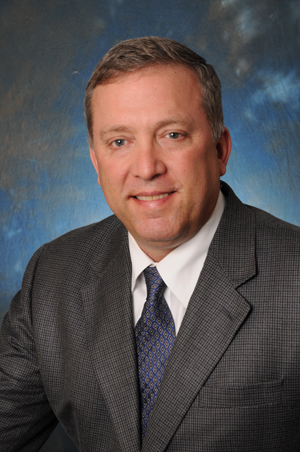
Spotlight On: David Gwynn, District Seven Secretary, Florida Department of Transportation

Writer: Max Crampton-Thomas

2 min read July 2019 — Challenges with transportation, traffic and transit options are not new issues for the Tampa Bay region. As the area continues to make strides in its economic and population growth, there is a heightened emphasis on finding solutions. Invest: Tampa Bay recently sat down and discussed these issues with David Gwynn, District Seven Secretary for the Florida Department of Transportation. Gwynn spoke about how FDOT is working to mitigate these challenges, enact forward-thinking initiatives and his outlook for transportation in Tampa Bay for the next year.

What is the biggest initiative for Florida Department of Transportation in District 7? 

We have been working on a program called Tampa Bay Next. Over the last two and a half years, we have had hundreds of public meetings with big and small interest groups, elected officials and general members of the public, which we used to gather some great input. A key issue that we identified was transportation. Although we recognize that our interstate needs some work, there are other areas, like the downtown interchange, where infrastructural improvement would have a pretty massive impact on the surrounding neighborhoods. As a result, we are focusing on ways we can improve transit and intersections in those areas to help make them safer, while also not requiring a significant expansion of the highway footprint.

How are you working to mitigate the traffic issues in the region? 

We have come to the conclusion that simply widening and continuing to build more roads is not going to completely mitigate this issue. We have shifted our efforts to also look at multimodal solutions, like the streetcar system in downtown Tampa. Until last year, it was underutilized, but we recognized that this could be a good part of a transit system. The question was how to make it more attractive for people to start riding it. What we found was because there was not a lot of local money to fund it, it was only running from 11 in the morning until 8 at night. We were able to get a grant to allow the streetcar to run from 7 in the morning until 11 at night and on a more frequent basis. The ridership has since tripled, and that is important because we now have a strong case for the federal government to invest in expanding that streetcar system further out into Tampa Heights. If we can get federal funding, they will put 50% of the cost in, the locals put in 25%, and then our department covers the last 25%. 

What is the outlook for the transportation sector in Tampa Bay for the next year?

The passage of the sales tax in Hillsborough County was a big step forward because the local money allows us to do things with state and federal matching money. We will start to see an increased frequency of buses, better stations and more opportunities to expand the systems. On the highway side, we continue to build road and safety improvements. Four hundred of our signalized intersections that had the highest number of crashes are in the process of receiving new LED lighting that will illuminate these intersections at night much better than they have been. We are going to start the Howard Frankland Bridge project, and the Gateway Expressway will probably be completed in another two years. 

To learn more about our interviewee, visit:
https://www.fdot.gov/home

No Stopping Tampa Tourism Rocket

Max Crampton-Thomas

2 minute read July 2019 — Quite often when the city of Tampa Bay is mentioned it is in the context of how rapidly the area is growing both in population and economically. The boom Tampa Bay is experiencing can be attributed to a great many things, including a bustling tech sector, a revolutionary healthcare market and first-class educational institutions. Perhaps most influential in all this growth, however, has been the economic rocket that is the city’s tourism sector. Tourism in Tampa Bay has steadily risen year after year, and with events like Super Bowl LV and Wrestlemania 36 on the horizon, that trend shows no signs of slowing down.

The spike in tourism to the region has not been by chance. Rather, it can be attributed to the focused and deliberate efforts made by local businesses, government and community organizations. Invest: Tampa Bay recently spoke with Santiago Corrada, the president and CEO of Visit Tampa Bay, about the record year the city had in 2018. “We had an incredible end to the 2018 calendar year. It was another record-setting year for hotel revenue, which is phenomenal given that we have had record-setting years every year since 2014. We ended 2018 at $673.5 million in hotel taxable revenue, which was almost 5% higher than the previous year at $644 million. This is important for us because anytime a county hits $600 million in taxable revenue, it is granted the designation of a high-impact tourism destination. We have been able to reach that designation for two years in a row, and this year was even more important because our county commission just approved a rise in the tourism tax from 5% to 6%, which is the highest that any county can collect.” The growth in tourism throughout Tampa Bay also has a spillover effect. As demand increases and new attractions open they bring with them fresh job opportunities for local residents.

To sustain momentum and build on these milestones, Corrada says that attracting new hotels to the city makes sense. “There are certain big-name, five-star brands we do not have in Hillsborough County, and as the business plan makes sense to add these properties then we will. These new properties will yield different business groups and markets for the region. We have to continue to capitalize when we have an opportunity to expand our reach, refresh our brands and to always have something new to bring visitors back,” Santiago told Invest. “That’s why new developments like the Tampa Riverwalk are so important, why food halls are so important and why Busch Gardens updating and adding its roller coasters is significant because it gives people a reason to want to come back to Tampa Bay. Sustainability in this industry has to do with still being aggressive and still going after it.”

Tampa Bay is quickly becoming a premier, must-visit destination in Florida. Tourism in the city of Tampa Bay shows no signs of slowing down, and due to the efforts of organizations like Visit Tampa Bay will likely reach new heights in 2019. 

To learn more about our interviewees, visit their websites:

https://www.visittampabay.com/

Spotlight on: George Cretekos, Mayor, City of Clearwater

Writer: Max Crampton-Thomas

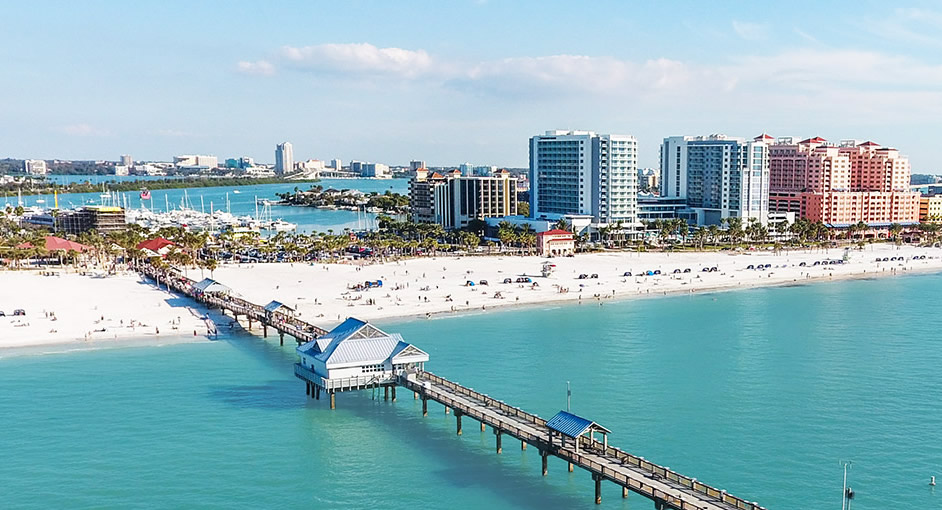
2 min read JULY 2019 — For the second year in a row, Tripadvisor awarded Clearwater  the distinction of having the best beach in the country. This comes as no surprise to the city’s 115,000 residents, who have long been stewards of their environment. With the population in the Tampa Bay region growing, that stewardship becomes even more important. 

Invest: Tampa Bay recently sat down with Mayor George Cretekos, who is on the verge of completing his second term. He discussed how the city is handling population growth, the challenges associated with it and how residents are at the forefront of environmental sustainability in Clearwater. 

How are Clearwater residents supporting environmentally sustainable practices? 

As I complete my second term, I appreciate how our residents and businesses have, on their own initiative, promoted sustainability and environmental stewardship.  Before there had been any talk about governments banning single-use plastics in the region, Clearwater’s businesses had started their own programs to stop using plastic straws. It is now common to find many restaurants in Clearwater that do not offer plastic straws or styrofoam to-go containers. This is a testament to how our residents are promoting sustainability and being good stewards of the environment.

How is the region handling the recent increase in population growth?

The region must have smart growth to make sure we are not only taking care of the environment, but also guaranteeing accessibility for our residents and visitors. We continually hear that we have traffic problems and at certain times of the year those problems can be exasperating. The population in this region needs to adapt to using alternatives like public transportation, which can be a better option than building more roads. We should model our transportation efforts to be like that of other major cities where reliable public transportation is an alternative.

What are the biggest challenges facing the city of Clearwater? 

Transportation and affordable housing are the two biggest concerns for the Tampa Bay area. A large percentage of the employees in Clearwater does not live in the city; if we can help provide affordable housing for these employees then the transportation problems could be eased. These individuals would not have to commute long distances into Clearwater, which in turn would help clear a significant amount of congestion on the roadways and emissions. My fellow mayors in the Tampa Bay region have realized that we may be separated by a body of water, but that doesn’t mean that our interests don’t run parallel. When one city does well then we all do well, so we should be working together to solve these issues.

To read more about our interviewee, visit: 
https://www.myclearwater.com/home


MacDill Air Force Base flying high as a premier Tampa Bay economic driver

2 minute read July 2019 —When describing the major economic drivers in the Tampa Bay region, the typical response will normally be associated with Fortune 500 companies, a budding technology sphere and the large healthcare systems that all call Tampa Bay MSA their home. While these are all significant contributors to the local economy, there is one entity that cannot be overlooked or underestimated: MacDill Air Force Base. 

A staple in the Tampa Bay community, MacDill Air Force Base employs approximately 15,000 people and creates over $3 billion a year in economic impact. Established in 1939, the base has been an economic powerhouse and premier training ground for aircrews throughout all the major wars since its inception. 

The impact of the base is far-reaching, as collaboration with various sectors of the local economy has spurred continued interest from companies to do business in Tampa Bay. Invest: spoke with Larry Richey, managing principal for Cushman & Wakefield in Tampa, who noted the appealing environment for defense technology thanks in part to MacDill. “We have companies that are providing cybersecurity services in conjunction with MacDill Air Force Base and the University of South Florida. The triangulation of MacDill, USF and cybersecurity startups has created a ripe environment for defense technology here in Tampa,” Richey told Invest:. 

Former Mayor Bob Buckhorn also credited MacDill as one of the reasons that Tampa is able to stay competitive in attracting new businesses to the area. “Most people don’t realize that MacDill is the only base in the military system that is home to two combat commands. There are 2,400 defense-contracting firms in the Tampa Bay area that largely feed off of central command but, more specifically, special operations command.” 

While the base has been successful on it’s own merit and continues to give back to the region tenfold, the relationship between MacDill Air Force Base and Tampa Bay is mutually beneficial. The Tampa Bay region has long been known as a welcoming community for veterans and active duty citizens. Regional Vice President for USAA Yvette Segura spoke to Invest: about the deep-rooted connection between the Air Force base and the surrounding community. “Knowing that the community as a whole is so warm and receptive to the folks coming into MacDill has created a strong sense of fellowship that is welcoming to a company like ours. Part of our company mission is to support military members as they’re exiting their roles and to offer them an opportunity to work with us,” she said. “There’s something special about what Tampa does for military families, and I truly believe it speaks to the collective comradery of the community leaders in the Tampa Bay area.

There aren’t many areas in Florida, or the United States for that matter, that have the economic advantage that MacDill Air Force Base provides to the Tampa Bay region. The base’s influence and impact continues to drive Tampa Bay both socially and economically into the future. 

To learn more about our interviewees, visit their websites:

MacDill Air Force Base: https://www.macdill.af.mil/

USAA: https://www.usaa.com/

Cushman & Wakefield: http://www.cushmanwakefield.com/en