Industrial investors eager to pounce on faltering retail properties

Industrial investors eager to pounce on faltering retail properties

By: Beatrice Silva 
2 min read August 2020 — Before April, e-commerce was already a booming business but COVID-19 has skyrocketed digital commercial transactions to a whole new level. Despite the current flash recession, the demand for industrial real estate has grown in almost every market. As a result, industrial real estate investors are eager to pounce on faltering hospitality and retail properties. Vacant or unprofitable large-acre facilities are being eyed up as potential warehouses and distribution centers. 

Businesses like hotels, theme parks, restaurants and others in the hospitality industry have taken the greatest hit financially among all major sectors. In Orlando, tourism disparities are now trickling down to those industrial companies that succor these industries. “Orlando’s weakness is that we’re a community built on tourism and convention services. When those industries suffer, typically our market suffers too,” Bo Bradford, industrial expert and co-president of Lee & Associates Central Florida, told Orlando Business Journal

However, with every crisis comes opportunity. If building vacancies do start to emerge as a result of the current economic slowdown it will give new operations a chance to plant roots in Orlando’s limited industrial market. One example is the area around the Orlando airport. In July, two flex industrial warehouses were proposed on 61.8 vacant acres at 6249 S. Goldenrod Road, according to the Orlando Business Journal. Orlando Office Center LLC are the property owners and Kelly Collins & Gentry Inc. are reported to be the project engineers. 

The increase in demand for industrial properties is making real estate investment companies get creative. Simon Property Group Inc. is considering converting vacant Sears and JCPenney stores into distribution centers, according to the Orlando Business Journal. However, in early June, the group decided not to proceed with an agreement with Taubman Centers that could have added various retail properties to its portfolio. “The COVID-19 pandemic has had a uniquely material and disproportionate effect on Taubman compared with other participants in the retail real estate industry,” Simon Property Group said in a press release. The real estate investment company has four properties in Orlando and if it does decide to transform even one of its properties into an industrial building, it could be a win-win for both parties involved in the transaction. 

Since the pandemic began, retail stores have suffered as more and more people shift to online shopping. Within a few years, traditional malls and outlet stores could become a thing of the past. For companies like Amazon, large vacant retail properties provide vital space in a limited market. 

South Jersey, Philly Industrial real estate a hotbed for investors

South Jersey, Philly Industrial real estate a hotbed for investors

By: Beatrice Silva

2 min read August 2020 — Even before the pandemic, billions of consumers had already been shopping on e-commerce sites like Amazon for years. But the pandemic is accelerating the platform’s growth as more and more people pivot away from physical stores. Shoppers say that there is something extremely gratifying about clicking a button and having a product delivered to their door the very next day. That’s music to the ears of those in the industrial real estate segment, as companies see an increasing need for distribution space.

When COVID-19 started to rapidly spread around the world, digital buying was no longer just a trend but a necessity. U.S. online sales grew 76% in June, reaching $73.2 billion that month, according to Digital Commerce 360. As a result, industrial real estate became even more of a hotbed for investment. Warehouses and distribution centers provide companies like Walmart and Target the local space they need to get purchase orders out to their customers quickly and efficiently.

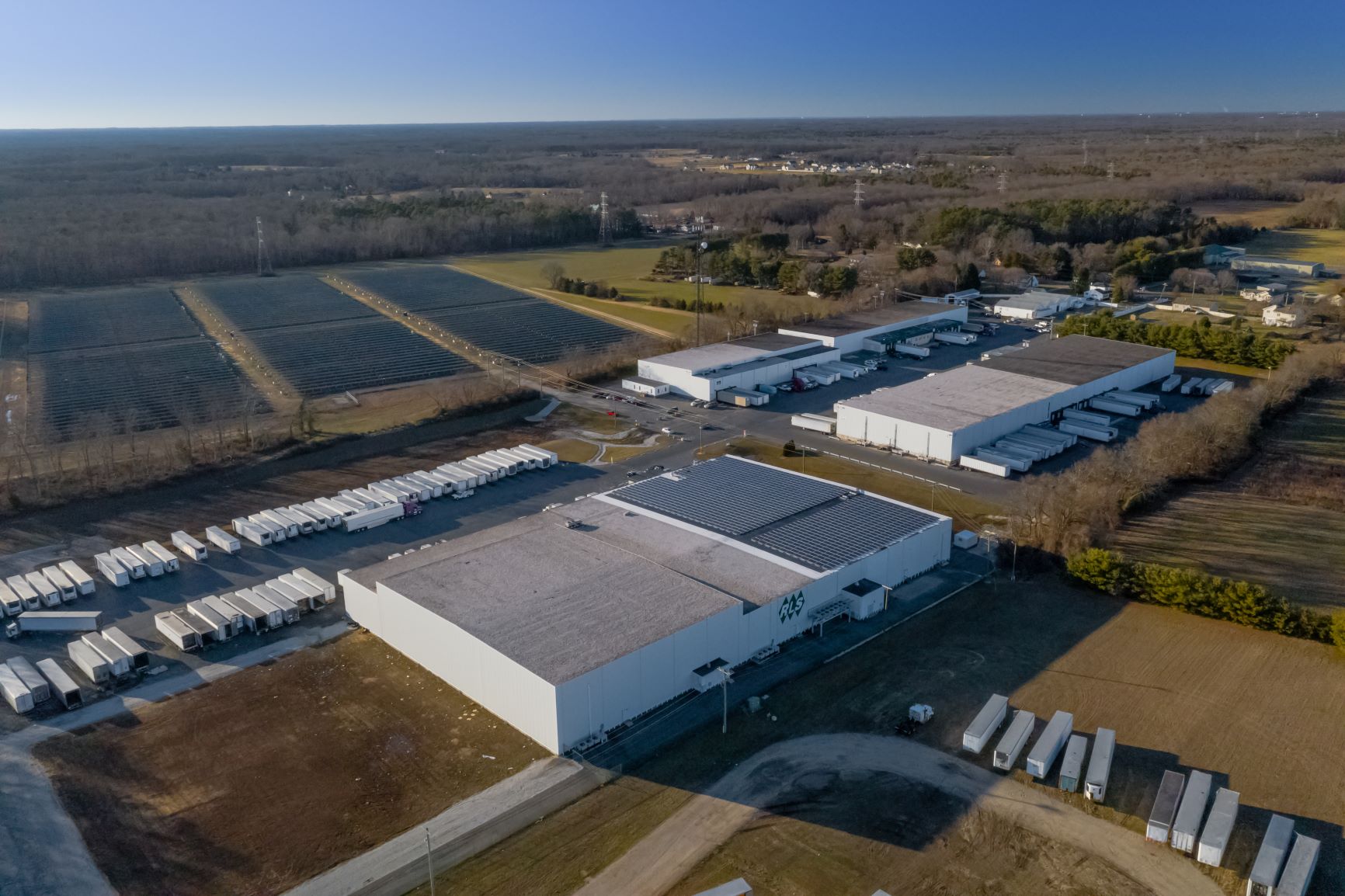
To offer consumers fast shipping, a large majority of the industrial real estate is located near key transportation hubs like seaports, highways, railroads and airports. That’s one of the reasons why a handful of out-of-state investors like Peter Lewis, president and founder of Coastal Realty LLC, have started building their industrial portfolios in the Northeast. Lewis explained to the Philadelphia Business Journal why his firm has increased their industrial properties in South Jersey: “These middle-market companies are going to start transitioning to becoming much more sophisticated online,” he said. “They have to. What that means is they’re going to require more warehousing, which is what our property offers. I continue to see a real demand for warehousing in densely populated areas. It’s going to be all the way from the 4 million-square-foot guys to the 2,500-square-foot guys,” said Lewis. Coastal Realty recently teamed up with Walton Street Capital to buy a 32-building industrial portfolio in Pennsauken. 


South Jersey and Philadelphia are lucrative areas because of their unique placement between Washington and New York. “The overall demand for warehouse space has continued to remain strong, especially with the uptick in e-commerce and the expectation by the consumer to have goods in their hands as quickly as possible. When Amazon Prime was introduced, two days for delivery seemed fast and quickly became the norm. We are now finding that next-day delivery, if not same-day delivery, is an integral part of the supply chain that is driving a lot of companies to look for warehouse space in South Jersey. The new speculative and build-to-suit development in our market has been mostly in the northern parts of Burlington County and the southern parts of Gloucester County,” Ian Richman, senior managing director of Southern New Jersey Colliers International, told Invest: South Jersey 2020. 

As long as there is a continued increase in consumer spending, the demand for retail space and other commercial activities like distribution centers, in theory, should rise. 

To learn more, visit: 

https://www2.colliers.com/en