Atlanta’s Westside: Where Opportunity Meets Walkability

By Sara Warden
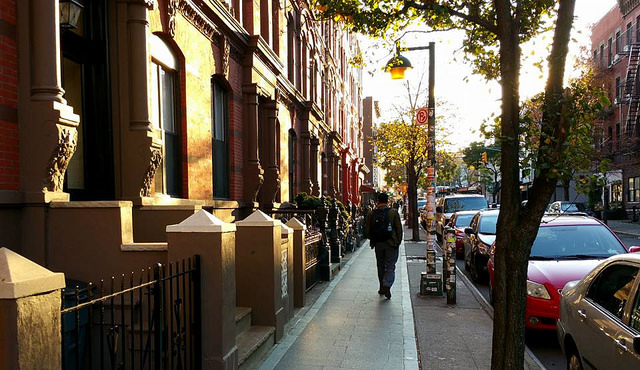
 

2 min read September 2019 — There are 26 qualified Opportunity Zones in the city of Atlanta, with the majority of them running down west of the I-75 in the city’s Westside. The qualified Opportunity Zones were born from a fiscal effort to drive private business into low-income communities. But it is more than just tax incentives that make Atlanta’s Westside one of the city’s fastest-gentrifying areas.

“There is demand,” Avison Young Principal Casey Keitchen told Bisnow. “There’s way more capital chasing qualified Opportunity Zone deals than there are qualified Opportunity Zone deals.”

This week, the Arthur M. Blank Family Foundation awarded a $17.5 million grant to Atlanta BeltLine Partnership to support development of Westside Park. The 280-acre park is slated to be the largest greenspace in Atlanta when it opens, with the first phase set to be inaugurated in 2020. The donation will be combined with $26.5 million from the city.

“Westside Park is a transformational project that will set an exciting new precedent for greenspace development across Atlanta,” said John Dargle, Jr., Commissioner for the city’s Parks & Recreation department in an interview with Atlanta Daily World.

According to Arthur M. Blank, Chairman of The Arthur M. Blank Family Foundation, the aim of the project is to create a community in an area that did not have the facilities to do so. “We want these Westside communities to feel like this is their park where residents, neighbors, and visitors are connecting and gathering because that is when Atlanta is at its very best,” he told Atlanta Daily World.

In the last few years, private developers have flocked to the area to take advantage of the qualified Opportunity Zone, among other features. 

“Westside is all the rage creative office. That makes sense,” Banyan Street Capital Principal Taylor White told Bisnow. “It makes a lot of sense for Opportunity Zone investors to go to that market.”

The magic of the Westside is that it is the point of crossover between most qualified Opportunity Zones and the Atlanta BeltLine project, meaning this real estate is worth its weight in gold. It can offer easy mobility, green spaces, social spaces and entertainment. Added to this is the Westside’s easy access to educational facilities, in particular Georgia Tech, which means that for developers, the sky is the limit. 

One developer that saw opportunity in the area is CrossStone Management, a firm that purchased several land parcels and is now looking to build retail, residential and commercial space. “I was attracted to the areas before Opportunity Zones were even discussed,” said the firm’s founder, Greg Todey, to Bisnow.


To learn more about our interviewees, visit:

https://beltline.org/about/the-atlanta-beltline-project/atlanta-beltline-overview/

https://blankfoundation.org/

https://www.atlantaga.gov/residents/parks-recreation

http://www.banyanstreet.com/

Mixing Work and Play in an Innovative Way

April 2018 — Started in 1999 as a graduate thesis and initiated in 2008 with walking trails, the Atlanta BeltLine has come a long way from what it was once envisioned to be. The recent developments of office buildings, retail and residential space along and around the BeltLine have created an environment where residents have everything they need within walking distance. It is the ideal mix of work and play and continues to grow as a current real estate hotspot in Atlanta.

In fact, in December 2017, a $750 million mixed-use project was unveiled for the continued expansion of the BeltLine. The plans include two 12-story office buildings, one hotel, 700 residential units and 200,000 square feet of retail space. The BeltLine also hired a new CEO, Brian McGowan, to continue the project.

The Atlanta BeltLine Partnership was formed to raise philanthropic dollars to supplement the BeltLine’s efforts. The Opening the Corridor campaign, which began in 2017, helped fund the recent purchase of the Southside Trail as an interim connection. The $25.8 million project will connect the East and West sides of Atlanta for the first time in history.

Focus: Atlanta spoke with a number of city leaders in both the real estate and transportation sectors to get their insights on the mixed-use developments quickly sprouting up along the BeltLine. Here’s what they said:

Brian McGowan, CEO, Atlanta BeltLine

“The BeltLine is currently refocusing itself. We are 12 years into the project, and it is time to reflect on where we have come from and reevaluate the direction we are heading. The BeltLine is about people at the end of the day. Our focus is function over form.”  


Jim Irwin, President, New City Properties

“Offices along the BeltLine allow people to create more alignment between their work life and their personal priorities. Whether it’s commuting to work by bicycle or walking across the BeltLine to meet a friend for lunch at Ponce City Market, this project gives people an opportunity to work in a place that they truly enjoy.”

Chris Faussemagne, Principal, Westbridge Partners

“There are a lot of suburban submarkets that are creating their own central business districts. They are creating their own communities, jobs and places to live. That has been a great thing for the city because it relieves congestion. The BeltLine is also creating a lot of connectivity and alternatives to work and play.”

Matt Bronfman, CEO, Jamestown Properties

The BeltLine is like our beachfront property at this point. We need to make sure that the people developing on the BeltLine do things that are worthy in the long term. We need to get tougher on the development community to do interesting projects because that is how you get appreciation. The entire BeltLine will be completed sooner than people realize, and those neighborhoods will be made much better. Neighborhoods attracting young talent will be the most successful, and those are along the BeltLine.”

Scott Cannon, Executive Vice President, Skanska

“The Atlanta BeltLine Development is focused on getting people outdoors and being green. It’s about changing the way people live, work and play in the city. Skanska has a unique project that we are working on with architect Lord Aeck Sargent: the Atlanta BeltLine Urban Farm Shed. It is a 500-square-foot off-grid storage and work shed featuring a photovoltaic energy and storage system, composting toilet, and the use of salvaged and locally milled wood products.”

Greg Hare, Managing Partner, Ogletree Deakins

“Some of the critics of the Atlanta BeltLine have called it nothing but a glorified sidewalk. However, that big wide sidewalk creates better connectivity between neighborhoods, as well as tremendous economic development, because it’s a popular place to be. Developers are now putting a lot of money into parts of Atlanta that have not seen investment in decades.”

Chris Clark, President and CEO, Georgia Chamber

“We need to attract young professionals. We need to create the cool factor, which is why things like the BeltLine are important. We can offer great amenities and quality of life.”

To find out more about our interviewees above, visit their websites at:

Atlanta BeltLine: https://beltline.org
Westbridge Partners: http://www.westbridgepartners.net
New City Properties: http://www.newcity-properties.com
Skanska: https://www.skanska.com
Jamestown Properties: https://www.jamestownlp.com
Georgia Chamber: https://www.gachamber.com
Ogletree Deakins: https://ogletree.com