Spotlight On: Steven Abrams, Executive Director, South Florida Regional Transportation Authority/Tri-Rail

By Max Crampton-Thomas
 

2 min read August 2019 — Transportation is a hot topic issue throughout South Florida, and as the population in the region continues to grow so do the challenges. While the roads seemingly become more congested every week, there is a significant emphasis on using other forms of transit. For 30 years, Tri-Rail has been one of the leading alternative forms of transit for visitors and residents of South Florida alike. Invest: Greater Fort Lauderdale recently had the chance to sit down and speak with Steven Abrams, the Executive Director for the South Florida Regional Transportation Authority, which is the governing body that operates and oversees Tri-Rail. Abrams discussed Tri-Rail’s longevity in the South Florida Community, how it is working in tandem with Virgin Trains USA (formerly Brightline), the ways in which it is using technology to improve operations and what is contributing to the steady uptick in ridership.

What has contributed to Tri-Rail’s longevity in the South Florida community? 

This year is Tri-Rail’s 30th anniversary. Tri-Rail started as a traffic mitigation project along I-95 while 95 was being widened, but it was supposed to be a stop-gap until the completion of the project. Thirty years later, it is still thriving. Over those 30 years, we have improved our service, added more trains, added weekend and holiday service and added connections to the area’s three airports. We are a transportation system that has become popular over time and we have embedded ourselves in the tri-county area.

How are you working with Virgin Trains USA to improve rail transportation in the community? 

We have a collaborative relationship with Brightline, and we anticipate that it will only be a benefit to both services. Brightline is geared more toward the tourism population, whereas Tri-Rail transports 15,000 riders a day to work and school. Our riders mainly consist of clerical workers, blue-collar workers, construction workers and students. It is a different market than Brightline, but we work very closely together and hope to be able to feed each other’s passengers into our system. We are far along on plans to enter Brightline’s downtown Miami station. The platform has been constructed, and we are just waiting on the approval for its Positive Train Control system. Positive Train Control is a safety system that was mandated by the federal government for all railroads in the country. Once Brightline’s system has been certified, we can apply to be a tenant on its system and continue our existing service and extend up to about half of our trains into downtown Miami. We are hopeful that this will occur in the near future.

How is Tri-Rail using new technology to improve operations and the safety of its passengers?

We are installing a Positive Train Control system that adds an extra level of safety on what is already a safe system. The National Safety Council did a survey and concluded that you are more likely to die of radiation or from a cataclysmic storm than you are being a passenger on a train. The Positive Train Control system is required by the federal government, and we anticipate that it will add that extra measure of safety in terms of avoiding oncoming collisions. If the train is going too fast, the system will automatically slow it down. We do not have many curves on our system, so this is probably more of a benefit for trains up north where there are hills and curves. Nonetheless, we will be able to stop the train should it exceed speed limits.

What factors are behind the steady increase in Tri-Rail’s ridership? 

There are three reasons and two are, in a way, related. South Florida is a tourist and service-related economy, and these individuals, like waiters or construction workers, cannot work from their homes. We have people coming from all over the world who are used to rail transportation in their countries, and they are feeding into our system. Our roads are also just becoming so congested. It used to be that our ridership would principally, and almost exclusively, fluctuate with gas prices, but now that  gas prices are stable and dropping, we still have people riding our system because ultimately it is the overabundance of cars on the road that are urging them to seek alternative transportation.


To learn more about our interviewee, visit:


https://www.tri-rail.com/

The Future is Now for FATVillage

By Max Crampton-Thomas


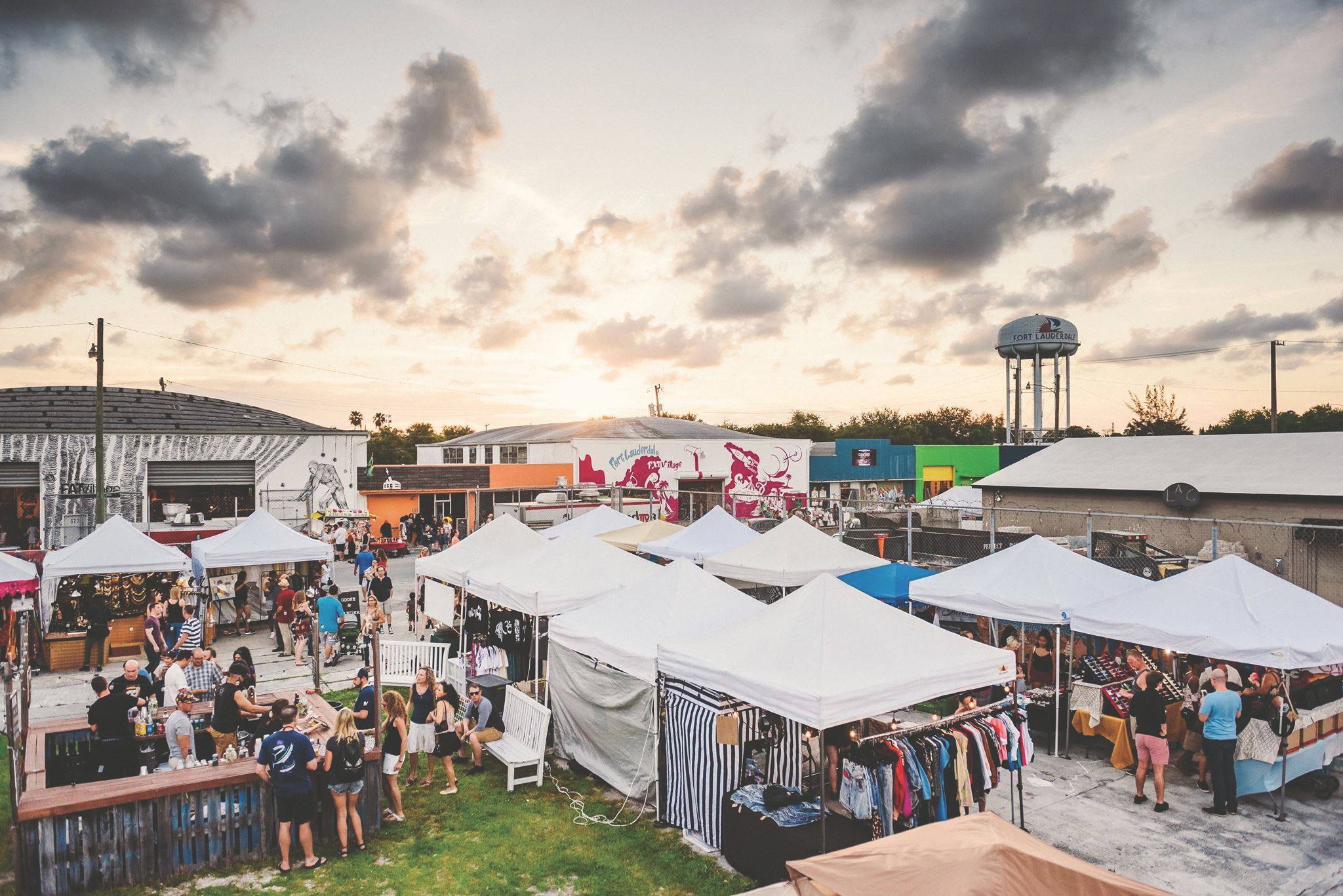
3 min read August 2019 — Fort Lauderdale’s FATVillage makes up for what it lacks in size with a treasure trove of arts, cultural and technological offerings. Founded in the late 1990s by Doug McCraw, the four-block historic warehouse district has developed into an arts hub to rival the most established arts districts in South Florida. While the area was originally founded as a way to rally philanthropic support around the artistic community in Fort Lauderdale, it is now transitioning into the premier destination for artists, small-business owners, technologists and arts enthusiasts.

The emergence of FATVillage has been a thoughtful and deliberate process of encouraging smart development that never diverts from the emphasis on art as the main part of the neighborhood’s DNA. This stands true for the introduction of more mixed-use development into the area, as McCraw highlighted in a recent interview with Invest: Greater Fort Lauderdale, discussing how that development is not only a new concept but also positively affecting the surrounding neighborhoods. “FATVillage has consistently been a significant economic driver in the Broward County region. It has acted not only as an arts community but also as a nucleus for a lot of the development in Flagler Village. What we are doing in terms of using art as a driver of mixed-use development is still a new concept, and not many developers are integrating product development with a creative community in the same way that we are,” McCraw told Invest. 

He also acknowledged that while FATVillage is undergoing a transition to focus on developing its status as an economic driver in the region, the reason for the district’s success has been the deliberate and careful process of deciding who can lease inside the area. “FATVillage is at a transition point. We are very focused on developing FATVillage to make it a treasure for Fort Lauderdale. We have aggregated various types of coworking spaces with different disciplines, all of which are major components of FATVillage. We have a curated process and we do not just lease to the first person who walks in the door. Our focus on art as an integrated part of the DNA of FATVillage makes us a unique component of Fort Lauderdale’s culture,” McCraw said

Helping to achieve this vision for the future of FATVillage, while also remaining true to its arts identity, is Urban Street Development, which has been involved with the district from the beginning. Invest: recently had a conversation with the Co-Founder Alan Hooper about what the next phase of development for FATVillage will look like. “In August, we intend to deliver a plan that will take the FATVillage Art District in downtown Fort Lauderdale into an exciting era that will combine food with art and technology (FAT) and develop a neighborhood where people and businesses of all sizes can find a place to live, create, collaborate, and socialize. The 5- acre-plus plan fully embraces the arts and elevates the opportunities for artists and creative businesses alike. Positioned inside the downtown core, the Opportunity Zone, and a block from Brightline, the options for community building are endless,” Hooper told Invest:. “We want to help FATVillage evolve into the place it should be. A place that is attractive to creative businesses while maintaining the artists who made us a well-known destination. We want to build some affordable housing for artists and local creative people, as well as really cool workspaces for start-up businesses that might represent art in another way, through video or audio, the art of the word, or the art of food. A place like this will be very attractive to businesses that benefit from hiring within a congregation of talent. In the end, we are creating a village that all people can grow with, be a part of and enjoy.” 

Arts and culture is a major key in Florida’s economy, and even more so in Broward County. Areas like FATVillage play a vital role in keeping arts in the county, and acting as a significant economic driver for the region. FATVillage has long been an attractive destination in Fort Lauderdale, but it is now on the cusp of a major transition into a true arts and economic staple in Broward County. 


To learn more about our interviewees, visit:

https://www.fatvillage.com/

http://www.urbanstreetdevelopment.com/