Innovation and adaptation: What this could mean for education post-pandemic

Innovation and adaptation: What this could mean for education post-pandemic

By: Beatrice Silva

2 min read September 2020 — The pandemic forced educational institutions to pivot all of their operations to a completely virtual landscape. Many university leaders were planning on returning to normalcy at some point in the upcoming months, but that looks increasingly unlikely. The keys to a successful academic future are in the hands of those educators who are willing to adapt and use innovative technology to their advantage. 

For the majority of universities the rapid transition into an entirely digital world came as a rude awakening. It showed just how fragile the framework of higher education could be without a contingency plan in place. Nevertheless, within days institutions like Drexel University and  Rowan University worked tirelessly to develop new strategies that would not only keep them afloat but would help unify the educational community.  

“Between the financial impact of COVID, the demographic changes, the situation in terms of bringing international students here, and with so many constraints on the system … institutions are really going to have to step back and begin to rethink their model because the sector is not going to be spared continued disruption going forward,” John Fry, president of Drexel University, told DrexelNOW. “More than ever, partnerships — or joint ventures, or mergers, or whatever you want to call them — are the way to go. I think the sector is going to see an almost healthcare system-like response to what’s going on. Healthcare started on its own consolidation and rethinking its model decades ago and it’s obviously still in the middle of it. I think it’s time for higher ed to go through the same types of dynamic changes. I think you’re going to see fewer institutions. I think you’re going to see more networks of institutions. I think you’ll see more hybrid, more online. Hopefully we keep face to face, but that’s just part of what we do.

As Fry mentioned, in the years to come, almost the entirety of higher education’s traditional model could be shifted, not only the logistics concerning profitability but also the student’s overall learning experience. Despite implementations caused by COVID-19, it seems as if a new institutional network was inevitable. Even before the recent pandemic, consumers have been transitioning into the digital realm. Students and parents had started craving alternative options for higher education that involve more flexibility, innovative delivery models and seamless transitions between face to face lectures and online learning. 

Universities are starting to require students to download applications like the DUO, a two-factor authentication system, that helps with the onboarding process. The software works with third-party technology providers to verify a student’s identity. Biometric tools, commonly used by financial technology corporations, are also gaining popularity in this space. “New users will now be asked to take selfies before uploading them to the (UK fintech company) Curve platform alongside pictures of their driver’s license, passport or other official ID documents. FinTech will then use its partner’s biometric capabilities to compare the two images and verify potential customers’ identities,” according to PYMNTS, a B2B platform for the payments industry. 

During this period of evolution, sound insights and collaboration between the public and university leaders will be pivotal for the education sector’s success. To learn more about the future of education in South Jersey, register now for the Invest:South Jersey 2020 Virtual Launch Conference. The conference takes place on Oct. 8 at 11:30 a.m. The virtual conference will feature two robust panels, including “Innovation and adaptation: What this could mean for education post-pandemic,” moderated by Marlene Asselta, president of Southern New Jersey Development Council, and featuring Frederick Keating, president of Rowan College of South Jersey, Monica Adya, president of Rutgers School of Business at Camden, and Barbara Gaba, president of Atlantic Cape Community College. 

To learn more, visit:
https://zoom.us/webinar/register/WN_z34pLBUwQlSCObV80dyE7w

Students face remote learning in return to school

Students face remote learning in return to school

By: Beatrice Silva

3 min read August 2020 — As COVID-19 cases continue to rise, so does the number of universities keeping their physical doors shut this school year. The University of Notre Dame Princeton University, and Rutgers-Camden Business School are just some of the institutes that announced their decision to go fully online. 

Just as businesses needed to pivot during the pandemic and subsequent recession, educational institutions also had to find a way to adapt. “It is an unprecedented event that took us all by surprise,” Dean Monica Adya of Rutgers-Camden Business School told Invest: South Jersey. “We established a COVID-19 task force that includes all of my cabinet members, to look at how to proceed. One of the first things we did was to look at our emergency management plan that tackles infectious diseases, among other things. We focused on operational and communication measures. The former is relative to academic and business continuity. As Gov. (Phil) Murphy enacted the executive order stating that no one was to come to campus, we moved to an online format for all classes. Fortunately, several of our programs were already entirely online. Many of our students were already taking a combination of online and in-class programs, making them familiar with the online platform. We are sparing no resources or action plans to make sure our students get through this semester. We are also launching discussions about recovery, how we are going to help people who are out of work to get back into the workforce, and what specific programs and certificates they will require for that to happen in the shortest of terms.” 

Most students experienced a taste of distant learning back in April when schools were forced to close after lockdowns were issued across the United States. However, that doesn’t make it any easier for undergraduates, postgraduates, and faculty members to pick up where they left off. “We had some challenges on the student side because many students, although we think of them as a digital generation, had difficulty making the switch to online learning.  We’ve worked through much of this but it took some time,” Mike Mittelman, president of Salus University, told Invest: Philadelphia.

Innovation and technology play a huge role in how higher education continues to operate. Virtual learning experiences have replaced physical classrooms and face to face lectures. The new format has left some students feeling overwhelmed and quite frankly ripped off. At Rutgers University, more than 30,000 people have signed a petition started in July calling for an elimination of fees and a 20 percent tuition cut, according to The New York Times

Student housing is another topic of debate in the education community. While some institutional leaders don’t believe it’s safe, others argue that students don’t have anywhere else to go.  Schools, like The University of Pennsylvania and Temple University, are allowing a limited number of students back on their grounds but under strict conditions. Most schools that are letting students live in dorm rooms or attend in-person classes are actively enforcing social distancing, face masks and have provided COVID-19 tests. At Drexel University, international students or students who are experiencing financial hardships will be the only ones allowed to live on campus. 

Along with the many challenges the pandemic caused, it also created new opportunities. COVID-19 pushed educational institutions out of their comfort zones. To stay in business, universities adapted to new technologies and even formed a few alliances along the way. “This whole industry has shifted very, very quickly, so that shows that there’s flexibility, it shows that there’s resilience,” John Fry, president of Drexel University, told the Philadelphia Business Journal. “Those adaptations are incredibly valuable assets and institutions should hold on to that and not say, ‘Once this is over, we can go back to the way it was.’ Going back to the way it was, I think, is not a good idea.” 

Technical college system major component of Georgia’s business climate

Technical college system major component of Georgia’s business climate

By: Felipe Rivas

2 min read August 2020 For the better part of the last decade, the Peach State has consistently ranked as the best state to do business year after year, a feat largely driven by Georgia’s robust higher education institutions and the state-funded technical college system. The Technical College System of Georgia (TCSG) is the state government agency overseeing Georgia’s 22 technical colleges. As the country slides into a pandemic-led recession, the system remains keen on solidifying Georgia’s workforce, while helping companies land the talent needed to thrive in a volatile economy. 

Georgia’s track record for attracting new industries and companies is largely a result of the state’s pro-business landscape, geographical location and proximity to other key markets, and efforts to nurture a market-ready workforce. The system’s mission is to build a well-educated, globally competitive workforce through technical education, adult education and customized training for Georgia’s businesses and industries. “We provide Georgians with the education and training that will lead directly to a career that is in demand,” Technical College System of Georgia Commissioner Greg Dozier told Focus: Atlanta. “Our colleges work hand in glove with local industry to understand their workforce needs and offer programs that meet those needs.”

According to the National Skills Coalition, 54% of Georgia’s jobs are considered “middle skill,” or jobs that require more than a high-school diploma, but less than a four-year degree, Dozier said. However, only 42% of Georgians are trained to this level. “We are laser-focused on closing this middle skills gap.”

The system is in constant communication with businesses and industry leaders across Georgia, and has close partnerships with companies across different sectors, such as Mercedes Benz, Kubota, King’s Hawaiian Rolls and KIA Motors Manufacturing Georgia. Via its Georgia Quick Start program, the system provides free workforce training for companies considering relocating to Georgia or expanding in Georgia. And market-ready talent is among the top necessities for companies wishing to relocate or expand in the Peach State. “We are at the table with the Department of Economic Development when meeting with companies that are considering Georgia as their new home,” Dozier said. “Businesses want to know how they’ll have a steady pipeline of skilled talent. That’s what we do.” Through these conversations the system can then develop training programs tailored to the businesses’ needs and expectations. “We went through this process with KIA, which now manufactures its Telluride, Sorento and Optima automobiles about 80 miles southwest of Atlanta,” Dozier said. 

Serving counties such as DeKalb, Newton and Rockdale, Georgia Piedmont Technical College is part of the Technical College System of Georgia and provides education for the three-county service area, mostly in the metro Atlanta region. “Across the counties we serve, companies come to us with their recruitment needs and it is our role as a technical college to ensure we have programs that support those jobs,” Georgia Piedmont Technical College President Tavarez Holston told Focus: Atlanta. Though the impact of the coronavirus has squeezed the education sector and the economy at large, Holston says the college remains keen on equipping the local workforce with in-demand skills and training. “As we look at the current environment, there are signs of life in the economy, and we want to make sure we remain relevant in producing a workforce that meets the needs of our counties. Even though COVID-19 has changed the way we do business, we are still getting calls from our industry partners that require training delivered virtually,” he said.  


Healthcare and tech-based training are among the most popular offerings at Georgia Piedmont Technical College. “There are two careers that seem to be gaining a great deal of traction, one of which is healthcare. We train essential frontline workers and we are proud to be part of that,” Holston said. “Another popular course is in manufacturing, which can be attributed partly to the rise of e-commerce. We are getting many requests for training in automation, programmable logic control and advanced manufacturing.”


While the ramifications of the coronavirus are likely to shape the future of business and education, leaders are optimistic that Georgia’s workforce will continue to meet the needs of employers and industries. “Our colleges have done a great job of preparing for in-person reopening following guidelines set by the CDC and GPH,” Dozier said. “I think there will be great needs with economic upticks in various industries across Georgia. As the economy comes back, the needs that TCSG satisfies for businesses and the community will make a difference. Georgia has been named the No. 1 state in the nation to do business seven years in a row. We will continue to build on the legacy Georgia has made for itself as the No. 1 state for business by providing a skilled workforce. The prospects for the state are extremely positive.”

After an overnight transition to remote learning in the spring, Georgia Piedmont Technical College aims to accommodate students’ needs further come the fall semester. “We have always done online and distance learning. But we have realized that we need to be more flexible and accommodating for our students,” Holston said. “We still have to think about the highest quality education we can provide during a pandemic. When the shelter in place order came down, we immediately started putting together an intensive two-year program that could be done in a year, with the reasoning that people at home have more time at their disposal.”


To learn more about our interviewees, visit:

https://tcsg.edu/

https://www.gptc.edu/

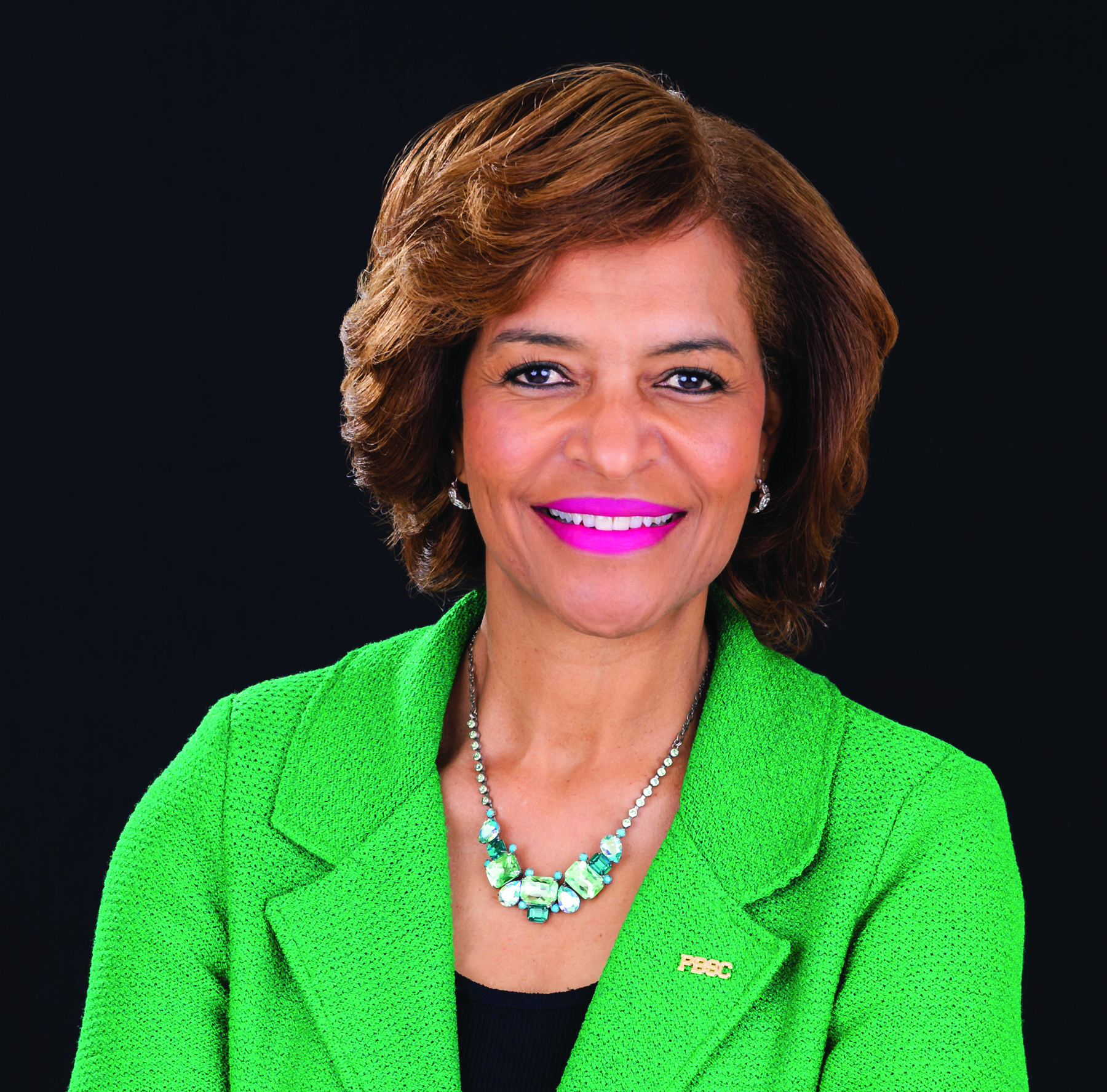
Spotlight On: Ava Parker, President, Palm Beach State College

Spotlight On: Ava Parker, President, Palm Beach State College

By: Felipe Rivas

2 min read May 2020 — Palm Beach State College succeeded in transferring most of its programs to a remote format to deal with the COVID-19 pandemic that hit the world early in 2020. The college is preparing the next generation of business leaders and frontline workers with business programs, health sciences career tracks, and fire and law enforcement among its most popular offerings. In an interview with Invest: Palm Beach, college President Ava Parker discussed the school’s most popular programs, its role as a stepping stone to a better life for students, and its stress on academic focus.


What are the most popular programs for the college?

As a state college, 60% of our students come here to earn an Associate in Arts (A.A.) degree and transfer to our bachelor’s programs or to a university bachelor’s program, most frequently in the state. Most of our students want to transfer to Florida Atlantic University or the University of Central Florida. Florida International University and the University of Florida are also top choices. 

In our A.A. pathway, many students want to go into business. Our entrepreneurship A.A. and bachelor’s degree tracks are popular, as is getting the business foundation needed to transfer to a university’s program.

Another popular area is health sciences. Many of our students are the first in their families to go to college, so for them, they are thinking about where they have seen people succeed, which people have improved their economic condition because of their chosen profession. Many of our students go into health sciences because that is an area where they can always find a job. The fields that are popular include dental hygiene, nursing, ophthalmic medical technology, respiratory care and radiography. Those are Associate in Science degree programs that many of our students see as opportunities to move from a lower socioeconomic status to the middle class. Most years, 100% of our ophthalmic graduates are placed right away, including at the Bascom Palmer Eye Institute, where we have a tremendous partnership. Our respiratory care graduates are picked right up once they pass their national boards, as are the radiography and dental hygiene graduates. And of course, our longest waiting list is for nursing. We are a sought-after solution for students, and also hospitals and doctors’ offices, because they understand that our program is rigorous and turns out great nurses. We also have bachelor’s programs in nursing and cardiopulmonary sciences for nurses and respiratory therapists who want to advance.

Our fire, law enforcement and corrections academies are also very popular. Many of our citizens rely on these programs as the primary route to entering those public safety fields. 

How does the college help students update skills to transfer to other institutions? 

Our bachelor’s degree programs are a fast lane. When I shake hands with students who are graduating with our bachelor’s degrees, most of them are in their 30s. They are folks who already have a job, and they found their way to us because they were sitting at work, and there was an HR announcement about a job opportunity that required a bachelor’s degree. 

We are ideal for those people because they can continue to work at their jobs, and they can come to us in the evenings or attend online to earn those additional credentials. We also can do that at a reasonable cost. 

How are your trade programs structured?

Regarding our trade programs, we are the workforce solution for adults in Palm Beach County. We see that as a hallmark of what we do as an institution for people who enjoy working with their hands, or people who want a shorter term of study and come out ready for work. We have long waiting lists for many of our trade certificate programs, which prepare students to become welders, HVAC technicians, machinists, low voltage technicians, electricians, automotive, diesel and marine service technicians as well as cosmetologists and barbers. Our Engineering Technology and Electrical Power Technology A.S. degree programs are producing much-needed technicians to support the manufacturing, aerospace and electrical power generation industries. In fact, graduates of PBSC trade programs can be found throughout the county, contributing to its growth and innovation. 

How is COVID-19 shaping the educational landscape?

I am concerned every day about students withdrawing. Our spring break was the first week of March, and I recall having the first conversation with my leadership team about us preparing for COVID-19. I never would have guessed that a month later most of my staff would be working from home, as well as all of our instruction happening remotely. My biggest worry, because we were able to successfully transfer most of our programs to a remote format, was related to our firefighter and police academies, because our instructors, who are first responders out there at work dealing with the situation, were not available to instruct our students. It was also considered a liability to have our Emergency Medical Technician (EMT) program students out there in the hospitals doing their clinical rounds, as well as our nursing students. The hardest thing has been stressing to our students to remain focused on their academic trajectory. Some of them did not have the devices to actually make the transition, so we had to go and look throughout the college for every laptop available for our students to check out, because it is really difficult to do your homework from your phone.

To learn more about our interviewee, visit: https://www.palmbeachstate.edu/

South Jersey and Philadelphia transition into online learning

South Jersey and Philadelphia transition into online learning

By: Felipe Rivas

2 min read April 2020As the coronavirus reduced daily activity to only essential services, educational institutions were forced to transition at a moment’s notice into a virtual setting as shelter-in-place measures and social distancing became commonplace. Entire curriculums, testing, labs, and even physical education in some cases, transitioned into an online classroom setting as teachers and students of all grade levels resumed their education under the COVID-19 pandemic. 

These risk-management decisions stressed and challenged the infrastructure of universities, colleges, and schools throughout the nation, while at the same time creating opportunities for innovation in the educational landscape. Although fully online classes are a temporary measure to slow the spread of COVID-19, and as local, state and national governments consider what a reopened economy may look like, educational systems alike are being forced to mitigate the challenges and innovate their educational practices and offerings via learning innovation and digitalization.

In the Philadelphia region, Neumann University transitioned quickly into an online learning setting thanks to close to two years of prior preparation. For the last 24 months, the university has been expanding its online and remote learning capabilities, President Chris Domes told Invest: Insights in a virtual interview. “Our faculty were well-prepared. Our students work off of their devices and their phones, they already live in a virtual world socially, and now they get to live in a virtual world academically,” Domes said. In similar fashion, in New Jersey, the Rutgers School of Nursing–Camden, was preparing for a shift in the educational landscape as early as February. In February, the university created an emergency operation center as part of its risk-management strategy, school of nursing Dean Donna Nickitas told Invest: Insights in a virtual interview. “By the time we got to spring break, we knew we were going to have to make some quick changes,” Nickitas said. The nursing school quickly notified students if they needed resources like computers, webcams, and access to remote learning software.

Under the COVID-19 landscape, tuition-dependent institutions are among the most vulnerable as students are liable to put their education plans on pause as they grapple with loss of employment and income. Colleges and universities with strong endowments and alumni contributions will likely survive the impact of COVID-19, but declines in revenue and increases in costs will likely loom for the coming academic years. Declining revenues could stifle innovation as institutions reprioritize budgets and offerings. 

However, a life post-COVID-19 may be ripe with opportunities for innovation and further streamlining of classes. COVID-19 helped destigmatize fully online learning. Moving forward, educational leaders will likely see online education as more than a source for extra revenues. Instead, online education will likely become an integral part of institutional resilience and academic continuity. Educational institutions will have to rethink how they plan for, fund, and market online learning. More unified institutions will emerge from the coronavirus pandemic, as online courses and student support functions become more centralized and integrated into existing academic structures and processes. 

After student outreach efforts, Neumann University found that close to 80 percent of its students were adjusting well to the remote learning setting. The university is working to assist all of its students with resources like tutoring, student engagement activities, counseling, and more. The feedback gathered from students will help determine what innovations and changes the institution needs to make for the future, according to Domes. “We are getting initial feedback from our students and are utilizing that to help us understand that moving forward if we remain in this status for some time what are we learning and how might we make this more appropriate for students in the future so that we make sure we are adapting along the way,” he said. For Rutgers School of Nursing–Camden, the school is preparing to continue to groom the next generation of nurses and healthcare professionals. “What we have learned is that we need to be prepared, Nickitas said. Though summer and fall enrollments figures will likely fall due to the COVID-19 pandemic, Nickitas hopes the essentiality of nurses and healthcare professionals will motivate more students to explore a career in medicine. “I do hope that because of the kind of publicity that TV stations and media are giving nurses, that people understand not only what nurses do, but what they know. Hopefully, that will resonate with some individuals and inspire them to say, ‘I want to make a difference, that is what I want to do.’”

Additionally, it is possible that online learning goes truly global as colleges and universities expand their student base to allow for more international students who may never see the inside of a physical campus. 

The lasting impact of COVID-19 to the educational sector remains to be seen. For the time being, it is likely that students will finish the spring semester and potentially the 2019-2020 school year from the comfort of their homes. As educators prepare for summer and fall semesters, they will have to contend with the challenges and opportunities of educating students in a post-COVID-19 world.       

To learn more about our interviewees, visit:

https://nursing.camden.rutgers.edu/

https://www.neumann.edu/

To see our full interview with the education leaders and more, visit:

 https://www.youtube.com/watch?time_continue=42&v=V9oL3kIX-NI&feature=emb_title

https://www.youtube.com/watch?v=q8wU5yYFccw&feature=emb_title

https://live.capitalanalyticsassociates.com/invest-insights/

COVID-19 making innovation a must for educators

COVID-19 making innovation a must for educators

By: Felipe Rivas

2 min read April 2020As the coronavirus reduced daily activity to only essential services, educational institutions were forced to transition at a moment’s notice into a virtual setting as shelter-in-place measures and social distancing became commonplace. Entire curriculums, testing, labs, and even physical education in some cases, transitioned into an online classroom setting as teachers and students of all grade levels resumed their education under the COVID-19 pandemic. 

These risk-management decisions stressed and challenged the infrastructure of universities, colleges, and schools throughout the nation, while at the same time creating opportunities for innovation in the educational landscape. Although fully online classes are a temporary measure to slow the spread of COVID-19, and as local, state and national governments consider what a reopened economy may look like, educational systems alike are being forced to mitigate the challenges and innovate their educational practices and offerings via learning innovation and digitalization.

In Orlando, Seminole State College of Florida was able to make the transition into a fully online learning setting effectively because its student body and faculty were already familiar with online and remote learning. Prior to the COVID-19 outbreak and shelter in place measures, the college was well-positioned for the quick change of events, President Georgia Lorenz told Invest: Insights in a virtual interview. “About 53 percent of our students were already taking at least one online course as part of their schedule. The vast majority of our students at some point of their academic career have had familiarity with our online learning managing system,” she said. Many of the campus based classes use the same learning management system to enhance and support the learning process, making the transition easier to handle for faculty and students. Additionally, the college also quickly transitioned its library, student support systems, and other resources online to maximize the learning experience during a time of abrupt changes. “It’s been a lot of work and I give a lot of credit to our faculty, students and all of our staff for making this change very quickly.” 

In the COVID-19 landscape, tuition-dependent institutions are among the most vulnerable as students are liable to put their education plans on pause as they grapple with loss of employment and income. Colleges and universities with strong endowments and alumni contributions will likely survive the impact of COVID-19, but declines in revenue and increases in costs will likely loom for the coming academic years. Declining revenues could stifle innovation as institutions reprioritize budgets and offerings. 

However, a life post-COVID-19 may be ripe with opportunities for innovation and further streamlining of classes. COVID-19 helped destigmatize fully online learning. Moving forward, educational leaders will likely see online education as more than a source for extra revenues. Instead, online education will likely become an integral part of institutional resilience and academic continuity. Educational institutions will have to rethink how they plan for, fund, and market online learning. More unified institutions will emerge from the coronavirus pandemic, as online courses and student support functions become more centralized and integrated into existing academic structures and processes. 

At Seminole State College of Florida,  “students are appreciating the e-services and online learning capabilities,” Lorenz said. “We are continuing to innovate and fine-tune as we move forward, but it seems to be working really well for a good portion of our students and staff.”

In terms of lasting innovation, it is possible that online learning goes truly global as colleges and universities expand their student base to allow for more international students who may never see the inside of a physical campus. 

The lasting impact of COVID-19 to the educational sector remains to be seen. For the time being, it is likely that students will finish the spring semester and potentially the 2019-2020 school year from the comfort of their homes. As educators prepare for summer and fall semesters, they will have to contend with the challenges and opportunities of educating students in a post-COVID-19 world.       

To learn more about our interviewee, visit: https://www.seminolestate.edu

To view the interview with Seminole State College of Florida President Georgia Lorenz, visit: https://www.youtube.com/watch?time_continue=6&v=MhowKRH4dkY&feature=emb_title

https://live.capitalanalyticsassociates.com/invest-insights/

Spotlight On: Larry Thompson, President, Ringling College of Art and Design

Spotlight On: Larry Thompson, President, Ringling College of Art and Design

By: Max Crampton-Thomas

2 min read March 2020 — While all higher education institutions operate with the purpose of preparing students for future lifelong careers, Ringling College of Art and Design is also working to shatter the myth of the starving artist, school President Larry Thompson told Invest:. He also spoke about the increased student interest in offerings from the school, positioning the college for future long-term success and identifying the issues that need to be addressed in higher education. 


What was one of the major successes for the college in 2019?

In December 2019, we opened the Sarasota Art Museum, which is a part of Ringling College. It is built on the site of a historic high school from 1926 located right in the middle of Sarasota. We took it over because the school system was trying to find a use for it and we were looking for space for a museum. We were able to turn it into a contemporary art museum and a space for continuing studies and lifelong learning. This project has been a long time in the making, so we are quite pleased to have this as part of our campus.

Where are you seeing the most growth in terms of student interest? 

We have seen growth in our virtual reality major and have launched a new major in entertainment design. We are also seeing a huge increase in the number of students who are interested in the Collaboratory. The idea of the Collaboratory is to help our students get real-world experience working with real-world clients. We invite clients to the institution and put together teams of students who work to help solve some of the problems that clients might be having. It is a wonderful tool for the clients, and it’s great for the students because they are getting to work with real people. The projects they are working on also have true meaning. I like to tell people that one of the great advantages for our students is that it helps with the recent college graduate dilemma: They can’t get a job if they don’t have experience, but they can’t get experience if they don’t have a job. The Collaboratory gives them that experience.

How is the college working to change the perception of art as a career? 

As an art and design college, we are fully committed to shattering the myth of the starving artist. Too many people have this feeling that art and design are more of a hobby than a career and that there are no real careers out there. This has never been true and it is certainly not true in today’s society. We focus on making certain that our students, when they graduate, have great careers. Over 100 national and international companies recruit here. These are corporations like Apple, Google, Pixar and Disney. The world has changed so much, having become a much more visual world. This has created more opportunities than ever before for artists and designers.

How are you positioning the college for future long-term success? 

We have to look at what the future holds, especially in this age of artificial intelligence (AI). AI is just in the early stages but many different jobs are going to be eliminated once it takes off. We also need to be looking at where the economy is headed. Everyone needs to be positioned for the next stage, which we are calling the Creative Age. In history, we have had the Agricultural Age, the Industrial Age and the Technology Age. The Creative Age is next because creativity is going to become one of the most essential skill sets people are going to need for success in the future. I believe this is already starting to be recognized on a global scale.

What do you view as the most significant challenges facing higher education? 

There are numerous challenges facing higher education, especially private nonprofit institutions. The whole basis for the business model needs to be rethought and recreated in some manner because being so tuition-dependent is not sustainable over the long term. Tuition is at such a high level that it is almost out of reach for many people, which leads to a huge issue with students having the ability to attend a school like ours. We are doing many things to mitigate this, such as offering financial aid and scholarships, which are among our greatest fundraising needs. Every college is trying to solve the problem of the business model.


To learn more about our interviewee, visit: 

https://www.ringling.edu/