Spotlight On: Bonneau Ansley, CEO, Ansley Atlanta Real Estate

Spotlight On: Bonneau Ansley, CEO, Ansley Atlanta Real Estate

By: Felipe Rivas
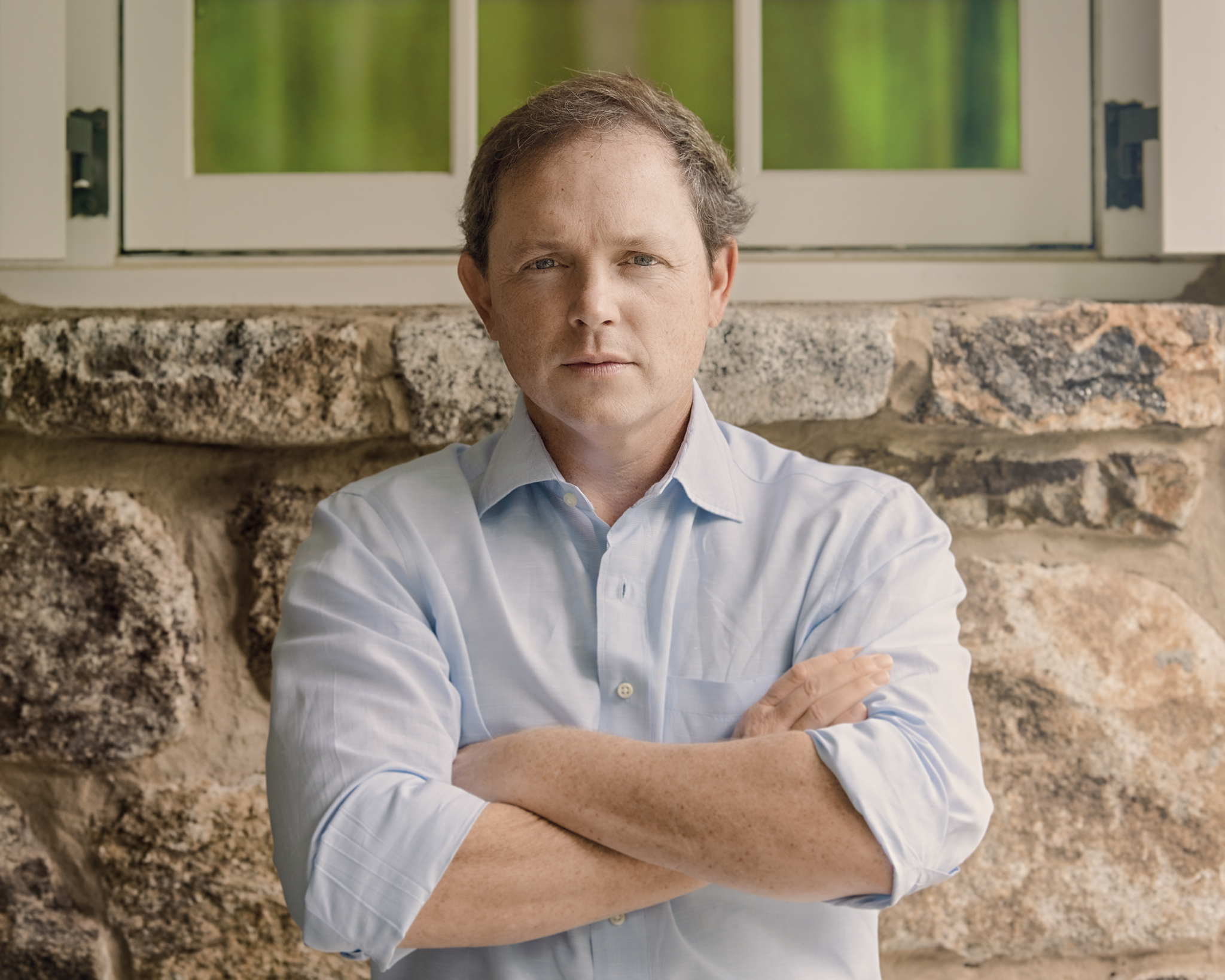
2 min read May 2020—Established in 2015, Ansley Atlanta Real Estate is now one of the top-performing residential real estate firms in metro Atlanta. The firm has plans to expand its presence throughout Atlanta and the Southeast market. In an interview with Focus: Atlanta, CEO Bonneau Ansley talked to Invest: about COVID-19, the challenges in the residential market and the impact from technology on the sector.


Q: How has your recent partnership with Chicago-based @properties progressed?

A: We partnered with @properties to enable our continued growth, and it allowed us to develop the top technology in real estate. We are jointly developing a technology suite called Pl@tform, which is a system that allows our agents a competitive advantage over competitors. Together, we are the 10th-largest residential real estate firm in the country, according to Real Trends. We still plan to focus on the Atlanta market and expand the company across the South. We are lucky in that we have managed to recruit a great, resourceful and determined team. We know our limitations. If we are not an expert in a particular aspect, we are very happy to outsource that to someone who is.

Q: In late 2019 and early 2020, what were the main trends you saw in the Atlanta market?

A: Pre-coronavirus, there was a very strong high-end market in the range of $3 million to $10 million. New homes over $2 million were selling very well, which is unprecedented. It has been very interesting to see how the ibuyers, such as Zillow, are disrupting the real estate market. While they did not impact us at such a high price point, they have now almost disappeared after the COVID-19 crisis. There is something to be said about a real estate agent, especially for an investment such as a house. 

Q: What has been the impact of the change in technology from the Pl@tform system?

A: We have a Client Relationship Management (CRM) system that is proprietary, so agents can keep track of follow-ups, be reminded when they should send newsletters out to different contacts and they can produce quick marketing updates. They have a deal management system where they can keep track of amendments under one system. This streamlines the administrative side and our agents can spend more time doing what they do best.

Q: How have mortgage rates impacted demand for luxury real estate?

A: The environment for mortgage rates is fantastic right now. Interest rates are low, so there is more buying power, and this produces a really great rush for buying property. The way we are buying property has certainly changed with the coronavirus. We are doing things differently, communicating a lot more through virtual methods and we are beefing up our online presence and social media. As we try to normalize this change, there has been an understandable lag in our performance, but the industry will adapt, and we will have a lot of pent-up demand. 

Q: What are some of the challenges you are keeping your eye on when it comes to the residential market?

A: From a consumer standpoint, COVID-19 has certainly been a challenge. There are two demographics: people with needs and people with wants. For those with needs, it is a bit more of a challenge to get them to go and look at properties, but we are getting there. Those with wants are on the sidelines right now, prioritizing other issues, but it won’t be long before we get them back. It may be too early to tell the full impact of the COVID-19 pandemic on our industry and on our economy. Having said that, I think it will become more acceptable to have a virtual viewing, which will streamline the market. I think in the end the challenges we have come up against because of the pandemic will be beneficial for us in the long run.

Q: What exciting new projects are you focusing on in the greater Atlanta area?

A: We are seeing people moving back to Buckhead because it is so walkable and well-connected. We are part of a 23-story new build right in the middle of Buckhead, which broke ground about a month ago and we are already over 30% sold. The average property value is over $2 million. People want this integrated environment. We are not the developer, but we are acting as the sales and marketing arm. The live, work and play lifestyle has a lot of value right now. From this development, it is possible to walk to the grocery store, to Starbucks, to work, and this type of convenience has become an essential part of life for many.

Q: What is your outlook for the market in the next 12 months?

A: The fundamentals are still fantastic in Atlanta. We have a steady influx of people and it is still relatively cheap to live in Atlanta compared with other sophisticated cities across the United States and in the Southeast. We are a great hub for technology, construction and manufacturing and I think that will continue to grow. From my perspective, Atlanta cannot be stopped.

To learn more about our interviewees, visit:

https://ansleyatlanta.com/


Spotlight On: Steven McCraney, President & CEO, McCraney Property Company

Spotlight On: Steven McCraney, President & CEO, McCraney Property Company

By: Yolanda Rivas

2 min read April 2020 —  The strength of the commercial real estate sector relies on the major roadways that run in and around Orlando, Steven McCraney told Invest:. He also notes that the location of Orlando is a great anchor to position his business as it provides ease of access to everywhere the company needs to be, as well as how the primary growth of his company has clearly been the warehouse and distribution space. 

How connected is the strength of the commercial real estate market to the major roadways in Orlando? 

The strength of the commercial real estate sector relies on the major roadways that run in and around Orlando. The last 50 years in Florida were all about the I-95 corridor, from Jupiter to Coral Gables. If you were to drive that route today there is not an available parcel of land on the roadway. We believe the next 50 years for Florida are going to be primarily focused on the I-4 corridor, from Tampa Bay to Lakeland to Orlando and onto Daytona Beach. While Daytona has not started to pop yet, the thing that we know is that there are two major roadways in Daytona, I-4 and I-95, which leads us to believe that it will be a good market at some point in the near future.


Why is Orlando the most ideal location for your operations? 

The Orlando economy continues to thrive. It’s attracting new residents, it’s generating new jobs and the increased interest is driving industrial users into the market because of the ability to distribute out of the state of Florida from the region on a one-day basis. We relocated to Orlando because the area places us right in the middle of the state. We operate throughout the Southeast and Orlando, which anchors us in the middle of everywhere that we need to be. It also provides the ability to move easily throughout the Southeast because of the region’s dynamic airport.


In regard to your business operations, where have you seen the most growth?

We are industrial developers. That is our mainstay and focus. This is complemented by third-party property management. As of late, the growth has clearly been the warehouse and distribution space. The total industrial space in Orlando is 123 million square feet, which breaks down into roughly 100 million square feet of warehouse distribution, 13 million square feet of manufacturing and the remainder is made up of office, flex space and distribution product. Here’s what we know: warehouse is the new retail. If a person is ordering online, whether it’s products,  clothing or food, the merchandise is likely not coming from a store, it is almost certainly coming from a warehouse. This is attributed to e-commerce growth and third-party logistics. Over the next few years, we are going to see the markets continuing to change and expand. From an industry perspective, I believe we have a trajectory that is at least 15 years long. While the product may continue to change, that product is coming from somewhere and that somewhere is a warehouse. As social distancing is ever more important and various markets are now under a “shelter in place” order, it is clear that suppliers, like Amazon, are still delivering essentials through package products to each and every home.


What market trends have had an effect on your business? 

We are always looking for ways to leverage technology in our business. Whether it’s roofing systems, lighting or super-flat floors, we want a logistics facility to be plug and play for a customer. The biggest challenge in recent years is rising costs. This can be broken down into the rising labor cost and the cost of materials. For example, the cost to build out a 1,500-2,000-square-foot office space within a warehouse space today can easily run around $250,000. That number exceeds $100 per square foot. At the same time, we have seen strong rent growth and because of that we have been able to keep pace. As we presently enter an economic downturn due to this pandemic, one would expect the cost of goods – both labor and material – will correct. Most of us in the industry went through the last recession and we know how debilitating it was. Moving forward, we have to be cautiously optimistic as we enter this challenging economic cycle and be mindful of our leverage, occupancy, quality of tenancy and our construction exposure.  


To learn more about our interviewee, visit: 

https://www.mccraneyproperty.com/

Spotlight On: Danny Jackson, City Manager, City of Mount Holly

Spotlight On: Danny Jackson, City Manager, City of Mount Holly

By: Felipe Rivas

2 min read February 2020 — Situated west of the Catawba River, the city of Mount Holly in Gaston County is known as one of the best bedroom communities in the Charlotte Metro Area. The city is experiencing residential growth as it aims to be a place where families can live, work and play. Its proximity to the Charlotte Douglas International Airport and to I-485 are great assets that will serve as a catalyst for the city’s growth, City Manager Danny Jackson told Invest: Charlotte. As part of its vision plan, the city is expanding its water and sewage systems and preparing its workforce for future tech-based jobs, Jackson said. 

How has Mount Holly grown in the last few years?

Mount Holly is in a great location. It is in proximity to Charlotte and the Charlotte Douglas International Airport. Interstate-485 has spurred development and as a result people have been discovering Mount Holly, as manifested by our population growth. These factors have been the genesis of our growth. We have been seen as a bedroom community for a number of years. Through our vision plan, we have launched efforts to make Mount Holly a place where residents can live, work and play. 


How is the city preparing for future growth?

Based on the growth that we are experiencing, people are approaching us for development opportunities, primarily residential and some commercial. Within that process, the infrastructure is constructed by the developers, then they turn it over to us for perpetual management. Sometimes, we add to existing projects to accommodate future growth. Also, we have connected our water and sewage plan to the city of Charlotte across the Catawba River to increase our capacity to accommodate future growth. Additionally, all of our local chambers of commerce have been working together to bring businesses to Mount Holly and boost the economy. It has been a good, collective effort. We believe we have the elements to support businesses. Not everyone wants to have the hustle-and-bustle of the large jurisdiction. We are not that, but yet we are close to one as well.  


What does the city’s updated vision plan entail?

In 2019, Mount Holly adopted its updated vision plan for the next 10 to 15 years. At the forefront of that plan is economic development, job growth and a diverse tax base. These are the nuts and bolts of it in terms of growth in the Gaston County region. I think the main sector growing in the region is technology. That is where the emphasis will be for this region, and with that comes the education component that is being addressed in Gaston County. Workforce development is a key component of this. We are making sure that our employee base is prepared for the next level of tech-based jobs that are coming to the area.


How is the city preparing itself in the event of a future economic downturn?

We have been working on worst-case scenarios. In 2008, the nation experienced an economic downturn, but Mount Holly continued to grow. Construction was still happening and people were moving to the city. I expect the same in case of another economic downturn. Our infrastructure is such that we are prepared for growth. We have done what we believe we need to do to stay economically sound, such as updating the vision plan and expanding our water and sewage systems. I think we have all of these mechanisms to continue to grow and grow positively.”  


To learn more about our interviewee, visit: https://www.mtholly.us/

Spotlight On: Gray Shell, Division President, TRI Pointe Homes

Spotlight On: Gray Shell, Division President, TRI Pointe Homes

By: Felipe Rivas

2 min read January 2020 — Creative product design and an increase in density are part of achieving a higher relative affordability for housing developer TRI Pointe Homes, according to Division President Gray Shell. The company also takes pride in achieving good, lasting business relationships with partners and providers to keep prices fair in an increasingly tight market, he said in an interview with Invest: Charlotte. 

How have you been able to secure land in the tight North Carolina market?


It really starts with people, with hiring the right land acquisition team to identify and underwrite the deals. Company strategy follows. TRI Pointe is a $3 billion public company. We build in seven states, but really, real estate is a local business. We have this concept called the best of big and small, meaning, we are a big, public company, we have access to the public debt markets, we have nearly a billion in liquidity to invest, but we really see the land strategy, the product design, the consumer segmentation as a local business. We have the flexibility to be creative and current with our product design and to be design-forward. That really resonates well with land sellers, developers and municipalities when we talk about our creativity on the product side. That is probably the largest single factor in our success in addition to people. Then, there is the process. You have to have the right process of identifying, underwriting and contracting land.


How is creativity applied to property development?


We start with a property, for example something near Uptown Charlotte. Here, it is about small acreage and a lot of density, and we want to create good relative affordability. So, we know what the property is, but we need to design the site plan and the product to maximize the use of that land.


We go through a product design process in which we identify the consumer. For example, are they millennials and if so, are they married or single, what is the household income? We’ll go through a three- day design process considering the customer’s wants and needs and, from scratch, draw a series of plans. By the end of those three days, we’ll have a good set of working drawings, with exterior elevations and renderings so we really understand the product. Most national builders would do that in nine months; we do it in a week.


What has been the impact of the millennial generation on the local market?


They do represent the single largest consumer group from a home buying perspective. But even if some people see millennials as one large group, there are really four or five different subsets, related to age, stage of life and income. The one thing all of them do want is relative affordability. It depends on whether they want an in-town, four-story product or a more suburban, traditional, residential two-story product, but you really have to decide what subsegment of that generation you are targeting.


The sort of amenities that we add to these developments has changed dramatically over the last five to 10 years. A lot of residential projects that were built 10 years ago had a big swimming pool, a large clubhouse, a golf course, but that has really transitioned and I can tell you, the No. 1 amenity today is walkability. Whether a community has a trail system, walkability to retail, entertainment and restaurants, that is the No. 1 amenity. When we get to suburban communities, there is still that want and need for younger families to have a swimming pool, but the scale is usually smaller.


How are you navigating the increase in construction costs in the area as you develop these communities?


It really starts with relationships. We partner with trade partners on the product design, on the value engineering, and they want to grow their business with ours. With that relationship, you might not get the best price, but you get a fair price and you get more advance notice of cost increases because you are partnering on it. It is also a tight labor market, the labor pool is short, but when you build a business relationship where they’d rather work for you, that is how you get the labor, and again, a fair price.


What other challenges for developers are arising in the Charlotte market?


Land availability has always been an issue. There is also the complexity regarding zoning, entitlements, and permit fees that continue to escalate so the cost of development becomes more expensive and affects affordability from a consumer standpoint. Those are the biggest problems. Every municipality is a little bit different and we have a dozen in the Charlotte market, so you have to really understand the municipality and partner with it to get the best result.


How can developers and local governments help to cover the affordable housing gap in the market?


I think that it requires flexibility from a product design standpoint, and creating good relative affordability. You get there by creating smaller, denser products, but it pushes yields up too. Some municipalities don’t like density, but I think getting more creative with density is the best approach over the next three to five years.


To learn more about our interviewee, visit: https://www.tripointehomes.com/


We’re making our mark on the industry by offering a strong benefits programs and great opportunities to build careers, a total rewards program to attract and retain the best talent: the unusual combination of offering both industry-leading 401(k) matches and a pension plan to most teammates; industry-leading time off programs to ensure maximum flexibility in planning life events; and financial wellness programs.


There is also a place for those interested in computer science and engineering. We are creating an Innovation and Technology Center in Charlotte that will be dedicated to the ongoing enrichment of client experiences. The Innovation and Technology Center will focus on optimizing technology to serve our clients at every interaction, whether it takes place in a branch, over the phone or through a digital channel. The Technology and Innovation Center will also focus on equipping teammates with solutions to deliver personal touch and care to clients. We see this combination of technology and personalization as vital to ensuring clients’ trust and confidence in the security, simplicity and convenience of our services.


To learn more about our interviewee, visit :https://www.truist.com/

Spotlight On: Leor Hemo, Founder & Managing Principal, Vantage Real Estate Services

Spotlight On: Leor Hemo, Founder & Managing Principal, Vantage Real Estate Services

By: Yolanda Rivas

2 min read January 2020 — Real estate investors from high-valuation areas like New York, North Jersey, Texas and California are bringing considerable activity to the Southern New Jersey region due to its affordability, according to Leor Hemo, founder and managing principal of Vantage Real Estate Services. The Invest: team recently interviewed Hemo about the strengths, challenges and areas of growth in South Jersey’s real estate market. 


 What unique investor opportunities does South Jersey offer?

South Jersey geographically is positioned to attract not only investors but also companies that require space, such as those in logistics, transportation and warehousing. South Jersey has the land mass to allow for large-scale, industrial developments. I-95 and or I-295 and the New Jersey Turnpike connect to New York, Washington, D.C., Maryland, and further down to the Southern states. Comparatively, the eastern Pennsylvania and Philadelphia markets lack this land mass. With the national economy so strong, low interest rates and small business confidence up, we are experiencing an influx of small businesses leasing office space. There has even been increased activity in the retail world in the past few years. Retail space is being occupied by service providers, such as healthcare and financial services. There is a soaring demand for large-scale developments for multifamily projects in South Jersey. 


What is the landscape for healthcare real estate?

The large healthcare systems are taking over the traditional family practices and specialties. Dental specialists and oral surgeons are active in starting new practices or expanding them. The same can be said for physical therapists and chiropractors. These specialty practices are growing and fueling a large demand for space. By the nature of their business, chiropractors, physical therapists and dentists are always interested in retail space for visibility and exposure purposes.


What challenges do you face in South Jersey?

The biggest challenge is the bureaucracy from our local governments, as well as the tax burden on businesses and individuals. Real estate taxes are still the No. 1 issue for property owners and businesses because of the impact on rents. Some regulations in place are hampering business and growth.


What is your outlook for the company and the market?

In terms of Vantage Real Estate, we just opened a new office in Philadelphia. It is a market we are rapidly growing into. We are also expanding our services portfolio: We have expanded our services and specialties and offer healthcare real estate, business brokerage, investment sales and multifamily as well. If the economy does well, South Jersey will do well, provided the regulatory framework remains unrestrictive. 


To learn more about our interviewee, visit:

Vantage Real Estate Services: https://www.vantageres.com/ 


Spotlight On: Scott Lyons, Business Unit Leader, SE Region DPR Construction

Spotlight On: Scott Lyons, Business Unit Leader, SE Region DPR Construction

By: Yolanda Rivas

2 min read January 2020— DPR Construction is leading the charge in delivering large construction projects faster and with better quality by employing prefabrication solutions and utilizing their own self-perform crews to put the work in place. Central Florida Business Unit Leader Scott Lyons discusses the prospects for the construction industry in Central Florida.

What has been the impact of DPR moving into Downtown Orlando and what opportunities are you finding there that promoted the move?


We moved Downtown in October 2018, which helped us combine two existing DPR Orlando offices into one. There is a great vibe Downtown, and many of our business partners and clients are now our next-door neighbors. This has been a path to strengthening our connections to the local business community with close proximity for lunch meetings or spending time with people in-person. Our new space was designed to host large groups, with a large training room and 10 conference rooms.


Our Orlando office is one of the largest for DPR, in terms of square footage, which provides us with the unique ability to host meetings for our national and regional teammates. Providing our visitors with walking-distance access to some of the city’s best restaurants and venues means they get the very best of what Orlando has to offer and DPR gets to contribute to the economic success of our Downtown district. We just fell in love with the Downtown vibe, it is where the energy is.


What are the most relevant projects DPR is working on in the region? 


We are finishing the KPMG Learning & Innovation facility, which will be completed by the end of 2019. It is the largest project being built by DPR in the Southeast this year. KPMG performed a lot of due diligence in choosing Orlando and the Lake Nona area and it has been one of the more rewarding, incredibly designed and fastest projects for us in a long time. Mega projects are historically tough to execute on time and on budget in the Central Florida area since finding enough skilled craftsmen to build these projects can be a challenge. However, our collaborative approach with the client and the design team plus integrating a lot of prefabricated components into the design has allowed the project to be built at a very good pace. This was truly a collaborative effort and success on behalf of our entire team, including the designer and our owner. KPMG is a huge regional project and a huge win for the city.


What are the clearest trends in construction in the Orlando area in recent years? 


At DPR, we are very passionate about driving forward the concept of prefabrication in our construction projects. There are multiple reasons for this. There is a shortage of skilled construction workers, so prefabrication decreases the demand for workers onsite and when you prefabricate components they are usually of a higher quality and safer generally, resulting in a better product for the client. For the KPMG project, we prefabricated 800-bathroom pods. We built them in a factory here in Orlando, called SurePods, and the quality was beyond anything we could get building them in place. It changed the dynamic of how the project was executed, resulting in a faster speed-to-market with fewer people needed on the project. Prefabrication is the way of the future for construction and DPR is well-positioned to lead this trend.


What other advanced technologies are you employing in your work? 


We are believers in technology where we can find a great use for it, and where it adds immediate value. We beta test a lot of ideas and technology, apps and software, and generally settle quickly on things that help the client or our people. One is laser scanning. We use it before rebuilding a client’s existing space, like a corporate office, to create a digital model that captures the exact reality of the designed space.


We are also working in partnership with Reigl to utilize LiDAR technology and bring some of their technology into the vertical construction market. It is a drone-borne scanning technology that flies over an existing site, scans it and provides the contours of the land, so you can see elevation changes and other useful data. A civil engineer can take that data to minimize how much dirt is moved around, for example. This type of real-world use of technology on our projects keeps us nimble. We are innovating in ways that not only change the landscape for the construction industry, they are helping our client successfully expand their products into new markets. 


What kinds of projects are in greatest demand in the Orlando area? 


The attractions companies have very robust plans for the next few years and we also see healthcare companies continuing to invest in their existing and new facilities. We also believe that advanced manufacturing will play an increased role in the Orlando economy as well, so we’re also keeping close tabs on those upcoming projects.


To learn more about our interviewee, visit:

DPR Construction: https://www.dpr.com/ 

Spotlight On: Andrew Burnett, Senior Principal, Stantec

Spotlight On: Andrew Burnett, Senior Principal, Stantec

By: Max Crampton-Thomas

2 min read January 2020 — The Broward County Convention Center and Hotel is one of the largest projects underway in Broward County. A project of this magnitude requires the utmost care in regards to design and architecture, as well as the foresight to plan for future environmental challenges. Invest: spoke with Andrew Burnett, the senior principal for Stantec, which is working on the Convention Center project. Burnett addressed the company’s ongoing projects, how shifting demands have changed its focus and the National Flood Insurance Program. 


What are some of your most significant projects in development within Broward County? 


We have multiple projects throughout Broward County, including the Fort Lauderdale region, Pompano Beach, Sunrise and Miramar. For instance, we are the architect of record and landscape architect for the Broward County Convention Center and Hotel, which is around a $1 billion project. This is an extremely large and involved project requiring integrated services from Stantec that also has many resilient aspects being built into it that we hope to use as a model for future growth and development throughout the county. As we are expanding the convention center and building the new hotel, we have done a series of wave-height analyses. These are not just focused on the floodplain and how high we need to build the building to stay out of the floodplain, they also address storm surges and how to design the building to be more resilient in those situations. It has been great to have the county’s support on these matters. Our other projects in Broward County include the new AC Hotel by Marriott in Sawgrass Mills, Manor Miramar, Las Olas Walk and 1380 South Ocean Boulevard. 


How have you seen demand shift in the last couple of years and how are you adapting to this shift? 


Historically, we would see the demand for smaller residential units in the Downtown urban core because of the density of the population. As we moved away from the urban areas, the units were constructed bigger to attract more people, but now we are starting to see smaller units becoming attractive away from the urban centers. This indicates that people are looking for alternative solutions that are more affordable. It may also be partially due to having more flexibility and adaptability in the way that we live and the way that we engage the community as Broward becomes more connected and dense. We foresee more of these deals for smaller units outside of the main urban areas making sense for investors. 


We are seeing more residential projects that want to permit themselves as or like a hotel. There is some gray area with the rise of services like Airbnb and WhyHotel that can allow owners to operate as a short-term rental while they’re leasing up their building. Owners and investors are starting to take advantage of this. This is shifting how we design our projects. For instance, if we need to design for things like ADA bathrooms, which you would find in a hotel, we are starting to look at an earlier stage how we might design the spaces to be more flexible to do this.


How have you seen Opportunity Zone legislation affect your business? 


We have seen an increase in requests for test fits on properties that fall in Opportunity Zones. The market is starting to ask questions on sites and locations that they hadn’t previously. There are a lot of regulations that are being finalized and released in the near future that are going to help increase investor confidence to go forward in these Opportunity Zones, but it may be too early to see the fruit of the test fits in these sites. We are expecting to see more of this in 2020. 


How much of a focus do you place on possible future changes to the National Flood Insurance Program? 


We are looking more broadly at what is happening with the National Flood Insurance Program and what may happen in the future in terms of how we go about flood insurance regarding how much of it is subsidized by taxpayers. At some point, taxpayers are going to say that they do not want to be subsidizing flood insurance for landowners who may not be doing enough to protect their buildings. As risk starts to shift from insurance entities to owners, they are going to be asked what they are doing to make their building more resilient. What we are trying to do with our integrated team is to find solutions to this so we can go back to our clients and suggest to them what they need to do to mitigate this risk. 


For more on our interviewee visit:


https://www.stantec.com/en

Spotlight On: Vito S. Pantilione, President & CEO, Parke Bank

Spotlight On: Vito S. Pantilione, President & CEO, Parke Bank

By: Yolanda Rivas

2 min read anuary 2020 —  Parke Bank is expanding its lending business, including construction lending, from the South Jersey and Philadelphia areas to North Jersey and New York’s Brooklyn and the Bronx with its lending expertise. Parke Bank has a major Asian client base, which makes it important to keep a careful eye on the politics of the country toward China. Parke is also one of the few banks that provide banking services to the cannabis industry, which also requires careful monitoring of Washington’s ever changing position on the emerging cannabis business, says Vito Pantilione, president & CEO of Parke Bank, in an interview with Invest:.


What main changes have you observed in the banking and loan business in the South Jersey market?


We are in a great location to provide lending and banking services in New Jersey, and the Philadelphia area, in addition to expanding up into the Lehigh Valley area. Because of our growth, we’ve also grown our lending operation to North Jersey, Brooklyn and the Bronx.


The banking industry is always changing, I don’t think there is any other industry except maybe insurance where there are as many regulatory changes. There is also a lot more competition, even from nonbanking entities. We embrace competition because it makes you pay more attention and sharpen your pencil.


What services are most in demand for an institution like Parke Bank?


One of the services we’ve offered since we opened the bank is construction lending. It is a very attractive product, especially because many banks have discontinued this banking product. Even though the regulations for construction lending have become much more stringent, our structure allows us to handle it because we are well-capitalized and we have the experience and expertise. We find that our construction lending product is very attractive in the Philadelphia and South Jersey area and most recently in the Bronx and Brooklyn. We carefully entered the Bronx and Brooklyn markets and now have multiple multifamily projects and commercial loans in these areas.


How does the bank support the small business community in South Jersey?


We are very active in commercial lending, which includes small business lending. Some of our commercial lending is related to real estate as we have financed many investment properties. We also look at some of the South Jersey markets that need extra services, like startup companies and small companies that need to expand to remain competitive, where it is more difficult to get financing. We look at those sectors and try to establish loans and banking relationships to help support those markets. 


Small business lending is important to us. We are a Small Business Administration (SBA) lender, which allows us to provide funding for projects to small businesses that may not fit into the standard bank  financing. The SBA is a perfect vehicle to provide the needed credit enhancement to make those loans possible. That type of lending with small business banking also provides the opportunity for full service banking, bringing much needed deposits.


Are there any worries or challenges in the banking industry that Parke Bank is watching?


One area in which we’ve been very fortunate is our Asian business. I used to be president of a Chinese bank in Philadelphia, and when I opened this bank in 1999, I was fortunate that a lot of my clients and friends from the Asian bank followed us to Parke Bank. The current Chinese trade situation with the United States is a concern to me personally, which can reduce growth in the Asian market. As far as actual business, it has not really affected us that I can see. We are still getting new Asian customers and we have a branch right in the heart of Chinatown in Philadelphia, with a multilingual staff. We are very proud of that.


Another potential challenge is the Banking Secrecy Act, which is of major importance to us because we are one of the few banks in the country to provide banking services to the cannabis industry. We entered the market totally by accident because we had a major customer of the bank who received a permit to open a cannabis dispensary and asked us to finance the building. We loaned him millions of dollars over the years and it wasn’t until two years later that we realized what a major step that was for Parke Bank. At that time, we were one of the very few banks that was even banking cannabis. Now we have about 130 customers, and that is an industry where government regulations are having a big impact. We are very careful to follow the regulations that are in place, given there are really no clear regulations yet in place because it is not legal at the federal level. We are a state-chartered bank doing business with state-approved cannabis businesses. 


To learn more about our interviewee, visit:

Parke Bank: https://www.parkebank.com/ 


Spotlight on: Nicholas Haines, CEO, Bromley Companies

Spotlight on: Nicholas Haines, CEO, Bromley Companies

By: Max Crampton-Thomas

The future of Tampa Bay is developing in front of our very eyes and there are a few select developers making this vision come to life. Real estate developer Bromley Companies broke ground in mid-2019 on its ambitious Midtown Tampa project. Company CEO Nicholas Haines discussed the importance of incorporating new tendencies, such as a pedestrian-focused design, and the challenges that both a proper mix of high-end and affordable housing present for the city.


What’s the status of the Midtown Tampa project?

We broke ground on the Midtown project in May 2019 and we are well under construction for the first phase. There are 11 buildings going up at the same time: three residential, two office buildings, and several retail, including a Whole Food Kitchen and True Food Kitchen, both of which are significant expansions in the market. There is also a 1,000-car parking garage that is already topped out, and we’re right on schedule. The goal is to finish it by the 2021 Super Bowl, which will be held here in Tampa Bay just a couple miles up the street. 

A lot of what we are doing now is spending a tremendous amount of time on the finishing touches of the common-space designs that create community. It is about creating an imaginative destination not just for the people working, living and shopping here, but for the neighborhood by adding public art and a feel for the place, all the things that make a space interesting and dynamic. We are building a city within a city — an entirely new district. 

What business trends are you keeping an eye on as you go ahead with this development?

Accessibility and pedestrian-friendliness. I just read about a development in Arizona, with 1,000 residential units and no parking. That is a bold thing for a non-superurban area. What we are trying to do is create one of the first, pedestrian-first mindset versus car-first developments in Tampa Bay and Florida. All the streets inside the development are private, which is a really interesting feature of Midtown Tampa. We are not constrained by the city’s rules regarding traffic and street design. For a big event like the Super Bowl, we can close the streets so that all the cars access Midtown from the periphery.

We have designed curbless sidewalks, for example, and dedicated ride-share drop-off areas. The city of Tampa is working on a number of mass transit initiatives and we are working to accommodate a mass transit stop on one of our main corridors. People are going to live, work and shop here because they want to wake up, go to a coffee shop, walk their dog at the dog park, go shopping at Whole Foods, have a drink at the hotel rooftop bar, and maybe work at one of the office buildings. They’ll also be able to ride a bike path that connects from Midtown Tampa to the Greenway Trail System, from Tampa to St. Petersburg, by crossing a 10-lane bridge at Dale Mabry.

Are there any other areas that you see as a hotspot or active as real estate developments for the moment? 

Yes, it’s really exploding. The Heights area is really interesting. St. Petersburg is incredibly exciting and a great example of a vibrant, urban place with the interplay between food and art. We are talking about a city that has transformed itself over 10 years in terms of the energy there. 

What is your outlook for the Tampa Bay region, and how do you see the region addressing its challenges? 

Regarding sustainability, it is really important to get the mix right between higher-end housing like we are building here and affordable housing. There’s a need to provide better incentives for the private sector to offer that kind of housing. You can only do so much as a city if everyone is building luxury apartments. It is an issue for all cities, but Tampa today does not have a cohesive development and zoning policy to encourage that. Tampa is still a very affordable place on a relative basis, but that affordability gap is narrowing. People who have been living here for a long time with a moderate income are being pushed further and further away from the urban core. 

Transportation is a huge thing too. In some ways, advances in mass transportation technology might help Tampa. The city might not have done it in the past, but in some ways that might not be the worst thing. Tampa might be able to take advantage of innovations in technology like self-driving buses to implement something that is very forward thinking, instead of having to put up the heavy infrastructure and the massive amounts of capital for a light rail system.

To learn more about our interviewee visit: 

https://www.bromco.com/