Top 5 Trendiest Neighborhoods in Fort Lauderdale
By Max Crampton-Thomas


2 min read July 2019 The growth of the Fort Lauderdale area is a true testament to the collaborative efforts of the city’s private and public sectors. The positive effects of this growth can be witnessed in the development, redevelopment and preservation of the city’s neighborhoods. 

Here, Invest: Greater Fort Lauderdale explores Fort Lauderdale’s five trendiest and up-and-coming neighborhoods.

Victoria Park: A beautiful mix of traditional “Florida” homes and new development, Victoria Park has long been a staple neighborhood in Fort Lauderdale. The revitalization of the area is thanks to its close proximity to Fort Lauderdale Beach, Las Olas Boulevard and cultural centers like the Broward Center for the Performing Arts. 

Invest: Greater Fort Lauderdale spoke with Doron Broman, managing partner of Moderno Development Group, about its investment in the development within Victoria Park. “We are tapping into the near downtown areas because more people are seeking to live in more walkable areas, where they need to spend less time commuting to work and experience a more urban lifestyle,” Broman said. “We are building very modern, urban townhouse rental communities in trendy Victoria Park.”

Tarpon River District: Located just north of Davie Boulevard and west of Andrews Avenue, Tarpon River District is a neighborhood whose appeal is thanks to its proximity to downtown Fort Lauderdale and emphasis on family life. With a recent influx of mixed-income homes and apartments, access to some of the cities best parks and the locally famous Tarpon River Brewing company, this neighborhood will continue to be a top choice of young families. 

“We are keen on Tarpon River District, which we believe is the new cool work-live-play hub, located right in the center of Fort Lauderdale,” Broman told Invest:. 

Flagler Village: Twenty years ago, this neighborhood was a rundown warehouse and residential district. Today, Flagler Village is one of the trendiest areas in Fort Lauderdale. The collaboration between artists and developers has transformed the neighborhood into a premier arts district with offerings of luxury rental apartments, restaurants and arts and culture. The Village is also home to the Brightline train station, which supplies a steady flow of traffic into the neighborhood daily. 

“Many developers have looked to the beach and Flagler Village areas in Fort Lauderdale. We are also invested in Flagler Village,” Broman said

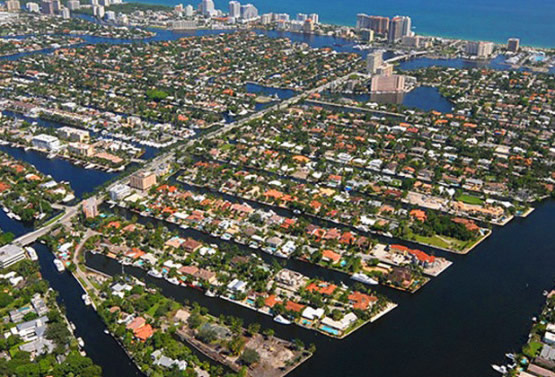
Las Olas Isles: Due to its proximity to Las Olas Boulevard and Fort Lauderdale Beach, Las Olas Isles is the perfect mix of retail, restaurants and a coastal lifestyle. Luxury living like this comes with a hefty price tag. Homes in the area range from $1 million to $40 million and rental units are in the thousands. 

Colee Hammock: Not only is this one of the oldest neighborhoods in Fort Lauderdale, it is also one of the most diverse and eco-conscious in the city. Situated next to the Intercoastal Highway and the New River, Colee Hammock offers residents a wide variety of homes and walkability to theaters, restaurants, retail and entertainment venues. This eclectic neighborhood is home to a wide demographic, from the working class to the wealthy. 

Invest: Greater Fort Lauderdale discussed development in Colee Hammock with Andrew Verzura, principal of VCM Builders, Inc. “We are working on a residential project in Colee Hammock, a historic neighborhood in Fort Lauderdale established in 1913. We are constructing a home that is being built around some of the area’s oldest and mature foliage. This is a neighborhood that has a special relationship and respect for the nature within it.” 


For more information visit:

http://vcmbuilders.com/

https://www.modernodev.com

No Slowdown in Sight for Miami Construction

By Yolanda Rivas

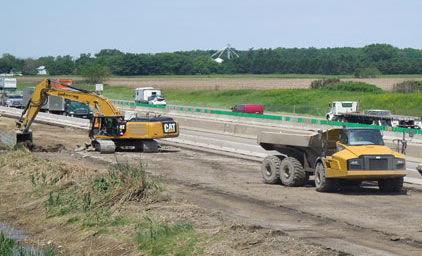
2 min read JULY 2019— Employment in the U.S. construction sector continued to trend upward last month, with the addition of 21,000 new jobs, according to data from the U.S. Bureau of Labor Statistics (BLS). The strength in the sector, reflected also in the latest Miami regional data, suggest the industry is not slowing as quickly as projected.

According to the most-recent BLS data for Miami, the construction industry added 5,100 jobs in May, a 3.7% year-on-year increase and above the 2.8% national figure for that month. The numbers aren’t surprising, given the amount of development in the Miami area.

“What has been impressive to me over the last year is the number of projects we have under construction,” Andrew Burnett, senior principal at Stantec Architecture, told Invest:. “We have around 26 to 30 projects that are either in construction or looking to start construction next year. A large percentage of them are mixed-use residential, and we’re not only providing architecture and interior design services but often engineering and MEP (Mechanical, Electrical and Plumbing) as well.”

As stated in Invest: Miami 2019, residential development remains the top driver of construction in Miami. Although there has been a slight slowdown in the condo market, some experts expect the strong performance to continue.

“I see the right projects and developments continuing to thrive,” Manny Varas, president and CEO of MV Group, told Invest:. “Buyers are taking their time to make better decisions. They’re seeking out developers with strong track records as well as the quality of interiors and finishes that they’re looking for and can count on,” he said.  

In 2018, Miami ranked among the Top 10 U.S. metropolitan areas for commercial and multifamily construction starts, according to Dodge & Data Analytics. The construction in Miami’s residential real estate is characterized by the trend of continued foreign investment in high-profile luxury condos.

Another area with strong demand is infrastructure construction, according to Luis Lugo, Hill International’s senior vice president and regional manager for the Southeast U.S. and Latin America. For example, Miami International Airport and Fort Lauderdale International Airport, will soon start major expansion and modernization projects and the Miami-Dade Transit SMART program is expected to start construction activity soon. 

“We also do a lot of work with the hospitality industry. We’re building about a dozen hotels throughout the region. That’s a big market for us, and it’s a space in which we excel,” Lugo said. 

Despite speculation about a national economic slowdown, the outlook for Miami’s construction sector is positive. “The market will continue to be strong. A little slowdown is expected, but construction is going to pick up in 2019 and beyond,” Lugo said. 

To learn more about our interviewees, visit their websites:

Stantec Architecture: https://www.stantec.com/en/services/architecture-interior-design 

MV Group: https://www.mvgroupusa.com/ 

Hill International: https://www.hillintl.com/en 

Mixing Work and Play in an Innovative Way

April 2018 — Started in 1999 as a graduate thesis and initiated in 2008 with walking trails, the Atlanta BeltLine has come a long way from what it was once envisioned to be. The recent developments of office buildings, retail and residential space along and around the BeltLine have created an environment where residents have everything they need within walking distance. It is the ideal mix of work and play and continues to grow as a current real estate hotspot in Atlanta.

In fact, in December 2017, a $750 million mixed-use project was unveiled for the continued expansion of the BeltLine. The plans include two 12-story office buildings, one hotel, 700 residential units and 200,000 square feet of retail space. The BeltLine also hired a new CEO, Brian McGowan, to continue the project.

The Atlanta BeltLine Partnership was formed to raise philanthropic dollars to supplement the BeltLine’s efforts. The Opening the Corridor campaign, which began in 2017, helped fund the recent purchase of the Southside Trail as an interim connection. The $25.8 million project will connect the East and West sides of Atlanta for the first time in history.

Focus: Atlanta spoke with a number of city leaders in both the real estate and transportation sectors to get their insights on the mixed-use developments quickly sprouting up along the BeltLine. Here’s what they said:

Brian McGowan, CEO, Atlanta BeltLine

“The BeltLine is currently refocusing itself. We are 12 years into the project, and it is time to reflect on where we have come from and reevaluate the direction we are heading. The BeltLine is about people at the end of the day. Our focus is function over form.”  


Jim Irwin, President, New City Properties

“Offices along the BeltLine allow people to create more alignment between their work life and their personal priorities. Whether it’s commuting to work by bicycle or walking across the BeltLine to meet a friend for lunch at Ponce City Market, this project gives people an opportunity to work in a place that they truly enjoy.”

Chris Faussemagne, Principal, Westbridge Partners

“There are a lot of suburban submarkets that are creating their own central business districts. They are creating their own communities, jobs and places to live. That has been a great thing for the city because it relieves congestion. The BeltLine is also creating a lot of connectivity and alternatives to work and play.”

Matt Bronfman, CEO, Jamestown Properties

The BeltLine is like our beachfront property at this point. We need to make sure that the people developing on the BeltLine do things that are worthy in the long term. We need to get tougher on the development community to do interesting projects because that is how you get appreciation. The entire BeltLine will be completed sooner than people realize, and those neighborhoods will be made much better. Neighborhoods attracting young talent will be the most successful, and those are along the BeltLine.”

Scott Cannon, Executive Vice President, Skanska

“The Atlanta BeltLine Development is focused on getting people outdoors and being green. It’s about changing the way people live, work and play in the city. Skanska has a unique project that we are working on with architect Lord Aeck Sargent: the Atlanta BeltLine Urban Farm Shed. It is a 500-square-foot off-grid storage and work shed featuring a photovoltaic energy and storage system, composting toilet, and the use of salvaged and locally milled wood products.”

Greg Hare, Managing Partner, Ogletree Deakins

“Some of the critics of the Atlanta BeltLine have called it nothing but a glorified sidewalk. However, that big wide sidewalk creates better connectivity between neighborhoods, as well as tremendous economic development, because it’s a popular place to be. Developers are now putting a lot of money into parts of Atlanta that have not seen investment in decades.”

Chris Clark, President and CEO, Georgia Chamber

“We need to attract young professionals. We need to create the cool factor, which is why things like the BeltLine are important. We can offer great amenities and quality of life.”

To find out more about our interviewees above, visit their websites at:

Atlanta BeltLine: https://beltline.org
Westbridge Partners: http://www.westbridgepartners.net
New City Properties: http://www.newcity-properties.com
Skanska: https://www.skanska.com
Jamestown Properties: https://www.jamestownlp.com
Georgia Chamber: https://www.gachamber.com
Ogletree Deakins: https://ogletree.com