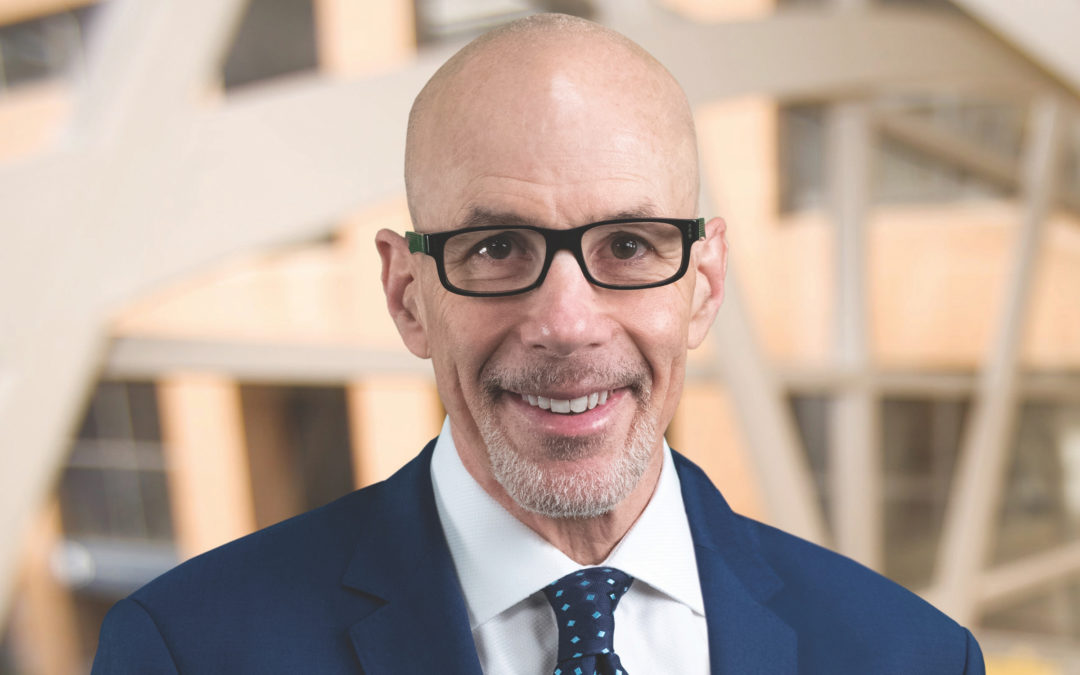
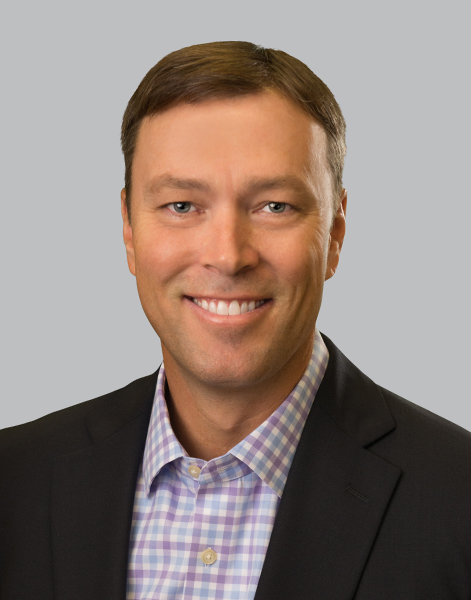
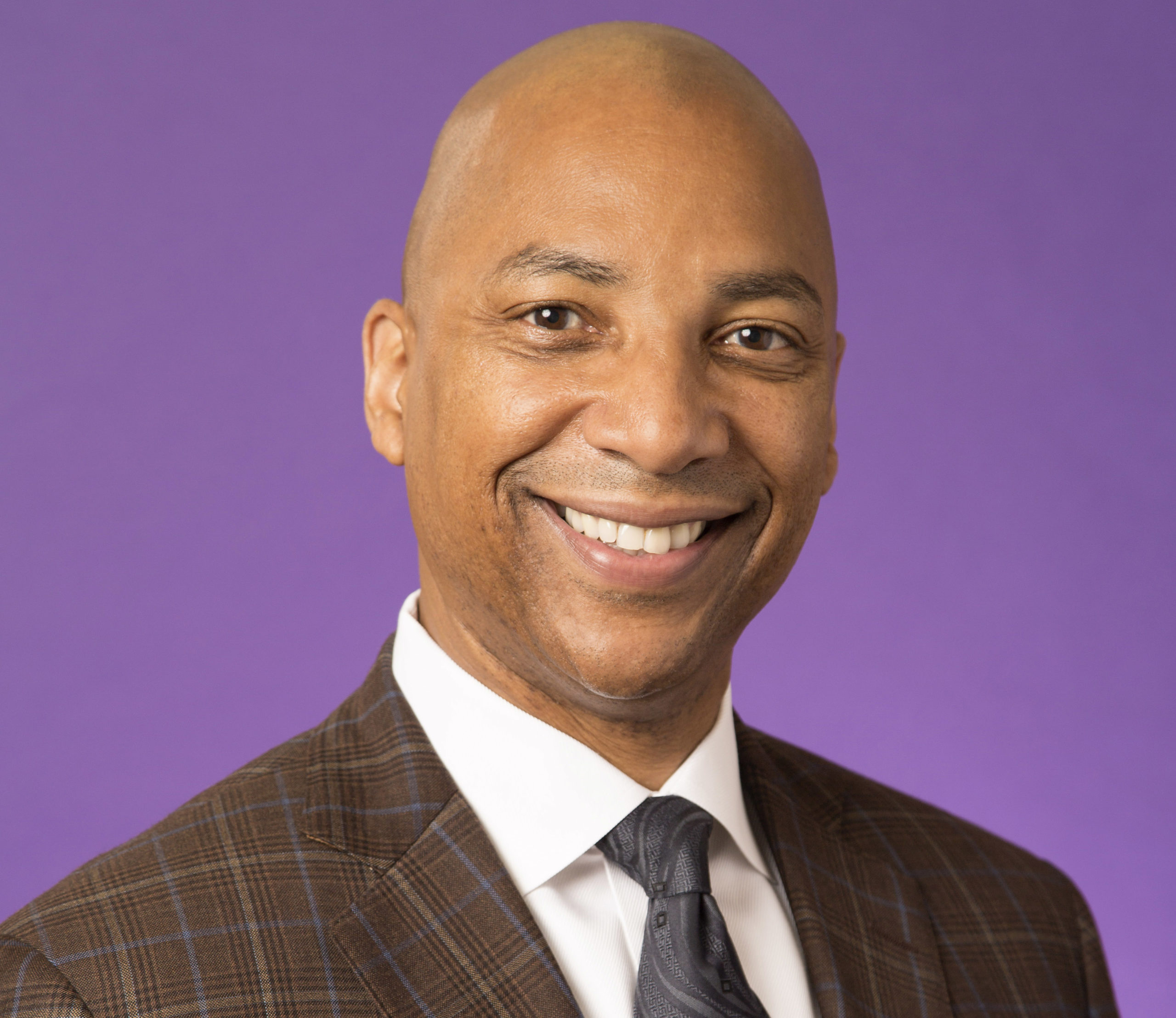
Spotlight On:  Larry Rice, President, Johnson & Wales University – North Miami

Spotlight On: Larry Rice, President, Johnson & Wales University – North Miami

By: Max Crampton-Thomas
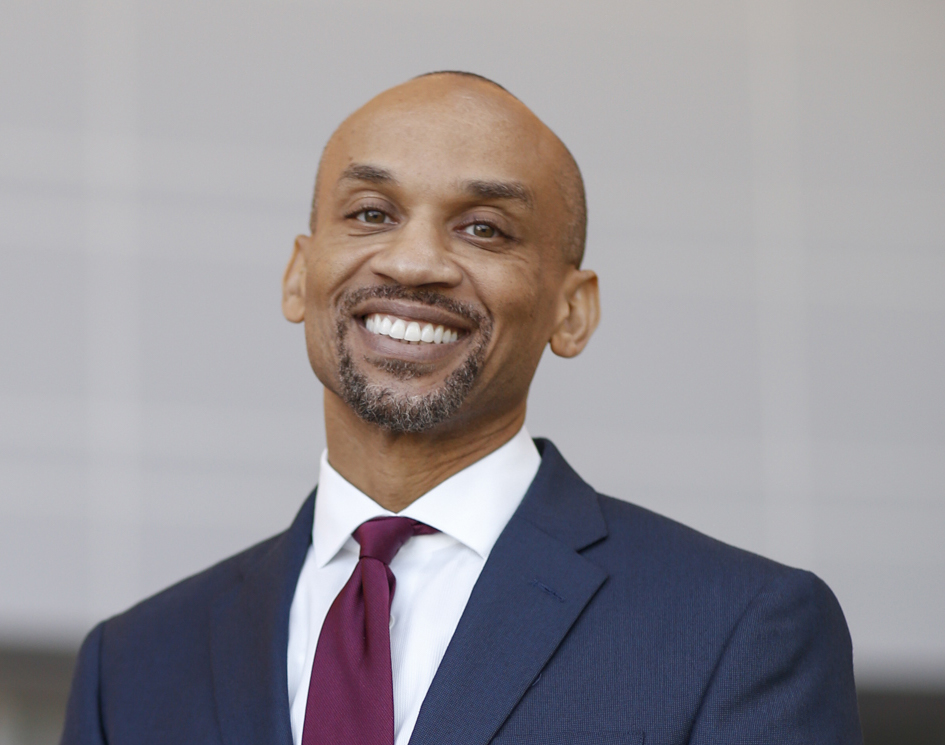
2 min read April 2020 —Like all educational institutions, Johnson & Wales University – North Miami has turned to the online universe to deliver its programs amid the containment measures for COVID-19. President Larry Rice discusses the transition to online and what the future could look like in a post-COVID-19 world.


How have the faculty and student body handled the transition to all online classes?  

Our faculty and staff have had to adapt to moving to virtual teaching during periods of crisis due to hurricane shutdowns that we have experienced in prior years. I must say that past campus preparations did not sufficiently help us in specifically anticipating the unforeseen issues resulting from having to transition to a fully virtual delivery format during a pandemic. Unlike with previous hurricanes, which required us to transition to virtual instruction, we could not predict the swiftness and fluidity of the changing dynamics of this pandemic. Therefore, our transition was peppered with heightened anxiety on all sides – parents, students, faculty and staff. However, together, we managed through those issues and were able to move all academic courses to our virtual platform. The university’s academic technology and instructional design department assisted faculty in adapting course material to the virtual environment. Since our students are conditioned to learn and acquire knowledge through hands-on applications, group collaborations and team-based projects, the transition to online learning was their greatest challenge. I am proud of how our students were able to make the necessary adjustments in such a short period of time, and I am especially proud of how our faculty and staff were able to meet this challenge in ways that can only be commended.


What unforeseen challenges did this present for the university and how did you mitigate those challenges? 

The greatest challenge was to ensure the safety and well-being of our resident students, 10% of whom are international students who were away from their families during what could best be described as the greatest crisis in their young adult lifetime. Managing the fear and anxiety of our students in the midst of ever-changing information concerning what we were facing was surely the greatest challenge. Initially, our message to students was that we were moving all academic classes to virtual environments, out of an abundance of caution and we would follow CDC, state, and local guidelines while continuing to house students on campus. 

This quickly changed to sharing with our students that to ensure the safety and well-being of our residences, we would need students to plan for a transition from the residence hall to a return home to be with their families. All but 19 of our 700+ resident students were able to return home to their families. JWU launched a taskforce of staff members to assist students who needed assistance with flights, ride-share transportation, buses, or gas cards. Any student who was unable to travel home or was from a country to which it was not safe to travel, was welcomed to stay at JWU, and the campus provided room and daily meals for those students. 


As higher education adjusts to the current situation, what opportunities and innovation do you see carrying over post-COVID-19?  

I believe that this crisis has provided all of higher education several teachable moments that we can learn from. Certainly, our dependence on face-to-face interactions has changed, and we must adapt. Having virtual, blended, and multiple other learning options available to students will become the norm. I foresee that the average classroom experience will shift to maximizing technology to allow for physical classroom instruction while simultaneously providing a remote live-streaming interactive option for students who are uncomfortable with a face-to-face interaction following this pandemic. I believe more time will be invested in moving that classroom experience beyond the physical walls, regardless of discipline, especially for more challenging curricula that require labs and hands-on activities. Prior to COVID-19 this was a nice thought, post-COVID-19, these curricular changes will become necessary and standard. 


How does the university plan on handling graduation this year for those students who are slated to graduate at the end of the spring semester?

The university has postponed the May 23 commencement ceremony. Our plan is to host a ceremony for students only on Aug. 22 while providing a live streaming service for families to watch from their homes and any students wishing to be recognized during the ceremony but who do not wish to attend physically. We anticipate that all 2020 graduates will also have the option of participating in the May 2021 commencement ceremony.  


What would your message be to the university’s student population and faculty that is sheltering in place and waiting for a return to normalcy?

Be strong and stay safe JWU Wildcats. We are making preparations for your return once the stay-at-home guidelines are relaxed and the CDC, state, and local agencies feel confident that you will be safe in returning to school.


To learn more about our interviewee, visit: 
 

 https://www.jwu.edu/


Spotlight On: Clay Worden, Office Managing Partner, RSM US LLP

Spotlight On: Clay Worden, Office Managing Partner, RSM US LLP

By: Max Crampton-Thomas

2 min read April 2020 — Accounting and consultancy firm RSM’s Orlando practice had little problem migrating its operation to remote after the COVID-19 pandemic hit the state. The company’s managing partner for the Central Florida city’s practice, Clay Worden, shares his views on how his company and small business will adapt and learn from the contingency.

What specific markets does your Orlando office focus on?

Hospitality and real estate are key components of the Central Florida economy, and we spend quite a bit of energy serving these sectors. Food and beverage is also an important sector for us. Agriculture is one of the key economic drivers in the state and we serve a lot of Ag-based organizations.


We also serve SEC clients, nonprofit organizations and manufacturing companies. Our tax practice is incredibly robust and growing. We seem to be firing on most cylinders.


Which area of your practice has seen the largest demand in recent years?

We are seeing a lot of demand related to digital transformation. Organizations, even before the COVID-19 situation, are looking at their systems, especially their legacy systems and saying, “Hey, is this the platform that is going to get us where we need to be?” From a technology consulting standpoint, I think that is one of the areas where we’ve had some exponential growth.


Another area where we continue to see organizations focusing on is the internal audit and risk advisory functions. When the economy is robust and companies are generally profitable, they want to make sure their systems, controls and policies are functioning as designed to safeguard their assets.


What challenges has the firm faced in dealing with the effects of the COVID-19 pandemic?

We recognize that our younger folks embrace technology and want to use technology. With that in mind, our audit practice and consulting practice has been primarily remote for the past several years. We visit clients and still have to access systems and software to be able to work, but we were pretty much prepared for the fact that we might not be at the office and prepared to work from home.


Our tax practice was traditionally people going to the office and to some client locations, so it was important to have the technology that provides them with access and to give them the tools they need, which included a little more bandwidth in the system to get to their tools. We started that process and were quickly able to get it to them. For us, it really hasn’t changed much. You still have access to all the data and everything we need to serve our clients.


One of the opportunities that we are seeing from this is that we are helping businesses access the stimulus that is being offered, making sure they qualify, follow the rules, and are taking advantage of the tax benefits that are available today. We’ve quickly mobilized people who are or are becoming experts in helping clients navigate these government programs.


Another area where we are seeing some changes is travel. We were to hold a firmwide leadership meeting with about 100 firm leaders going to Chicago in April. Instead, we held that meeting virtually. From my perspective it was very effective. We missed the reception and cocktail hour to talk face to face with some of our colleagues we have not connected with for a while, but in terms of disseminating information and communicating, it was very effective.


What is your outlook for the Orlando area in the near term?

My cup is always half full. I am confident that our firm and Orlando, Florida, and the country as a whole will come out of this stronger and more equipped than we were going in.


I think that certainly the pain is going to be probably worse, and longer, than most people would like. When you live in Central Florida, which is primarily built on hospitality and entertainment, I don’t know how quickly people are going to hop back on a plane and come right back.


I do have some serious concerns for the smaller businesses. I don’t know that the smaller businesses, like restaurants, have the capital to withstand being with limited customers for an extended period of time. Big and small,  companies are going to have to rethink how they do business in the future.


To learn more about our interviewee, visit: 

https://rsmus.com/

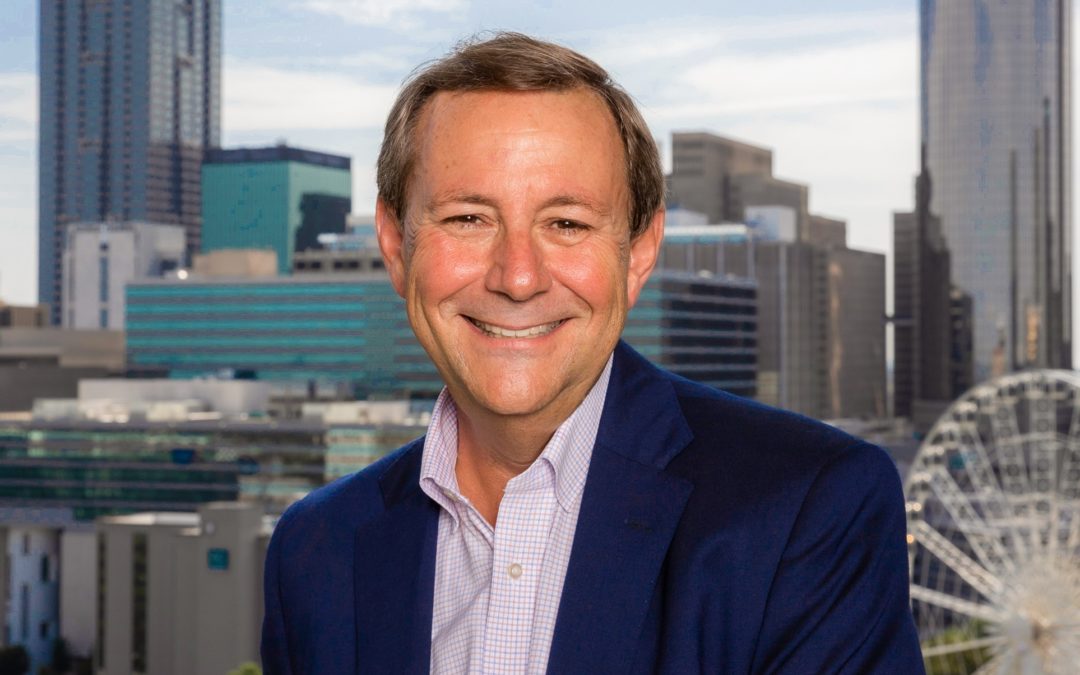
Spotlight On: William Pate, President and CEO, Atlanta Convention & Visitors Bureau

Spotlight On: William Pate, President and CEO, Atlanta Convention & Visitors Bureau

By: Max Crampton- Thomas

2 min read April 2020 — As the full wrath of the COVID-19 pandemic strikes the country, tourism is among the worst-hit sectors. Atlanta Convention & Visitors Bureau President & CEO William Pate calls the impact “unprecedented” and points to an expected 95% drop in business in May. Pate outlines the actions the bureau is taking to help businesses in the sector and also provides his outlook for the second half of the year.   


In comparison to where the numbers were last year, what have you seen in terms of drop off from the COVID-19 pandemic on the tourism and hospitality community in the region?

The hospitality industry is on the front line of those affected financially, and the impact is unprecedented. We experienced a 70% reduction in business in March and expect a 95% reduction in April and a 95% reduction in May. Smith Travel Research estimates hotel occupancy in the city of Atlanta for March was 33 percent, compared to 81 percent in March 2019 and March 2018. Destinations across the country are seeing similar downtrends or worse. Our priority is now on recovery. Atlanta Convention & Visitors Bureau is laser-focused on making sure our city’s hospitality industry comes back strong so we are able to spread the economic benefit throughout the city as quickly as possible.

How is your organization working to assist the tourism sector in mitigating the challenges and impact felt from the COVID-19 pandemic?

Many of our 850 members are facing extreme financial challenges. We have aggregated online resources on Atlanta.net designed to help them along with their employees. These include fundraising efforts on behalf of employees in our industry as well as restaurants that are providing pickup and delivery services. For locals and visitors, we list attractions offering virtual experiences as well as updates on event cancellations and venue closures.

How quickly do you believe the tourism and hospitality industry in Atlanta will be able to recover from this pandemic? 

Atlanta has a strong convention calendar in the second half of this year, and our sales team is actively working with the staff at Georgia World Congress Center to optimize space and bring additional meetings to the city. It is difficult to forecast how quickly travel will rebound. This is an unprecedented situation, and the length of this event and the rate at which people will travel again and attend conventions remains to be seen. Atlanta is a very attractive destination for travelers though, and we continue to see substantial activity in booking meetings and conventions over the next five years.


To learn more about our interviewee, visit:
 

https://www.atlanta.net/acvb/


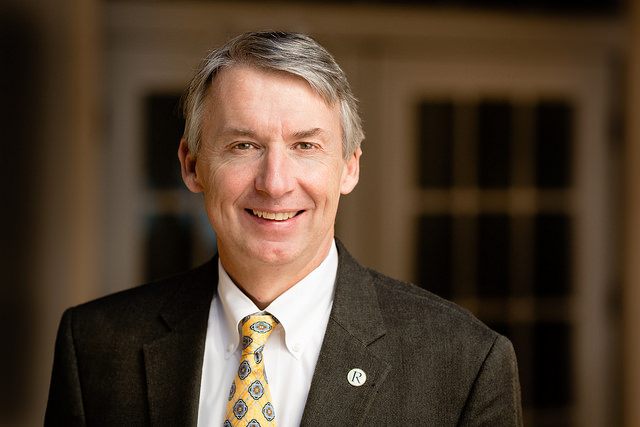
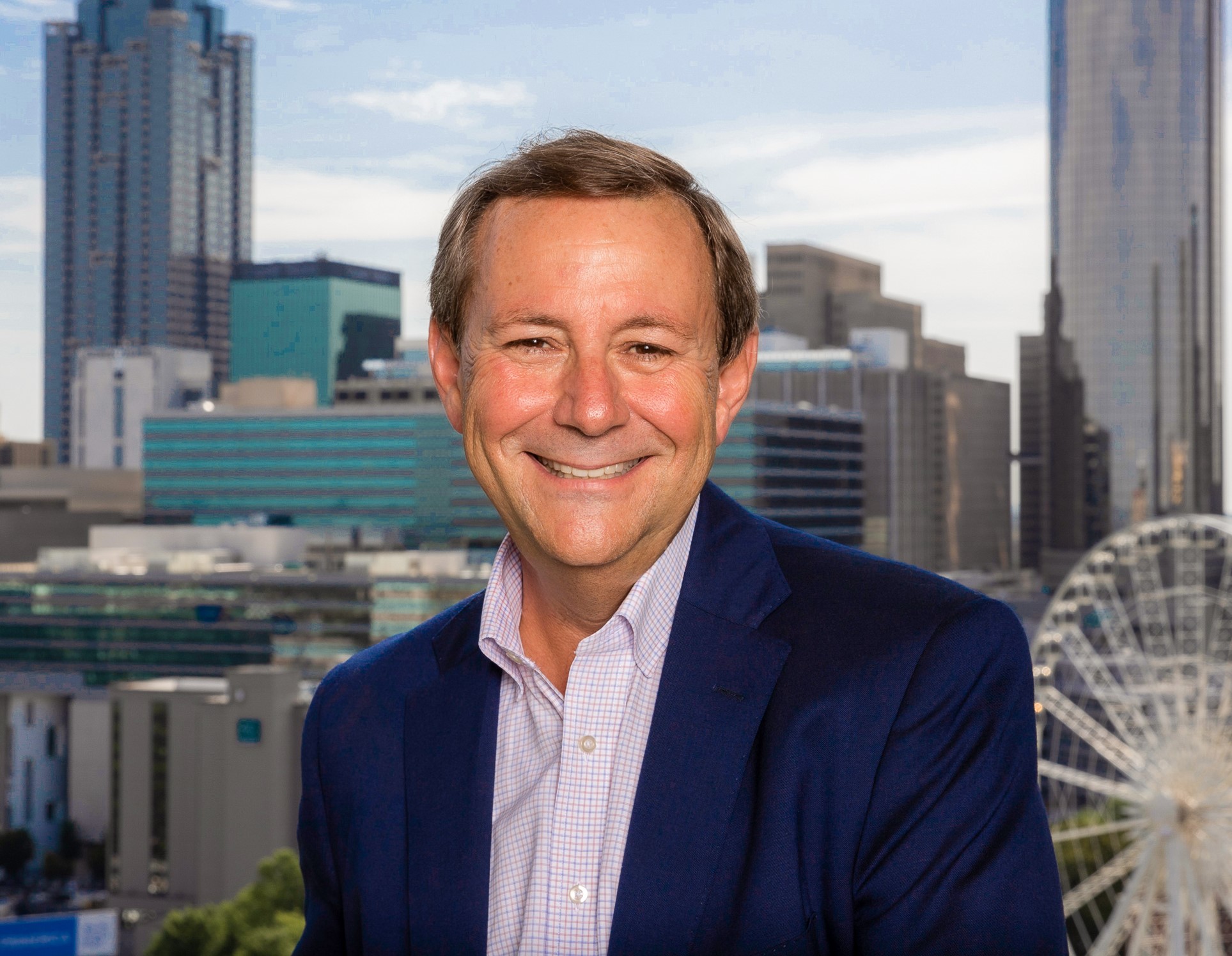
Spotlight On: Tony Jenkins, Market President – Central Florida, Florida Blue

Spotlight On: Tony Jenkins, Market President – Central Florida, Florida Blue

By: Max Crampton-Thomas

2 min read April 2020 — Florida Blue is part of the Blue Cross and Blue Shield Association, providing insurance products to individuals and businesses. Market President – Central Florida Tony Jenkins told Invest: about the company’s actions to tackle the COVID-19 crisis, assistance for policyholders and its experience holding virtual job fairs during the pandemic.

What accommodations to your network of primary care doctors and specialists did you have to make to handle the influx of patients due to the COVID-19 outbreak? 

Our network of providers has quickly adapted to offer more virtual care options to their patients during the COVID-19 health crisis. This allows individuals to chat with their doctor in the safety of their own home. 


Florida Blue has taken several measures to increase virtual care options for our members. We added free access to Teladoc for our Medicare Advantage members, and we’ve waived the Teladoc copay for all Affordable Care Act members and most employer group plan members. Teladoc provides 24/7 bilingual virtual care via phone, video or mobile app. 


We also are allowing our primary care doctors and specialists, including behavioral health providers, to treat patients virtually at their normal office visit rates during the crisis. We’re even allowing those with our Florida Blue Dental plans to seek emergency virtual care from a dentist at no cost. 


Sanitas Medical Centers, which exclusively serves Florida Blue members, has designated select facilities as sites for patients with respiratory issues while other sites are treating other health concerns to reduce the chance of exposure of patients who need to seek care for non-respiratory issues. Sanitas is also providing free bilingual virtual care to its current patients via its mySanitas Chat website and mobile app. 


Our GuideWell Emergency Doctors, which provide high-acuity urgent care, are also offering virtual visits via phone or video. They will even come out to your car and administer testing in their parking lot, so you do not have to enter the clinic. 


What kind of out-of-pocket cost waivers have you implemented as a result of the coronavirus?

In addition to waiving copays for Teladoc sessions during the crisis, we waived cost-sharing through June 1 for any members who must undergo treatment for COVID-19 for our Affordable Care Act, Medicare Advantage and other individual plans (excluding Medicare Part D drug plans), as well as all fully insured employer group health plans. We also are waiving cost-sharing for medical testing for COVID-19. 


Tell us about your initial investment of $2 million to address urgent health and safety needs in communities across Florida. What is the vision for this initiative?

Florida Blue made an initial investment of $2 million to address food security for seniors and children, support hourly workers, behavioral health needs and other crisis priorities in local communities. $500,000 was set aside specifically to support Central Florida communities. 


With those funds, we’ve provided 300,000 meals to Second Harvest Food Bank, donated $75,000 to senior organizations across the region offering Meals on Wheels and other in-home support to seniors, and funded free childcare at the two area YMCAs for the children of healthcare workers, first responders and other essential frontline workers. We also worked with four Central Florida school districts to ensure children will continue to receive free meals while they are taking classes from home, in addition to supporting crisis relief funds for our local United Way chapters, which are aiding our neighbors in need. 


How is the company dealing with the transition to remote work?

Our IT team did a phenomenal job ramping up quickly so we could transition more than 95 percent of our workforce across the nation to work remotely. We have only a few hundred individuals who are working on site in an office or medical clinic because they serve essential roles that cannot be performed elsewhere. We’ve taken extra precautions to address their health and safety. 


We asked a lot of our employees with this transition and they showed unbelievable resilience as some had to adapt to working from home for the first time or sharing a makeshift workstation with their spouse or child. 


Despite all the added obstacles, our team has truly stepped up and is delivering on our mission to help people and communities achieve better health. They continue to be innovative and adaptable to ensure we’re keeping our members at the center of everything we do.  


You recently held a virtual job fair. What was that experience like? 

We are currently hosting virtual job fairs for roughly 300 Member Care Specialist roles here in Orlando and across the state. These roles have a unique teacher-like schedule where employees get three months of paid leave with full benefits during the summer months. Training for these roles will get underway in mid-June. 


We have transitioned all our recruiting and hiring to virtual meetings and interviews right now. We have several other positions open in several fields, including IT, analytics, sales, Medicare, training and more. 


To learn more about our interviewee, visit: 
https://www.floridablue.com/

Spotlight On: Saad Ehtisham, President, Novant Health Greater Charlotte Market & Novant Health Presbyterian Medical Center

By: Max Crampton-Thomas

2 min read April 2020 —Novant Health is an integrated nonprofit organization with 15 medical centers and more than 1,600 physicians in almost 700 locations. President of Novant Health Greater Charlotte Market and Novant Health Presbyterian Medical Center Saad Ehtisham told Invest: about the group’s approach to the COVID-19 pandemic and how it is minimizing risk to patients and healthcare staff.

What accommodations is Novant Health making to handle the influx of patients due to the COVID-19 outbreak? 

Novant Health excels at being change-ready and resilient in the ever-changing world of healthcare. From the onset of COVID-19, we began assessing our readiness. Our emergency management and clinical teams have been hard at work, building on our existing plans to make sure we’re ready to manage any and all scenarios that could come with an influx of COVID-19 cases in our communities. 

At Novant Health, we made the decision to cancel elective and non-time-sensitive procedures to minimize risk to patients and our team members, conserve PPE (personal protective equipment) and be mindful of future capacity needs. We’ve also made investments to greatly increase our bed capacity across the system. As part of our commitment to patient safety, we diversify and routinely monitor our supply chain in order to be prepared and meet the needs of our patients and team members. In anticipation of a surge, our supply chain and emerging infectious diseases teams doubled down.

Outside of managing our acute care capacity, we’ve prepared for an influx of patients who need screening, testing and treatment in our ambulatory clinics, as well. Novant Health proactively stood up screening centers, respiratory assessment centers and mobile health units across our markets. This ensures we are able to test and treat, as clinically necessary, people outside of our hospitals and ensure beds are available for those who need higher levels of care.

We’re confident that we are prepared and well-equipped to safely care for our community.

How can the community best assist local healthcare providers in this time of need?

The best thing the community can do for us right now is stay home, if and when they can, and practice physical and social distancing. This will help us further flatten the curve to ensure we won’t experience a surge of patients all at once or a resurgence if we ease up on social distancing. 

If someone thinks they may have symptoms of the coronavirus or have been exposed, it’s best to first take our online assessment, call their healthcare provider, or call our 24/7 helpline 877-9NOVANT for advice on care and how to be treated. This will help us ensure only those who meet guidelines for further evaluation and testing are routed to the most appropriate venue of care, which in turn reduces risk of exposure to our team members, the community and helps us conserve valuable resources.

We each have a responsibility to do what we can to care for ourselves, our families and our neighbors. Continue to wash your hands, stay informed, stay calm, and stay home. 

What would your message be to the local community that is sheltering in place and waiting for a return to normalcy?

First and foremost: Thank you. From the #ThankYouNH posts to the purple ribbons tied around your mailboxes – we see you and we thank you. We understand this is a time of stress and uncertainty for many in our communities. This new normal is not easy, with social and economic impacts being felt deeply by many. Yet, staying-at-home, if and when you can, and practicing physical distancing is quite literally saving lives. It’s helping to ensure that those who do get sick, and not just with the coronavirus, will be able to get the care they need. So when you’re getting a little stir crazy, just try to remember why it is we’re doing what we’re doing, together, and I encourage all of us to hang in there. 

If at the end of this we look back and see that the number of cases and deaths are lower than the models predicted, that’s a good thing. It means the policies put in place and the actions taken by our communities worked to beat the coronavirus. This was not for nothing.

Where can the community go to find more resources to support your efforts or learn more about what you are doing?

At Novant Health, we are humbled by the outpouring of support from our community in our fight against the coronavirus outbreak. So many people – from all over – are reaching out to see how they can contribute and, truly, no contribution is too small. To support our efforts, visit novanthealth.org/giving. 

For up-to-date information and resources, visit novanthealth.org/coronavirus. I also encourage everyone to visit healthyheadlines.org where you’ll find truly remarkable stories about our team members who are fighting this virus on the frontlines. You can also join the conversation by following @NovantHealth on your social channels.

To learn more about our interviewee, visit: 

https://www.novanthealth.org/


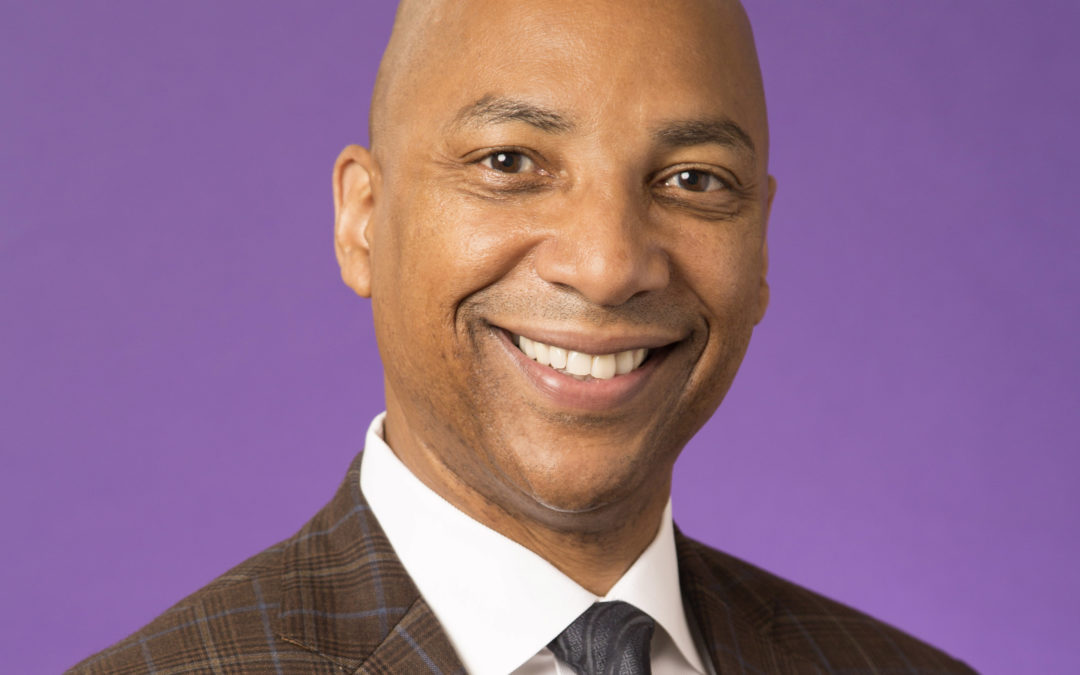
South Jersey and Philadelphia transition into online learning

South Jersey and Philadelphia transition into online learning

By: Max Crampton-Thomas

2 min read April 2020 —Jefferson Health is a multistate, nonprofit health system, including teaching hospitals, centered in Philadelphia. CEO Dr. Stephen Klasko details how earlier actions helped its hospitals get ahead of the COVID-19 pandemic in terms of preparation. Klasko also outlines the actions he would like to see from the state and federal governments to deal with the fallout from the pandemic.

What accommodations have you made to handle the influx of patients due to the COVID-19 outbreak? 

No one was totally ready for this pandemic, but Jefferson Health – all 14 hospitals – had a head start in preparing because of two initiatives. More than 10 years ago, Jefferson infectious disease doctor Edward Jasper started leading pandemic drills, and he stockpiled a supply of PPEs (personal protective equipment). In fact, we even sent PPEs to New York City in the early days of the crisis. Second, in 2014, we invested heavily in telehealth, launching JeffConnect, which immediately connects patients by video-call to an emergency department physician. As a result, we didn’t have to rebuild our system when calls went from 50 a day to more than 3,000 a day. Telehealth handled the first wave of the crisis, allowing us to support COVID-19 patients at home, as well as help thousands of people who were sick but not with COVID-19.

How are you working to ensure that patients and healthcare professionals alike are maintaining a safe environment?

Jefferson Health moved very quickly to a “universal masking” policy, requiring all staff to wear masks at work, even if their patients were COVID-negative. We were one of the first hospital systems to adopt universal masking, exactly to ensure we protect our own staff. We were in close contact with our colleagues in Italy, who told us that proper protection for staff dramatically cuts transmission within a hospital. 

Because we were prepared, we are able to allow a loved one to attend our patients during end of life situations, even for COVID-positive patients. We even allow a loved one to attend labor and delivery for a birth. This requires a full procedure of having a nurse escort to attend the loved one. We did this because of the long-term psychological trauma of unresolved grief when families are unable to say goodbye in person. 

How can the community best assist the local healthcare providers in this time of need?

The first answer is the critical one: Do not spread the illness. Our frontline staff are working horrendous hours attempting to save the lives of vulnerable patients. They are isolating themselves from their own children and families in order not to spread the virus. Do not increase their already heavy workload by getting sick yourself. 

But there are also vulnerable populations who need our help. The virus is disproportionately hitting places of congregate living – that includes retirement homes and communities. It is disproportionately hitting people who are poor. And the consequences of staying home are hitting people with medical needs all across society, from uninsured women who cannot get prenatal care, to older people on dialysis. In each case, there is specific advice, which may just be to give money to help not-for-profits that are providing assistance to the poor. 

What is your message to the local community that is sheltering in place and waiting for a return to normalcy?

Many of us are concerned that people with urgent medical issues are delaying treatment plans, not collecting medications, not seeking help. Please tell your family and friends: Do not delay getting help for cardiac and stroke issues. Do not delay taking medications. Stay on your cancer treatment regimen, and if you have the opportunity to join an advanced protocol or clinical trial, you should do that. Very important: Use telehealth to get mental health support if you need it. It may take more work today than it did last year, but please get the help you need. 

Do you feel you are receiving enough state and federal support and what more is needed? 

I believe Congress should immediately convene a COVID Commission along the lines of the 9/11 Commission – it is that serious. We need immediate changes to policy to enhance innovation to fight the immediate threat, but we also need to review the financial implications of this fight for hospitals, and we need to figure out how to ensure the next pandemic doesn’t create a health and economic crisis of this magnitude. On my list of things we need: Immediate access to the internet for all citizens, not just those who can afford a data plan. We need the federal government to lead preparation for surge capacity for intensive care, responding to any crisis. We need to prepare to offer health insurance after massive layoffs. And we need to evaluate the ethics of how we pay for healthcare to ensure equity for disadvantaged communities. 

To learn more about our interviewee, visit: 
https://www.jeffersonhealth.org/index.html

https://www.jefferson.edu/

Florida Polytechnic University navigates through COVID-19

Florida Polytechnic University navigates through COVID-19

By: Max Crampton- Thomas

2 min read April 2020As the coronavirus reduced daily activity to only essential services, educational institutions were forced to transition at a moment’s notice into a virtual setting as shelter-in-place measures and social distancing became commonplace. Entire curriculums, testing, labs, and even physical education in some cases, transitioned into an online classroom setting as teachers and students of all grade levels resumed their education under the COVID-19 pandemic. 


These risk-management decisions stressed and challenged the infrastructure of universities, colleges, and schools throughout the nation, while at the same time creating opportunities for innovation in the educational landscape. Although fully online classes are a temporary measure to slow the spread of COVID-19, and as local, state and national governments consider what a reopened economy may look like, educational systems alike are being forced to mitigate the challenges and innovate their educational practices and offerings via learning innovation and digitalization.

In Lakeland, Florida Polytechnic University, an institution solely focused on STEM education, pivoted to online learning quickly and carefully. “We made the transition much faster than anyone could have imagined. As a new university, we did not have an infrastructure in place for online classes, but nonetheless we were able to make the transition,” President Randy Avent told Invest: Insights via a virtual interview. “The biggest challenge was getting into a flow and using the software. We had to make a number of software purchases and get them running and get the student integrated. By far and large, it is going  much better than we expected,” he said. 

Under a COVID-19 landscape, tuition-dependent institutions are among the most vulnerable as students are liable to put their education plans on pause as they grapple with loss of employment and income. Colleges and universities with strong endowments and alumni contributions will likely survive the impact of COVID-19, but declines in revenue and increases in costs will likely loom for the coming academic years. Declining revenues could stifle innovation as institutions reprioritize budgets and offerings. 

However, a life post-COVID-19 may be ripe with opportunities for innovation and further streamlining of classes. COVID-19 helped destigmatize fully online learning. Moving forward, educational leaders will likely see online education as more than a source for extra revenues. Instead, online education will likely become an integral part of institutional resilience and academic continuity. Educational institutions will have to rethink how they plan for, fund, and market online learning. More unified institutions will emerge from the coronavirus pandemic, as online courses and student support functions become more centralized and integrated into existing academic structures and processes. 

For Florida Polytechnic University, there is an opportunity to use blended learning to teach a mixture of hard and soft skills, while also innovating their lab offerings. As part of their strong STEM curriculum, the university places a keen focus on teaching students a mixture of leadership skills that include communication, collaboration, and reliability that are desirable to employers, Avent said. “With this abrupt move to remote instruction, I think that we are exploring how we do all those things. One of the things that we also have as an engineering school is labs, and labs are very hard to do remotely,” he said. “It is one of those things that is forcing us to do blended models, where we do some instruction online and some instruction face to face. I think innovation is on how you do labs online and teach those leadership skills.”

Additionally, it is possible that online learning goes truly global as colleges and universities expand their student base to allow for more international students who may never see the inside of a physical campus. 

The lasting impact of COVID-19 to the educational sector remains to be seen. For the time being, it is likely that students will finish the spring semester and potentially the 2019-2020 school year from the comfort of their homes. As educators prepare for summer and fall semesters, they will have to contend with the challenges and opportunities of educating students in a post-COVID-19 world.       

To learn more about our interviewees, visit:https://floridapoly.edu/ 

To see the full interview with Florida Polytechnic University President Randy Avent, visit: 

https://www.youtube.com/watch?v=R22lng9yxAc&feature=emb_title

https://live.capitalanalyticsassociates.com/invest-insights/

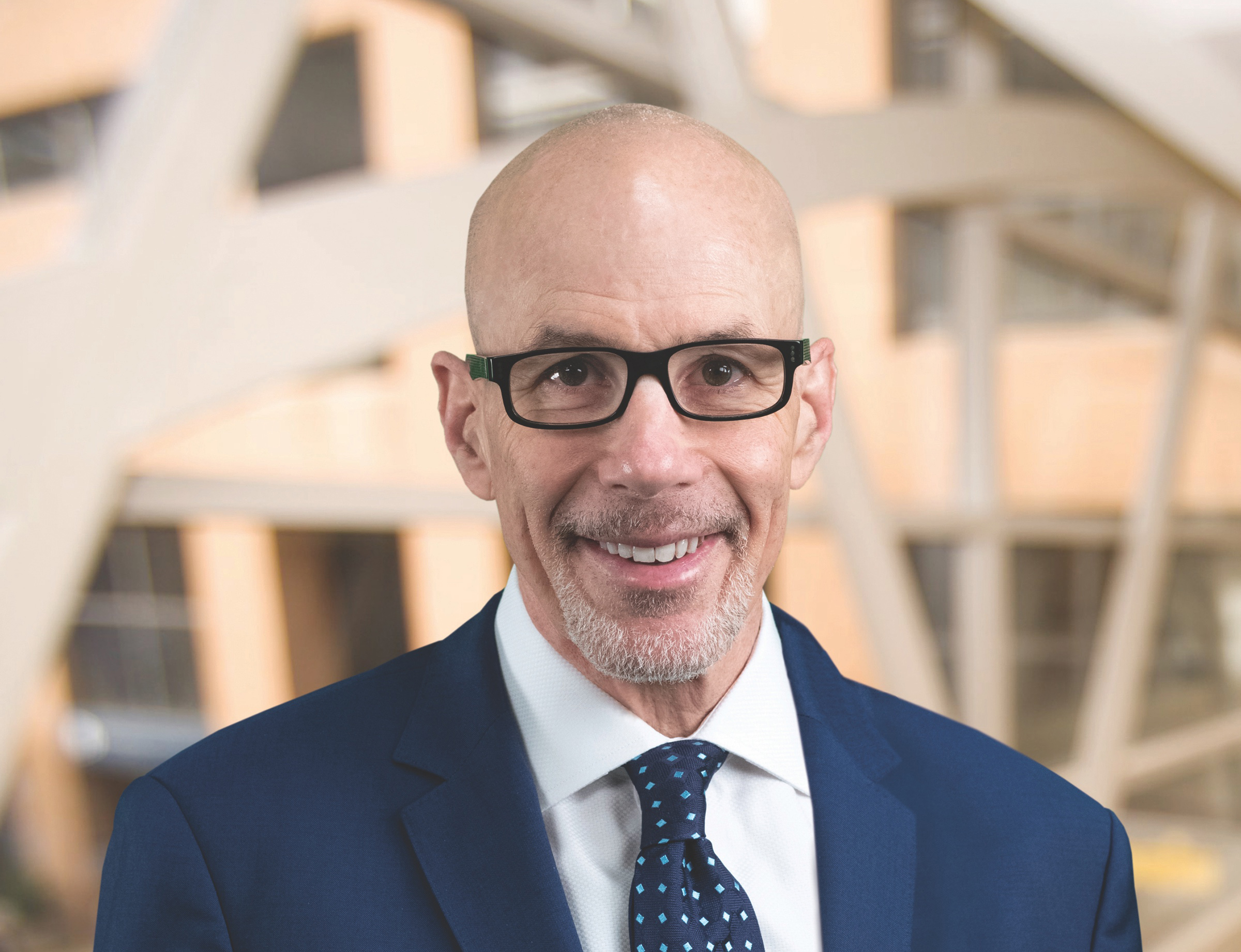
Spotlight On:  Grant Cornwell, President, Rollins College

Spotlight On: Grant Cornwell, President, Rollins College

By: Max Crampton-Thomas

2 min read April 2020 — Rollins College is a 135-year-old private liberal arts institution. President Grant Cornwell discusses how the school has adapted in the face of the COVID-19 pandemic and how faculty and staff are adjusting to the crisis, including moving to a fully online delivery of courses and one on one meetings. 

How has the transition to all online classes and education been for your university, both for students and faculty?  


In early March, Rollins started making plans to shift to virtual, synchronous teaching. Our faculty and staff immediately switched gears, canceling many spring break plans to modify their lesson plans and maximize utilization of WebEx, the internet-based meeting platform the College adopted campus-wide.  By the start of remote classes on March 23 they were fully prepared to support our students.

I have been so impressed by our creative, innovative and resilient faculty and staff who are committed to providing our students with the best and most meaningful education, even under these exceptional circumstances. Across the board, departments have stepped up to serve our students from afar. Our librarians serve as consultants, our tutors are demonstrating their online coaching skills at our Writing and Tutoring Center, one-on-one office hours are being conducted via WebEx, our health center has transitioned to telemedicine and counseling – and the list goes on and on. The Rollins community has confronted this challenge by conceiving and executing innovative approaches that continue our educational mission. 

The feedback from students has been largely positive. They are doing their part to complete the semester remotely and are eager to learn more about COVID-19 from all aspects so that they can contribute to solutions. 


How is the university working to assist the student body and faculty in mitigating the challenges and impact from the COVID-19 pandemic?  

Our Endeavor Center for Faculty Development has been working closely with our IT department to ensure that everyone has the resources they need to both teach and learn in this new environment. 

Our communication channels are open and transparent as the pandemic evolves. We created and continually update an FAQ on the College’s COVID-19 response webpage to help address questions from our various audiences and stakeholders. Regular updates are communicated through newsletters to students, faculty and staff, parents, alumni and others.  

At first, the information was largely operational, demonstrating the proactive steps we were taking to ensure the health and safety of our community. As we have stabilized and successfully developed new systems for operating remotely, we are also sharing the positive stories about the contributions the Rollins community is making to help others navigate the negative effects of COVID-19. 


Do you feel higher education is receiving enough state and federal support in this time of need?  What can the state and federal governments be doing better in this regard?  

We are grateful for the funds dedicated to higher education from the CARES Act.  Every bit is helpful as colleges and universities look to deal with budget challenges. State-funded institutions already receive government funding and that’s certainly acceptable as that is their operating model. What’s important, however, is that private colleges and universities are like private business. We run our institutions based on private revenue and, ideally, that should be accounted for if there is a future funding bill from the federal government.


As higher education adjusts to the current situation, what opportunities and innovation do you see carrying over post-COVID-19?  

This experience has emphasized that we can indeed deliver our mission to our students in a new way. In fact, remote classes should be made available to those who are ill or unable to attend a class for other reasons. Post-COVID-19, our culture will need to change to make remote accommodations for those who are vulnerable or ill.

Because the Rollins mission is so focused on community engagement, we are finding other ways to help our communities not only during these difficult days of isolation but in the future, as our country recovers. The tenets of a Rollins education community engagement, responsible leadership and global citizenship  are needed now more than ever.  


What would your message be to the university’s student population and faculty that is sheltering in place and waiting for a return to normalcy? 

Stay calm, stay home and carry on. We all have to do our part to keep moving forward to the best of our ability. Finish the semester strong and find ways to be a light to others. Keep in your sights the Rollins motto, FIAT LUX, “Let there be light.” 

To learn more about our interviewee, visit: 
https://www.rollins.edu/

Spotlight On: Gregory Sorensen, Executive Vice President and Chief Medical Officer, Tower Health

By: Max Crampton-Thomas

2 min read April 2020 — Tower Health is a regional, integrated healthcare provider/payer system that oversees six acute care hospitals and other entities serving 2.5 million people. Executive Vice President and Chief Medical Officer Gregory Sorensen told Invest: what Tower is doing to handle the influx of COVID-19 patients, the community’s role in fighting the virus and his message to the community.

What accommodations is your hospital making to handle the influx of patients due to the COVID-19 outbreak? 

We monitor our bed capacity hourly. The elimination of elective surgeries and the general decline in routine demand for care has reduced normal bed demand and is freeing up beds for possible use by COVID-19 patients. We will also coordinate bed capacity among Tower hospitals.

How is your hospital working to ensure that patients and healthcare professionals alike are maintaining a safe environment?

Safety for our employees and patients is our top priority. Like other healthcare providers, Tower Health is working very hard to manage and conserve our supplies of masks, eye protection, disinfecting wipes, gowns, and other materials related to controlling the spread of COVID-19. Our normal production sources and distribution channels have been interrupted, just as they have for every hospital in the country. While our inventories are not at normal levels, with careful management we believe we can meet current needs. We are working to acquire additional supply. We are implementing a number of strategies, including sharing supplies across Tower Health facilities; gathering supplies from shuttered outpatient clinical areas and getting them to the hospitals; and identifying alternative sources for supplies. 

How can the community best assist local healthcare providers in this time of need?

We have been gratified by the many offers from area businesses, organizations, and individuals to donate supplies and we are accepting contributions of specific items. More information is available on our web site.

What would your message be to the local community that is sheltering in place and waiting for a return to normalcy?

We encourage all members of the public to adhere to the guidance of the governor and the PA Department of Health on sheltering at home, practicing social distancing and practicing infection prevention. These steps will reduce the spread of COVID-19, which protects the community and helps ensure the safety of our healthcare team and the patients relying on us for care. Our team at Tower Health is committed and prepared to care for our communities through this pandemic. The public can contribute meaningfully to this effort by remaining at home to prevent the spread of the virus.  

Do you feel you are receiving enough state and federal support for items you are in need of? What can these entities be doing better? 

Our public health officials at the local, state and federal levels are working hard to keep the public safe during an unprecedented situation. We support their efforts and are grateful for their dedication, perseverance and leadership. 

To learn more about our interviewee, visit: 

https://www.towerhealth.org/