Commercial Real Estate to Remain Steady in 2020

Commercial Real Estate to Remain Steady in 2020

By: Max Crampton-Thomas

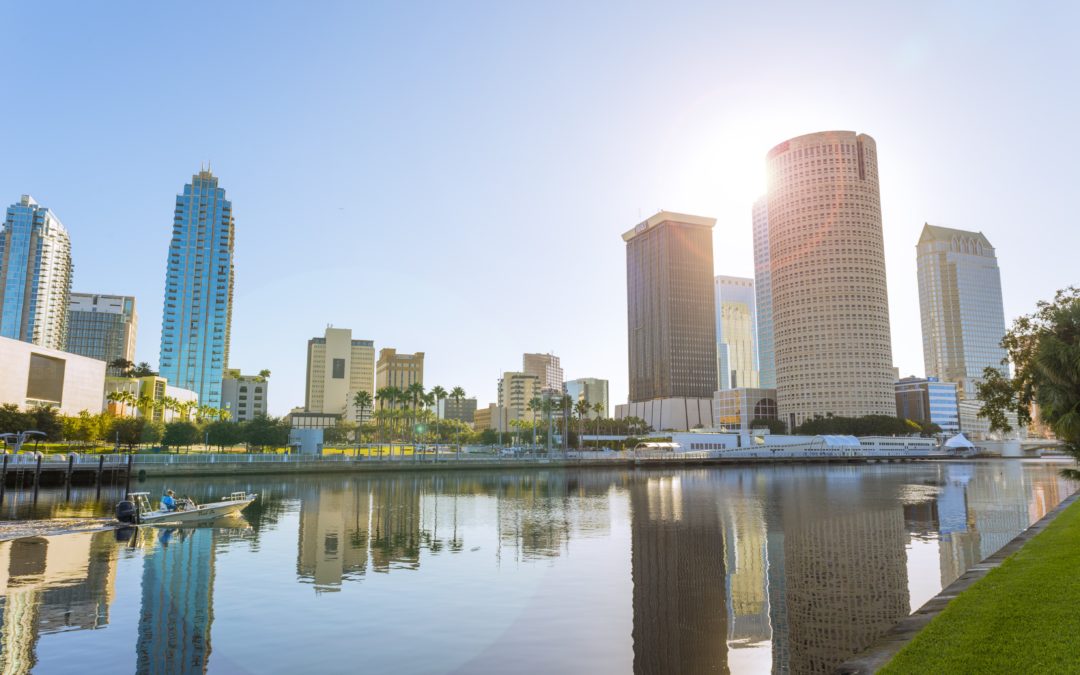
2 min read February 2020 If there were ever a time or place to consider investing in commercial real estate, now would be that time and the Tampa Bay region would be that place. 2019 proved to be another banner year for the real estate sector and with interest rates remaining low, consistent inmigration into Florida and the Tampa Bay region, rising rental rates and ongoing outside investment into the area, all indicators point to 2020 being just as strong if not better for the commercial real estate sector. 


2 min read February 2020 If there were ever a time or place to consider investing in commercial real estate, now would be that time and the Tampa Bay region would be that place. 2019 proved to be another banner year for the real estate sector and with interest rates remaining low, consistent inmigration into Florida and the Tampa Bay region, rising rental rates and ongoing outside investment into the area, all indicators point to 2020 being just as strong if not better for the commercial real estate sector. 

“Around $17 billion has migrated to Florida, the No. 1 destination for capital in the country followed by Texas, at $2 billion. People are leaving states that are not tax friendly and coming to Florida, which is very tax friendly. Because the stock market can go up or down, hard assets are attractive. The returns investors can get in commercial real estate are attractive. People are looking at commercial real estate as a means for retirement, passive income,” Christopher Travis, sales manager for the Tampa office of Marcus & Millichap, remarked to Invest:.  

Perhaps the clearest indication of the sector’s continued success has been the large-scale mixed-use projects that are happening throughout the region. Larry Richey, the managing principal and Florida market leader for Cushman & Wakefield, spoke about what these developments mean for the sector. 

“The most talked about projects happening in Tampa Bay at the moment are in the office and mixed-use sectors. In the Hillsborough County market, we have four mixed-use projects that are all very active. Those four new projects are Water Street Tampa in Downtown, Heights Union just on the northern fringe of Downtown, the Midtown project that is being developed at the intersection of I-275 and Dale Mabry and fourth is the MetWest project in the Westshore District on Boy Scout Boulevard,” Richey told Invest:. “We are seeing the highest office rents in the history of the Tampa Bay area right now, and it is because we have the strongest demand for office space that we have ever had. This is good news because it means new development and jobs in the commercial real estate sector. It also means that buildings that were always below what they should have been charging are now charging rents that are justifiable based on the investment that people have put into these properties.” 

These projects, and ultimately the continued success of commercial real estate in Tampa Bay, are the product of taking note and early adaptation to emerging and developing trends within the industry and local economy. While basically all subsectors of commercial real estate are prospering, there are some that industry professionals are keen to keep a particularly close eye on. What may come as a surprise to some is that one of these prosperous submarkets is retail. 

“The retail market continues to be very strong here.  Demand continues to exceed supply in many of the strongest retail markets throughout Tampa Bay.  This continues to drive up rental rates and has limited cap rate decompression for stabilized retail assets,” Scott Dobbins, the founder and principal of Hybridge Commercial Real Estate, said. 

Travis agreed that retail remains one of the stronger segments in commercial real estate, touching on the fact that the e-commerce trend is not as bad as some may think. “Retail has remained strong during the real estate market recovery. Everybody was scared about e-commerce, but it only makes up about 14% of the overall market. Retail is going to be just fine, especially retailers like dollar stores, gas stations, and fast food.” 

While all indications point to another strong year for the commercial real estate market, it will not be without its challenges. Besides 2020 being an election year that could possibly send the national economy into flux, Tampa Bay must address unaffordability in the housing sector and ongoing challenges with transportation in the region. 

Nonetheless, commercial real estate professionals continue to have a positive outlook for the Tampa Bay Region. 

It has always been in the core submarkets, like Westshore and the Central Business District (CBD). Historically, they’ve been the focus of development and I think that will continue. We are seeing new developments in areas like the Heights and Water Street Tampa. Time will tell how these developments impact the marketplace. I think they are both going to be extremely successful, but they are on the outskirts of the Tampa CBD. Perhaps we will see the core of the Tampa CBD start to shift,” Gary Godsey the Managing Director for JLL, said to Invest in regards to the next year for commercial real estate. “Additionally if you just look at the rooftops in Pasco County and in South County, it makes sense for these areas to be considered for future commercial real estate development, despite the lack of transportation. I think we will see developers get creative and maybe look at areas like this. If you look at the I-4 corridor, that is going to continue to be a main driver in the industrial sector.”

To learn more, visit:

https://www.marcusmillichap.com/about-us/offices/tampa-florida

https://www.cushmanwakefield.com/en/united-states/offices/tampa

http://www.hybridgecre.com/

https://www.us.jll.com/en/locations/southeast



Spotlight On: Bill Cronin, President & CEO, Pasco EDC

Spotlight On: Bill Cronin, President & CEO, Pasco EDC

By: Max Crampton-Thomas

2 min read February 2020 — Successful economic development is a product of consistent improvement of the current situation of a region and consideration of what the long-term future could hold for that same region. In Florida’s Pasco County, economic developers are thinking about what is to come and how to create a sustainable economic growth environment by helping startups get off the ground while training a competitive workforce, taking advantage of the state’s first-rate education system. In a conversation with Invest:, President and CEO for the Pasco EDC Bill Cronin discussed these initiatives and actions at length. 


 How is Pasco County working to push forward economic development?


We want to make sure we have a good mix of both office and industrial investments in the county since large industry has a different multiplier because it attracts suppliers and others that the office investments do not. We are one of the only Economic Development Organizations to own and operate our own business incubators. These two incubators offer countywide programming, where you don’t necessarily have to be in that co-working space to take advantage of the curriculum that we offer for startups, and even for companies that are going into their second phase.


We offer micro loans through that program, and we have a regional license for CO.STARTERS, which is a curriculum that we use for startups and next-generation companies. We also use those incubators as a soft-landing place for our international FDI prospects. While many of our competitors in economic development are going after these large, established companies that have 100-200 employees, we work with them, but also with the company that says, “Hey, I just want to start sales with one or two people,” and we let them use our incubators as a landing place to get them started.


All areas, whether it is entrepreneurship, land development and making sure we have enough product, our buildings and sites, workforce development in the county as a whole — all of those are now part of the strategic plan, but also with a sense of innovation and smart growth that is interwoven through those protocols. They are verticals in our strategic plan, such as innovation and technology. When we look at a collision between areas, such as logistics and IT, or life sciences or agriculture and IT, life sciences and distribution, all of these can be tied together through innovation and smart growth.


How are you ensuring that your workforce is being trained to survive the changing economic environment?


There is a lot of confusion right now with some of these rapid changes in technology and business models. That also applies to the industries we focus on. Probably 80% to 90% of our workforce is being trained for jobs that do not yet exist. How do we make sure we are prepared for that? We started to hear this theme about competitiveness and we are making sure we have fertile conditions for that type of growth in the future. We may not know everything but what we do know is that we’ve got to be ready and have the right conditions for these things to be deployed.


How are you looking at sustainability regarding the county’s economic growth?


We need to make sure that when it comes to jobs and recruitment, we are creating jobs for everybody. If you put too much emphasis on high-impact jobs alone, they won’t trickle down by themselves. You still need to make sure that every single layer of the economy and socio-economic strata has the right jobs for the right people. That is important because if you don’t do that then people will have to move away, and we will have to import talent to some extent.


In the last couple of years, Florida has been among the leading destination states for migration. We are looking at around 180 people a day coming into this region, and the state sees around 1,300 people a day. With that many people moving in, our business community has been able to take their pick of all the people coming in, and in times of low unemployment it is usually hard to find talent. You have to steal it from someone else or grow it internally. But because of interstate migration, we have been at full employment for a long time now and we still have access to talent. That’s because all these people are moving here everyday. The reason they are moving here is because things are not as good somewhere else, or they prefer it here. We have to make sure that our environment continues to be better than that of our competitors, and that we provide a good tax environment, which we have. We are also the fastest-growing region in the United States and the largest consumer market in the Southeast. You see a lot of that migration because of things like that, and because of quality of life and education. Our state university system is now No. 1 in the nation.


To learn more about our interviewee, visit: 

http://pascoedc.com/


The Real Winner in Super Bowl LIV

The Real Winner in Super Bowl LIV

By: Max Crampton Thomas

2 min read February 2020 Over the course of last week the excitement for Super Bowl LIV was palpable throughout Miami-Dade County, which was not surprising with over 200,000 people visiting South Florida to watch the Kansas City Chiefs take on the San Francisco 49ers. Ultimately the Chiefs came from behind to snatch their first Super Bowl title in 50 years. While the final numbers aren’t yet in, the early indications suggest another winner from the NFL championship: Miami-Dade County.

 The expected economic impact for the Miami-Dade area when the final numbers are reported from the past week’s events? $500 million. This would be a significant boost from Miami’s last Super Bowl (XLIV) in 2010, which generated $234 million for the region, and the 2007 Super Bowl (XLI), which accumulated $463 million in economic impact.  

The stellar financial results are thanks to well-thought-out events and years of deliberate planning by local leaders and organizations, like the Super Bowl Host Committee. Events like Miami Beach’s Super Bowl Experience and Bayfront Park’s Super Bowl Live were glowing examples of why this Super Bowl was a major win for Miami-Dade. 

Equally impressive was the windfall from “free publicity” that was afforded to Miami, thanks to media coverage of the game and the surrounding large-scale events. In fact, according to the South Florida Business Journal, during a panel discussion on Feb. 3 between local leaders for Super Bowl LIV at the University of Miami’s Carol Soffer Indoor Practice Facility, Miami Super Bowl Host Committee Chairman Rodney Baretto said the figure related to free publicity would be “in excess of $200 million” for Miami-Dade. 

This Super Bowl also provided an opportunity to some of the smaller, local businesses in the region through the Business Connect program. This program afforded close to 300 South Florida-based minority-owned businesses with vendor contracts in order to help in supplying their services and products for the events happening in the region and on the day of the game. 

Another opportunity resulting from Super Bowl LIV was the Super Bowl Legacy Grant Program. This program consisted of the NFL Foundation donating $1 million to the host city, which was then supplemented by funding from the Miami Dolphins and the Miami Super Bowl Host Committee, bringing the grand total to $2.4 million. The money has since been distributed to five capital improvement initiatives throughout the South Florida area. These include new lighting for Bayfront Park in Miami, new synthetic turf for Gwen Cherry Park and a new Outdoor Fitness Zone for Plantation Heritage Regional Park in Broward County. 

One of the biggest winners from the Super Bowl events was the hospitality sector in Miami-Dade and Broward County. With room rates in the Downtown Miami and Brickell areas ranging anywhere from $500 to $5,000, the Super Bowl provided local hotels with an opportunity that couldn’t be missed. The South Florida region was prepared for this onslaught of new guests into the area, with more than 10,000 new rooms being added since the last Super Bowl in 2010. 

While the Chiefs may be walking away the official winners of Super Bowl LIV, Miami-Dade and the South Florida region are the true beneficiaries of a job well done. 

To learn more visit: 

https://www.miasbliv.com/


Spotlight On: Silvana Capaldi, Founding Chair, Alliance of Merger & Acquisition Advisors of Tampa Bay

Spotlight On: Silvana Capaldi, Founding Chair, Alliance of Merger & Acquisition Advisors of Tampa Bay

By: Max Crampton-Thomas

2 min read January 2020 — The long-term success of any economy is predicated on both organic growth and consistent M&A activity within the business community. Founding Chair of the Tampa Bay Chapter of the Alliance of Merger & Acquisition Advisors Silvana Capaldi believes the Tampa Bay Region is booming with new opportunities for business deals and the business experts she represents are there to help business owners and investors make the most of their businesses.


What is happening in the Tampa Bay Region market that makes it attractive for an advisory body such as the Alliance to decide to set up shop here?


According to the Census Bureau, Tampa Bay is one of the fastest-growing areas in the United States, which is great for our local businesses, businesses relocating here and startups. We have an enthusiastic entrepreneurial spirit and a very strong, engaged business community. Our support system and services for our young, innovative business startup space continues to grow. We want to see businesses thrive and our goal is to provide education and resources to business owners and business professionals.  Business owners are reluctant to attend events for fear of being bombarded with people selling to them. It is our mission to provide a venue where they can hear local business owners share their lessons learned and showcase the talent pool of experts in our community: investors, business leaders, organizations and mentors who are invested in Tampa Bay.  


Have you seen a significant uptick in M&A activity in the region?


With our favorable economic condition, availability of bank loans and private equity accessibility, we have seen an increase in M&A activity. For example, ConnectWise acquired companies and then sold to a private equity group, while PGT Innovations acquired NewSouth Window Solutions.  

We see companies looking for strategic growth through M&A. They may be looking to gain market share, expand talent pool, gain resources or eliminate competition.   

In addition, the benefactors of the M&A deal now have capital to reinvest. These business owners are experienced people feeding back into the entrepreneurial ecosystem, building companies that will one day sell again.


Where are you seeing the most demand for the services the Alliance provides?


The Alliance is both an educational and resource platform for business owners. We want business owners to have an understanding of the options they have, whether they are selling their business, passing the business to family or employees, or growing their business with an investor. So often we hear from business owners stating that they were unaware of options available to them when deciding to exit. We engage speakers with the business owner in mind. 


What is the value added by the professional services you offer in facilitating business deals?


There are so many moving parts in a business deal. We provide valuable resources and have a network of professional experts to work with the business owner to maximize valuation and expose them to the right opportunities.


Companies that have approached a transaction intermediary, hoping to sell their businesses, are often turned away for not being “market ready.” Those that go to market sell for a lower value. Then there are deals that fall apart when they get to the due diligence. I worked as a consultant for an insurance agency and the owner claimed he was 100% owner. Through the due diligence process, the client neglected to share that there were two family members who had ownership in the company.


Business owners often think that their business is worth more, only to be disappointed at the number after the valuation. That’s when a professional can come in and suggest adjustments that would increase the value. For example, the buyer may want to know what prospects are in the pipeline, projected future sales, reports or what CRM they are using.  Not having that information or tools can decrease the value of the company.


What is your view of the Tampa Bay Area market in the near term?


This is an exciting time for Tampa Bay. We will continue to attract businesses that want to relocate here,  and companies that are being formed. Business owners that have exited their businesses are reinvesting into companies. Our entrepreneurial ecosystem will continue to draw young innovators. The University of Tampa’s John P. Lowth Entrepreneurship Center, a partner of the Alliance, is committed to helping innovative startups gain traction, which equates to continually drawing and retaining entrepreneurs. Tampa Bay communities will continue to invest in an already exceptional entrepreneurial ecosystem, allowing Tampa Bay to become recognized as the place to invest.


To learn more about our interviewee, visit: 

https://www.amaaonline.com/tampa-bay-chapter/


Spotlight On: Stan Lifsey, Co-Owner, The Current Hotel

Spotlight On: Stan Lifsey, Co-Owner, The Current Hotel

By: Max Crampton-Thomas

2 min read January 2020 — In 2020, creating experiences and innovation are two of the main keys to success in the hospitality industry. Stan Lifsey, the co-owner of The Current Hotel, recognized this and used it to help develop one of the newest hotel offerings in the Tampa Bay region. After receiving an initial positive reception, Lifsey is looking to continue capitalizing on the momentum while also pushing the hotel’s innovative approach to hospitality as customer demands continue to change. 


 How are visitors and residents in the Tampa Bay community reacting to the newest addition to the hotel scene? 


We wanted to take advantage of our strategic location on the water, so all 180 rooms have a waterfront view. We also wanted to partner with the best local brands in Tampa Bay and feature them, along with other local artists, in our hotel. This hotel is a one of a kind product and in a one of a kind location. We have been open for a short while, but so far we are very happy with how we have been received by the local community and the visitor turnout to the hotel. The customer feedback from both locals and visitors has been extremely positive, especially regarding the unique brand and design we have brought to Tampa Bay. We built this hotel with the idea to break the mold and cookie-cutter box that the hospitality sector in this region seemed to be stuck in with regards to architecture, interior design and concept.


Do you believe the demand curve will support the multiple new hotels coming online this year in the region? 


I believe the demand curve will be able to support all the new hotel inventory coming online, but that is with a caveat. I’d be interested to see how many of the current deals actually end up being built because of rising construction costs. Construction costs are at an all-time high, construction labor is incredibly tight and land is expensive. We were fortunate enough to have built when we did, but this market is becoming increasingly challenging. It requires a lot of equity to get these deals done and built.


Having all this new supply of rooms in the market is providing positive momentum and growth to the Tampa Bay Region and certainly makes entities like Visit Tampa Bay and the Tampa Bay Sports Commission’s jobs a little easier. Being able to offer this type of innovative product that is coming online really speaks to the evolution of the Tampa Bay hospitality market. We have been an undervalued market for quite a while, but with all the free press that Tampa Bay is receiving thanks to massive development’s like Water Street Tampa, it is driving more people into the region, which increases the demand for more hotels. All of which is ultimately great for the economy of the entire region.


How have you seen the hospitality industry adapt to changing customer demands? 


The overall hospitality market is moving more toward unique guest experiences. Guests want a different vibe and experience whenever they visit a new hotel. This is where the hospitality market is going not only for leisure travelers but also for corporate travelers. The upfront cost may be more to developers and owners but on the back end, your rate and the desire of people wanting to frequent your hotel is much greater.


The idea when building this hotel was that we didn’t want to adapt to anything. We wanted to be  contrarian and blaze our own path. When we started this whole process, we had to engage a branding company and we went through about nine months of branding. Current was not just something that we landed on. The Current name is to do with the fact that we are on the water. It is also a nod to our wave ceiling inside the hotel lobby rotating art gallery and that we want to always be current and innovative in our approach. We always want our brand to shine through in everything we do, which ultimately benefits the customer experience.


To learn more about our interviewee, visit: 

https://www.marriott.com/hotels/travel/tparo-the-current-hotel-autograph-collection/


Face Off: Osceola County Cities Sharpening Economic Growth Plans

Face Off: Osceola County Cities Sharpening Economic Growth Plans

By: Yolanda Rivas

2 min read January 2020 — Amid the growth in Orlando’s economy and population, local cities are emphasizing the unique characteristics of their respective business communities. The city of Kissimmee is taking advantage of its aviation industry, while the city of St. Cloud is looking to expand its experiential and entertainment retail offer. The Invest: team spoke with Belinda Ortiz Kirkegard, economic development director at the city of Kissimmee, and Antranette Forbes, St. Cloud’s economic development manager, about their efforts to grow their economies while taking care of their existing businesses. 

What are the key industries for the city’s economy?

Belinda Ortiz Kirkegard: Aviation is a growing industry in Kissimmee, as the city owns a general aviation airport, Kissimmee Gateway Airport. This airport is predominately the airport of choice for corporate jets or private plane owners arriving to go to the Orange County Convention Center or a Central Florida theme park. Kissimmee Gateway Airport is also a relief airport for Orlando International (OIA), providing services for noncompatible OIA uses.  Additionally, understanding the value of high-wage aviation jobs, the city launched its Aerospace Advancement Initiative to attract companies to our airport. A recent Florida Department of Transportation study showed our airport yields a direct annual economic impact of $190 million. In the last seven years, the airport has grown by over 300 jobs.

Another growing field in Kissimmee is the medical sector. The city of Kissimmee is home to two strong, growing hospitals, AdventHeath-Kissimmee and Osceola Regional Medical Center. Combined, these hospitals have invested over $300 million in campus expansions or are growing their service lines. To capitalize on that growth, the city launched its Kissimmee Medical Arts District, providing economic development incentives specifically to attract more physicians and medical companies to the area. When new medical companies enter the market, they provide new job opportunities, but it also results in more medical services available to residents. It’s a win-win.   

Antranette Forbes: Retail and professional services are our key industries. In fact, 35% of our business is service-oriented. In the medical industry, St. Cloud Regional Medical Center is our largest nongovernmental employer. They have over 500 employees and the majority are in medical or medical-related professions. We also have a large population of dentists. From a business recruitment standpoint, that is a great opportunity for medical device providers, assisted living facilities and other related companies.

We are focusing on diversifying our retail footprint. We are looking to attract experiential and entertainment retail. We have places to shop and eat, and now we are focusing on providing options to play. We also need more diversity in our industrial sector. While we may not have a high amount of space to do industrial, we do have talent who can perform in the sector.

How do you support the interests of residents, while focusing on expanding the city’s business community?

Ortiz Kirkegard: Meeting the needs of our residents is always at the forefront of economic development. Programs are designed to attract companies that provide high-value, high-wage jobs to the community. As our economic development program has evolved, so have the job opportunities, and that helps advance our household income levels. Additionally, the evolution of the program has worked toward diversifying our economy by no longer being solely tourism centric with jobs circling retail and hospitality. Although tourism will always be at the heart of Central Florida, diversifying industries increases our economic resilience.  

Forbes: We are implementing numerous strategies to diversify our economy. We have over 1,300 registered businesses in St. Cloud. Over 35 percent of those are home-based businesses. These types of businesses are an important contributor to our economy. These “mom and pop” types of companies are a major focus for us. We are looking to move them out of their homes and into office or storefront space. By helping them to reach that next level, these are the businesses that will be hiring more employees and supporting our growth.

To learn more about our interviewees, visit:

City of Kissimmee: https://www.kissimmee.org/government/economic-development/economic-development-office 

City of St. Cloud: http://stcloud.org/926/Economic-Development 

Spotlight On: Shaun Kwiatkowski, General Manager, The Godfrey Hotel and Cabanas Tampa

Spotlight On: Shaun Kwiatkowski, General Manager, The Godfrey Hotel and Cabanas Tampa

By: Max Crampton-Thomas

2 min read January 2020 — The hospitality industry in Tampa Bay welcomed several new hotel offerings into the marketplace in 2019, and 2020 is going to see the introduction of even more inventory. Invest: spoke to Shaun Kwiatkowski, the general manager of one of the newest offerings to the Tampa Bay region, The Godfrey Hotel and Cabanas Tampa.  Besides a bountiful 2019, Kwiatkowski also spoke about the importance and benefits of operating as an independent brand in a market that is saturated with corporate offerings, as well as his view on the impact of the sharing economy in the Bay. 


How would you describe The Godfrey’s performance in 2019? 


In 2019, we enjoyed the continued market penetration of our brand. We are still pretty new and usually the ramp-up period for a hotel brand in this market can take up to five years to really penetrate and become established, especially a new, independent hotel like The Godfrey. We do not have the Marriott or the Hilton behind us, so we have to rely on a lot of specific strategies to execute. We feel that we have been able to penetrate the market effectively in a short period of time. We have had a lot of growth, which we measure by ADR growth. We had almost double-digit ADR growth last year, which equates to RevPar growth in the hotel’s revenue results. We’re very thankful and proud that we have been able to grow that ADR a little bit faster than the market as a whole. When you look at the Tampa Bay market this past year, occupancy rates had stayed pretty much flat, but I believe that has a lot to do with the additional room supply coming into the market. 


How has operating as an independent brand been beneficial and a challenge to the hotel? 


Being an independent brand can create benefits, but there are also challenges to that. As the business and the industry have evolved, demand has changed and today, many people want something different from the corporate type of hotel. Not to take anything away from those brands, but people do want to have the unique and fun experience that an independent brand can provide, similar to our food and beverage experience in WTR Pool & Grill. That is exactly who we are. If we look at the market as a whole, we are starting to see some of those big-name brands evolve into a more independent style. We are seeing those independent, millennial-focused brands growing in popularity, especially in this area.


A big challenge for us across the industry is employee retention and finding the right talent. We drive employee retention through the culture that we create within the hotel. If we find a good employee, we reward them and we guide them through their career. When we are looking at recruiting people to fill our open positions, it is more about the person than their skills. I can teach you most of the skills to be a front desk agent or to be a server, but I can’t teach you to smile. I can’t teach you to be positive and warm. This means we always have to be in our recruiting mindset and look for those individuals who have the hospitality spirit.


How has the sharing economy impacted your business, if at all? 


In regards to the impact from the sharing economy and things like Airbnb, there’s enough room for everyone to play, from our perspective. The Godfrey has not seen a major impact from the sharing economy. If the average person does a normal search of Airbnbs in this region, there is not as large an inventory as you might find in Boston or Chicago. That being said, when we look at what Airbnb is doing and the future of their booking channel, that is something that’s on our radar. If there is an opportunity there that works for us, we are going to investigate it and see if there is enough return on investment to try and implement something similar.


To learn more about our interviewee, visit: 

https://www.godfreyhoteltampa.com/


Face Off: The Sunshine City’s Future Shines Bright

Face Off: The Sunshine City’s Future Shines Bright

By: Max Crampton-Thomas


4 min read January 2020 Deliberate, calculated and fast-moving are just a few of the ways to describe the economic growth happening in the city of St. Petersburg. Long known as the “Sunshine City,” St. Pete has developed into an economic and arts and culture powerhouse within the Tampa Bay Region. This is in large part thanks to efforts by a motivated business community and community leaders. Invest: spoke with two of the prominent figures in the St. Pete community about their organization’s efforts to maximize the potential of their city. J.P. DuBuque, the president of the St. Petersburg Area Economic Development Corporation, and Alison Barlow, the executive director of the St. Pete Innovation District, also discussed their view of the future and the challenges that await. 


How are you working to promote economic expansion in St. Petersburg?

J.P. DuBuque: As an EDC, our primary role is to help grow jobs in the St. Petersburg area. One way we can contribute to that is by attracting new companies into our community. The most effective means of doing this is by telling our story, and to tell the story we have to know what the story is. This means we have to understand what our local community looks like. We are spending a good bit of time focusing on our local community to really understand the targeted industries that we want to enhance and grow. We are working with groups like the data analytics community and marine science community to best understand their needs. This in turn relays to us where the opportunities lie to attract new businesses to the region. Apart from this, we spend a lot of time out of the market, meeting with individual companies and other markets to tell them the great story of doing business in St. Petersburg. Sometimes this is through coordinated business development missions, while other times it is by leveraging non- economic-development-related conferences like South by Southwest or through focused sales development efforts.

Alison Barlow: The entrepreneurial ecosystem and talent development are two big areas of focus for us. We are doing a program called Innovation Scholars, which provides unique job shadowing opportunities for first-year students at USF St. Petersburg. We have already paired 39 students with companies in the Innovation District and around Downtown. We are also exploring ways to incubate more marine technologies, such as sensors, drones and ROVs, as well as encouraging the link between marine and life sciences.

As part of our efforts to attract businesses and talent to the district, we offer a variety of office space types. We are also focusing on connecting people who are located near the St. Pete Innovation District and making them part of the district. We are supporting the creation of social spaces by encouraging restaurants and retailers to come to the area. We are also supporting the full range of housing, from fully-assisted affordable housing to workforce, multifamily and luxury condos.

From your perspective, what is one of the most significant challenges for economic growth in St. Petersburg?

DuBuque: The biggest challenge for us is perception versus reality, and I believe this is a statewide challenge. When you look at what people think regarding some of the things that are necessary to build a successful business, and a successful quality of life, there are some perception challenges for Florida. The perception that Florida is not a good business environment, and that our school systems are not up to par are a real challenge. The perception, and reality, of Florida’s lack of mass transit is a real issue that needs to be overcome. When we have an opportunity to show folks what the reality is, they are typically pleasantly surprised.

Barlow: We are leading conversations with local health institutions about how changes in our oceans have an impact on our people. Human and ocean health are becoming much more related. For example, last year we had a significant red tide, and while the marine scientists were looking at the causes that were making it worse and the impact on marine life, the physicians in our area were seeing an uptick in asthma issues due to the airborne aspect of red tide.

We have some of the best sea level rise experts in St. Petersburg. It is encouraging to see the progress of their research looking at temperature fluctuation, the infiltration of bacteria and nutrients in the water that is contributing to algae blooms such as blue-green algae and red tide. They are turning this deep research into practical knowledge for the community. 

What has you excited for the future economic growth in St. Petersburg?  

DuBuque: It is important to remember that growth is necessary for us to move forward as a society. If we are not growing as individuals and as a community, then we are actually moving backward. That said, the level of proactivity from the Economic Development Corporation allows us to select the types of businesses that we want to really bring here. That in and of itself will help move us forward. We also have a full community commitment to the Grow Smarter Strategy, which gives us a common road map for every person in the economic development game. Those things allow us to maintain the culture and character of St. Petersburg while still moving forward. The worst thing that we could do is to kill the golden goose, which for us is the vibrancy, authenticity, arts, creativity, innovation and “funk” of St. Pete.

Barlow: We are excited about our progress on our smart city project. The St. Pete Innovation District is partnering with Spectrum and US Ignite to test concepts around smart city technology to improve the lives of the people in our community. It is also a chance for us to try sensor technology and think about what it would mean for educational and workforce opportunities. We are getting closer to installing four smart light poles on the University of South Florida St. Petersburg campus that will have power, internet and the ability to host environmental and traffic sensors.

To learn more about our interviewees, visit:

https://stpeteinnovationdistrict.com/the-district/

https://stpeteedc.com/


Spotlight On: Les Vail, CEO & President, Gloucester County Chamber of Commerce

Spotlight On: Les Vail, CEO & President, Gloucester County Chamber of Commerce

By: Yolanda Rivas

2 min read January 2020— The Gloucester County Chamber of Commerce’s focus on business development and education has positioned it as the fifth-largest chamber in the state of New Jersey. The chamber’s partnerships with local county colleges and universities have been key for businesses and the local workforce. Les Vail, president and CEO of the chamber, discussed with Invest: the different ways the chamber is promoting Gloucester County as an economic engine in the region.


 What have been some of the highlights for the Gloucester Chamber of Commerce over the past 12 months?


We have been making a concerted effort over the past year to improve branding and marketing to ensure that our message reaches as many people as possible. We initiated a partnership with Rowan College of South Jersey that provides around 30 percent discounts on degree tuition fees for any of our employees and members. We are already seeing that initiative bearing fruit, with over 12,000 unique visits per week across our social media platforms and a significant uptick in returns on our email blasts.


How is the chamber working to promote South Jersey as a catalyst for economic development in the tri-state area?


We have grown to become the fifth-largest chamber in the state with almost 1,000 members, and a big reason for that success is our focus on business development. We act as the middleman to help companies and executives connect with each other. Our efforts on education are also vital. We firmly believe that economic development starts with educating the workforce, as this is what attracts new businesses to the region. 


Manufacturing, for example, has a great need for employment. Gloucester County is the fifth-largest region in the country for food manufacturing. The sector offers competitive wages, but it is struggling to find sufficient numbers of skilled workers, not only for now but for the future. The industry does not necessarily require a college degree, but usually requires some form of certification. That’s where our partnerships with local county colleges can have an important impact. We listen to the business community and we support them in their efforts to increase the number of qualified workers for this industry.


What kinds of businesses are you trying to attract to the Gloucester County region?


We are not known as a technology hub, but we have a research institution and two medical schools that are contributing in this area. So we are looking to attract technology-based industries that can offer competitive wages. We have the land capacity and infrastructure in place to attract these businesses.


What are the main challenges facing businesses in the county?


Workforce is still the main issue. We need more plumbers, electricians and carpenters. Manufacturing businesses and refineries, despite offering attractive salaries, are struggling to find their future workforce. It is important to change the mindset of young people today and to let them know that not every career requires a college degree. We need to find people without college degrees and include them in the workforce by giving them valuable skills that contribute to the economy. This process starts in high school, so it is encouraging to see institutions like Gateway Regional High School offering guidance and advice on potential career paths to students from an early age.


To learn more about our interviewee, visit:

Gloucester County Chamber of Commerce: https://www.gc-chamber.com/