Public and Private Collaboration Key to Camden’s Eds and Meds Corridor

Public and Private Collaboration Key to Camden’s Eds and Meds Corridor

By: Yolanda Rivas

2 min read December 2019 — The life sciences industry is one of the fastest-growing industries in New Jersey, with the largest concentration of scientists and engineers per square mile in the world. The southern New Jersey region is no exception, with Camden’s “eds and meds” corridor boasting numerous healthcare, educational and research institutions.

The city’s eds and meds corridor has been experiencing steady growth over the last few years, thanks to the commitment of anchor institutions and the city’s leadership. According to Cooper’s Ferry Partnership statistics, the corridor employs almost 40% of the Camden workforce and over $1 billion has been invested in the “eds and meds” sector, with an additional $175 million planned. 

Created in 2012 by the New Jersey Medical and Health Sciences Education Restructuring Act, the Rowan University / Rutgers – Camden Board of Governors has been a catalyst in the corridor’s extension and economic development. In October, the board reached a milestone with the opening of the new Joint Health and Sciences Center, which provides lab and training spaces for Rowan University, Rutgers-Camden and Camden County College. 

“By leveraging the power of these institutions, the Center is poised to become the research and innovation hub of South Jersey. This campus will be the beating heart of Camden’s eds and meds corridor, injecting opportunity, growth, and innovation throughout the entire region,” said  Joint Board CEO Dana Redd in a press release. 

The center houses research laboratory spaces for both Rowan and Rutgers-Camden, simulation rooms for medical students at Cooper Medical School of Rowan University, instructional space and additional simulation labs for Camden County College, and office space for the Joint Board, according to the press release. The center will help expand the city’s transformation into a hub for medical research and innovation and attract top talent into the region. 

Camden’s “eds and meds” corridor growth is also due to the numerous partnerships between healthcare and education organizations in the area. These community collaborations and initiatives have helped combat social determinants and support local residents. For example, Camden residents now have expanded access to care as a result of efforts by institutions such as Cooper University Health Care, Virtua Health System, CAMcare Health Corporation and Camden Coalition of Healthcare Providers.  

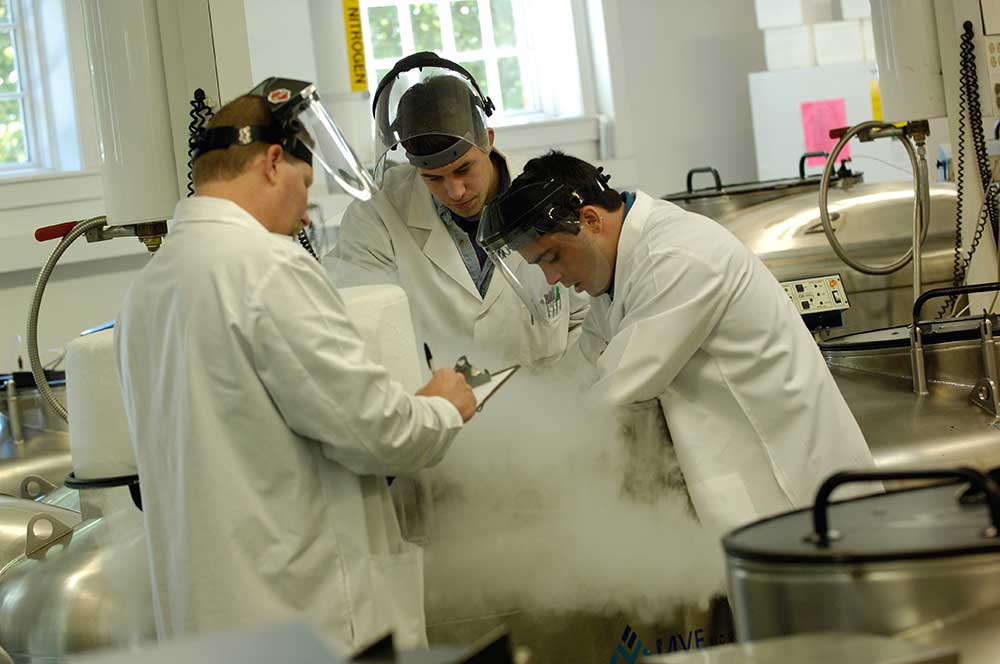
The Coriell Institute for Medical Research, an independent, nonprofit biomedical research center, has been a leader in Camden’s health sciences sector. The institute hosts one of the world’s leading biobanks, distributing biological samples and offering research and biobanking services to scientists in 85 countries around the globe. By conducting groundbreaking research in biobanking, personalized medicine and stem cell biology, the Coriell Institute has been and continues to be a main driver of the corridor’s growth.

Another example is the MD Anderson Cancer Center at Cooper, which has also significantly contributed to Camden’s eds and meds corridor since its opening in 2013. The center not only brought a new option for cancer patients across the region, but its innovative clinical trials and research has helped Camden’s reputation as a hub for groundbreaking healthcare research and education.


To learn more, visit:

Cooper’s Ferry Partnership: https://coopersferry.com/  

Rowan University / Rutgers – Camden Board of Governors: https://rurcbog.com/ 

Coriell Institute for Medical Research: https://www.coriell.org/ 

MD Anderson Cancer Center at Cooper: https://www.mdanderson.org/about-md-anderson/our-locations/md-anderson-at-cooper.html 

Truist completes merger to create country’s sixth-largest commercial bank

Truist completes merger to create country’s sixth-largest commercial bank

By: Felipe Rivas

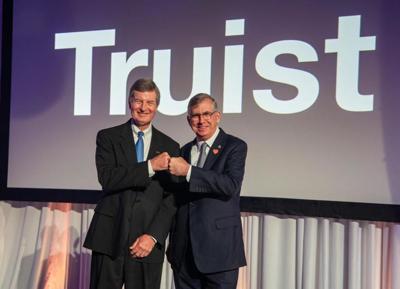
2 min read December 2019The banking industry welcomed the nation’s sixth-largest commercial bank earlier this month as regulatory authorities completed the merger between BB&T and SunTrust banks, now officially known as the Truist Financial Corporation. The new bank will be headquartered in Charlotte, North Carolina, while Atlanta retains its corporate and investment banking division. The conversion to the Truist brand will be phased out over two years as systems are integrated and will serve approximately 10 million U.S consumer households and businesses. The Truist brand will keep its predecessors’ philanthropic culture by contributing close to $100 million annually to various metro Atlanta community organizations over the next three years.  

“This is a historic moment for Truist – a financial services organization created from two companies with shared values and a deep commitment to building a better future for our clients and communities,” said former BB&T Corporation CEO and Truist Chairman Kelly King in a press release. “The completion of this merger of equals is a tremendous achievement and a testament to the thousands of Truist teammates who have diligently worked to ensure its timely conclusion.”

Truist will have the largest market share of any bank in metro Atlanta and will rank as one of the leading commercial banks in most of the major markets in its territory. Prior to the merger, SunTrust had been Georgia’s largest bank. “We have much work ahead of us, but we’re well-positioned to create meaningful change for the clients we serve and the communities where we live and work,” said former SunTrust CEO and Truist President William Rogers in a press release. 

To that end, its leaders announced a $60 billion community benefits plan in July earmarked for lending or investment in low- and moderate-income communities from 2020–2022. The commitment includes monies slated to help customers with home purchase mortgages and small business loans, as well as creating affordable housing developments and investments in local community redevelopment agencies across its markets.

Metro Atlanta can expect close to $100 million in community investments annually for the next three years. The community investments will support varying initiatives each year aimed at addressing the diverse needs of the region. Previously, SunTrust supported nonprofit organizations such as the Boys & Girls Club of Atlanta, YMCA of Metro Atlanta, as well as investing more than $10 million in Low-Income Housing Tax Credits to help construct 175 units of affordable senior housing in greater Atlanta, according to its website.

As for the Atlanta Braves’ newly built home, SunTrust Park will keep its namesake for now.  Much like the systems integrations, the rebranding efforts, including BB&T and SunTrust sports related facilities, could take close to two years to bear the Truist name, per different reports. 

For now, clients can continue to use their perspective BB&T or SunTrust branches, websites, mobile apps, financial advisers and relationship managers, as well as use BB&T and SunTrust ATMs to make withdrawals without incurring out-of-network fees, Truist officials said. 


To learn more, visit: https://www.thepremierfinancialinstitution.com/

Spotlight On: Douglas Zaren, CEO, Memorial Regional Hospital South

Spotlight On: Douglas Zaren, CEO, Memorial Regional Hospital South

By: Max Crampton-Thomas

2 min read December 2019 — As the population continues to grow, the need for specialized healthcare follows suit. For Memorial Regional Hospital South, the focus is on being able to adapt and grow areas that will benefit the future of post-acute care. Invest: spoke with CEO Douglas Zaren about how the hospital is adapting its practices to meet increased demand while also being open and flexible when it comes to adopting new technology into the hospital. 


What differentiates Memorial Regional Hospital South from the other hospitals in the region? 

As the home of the Memorial Rehabilitation Institute, Memorial Regional Hospital South is made unique by our focus on post-acute care. One of our rehabilitative programs is Determination Drive, where we have created a community with an ATM, grocery store, library, park and a MINI Cooper. We use these environments to help patients re-learn different skills in realistic scenarios. By practicing everyday tasks under the supervision and guidance of our therapists, our patients will be ready to leave our hospital with confidence. We also take pride in our Adaptive Sports program, which helps our disabled patients reach their maximum potential. Different activities, such as wheelchair basketball, adaptive bowling and adaptive cycling help our patients gain confidence as they adapt to life with a disability. Our patients are the center of all that we do, and we strive to help them recover both physically and emotionally. 

As the population in Broward County continues to grow, how is the hospital preparing for the increased demand? 

As our population grows, it is important for us to be able to adapt and grow the areas that will be necessary for the future of post-acute care. This need to adapt is further exacerbated by pressures to provide more efficient care. As a result, we focus on the entire continuum of post-acute care, going beyond inpatient rehab to outpatient rehab, home health and Memorial Manor, our Skilled Nursing Facility. By expanding the capabilities to these providers, more patients are able to receive appropriate care. An example of this dedication to growth is the expansion of our electronic medical records technology to Memorial Manor, which will allow the caregivers to easily see the patient’s medical history. Our expansions of outpatient rehab and home health services allow more patients to receive care outside of the hospital setting, in the comfort of their home and on their schedule. Finally, our continued focus on excellent quality in our hospital still gives those patients with higher needs the care they need through our inpatient rehabilitation services, 

How are you implementing new technology to better serve your patients and physicians. 

Technology is advancing rapidly in all aspects of life, including patient care. We have a strong commitment to leverage this expanding technology to provide our patients with the most modern and innovative care in the market. An example of this is our recent acquisition of a C-mill treadmill, which utilizes virtual reality technology to simulate realistic environments for patients. This allows patients to get acclimated to walking in environments they would see outside the hospital, while still being in a safe, monitored situation. In addition, we help our patients become accustomed to using technology in their everyday life. By training our patients with an Amazon Alexa smart home system, they will be able to use these tools in their homes after discharge to help with tasks, such as turning on the lights and controlling the TV, that may be difficult for them as they continue their recovery. 

For more on our interviewee, visit:

https://www.mhs.net/locations/memorial-south

All Aboard! Seminole Hard Rock Winterfest Boat Parade Ready to Set Sail

All Aboard! Seminole Hard Rock Winterfest Boat Parade Ready to Set Sail

By: Max Crampton-Thomas

2 min read December 2019 — The annual Seminole Hard Rock Winterfest Boat Parade is just around the corner, and event organizers are adding the finishing touches to “The Greatest Show on H2O.” That’s no understatement, with an estimated economic impact of $50 million and 1 million live spectators, plus online and TV streams. “There is nothing like the Seminole Hard Rock Winterfest Boat Parade in the entire world,” said Lisa Scott-Founds, the event’s President and CEO.


Taking place on Dec. 14, the show – the seventh-largest one-day spectator event in the country – is not to be missed. “Private boats to the giant showboats and corporate megayachts will be adorned with hundreds of thousands of lights, music, entertainment, decorations, celebrities, musical groups, beauty queens and many other exciting entries,” the event’s website promises. Think the Macy’s Thanksgiving Day Parade, but on water.

According to Scott-Founds, as a nonprofit organization, organizers are constantly innovating to think of new ways to make the event stand out without breaking the bank. “We always want to integrate the newest technology into our event, like the use of holograms, which we hope is a real possibility for this year,” she said. “We are always asking people, ‘What is something that you’ve never seen us do before?’ We take their suggestion, develop a budget to execute the idea and bring it to our board and possible sponsors to help with underwriting the “new wow factor idea.”

This year, the 12-mile parade route will begin at Stranahan House and will sail eastward into Fort Lauderdale to the Intracoastal Waterway, and ending at Lake Santa Barbara in Pompano Beach. It costs a minimum of $35 to enter a boat with no advertising, while the heftiest sponsorship package comes in at a cool $65,000. Spectators can also purchase a ticket to the Grandstand Viewing Area inside the Hugh Taylor Birch State Park with prices starting at $25 for children 10 and under.

The economic bump in the county’s coffers comes at a good time, says Scott-Founds. “The beginning of December is a little slower for tourism, as opposed to other months when tourism in South Florida sees a boom, so we feel a responsibility to bring people into the region and put heads in beds,” she says.

For the event, it seems that all stakeholders in the area come together to enhance the experience for visitors. “Our success is due to collaboration with organizations like our Greater Fort Lauderdale Convention and Visitors Bureau and working with area hotels,” says Scott-Founds. “Tourists should experience a Winterfest weekend, a show at the Broward Center for the Performing Arts, eat at our restaurants and immerse themselves in our community. There is just so much to do in Fort Lauderdale, and in Broward County for that matter.”

To learn more, visit:

https://winterfestparade.com/

Spotlight on: Nicholas Haines, CEO, Bromley Companies

Spotlight on: Nicholas Haines, CEO, Bromley Companies

By: Max Crampton-Thomas

The future of Tampa Bay is developing in front of our very eyes and there are a few select developers making this vision come to life. Real estate developer Bromley Companies broke ground in mid-2019 on its ambitious Midtown Tampa project. Company CEO Nicholas Haines discussed the importance of incorporating new tendencies, such as a pedestrian-focused design, and the challenges that both a proper mix of high-end and affordable housing present for the city.


What’s the status of the Midtown Tampa project?

We broke ground on the Midtown project in May 2019 and we are well under construction for the first phase. There are 11 buildings going up at the same time: three residential, two office buildings, and several retail, including a Whole Food Kitchen and True Food Kitchen, both of which are significant expansions in the market. There is also a 1,000-car parking garage that is already topped out, and we’re right on schedule. The goal is to finish it by the 2021 Super Bowl, which will be held here in Tampa Bay just a couple miles up the street. 

A lot of what we are doing now is spending a tremendous amount of time on the finishing touches of the common-space designs that create community. It is about creating an imaginative destination not just for the people working, living and shopping here, but for the neighborhood by adding public art and a feel for the place, all the things that make a space interesting and dynamic. We are building a city within a city — an entirely new district. 

What business trends are you keeping an eye on as you go ahead with this development?

Accessibility and pedestrian-friendliness. I just read about a development in Arizona, with 1,000 residential units and no parking. That is a bold thing for a non-superurban area. What we are trying to do is create one of the first, pedestrian-first mindset versus car-first developments in Tampa Bay and Florida. All the streets inside the development are private, which is a really interesting feature of Midtown Tampa. We are not constrained by the city’s rules regarding traffic and street design. For a big event like the Super Bowl, we can close the streets so that all the cars access Midtown from the periphery.

We have designed curbless sidewalks, for example, and dedicated ride-share drop-off areas. The city of Tampa is working on a number of mass transit initiatives and we are working to accommodate a mass transit stop on one of our main corridors. People are going to live, work and shop here because they want to wake up, go to a coffee shop, walk their dog at the dog park, go shopping at Whole Foods, have a drink at the hotel rooftop bar, and maybe work at one of the office buildings. They’ll also be able to ride a bike path that connects from Midtown Tampa to the Greenway Trail System, from Tampa to St. Petersburg, by crossing a 10-lane bridge at Dale Mabry.

Are there any other areas that you see as a hotspot or active as real estate developments for the moment? 

Yes, it’s really exploding. The Heights area is really interesting. St. Petersburg is incredibly exciting and a great example of a vibrant, urban place with the interplay between food and art. We are talking about a city that has transformed itself over 10 years in terms of the energy there. 

What is your outlook for the Tampa Bay region, and how do you see the region addressing its challenges? 

Regarding sustainability, it is really important to get the mix right between higher-end housing like we are building here and affordable housing. There’s a need to provide better incentives for the private sector to offer that kind of housing. You can only do so much as a city if everyone is building luxury apartments. It is an issue for all cities, but Tampa today does not have a cohesive development and zoning policy to encourage that. Tampa is still a very affordable place on a relative basis, but that affordability gap is narrowing. People who have been living here for a long time with a moderate income are being pushed further and further away from the urban core. 

Transportation is a huge thing too. In some ways, advances in mass transportation technology might help Tampa. The city might not have done it in the past, but in some ways that might not be the worst thing. Tampa might be able to take advantage of innovations in technology like self-driving buses to implement something that is very forward thinking, instead of having to put up the heavy infrastructure and the massive amounts of capital for a light rail system.

To learn more about our interviewee visit: 

https://www.bromco.com/

Philly Leads in ‘Taking Care of Business’

Philly Leads in ‘Taking Care of Business’

By: Sara Warden


In NBC’s 2019 ranking of Top States for Business, Pennsylvania landed a lacklustre 28th position – lower than half way down the poll for business friendliness in the country. The state was in 39th place in terms of economy, 32nd in quality of life and 31st in workforce. But there is potential. The state ranked ninth in terms of education and sixth in access to capital. The Philadelphia authorities are grabbing onto these roots and nurturing them into shoots with the new PHL Taking Care of Business Initiative.


“This new investment will have a big impact on neighborhoods all across our city by providing businesses and neighborhoods beyond Center City with the resources they need to succeed and to thrive,” Mayor Jim Kenney said to the Philadelphia Tribune. “Reducing blight not only makes our city more beautiful but it helps small businesses — especially minority and women-owned businesses — attract shoppers and employees. When small businesses succeed, our economy grows stronger.”

The program was pioneered by city Councilwoman Cherelle Parker, with the goal of reducing blight while creating 300 jobs for local residents – that’s 30 part-time employees in each district who are paid $15 per hour. “We are committed to building a strong workforce and job market that will in turn help us attack poverty and crime to ensure inclusive growth across the city,” added Kenney.

But rather than making the employees public servants, they will instead be Cleaning Ambassadors, paid by the Commerce Department to Philadelphia Industrial Development Corporation (PIDC), which will issue RFPs and/or contract with CDCs. “This program will pay workers a living wage and introduce them to workforce training that can lead to other professional opportunities and jobs. I strongly support PHL Taking Care of Business,” said Council President Darrell Clarke in a press release.

For initial costs related to the program, the city has now pledged $10 million to fund the initiative, which is a way to attract new business, improve conditions for existing companies and improve quality of life. “Strengthening our commercial corridors, which are the lifeblood of communities throughout my district and across the city, is essential to stabilizing our neighborhoods,” said Councilwoman Parker in a press release. “PHL Taking Care of Business will help ensure that every business corridor in the city, regardless of size or neighborhood, will be clean and attractive, allowing the businesses to focus more time on growing their enterprise. It will also help to change that awful characterization of our city as ‘Filthadelphia.’”

Several local business owners that are already part of the program’s pilot catchment area are delighted with the results. “Living on a busy street with lots of businesses, you always see trash on the street. Ever since the 9th District street cleaning team started, you definitely see a difference. I believe neighbors see the difference too. People walk around prouder and are more likely to speak up when they see people throwing trash on the ground,” said local resident Frank Huynh.

To learn more, visit:

https://kenneyforphiladelphia.com/

http://phlcouncil.com/darrellclarke/

http://phlcouncil.com/cherelleparker/

Charlotte drops out of the Top 5 in US for tech jobs

Charlotte drops out of the Top 5 in US for tech jobs

By: Felipe Rivas

In 2019, the Queen City nurtured a culture of tech company headquarter relocations with giants such as LendingTree and Honeywell settling into the region. Despite recognized names establishing in the area, the Charlotte Metro Area slipped from the top spot for tech jobs, according to CompTIA’s annual report. The world’s leading tech association ranked Charlotte No. 6 on its “Tech Town Index” for 2019, dropping from last year’s No. 1 spot. Though Charlotte ranked out of the Top 5 cities for tech jobs in the nation, the report and local education leaders say there is an exciting energy in the region as it relates to technology that they will continue to develop and invest in.

CompTIA cites long-term job growth as “one of the reasons the Charlotte-Concord-Gastonia metro just missed the Top 5.” According to the report, in 2018 “the area showed signs of an 11 percent job growth over the next five years” but as the end of 2019 nears, the growth projection sits at 9 percent. However, the report says that when it comes to the technology industry, Charlotte is “still putting its money where its mouth is.” 

In the past 12 months, more than 52,000 tech jobs were posted, the majority of those positions being for developers, software engineers, and data analysts, the report states. As such, local educational leaders say institutions need to capitalize on the energy, diversification, and growth of the local technology industry. “What is going on with fintech, healthcare, and energy is exciting here,” said Queens University of Charlotte President Daniel Lugo to Invest: Charlotte. “The most exciting part is the growth of the technology sector. We want to be at the forefront of working with those businesses.” As an institution focused on liberal arts, Queens University of Charlotte is meshing tech skills, such as coding and data analytics, with its liberal arts curriculum. “We are actually training students with hybrid skills,” Lugo said. “We want to be in a position to have retained that general education of the liberal arts, but to look at pedagogy and the curriculum to empower our folks to understand coding and data analytics, to look at this whole 21st century and technology in a more robust way.”

Similarly, Catawba College is also upgrading its curriculum to account for the growth of the region’s technology industry. “We’re launching a master’s in data analytics, as well as a minor in data analytics to accompany almost any other major,” said President Brien Lewis to Invest: Charlotte. “We’re trying to take advantage of what’s in our region.” Going forward, the Charlotte Metro Area has the opportunity to continue to distinguish itself as a tech town. “The opportunities are to be cutting-edge in specific areas, such as data analytics,” Lewis said. “It’s a matter of capitalizing and investing further in what’s already in Charlotte to create an environment where people know we’re a leader in that area.” 

For 2020, As the Queen City continues to grow and attract companies and new residents, factors such as access to banks and capital, a diverse and growing talent pool, access to a robust logistics and distribution infrastructure, and a cost of living that is lower than the national average will prove advantageous for the local economy and those wishing to tap into its technology sector. 

To learn more about our interviewees, visit: https://www.queens.edu; https://catawba.edu/

Spotlight On: Lynn Stoner, Mayor, City of Plantation

Spotlight On: Lynn Stoner, Mayor, City of Plantation

By: Max Crampton-Thomas

4 min read December 2019 — To move a city forward both economically and community-wise, it takes a leadership with the forethought to develop for the future and individuals with their finger on the community’s pulse. The Mayor of the City of Plantation Lynn Stoner recently sat down with Invest: and discussed her first year as mayor, the key challenges her city faces, and how customer service has become the buzz phrase for her administration and how it deals with the community.


What has been a key focus of your first year as mayor of Plantation?


One of the many components that I chose to focus on is our transportation corridor. Plantation’s population is approximately 94,000 residents, 22 square miles and it’s right in the middle of the county, 10 minutes away from the Port Everglades and 15 minutes away from the airport. About 70% of the pass-through traffic on University Drive does not originate in Plantation, so one of my priorities was to be on the Board of Broward County’s Metropolitan Planning Organization. As a result, we will have adaptive lighting installed on University Drive starting in 2020. The following year, we will start the project on Pine Island, and we are in conversation regarding the bridge from Midtown across the river to State Road 84. These are hugely important and beneficial initiatives. Another major city initiative stems from 2016 when our citizens approved a $60-million bond issue. We are working now to complete these projects in the areas of public works, public safety, and parks and recreation. These projects will provide tangible improvements for residents, visitors, and businesses. 


We have people arriving to Plantation every day, calling or visiting to explore areas and opportunities, which has us absolutely thrilled. Being a strong mayor, I am trying to retain our hometown feel. I’ve lived here since 1970. I went to high school here and my three children and granddaughter are still in town. I understand the family component of Plantation. And keeping with this hometown feel, our first Light Up City Hall event was held on Dec. 7 and we anticipate making this as an annual event. 


What makes Plantation attractive to new businesses?


There was a time when Plantation was the golden city of the county. Now, many of the people that were raised here, are coming back . They have fond memories of where they used to fish, ride their bikes and go to our parks. They want to come back to raise their children in a similar environment.


We are focusing on maintaining that hometown feeling amid the development. We are now putting the finishing touches on our Midtown district, which was created in 1980 to be high density. We are handling the traffic in a manner that you feel comfortable coming here, taking a walk, riding a bike or taking a shuttle. We are focused on finding the right balance for our residents, visitors and businesses.


How is Plantation focused on government as a customer service?


As a contractor, I understand when people talk about their project costs. I understand their financial constraints when trying to put a project together. The city has codes that must be complied with but there is a way to present that information in a more palatable manner. City staff needs to understand the business consequences of their comments and we as a city need to understand the impacts of our rules and regulations and take a balanced approach. We are also striving to streamline business processes with a goal of transitioning to online plan review and permitting over the next several years as part of our “Paperless Plantation” initiative. This particular initiative is part of an overall effort through strategic planning that will focus on providing greater customer service across all 16 city departments. The City of Plantation believes in continuous improvement and every day we look for ways to better serve our stakeholders.


What are the main challenges that the city is facing as it grows economically?


Coming from the private sector, I always want things done a little faster. Still, when I look back over the last year, we’ve come a long way. Traffic and transportation are the main challenges, as well as sustainability. Along with our partners, Broward County, FDOT and MPO, our transportation initiatives together with Midtown upgrades will continue to offer a welcoming hometown feel that everyone will enjoy.


For more on our interviewee, visit:

http://www.plantation.org/

Spotlight On: Bill Schifino, Tampa Office Managing Shareholder, Gunster

Spotlight On: Bill Schifino, Tampa Office Managing Shareholder, Gunster

By: Max Crampton-Thomas

  2 min read December 2019 — A greater number of law firms in the Tampa Bay market may be a concern to some but for firms in the Tampa Bay region, these new legal-focused businesses are welcomed. Bill Schifino, the managing shareholder for Gunster’s Tampa Office, believes there is plenty of work for quality law firms throughout the region and that the collaborative environment between the various firms in Tampa Bay is a benefit to both his office’s practice and its clients. 


 Do you believe there is enough work to meet the increased supply of law firms in the region?


There is plenty of legal work in Tampa Bay for quality law firms and competent lawyers. I have been in this marketplace for 33 years, and the way law firms interact with one another has relatively remained the same. The law firms in this region play well together, and we refer work back and forth to one another because we sometimes have inherent conflicts in our cases. For example, if there is a business litigation case that involves multiple parties and the lawyer can’t represent them all, that lawyer will call other lawyers who may have been on the other side in a similar case in the past but who are capable and competent. So while I may have a case where I’ll see a credible law firm on the other side, one day they may be joining with me to help defend another group on a different case. 


How does Gunster’s statewide presence benefit your clients? 


One of Gunster’s attractions for me was the fact that I can offer my clients statewide coverage in all of the key markets. When I have a client with an issue, whether it be in Fort Lauderdale, Miami or Jacksonville, we can make sure they are covered because we have 200-plus lawyers around the state. It also helps that we have some of the best and brightest lawyers Florida has to offer. If I have a client with an issue-based question, and I do not have the talent here in Tampa to address it, I can consult someone from one of our other offices who has expertise in this area. This is how we handle all of our clients’ needs. Gunster also is a big believer in their lawyers serving their community, which is why you will see the firm extremely active in our respective markets.


How important is being a steward of one’s community to the success of a law firm? 


A law firm cannot attract the right talent without a commitment to community service, service to the profession and pro bono work. It is critically important that we as professionals give back to those less fortunate. Within the Florida Bar, a big focus is access to justice. In the criminal justice system, if you’re indigent then you are constitutionally entitled to a public defender, but what if you are someone that just really cannot afford a lawyer and are on the cusp of being below the poverty level? What happens if that person all of a sudden has a traumatic event in their life, and cannot get free legal service? We need to address how we as a profession can make certain that those people are being taken care of. The Florida Bar works extremely hard at addressing this issue, along with lawyers providing millions of dollars in pro bono hours to those in need throughout their community.


To learn more about our interviewee, visit: 

https://www.gunster.com/