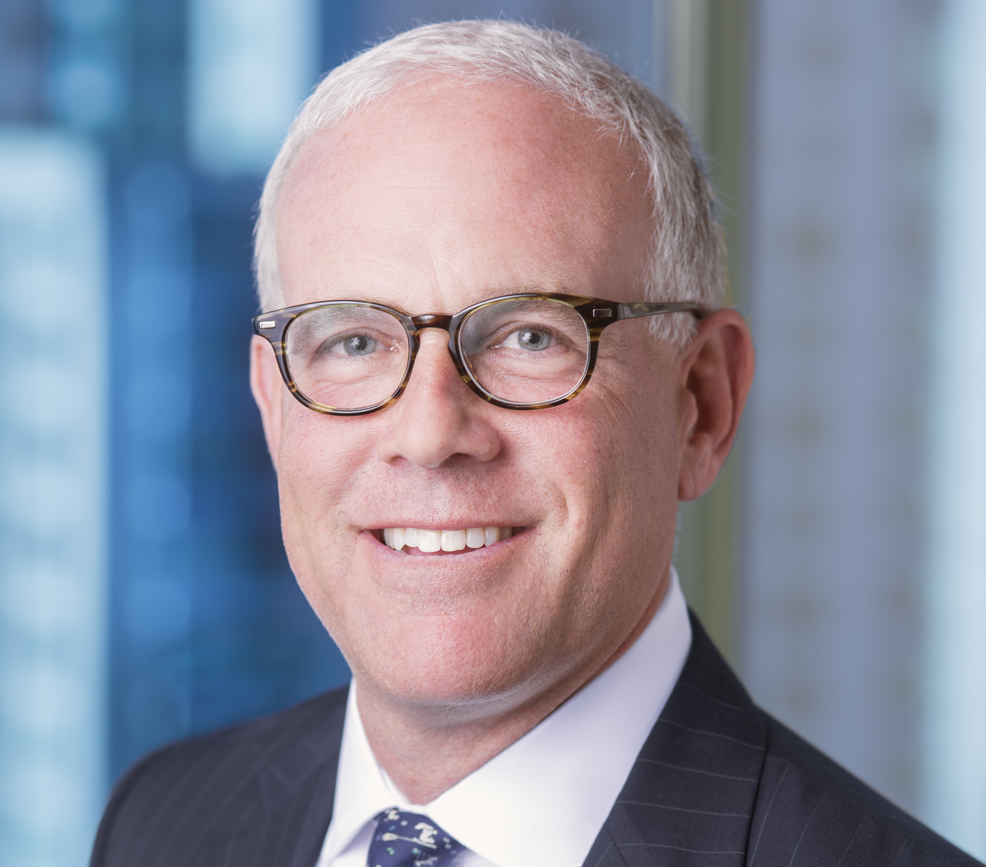
Spotlight On: Gregory Stuart, Executive Director, Broward Metropolitan Planning Organization

By Max Crampton-Thomas
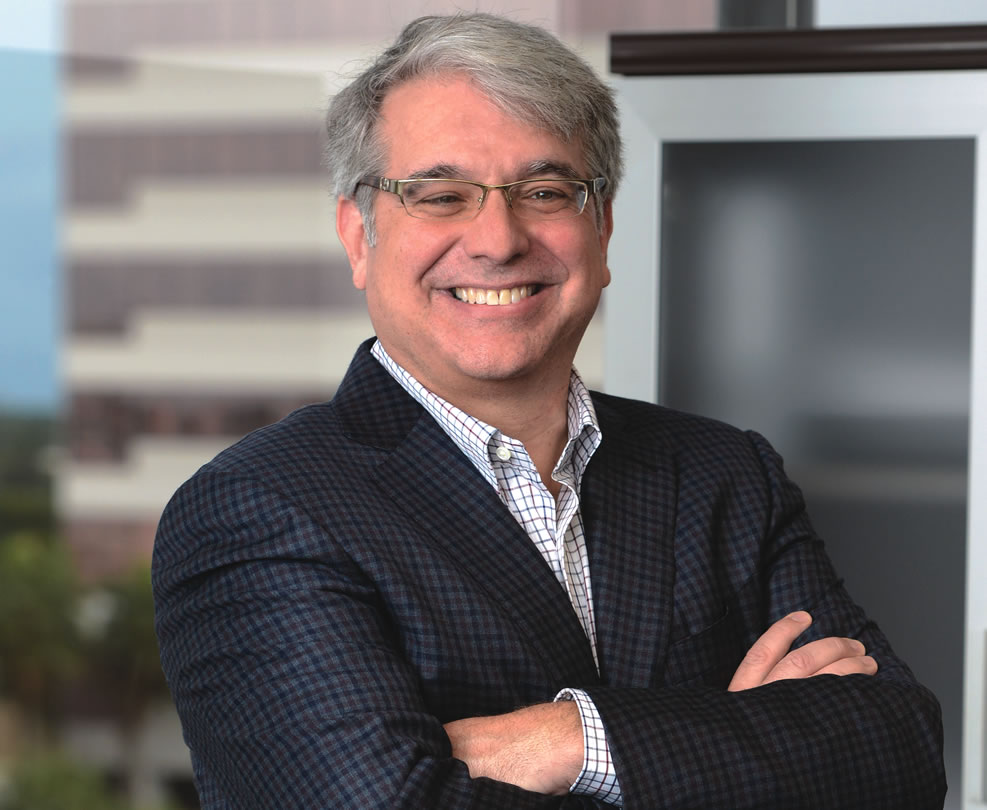
 

2 min read August 2019 — Almost a billion dollars a year are spent on transportation in Broward, and as the region continues to grow so will this number. With so much money being funneled into transportation, there must be an overseer to decide how to disperse these federal funds. This overseer is the federally-mandated agency The Broward Metropolitan Planning Organization. Invest: Greater Fort Lauderdale recently spoke to Executive Director of the MPO Gregory Stuart, who discussed how the passage of the penny sales tax will help fund new transportation initiatives, the more immediate changes Broward will see thanks to the sales tax and the challenges facing transportation in the county. 

What have been Broward MPO’s most significant highlights over the last year? 

There have been three. The first is possibly the most significant, which was the passage of the penny sales tax that added $350 million a year to our annual budget. We spend about a billion dollars a year on transportation in Broward, so adding this $350 million is a substantial increase in transportation spending for our region. Second, was the municipal portion of that sales tax, which was one of the most significant items to be included in the penny sales tax. While we can talk about the large-scale projects that the sales tax will generate for the region, the impact of 23% of that money being dedicated to our municipal partners to build quality of life improvements when it comes to the transportation system is going to be key. It will provide those dedicated funding sources for our community shuttles, which folks use to go to the grocery store, appointments and other short distances. Third, was the implementation of the quiet zones for the FEC and CSX tracks here in Broward. While this didn’t necessarily improve the overall condition of transportation, it improved the quality of life for the residents along both of those corridors. 

What will be some of the more immediate changes due to the passage of the penny sales tax for transportation? 

Realistically, the immediate changes aren’t going to result in construction. We are focusing on enhancing the traffic signalization program. This includes coordination between traffic lights and people’s vehicles through the installation of smart communication equipment. Another immediate change that has happened already but which we’re not going to notice for about another year, is the county transit agency’s purchase of another 130 buses. Considering they are operating a fleet of about 300 buses right now, this is a one-third expansion and a significant increase in the bus system. 

What are some of the biggest challenges facing transportation and transit in Broward County?

The biggest challenge that we face is just trying to get everybody on the same page, whether it is a local government, the county government, the state government, the federal government or homeowners and business associations. It can be a very difficult task, but it can be done. We are working to strengthen the relationship between the three counties: Miami Dade, Broward, and Palm Beach. They all need to be talking to one another if we are going to make real positive change when it comes to transportation needs across South Florida. 

To learn more about our interviewee, visit:

http://www.browardmpo.org/

Spotlight On: David Gwynn, District Seven Secretary, Florida Department of Transportation

Writer: Max Crampton-Thomas

2 min read July 2019 — Challenges with transportation, traffic and transit options are not new issues for the Tampa Bay region. As the area continues to make strides in its economic and population growth, there is a heightened emphasis on finding solutions. Invest: Tampa Bay recently sat down and discussed these issues with David Gwynn, District Seven Secretary for the Florida Department of Transportation. Gwynn spoke about how FDOT is working to mitigate these challenges, enact forward-thinking initiatives and his outlook for transportation in Tampa Bay for the next year.

What is the biggest initiative for Florida Department of Transportation in District 7? 

We have been working on a program called Tampa Bay Next. Over the last two and a half years, we have had hundreds of public meetings with big and small interest groups, elected officials and general members of the public, which we used to gather some great input. A key issue that we identified was transportation. Although we recognize that our interstate needs some work, there are other areas, like the downtown interchange, where infrastructural improvement would have a pretty massive impact on the surrounding neighborhoods. As a result, we are focusing on ways we can improve transit and intersections in those areas to help make them safer, while also not requiring a significant expansion of the highway footprint.

How are you working to mitigate the traffic issues in the region? 

We have come to the conclusion that simply widening and continuing to build more roads is not going to completely mitigate this issue. We have shifted our efforts to also look at multimodal solutions, like the streetcar system in downtown Tampa. Until last year, it was underutilized, but we recognized that this could be a good part of a transit system. The question was how to make it more attractive for people to start riding it. What we found was because there was not a lot of local money to fund it, it was only running from 11 in the morning until 8 at night. We were able to get a grant to allow the streetcar to run from 7 in the morning until 11 at night and on a more frequent basis. The ridership has since tripled, and that is important because we now have a strong case for the federal government to invest in expanding that streetcar system further out into Tampa Heights. If we can get federal funding, they will put 50% of the cost in, the locals put in 25%, and then our department covers the last 25%. 

What is the outlook for the transportation sector in Tampa Bay for the next year?

The passage of the sales tax in Hillsborough County was a big step forward because the local money allows us to do things with state and federal matching money. We will start to see an increased frequency of buses, better stations and more opportunities to expand the systems. On the highway side, we continue to build road and safety improvements. Four hundred of our signalized intersections that had the highest number of crashes are in the process of receiving new LED lighting that will illuminate these intersections at night much better than they have been. We are going to start the Howard Frankland Bridge project, and the Gateway Expressway will probably be completed in another two years. 

To learn more about our interviewee, visit:
https://www.fdot.gov/home

Young Atlanta Forcing Real Estate Disruption

By Sara Warden


2 min read July 2019 — As demographics change, so does the way real estate is purchased. With a host of disruptive real estate companies entering Atlanta, such as Zillow, Redfin and Opendoor, all with their own added value, legacy real estate companies need to keep up.


Realogy, owner of Coldwell Banker, Century 21 Real Estate and Sotheby’s International Realty, has teamed up with none other than Amazon to tap into the younger generations and provide a new kind of real estate offering.

According to data from the 2017 American Community Survey carried out by the Census Bureau, Atlanta’s median age is 33.3 years. The largest demographic group is the 20-29 bracket, composing 21% of Atlanta’s residents, followed by the 30-39 group that makes up a further 17%. Only around 17% of the population of Atlanta is over 59 years old.

This is one reason why Amazon and Realogy chose Atlanta as one of the 15 cities to participate in the TurnKey service.

“Customers can be overwhelmed when moving, and we’re excited to be working with Realogy to offer homebuyers a simplified way to settle into a new home,” Pat Bigatel, director of Amazon Home Services, said in a statement. “The Amazon Move-In Benefit will enable homebuyers to adapt the offering to their needs — from help assembling furniture, to assisting with smart home device set up, to a deep clean, and more.”

The Amazon Move-In Benefit refers to up to $5,000 in Amazon products that come free with the purchase of a home through the platform, depending on the value of the purchase. For Realogy, the partnership adds value to its brand – its stock price jumped 20% the day the alliance was announced after having fallen from $48/share to $6/share over the prior four years.

For Amazon, the investment is practically risk-free. Realogy shoulders the cost for the program, allowing Amazon to drive traffic to its Home Services division in exchange for Realogy’s access to Amazon’s powerful platform. “For Amazon, this is a free way to experiment with attracting customers,” wrote Brad Berning, an analyst at research company Craig-Hallum.

Other platforms also see the value in Atlanta. This month, Zillow ranked it fourth-best as a location for first-time homebuyers to invest in real estate and earlier this year announced it was looking to establish its regional headquarters for Zillow Offers in the city.

“The area checks a lot of our boxes in terms that it is a well-connected part of the region, easily-accessible, and the talent pool is strong for both real estate professionals and tech talent,” said Zillow spokesperson Viet Shelton in an interview with Hypepotamus. “It just makes a lot of sense for a venture like Zillow Offers, which is trying to redefine and make (the experience) incredibly seamless for the consumer.”

Zillow Offers, a similar concept to Atlanta-based startup Knock, aims to tap into the hassle-free aspect of moving house and simultaneously find a new home for those selling on the platform. Since it was established in 2017, Knock has raised $400 million in equity and debt funding as it aims to expand nationally based on its Atlanta success.

As the Atlanta seller’s market transitions to a buyer’s market, it seems Amazon, Zillow and the others have found the sweet spot in between that favors all kinds of investment. “Some real estate experts say that if you’re going to enter this market, 2019 is the year to get it done,” said digital media strategist Brandon Barker in a blogpost for Roofstock.

Spotlight On: Brett Forman, President & CEO, Trez Forman Capital

By Max Crampton-Thomas


2 min read July 2019 — The demand for residential and commercial real estate development in Palm Beach County is at a high, and developers are jumping at the opportunity to capitalize. This spike in demand has not only been beneficial to developers but also to those who are helping fund this development. Invest: Palm Beach recently sat down with Brett Forman, President and CEO of Florida-based, commercial bridge lender Trez Forman Capital. He discussed how Palm Beach County is uniquely positioned for real estate development, and how his company is benefiting from the boom in the market.

Where are you seeing the highest demand for your services? 

We experience the highest demand from developers of condominiums or multifamily rental apartments. There are a variety of financial firms pursuing these type of deals, but we offer something slightly different. We’re competing with banks every day, and we’re competing with more traditional mezzanine players and preferred equity investors. As a result, we have to be creative and offer a unique one-stop shop, including higher proceeds than the banks and non-recourse options. 

How is Palm Beach County a unique market for real estate development? 

Palm Beach County is home to some of the most expensive residential real estate in the world. On the opposite end of the spectrum, it’s also home to some of the poorest areas. So when you talk about Palm Beach real estate, you’re talking about a very diverse asset mix.

Trez Forman is more or less asset-agnostic; we lend against residential real estate, whether it’s apartment communities for rent, single-family houses for rent or condominiums for sale. We don’t necessarily construct homes, but we finance the lot on which developers do the horizontal development. 

What differentiates Trez Forman Capital from a traditional bank? 

It’s very easy to understand what differentiates us from the banks, since the banks are highly regulated. They have to do things according to what the regulatory agencies prescribe, and their leverage is usually much lower and typically requires recourse. What we’re offering is a much higher loan-to-cost solution. Trez Forman basically can take what the bank and the preferred equity investor offers and combine it to provide our clients with a one-stop solution that has surety of execution. We like to under-promise and over-deliver. We can fund a deal in 30 to 45 days, unlike a bank that may not be able to lend in that timeframe.


To learn more about our interviewee, visit its website:

https://www.trezforman.com/

Top 5 Trendiest Neighborhoods in Fort Lauderdale

By Max Crampton-Thomas


2 min read July 2019 The growth of the Fort Lauderdale area is a true testament to the collaborative efforts of the city’s private and public sectors. The positive effects of this growth can be witnessed in the development, redevelopment and preservation of the city’s neighborhoods. 

Here, Invest: Greater Fort Lauderdale explores Fort Lauderdale’s five trendiest and up-and-coming neighborhoods.

Victoria Park: A beautiful mix of traditional “Florida” homes and new development, Victoria Park has long been a staple neighborhood in Fort Lauderdale. The revitalization of the area is thanks to its close proximity to Fort Lauderdale Beach, Las Olas Boulevard and cultural centers like the Broward Center for the Performing Arts. 

Invest: Greater Fort Lauderdale spoke with Doron Broman, managing partner of Moderno Development Group, about its investment in the development within Victoria Park. “We are tapping into the near downtown areas because more people are seeking to live in more walkable areas, where they need to spend less time commuting to work and experience a more urban lifestyle,” Broman said. “We are building very modern, urban townhouse rental communities in trendy Victoria Park.”

Tarpon River District: Located just north of Davie Boulevard and west of Andrews Avenue, Tarpon River District is a neighborhood whose appeal is thanks to its proximity to downtown Fort Lauderdale and emphasis on family life. With a recent influx of mixed-income homes and apartments, access to some of the cities best parks and the locally famous Tarpon River Brewing company, this neighborhood will continue to be a top choice of young families. 

“We are keen on Tarpon River District, which we believe is the new cool work-live-play hub, located right in the center of Fort Lauderdale,” Broman told Invest:. 

Flagler Village: Twenty years ago, this neighborhood was a rundown warehouse and residential district. Today, Flagler Village is one of the trendiest areas in Fort Lauderdale. The collaboration between artists and developers has transformed the neighborhood into a premier arts district with offerings of luxury rental apartments, restaurants and arts and culture. The Village is also home to the Brightline train station, which supplies a steady flow of traffic into the neighborhood daily. 

“Many developers have looked to the beach and Flagler Village areas in Fort Lauderdale. We are also invested in Flagler Village,” Broman said

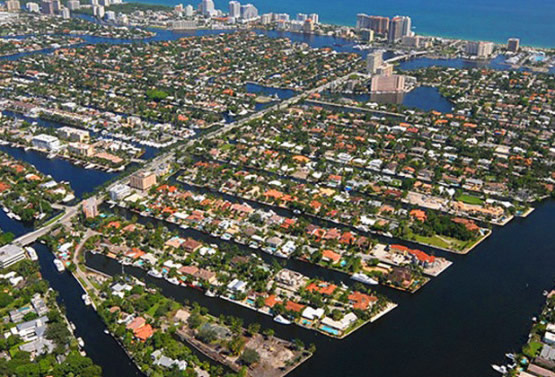
Las Olas Isles: Due to its proximity to Las Olas Boulevard and Fort Lauderdale Beach, Las Olas Isles is the perfect mix of retail, restaurants and a coastal lifestyle. Luxury living like this comes with a hefty price tag. Homes in the area range from $1 million to $40 million and rental units are in the thousands. 

Colee Hammock: Not only is this one of the oldest neighborhoods in Fort Lauderdale, it is also one of the most diverse and eco-conscious in the city. Situated next to the Intercoastal Highway and the New River, Colee Hammock offers residents a wide variety of homes and walkability to theaters, restaurants, retail and entertainment venues. This eclectic neighborhood is home to a wide demographic, from the working class to the wealthy. 

Invest: Greater Fort Lauderdale discussed development in Colee Hammock with Andrew Verzura, principal of VCM Builders, Inc. “We are working on a residential project in Colee Hammock, a historic neighborhood in Fort Lauderdale established in 1913. We are constructing a home that is being built around some of the area’s oldest and mature foliage. This is a neighborhood that has a special relationship and respect for the nature within it.” 


For more information visit:

http://vcmbuilders.com/

https://www.modernodev.com

Orlando Welcomes Mixed-use University City

by Sara Warden

2 min read July 2019Right now, students all over the world are enjoying a long summer break. But when summer ends in the fall, 7,700 UCF and Valencia College students will be returning to classes at a new state-of-the-art 68-acre development called Creative Village.

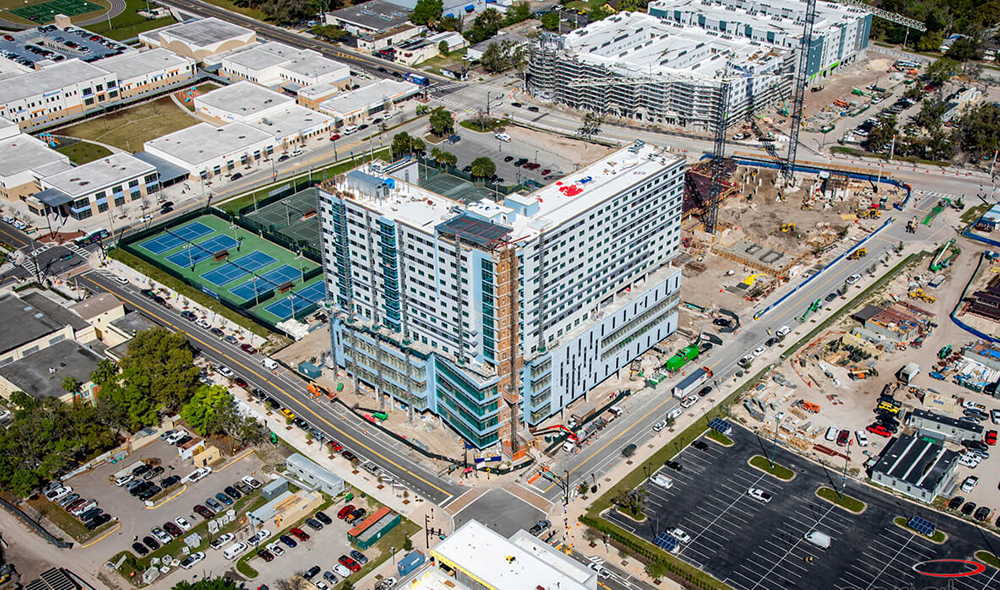
A $1-billion public-private partnership, Creative Village is designed to become a minicity in the heart of Orlando’s downtown. The campus will host more than 20 UCF academic programs, including communication, digital media, legal studies, healthcare technology and healthcare management. Valencia College will offer programs in digital media, health information technology, culinary studies and hospitality.

The centerpiece of the campus will be the Dr. Phillips Academic Commons, designed by architects Robert AM Stern and SchenkelSchultz. UK-based contractor Skanska is responsible for the development of the $66 million building. The 580-space, four-story, $14.6 million parking garage will be installed with license plate recognition technology and electric charging stations. State-of-the-art student accommodation will be provided by Ustler Development and DEVEN in the form of UnionWest, a 15-story building with over 600 beds and retail spaces.

The new campus has been in the works for the last four years but it is not just students who should be interested in the development. For local companies, the business of education can be a lucrative one. Not only will Creative Village host the campus, but it will eventually become a massive mixed-use district with 1.2 million office spaces, 1,500 residential units and 225 hotel rooms.

According to the Assistant Vice President of the new campus, Mike Kilbride, the goal was to offer students integration, convenience and walkability. “You go to the legal studies example and we’re just a five-, six-minute walk to the courthouse. So, students have the opportunity to intern while they’re in their courses,” he told Click Orlando.

Sunrail and Lynx buses have established a partnership with the campus, allowing students and staff to ride free of charge. “That allows students with their student IDs to ride Lynx buses for free, so there’s a lot of great options for our students and faculty and staff to connect with this campus if they want to leave their car at home,” Kilbride said.

As the campus becomes more walkable, the need for convenient retail outlets becomes more pressing. According to Wells Fargo research, the average spend of students per year on basics like accommodation, books, transport, clothes and food comes to around $14,960. When considering the students alone, that’s a $150-million gold mine for local vendors just waiting to be tapped into.

Just last week, UCF Downtown announced sushi restaurant Vera Asian would be joining the ranks of Dunkin’, Qdoba, Subway and many more as vendors at the campus. The development will also generate jobs for hundreds more custodial workers, security guards, maintenance workers, IT support workers and others.

“We’re not just talking about transforming a city, we’re talking about transforming lives,” said City Commissioner Regina Hill, who represents west downtown Orlando, at a meeting with the Florida Board of Governors.

“It’s terribly exciting to have 7,000 students in our downtown. That’s going to change the complexion of downtown forever for the better,” Orlando Mayor Buddy Dyer told News 6.

No Slowdown in Sight for Miami Construction

By Yolanda Rivas

2 min read JULY 2019— Employment in the U.S. construction sector continued to trend upward last month, with the addition of 21,000 new jobs, according to data from the U.S. Bureau of Labor Statistics (BLS). The strength in the sector, reflected also in the latest Miami regional data, suggest the industry is not slowing as quickly as projected.

According to the most-recent BLS data for Miami, the construction industry added 5,100 jobs in May, a 3.7% year-on-year increase and above the 2.8% national figure for that month. The numbers aren’t surprising, given the amount of development in the Miami area.

“What has been impressive to me over the last year is the number of projects we have under construction,” Andrew Burnett, senior principal at Stantec Architecture, told Invest:. “We have around 26 to 30 projects that are either in construction or looking to start construction next year. A large percentage of them are mixed-use residential, and we’re not only providing architecture and interior design services but often engineering and MEP (Mechanical, Electrical and Plumbing) as well.”

As stated in Invest: Miami 2019, residential development remains the top driver of construction in Miami. Although there has been a slight slowdown in the condo market, some experts expect the strong performance to continue.

“I see the right projects and developments continuing to thrive,” Manny Varas, president and CEO of MV Group, told Invest:. “Buyers are taking their time to make better decisions. They’re seeking out developers with strong track records as well as the quality of interiors and finishes that they’re looking for and can count on,” he said.  

In 2018, Miami ranked among the Top 10 U.S. metropolitan areas for commercial and multifamily construction starts, according to Dodge & Data Analytics. The construction in Miami’s residential real estate is characterized by the trend of continued foreign investment in high-profile luxury condos.

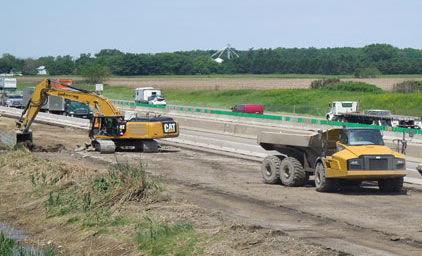
Another area with strong demand is infrastructure construction, according to Luis Lugo, Hill International’s senior vice president and regional manager for the Southeast U.S. and Latin America. For example, Miami International Airport and Fort Lauderdale International Airport, will soon start major expansion and modernization projects and the Miami-Dade Transit SMART program is expected to start construction activity soon. 

“We also do a lot of work with the hospitality industry. We’re building about a dozen hotels throughout the region. That’s a big market for us, and it’s a space in which we excel,” Lugo said. 

Despite speculation about a national economic slowdown, the outlook for Miami’s construction sector is positive. “The market will continue to be strong. A little slowdown is expected, but construction is going to pick up in 2019 and beyond,” Lugo said. 

To learn more about our interviewees, visit their websites:

Stantec Architecture: https://www.stantec.com/en/services/architecture-interior-design 

MV Group: https://www.mvgroupusa.com/ 

Hill International: https://www.hillintl.com/en 

No Stopping Tampa Tourism Rocket

Max Crampton-Thomas

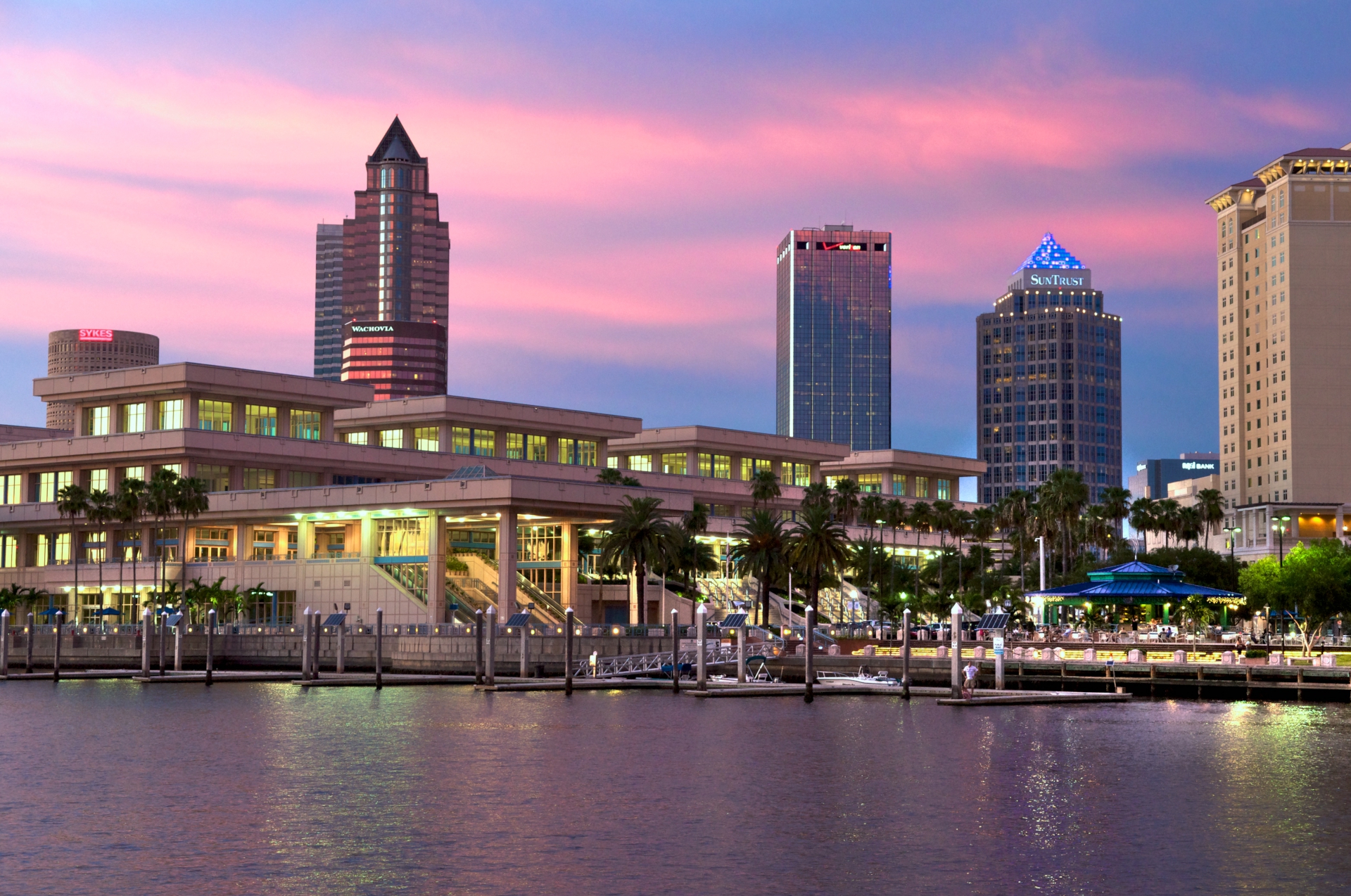
2 minute read July 2019 — Quite often when the city of Tampa Bay is mentioned it is in the context of how rapidly the area is growing both in population and economically. The boom Tampa Bay is experiencing can be attributed to a great many things, including a bustling tech sector, a revolutionary healthcare market and first-class educational institutions. Perhaps most influential in all this growth, however, has been the economic rocket that is the city’s tourism sector. Tourism in Tampa Bay has steadily risen year after year, and with events like Super Bowl LV and Wrestlemania 36 on the horizon, that trend shows no signs of slowing down.

The spike in tourism to the region has not been by chance. Rather, it can be attributed to the focused and deliberate efforts made by local businesses, government and community organizations. Invest: Tampa Bay recently spoke with Santiago Corrada, the president and CEO of Visit Tampa Bay, about the record year the city had in 2018. “We had an incredible end to the 2018 calendar year. It was another record-setting year for hotel revenue, which is phenomenal given that we have had record-setting years every year since 2014. We ended 2018 at $673.5 million in hotel taxable revenue, which was almost 5% higher than the previous year at $644 million. This is important for us because anytime a county hits $600 million in taxable revenue, it is granted the designation of a high-impact tourism destination. We have been able to reach that designation for two years in a row, and this year was even more important because our county commission just approved a rise in the tourism tax from 5% to 6%, which is the highest that any county can collect.” The growth in tourism throughout Tampa Bay also has a spillover effect. As demand increases and new attractions open they bring with them fresh job opportunities for local residents.

To sustain momentum and build on these milestones, Corrada says that attracting new hotels to the city makes sense. “There are certain big-name, five-star brands we do not have in Hillsborough County, and as the business plan makes sense to add these properties then we will. These new properties will yield different business groups and markets for the region. We have to continue to capitalize when we have an opportunity to expand our reach, refresh our brands and to always have something new to bring visitors back,” Santiago told Invest. “That’s why new developments like the Tampa Riverwalk are so important, why food halls are so important and why Busch Gardens updating and adding its roller coasters is significant because it gives people a reason to want to come back to Tampa Bay. Sustainability in this industry has to do with still being aggressive and still going after it.”

Tampa Bay is quickly becoming a premier, must-visit destination in Florida. Tourism in the city of Tampa Bay shows no signs of slowing down, and due to the efforts of organizations like Visit Tampa Bay will likely reach new heights in 2019. 

To learn more about our interviewees, visit their websites:

https://www.visittampabay.com/

Spotlight on: George Cretekos, Mayor, City of Clearwater

Writer: Max Crampton-Thomas

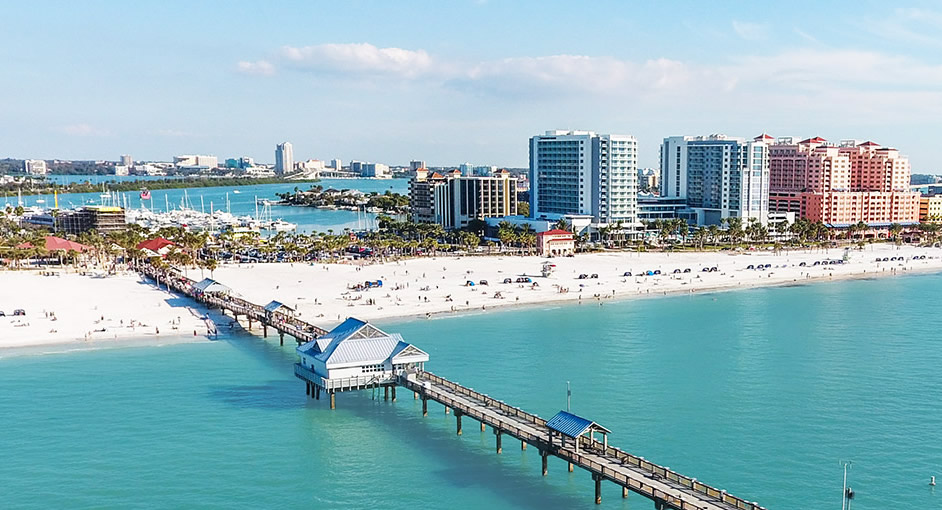
2 min read JULY 2019 — For the second year in a row, Tripadvisor awarded Clearwater  the distinction of having the best beach in the country. This comes as no surprise to the city’s 115,000 residents, who have long been stewards of their environment. With the population in the Tampa Bay region growing, that stewardship becomes even more important. 

Invest: Tampa Bay recently sat down with Mayor George Cretekos, who is on the verge of completing his second term. He discussed how the city is handling population growth, the challenges associated with it and how residents are at the forefront of environmental sustainability in Clearwater. 

How are Clearwater residents supporting environmentally sustainable practices? 

As I complete my second term, I appreciate how our residents and businesses have, on their own initiative, promoted sustainability and environmental stewardship.  Before there had been any talk about governments banning single-use plastics in the region, Clearwater’s businesses had started their own programs to stop using plastic straws. It is now common to find many restaurants in Clearwater that do not offer plastic straws or styrofoam to-go containers. This is a testament to how our residents are promoting sustainability and being good stewards of the environment.

How is the region handling the recent increase in population growth?

The region must have smart growth to make sure we are not only taking care of the environment, but also guaranteeing accessibility for our residents and visitors. We continually hear that we have traffic problems and at certain times of the year those problems can be exasperating. The population in this region needs to adapt to using alternatives like public transportation, which can be a better option than building more roads. We should model our transportation efforts to be like that of other major cities where reliable public transportation is an alternative.

What are the biggest challenges facing the city of Clearwater? 

Transportation and affordable housing are the two biggest concerns for the Tampa Bay area. A large percentage of the employees in Clearwater does not live in the city; if we can help provide affordable housing for these employees then the transportation problems could be eased. These individuals would not have to commute long distances into Clearwater, which in turn would help clear a significant amount of congestion on the roadways and emissions. My fellow mayors in the Tampa Bay region have realized that we may be separated by a body of water, but that doesn’t mean that our interests don’t run parallel. When one city does well then we all do well, so we should be working together to solve these issues.

To read more about our interviewee, visit: 

https://www.myclearwater.com/home