Tourism in Orlando pushing forward despite rise in COVID-19 cases

Tourism in Orlando pushing forward despite rise in COVID-19 cases

By: Beatrice Silva

2 min read July 2020 — It has been almost six months since the World Health Organization declared the novel coronavirus a pandemic. Within days, each sector of the economy had to discover new ways to keep businesses afloat despite being forced to close their doors. Unlike banking and technology, tourism relies on almost every aspect of life that is now restricted, like travel and face-to-face interaction. For cities like Orlando, tourism is a major factor in the economy, to the tune of $75 billion a year.


 Tourism supports an estimated 41% of Orlando’s workforce. Around 463,000 jobs have been affected and millions of dollars worth of wages are being lost each day during the area’s local tourism shut down. Tourism also accounts for $5.8 billion in state and local taxes, finances which go to support local schools, roads and other crucial services, according to Visit Orlando. The city’s resilience, however, is proving that it is not going to let a microscopic organism bring it down as tourism continues to push forward.

Although the hotel industry has been wrestling with obstacles caused by COVID-19, activity in that area is starting to gain traction again. One example is the development of a five-star convention hotel that was recently announced. Summa Development Group LLC has proposed a 33-story project in Thornton Park and the construction is expected to begin sometime next year, according to Orlando Business Journal. As for the big players like Walt Disney World, SeaWorld and Universal Studios, they too have begun to jump-start their operations. Disney’s Hollywood Studios and Epcot officially opened on July 15. Universal Studios welcomed guests back to its park on June 5, after almost two and a half months of closure. Of course, the theme parks will each have their own updated operational guidelines, including mandatory face coverings, temperature checks and social distancing regulations.  

When we first made the decision in March 2020 to close Universal Orlando Resort in response to the coronavirus pandemic, we didn’t know how long it would be for. We didn’t know what the future held or what a reopening would entail … Getting us here has been an in-depth process, and I am incredibly proud of the ways our Team Members have listened to experts and implemented new operational guidelines for the safety of our guests. At Universal Orlando Resort, we are following what we’re calling the three Ss. That’s screening, meaning we’re taking everybody’s temperature before they enter; sanitization, because we are constantly sanitizing areas and high-touch surfaces in the parks; and spacing, providing markings and reminders throughout our resort so guests can socially distance themselves from other parties,” said Bill Davis, president of Universal Orlando Resort, in a welcome back letter. 

It’s safe to say that tourism is the bloodline of Orlando’s economy. While there is hope for a new beginning and a new normal after the pandemic, the city isn’t in the clear just yet. Despite every attempt by public officials to stop the spread of the novel coronavirus, cases continue to surge and hospitals are starting to fill up. On July 19, Florida reported 10,328 new positive COVID-19 cases and 90 Florida resident deaths related to COVID-19. Orlando has been listed as the second highest city, behind Miami, with the most confirmed number of COVID-19 cases, according to The Florida Department of Health


Cruise industry sailing into unknown waters due to pandemic

Cruise industry sailing into unknown waters due to pandemic

By: Max Crampton Thomas

2 Min read July 2020 This year has been nothing short of a disaster for the cruise industry, and for PortMiami this has presented some major challenges. Coming into 2020, expectations could not have been higher for the “Cruise Capital of the World” as it came off a record cruise year, reporting a 22% increase in cruise passenger totals for the 12-month period that ended on Sept. 30, 2019. With multiple port terminal expansion projects on the horizon and continued strong support from the county, it appeared as though the sky was the limit for the cruise industry in Miami-Dade. 


This all rapidly changed as the COVID-19 pandemic began to spread throughout Florida, severely impacting the local community and economy of Miami-Dade County. On March 14, 2020, the Center for Disease Control and Prevention (CDC) issued the “No Sail Order,” preventing all cruise ships in the United States from normal cruising operations. This order has since been extended, first in April 2020 and most recently on July 16. Now with the order in effect until at least Oct. 1, 2020, the once bright outlook for Miami-Dade’s cruise industry now looks dark. 

Due to the challenges presented by the pandemic and with the industry still on hold, some South Florida-based cruise organizations are rethinking their business strategies and expansion plans. One such company is the Miami-based Norwegian Cruise Line Holdings Ltd, which announced on July 16 that it was launching an underwritten public offering of $250 million worth of ordinary shares. As reported by Bizjournals, the net proceeds from the offering would be used for general corporate purposes. 

While NCL is offering shares in its company, other cruise organizations are working with the county to look at restrategizing terminal expansion and development plans at PortMiami. After a vote on July 14 by the Miami-Dade County Tourism and the Ports Committee, plans were set in motion to negotiate a revised scope of work for two terminal projects at PortMiami. One of these terminal projects is that of Broward-based MSC Cruises, which would look to benefit from these negotiations as an extended timeline would allow it more time to secure the proper funding for its $300-million project. The other project under discussion in these negotiations is the Terminal V project at PortMiami belonging to Virgin Voyages. The company, in collaboration with the county, is working toward finding a way to reduce the cost of the $179-million project. 

Although the cruise industry may be at a standstill, PortMiami is weathering the economic storm of the pandemic due in large part to cargo and trade business. While it prepares for the eventual return of the cruise industry, the port and county have continued to support these organizations in a variety of ways. On March 13, Mayor Carlos Gimenez announced that PortMiami would be waiving berth fees for 30 days, which has continued to be extended throughout the pandemic. The Miami-Dade County mayor has remained steadfast on the county’s support of the cruise industry. “Our partnership with the cruise industry is stronger than ever, and we will continue to offer our support,” Mayor Gimenez was quoted as saying. 


Palm Beach education leaders assess 2020-21 academic year

Palm Beach education leaders assess 2020-21 academic year

By: Felipe Rivas

2 min read July  2020Forced to switch from in person learning to remote instruction seemingly overnight, Palm Beach education leaders are now planning the reopening of county campuses as the 2020-21 academic year nears its August start date. The reopening of public schools has been a contentious topic among parents, policymakers and educators, all of whom have different visions for the reopening process. 

The Palm Beach County School Board convened on Wednesday to discuss what the reopening of county public schools could look like under the coronavirus landscape. The Palm Beach County School Board is likely to approve its reopening plans, which will feature a mixture of distance education and a phased reopening process, according to the Sun Sentinel. With this approach, the youngest of each grade category will be among the first students to return to the classroom, along with those students with special needs. This would include students in pre-K, kindergarten, first grade, sixth grade and ninth grade, the paper reported.     

Further complicating the difficult reopening process, many teachers and parents fear that opening campuses would not be safe given the recent spikes in cases and Florida’s standing as the epicenter of coronavirus cases worldwide. Florida has reported 301,810 cases of the virus and 4,521 deaths as of Wednesday, according to the Johns Hopkins Coronavirus Dashboard. 

Not everyone is on board with strictly online classes, either. Some Palm Beach County parents gathered in front of the Palm Beach County School District’s headquarters on Monday to protest school officials’ decision to bar students from campuses and deliver only online classes at the start of the new school year. Among the parents’ chief concerns are the needs of students with disabilities, or those struggling with the online learning environment, and the needs of parents who have to choose between working or taking care of their children, the Palm Beach Post reported. 

According to the Palm Beach County School Board’s agenda, Palm Beach County Public School Superintendent Donald Fennoy is recommending “starting the school year with distance learning for all students and allowing for a phased return to brick and mortar in-person instruction when county health conditions permit.”

At the university level, institutions like Florida Atlantic University are also likely to begin the school year with an emphasis on remote learning while enforcing mask measures and strict social distancing rules for students and staff present on campus. Florida Atlantic University President John Kelly announced in late June that the university’s fall 2020 reopening plans were approved by the State University System of Florida Board of Governors. The school’s 25-page plan features the requirement of face coverings, with most classes remaining online, including classes with more than 50 students and all graduate-level courses, according to the university. Classrooms are to remain at 25 percent capacity and faculty, staff, and students will be required to observe social distancing measures while in the classroom.

Each of the state’s 12 public universities was required to file such a plan. School leaders still have to submit their reopening plans to the Florida Department of Education for final approval by July 31, 2020.

For more information, visit: 

https://fau.edu/

https://www.palmbeachschools.org/

Fort Lauderdale company develops another layer of COVID-19 protection

Fort Lauderdale company develops another layer of COVID-19 protection

By: Beatrice Silva 

2 min read FORT LAUDERDALE — It has been nearly five months since COVID-19 became a pandemic and initiated its assault on the world. On March 13, the United States declared a national state of emergency. Within weeks, local economies were in decline. Millions of people quarantined themselves in the safety of their homes. As the months went on, county officials began to loosen restrictions on non-essential businesses and people slowly started to emerge from the lockdown. What materialized on the other side was a completely new way of living. Wearing a mask inside establishments, waving hello instead of greeting people with a handshake and keeping a safe distance have become the new normal. With that being said, more and more people are looking for additional ways to protect themselves from the novel coronavirus. Veloce BioPharma LLC, a Fort Lauderdale-based company, has raised $2.3 million in equity financing to help scale up manufacturing of its COVID-19 nasal antiseptic and mouth rinse, according to the Philadelphia Business Journal. 


Veloce paid homage to its roots by naming its two over-the-counter products after the company it originated from, Halodine. “This is the first iodine-based antiseptic that has ever been shown to have activity against the virus that causes Covid-19,” Dr. Jesse Pelletie, CEO of Veloce and Halodine, said in a news release. The antiseptic contains a polymer-enriched povidone-iodine, which is non-toxic to sensitive areas of the body like the eyes, mouth and skin. 

The spread of COVID-19 most commonly occurs through respiratory droplets produced when an infected person coughs, sneezes or talks. Those viral aerosols and droplets can remain infectious for up to three hours. Although face coverings are suggested by the CDC to help prevent the spread of the virus, all masks are not created equal. The N95 has been proven to effectively prevent viral spread. However, even the most prestigious hospitals are having trouble obtaining them. A  cloth mask, most commonly worn by the average person, allows air in around the sides. “Masks aren’t enough,” said Samuel Barone, Chief Medical Officer of Veloce BioPharma to the Philadelphia Business Journal. “The world is going to be a different place. We are seeing a changing recognition and a new normal with infection control. There’s never been anything before that could bring economies to a screeching halt like COVID-19 has.”

Even though thousands of companies have adjusted their business to allow their employees to work from home there are still obstacles to overcome. For workers who have to be physically present at their jobs, undergoing a bi-weekly COVID-19 test could become a normal activity but companies should be mindful of the type of test they ask their employees to take. A molecular test is done with a simple nasal or throat swab and it can identify if a person has been infected within three to five days. Antibody tests, on the other hand, can help identify who has already been exposed to COVID-19 to reduce the need for any future testing. 

“The good news is that we’ve been synthesizing a lot of information to come up with simpler, more digestible rules, approaches and strategies that we can use to take the important steps to help people get back to their workplaces… We’re continuing to learn more about these tests and how to interpret them. We’re also gaining more experience with how to use these tests in work environments,” Dr. William Shrank, chief medical officer for Humana, told the South Florida Business Journal.  


Startup ecosystem has a new Silicon Valley: Philadelphia

Startup ecosystem has a new Silicon Valley: Philadelphia

By: Beatrice Silva

2 min read July 2020The term “startup” may bring to mind a group of motivated mid-20-year-olds huddled together in a high-tech office somewhere in Silicon Valley. However, the southern part of San Francisco Bay is no longer the only hotspot for young, ambitious people. The Philadelphia Business Journal recently reported that Philadelphia has one of the top emerging startup ecosystems in the United States, according to a new study from the Startup Genome. Although startups are often small enterprises, the role they play in economic growth is extensive. With new entrepreneurs come new ideas, new innovations and new competition for bigger corporations. 


While all startups have the ability to transform into a big business, there are many differences between the two. Along with having different visions for growth and sustainability, startups also tend to have a unique relationship with funding. Unlike a traditional business, startups often rely on capital from outside investors or venture capital firms. Running out of money is the second-most common reason for a startup’s failure. An estimated 29% of startups fold because they ran out of cash, according to CB Insights. With that being said, more and more entrepreneurs are opening up shop in Philadelphia because it has a diverse population, an urban atmosphere and most importantly affordable rents. 

“People who do tech startups in Philly still feel that giddy sense of wonder and magic that comes from starting something totally new. We don’t take it for granted. We still feel lucky and grateful to be doing what we’re doing. We’re scrappy. Philly tech is the way I imagine Silicon Valley must have been before the personal computer boom, the first internet boom, and the second internet boom made startup success feel like a foregone conclusion. In the Valley, most employees don’t remember those days. In America, we’re used to thinking of the East as the past and the West as the future. But when it comes to tech, the tables are turned. The Valley is experienced and satisfied. Philly is young and hungry,” Michael Idinopulos, a social business pioneer, wrote in a blog originally for PeopleLinx, now FRONTLINE Selling, and reposted on Robin Hood Ventures

Startups and small businesses are also a crucial part of Philadelphia’s economy. Startups have been proven to boost employment patterns, which leads to more job opportunities. In 2019, small businesses created 57,377 net jobs. Firms employing fewer than 20 employees experienced the largest gains, adding 34,585 jobs, according to Pennsylvania Small Business Economic Profile. Other than economic growth, startups also tend to revolutionize technology. Exyn Technologies, founded in 2014 by Nader Elm, is just one of the many startups using research to create technology designed to keep more people out of harm’s way. Exyn Technologies pioneers autonomous aerial robot systems to improve operational efficiencies and safety for data gathering in underground mining. 

“I think it is interesting as we are watching the use of drones following the emergence of COVID-19. A lot of companies have started testing and demonstrating the capability of using drones to disinfect public areas. I think that is super relevant and very important not only for this pandemic, but it also shows how the industry at large is adopting autonomous tech in all kinds of environments. Also, it is fascinating to think about autonomous inspections and data collection for heavy industry,” Joe Snodgrass, field engineer at Exyn Technologies, told My Dear Drone. 


Georgia’s business reputation stays strong in midst of pandemic

Georgia’s business reputation stays strong in midst of pandemic

By: Felipe Rivas

2 min read July 2020 — The Peach State’s methodical investments in economic development, workforce training, support for small businesses, and overall pro-business environment continue to pay dividends for the region, even in the midst of a global pandemic.


Georgia was once again celebrated as a leader in economic development in June by Area Development Magazine, which awarded the state its 12th Silver Shovel Award. This distinction, Georgia’s 11th consecutive award, celebrates the region’s excellence in economic activity, job creation and investment attraction. Besides this latest recognition, the region also saw significant technology-based business expansion in June, while its film industry readies to meet pent-up studio demand, which is set to employ some 40,000 people — a significant boon to the local economy afflicted by coronavirus-related challenges. 

“It’s an honor to accept this award on behalf of all of the hardworking Georgians who consistently create opportunities in their communities,” Gov. Brian Kemp said of the 12th Silver Shovel Award, according to a press release. “For 11 years in a row, Georgia has earned this recognition thanks to our pro-business environment, unmatched workforce, world-renowned logistics, and long-standing commitment to attracting jobs to every corner of the state. I want to thank our state’s economic development team and our local partners for their tireless work to promote prosperity throughout the Peach State.”

While compounded economic activity prior to the coronavirus slowdown may have significantly maintained the state’s pro-business reputation, recent June business expansion announcements continue to highlight the strong economic fundamentals found in the Peach State. 

Three technology-based companies announced investments and job creation plans in different Georgia communities. Milletech Systems Inc., SK Innovation, and Perspecta, companies that span the gamut of technology services from software solutions to advanced manufacturing to cybersecurity, are set to bring more than 1,200 jobs to the region while providing millions of dollars in investments. These announcements are testaments to Georgia’s “top-notch college and university system and training programs,” Kemp said. “I am confident that Milletech will be pleased with their decision to expand and invest in Georgia along with the skilled talent we have right here in the Peach State.” Kemp had similar sentiments when speaking of the other recent technology company expansions.

To go along with editorial recognition and recent business expansions, the Peach State’s film sector officially opened for business following months-long coronavirus-related shutdowns. Major motion picture, television, and streaming companies are gearing up to hire approximately 40,000 production workers, the governor’s office announced in June. The announcement follows revised safety protocols provided by the Georgia Film Office, which complements further safety guidelines published by the Industry-Wide Labor-Management Safety Committee Task Force, aimed at ensuring a safe workplace environment and reducing the spread of the virus. 

An expected 75 productions are set to resume filming. They are projected to inject over $2 billion into the Georgia economy during the next 18 months, helping more than 17,000 small businesses in the process. “The entertainment production industry is coming back and ready to jumpstart the Georgia economy by creating jobs and generating greatly needed investment and spending in communities across the Peach State,” said Gov. Kemp, according to a press release.

“Georgia is open for business, and we look forward to an even stronger relationship with the film industry moving forward,” said Georgia Department of Economic Development Commissioner Pat Wilson. In 2019, 391 film and television productions filmed in Georgia, supported by 3,040 motion picture and television industry businesses. “Thanks to the historic best practices guide, Georgia is able to safely send the tens of thousands of film and TV industry employees back to work and restart production. The economic impact of film touches local communities and small businesses across Georgia. We look forward to resuming the hundreds of productions across the state and to keeping Georgia as the nation’s film and TV capital,” Wilson said.

To learn more, visit: https://gov.georgia.gov


Capital Analytics Highlights South Jersey’s Business Growth

Capital Analytics Highlights South Jersey’s Business Growth

Invest: South Jersey offers economic insight in a time of uncertainty

July 6, 2020

FOR IMMEDIATE RELEASE


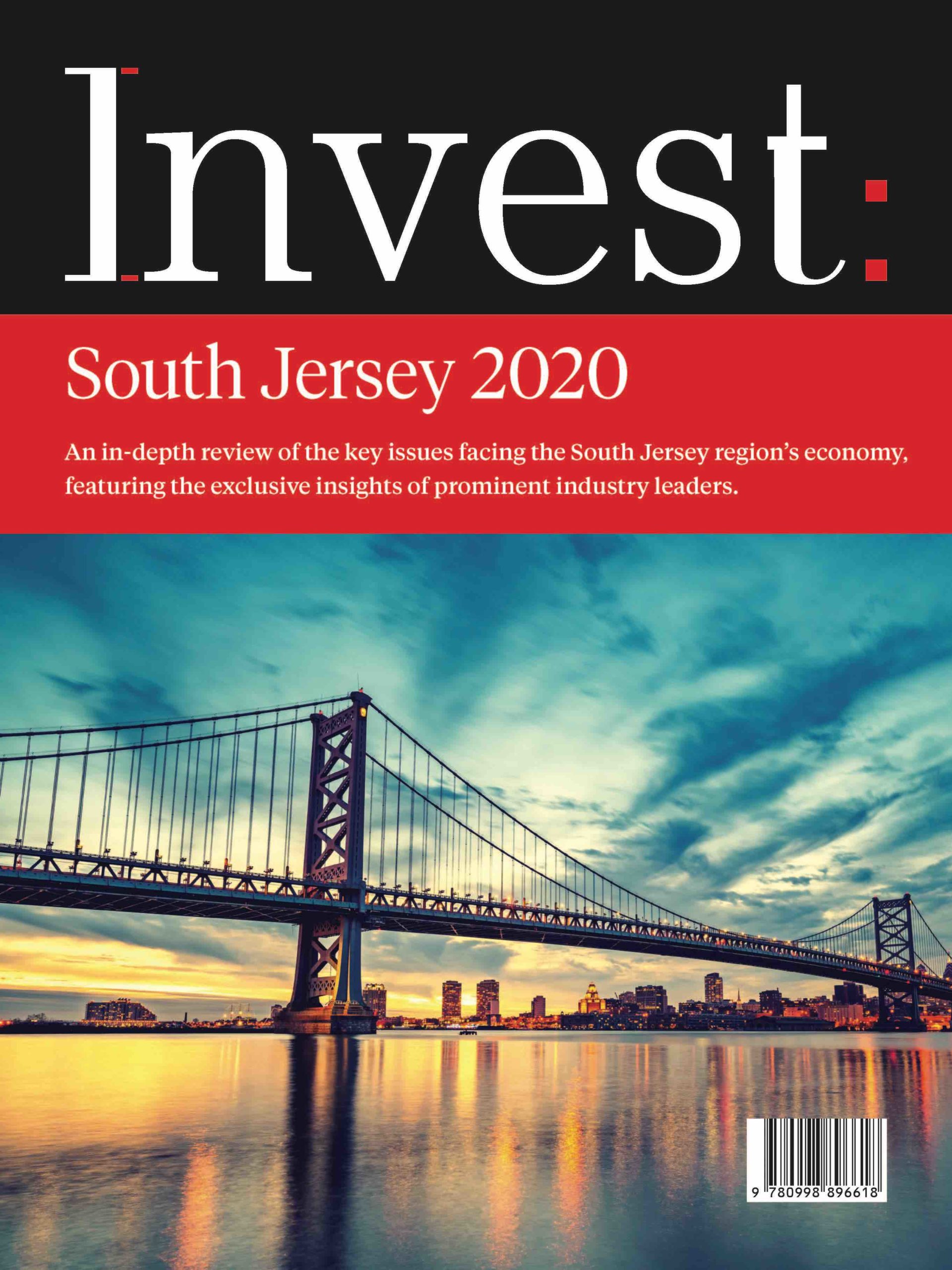
CHERRY HILL, NJ – Capital Analytics’ in-depth research into the South Jersey market has never been more important. Invest: South Jersey, one of an annual series of business reports, offers comprehensive business intelligence during a time of economic uncertainty. Invest: South Jersey dives into the top economic sectors in the county, including real estate, construction, utilities and infrastructure, transportation and aviation, banking and finance, legal, healthcare, education, and arts, culture and tourism. The publication features exclusive insights from industry leaders, sector insiders, political officials and heads of important institutions. It analyzes the leading challenges facing the market and uncovers emerging opportunities for investors, entrepreneurs and innovators.

“South Jersey was an important expansion for us because it is a unique and dynamic area that functions with the greater Philadelphia region. Our South Jersey expansion showcases how metro areas are more than just cities, but rather a diverse ecosystem made up of many companies, locations and environments. Despite the challenges put upon us by COVID-19, Capital Analytics remains steadfast in our purpose: to deliver in-depth business intelligence through its print and digital platforms. Now more than ever, information is not only necessary, it is vital,” said Abby Melone, President and CEO of Capital Analytics. 

Over seven months, the Capital Analytics team conducted extensive research and interviewed over 200 high-profile industry leaders such as; Steve Sweeney, New Jersey’s Senate President, Marty Small, Mayor of Atlantic City and Michael Snyder, Director of Operations for Visit South Jersey. Through their research, the Capital Analytics team identified significant business insights that will serve as important knowledge benchmarks for investors, entrepreneurs and innovators. The publication is the first and most comprehensive report on South Jersey’s vibrant business climate, as seen through the eyes of those at the forefront of their sectors.

“Over the course of our seven-month research period, we were given the ability to truly peel back the curtain and discover what has gone into making South Jersey the hotbed for investment that it has become. What we found was that this economy has not only flourished thanks to cross-sector collaboration but also because of thoughtfully calculated community efforts to raise South Jersey’s status as a preeminent destination for both economic and social prosperity,” said Max Crampton-Thomas, Regional Editor of Capital Analytics. 


About Capital Analytics:

Capital Analytics produces in-depth business intelligence with a focus on providing comprehensive investment knowledge on markets within the United States for the domestic and global business community. Over a seven-month research period, it meets with more than 200 top political, commercial and industry leaders to deliver targeted information, in-depth analyses and strategic insights to the global business community on economic trends and investment opportunities.

Its first publication, Invest: Miami, has a global readership and includes among its readers top executives working in real estate, finance, technology, trade and logistics, health, hospitality and others. Books are distributed locally, nationally and globally to trade and investment boards, executives of Fortune 500 companies, institutional investors, consulates and embassies, hedge funds, leading chambers and associations, as well as high-level summits and conferences.


For more information contact 

Max Crampton-Thomas 

Regional Editor

mcthomas@capitalaa.com

TEL: 305-523-9708 ext 233

Face Off: Miami-Dade ripe with opportunity

Face Off: Miami-Dade ripe with opportunity

By: Max Crampton Thomas

4 min read July 2020 While the ongoing pandemic has been nothing short of a gut punch to what was set up to be another monumental year for economic growth, real estate development and investment has continued to adapt and move forward through a somewhat uncertain landscape. Invest: recently spoke with two Miami-Based leaders within these spaces. Real estate investor Jeronimo Hirschfeld, chairman, founder and CEO of One Real Estate Investment (OREI), and commercial real estate developer Bernardo Rieber, president and CEO of Rieber Developments, both spoke to the immediate effect and changes the pandemic has created for their projects and industry, as well as why they continue to believe in the Miami-Dade marketplace regardless of the roadblocks thrown up by COVID-19. 

What advantages does the Miami marketplace offer to your business operations?

Bernardo Rieber: I think that Miami is one of the greatest cities in the world. I travel a lot, especially in recent years, and it is hard to find a city like Miami where everything works. It’s new, beautiful, with great weather most of the year. People are amazing, and the properties in general are still less expensive than in other major urban centers. The airport is one of the top in the nation and they have done a great job of expanding to meet the need. I think that Miami will continue to grow. Money will continue to be invested here.

In the commercial segment, I also see a strong market, for several reasons. In particular, more and more people are moving to South Florida. It might be because of low taxes, and the fact that it is becoming more of a global city, compared to 40 years ago when it was beaches and malls. Now, we are a culinary center, with new cultural centers, museums, a lot of great things happening. People move here from the East Coast, from South America and Europe. There are a lot of young professionals in areas such as Brickell. There is great demand for offices because a lot of international companies in the financial world are doing business here.

But there has also been a situation related to traffic, in which smaller municipalities, like Aventura, have been developing more commercial infrastructure to accommodate the people who live there and don’t want to commute into Downtown Miami. More offices are needed, and that’s fueled the market. In my particular case, as I am a developer of mostly medical spaces, I see Miami as a tremendous hub for medical tourism. I am right next to the Aventura Hospital and Medical Center, which is a level two trauma center, with 500 beds. I am finishing an extended stay hotel next door, and a total of 80,000 square feet of offices.

Jeronimo Hirschfeld:  In today’s market, especially in the asset class that OREI operates in, which is multifamily, I believe there are going to be many opportunities here. In previous years, there were a lot of developers and investors deploying money into these investments, but as more uncertainty surrounding the real estate sector becomes apparent, opportunities begin to arise for firms like One Real Estate Investment.  What we are seeing today is that these investors are now realizing that their strategy and their returns are not what they expected, so they are turning around and selling.

Bernardo Rieber

Jeronimo Hirschfeld


Multifamily assets are commonly tiered in A, B, C, and D categories based on the asset, location, and tenant base. In the market where I play, which is typically workforce housing in the B+ to C+ space, the assets tend to have a level of insulation from macro market drivers and economic factors. This is because when there’s a crisis and we see unemployment increase, many people begin to downsize to a living space that is more economically practical and feasible. So, when looking in multifamily real estate, you’ll see renters that were previously paying $4,000 in rent coming down to $3,000, and so on. Looking at the assets I invest in, the rents average between $750 and $1,200. These assets tend to perform in times of crisis because, as I mentioned, when people adjust their lifestyle, rent is usually a major expense that can be altered. As individuals who were once living in the Class A and B apartments begin to see a decrease in income, they will make the shift to a B or C class apartment. Ironically, I’ve seen the occupancy of my properties across the board tends to increase during a crisis between 1 to 2% because in addition to the individuals downsizing, many tenants who currently reside at our properties work blue collar jobs that aren’t drastically affected by a downturn. We feel very good about where we sit and what we are doing. Our competitive advantage is showcased through finding the right opportunity, taking advantage of the right deals and making sure we put the appropriate debt structure in place. Multifamily is an asset that sustains itself and performs very strongly during these times.


Where do you see the real estate market in Miami going over the next couple of years?

Rieber: We are mostly focused now on selling office condominiums in the medical sector, and there’s been a great response. We are sold out at our project Ivory 214 and we broke ground on our 12|12 Aventura mixed-use development in early 2020. We demolished the previous structure, prepared the land, started piling, and we are now about to start the foundations. We are on schedule to be up and running by the first quarter of 2022. Of course, since the COVID-19 situation began, we have had to adjust our sales process, but we continue to have interest in our offering and I expect to fully rebound.

Hirschfeld: In terms of neighborhoods, Wynwood is pretty hot, and you have nearby Allapattah, which is also a growing area with a lot of opportunities. It is still industrial, but as population and developments move up north, all these industrial neighborhoods will start changing into places where people are going to be living, playing and working. That’s what we saw with Wynwood. OREI is still very much in acquisition mode, as we are consistently sourcing new deals, while bringing in new equity groups and private investors who are interested in the multifamily space. 

How has the fallout from the COVID-19 pandemic altered your developments at least for the near term?

Rieber: It’s been a shock from a business perspective. We are monitoring the situation daily. Of course, there have been ripple effects because Miami-Dade County’s building department closed, and you cannot call for inspections, which you need to continue building, and permits are delayed, but everyone is powering through and adjusting as best as possible during this unprecedented time. I truly believe that this short-term pain does not compare to the long-term potential of this community. 

Hirschfeld: (With  more people working from home in the future) there are a lot of things that we are implementing. We are implementing USB outlets in new projects, to make sure people can connect their devices directly. We are also implementing smart thermostats that you can control remotely through your phone, making it more efficient because you can set it up to emit minimal power every time you leave and to start cooling five, 10 minutes before you return to the apartment. In our Wynwood project, we have a large bike space at the street level.

To learn more about our interviewees, visit:

http://www.rieberdevelopments.com/

https://www.onerealestateinvestment.com/

Palm Beach County shows patriotic spirit this Fourth of July

Palm Beach County shows patriotic spirit this Fourth of July

By: Felipe Rivas

2 min read July  2020 — Is COVID-19 casting a dark shadow on your Fourth of July weekend plans? Every year Floridians eagerly look forward to Independence Day for peak summer fun, beach and outdoors activities, and family cookouts. However, the rising number of coronavirus cases have prompted Palm Beach County officials to again place the beaches on lockdown in an effort to curb further spikes in infections at a time when many residents were expecting to enjoy time by the water. Along with beach closures, many fan favorites and fireworks displays also erred on the side of caution to prevent more cases of COVID-19. 

Though celebrating the nation’s birthday looks entirely different this year, there are a slew of in-person and virtual events for the entire family to enjoy. Here is a list of activities we are looking forward to in Palm Beach County during the Independence Day weekend. 

Catch some waves at Rapids Water Park

 Bummed that you can’t catch some waves at the beach this Fourth of July weekend? Then spending a lazy day at Rapids Water Park’s lazy river is a great alternative. The Riviera Beach water park, known for its colorful, thrilling slides and family/friendly water attractions, will be open for business this summer following all guidelines and cleaning standards, of course. “I thank you for your patience as we work through the many new challenges this pandemic has presented. We are excited to reopen and provide an entertaining break from the day-to-day world,“ General Manager Bryan Megrath wrote on the park’s website. Tickets must be purchased in advance and the park will feature extended hours from 9 a.m. to 7 p.m.

For more information, vist: https://www.rapidswaterpark.com/covid-19-safety/

West Palm Beach’s surprise fireworks show

Those wishing to see traditional fireworks shows will have to hang out in the city of West Palm Beach and look very closely skyward once night settles. The city’s traditional fireworks show will not launch near Flagler Drive as usual, but instead from two undisclosed locations north and south of the city, wowing families socially distancing at home. “While some will be able to see the fireworks from their home, all residents will be able to view them by tuning into WPBF 25’s Project CommUNITY: Fireworks From Home at 9:00 p.m. on July 4,” the City of West Palm Beach wrote on its website.

For more information, vist :https://www.wpb.org/government/community-events/community-events/4th-on-flagler

Gardens 2 Go Drive-Thru Market

Feeling lethargic after a good Fourth of July family cookout? Head over to Palm Beach Gardens to access fresh produce, meats, dairy and more while helping local vendors in the process. Every Sunday, local Palm Beach Gardens residents can get ahead on their grocery shopping from the comfort of their own cars by visiting Gardens 2 Go Drive-Thru Market. “Gardens 2 Go will provide residents and visitors with a safe and socially-distanced way to access quality produce, bread, coffee, eggs, meat, seafood, dairy and cheese from local vendors,” the city wrote on its website. 


For more information, visit: https://www.pbgfl.com/1067/Gardens-2-Go?fbclid=IwAR2eTUe4tcd4u90VfvyRBjniUdqqFwWsduqX9lewWMbLDDmAEegeK5K2YlU

Virtual trivia 

Want to flex your knowledge of American history as you celebrate the nation’s birthday? Delray Beach has you covered. The city of Delray Beach will host two trivia games set to challenge even the smartest of history buffs. “Your knowledge of Delray Beach and America will be tested. Each game will consist of two rounds of questions (one round on Delray Beach and one round on America) with 20 questions in each round. You earn more points the faster you answer correctly,” the city of Delray Beach wrote on its website. Games are free to enter and family-friendly. Players are playing for bragging rights and a gift card. Game 1 and 2 begin at 2 p.m. and 7 p.m., respectively, on July 4. 

For more information, visit: https://www.delraybeachfl.gov/our-city/things-to-do/4th-of-july